
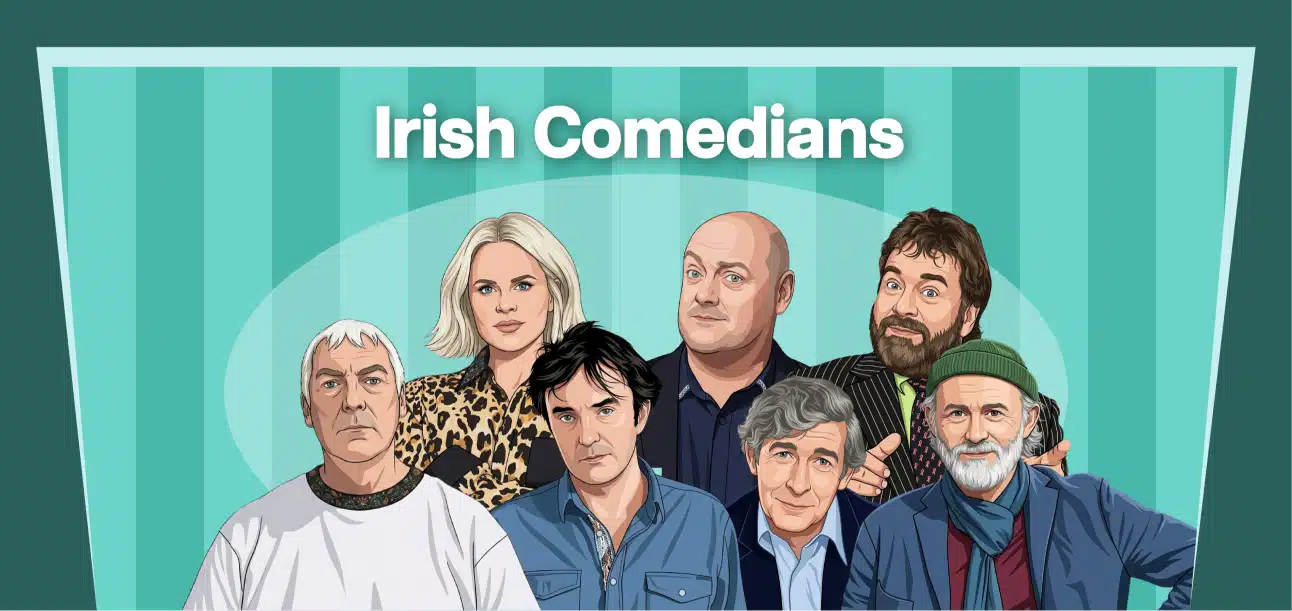


Article Summary
What this article covers: The Irish comedians worth knowing, grouped by era and by what they actually do, from the 1970s club and cabaret generation through to the stand-ups and screen writers working now.
Who this is for: Anyone trying to place a half-remembered name, readers looking for someone new to watch, and visitors wanting to know where Irish comedy actually happens.
Key takeaway: Irish comedians fall into two clear waves. The 1970s and 1980s generation worked cabaret rooms and television variety, while the post-1988 generation came out of the Comedy Cellar in Dublin and went straight to stand-up. Almost everyone famous today comes from the second wave.
Expert insight:
I saw Tommy Tiernan in a function room in Donegal years ago where the stage was a pallet with a bit of carpet over it. He was better in that room than in any television special I have watched since. Irish comedy still works best in places that small.
Ciaran Connolly, Founder of ConnollyCove
Quick facts:
- The Comedy Cellar, founded in Dublin in 1988 by Ardal O’Hanlon, Kevin Gildea and Barry Murphy, produced most of the modern generation
- Dave Allen’s seated storytelling routine ran on BBC television from the late 1960s to the mid-1980s
- Father Ted, written by Graham Linehan and Arthur Mathews, ran for only 25 episodes across three series
Table of Contents
Most people looking up Irish comedians are trying to place a name. It might be the older man on television in the seventies with a whiskey glass, somebody’s favourite from a panel show, or a woman selling out arenas whose name will not come.
So the Irish comedians here are organised by era and by trade rather than ranked. A ranking answers nobody’s question and everybody argues with it anyway. The 1970s and 1980s generation comes first, then the stand-ups, then the screen names, then the women who have taken over the touring circuit.
ConnollyCove covers Irish culture and travel, so there is also a section at the end on where you can see Irish comedians live.
Who Are the Best-Known Irish Comedians?
Dave Allen, Brendan Grace and Hal Roach defined the older generation. Dermot Morgan and Graham Norton crossed into television. Among Irish comedians working now, the biggest names are Tommy Tiernan, Dara Ó Briain, Dylan Moran, Aisling Bea and Joanne McNally.
The table below covers male and female Irish comedians and is a reference rather than a ranking. Era is when they became widely known, not when they started.
| Comedian | From | Era | Best known for |
|---|---|---|---|
| Dave Allen | Dublin | 1960s to 1980s | Solo storytelling, whiskey and a stool |
| Hal Roach | Waterford | 1950s to 1990s | Jury’s cabaret, Irish-American audiences |
| Noel Purcell | Dublin | 1940s to 1970s | Variety television, the white beard |
| Brendan Grace | Dublin | 1970s to 2019 | Bottler, and Father Fintan Stack |
| Dermot Morgan | Dublin | 1980s to 1998 | Father Ted, Scrap Saturday |
| Frank Carson | Belfast | 1960s to 2012 | The Comedians, catchphrase It is the way I tell them |
| Niall Tóibín | Cork | 1960s to 2019 | Impressions, Ballykissangel |
| Ardal O’Hanlon | Monaghan | 1990s to now | Father Dougal, Death in Paradise |
| Graham Norton | Cork | 1990s to now | The Graham Norton Show |
| Pat Shortt | Tipperary | 1990s to now | D’Unbelievables, Killinaskully |
| Dylan Moran | Navan | 1990s to now | Black Books, stand-up |
| Tommy Tiernan | Donegal and Navan | 1990s to now | Stand-up, Derry Girls, his chat show |
| Dara Ó Briain | Wicklow | 2000s to now | Mock the Week, arena tours |
| Des Bishop | New York and Dublin | 2000s to now | Work Experience, In the Name of the Fada |
| Mario Rosenstock | London-born, raised in Ireland | 2000s to now | Gift Grub impressions |
| Chris O’Dowd | Roscommon | 2000s to now | The IT Crowd, Moone Boy |
| Aisling Bea | Kildare | 2010s to now | This Way Up, panel shows |
| Joanne McNally | Dublin | 2010s to now | Arena tours, My Therapist Ghosted Me |
| Maeve Higgins | Cork | 2010s to now | Writing, Maeve in America |
| David O’Doherty | Dublin | 2000s to now | Stand-up with a toy keyboard |
| Ed Byrne | Dublin | 1990s to now | Stand-up, panel shows |
| Jason Byrne | Dublin | 2000s to now | Stand-up, Edinburgh Fringe |
| Neil Delamere | Offaly | 2000s to now | The Blame Game, stand-up |
| Kevin McGahern | Cavan | 2010s to now | Bridget and Eamon |
| Lisa McGee | Derry | 2010s to now | Writing Derry Girls |
Irish Comedians of the 1970s and 1980s
These are the Irish comedians people struggle to name, because most worked cabaret rooms and variety television rather than the stand-up circuit that came later. ConnollyCove gets asked about this generation more than any other. Their material was built for hotel function rooms and Sunday night light entertainment.
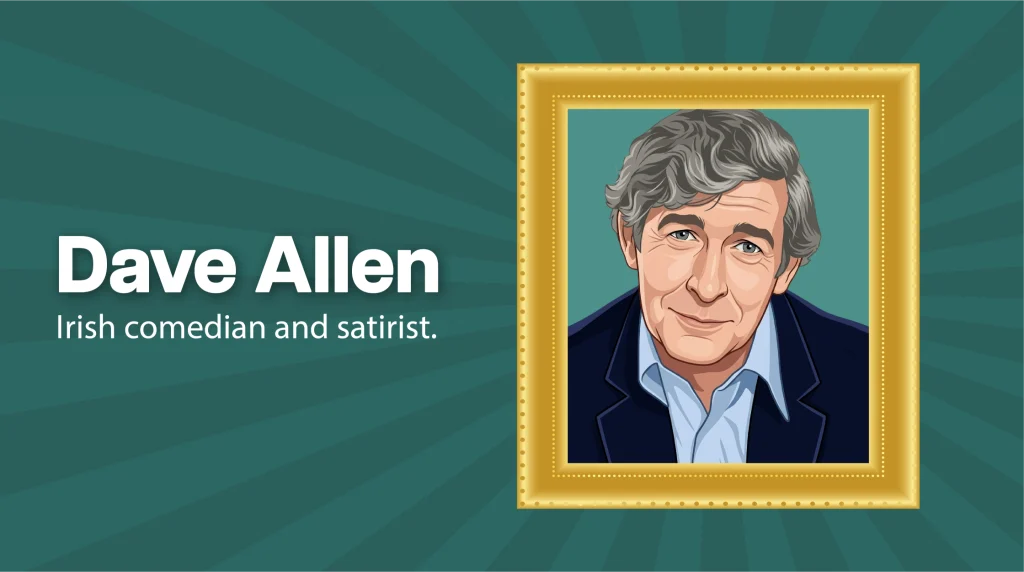
Dave Allen
One of the first Irish comedians to build a mainstream British television career, and the one most people are thinking of when they half-remember a man on a stool with a whiskey. Born in Firhouse, Dublin, on 6 July 1936, he built a career on unhurried personal storytelling rather than joke-telling. His material about the Catholic church was genuinely risky at the time.
His fame first grew in Australia, where he hosted a live television chat show in 1963. He signed to the BBC in 1968, and the solo routine, glass in hand, cigarette going, became the format he is remembered for. He died in March 2005.
Hal Roach
The Waterford entertainer who held a Guinness World Record for the longest run by a comedian at a single venue, playing Jury’s cabaret in Dublin for 26 years.
Roach played almost entirely to Irish-American tourists, and his material leaned hard on stage-Irish stereotypes, which is worth stating plainly rather than glossing. His albums and books sold well in the American market and shaped how a generation of visitors expected Irish humour to sound.
Brendan Grace
Forty years of live work, and the closest thing Ireland had to a national entertainer. His schoolboy character Bottler is the gag he is remembered for. He was a genuine singer too, having formed a showband called The Gingermen at 18 before turning to comedy.
Younger audiences know him as Father Fintan Stack in Father Ted, a single episode that has outlasted almost everything else he did. He continued touring through illness and died in July 2019. The Irish Times published a full obituary at the time.
Dermot Morgan
Morgan was a satirist before he was Father Ted. His radio series Scrap Saturday took apart Irish politics in the early 1990s with a savagery Irish broadcasting had not seen, and it was cancelled while it was still popular.
Father Ted made him internationally known, and he died in February 1998, the day after filming finished on the final series. His legacy is why Craggy Island jokes still land in Ireland thirty years on, and why fans still hold Ted Fest on Inis Mór each year.
For the wider cast of Irish public life in this period, our guide to famous Irish people covers the figures the satirists were aiming at.
Irish Stand-Up Comedians Working Today
The modern generation of Irish comedians traces back to one room. The Comedy Cellar opened above the International Bar in Dublin in 1988, founded by Ardal O’Hanlon, Kevin Gildea and Barry Murphy. Almost every one of the Irish comedians who followed passed through it.
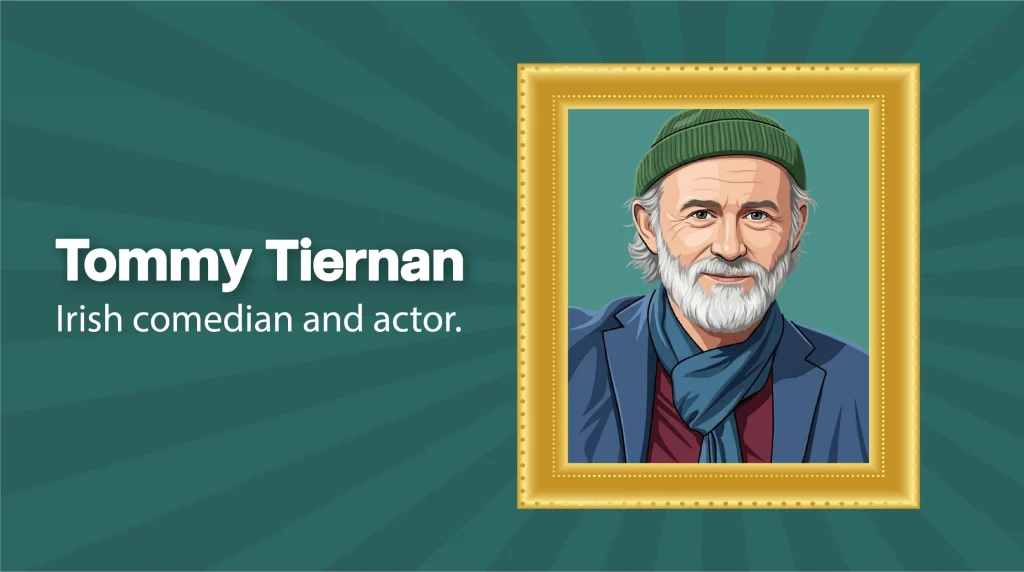
Tommy Tiernan
The most divisive and probably the most gifted live performer of the group. Tiernan works without much structure, following an idea until it either collapses or turns into something better, which makes him thrilling in a room and harder to watch on television.
He plays Gerry Quinn in Derry Girls, hosts his own chat show, and co-hosts a podcast with Hector Ó hEochagáin and Laurita Blewitt. His stand-up remains the reason to see him.
Dara Ó Briain
The Wicklow man who made panel-show hosting a career. He came out of University College Dublin and the Irish circuit, hosted Don’t Feed the Gondolas, then moved to Britain and fronted Mock the Week for its whole run.
Ó Briain is an unusually quick improviser and better live than the television format allows. He tours arenas regularly.
Dylan Moran
The Navan comedian who co-wrote and starred in Black Books. His stand-up is the most literary of any of the Irish comedians here: long, digressive, and delivered as though it is only just holding together. He also appeared in Shaun of the Dead and Notting Hill.
Des Bishop
Born in New York, moved to Ireland at 14, and built a career out of turning that outsider position into material. The Des Bishop Work Experience had him living on minimum wage, and In the Name of the Fada followed his attempt to become fluent in Irish.
If that documentary is what brought you here, our guide to saying goodbye in Irish covers the same language from the other direction.
ConnollyCove’s collection of Irish proverbs has the older sayings the comedy often plays off.
David O’Doherty and Ed Byrne
O’Doherty performs with a battered toy keyboard and has won the Edinburgh Comedy Award, working a deliberately small, self-deprecating style. Byrne has been touring since the 1990s and is one of the most reliably funny observational acts working anywhere in these islands.
Irish Comedians on Screen
Several of the best-known Irish comedians are not primarily stand-ups at all. That is worth separating out, because a list mixing touring comics with sitcom writers tells you nothing about what you are going to watch.
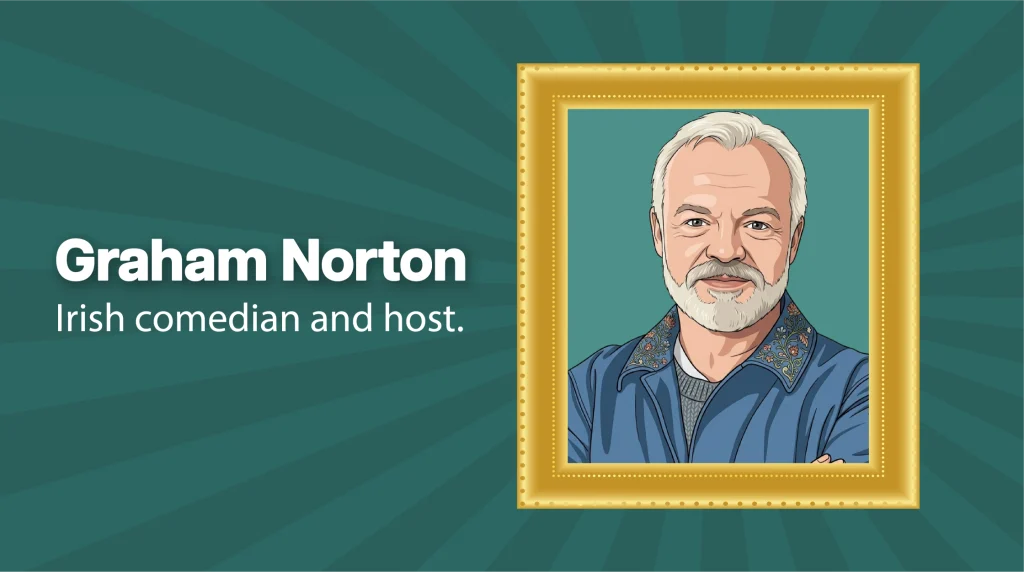
Graham Norton has interviewed A-listers for over two decades and is one of the most successful chat show hosts in Britain or Ireland. Before that he was Father Noel Furlong in Father Ted. Ardal O’Hanlon played Father Dougal, founded the Comedy Cellar, and has since carried Death in Paradise as DI Jack Mooney.
Chris O’Dowd was Roy in The IT Crowd, then created and co-wrote Moone Boy, which remains the warmest thing anyone has made about growing up in 1980s rural Ireland. Pat Shortt came out of the duo D’Unbelievables with Jon Kenny, then made Killinaskully, and is a serious dramatic actor in Garage and The Guard.
Mario Rosenstock built a career on impressions of Irish public figures, from Gift Grub onwards, committing fully enough to dress as whoever he is doing.
Lisa McGee wrote Derry Girls, a sitcom that found comedy in the Troubles without making them trivial. Our guide to the writer Lisa McGee covers her work in full.
There is more on the shows themselves in our round-up of famous Irish TV shows.
Irish Women in Comedy
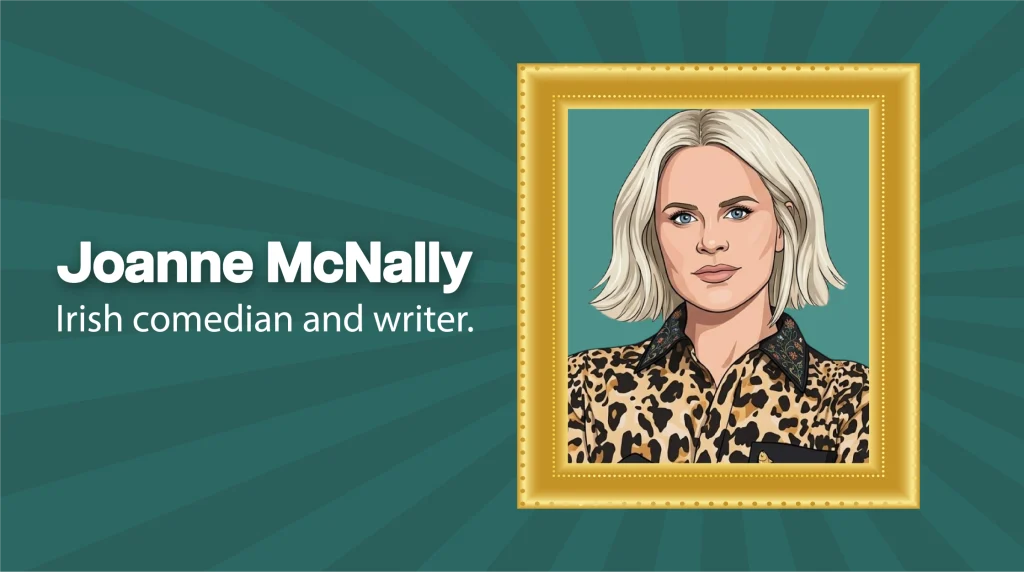
The touring circuit has shifted substantially in the last decade, and the biggest live draw among Irish comedians right now is a woman.
Joanne McNally now sells out arena dates in Ireland and Britain. Her show Bite Me came out of her own experience of eating disorder recovery, and her podcast with Vogue Williams, My Therapist Ghosted Me, has a large following.
Aisling Bea won So You Think You’re Funny at the Gilded Balloon in 2012, then created This Way Up, which won her a BAFTA and is as sad as it is funny.
Maeve Higgins left Cork for New York and became a writer as much as a comedian, with Maeve in America collecting essays on immigration. Tara Flynn moved from stand-up into activism during the Eighth Amendment campaign. Eleanor Tiernan left civil engineering for comedy and has played Montreal’s Just For Laughs. Deirdre O’Kane, Alison Spittle and Jennifer Zamparelli all work steadily on the Irish circuit.
Our guide to famous Irish women covers the wider picture.
Northern Irish and Irish American Comedians
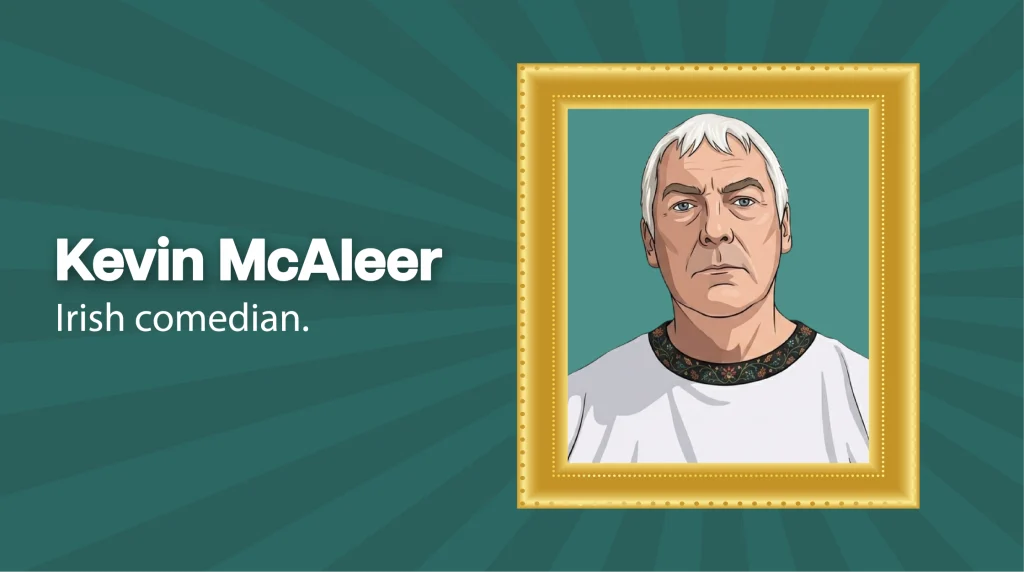
Two groups get folded into the term Irish comedians without much thought, and both are distinct.
From Northern Ireland: Kevin McAleer from Tyrone, whose deadpan surrealism influenced far more people than he gets credit for. Shane Todd from Bangor, whose podcast has a large following. Micky Bartlett and Paddy Raff, both working the Belfast circuit. Northern Irish comedy has a different rhythm, drier and more willing to sit in discomfort, which Derry Girls made legible to everyone else.
On the Irish American side, the tradition runs from vaudeville through to comedians with Irish parents or grandparents working in the United States now. It is a genuinely separate lineage rather than a branch of the Irish scene, and conflating the two flattens both.
Belfast has a live circuit worth planning around, and our guide to nights out in Belfast covers the venues.
Where to See Irish Comedians Live
This section is for readers who want to see Irish comedy in person. ConnollyCove has been to most of these rooms, and the small ones are consistently better.
The Comedy Cellar, Dublin. Above the International Bar on Wicklow Street. Small, cheap, and the room the whole modern scene came out of. Still runs weekly.
Vicar Street, Dublin. The room every Irish comedian wants to fill. Around 1,000 seats, and residencies from the big names are common.
The Cat Laughs, Kilkenny. Kilkenny’s comedy festival, held over the June bank holiday weekend. Small venues across the city, and the line-ups mix Irish acts with international names.
The Empire, Belfast. A converted church, and the main room for Northern Irish comedy. Tuesday nights have run for decades.
Iveagh Gardens and Iveagh Fringe, Dublin. Outdoor comedy shows in summer, so bring a layer whatever the forecast says.
Book ahead for anything at Vicar Street or the Cat Laughs. Small-room gigs you can generally walk into. If you want the tradition behind the wit rather than the gigs, our guide to Irish traditions covers where the humour comes from.
Frequently Asked Questions
Who are the most famous Irish comedians?
Of the older generation, Dave Allen, Brendan Grace and Dermot Morgan. Among those working now, Tommy Tiernan, Dara Ó Briain, Dylan Moran, Graham Norton, Aisling Bea and Joanne McNally.
Who are the best-known male Irish comedians?
Dave Allen, Brendan Grace, Hal Roach, Dermot Morgan and Noel Purcell from the earlier era. Currently Tommy Tiernan, Dara Ó Briain, Dylan Moran, Des Bishop, David O’Doherty and Ed Byrne.
Who was the Irish comedian in the 1970s with the whiskey and the stool?
Dave Allen. He sat on a tall stool with a glass of whiskey and a cigarette, telling long personal stories rather than jokes. He is the Irish comedian most often half-remembered from that period.
Who are the old Irish comedians from the 70s and 80s?
Dave Allen, Hal Roach, Brendan Grace, Noel Purcell and Dermot Morgan. Most worked cabaret rooms and variety television rather than the stand-up circuit, which is why they are harder to look up than later acts.
Who are the best Irish female comedians?
Joanne McNally is one of the biggest live draws in Irish comedy. Aisling Bea, Maeve Higgins, Deirdre O’Kane, Tara Flynn, Eleanor Tiernan and Alison Spittle are all working steadily.
Which Irish comedians are still touring?
Tommy Tiernan, Dara Ó Briain, Dylan Moran, Joanne McNally, Des Bishop, Pat Shortt, David O’Doherty and Ed Byrne. All tour regularly in Ireland and Britain.
Where did modern Irish comedy start?
The Comedy Cellar, opened above the International Bar in Dublin in 1988 by Ardal O’Hanlon, Kevin Gildea and Barry Murphy. Almost all of the current generation played there early on.
Who are the Northern Irish comedians?
Kevin McAleer, Shane Todd, Micky Bartlett and Paddy Raff, alongside writers such as Lisa McGee. The Empire in Belfast is the main room for the Northern Irish circuit.
What is Irish humour actually like?
Self-deprecating, understated and comfortable with dark subjects, particularly death. The performers who travel best tend to be the ones who talk about failure rather than success, which ConnollyCove would argue is the whole tradition in one line.
Discover More Irish Culture
If you are trying to place one name, start with the era. The whiskey and the stool is Dave Allen. The schoolboy is Brendan Grace. The priest is Dermot Morgan or Ardal O’Hanlon depending on which priest you mean.
And if you are visiting, skip the list and go to a room. The Comedy Cellar on a Wednesday will tell you more about Irish comedians than any ranking. ConnollyCove covers the culture behind the humour too. See our guide to famous Irish TV shows, or watch the ConnollyCove YouTube channel for Irish culture and travel guides.


Hello – what was the name of the Irish comedian in the 1950’s-60’s – an older man with a big white beard? He told, among many others, the joke about the building site:
Foreman: “How’s it going up there? Are you putting the window in straight?”
Builder on ladder: “It’s near enough”
Foreman: “What do you mean by near enough? It has to be perfect.”
Builder on ladder: “Ok then, it’s perfect”
Foreman: “That’s near enough”
He told it on ‘Sunday night at the London Palladium’ hosted by Bruce Forsyth in 1967