

Skip to content
Updated on:October 3, 2024 by Avatar image of authorMarise

Roddy Doyle is one of Ireland’s most celebrated and influential contemporary writers, known for his sharp wit, keen observations of social issues, and profound understanding of the human experience. His work spans novels, plays, screenplays, and children’s literature, and through his distinctive voice, Doyle has captured the essence of working-class Dublin life. His ability to intertwine humour, heartbreak, and societal critiques has earned him critical and widespread acclaim across the globe. This article will explore Roddy Doyle’s life, his significant contributions to literature, and the enduring impact of his works.

Background

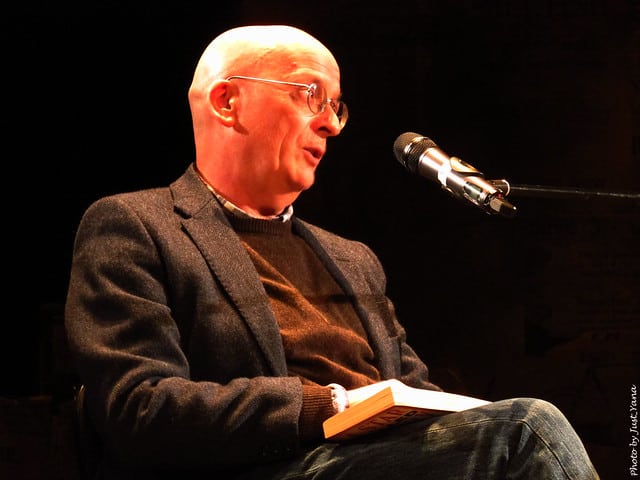
Roddy Doyle
Roddy Doyle (Image Source: The Diary of Blue Shows!)

Born in Dublin, Ireland, on the 8th May 1958. He was raised in Kilbarrack and attended Trinity College Dublin, educated by the Christian Brothers. He then graduated with a Bachelor of Arts Degree.

After university, he became an English and Geography teacher in 1980. He then found his true calling and became a full-time writer in 1993. He married Belinda Moller in 1987 and had three children: Rory, Jack and Kate. His wife, Belinda, is the granddaughter of former Irish President Erskine Childers.

In 2009, Roddy Doyle, who is the co-founder and chairperson, created Fighting Words. The main aim of this organisation is to help children, young adults, and adults who do not have the opportunity to grow up to read and write.

The hope is to use literature’s creativity to teach young people of all backgrounds to be creative and help them become successful adults.

Inspiration

The Works Presents: Roddy Doyle

Roddy Doyle’s first story, “Your Granny is a Hunger Striker,” was never published. Due to this, his work colleague, Paul Mercier, became a sort of mentor. Mercier was also a writer; he wrote about working-class Dublin.

This pushed Doyle to write about his home place, leading to his writing “The Commitments” in 1986. Dublin and his home place continued to be the topic of his writing.

Writing

The Barrytown Trilogy consisted of “The Commitments,” “The Snapper,” and “The Van.” This led to movie success, and “The Van” was shortlisted for the 1991 Booker Prize.

In 1993, “Paddy Clarke Ha Ha Ha” was published, winning the 1993 Booker Prize. This novel, written by a ten-year-old Dubliner in 1968, was about the understanding and misunderstanding of the world.

“It was a sign of growing up, when the dark made no more difference to you than the day”

Roddy Doyle’s following novel deals with a much darker theme: domestic violence. It is entitled “The Woman Who Walked into Doors”, published in 1996. The storyline is about a woman whose husband beat her and defended him by using the excuse that she walked into a door. This story returns in his novel “Paula Spencer” in 2006.

“He loved me and he beat me. I loved him and I took it. It’s as simple as that, and as stupid and complicated. It’s terrible. It’s like knowing someone you love is dead but not having the body to prove it. He loved me. I know it.”

Roddy Doyle’s most recent trilogy is “The Last Roundup.” This trilogy follows an IRA volunteer through his life: fighting in the Easter Rebellion, moving to America, finally returning to Ireland, and finding himself involved in the IRA again.

Along with these novels aimed at an adult audience, Roddy Doyle successfully wrote children’s books. Arguably, his most well-known children’s novels are the Rover Adventures, including “The Giggler Treatment,” “Rover Saves Christmas,” and “The Meanwhile Adventures.”

Roddy Doyle has also become an established playwright. His first published novel, “The Commitments,” was performed in the West End as a musical in 2013. Other plays include “Brownbread,” “War,” and “The Woman Who Walked into Doors” (a novel written in 1996 and performed in theatre in 2003). Roddy Doyle also adapted John Millington Synge’s “Playboy of the Western World.”

The Barrytown Trilogy

Doyle’s rise to literary fame began with his Barrytown Trilogy, a series of novels set in a fictional working-class neighbourhood in Dublin. The trilogy consists of The Commitments (1987), The Snapper (1990), and The Van (1991). Each novel revolves around the lives of the Rabbitte family, a quintessentially Irish family navigating life’s struggles with wit, warmth, and resilience.

The Commitments (1987)

The Commitments marked Doyle’s literary debut and was an instant success. The novel follows a group of young Dubliners who form a soul band to escape their dreary lives. Full of rapid-fire dialogue and sharp humour, The Commitments is both a comedy and a social commentary on the working-class experience in Ireland during the 1980s.

The novel was later adapted into a successful film in 1991, directed by Alan Parker. The film further cemented Doyle’s place as a key figure in Irish literature, and The Commitments became a beloved classic, both in book and movie form.

The Snapper (1990)

The second novel in the Barrytown Trilogy, The Snapper, explores the dynamics of the Rabbitte family as they deal with an unplanned pregnancy. Sharon Rabbitte, the eldest daughter, becomes pregnant but refuses to reveal the father’s identity. The novel focuses on the family’s reactions, the social stigma of single motherhood, and the strong community bonds in Barrytown. Doyle’s signature humour is again present, but so is his keen understanding of human emotions and relationships. The Snapper was also adapted into a film, which received widespread acclaim.

The Van (1991)

The Van, the trilogy’s final novel, delves into the lives of Jimmy Rabbitte Sr. and his friend Bimbo as they attempt to run a chip van during the economic downturn of the early 1990s. The novel explores themes of friendship, masculinity, and the trials of trying to survive in a changing Ireland. Shortlisted for the Booker Prize in 1991, The Van is a bittersweet tale of hope, disappointment, and the working-class struggle to find dignity in difficult times.

Roddy Doyle Awards:

Roddy Doyle is a member of the Royal Society of Literature and has won many awards for his work:

  • 1991 Booker Prize shortlist for “The Van”
  • 1991 BAFTA Award for the film “The Commitments”
  • 1992 Peter Sellers Award for Comedy and the ALFS Award for the film “The Commitments”
  • 1993 Booker Prize for “Paddy Clarke Ha Ha Ha”
  • 1994 ALFS Award British Screenwriter of the Year for “The Snapper”
  • 2010 Irish Book of the Decade
  • 2011 French Literary Award for “The Snapper”
  • 2013 Irish Book Awards Novel of the Year Award for “The Guts”

Fun Facts:

  • He was nicknamed “Funky Doyle” by his pupils as he wore a leather jacket and jeans when teaching
  • His star sign is Taurus
  • He supports Chelsea Football Club
  • He taught at Greendale Community School (1980-1993)
  • When writing in the afternoon/ evening, he prefers to drink Green Tea

Screenwriting and Film Adaptations

In addition to his novels, Roddy Doyle has had considerable success as a screenwriter. Several of his books, including The Commitments, The Snapper, and The Van, were adapted into successful films, with Doyle himself involved in the screenplays. His ability to translate his humorous and gritty narratives onto the screen has earned him a reputation as a talented screenwriter, and his adaptations have been praised for their loyalty to the spirit of the original works.

Doyle also wrote the screenplay for When Brendan Met Trudy (2000), a romantic comedy about a shy teacher who falls in love with a criminal. The film, directed by Kieron J. Walsh, showcases Doyle’s characteristic blend of humour and heart.

Children’s Literature and The Giggler Treatment

Roddy Doyle has also made significant contributions to children’s literature. His first children’s book, The Giggler Treatment (2000), marks his foray into this genre. The book is a whimsical and humorous tale introducing children to Doyle’s signature style. His other children’s books include Rover Saves Christmas (2001) and Her Mother’s Face (2008), which have been enjoyed by young readers worldwide.

Political and Social Commentary

Throughout his career, Doyle has not shied away from political commentary. His 2011 novel The Dead Republic, the final part of his The Last Roundup trilogy, examines the myth of the Irish Republic and critiques nationalism and the distortion of history. In 2016, Doyle released The Deportees and Other Stories, a collection of short stories that focuses on the experiences of immigrants in modern-day Ireland, highlighting issues of racism, integration, and identity in a rapidly changing society.

In public interviews and essays, Doyle has also been vocal about contemporary Irish politics and social issues. His writing reflects a deep engagement with Ireland’s social evolution, and he often comments on topics such as the housing crisis, economic inequality, and the role of religion in Irish society.

Legacy and Impact

Roddy Doyle’s contribution to Irish literature cannot be overstated. His unique ability to blend humour with serious social critique has made his works accessible to readers from all walks of life. Through his vivid portrayal of Dublin’s working-class communities, Doyle has provided a voice to people often overlooked in literature. His novels, plays, and screenplays have left an indelible mark on Irish and international cultures.

In addition to his literary achievements, Doyle co-founded the Fighting Words Creative Writing Centre in Dublin, a programme aimed at helping children and teenagers develop their writing skills. This initiative reflects his commitment to nurturing future generations of writers and storytellers.

Conclusion

Roddy Doyle remains a significant figure in Irish literature, a writer whose works are infused with warmth, wit, and an unwavering commitment to portraying the complexities of human life. From the Barrytown Trilogy to his Booker Prize-winning Paddy Clarke Ha Ha Ha, Doyle has explored the intricacies of family, friendship, and society with a depth and humour that resonate with readers around the world. His contribution to Irish culture and the broader literary world ensures that his works will continue to be read and cherished for future generations.

If you enjoyed this blog post about the life and work of Roddy Doyle, read more of our Connolly Cove articles about Irish writers:

100 Best Irish Historical Fiction to Consider ReadingSeamus Heaney: His Life | His Work | His Successes | Dublin’s Literary Pubs

Leave a comment

Your email address will not be published. Required fields are marked *