
Skip to content
Updated on: by Avatar image of authorCiaran Connolly

Want to escape from the stresses and strains of everyday life? The unique Victors Way Indian sculpture park in County Wicklow, Ireland, is a hidden gem.

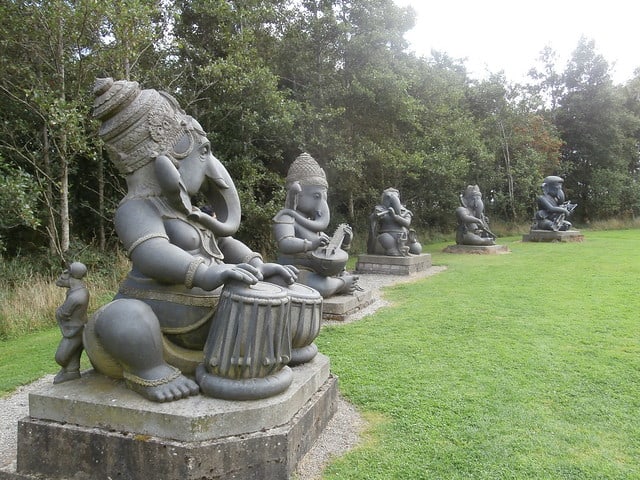
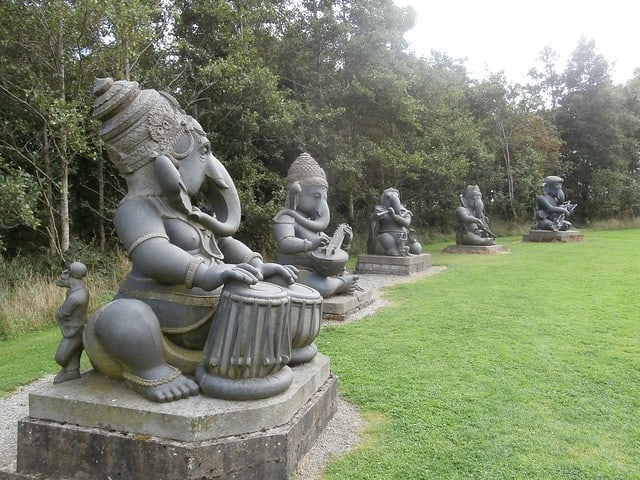
At Victor’s Way Indian Sculpture Park, you’ll discover a tranquil meditation garden with incredible granite sculptures. The attraction was created by craftsmen in Mahabalipuram, India, and the sculptures have now found their way to County Wicklow.

Read on to discover why Victor’s Way is a must-see!

The Origins of Victors Way

Exploring Victor’s Way (Indian Sculpture Park)

Victors Way Indian Sculpture Park was the brainchild of Victor Langheld, a German-born artist and spiritual seeker. Langheld’s life journey is as fascinating as the sculptures he created. After travelling extensively throughout India for spiritual enlightenment, he returned to Ireland with a deep understanding of Eastern philosophies, notably Buddhism and Hinduism. His travels profoundly impacted him, and the idea of creating a space that would allow others to reflect and meditate on the complexities of life began to take shape.

Langheld’s vision for Victor’s Way was to display art and create a spiritual journey through sculpture. He was driven to offer a space for introspection, a “contemplative park” where visitors could confront deep personal and philosophical questions. The sculptures, inspired by Indian spiritual deities and concepts, reflect Langheld’s own spiritual exploration and his reflections on life, death, and the human condition. The park officially opened in the early 2000s, and since then, it has attracted visitors from all over the world, offering a unique experience that is hard to find elsewhere.

The Layout and Design

Victors Way Indian Sculpture Park is spread over 22 acres of serene woodland. The park’s layout is designed to take visitors on a meditative journey, with each sculpture representing a different stage of the human experience. The sculptures are positioned along meandering paths, inviting visitors to stroll at their own pace, pause, and reflect at each stop.

Unlike conventional parks, where sculptures are often placed solely for aesthetic value, Victors Way uses its natural surroundings to enhance the experience. The towering trees, quiet streams, and secluded clearings create an atmosphere of tranquillity, making them the perfect backdrop for the park’s thought-provoking sculptures. The carefully curated landscape encourages a sense of solitude and introspection, as if the environment is part of the artwork.

The park is designed to evoke contemplation. Visitors are gently guided through various stages of reflection, from the initial excitement of entering the park to the sobering realisation of life’s challenges and complexities as they proceed.

The Unusual Indian Sculptures on Display

Ireland, Victor’s Way, Indian Sculpture Park

At the heart of Victors Way Indian Sculpture Park are its sculptures, each telling a unique story. Indian deities, particularly from Hinduism, inspire most sculptures but are not mere religious symbols. Instead, they embody profound philosophical messages, offering commentary on the human journey of growth, suffering, enlightenment, and eventual death.

The Giant Buddha Head

One of the most striking sculptures is the Giant Buddha Head, which sits serenely in a peaceful clearing. This sculpture symbolises spiritual wisdom and calm, reminding visitors of the importance of mindfulness and inner peace. The head, larger than life, emanates tranquillity, encouraging visitors to pause and reflect on their spiritual journey. Its serene expression and closed eyes suggest that true wisdom lies within, a central tenet of Buddhist philosophy.

The Starving Buddha

In stark contrast to the Giant Buddha Head is the Starving Buddha. This sculpture represents the self-denial and extreme asceticism practised by Siddhartha Gautama before he became the Buddha. The skeletal figure of the Buddha, with visible bones and a gaunt expression, serves as a powerful reminder of the futility of extreme self-denial in the search for enlightenment. It symbolises the need for balance, a fundamental teaching of Buddhism, and reminds visitors that life is about finding the middle way between indulgence and deprivation.

Shiva Nataraja: The Cosmic Dancer

Another significant sculpture is that of Shiva Nataraja, the cosmic dancer. In Hindu mythology, Shiva is the god of destruction, and his dance represents the cycle of creation and destruction, a central theme in Indian cosmology. With its intricate detail and dynamic form, this sculpture captures the essence of life’s impermanence. Shiva’s dance is both joyous and fierce, symbolising the constant flux of the universe. Visitors are reminded that change is inevitable and that death is not an end but a transformation into a new beginning.

The Ferryman

The Ferryman is a sculpture depicting a skeletal figure rowing a boat, a symbolic representation of death. The sculpture is a nod to mythological figures like Charon in Greek mythology, who ferried souls across the river Styx to the afterlife. In the context of Victor’s Way, the Ferryman represents the inevitable passage of life towards death. However, rather than inciting fear, the sculpture invites reflection on mortality and the importance of living fully in the present.

The Split Man

The Split Man is perhaps one of the park’s most visually arresting and emotionally charged sculptures. The figure is split in half, symbolising the internal conflict that all human beings face. It represents the struggle between opposing forces within oneself—good versus evil, desire versus restraint, and reason versus emotion. The sculpture encourages visitors to confront their internal battles and the suffering that often accompanies these conflicts.

The Awakening: A Path to Enlightenment

At the end of the park’s winding path is The Awakening, a sculpture symbolising enlightenment. The figure emerges from a cocoon, a metaphor for the process of spiritual awakening. This final sculpture brings the journey full circle, offering hope and renewal. After confronting the challenges and sufferings represented by the earlier sculptures, visitors arrive at this figure of transcendence, suggesting that enlightenment is possible after a long, arduous journey of self-reflection and personal growth.

The Reopening of Victor’s Way Park

Sculptures at Victors Way Indian Sculpture Park

The park was known as Victoria’s Way until 2015 its owner eventually closed it.

He said: Too may day-trippers came turned it into a fun park for parents with children. It was designed as a contemplative garden for over 28’s.” 

However, in 2016, the park reopened under its original name, Victor’s Way. A new age restriction was put in place to limit the park to those who would appreciate its spiritual meaning.

The relaunched park was described by Slate magazine as “a garden designed to change your life”.

Although the park won’t suit everyone’s taste, it’s one of the unique things to discover in Ireland. If you’re looking to escape from your busy daily life, then a trip to the peaceful Victor’s Way Park might just be what you need. In addition, it was created for those between the ages of 28 and 60 as a space for contemplation.

A Journey into the Self

What sets Victor Way Indian Sculpture Park apart is its ability to compel visitors to engage with the art on a profoundly personal level. Each sculpture is a beautiful piece of craftsmanship and a symbol of a universal human experience. The themes of suffering, growth, transformation, and enlightenment resonate with everyone, regardless of religious or cultural background.

The park invites visitors to journey into themselves. As they walk through the tranquil forest and encounter each sculpture, they are encouraged to reflect on their own lives—their struggles, their hopes, and their spiritual journeys. The sculptures act as mirrors, reflecting back the visitor’s inner world, often in surprising and enlightening ways.

The park’s layout, with its secluded paths and quiet spaces, creates a sense of solitude, allowing for deep contemplation. Visitors are encouraged to spend time with each sculpture, sit in silence, and engage with the philosophical questions that each work poses.

Art Meets Nature

Another remarkable aspect of Victor’s Way is its integration of art with nature. The sculptures are carefully placed within the natural landscape, allowing them to interact meaningfully with their surroundings. For example, with its gaunt frame, the Starving Buddha is set against a backdrop of tall, thin trees, creating a sense of fragility and impermanence. Similarly, The Ferryman’s skeletal figure, rowing his boat, seems to glide along a stream, reinforcing the idea of the passage of life.

This interaction between art and nature enhances the park’s meditative experience. The natural surroundings provide a sense of calm and serenity, essential for the deep reflection that Victors Way encourages. Visitors are not uncommon to sit in quiet contemplation, surrounded by the beauty of both the sculptures and the landscape.

Conclusion: Why Victors Way is a Must-Visit

Victors Way Indian Sculpture Park is more than just a collection of sculptures. It is a journey into the depths of the human experience, a space that encourages reflection on some of life’s most profound questions. The park’s unique blend of Eastern philosophy, stunning artistry, and natural beauty makes it a place like no other.

For those seeking more than just a visual experience, Victors Way offers a spiritual and philosophical exploration that is deeply personal and transformative. Whether drawn to the park for its artistic beauty or spiritual themes, you will leave with a sense of enlightenment and peace.

Opening Times

Every day till 6 October: from 12:00 pm to 6:00 pm.

Closed during the winter season.

Ticket Price

€10 (including the booking fee) per adult.

*Children are unadvised to visit. 

*Pre-booking is a must!

Have you ever been to the Indian Sculpture Park in Victors Way? We’d love to hear your thoughts on the attraction.

Also, check out some other tourist attractions that might interest you: The Jeanie Johnston: Irish Immigrant Ship| The Famous Carrick-a-Rede Rope Bridge| Classiebawn Castle: Owned by Royals and inhabited by Ghosts| The Gobbins: Europe’s Most Dramatic Cliff Path

Leave a comment

Your email address will not be published. Required fields are marked *