
Article Summary
What this article covers: Navan Centre and Fort in County Armagh; the practical difference between the free ancient earthwork and the ticketed visitor centre; the mythology of Emain Macha; the archaeology beneath the mound; and how to plan a visit.
Who this is for: Travellers planning a trip to Armagh or Belfast, heritage-seekers tracing Irish and Ulster ancestry, and anyone curious about the mythology behind one of Ireland’s Royal Sites.
Key takeaway: Navan Fort, the ancient earthwork, is free to visit year-round. The Navan Centre next to it, with its exhibitions and living-history sessions, is a separate, ticketed experience, and that one distinction shapes almost every practical decision about visiting.
Expert insight: “Standing on top of that mound, looking out over the Orchard County drumlins, you understand why this particular hill became the centre of an entire mythological cycle. It is not a dramatic peak. It is a modest rise with a commanding view in every direction, exactly the kind of place a Bronze Age or Iron Age community would choose to mark as sacred ground.” Ciaran Connolly, Founder of ConnollyCove
Quick facts:
- The central timber structure at Navan Fort was dendrochronologically dated to 95 BC, then deliberately burned and buried in a single ceremonial act.
- Navan Fort is one of five Royal Sites of Ireland, alongside the Hill of Tara, Rathcroghan, Dún Ailinne and the Rock of Cashel, currently on the UNESCO World Heritage Tentative List.
- Excavations at the site recovered the skull of a Barbary ape, a species native to North Africa, evidence of long-distance trade reaching Iron Age Ulster.
Table of Contents
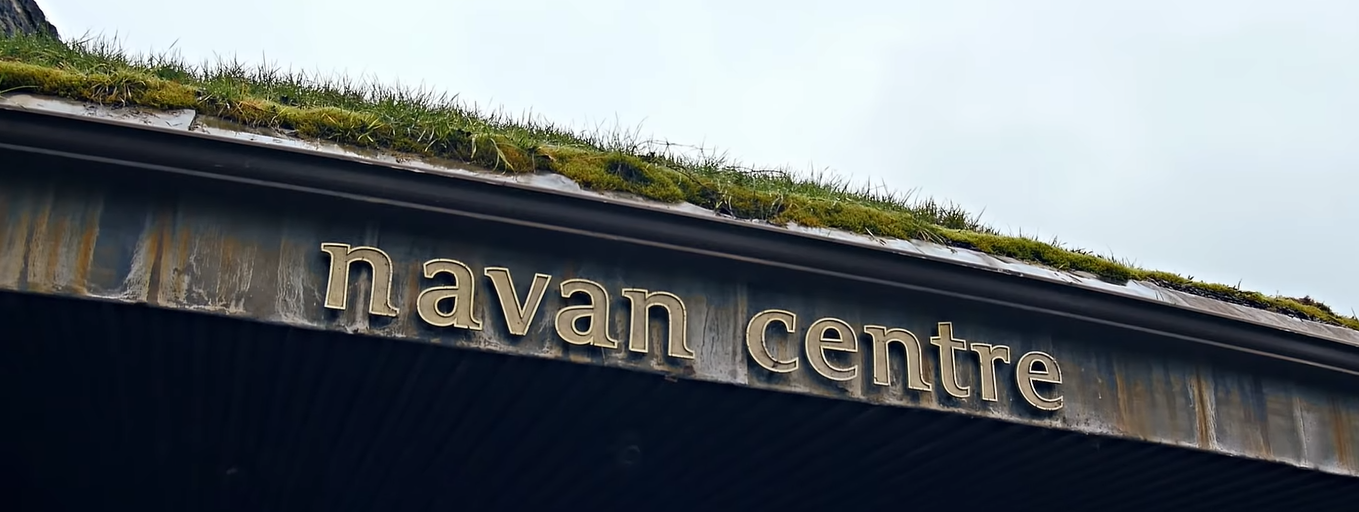
Navan Centre and Fort lie two miles west of Armagh City, and it is really two attractions sharing one hilltop. Navan Fort itself, ancient Emain Macha, is a free, open-access earthwork where the Iron Age kings of Ulster are said to have ruled. Beside it, the Navan Centre is a ticketed visitor building with living-history interpreters, an archaeology exhibition and a cafe. Most first-time visitors do not realise the two are separate until they arrive, which is the single most common point of confusion this guide sets out to fix.
Ireland’s mythology rarely survives as pure story. It tends to stay attached to a specific field, hill, or lake, and Emain Macha is one of the clearest examples. Long before Navan Fort became a heritage attraction, it was already central to the Ulster Cycle, the body of Irish sagas built around the warrior Cú Chulainn and the court of King Conchobar mac Nessa. Connolly Cove has covered the wider cast of that mythology in our guide to the Kings of Ulster, and this piece narrows the focus to the single site where their stories are said to have played out.
Navan Centre and Fort at a Glance
Navan Fort is free to visit year-round, while the Navan Centre’s exhibitions and living-history sessions require a paid ticket. That single distinction shapes almost every practical decision a visitor makes about this site, from budget to how much time to set aside.
The fort stands on land under state care, roughly a five-minute drive or a manageable walk from Armagh City centre along the A28 Killylea Road. There is no charge to climb the mound, walk the ramparts or photograph the earthworks, and the site is accessible from dawn until dusk throughout the year. The Navan Centre building, by contrast, keeps set opening days and hours, and its ticket covers the exhibition galleries, the audiovisual presentation and, on selected dates, the costumed roundhouse demonstrations. Families travelling on a tight schedule sometimes treat the fort as a standalone stop; those with more time, particularly with children, get more from pairing both halves of the site in a single visit.
Quick facts worth knowing before you set off:
- Navan Fort predates the modern visitor centre by roughly two thousand years, with archaeological activity on the hilltop stretching back to the Bronze Age.
- The 40-metre timber structure at the heart of the mound was built and then deliberately burned in a single ceremonial act, not lost to age or accident.
- The site’s Irish name, Eamhain Mhacha, refers to the goddess Macha, not the modern town of Navan in County Meath, a mix-up that trips up plenty of first-time researchers.
Navan Fort vs Navan Centre: What Actually Costs Money
The confusion between “the fort” and “the centre” is the most searched practical question about this site, and it deserves a direct answer. Navan Fort, the earthwork monument on the drumlin, is open to the public for free. The Navan Centre, the building at its base, charges admission for its indoor experience.
| Feature | Navan Fort (the earthwork) | Navan Centre (the visitor building) |
|---|---|---|
| Admission | Free, open access | Paid ticket required |
| Opening pattern | Daylight hours, 365 days a year | Set days and hours, seasonal variation |
| What you get | Open-air mound, ramparts, panoramic views over Orchard County | Archaeology exhibition, audiovisual theatre, living-history roundhouse, cafe |
| Terrain | Uneven turf, a moderate incline to the summit | Level, accessible building |
| Best for | A quick stop, a walk, photography | Families, first-time visitors, wet weather |
If your time in Armagh is limited, walking the free earthwork still delivers the core experience: standing on the mound where, tradition holds, the Kings of Ulster once ruled. Families and travellers new to Irish mythology tend to get considerably more from adding the ticketed centre, since the exhibition supplies context that the bare earthwork cannot.
The Story of Emain Macha: Myth, Kings and a Goddess’s Curse
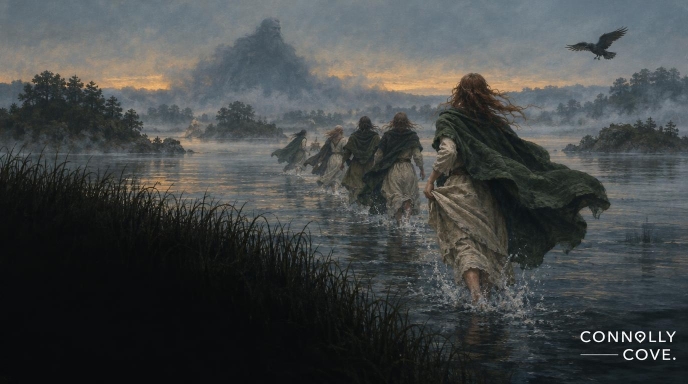
Emain Macha’s story begins with a goddess, not a king, and that detail matters more than most retellings give it credit for. According to the medieval sagas, the site takes its name from Macha, forced by King Conchobar mac Nessa’s court to race the king’s horses while heavily pregnant. She won the race, gave birth immediately afterwards to twins on the finish line, and cursed the men of Ulster with the pangs of labour at their moment of greatest need for nine generations. Eamhain Mhacha is usually translated as “Macha’s Twins,” and the name has stuck to this hilltop for well over a thousand years.
Conchobar mac Nessa’s court at Emain Macha is the setting for most of the Ulster Cycle, the collection of sagas that also gives Irish mythology its best-known warrior. Cú Chulainn trained here as a boy under the name Sétanta before earning his adult name after killing the guard hound of the smith Culann. His single-handed defence of Ulster during the Táin Bó Cúailnge, the Cattle Raid of Cooley, is the centrepiece of the cycle and the story most visitors half-remember before they arrive. ConnollyCove’s guide to Irish mythology’s heroes covers Cú Chulainn’s wider story in more depth, and our piece on the Morrígan, the war goddess who both taunted and warned him, is worth reading alongside this one.
Pronunciation trips up almost every English-speaking visitor, so it is worth settling before you go. Emain Macha is generally rendered “Ev-in Mock-a” in modern anglicised form, with Ulster Irish speakers closer to “Av-in Vock-a.” Cú Chulainn is “Coo-hullen,” and the Red Branch Knights, Conchobar’s warrior elite, are Craobh Rua, “Creeve Roo-ah.” None of these are the kind of thing a guidebook usually bothers to spell out, and getting them right does more for a visit than most people expect.
The wider pantheon behind these stories, including the Tuatha Dé Danann who predate the Ulster Cycle’s human kings, is covered in ConnollyCove’s guide to Celtic gods and goddesses and our dedicated page on the Tuatha Dé Danann themselves. For the fuller cast of monsters and supernatural beings that populate this same body of myth, our Celtic mythology creatures guide groups them by what they actually do instead of simply listing names.
The Archaeology: What Was Actually Found Under the Mound
Navan Fort’s mound is not a natural hill. It covers the remains of a deliberately built and deliberately destroyed timber temple, and the story of that destruction is one of the more remarkable findings in Irish archaeology. Excavations in the 1960s uncovered a sequence of Iron Age structures, culminating in dendrochronology dating that places the felling of the central oak post at precisely 95 BC.
That temple was a 40-metre circular timber structure, one of the largest ritual buildings known from later prehistoric Europe. It appears to have stood for a very short time before being packed solid with limestone boulders, set alight, and then buried under layers of sod and clay to form the mound visible today. Archaeologists generally interpret this as a single, planned ceremonial act, not an accident or an act of war, a votive deposit on a scale that has no obvious parallel elsewhere on the island. Among the objects recovered from the site is the skull of a Barbary ape, a species native to North Africa, evidence of long-distance trade or gift-exchange networks reaching Iron Age Ulster centuries before the Roman period.
Recent research has expanded that picture considerably. Geophysical survey work led by Queen’s University Belfast identified further buried structures beneath the visible earthworks, including additional figure-of-eight buildings and evidence of continued activity into the medieval period, when Navan Fort remained associated with the kingship of Ulster long after the original temple was buried. The full findings are documented by Queen’s University Belfast, whose Comparative Kingship project, supported by the Department for Communities’ Historic Environment Division, continues to reshape how archaeologists read this hilltop.
Beyond the Mound: The Wider Navan Ritual Complex

Navan Fort was never an isolated monument, and travellers with an extra hour in Armagh gain a great deal by seeing it as part of a connected ceremonial complex, not a single stop. Three related sites lie within easy reach of the main car park.
Loughnashade, a small lake close to the fort’s northern edge, produced four Iron Age bronze war-horns when it was drained in 1798, almost certainly deposited as ritual deposits. The King’s Stables, an artificial pond a short distance away, held further evidence of ceremonial deposits, including animal remains, and appears to date from the Late Bronze Age. Haughey’s Fort, an earlier hillfort roughly a kilometre west, predates Emain Macha itself and suggests this ground was significant long before the 95 BC temple was ever built. None of the three is heavily signposted, and asking at the Navan Centre for current access advice before setting off on foot is worthwhile.
Inside the Navan Centre: What You Will Actually Do There
The Navan Centre’s ticketed exhibition earns its admission price mainly through context, turning an atmospheric but largely unexplained earthwork into a story visitors can follow. The building houses an archaeology gallery built around the original excavation finds, an audiovisual theatre retelling the Ulster Cycle, and, on scheduled dates, costumed living-history interpreters demonstrating Iron Age crafts, weapon handling and roundhouse life.
Family groups tend to get the most from a “Meet the Warriors” style session, when interpreters lead hands-on demonstrations instead of a straight walkthrough of the galleries. The centre’s Ancient Grounds cafe, which draws on Armagh’s Bramley apple orchards for its bakes, is a practical reason to plan lunch around the visit and not around Armagh City itself. Facilities also include an ASD-friendly quiet space, a detail worth knowing in advance if a member of your group benefits from a lower-stimulation break during the visit.
Current Conditions and Seasonal Visitor Information
Navan Fort’s outdoor earthwork is open in daylight hours throughout the year, while the Navan Centre building follows a shorter, seasonal schedule that typically narrows over the winter months. Because these hours are set by the operator and can shift with staffing or seasonal demand, checking the current times before travelling saves a wasted trip, particularly outside the main April-to-September season.
Spring and fields around the fort in bloom make for pleasant walking conditions, and the living-history programme generally runs more consistently once the main visitor season begins in April. Summer brings the longest days and the fullest events calendar, including seasonal Celtic fire festivals; early August is worth targeting if a Lughnasa-season gathering is scheduled, since these events connect the modern calendar directly back to the ancient harvest festival the mythology describes. Autumn thins the crowds considerably and pairs well with a broader look at Irish autumn and winter folklore, given how closely Samhain and the turning of the year are tied to this same body of myth. Winter visits are quieter again, with shorter daylight hours limiting how much of the outdoor site is comfortable to explore, though the earthwork itself remains accessible.
The drumlin’s turf is uneven and can be slippery after rain regardless of season, so footwear suited to grass and moderate inclines is worth packing, whatever the forecast. For the Navan Centre’s current opening days, admission prices and any temporary closures, checking directly with the operator ahead of travel is the most reliable approach, since these details change more often than an article like this one can track.
Making a Day of It: Armagh and the Royal Sites
Navan Fort works naturally as the anchor for a full day exploring Armagh’s wider heritage instead of a standalone stop. Armagh City itself, roughly two miles east, is worth the short drive on its own merits. The city styles itself as Ireland’s ecclesiastical capital, and its twin cathedrals, both dedicated to St Patrick, stand on facing hills that dominate the skyline. That positioning is not an accident. Tradition holds that Patrick deliberately founded his first church within sight of Emain Macha in 445 AD, placing Christianity’s new authority in direct view of Ulster’s old pagan seat of power. ConnollyCove’s broader guide to things to do in Armagh and our overview of Armagh City itself both expand on the cathedrals, the Georgian streets and the county’s Bramley apple heritage, while our wider look at County Armagh covers attractions further afield, from Gosford Forest Park to Oxford Island Nature Reserve.
Navan Fort’s significance also extends beyond Ulster. It belongs to a group known as the Royal Sites of Ireland, five ceremonial centres, alongside the Hill of Tara, Rathcroghan, Dún Ailinne and the Rock of Cashel, that medieval tradition names as the ancient capitals of Ireland’s provinces. That collective grouping is currently on the UNESCO World Heritage Tentative List, and ConnollyCove’s guide to the High Kings of Ireland sets Navan Fort’s story alongside the others in that same royal tradition. Travellers building a longer Northern Ireland itinerary around Armagh will also find our roundups of unforgettable Northern Ireland getaways and Northern Ireland’s top cities useful for planning what comes before or after an Armagh stop, and our best time to visit Northern Ireland guide for matching the wider trip to the right season.
The mythology itself does not stay confined to Armagh. Fairy belief tied to specific trees and hills runs through the same folk tradition as the Ulster Cycle, and ConnollyCove’s guides to fairy trees in Ireland and the fairy faith in modern Ireland show how directly that older belief system still shapes the countryside travellers pass through on the way to sites like this one. The supernatural beings who predate the Ulster Cycle’s human kings, including the Fomorians who opposed the Tuatha Dé Danann, are covered in our piece on Ireland’s forgotten gods.
“Every time we bring a group up onto that mound, someone asks how a single story about a goddess and a horse race turned into the name of an entire archaeological complex. The honest answer is that in Ireland, myth and ground were never really separate things. The name survived because the place did.” — Ciaran Connolly, Founder of ConnollyCove
The tradition of oral storytelling that carried the Ulster Cycle down through the centuries, and not any written record, connects directly to the wider culture of proverbs ConnollyCove documents elsewhere, including our guide to Irish proverbs and seanfhocail. If Armagh is one stop on a wider Northern Ireland trip, ConnollyCove’s guide to Belfast date ideas is a practical next stop for the Belfast leg of the journey.
Watching Navan Fort Before You Go
A walkthrough video of the mound and the surrounding earthworks is a genuinely useful way to get your bearings before travelling, particularly given how little the site’s scale and layout come across in still photographs. ConnollyCove films across Northern Ireland’s heritage sites for exactly this reason, and a video tour of Emain Macha joins our written coverage of Armagh’s wider attractions on our YouTube channel.
FAQs
What is the difference between Navan Fort and the Navan Centre?
Navan Fort is the ancient open-air earthwork monument, free to visit year-round. The Navan Centre is the nearby building housing the ticketed archaeology exhibition, audiovisual theatre and living-history sessions. You can visit the fort without ever entering the centre, though most families get more from combining both.
How much does it cost to visit Navan Centre and Fort?
Walking up to Navan Fort itself costs nothing. Admission to the Navan Centre’s exhibitions and living-history experiences is charged per ticket, with discounts typically available for children and families. Costs and concessions change periodically, so checking current pricing directly with the operator before travelling is the most reliable approach.
How do you pronounce Emain Macha, and what does it mean?
Emain Macha is generally pronounced “Ev-in Mock-a” in anglicised form, or closer to “Av-in Vock-a” among Ulster Irish speakers. The name translates roughly as “Macha’s Twins,” a reference to the goddess Macha giving birth after her race against King Conchobar mac Nessa’s horses.
Why was the great timber temple at Navan Fort burned down?
Archaeologists believe the 40-metre timber structure was never meant to be lived in. Dendrochronology dates its central post to 95 BC, and the evidence suggests it was deliberately packed with limestone boulders, set alight, and buried under sod in a single ceremonial act, likely a large-scale votive deposit, not the result of accident or attack.