


The Fascinating History of the President of Ireland
Updated On: December 21, 2023 by  Ciaran Connolly
This article is a simple and accessible guide to the history of the president of Ireland. We will explain the role of the president of Ireland as well as giving you a chronological timeline of all of the Presidents of the Republic of Ireland. This is perfect if you want to learn a bit more about Irish history and politics or the life of Irish presidents!
If you are planning to travel to Ireland, this article may also prove useful as we mention many interesting places that are intertwined with and integral to Irish history, so keep reading to ensure that you don’t miss any important landmarks during your visit!
Irish history is equal parts fascinating and intriguing. Since its independence and declaration as a republic, Ireland has transformed itself from a predominantly agricultural society to a hub of innovation in industry, the economy and education. Before we delve into our list of Irish Presidents, here are some frequently asked questions that may help you to understand the roles and responsibilities of the President.
List of the Presidents of Ireland:
- Douglas Hyde (1938-1945)
- Sean T. O’Kelly (1945-1959)
- Éamon de Valera (1959-1973)
- Erskine Hamilton Childers (1973-1974)
- Cearbhall Ó Dálaigh (1974-1976)
- Patrick J. Hillery (1976-1990)
- Mary Robinson (1990-1997)
- Mary McAleese (1997-2011)
- Michael D. Higgins (2011-)
Before diving into a detailed description of the lives of each Irish President, we have included some frequently asked questions about Irish Presidents below to help you better understand the role better.
Alternatively, click on any president’s name to skip ahead and learn about their life and career.
Frequently Asked questions about the President of Ireland:
What is the president called in Irish
The official title in Irish is ‘Uachtarán na hÉireann’ which means President of Ireland.
Why does Ireland have a president
Ireland is a parliamentary democracy. In the constitution of Ireland, the President is recognised as the Head of State. The president is elected by the people of Ireland and represents all Irish people at home and abroad.
What is the role of the Irish president
The President of Ireland has many duties including the power to appoint the Taoiseach, as well as other officials such as government members and judges. The President of Ireland signs legislation into law and acts as the Supreme Commander of the Defence Forces.
How long is the presidential term in Ireland?
The President of Ireland holds office for 7 years for a maximum of two terms or 14 years.
What is the International role of the Irish President?
The Irish President represents people at home and abroad by making state visits abroad and hosting other heads of states.
Does Ireland have a Prime Minister and a President?
Ireland has both a President and a Taoiseach. The Taoiseach is the head of the Irish government. This title translates to ‘leader’ or ‘chief’ in English.
Who was the first President of Ireland?
Douglas Hyde was the first President of Ireland, he was elected in 1938.
Who was the first female President of Ireland?
Mary Robinson was the first female President of Ireland, she was elected in 1990.
Are there any prerequisites to be nominated as a candidate for President of Ireland?
A potential candidate must be at least 35 years old and be nominated by at least 20 members of the Dáil (Irish Parliament) or 4 County Councils. A former president may nominate themselves as a candidate for the Presidency.
Where does the president of Ireland live?
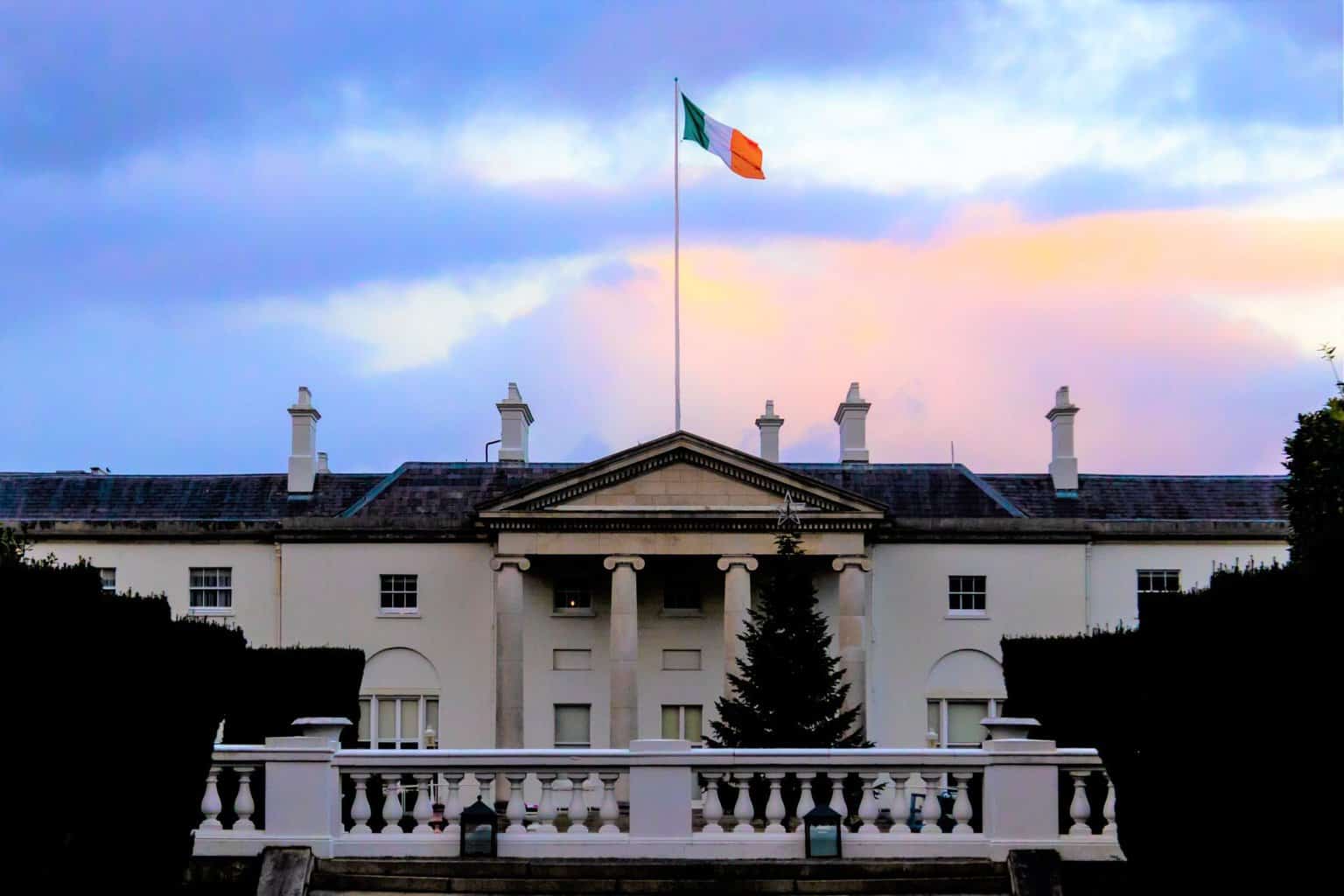
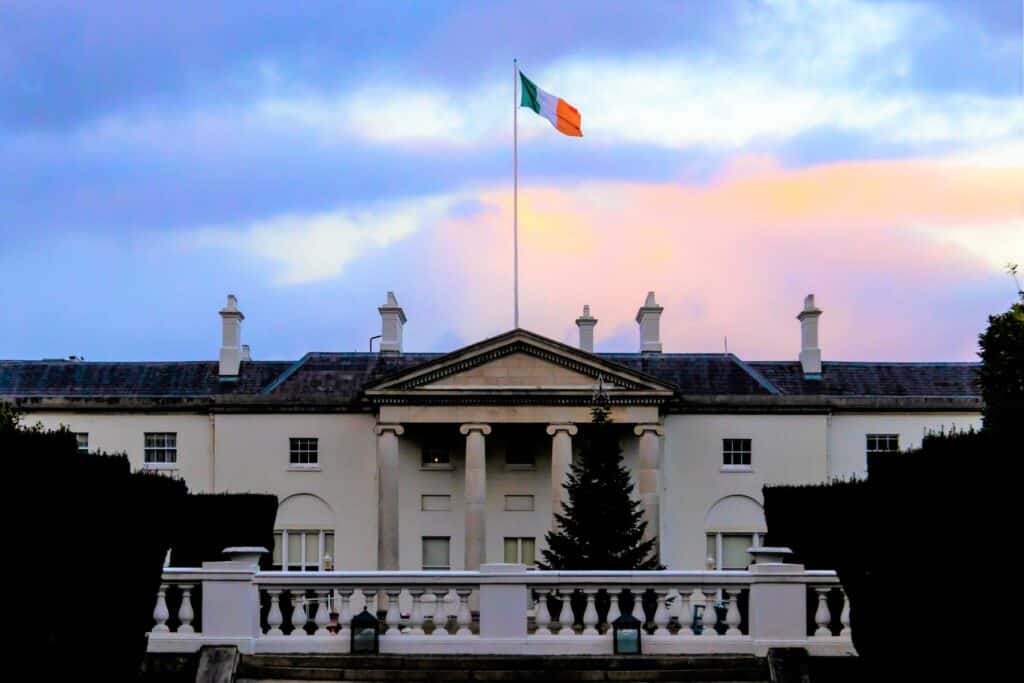
The Irish president lives in ‘Áras an Uachtaráin’. This literally translates to the house or residence of the president, though it is usually referred to by its Irish name.
Áras an Uachtaráin is located inside of Phoenix Park in Dublin’s city centre. Phoenix Park is one of the largest enclosed parks in a city in all of Europe. Wild Deer roam around the park freely. According to Ordance Survey Ireland, Ireland’s National Mapping Agency, the park name does not originate from the mythological bird, but from the Irish name ‘Fionn Uisce’ which literally translates to ‘clear water’.
Can I visit Áras an Uachtaráin?
Yes, guided tours take place almost every Saturday year round and are about an hour and 15 minutes long. Tickets are free of charge on a first come first served basis so you cannot reserve in advance.
Where is the President of Ireland inaugurated?
The President of Ireland is inaugurated in St. Patrick’s Hall in Dublin Castle.
Is there a website to learn more about Irish Presidents?
Yes, check out President.ie for more information on the current president of Ireland, past presidents of Ireland, archived media and information on visiting Áras an Uachtaráin. You can also find transcripts of the original inauguration speeches of each President of Ireland which are quoted in this article in Irish and English on the website.
Presidents of Ireland
In this article we will learn about all of the presidents of Ireland, from the very first president to the current leader of Ireland.
Douglas Hyde (1938-1945) – First President of Ireland
Douglas Hyde was the first president of the Republic of Ireland. Born in co. Roscommon, Hyde had a great interest in the Irish language, working as a professor of Modern Irish in University College Dublin (1909-1932) as well as the Dean of the Celtic faculty. Douglas Hyde was also the co-founder and first president of the Gaelic League, an organisation that aimed to revitalise Irish culture and language.
On the 26th of June 1938, President Hyde gave his inauguration address at Dublin Castle in Irish, which was fitting considering his ambition to revive the Irish language. His address was brief, thanking the Taoiseach and asking God to help him to fulfil his duties to the best of his abilities. Many inauguration speeches since this address have begun with an introduction in the Irish language before switching to the main address in English.
Roscommon GAA’s home stadium for Gaelic Football, a traditional Irish sport, is named Dr. Hyde Park after the first president of Ireland.
Sean T. O’Kelly (1945-1959) – Second President of Ireland
Sean T. O’Kelly was the second president of Ireland. He is also noted as one of the founding members of Sinn Féin, one of Ireland’s most well-known political parties. O’Kelly served in the Dáíl Eirinn (the Irish parliament) from 1918-1921, acting as Speaker of the First Dáíl Eirinn from 1919. He also served as minister of finance during Hyde’s presidency from 1939-1945. O’Kelly was born and raised in Co. Dublin, the capital city of Ireland.
Sean T. O’Kelly served a full two terms during his time in office. In his inauguration address on the 25th of June 1945, O’Kelly stated that he aimed to do great things for Ireland by co-operating together. He also planned to follow in Douglas Hyde’s example with efforts to further revitalise the Irish language.
‘’Co-operating together, I hope that we shall be able to do great things for Ireland.’’
President Sean T.O’Kelly, Inauguration Speech 25/06/1945
Éamon de Valera (1959-1973) – Third President of Ireland
Éamon De Valera was born in New York in 1882, moving to Ireland at the age of two and a half years. De Valera was initially a teacher and university lecturer before joining the Irish Volunteers in 1913. De Valera also took part in the 1916 Easter Rising as a Commandant. He was initially sentenced to death because of his involvement but was later pardoned and released.
De Valera was elected as the M.P. for East Clare in 1917. He was then re-elected to this position until he became the President of Ireland. From 1932-1937 De Valera was the President of the Executive Council of the Irish Free State.
Before becoming President of Ireland, De Valera was elected as the Taoiseach, or the Irish Prime minister from 1937-1948, 1951-1954 and 1957-1959. De Valera was also a founding member of the Irish Political Party Fianna Fáil.
In his second inauguration address in Dublin Castle on the 26th of June 1966, De Valera spoke about the importance Ireland had in the world. He also mentioned two of the then-Taoiseach’s aims of unification and the restoration of the Irish language, but concluded that his address was not the place that one should discuss these problems in detail.
‘’We have an importance far beyond our size, of our territory or the numbers of our people.’’
President De Valera, 26/06/1966, inauguration speech.
Erskine Hamilton Childers (1973-1974) – Fourth President of Ireland
Erskine Hamilton Childers was the fourth President of Ireland. He was born in London in 1905, and lived in England and France before moving to Dublin at age 26.
Childers was elected to the Dáil (Irish Parliament) in 1938, before serving as the Tánaiste (deputy prime minister) from 1969-1973.
Childers became president of Ireland in 1973. In his inauguration address on the 25th of June 1973, President Childers spoke about his aims to contribute to harmony among all Irish people. Childers died suddenly in November 1974.
Childer’s daughter Nessa went on to become a member of the European Parliament.
Cearbhall Ó Dálaigh (1974-1976) – Fifth President of Ireland
Cearbhall Ó Dálaigh, the fifth President of Ireland was born in Bray Co. Wicklow. Ó Dálaigh was a barrister and was appointed as Ireland’s youngest Attorney General of Ireland in 1946 as well as a Judge of the Supreme Court. He also served as Chief Justice and President of the Supreme Court. In 1973, the same year that Ireland joined the EC, Ó Dálaigh was appointed as a judge of the Court of Justice of the European Communities.
Cearbhall Ó Dálaigh served as President of Ireland for just under 2 years from 1974 to 1976 until his resignation.
Patrick J. Hillery (1976-1990) – Sixth President of Ireland
Born in Co. Clare, Patrick J. Hillery was inaugurated as the sixth President of Ireland on the 3rd of December, 1976, serving for two terms. Hillery had previously worked as a doctor before he was appointed as the Irish government’s Minister for Education.
In his Presidential inauguration on the 3rd of December 1976, Hillery emphasised the importance of community and finding a balance between conserving the past and making changes for a better future.
”In seeking to serve Ireland in a new role my first task will be to reflect on what may be achieved and what must be conserved and protected.”
President Patrick Hillery Inauguration Address 3/12/1976
Mary Robinson (1990-1997) – Seventh President of Ireland
Mary Robinson made history as the first female president of the Republic of Ireland. Mary Robinson is undeniably one of the most important Irish figures of our time. She was born in the town of Ballina in Co. Mayo which is located at the mouth of the River Moy in the West of Ireland.
Mary was a barrister and became a professor of Criminal Law in Trinity College Dublin. Mary had previously went to study law at Trinity College Dublin where she was elected a scholar, a very prestigious award in the university.
In the interview above detailing why she ran for Presidency, Mary Robinson mentions the Irish diaspora which is a term used to describe the mass migration from Ireland to countries around the world due to a number of factors such as the Great Famine and unemployment.
In her inauguration address on the 3rd of December 1990, President Robinson aimed to promote participation in democracy at a grassroots level. She saw modern Ireland as a tolerant and pluralist society, as evident by the fact that people with opposing views on some of her stances still chose to vote for her.
“The Ireland I will be representing is a new Ireland, open, tolerant, inclusive”
Mary Robinson Inauguration Address 3/12/1990
Robinson is known for her progressive views and ambition as a feminist and human rights lawyer at a time where Ireland was much more conservative than it is today. However even at a time of great change, Robinson was incredibly popular during her time as President of Ireland; at one point her popularity rating had reached 93% which was unprecedented.
Robinson resigned in September of 1997, to become the United Nations High Commissioner for Human Rights. The Presidential Commission took over until November when the new President of Ireland was sworn in. Alongside her husband Nicholas Robinson, she set up the Irish Centre for European Law in 1998.
Mary McAleese (1997-2011) – Eighth Preisdent of Ireland
Mary McAleese was elected as the eighth president of Ireland, serving two terms from 1997 to 2011. Before her presidency, she worked as a barrister and professor of law. McAleese is also a skilled broadcaster, having worked in the current affairs department of RTÉ, Ireland’s national broadcasting company.
Mary McAleese also made history as the first President of the Republic of Ireland to come from Northern Ireland. She was born and raised in Ardoyne in North Belfast, receiving her law degree from Queen’s of University Belfast
In her inauguration address on the 11th of November 1997 in Dublin Castle, McAleese spoke about the Presidents that had preceded her, noting that their religious, political, social and geographical differences emphasised the openness of the Presidential role in Ireland. The theme of McAleese’s speech was ‘building bridges’.
Another theme of McAleese’s speech was the fifth province. Ireland has 4 provinces; Leinster, Ulster, Munster and Connacht, but the Irish word for province is ‘coicead’ which literally translates to ‘a fifth’. While ancient Ireland may have been divided into five parts, Robinson stated that in modern Ireland, the fifth province resides inside of citizens.
Ireland sits tantalisingly ready to embrace a golden age of affluence, self-assurance tolerance and peace. It will be my most profound privilege to be President of this beautiful, intriguing country.
Mary McAleese Inauguration Address 11/11/1997
Michael D. Higgins (2011-) – Ninth President of Ireland
Michael D. Higgins was elected as the ninth president of Ireland in 2011 and re-elected for a second term in 2018. With a passion for Irish language, education and culture, President Higgins made history as Ireland’s first Minister for Arts, Culture and the Gaeltacht. As Minister for Arts Higgins established Telifís na Gaeilge (TG4), a TV channel that is presented in the Irish language.
Born in Co. Limerick and raised in Co. Clare, President Higgins worked as a lecturer of political science and sociology. He had previously studied in University College Galway as well as further afield in Indiana University Bloomington and University of Manchester.
Higgins has had a long career in politics being elected to both the Seanad and Dáil Éirinn. He has also served as Mayor of Galway on two occasions and in 2003 was awarded the position of the President of the Labour Party.
Michael D. Higgins married his wife Sabina in 1974. She is also passionately involved in the arts, particularly acting and drama and is one of the founding members of the focus theatre in Dublin. The President and his wife have a Bernese Mountain Dog called Bród who also lives in Áras an Uachtaráin.
In his inauguration speech on the 11th of November 2011, President Higgins aimed for transformation and a ‘Presidency of ideas’ encouraging innovation, creativity and building upon existing initiatives to unlock greater potential. He also believes in Ireland being a Real Republic by promoting inclusive citizenship in a creative society to establish a common shared future. He planned to do this by holding Presidency Seminars to shape Ireland’s Shared Future.
”We must seek to build together an active, inclusive citizenship; based on participation, equality, respect for all and the flowering of creativity in all its forms..”
Michael D. Higgins Inauguration Address 11/11/2018
Higgins gained over one million votes in the presidential election- the highest of any Irish politician in the history of Irish elections.
Theme of Irish Presidents
Ireland is famous for its beautiful landscapes, its culture, music, language, sports and entertainment. Historically known as the ‘Land of Saints and Scholars’, we are also famous for being friendly hosts and resilient people, having found success all around the world in the arts, film industry, music industry and world of sports. Many Irish people have helped to make history in their lifetime, including the Presidents of Ireland, each of whom have contributed uniquely to Ireland.
In many inauguration speeches preserving Irish language and culture, unity, and innovation are common themes. Many Presidents also discuss Ireland on a global scale and mention the Irish diaspora, remembering the sacrifice of Irish people all around the world who were forced to emigrate during difficult times.
These themes highlight the importance of preserving culture as well as moving forward together to create a modern and tolerant Ireland where people of different beliefs and backgrounds can live peacefully.
Symbol of the President of Ireland
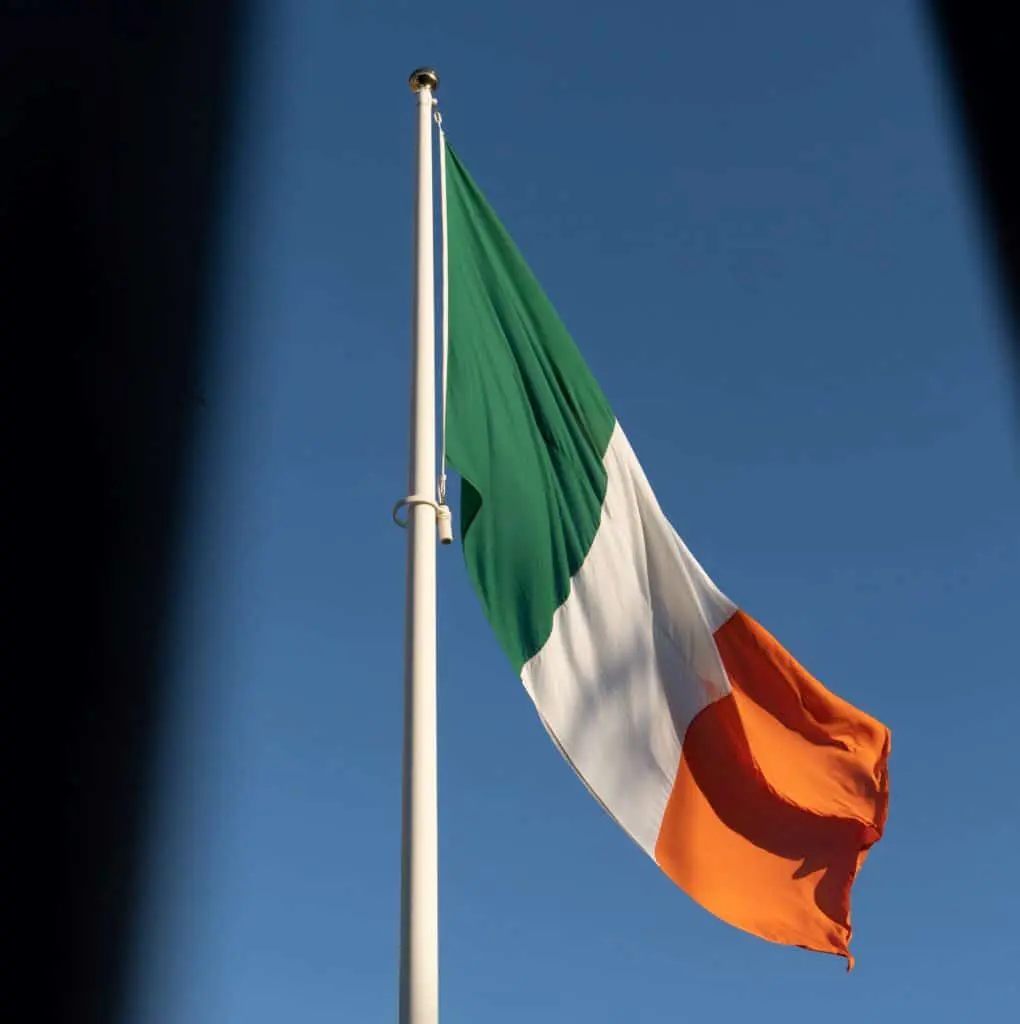
There are many Irish symbols such as the shamrock, harp and colour green.
The role of the President is to represent the people of Ireland. In theory, the president is elected by the people and should therefore symbolise the voice of the people.
Presidents of Ireland – Conclusion
Many of these Presidents will be remembered as Irish people who changed history significantly during their life and time in office by acting as the voice of the people.
We hope that you have enjoyed reading this article! If you want to learn more about Irish history, why not explore more articles on our site, including:
9 Traditional Irish Crafts & Their Fascinating History | Irish King and Queens who changed History | Blarney Castle: Where Myths and History combine | Things to do in Meath: Explore the Rich History of the County
Exploring the Myth of the Celtic Symbol for New Beginnings
Culture Exploration
28/04/2024
Kenya Tourism Statistics: An Increase in International Tourist Arrivals
Travel Statistics
28/04/2024
Albert Memorial – London Attractions
England
28/04/2024
Cuffs Bar and Grill: The Jewel of Crumlin Gaol
Food and Cuisine
28/04/2024
Discover the Best Scottish Golf Courses for an Unforgettable Golf Break
Scotland
28/04/2024