
Updated on:
by
 Marwa Alaa
 Marwa Alaa
Article Summary
What this article covers: A complete, categorised guide to things to do in Kuala Lumpur, covering landmarks, parks, museums, family activities, food streets, cultural neighbourhoods, and day trips, plus a practical survival guide for UK and Irish travellers.
Who this is for: First-time visitors to Kuala Lumpur, families planning a Malaysia trip, and travellers from Ireland or the UK who want more than a landmark checklist.
Key takeaway: Kuala Lumpur rewards travellers who go beyond the Petronas Towers; the city’s botanical gardens, food streets, and neighbourhoods like Kampung Baru show a side of the capital most itineraries skip entirely.
Expert insight: “The buildings get all the attention, but what struck us most about Kuala Lumpur was standing at the muddy confluence of the Klang and Gombak rivers, the exact spot that gave the city its name, with a historic mosque on one side and glass towers on the other. That contrast is the whole story of KL in one view.” – Ciaran Connolly, Founder of ConnollyCove
Quick facts:
- Kuala Lumpur’s Perdana Botanical Gardens complex holds the world’s largest free-flight walk-in bird aviary and the largest butterfly park in the world under one-roof system
- Kuala Lumpur sits almost on the equator, so temperatures stay close to 32°C to 35°C year-round, with the heaviest rain usually falling in March–April and October–November
- Merdeka 118, which opened in January 2024, stands 678.9 metres tall and is the second-tallest building on Earth after the Burj Khalifa
Table of Contents
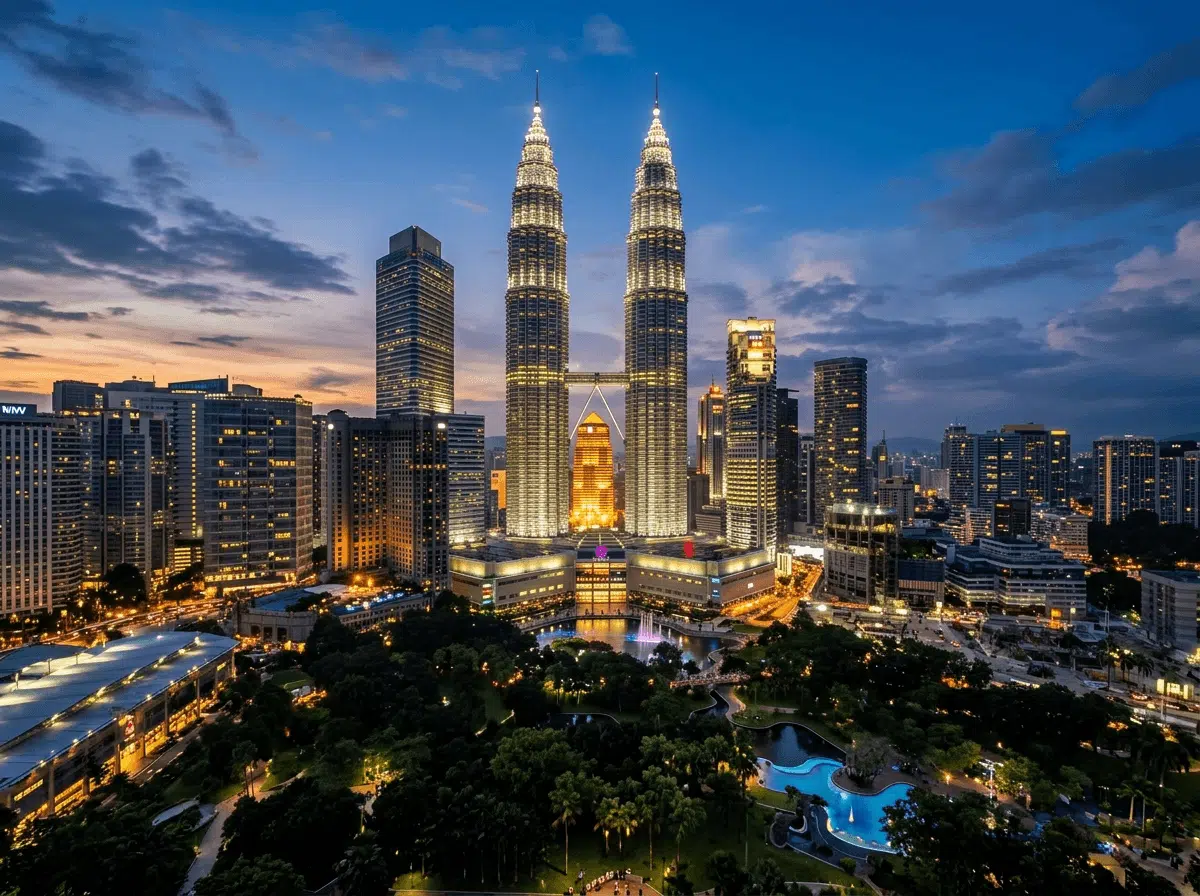
Kuala Lumpur regularly places among the world’s most-visited cities, and it earns that ranking by refusing to be just one thing. It’s a city of gleaming ultra-modern towers standing a short walk from a working rainforest and colonial-era civic buildings. Malay, Chinese, and Indian communities have shaped its culture side by side for well over a century; that’s exactly why locals still call it the Garden City of Light and the Melting Pot of Cultures.
ConnollyCove is an Ireland-based travel and culture platform, and this guide takes the same approach we use for Dublin or Belfast: the landmarks matter, but the food streets, the transport quirks, and the neighbourhoods that don’t make the postcards are usually what travellers remember. Below, we’ve grouped the best things to do in Kuala Lumpur by theme rather than as a flat list, so you can build a realistic itinerary rather than trying to see all of it in a day. If you’re weighing Malaysia against other budget-friendly options, our guide to some of the world’s cheapest travel destinations puts Kuala Lumpur’s costs in context against the rest of Southeast Asia.
Three full days is the sweet spot for a first visit: one day for the historic city centre and colonial quarter, one for the spiritual sites and Batu Caves, and one for food and the newer neighbourhoods. Everything below is organised so you can slot it into that structure or stretch it out further.
Read on to discover the unique experiences that await in this dynamic city!
Iconic Landmarks Kuala Lumpur Is Famous For

Kuala Lumpur’s skyline is the reason most people book the trip in the first place. We cover it in full elsewhere on ConnollyCove, so here’s the short version.
Kuala Lumpur City Centre (KLCC), the “city within a city” built around the Petronas Twin Towers, holds the towers themselves, Suria KLCC’s several hundred shops, and KLCC Park. Menara Kuala Lumpur (KL Tower) sits nearby on its own forested hill, and Aquaria KLCC adds underwater tunnels and shark-diving experiences to the mix. We’ve broken down all the best things to do in the KLCC precinct, including ticket-booking timelines and which observation deck gives the better photo, in our dedicated Kuala Lumpur City Centre guide.
The Seven Wonders of Kuala Lumpur cover a different set of landmarks: the Old Colonial District, the “I ♥ KL” landmark at Dataran Merdeka, Thean Hou Temple, and Batu Caves’ rainbow staircase and golden Lord Murugan statue. That guide gets into the mythology behind Batu Caves and the colonial architectural history of Merdeka Square in full. Read the complete breakdown in our Seven Wonders of Kuala Lumpur guide.
Another landmark is Merdeka 118, which opened in January 2024 and, at 678.9 metres, is the second-tallest building in the world after the Burj Khalifa. Two observation levels are planned; one around 452 metres and a second inside the spire, alongside the 118 Mall retail complex at the base. Public ticketing for the observation deck and full mall access is still being rolled out through 2026, so check the tower’s official channels before building a visit around it. The Park Hyatt hotel occupying the upper floors has been open since August 2025, if you want to experience the building from the inside regardless.
Museums, Galleries, Parks, and Family Days Out
Kuala Lumpur’s green spaces and museums are where the city slows down, and they’re consistently underrated against the skyline attractions.
Perdana Botanical Gardens: A Rainforest in the Middle of the City

Perdana Botanical Gardens, formerly Taman Tasik Perdana or Perdana Lake Gardens, was Kuala Lumpur’s first large-scale recreational park and still feels like a tropical rainforest despite being in the heart of the bustling city. Entry to the main gardens is free year-round, though the bird and butterfly sections charge admission, and the Orchid and Hibiscus Gardens also charge on weekends.
- Kuala Lumpur Bird Park, or Taman Burung, is the largest free-flight walk-in aviary in the world, with over 3,000 birds of around 200 species breeding naturally across four zones. Zone 4 houses flightless species like the ostrich, cassowary, and emu, alongside an education centre where you can watch live egg hatching, and a daily bird show runs at 12:30 pm and 3:30pm.
- Kuala Lumpur Butterfly Park, next door, is the largest butterfly park in the world, home to more than 5,000 butterflies, several exotic plants, butterfly-host plants, and ferns. There are also exhibitions for freshwater turtles, Japanese koi fish, and a museum of preserved insects and arachnids.
- Kuala Lumpur Orchid Garden showcases orchid varieties from across the world along landscaped walking paths, with a rock garden dedicated to terrestrial species.
- Hibiscus Garden, next to the orchids, is dedicated to Malaysia’s national flower, the Hibiscus. It includes a colonial-era building that houses a small gallery on hibiscus history, plus a tearoom.
- Kuala Lumpur Deer Park houses several deer species, including fallow deer (dama deer) from the Netherlands, the mousedeer (chevrotain), sambar deer, and axis deer.
- Laman Perdana and the Sunken Garden, with its star-shaped fountain and pergola-covered walking paths, are the quieter, more contemplative corners of the complex, good for a slower afternoon.
- Herbarium Perdana Botanical Garden, open from Monday to Friday, houses a curated collection of dried plant specimens for anyone with a genuine interest in Malaysia’s flora, including fruiting and flowering plants.
KL Forest Eco Park
Previously known as Bukit Nanas Forest Reserve, KL Forest Eco Park is located right in the city centre. It gives you a genuine rainforest canopy walk via a series of hanging bridges, leading to the base of Menara Kuala Lumpur. The park consists of many trees, creepers, bamboo, and herbs, and also has a campsite and a playground. Buying a ticket to the tower’s observation deck includes a free guided tour of the park.
Titiwangsa Lake (Taman Tasik Titiwangsa)
Lake Titiwangsa is one of Kuala Lumpur’s most popular recreational parks and a strong choice if you’re travelling with children. The canopy trails and jogging paths, horse riding and cycling tracks, playground, and water play area give your kids plenty to do. A helicopter tour departing from the park is one of the more memorable ways to see the skyline from above.
Maya Falls (Lata Medang)
For a change of pace from the city, Maya Falls, locally known as Lata Medang, is a waterfall hike with the water cascading down rocky cliffs through dense greenery. Wear proper footwear; the trail is rewarding but not paved.
Museums and Galleries
The National Museum of Malaysia, near Perdana Lake Gardens, is a three-storey museum covering the country’s history and culture, including historical wedding attire, traditional weapons, bronze and stone sculptures. Its outdoor exhibit features a 19th-century timber palace in Terengganu Malay architectural style.
The National Visual Art Gallery, near Lake Titiwangsa, is a four-storey gallery recognisable by its blue glass pyramid roof. It’s free to enter, and houses work from Malaysia’s leading contemporary artists across four storeys: sculptures, paintings, and more.
For something more unusual, the Royal Malaysia Police Museum traces the history of the Royal Malaysia Police back to the Portuguese colonial period across three galleries. The outdoor attractions include an old police ship, an armoured train carriage, and a cable car on display outside. Entry is free.
Another new adventure is awaiting you at the Museum of Illusions. The Museum of Illusions offers more than 80 interactive visual and sensory exhibits designed to trick your eyes and entertain your mind, a solid option on a hot afternoon when you want something indoors.
Family-Friendly Theme Parks
Sunway Lagoon Theme Park, Asia’s first Nickelodeon-themed park, spans six adventure zones and over 90 attractions. Most visitors head straight for the Water Park zone, where the world’s largest surf pool and vortex ride draw the biggest crowds, alongside a 3D screening in Waterplexx 5D and the African-themed Little Zimbabwe area for younger children. The Wildlife Park offers a calmer change of pace with over 150 animal species, while Scream Park leans into the frights with attractions like Nights of Freight and Sharknado Alive.
Round out the day in the Amusement Park, the Extreme Park, or the Nickelodeon Lost Lagoon. Restaurants, cafes, and snack bars serving local and Indian cuisine are scattered throughout the site. Book tickets online in advance rather than at the gate; queues at the entrance build quickly on weekends.
KidZania, meanwhile, is a role-play city where children choose from over 60 career simulations, from firefighter to surgeon, in a scaled-down replica of a real city. It’s one of the better wet-weather backup plans in Kuala Lumpur. Tickets can be booked directly through KidZania’s official site.
Food Streets, Neighbourhoods, and Unique Dining

Kuala Lumpur’s food scene is where its communities overlap most visibly. It rewards travellers who go beyond the single street every guidebook names.
Chinatown, Petaling Street, and Kwai Chai Hong
Centred on Petaling Street, known locally as Green Dragon for its covered green roof, Chinatown is a dense grid of street markets, hawker stalls, and shops selling clothing, souvenirs, and electronics. It’s best experienced after dark when the food stalls are in full swing. Just off Petaling Street, Kwai Chai Hong is a narrow heritage alley restored with interactive murals depicting 1960s street life, alongside small cafes and craft shops. It’s a manageable, photogenic stop that adds context to the wider Chinatown area.
Brickfields, Little India
Brickfields Little India gives Kuala Lumpur a genuinely different atmosphere again, with restaurants serving South Indian curries and shops selling traditional clothing and jewellery. It’s a worthwhile contrast to spend an afternoon in after Chinatown, to see how differently each community has shaped its own corner of the city.
Jalan Alor Versus ICC Pudu
Jalan Alor Food Street, previously known as the Red Light District, remains the food street every guidebook sends visitors to. The atmosphere after dark, with stalls serving fresh juices, dumplings, and Chinese and Thai hawker food, is still worth an evening. The trade-off is that it’s become noticeably pricier and more tourist-oriented than it was a decade ago.
ICC Pudu, a covered hawker centre a short ride away, is where a lot of locals actually eat breakfast and lunch instead: Hainanese kopi (coffee brewed with condensed milk), claypot pearl noodles, and toasted kaya roti (coconut jam toast), all for well under what you’d pay on Jalan Alor. If you only have time for one, ICC Pudu gives the more locally grounded experience.
Kampung Baru: A Malay Village Inside the Skyline
Kampung Baru is a traditional Malay village that has survived, largely intact, within sight of the Petronas Towers, protected by historic land-gazetting laws that kept it from being redeveloped. Wooden stilt houses line in narrow, quiet streets minutes away from the glass office towers. It’s one of the best places in the city to try nasi lemak or nasi kandar cooked the way Malay families make it at home.
“Kampung Baru is the part of Kuala Lumpur that surprises people most. You’re standing among wooden stilt houses with the Petronas Towers rising directly behind them. It tells you more about how this city actually grew than any single landmark does.” – Ciaran Connolly, Founder of ConnollyCove
Only-in-KL Dining Experiences
Kuala Lumpur’s novelty dining scene is genuinely worth a slot in your itinerary. Dinner in the Sky suspends diners at height overlooking the Petronas Towers and Menara Kuala Lumpur. Plane in the City serves five-star cuisine inside a repurposed aircraft, with economy, business, and first-class ticket tiers and access to the cockpit for photos. Dining in the Dark serves a daily-changing surprise menu in complete darkness, testing your sense of taste and smell rather than sight.
Spiritual Sites Beyond the Seven Wonders
Exploring Kuala Lumpur’s neighbourhoods on foot also puts you within reach of two active places. Masjid Jamek, completed in 1909, sits at the literal confluence of the Klang and Gombak rivers, the “muddy confluence” that gives Kuala Lumpur its name. It’s still an active mosque, so it keeps limited visiting hours around prayer times.
Sri Mahamariamman Temple, founded in 1873 in the heart of Chinatown, is Kuala Lumpur’s oldest Hindu temple, with a five-tier gopuram covered in over 200 hand-painted deity statues. It’s also the starting point each year for the Thaipusam procession to Batu Caves. Murugan’s sacred vehicle, the peacock, is one of many creatures elevated to divine status across world cultures. Our guide to sacred animals in cultures around the world traces similar patterns from ancient Egypt to India.
Both mosques and temples expect shoulders and knees covered and shoes removed at the entrance; robes are usually provided if you arrive underdressed.
What Kuala Lumpur Is Famous for Eating
Trying the local food is arguably one of the best things to do in Kuala Lumpur regardless of where you eat it. Nasi lemak, Malaysia’s national dish, is fragrant coconut rice with anchovies, hard-boiled egg, cucumber, and sambal (chilli-based sauce). It can be served with lamb, beef curry, rendang chicken, seafood, or vegetables. Locals usually eat it for breakfast, but it’s available all day, usually on a banana leaf. Mee Goreng Mamak, an Indian Muslim dish, tosses fried yellow noodles with boiled potatoes, choy sum, fresh egg, shrimp, pan-fried tofu, and dhal (dried legumes in Indian kitchens) in a rich sauce.
Mee Rebus is a Chinese-style noodle dish in a sweet, savoury curry-like gravy made from sweet potato and soybean paste. Ayam Masak Lemak is chicken in a creamy coconut sauce built on chilli, ginger, turmeric, garlic, and lemongrass. Satay is skewered and grilled meat served with peanut sauce. It’s one of Malaysia’s best-known exports. And thanks to British colonial influence, high tea has become a genuine local tradition, worth building an afternoon around.
Day Trips, and the UK/Irish Traveller’s Survival Guide

Kuala Lumpur works well as a base for trips further afield, and a few practical details make the difference between a smooth week here and a frustrating one. This section covers where to go beyond the city limits, plus the logistics that most often catch UK and Irish visitors off guard.
Beyond the City
Kuala Selangor is roughly 90 minutes northwest. It’s best known for its Selangor River firefly boat tours. Thousands of synchronised fireflies light up mangrove trees along the riverbank after dark, best compared to strings of Christmas lights blinking in waves. The area also has a handful of restored historical forts from the Dutch and British colonial periods.
Melaka (Malacca) is roughly two hours south and jointly UNESCO World Heritage-listed with George Town. It was ruled in succession by Portuguese, Dutch, and British colonial powers, and the historic centre still carries all three influences in its architecture. It’s also the home of Peranakan (Nyonya) cuisine, a fusion of Chinese and Malay cooking that developed among the descendants of Chinese traders who settled and intermarried locally centuries ago.
Getting to Kuala Lumpur
Kuala Lumpur is on the central west coast of Peninsular Malaysia, eight hours ahead of GMT/UTC. Kuala Lumpur International Airport (KLIA) is one of the largest in Southeast Asia. From Singapore, it’s roughly 316 kilometres away: about six and a half hours by train, four hours by car, or fifty minutes by air. From London, expect a flight of around 13 hours 15 minutes; from New Delhi, around five hours 20 minutes. Visitors from the Philippines can travel by plane or ferry.
The Touch ‘n Go Problem, and How to Actually Solve It
Public transport in Kuala Lumpur runs on the Touch ‘n Go (TnG) card system. The single most common frustration for foreign visitors is that physical TnG cards are frequently sold out at the airport and nearby convenience stores. The workaround is the Touch ‘n Go eWallet app: download it before you fly, register with your passport and a UK or Irish mobile number, and top it up with an international debit or credit card once you land and have local data. It works across LRT, MRT, monorail, and most tolls, and avoids the scramble for a physical card that catches out a lot of first-time visitors.
Tipping and the “10% + 6%” Rule
Tipping isn’t customary in Malaysia the way it is in parts of Europe or North America. Many restaurants and hotels add a service charge and government service tax to the bill automatically, commonly cited as around 10% service charge plus 6% government tax. The exact tax rate has shifted in recent years, though, so it’s worth confirming on your specific bill. Check the printed total before adding anything extra.
Plugs, Language, and What to Pack
Malaysia uses the same Type G three-pin plug as Ireland and the UK, so no need for a different adapter. The official language is Malay, with Malaysian English widely spoken; older residents often speak Hakka or Hokkien, while younger generations lean towards Cantonese. Mandarin and Tamil are common among Chinese and Indian communities respectively.
For clothing, lightweight breathable fabrics work better than synthetics in the heat and humidity. If you’re visiting religious sites, bring something to cover your shoulders and legs; carrying a pashmina or light scarf covers you for temple visits and the aggressively air-conditioned shopping malls and restaurants. If you’re travelling in the wetter months, pack a lightweight raincoat and waterproof shoes.
Weather and When to Go
Kuala Lumpur sits close to the equator, so temperatures stay fairly constant year-round, typically between 32°C and 35°C in the day, with April usually the hottest month and January the mildest. There isn’t a dramatic wet-versus-dry season, but rainfall tends to be heavier around March to April and again from October to November, usually arriving as short, intense afternoon downpours rather than day-long rain. November is typically the wettest month overall. May to July is often cited as the most settled stretch, though the difference between months is smaller here than in most destinations.
For budget planning beyond the flights themselves, our broader guide to digital tools for smarter budget travel covers strategies that apply just as well here as anywhere else.
FAQs About Things to Do in Kuala Lumpur
How many days do you need in Kuala Lumpur?
Three to four full days works well for a first visit that covers the city centre, at least one park or nature stop, a food street, and one of the heritage or spiritual sites. Add an extra day if you want to include a trip to Kuala Selangor or Melaka. Travellers short on time can compress the highlights into two days, but it will feel rushed given how spread out the city’s attractions are.
Is Kuala Lumpur expensive for UK and Irish travellers?
Kuala Lumpur is generally a budget-friendly destination. Street food, public transport, and mid-range accommodation all cost a fraction of equivalent prices at home.
What is Kuala Lumpur best known for?
Kuala Lumpur is best known for the Petronas Twin Towers, the tallest twin structures in the world, and for Batu Caves, a limestone hill temple complex reached by 272 brightly painted steps. Beyond those two, it’s increasingly known for its food scene, its botanical gardens and bird park, and its mix of Malay, Chinese, and Indian culture in neighbourhoods like Chinatown, Little India, and Kampung Baru.
What are some basic Malay phrases I should know before visiting?
Terima kasih (teh-ree-mah kah-seh) means thank you, sama-sama (sah-mah sah-mah) means you’re welcome, and selamat pagi (seh-lah-mat pah-gee) means good morning. Staff and vendors generally respond warmly to visitors making the effort, even with imperfect pronunciation.
Is there a connection between Irish and Malaysian history?
Ireland and Malaysia share a background of British colonial administration, which left a visible mark on Malaysia’s legal system, education structures, and civic architecture. Several of Kuala Lumpur’s colonial-era public buildings were designed under the same architectural conventions used for administrative buildings in Dublin and Belfast during a similar era, which is part of why the old city centre can feel oddly familiar to Irish visitors.
Can I use my UK or Irish debit card in Kuala Lumpur, or do I need cash?
Card payments are widely accepted in shopping malls, hotels, and upscale restaurants. Cash is still essential for hawker stalls, street food, market vendors, and some public transport top-ups, so carry Malaysian ringgit for day-to-day spending alongside a card for larger purchases.
Is Malaysia safe for tourists visiting Kuala Lumpur?
Kuala Lumpur is generally considered safe for tourists, including solo travellers, with standard city precautions around bags and valuables in crowded areas like night markets. Ride-hailing apps such as Grab are widely used and considered a safer, more transparent option than hailing a taxi on the street, particularly at night.
Planning Your Visit?
ConnollyCove covers travel destinations and the cultural stories behind them, from Ireland to Southeast Asia. If you’re comparing this trip against other budget-friendly options, our guide to São Paulo covers a city that rewards the same kind of neighbourhood-first exploring. You can also find more travel and cultural guides on the ConnollyCove YouTube channel.
If you liked this article, check out some of our other great blogs about Asian destinations:
Best Things To Do In China | Your Travel Guide To Having The Best Time In Shanghai | 13 Top Things To Do In Magnificent South Korea | Japan: Ultimate Guide to Exploring the Land of the Rising Sun