
When most people picture Egypt, they imagine the Pyramids rising from golden sands, the Sphinx gazing across millennia, or the treasures of Tutankhamun glittering in museum cases. But modern Egypt tells another story too—one of gleaming shopping malls where air conditioning offers respite from the desert heat, and international brands sit alongside traditional Egyptian crafts.
Shopping in Egypt reveals layers of the country’s character. Ancient bazaars like Khan al-Khalili have served travellers for over 600 years, while ultra-modern malls in Egypt showcase rapid development. For visitors, these spaces offer more than retail therapy—they’re windows into contemporary Egyptian life, places where families gather, friends meet over coffee, and the rhythms of daily life unfold away from tourist trails.
Whether you’re seeking a break from heritage site exploration, hunting for souvenirs beyond the standard offerings, or simply curious about modern Egyptian culture, the country’s shopping centres deserve attention. From Cairo’s sprawling retail complexes to Sharm El-Sheikh’s entertainment hubs, each tells part of Egypt’s evolving story.
Table of Contents
Understanding Egypt’s Shopping Scene: Where Ancient Meets Modern
Egypt’s retail landscape tells a story of transformation. From the covered souqs that have served merchants for centuries to gleaming glass-fronted complexes housing international brands, the country’s approach to commerce reflects its position between tradition and modernity. Understanding this evolution helps visitors appreciate both the mall experience and the cultural context surrounding it.
The Evolution of Shopping in Egypt

Egyptian commerce has always adapted to its era. For centuries, covered souqs provided shelter from the sun while merchants displayed textiles, spices, and metalwork. Today’s shopping malls in Egypt follow that same principle—creating comfortable environments for commerce—but on a dramatically different scale.
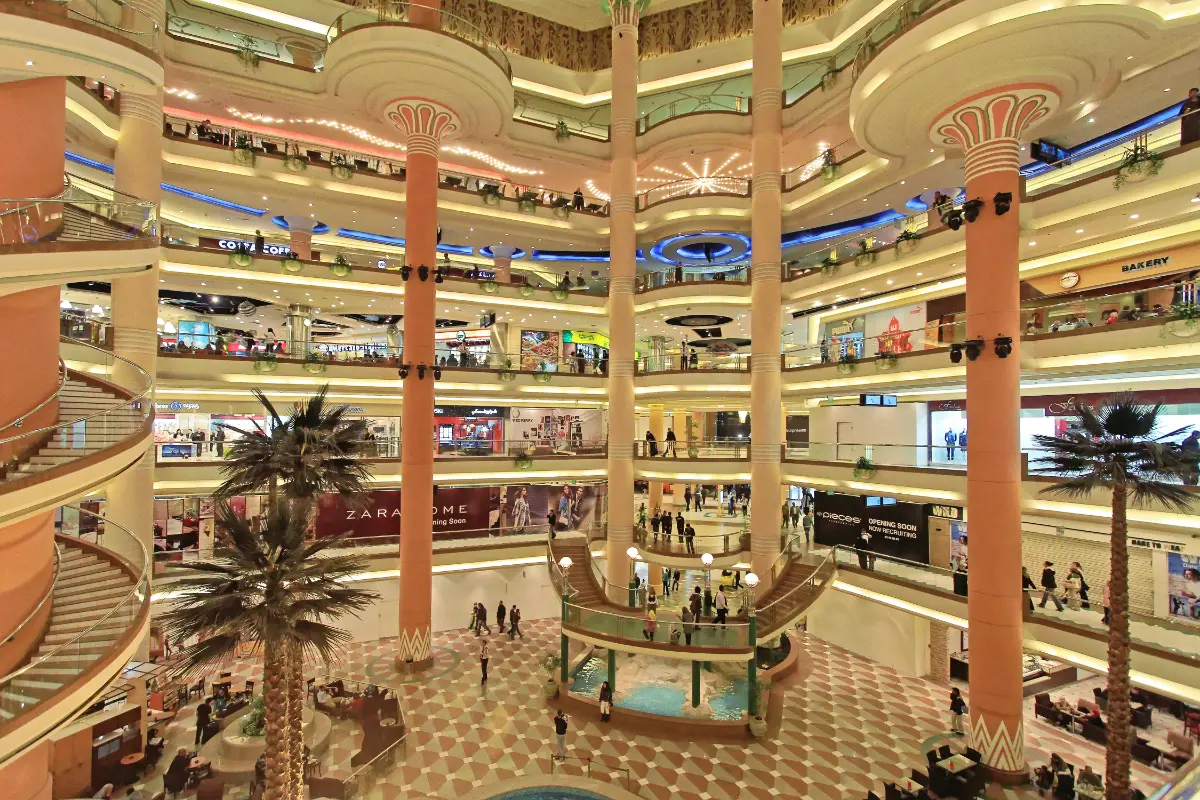
The mall boom in Egypt began in earnest during the 2000s, concentrated initially in Cairo’s expanding suburbs. These weren’t simple retail spaces; they were lifestyle destinations designed for Egypt’s growing middle class and the millions of tourists who visit annually. Cairo Festival City Mall opened in 2013. The Mall of Egypt followed in 2017, becoming one of Africa’s largest shopping centres.
What Makes Malls in Egypt Unique
Malls in Egypt serve different purposes than their Western counterparts. They’re social hubs where extended families gather, especially during evening hours when temperatures drop. It’s common to see multiple generations sharing meals in food courts, teenagers meeting friends at cinemas, and couples strolling through air-conditioned corridors.
Key characteristics of malls in Egypt:
- Extended operating hours: Most stay open until midnight or later, accommodating Egypt’s late dining culture
- Mixed retail landscape: International luxury brands coexist with local Egyptian retailers
- Family-focused amenities: Extensive play areas, family restaurants, and entertainment zones
- Food court diversity: Egyptian street food stands alongside international chains
- Prayer facilities: Dedicated spaces reflecting the country’s Muslim majority
- Security presence: Thorough bag checks and metal detectors at entrances
Shopping Culture and Expectations
Understanding local shopping customs helps visitors navigate malls in Egypt more comfortably. Unlike traditional souqs where haggling is expected, mall prices are fixed. Staff generally speak English in larger malls, though learning a few Arabic phrases builds rapport.
Egyptian shoppers often browse extensively before purchasing. Don’t feel pressured to buy immediately—taking time to compare options across multiple stores is normal behaviour. Sales periods align with Islamic holidays, particularly Eid al-Fitr and Eid al-Adha, when substantial discounts appear.
The Best Shopping Malls in Cairo and Giza
Cairo’s shopping malls cluster in the city’s modern districts, serving both residents and visitors with varying tastes and budgets. Each major mall has developed its own character—some attract fashion-conscious youth, others serve family needs, while a few position themselves as luxury destinations. The five malls detailed below represent the best options for international visitors seeking comfort, variety, and a glimpse of contemporary Egyptian life.
Cairo Festival City Mall: Entertainment Meets Retail
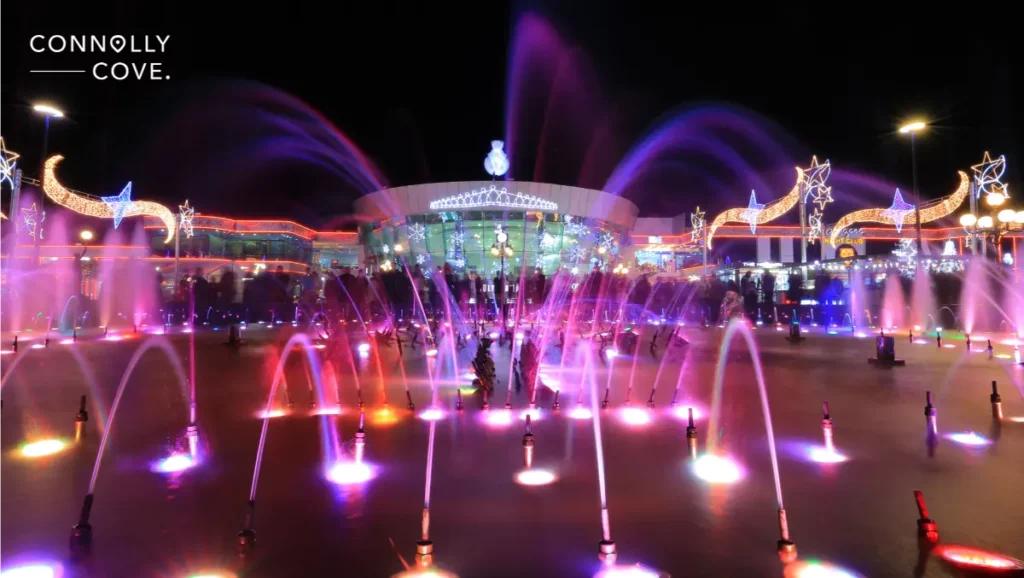
Located in New Cairo, Cairo Festival City Mall has established itself as the city’s premier shopping destination for younger Egyptians and expatriates. The complex combines over 300 stores with outdoor dining areas, a 16-screen VOX Cinema, and one of Egypt’s most photographed dancing fountains.
What you’ll find:
Fashion: International brands including Michael Kors, Calvin Klein, Guess, and Hugo Boss dominate the fashion corridors, alongside Egyptian retailers like Concrete and Mobaco Cottons. The mall caters primarily to mid-to-high-end shoppers, with fewer budget options than other Cairo malls.
Dining: The Village, an open-air section, houses restaurants and cafes where you can dine under the stars. Egyptian chains like Zooba (serving street food elevated) sit near international options like Chili’s and TGI Friday’s. The food court offers quicker alternatives, though quality varies considerably.
Entertainment: VOX Cinemas shows both Hollywood releases and Arabic films, with English subtitles available. The ice skating rink provides a novelty in Egypt’s climate, particularly popular with families during weekends. The dancing fountain show runs several times nightly, drawing crowds who gather on surrounding terraces.
Practical details:
- Best visited: Weekday afternoons (weekends are extremely crowded)
- Getting there: Taxi or Uber from central Cairo (30-45 minutes depending on traffic)
- Parking: Ample underground parking (charges apply)
- Currency exchange: Available inside, though rates aren’t competitive
- Prayer rooms: On multiple floors
Mall of Egypt: Scale and Spectacle in Giza
The Mall of Egypt lives up to its grandiose name. Situated near the Pyramids of Giza, this massive complex spans over 165,000 square metres, making it one of Africa’s largest malls. First-time visitors often spend 30 minutes simply navigating the layout.
What sets it apart:
Luxury shopping: High-end boutiques from Dior, Gucci, and other luxury houses occupy prime ground-floor positions. If you’re seeking designer goods, Mall of Egypt offers Egypt’s most comprehensive selection. Local luxury can be found at artisan boutiques selling fine Egyptian cotton, hand-crafted jewellery using traditional techniques, and leather goods.
Dining variety: The restaurant selection spans from steakhouses (The Grill) to Italian trattorias (Il Terrazzo), plus familiar chains like PF Chang’s and Johnny Rockets. Egyptian restaurants include Abou El Sid, serving traditional dishes in an upscale setting—an excellent introduction to Egyptian cuisine in comfortable surroundings.
Magic Planet: This indoor amusement park targets families with young children. Expect arcade games, small rides, and soft play areas. It’s particularly useful for parents who need to entertain kids after a long day at the Pyramids.
Entertainment highlights:
- 21-screen cinema complex with IMAX
- Dancing fountain with music and light shows
- Bowling alley and arcade games
- Regular events and seasonal decorations
Visitor considerations:
- Extremely large—wear comfortable shoes
- Can feel overwhelming on first visit
- Best combined with Pyramids visit (only 15 minutes away)
- Weekend crowds can be intense
- Premium positioning means higher prices overall
City Centre Almaza: Heliopolis Shopping Hub
City Centre Almaza serves Heliopolis, one of Cairo’s most established neighbourhoods. This mall attracts a slightly more local crowd than tourist-heavy alternatives, offering insight into Egyptian shopping preferences.
Layout and offerings:
Spread across multiple levels, City Centre Almaza houses over 300 stores mixing international chains with Egyptian retailers. The Carrefour hypermarket anchors one end—useful for visitors staying in nearby accommodations who need everyday items.
Fashion and accessories: Mid-range brands dominate, including Zara, Mango, and Marks & Spencer. Egyptian brand Cottonil, famous for quality basics, has a large store here. La Cravate offers men’s formal wear with tailoring services.
Entertainment options:
- Magic Planet amusement area
- 12-screen cinema
- Bowling lanes
- Regular children’s activities and workshops
- Dancing fountain in the central plaza
Why visit: City Centre Almaza offers a more authentically Egyptian shopping experience than tourist-oriented malls. Prices tend to be slightly lower, and the mix of shoppers reflects Cairo’s demographic diversity. It’s less polished than newer malls but more representative of everyday Egyptian retail.
Location advantages:
- Near Cairo International Airport (useful for last-day shopping)
- Well-connected to public transport
- Surrounded by restaurants and cafes in Heliopolis
- Less tourist-focused atmosphere
Open Air Mall Madinaty: Cairo’s Outdoor Shopping Experience
Open Air Mall in Madinaty offers something different—shopping under the Egyptian sky. This open-air concept works particularly well during Cairo’s pleasant winter months (November-March) and evening hours year-round.
The outdoor advantage:
Unlike enclosed malls in Egypt, Open Air Mall creates a village-like atmosphere with cobblestone pathways, landscaped gardens, and water features. Shops open onto pedestrian streets, and outdoor seating at restaurants overlooks small parks where children play.
Store selection:
Over 60 shops cater to various budgets. You’ll find Calvin Klein and Guess alongside local retailers. The Carrefour hypermarket provides grocery options. The mix skews toward practical shopping rather than luxury brands.
Dining and leisure:
- Pastamania for Italian food
- Johnny Rockets for American classics
- Various Egyptian restaurants and cafes
- Ice cream parlours popular with families
- 15-screen VOX Cinemas
Best times to visit:
- Winter afternoons when weather is perfect
- Summer evenings after 6pm when temperatures drop
- Avoid midday heat in summer months
- Particularly pleasant during sunset hours
Family appeal: The open spaces and play areas make this especially suitable for families with young children who need room to move. The mall hosts regular outdoor events, workshops, and seasonal celebrations.
Shopping Destinations Beyond Cairo
Egypt’s shopping scene extends well beyond the capital. Coastal resort areas and other major cities have developed their own retail centres, each reflecting local character and serving different visitor needs. While Cairo dominates in terms of scale and variety, these destinations offer shopping experiences shaped by their unique locations and tourist demographics.
SOHO Square Sharm El-Sheikh: Red Sea Entertainment Hub
SOHO Square isn’t technically a traditional mall—it’s an entertainment complex that includes shopping. Located in Sharm El-Sheikh, Egypt’s premier Red Sea resort, SOHO Square serves holidaymakers seeking evening entertainment beyond their hotel grounds.
The atmosphere:
Designed to evoke a Mediterranean plaza, SOHO Square features cobbled streets, colourful buildings, and a central fountain. Street performers entertain crowds, restaurants spill onto outdoor terraces, and the vibe is distinctly holiday-oriented.
What’s available:
Shopping: Boutiques sell resort wear, souvenirs, and beach accessories rather than extensive fashion collections. Egyptian crafts, jewellery, and local specialities feature prominently—this is souvenir shopping, not serious retail therapy.
Dining: International restaurants predominate, serving Italian, Asian, and seafood dishes. Quality varies, but the setting compensates. Egyptian options exist but cater to tourist palates rather than offering authentic local cuisine.
Entertainment:
- SOHO Stage hosts live music and performances
- Ice rink (novelty in the desert climate)
- Bowling alley
- Culturama edutainment centre
- Various nightlife options
Visitor perspective: SOHO Square excels as an evening destination for resort guests wanting a change from their hotel. Don’t expect serious shopping—treat it as an entertainment complex with retail elements. The atmosphere peaks after sunset when the fountain shows begin and outdoor dining becomes pleasant.
Practical advice for visitors:
- Taxis from Naama Bay or other resort areas are plentiful
- Prices are tourist-oriented (higher than Cairo)
- Most enjoyable for a single evening visit
- Good option if your resort entertainment feels limited
Beyond Malls: Egypt’s Best Local Markets
While modern shopping malls in Egypt provide comfort and convenience, Egypt’s traditional markets offer experiences no air-conditioned complex can replicate. These souqs connect directly to centuries of trading traditions, providing authentic encounters with Egyptian commerce, craftsmanship, and daily life. The contrast between sleek malls and chaotic markets reveals different facets of Egypt’s commercial culture—both worth experiencing during your visit.
Khan al-Khalili: Cairo’s Historic Bazaar
Dating to 1382, Khan al-Khalili remains Cairo’s most famous market. Located in Islamic Cairo near Al-Azhar Mosque, this sprawling bazaar occupies a neighbourhood of narrow lanes where shops have operated for generations.
What makes it special:
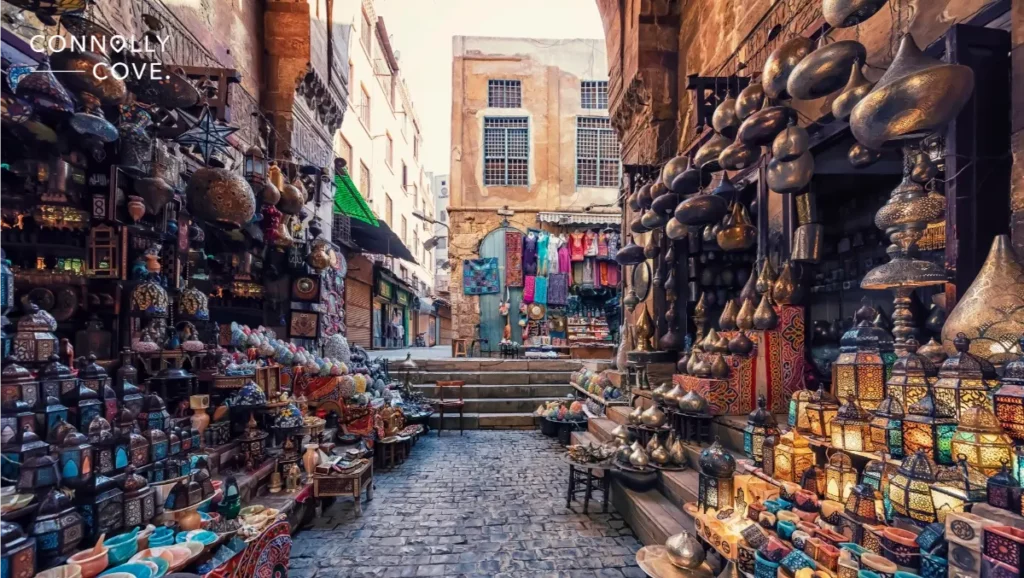
The sheer density of commerce overwhelms first-time visitors. Spice vendors display pyramids of cumin, turmeric, and hibiscus. Perfume shops offer oil-based scents in ornate bottles. Metalworkers hammer intricate patterns into brass trays while you watch. Textile merchants stack Egyptian cotton fabrics in rainbow colours.
Navigation tips:
- Enter from Al-Azhar Street or from Hussein Mosque
- Getting lost is part of the experience—embrace it
- Shop prices start intentionally high—haggling is expected
- Quality varies dramatically—examine items carefully
- Genuine antiques are rare; most “antiques” are reproductions
What to buy: Hand-painted papyrus (check it’s genuine—real papyrus doesn’t tear), silver jewellery (especially cartouches with hieroglyphics), spices by weight, perfume oils, leather goods, traditional clothing like galabeyas, backgammon sets, and brass lanterns.
Cultural etiquette: Haggling follows unspoken rules. Start at 50-60% of the asking price and negotiate from there. Walking away often produces a better offer. Accepting tea from a shopkeeper creates no obligation to buy, though it establishes rapport.
Best times: Morning hours (9-11am) are less crowded and marginally cooler. Avoid Friday mornings during prayer times. Evenings bring crowds but also atmosphere—particularly during Ramadan when the area comes alive after sunset.
Souq Khan al-Misriyin: Cairo’s Textile Heart

For serious fabric shopping, Souq Khan al-Misriyin specialises in Egyptian cotton and textiles. This market serves both locals and savvy tourists seeking quality fabrics at wholesale prices.
What you’ll find:
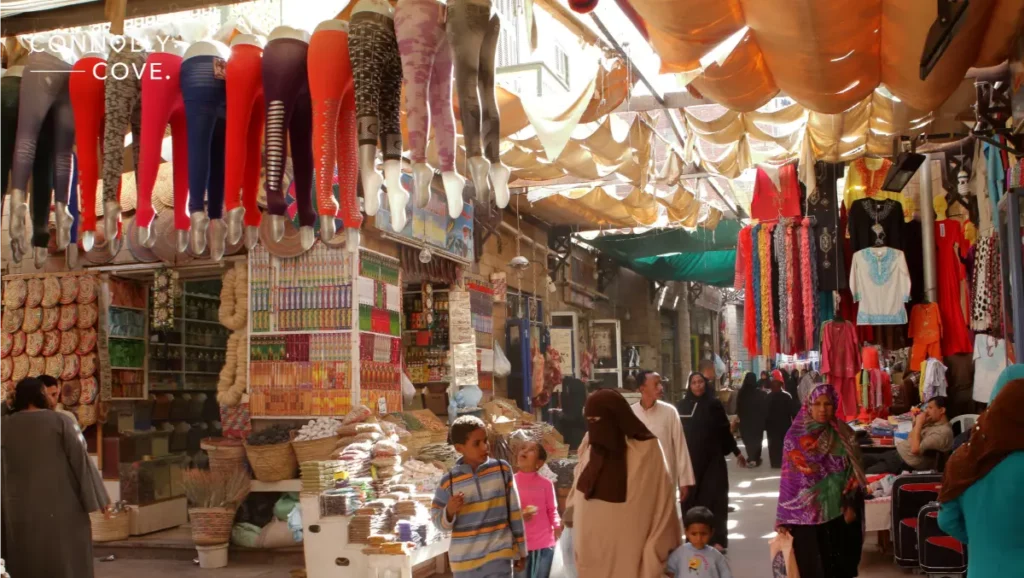
Egyptian cotton ranks among the world’s finest, and this market offers direct access. Merchants display fabrics by the bolt—delicate muslins, sturdy canvas, intricate tapestries, and everything between. Many shops provide tailoring services, creating custom clothing from your chosen fabric.
Shopping strategy:
- Bring fabric samples if you want colour matches
- Know your measurements for custom tailoring
- Allow several days for tailoring work
- Inspect fabric quality—thread count matters
- Negotiate prices per metre or for entire bolts
Practical advantages: Prices significantly undercut tourist shops, especially for bulk purchases. Having items custom-made costs less than you’d expect, and Egyptian tailors work with remarkable speed. A custom-tailored shirt or dress typically takes 2-3 days.
Aswan Souq: Nubian Cultural Shopping
Aswan’s market introduces Nubian cultural elements rarely found in Cairo. Located along the Nile in Egypt’s south, this souq reflects the region’s distinct heritage.
Distinctive items:
Hand-painted Nubian pottery in bold colours, ebonywood carvings (check legality before purchasing—some woods have restrictions), beaded jewellery featuring traditional Nubian patterns, spices including Sudanese varieties, baskets woven from palm fronds, and henna body art.
Cultural context: Nubian culture differs from mainstream Egyptian culture. The language, artistic traditions, and social customs reflect millennia of distinct identity. Shopping here supports communities who’ve faced displacement from their traditional lands following Aswan High Dam construction.
Visitor considerations:
- Aswan is intensely hot—shop early morning or evening
- Vendors are generally less aggressive than in Cairo
- Genuine cultural exchange is possible with patient interaction
- Photography of people requires permission
- Prices are reasonable but still require negotiation
Sharia Khayamiya: Cairo’s Silk Street
Sharia Khayamiya specialises in luxury fabrics, particularly silk. This street attracts Egyptians shopping for wedding attire and special occasion clothing, alongside tourists seeking high-end souvenirs.
What sets it apart:
Quality here exceeds typical tourist markets. Silks feature elaborate embroidery, cashmere shawls rival those from traditional producers, and workmanship reflects generations of expertise. Prices match the quality—this isn’t budget shopping.
Best for:
- Special occasion fabrics
- Investment pieces
- Gifts requiring exceptional quality
- Custom tailoring of luxury items
Tentmakers’ Market: Historic Craft Shopping

Adjacent to the Citadel, Cairo’s Tentmakers’ Market showcases traditional Bedouin tent-making. Craftsmen hand-stitch vibrant fabric panels featuring geometric patterns, creating both functional tents and decorative hangings.
The experience:
Watching craftsmen work provides as much value as purchasing. The skill involved in creating these pieces—entirely hand-stitched without machinery—demands appreciation. Small decorative pieces make manageable souvenirs; full-sized tents can be commissioned and shipped.
Practical considerations:
- Prices reflect the labour-intensive craft
- Miniature tents cost 200-500 EGP
- Full-sized tents require commission and shipping arrangements
- Work quality varies—examine stitching carefully
- Some shops offer to teach basic techniques
Khan El Halili Alexandria: Mediterranean Market Character
Alexandria’s Khan El Halili (sharing the famous Cairo name) offers a Mediterranean twist on traditional Egyptian market shopping. The city’s cosmopolitan history influences the goods available.
Distinctive offerings:
Hand-blown glasswork reflects Alexandria’s Venetian influences, intricate metalwork shows Ottoman heritage, leather goods match Cairo quality but often at better prices, and traditional sweets include regional specialities not found in Cairo markets.
Alexandria advantages:
- Less tourist-crowded than Cairo’s Khan al-Khalili
- Competitive prices due to lower tourist volume
- Interesting mix of Egyptian and Mediterranean influences
- Coastal location means fresher seafood at nearby restaurants
Essential Shopping Tips for Travellers in Egypt
Shopping in Egypt differs significantly from retail experiences in Western countries. Success requires understanding local customs, pricing structures, payment preferences, and cultural expectations. These practical guidelines help visitors navigate both modern malls and traditional markets confidently, avoiding common pitfalls while getting the best value and most authentic experiences.
Understanding Egyptian Retail Culture
Fixed prices vs. negotiable:
- Shopping malls: All prices are fixed—negotiation doesn’t apply
- Markets and souqs: Haggling is expected and part of the experience
- Small local shops: Negotiation often possible but less aggressive
- Tourist shops near monuments: Prices start very high—negotiate firmly
Payment methods:
- Cash remains dominant, especially in markets
- Major malls accept international credit cards
- Currency exchange available in malls but rates aren’t competitive
- ATMs widely available in shopping areas
- Small vendors prefer Egyptian pounds—carry small notes
Seasonal Shopping Considerations
Best shopping periods:
November-March (peak season):
- Pleasant weather for open-air markets
- Larger crowds at tourist-oriented venues
- Stock levels high across all retailers
- Seasonal sales less common than in West
Ramadan (dates vary—Islamic calendar):
- Reduced daytime hours for many shops
- Markets come alive after sunset
- Special Ramadan sales and promotions
- Festive atmosphere but crowded
- Eid al-Fitr (post-Ramadan) brings major sales
Summer (June-August):
- Extreme heat limits outdoor market shopping
- Air-conditioned malls become more appealing
- Smaller tourist crowds mean better attention
- Some sales as retailers clear seasonal stock
Holiday periods:
- Egyptian national holidays may affect opening hours
- Coptic Christmas (7 January) sees some closures
- Eid al-Adha brings significant sales
- Western-style Christmas sales appear in tourist areas
What to Buy: Egyptian Specialities Worth Shopping For

Egyptian cotton products: Egypt’s famous long-staple cotton produces exceptional textiles. Look for:
- Cotton shirts and clothing (check thread count)
- Bed linens (Egyptian cotton sheets are world-renowned)
- Towels (absorbent and durable)
- Galabeyas (traditional Egyptian robes in cotton)
Quality indicators: Higher thread count, smooth texture, slightly heavier weight than standard cotton. Reputable shops provide thread count information. Prices vary dramatically—mall prices are fixed and higher; market prices are negotiable but quality varies more.
Papyrus art: Genuine papyrus (made from papyrus plant) versus “banana leaf papyrus” (cheap imitation):
- Real papyrus doesn’t tear easily
- It has a distinct crosshatch pattern
- Smells slightly earthy
- Costs more but lasts indefinitely
Purchasing advice: Buy from reputable shops that explain the creation process. Watch for demonstrations—legitimate sellers show how papyrus is made. Avoid “ancient” papyrus—genuine antiquities have export restrictions.
Spices and aromatics: Egyptian spices offer excellent value:
- Hibiscus (karkade) for tea
- Cumin (kamoun) – staple in Egyptian cooking
- Dukkah spice mix (nuts, seeds, spices)
- Saffron (check quality—varies greatly)
- Perfume oils (less common in West)
Market shopping tips: Buy spices by weight from vendors who let you smell before purchasing. Avoid pre-packaged tourist blends. Bring ziplock bags for transport.
Jewellery:
- Cartouche pendants (silver or gold) personalised with hieroglyphics
- Scarab beetle designs (traditional Egyptian symbol)
- Bedouin silver jewellery (particularly from Sinai)
- Semi-precious stones (turquoise, lapis lazuli)
Quality checks: Silver should be hallmarked (900 or 925). Gold pricing typically follows daily gold price plus craftsmanship charges. Reputable jewellers provide certificates for valuable pieces.
Brass and copperwork: Traditional metalwork includes:
- Lanterns and lamps
- Trays and decorative plates
- Coffee pots (dallah style)
- Incense burners
Purchasing wisdom: Examine welding and joins carefully. Hand-hammered pieces cost more but show superior craftsmanship. Large items require shipping considerations—check airline restrictions.
Customs, Export, and Shopping Regulations
Duty-free allowances (for visitors departing Egypt):
- Reasonable quantities of personal items
- Up to 200 cigarettes or equivalent tobacco
- One litre of alcohol (if over 18)
- Gifts up to specified value
Restricted items:
- Genuine antiquities (illegal without permits)
- Certain animal products
- Some plant materials
- Ivory (completely prohibited)
VAT refunds: Egypt operates a VAT refund scheme for tourists, though the process can be bureaucratic. Keep receipts from participating retailers. Allow extra airport time for processing.
Shipping considerations:
- Major malls can arrange international shipping
- Costs often exceed item value for large pieces
- Insurance recommended for valuable items
- Customs duties apply in destination country
- Processing time: 4-8 weeks typically
Practical Safety and Comfort Advice
Mall shopping:
- Bag checks at entrances are standard
- Keep valuables secure despite security presence
- Dress modestly—shoulders and knees covered
- Prayer times (five times daily) don’t affect mall operations
- Smoking areas are designated
- Restrooms plentiful but quality varies
Market shopping:
- Pickpocketing exists—secure your belongings
- Leave expensive jewellery at hotel
- Carry a photocopy of passport (not original)
- Agree on taxi fares before departing
- Bring small-denomination Egyptian pounds
- Stay hydrated—heat exhaustion is real
- Wear comfortable walking shoes
- Have hotel address written in Arabic
Scam awareness:
- “Free” papyrus schools that pressure buying
- “Special government shop” claims (verify independently)
- Dramatic “wholesale” discounts (inflated starting prices)
- Taxi drivers receiving commissions (inflate prices)
- “Closed today” lies to redirect to other shops
Cultural sensitivity:
- Remove shoes when asked (some carpet shops)
- Accept refreshment offers politely—creates no obligation
- Dress conservatively in traditional markets
- Ask before photographing people or shops
- Learn basic Arabic greetings (builds rapport)
- Respect prayer times and Ramadan fasting
Budget Planning for Shopping in Egypt
Mall shopping budget guidelines (in EGP):
- Coffee/light snack: 100-200 EGP
- Fast food meal: 150-250 EGP
- Restaurant meal: 300-500 EGP
- Cinema ticket: 100-150 EGP
- Clothing (international brands): Similar to UK/EU prices
- Local brands: 30-50% less than international equivalents
Market shopping budget (in EGP):
- Small souvenir: 50-100 EGP
- Quality papyrus art: 100-500 EGP
- Spices (100g): 10-50 EGP
- Cotton galabaya: 150-500 EGP
- Silver cartouche: 200-800 EGP
- Brass lantern: 150-1,000 EGP
Currency context: £1 = approximately 62 EGP (rates fluctuate). €1 = approximately 54 EGP.
Negotiation targets: In markets, aiming for 40-60% of the initial asking price is reasonable for most items. Vendors expect negotiation—starting too high is standard practice. Walking away often produces the best price.
Combining Shopping with Heritage Sites
Pyramids and Mall of Egypt: The Mall of Egypt sits 15 minutes from the Pyramids of Giza. Many visitors structure their day to include morning pyramid exploration, midday respite at the air-conditioned mall for lunch and shopping, then return to pyramids for sunset. This pattern works well during hot months.
Khan al-Khalili and Islamic Cairo: Combine market shopping with exploring Islamic Cairo’s architectural treasures. Al-Azhar Mosque, Sultan Hassan Mosque, and the Citadel all sit within walking distance (though Cairo’s definition of “walking distance” is generous). Plan 4-5 hours minimum for a meaningful experience of both shopping and heritage.
Alexandria markets and Mediterranean coast: Alexandria’s markets complement visits to the Library of Alexandria, Qaitbay Citadel, and Corniche waterfront. The Mediterranean setting provides cooler shopping conditions than Cairo during summer months.
Getting Around for Shopping
Cairo:
- Uber and Careem operate widely—most reliable transport option
- Taxis available but negotiate fare beforehand
- Cairo Metro serves some shopping areas (crowded but efficient)
- Walking between malls isn’t practical due to distances and traffic
- Allow 45-60 minutes travel time across Cairo due to congestion
Transportation to major malls:
- Most hotels can arrange transport
- Mall websites provide directions
- Some malls offer shuttle services from major hotels
- Avoid rush hours (roughly 7-10am and 4-7pm)
Market transport:
- Khan al-Khalili accessible by Metro (Ataba station)
- Taxis to specific souqs—have address in Arabic
- Walking tours often include market visits
- Solo navigation possible but challenging initially
Current Shopping Conditions in Egypt (2025 Update)
Egypt’s retail landscape continues evolving rapidly, with economic factors, tourism patterns, and infrastructure development all affecting the shopping experience. Understanding current conditions helps visitors set realistic expectations for pricing, availability, and overall experience quality. Here’s what you need to know about shopping in Egypt as of 2025.
Economic context: Egypt’s economy has experienced inflation and currency fluctuations affecting retail prices. Shopping remains excellent value for visitors with foreign currency, but price volatility means checking current rates before assuming costs.
Mall expansions: Several new malls have opened or are under construction in Cairo’s New Administrative Capital and along the North Coast, expanding Egypt’s retail offerings beyond traditional centres.
Tourism recovery: Following various setbacks, Egyptian tourism continues recovering, meaning shopping areas see more international visitors. This affects both prices (trending upward in tourist areas) and availability of multilingual assistance.
Safety improvements: Security presence in malls and major shopping areas has increased, making these spaces generally safe for visitors. The Egyptian government prioritises tourist security in designated shopping zones.
Seasonal patterns: Winter (November-March) remains the peak shopping period when pleasant weather makes both mall and market shopping comfortable. Summer shopping increasingly concentrates in air-conditioned venues.
Planning Your Egyptian Shopping Experience

Egyptian shopping spans millennia of trading traditions and ultra-modern retail complexes. Whether you prefer exploring the air-conditioned corridors of Cairo’s mega-malls, haggling in Khan al-Khalili’s narrow lanes, or discovering Red Sea resort shopping in Sharm El-Sheikh, Egypt accommodates every shopping preference. The key to a successful shopping experience lies in understanding what each venue offers and planning accordingly.
The country’s retail landscape reflects its dual character—ancient and modern, traditional and contemporary, local and international. Major malls showcase Egypt’s economic development and provide familiar shopping experiences for international visitors. Traditional markets offer irreplaceable cultural encounters where commerce and tradition intertwine.
Smart travellers allocate time for both experiences. Malls provide comfortable respite from Egypt’s heat, reliable product quality, and entertainment options making them particularly valuable for families. Markets deliver authentic cultural immersion, unique handcrafted items, and the satisfaction of negotiating your own deals.
Next steps for planning:
For mall shopping:
- Check mall websites for current opening hours
- Download Uber or Careem apps for transport
- Bring credit cards and some cash
- Allow more time than expected—malls are massive
- Plan visits during weekday afternoons for smaller crowds
For market shopping:
- Research specific souqs matching your interests
- Bring Egyptian pounds in small denominations
- Wear comfortable shoes and modest clothing
- Start shopping early morning or late afternoon
- Practice basic Arabic phrases
- Remember negotiating is part of the experience
Egypt’s shopping experiences enrich any visit beyond historical sites and ancient monuments. These spaces—whether gleaming malls or atmospheric souqs—reveal how Egyptians live, socialise, and maintain traditions while embracing modernity.
Ready to explore more of Egypt? Browse ConnollyCove’s complete guides to Egyptian culture, history, and travel planning. Sign up for our newsletter to receive insider tips for experiencing authentic Egyptian traditions beyond the guidebook recommendations.
FAQs
What types of stores can I find in Egyptian malls?
Egyptian malls offer diverse retail mixing international brands (Calvin Klein, Guess, Zara, Marks & Spencer) with local Egyptian retailers. You’ll find everything from high-end fashion and everyday clothing to hypermarkets (Carrefour), electronics, home goods, and Egyptian speciality shops selling local crafts, cotton products, and perfumes.
Do all malls have ATMs and currency exchange?
Most major malls have multiple ATMs accepting international cards. Currency exchange facilities exist in some malls but rates aren’t competitive—exchange money at banks or authorised exchange offices before visiting. Carry Egyptian pounds for smaller purchases and market shopping.
Do malls stay open late in Egypt?
Yes, Egyptian malls typically operate until midnight or even 2am, particularly on weekends. This reflects Egypt’s cultural pattern of late dining and evening socialising. Many families visit after sunset when temperatures drop. Specific hours vary by mall and season—check individual mall websites.
Are there special events or sales in Egyptian malls?
Malls host regular sales during Ramadan and Eid holidays (Eid al-Fitr and Eid al-Adha), offering substantial discounts. Some malls organise fashion shows, seasonal exhibitions, and children’s events. Sales don’t follow Western patterns (no Boxing Day sales), instead aligning with Islamic calendar events.
Do malls have family-friendly facilities?
Egyptian malls cater extensively to families with dedicated play areas, children’s entertainment centres (like Magic Planet), family-friendly restaurants with kids’ menus, baby changing facilities, and often activities like bowling, ice skating, and cinemas. Many restaurants have separate family sections.
Are there cultural differences I should know when shopping in Egyptian malls?
Dress modestly—cover shoulders and knees. During Ramadan, eating, drinking, or smoking in public during daylight hours is inappropriate (though malls stay open). Haggling doesn’t apply in malls (prices are fixed) but is expected in traditional markets. Male-female interactions follow conservative norms—couples should behave discreetly.
How do Egyptian malls compare to traditional markets?
Malls offer air-conditioned comfort, fixed prices, modern amenities, international brands, and predictable quality. Traditional markets provide authentic Egyptian atmosphere, negotiable prices, unique handcrafted items, cultural immersion, and generally better value. Most visitors find time for both experiences serves different purposes.
What should I know about bargaining in Egyptian markets?
Bargaining is expected and enjoyable when approached correctly. Vendors intentionally start 2-3 times higher than their acceptable price. Counter at 40-50% of the asking price and negotiate upward. Walking away often produces better offers. Stay friendly—haggling should be pleasant, not confrontational. Accept tea offers politely (creates no purchase obligation).
Can I use credit cards in Egyptian shops?
Major malls and established shops accept international credit/debit cards, though small transaction fees may apply. Traditional markets and smaller vendors operate cash-only. ATMs are widespread in shopping areas. Carrying a mix of cash (in small denominations) and cards provides flexibility.
What are the best souvenirs to buy in Egypt?
Quality souvenirs include Egyptian cotton products (shirts, linens), genuine papyrus art (check it’s real papyrus, not banana leaf), spices (hibiscus, dukkah, cumin), perfume oils, silver cartouche jewellery personalised with hieroglyphics, hand-painted pottery, brass lanterns, and galabeyas (traditional robes). Avoid “ancient” items—genuine antiquities have strict export restrictions.