

Article Summary
What this article covers: How Alexandria Beach works in practice, from public and private beach categories and swimming flags to seafront landmarks, customs and transport in 2026.
Who this is for: Travellers planning a Mediterranean stay in Egypt, visitors adding Alexandria to a Cairo itinerary, and anyone deciding between a public shore and a hotel beach club.
Key takeaway: Alexandria Beach is a city seafront rather than a resort strip. Knowing the beach category and the day’s flag matters more than choosing a famous name.
Expert insight: “Walk the Corniche from Qaitbay towards Stanley on a July evening and you realise Alexandria Beach belongs to the people who live here first. Families carry their own chairs down the steps, and the corn sellers seem to know everyone. The best thing a visitor can do is slow down and join in, rather than hunt for a resort that was never there.” , Ciaran Connolly, Founder of ConnollyCove
Quick facts:
- The Alexandria Governorate’s own beach guide describes a shoreline of about 24 kilometres, running from Maamoura in the east to Agami in the west
- Private beaches in the governorate rose from none in 2013 to 65 by 2024, according to figures from Egypt’s official statistics agency
- The historic Raml tram, long the easiest way to travel along the seafront, has been fully suspended since April 2026 for a rebuild due to finish in 2027
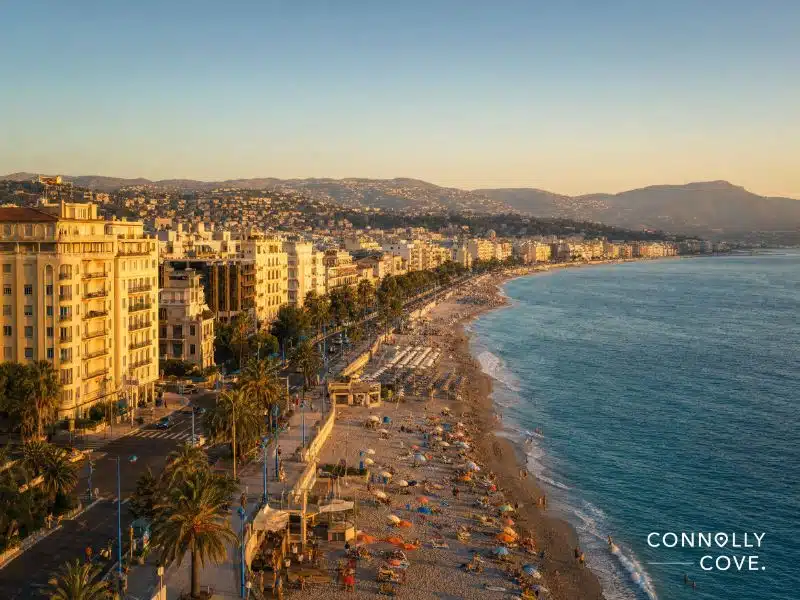
Alexandria Beach is the name most visitors give to the long, curving Mediterranean seafront of Egypt’s second city, though locals would tell you there is no single beach at all. There are dozens, each with its own gate, price band and crowd, strung along the Corniche between the royal gardens at Montaza and the western suburbs of Agami. Alexander the Great founded the city in 331 BC. The long history of Alexandria still shows along the waterfront, from a Mamluk fortress to a modern library built in tribute to the ancient one.
At ConnollyCove, we cover destinations for travellers who want the cultural story behind the view, and this guide follows that approach. It explains how the city’s beaches are organised, which areas suit families, how the flag system works and what to wear, with current transport advice for 2026.
Table of Contents
What Is Alexandria Beach Really Like?
Alexandria Beach is an urban seafront in a busy port city, and that shapes everything about a day by the sea here. The beaches sit below El Geish Road, the coastal highway everyone calls the Corniche, and you reach most of them through ticket gates, stairways or pedestrian tunnels under the traffic.
In July and August the sand fills with families from Cairo and the Nile Delta escaping the inland heat. Umbrellas are packed close, music drifts from kiosks, and vendors sell termes (salted lupin beans), grilled corn and glasses of sweet tea. It is loud, sociable and very Egyptian.
What you won’t find is the Red Sea experience of Hurghada or Sharm El Sheikh, with coral reefs outside a quiet resort. Water clarity varies, the harbours are working ports, and the western shore can be rough. Arrive expecting a city beach with deep history rather than a secluded lagoon, and you’ll enjoy Alexandria far more.
This guide focuses on the shoreline itself. For museums, markets and neighbourhoods further inland, our wider guide to places to visit in Alexandria covers the rest of the city.
How Alexandria’s Beaches Are Organised
Most of the city’s shoreline is managed by the governorate’s Central Administration for Tourism and Resorts, which sorts beaches into categories by service level and price. The Alexandria Governorate’s beach directory lists touristic, featured, service-on-request and public beaches, and later studies describe separate free and private categories alongside these. The category on the gate tells you roughly what your ticket includes.
The balance between these categories has shifted. An investigation by the Arab Reporters for Investigative Journalism network found that only 20 free beaches remained in the governorate, as more shoreline was auctioned to private operators. Expect the details below to change from season to season.
Free and Public Beaches
Public beaches are supervised by district staff, and you can bring your own chair and umbrella or rent them on the sand. The governorate’s list includes Gleem, Al-Mandara 3, Al-Maks and Al-Hanoville in this group. They show how Alexandrians really spend their summer, but space is tight and facilities are basic.
Service-on-Request Beaches
Service-on-request beaches charge a small entry fee that covers a chair, umbrella, table, toilets and changing cabins. You are also allowed to bring your own equipment, which keeps them popular with families. The governorate lists Abu Qir, Sidi Bishr, Abu Heif and Mazloum among them.
Featured and Touristic Beaches
Featured and touristic beaches sit higher up the price scale, with better spacing, cleaner changing areas and staffed gates. Stanley, Beau Rivage and Al-Mandara 1 appear in the touristic group, and several of these beaches are now leased to private operators on long contracts.
Hotel Beach Clubs and Private Lidos
At the top end, hotels such as the Four Seasons at San Stefano sell day passes that include a lounger, umbrella and towel. Montazah Bay charges a single ticket covering both the beach and the palace gardens, and a Rixos hotel opened at Montaza in 2025 with its own private beach. These clubs cost many times more than a public beach, but they are quieter, closely staffed and relaxed about Western swimwear.
| Beach category | What entry usually covers | Crowd level | Typical swimwear | Suits |
|---|---|---|---|---|
| Free and public | Sand access; rentals extra | Very high in summer | Modest | Budget travellers, cultural curiosity |
| Service-on-request | Chair, umbrella, table, toilets | High | Modest | Families bringing their own kit |
| Featured and touristic | Seating, cabins, staffed gate | Moderate | Modest, cover-ups advised | First-time visitors wanting comfort |
| Hotel clubs and lidos | Lounger, towel, pools, food service | Low | Western swimwear accepted | Couples, solo travellers, quiet days |
Alexandria Beach Areas From East to West
The seafront changes character every few kilometres, so where you go matters as much as which ticket you buy. Think of the coast in four stretches, from east to west.
Montaza, Maamoura and Abu Qir
Montaza is the green end of Alexandria Beach. Khedive Abbas II built the Salamlek palace here in 1892, and King Fuad I later added the larger Haramlik as a summer residence, mixing Turkish and Italian styles. The palace interiors are closed to visitors, but the gardens lead down to small coves and hotel beaches. Read more in our round-up of royal palaces across Egypt.
Next door, Maamoura is a large beach split between a free public section and managed clubs such as the Helnan and Paradise Inn properties. Further east, the fishing town of Abu Qir is known for seafood. Its bay was the scene of the Battle of the Nile between the British and French fleets in 1798.
Stanley, San Stefano, Sidi Bishr and Gleem
The central eastern stretch holds the Alexandria Beach scenes most people picture. Stanley Bay, with its tiers of beach cabins and the arched Stanley Bridge overhead, is the city’s classic postcard view. It’s worth a visit at sunset even if you don’t swim.
San Stefano, home to the Four Seasons, sits just east of Stanley, while Sidi Bishr and Gleem offer busier, more local days out. Part of the Gleem sandbar has been turned into a strip of restaurants and cafés, which makes it a good spot for a long lunch by the water.
Chatby, Anfoushi and the Eastern Harbour
The western end of the old city curves around the Eastern Harbour, where fishing boats bob below the Bibliotheca Alexandrina and the Qaitbay Citadel. This is the most historic part of the Alexandria Beach Corniche, though most visitors come to walk, eat and sightsee rather than swim beside a working harbour.
Agami and the Western Shore
Agami, west of the port, grew up as a suburb of summer villas and remains hugely popular with Egyptian holidaymakers. The waves here are noticeably stronger than in the east, and some Agami beaches have a serious safety record, covered in the section below. Beyond Agami, the coast runs towards Egypt’s North Coast resorts, known locally as El Sahel, where gated compounds offer water sports and summer nightlife.
Seafront Landmarks Along the Alexandria Beach Corniche
Some of Egypt’s most important historic sites stand within sight of the sand, so a beach day can easily include a museum or a fortress.
Qaitbay Citadel
Qaitbay Citadel guards the tip of the Eastern Harbour. Sultan al-Ashraf Qaitbay built it in the late 15th century to defend the coast against the growing Ottoman threat, on the site of the ancient Lighthouse of Alexandria. The lighthouse, one of the Seven Wonders of the Ancient World, had been ruined by earthquakes in the 14th century. Some of its stone is thought to be built into the fort.
The ramparts give some of the best sea views in the city. Our full story of Qaitbay Citadel covers its architecture and restorations in more depth.
Alexandria Aquarium
The Alexandria Aquarium opened in 1930 a short walk from the citadel. It displays species from the Mediterranean, the Red Sea, the Nile and the Amazon, and it is linked to the country’s marine research institute. Our Alexandria Aquarium Museum guide explains what to expect inside.
Bibliotheca Alexandrina
The Bibliotheca Alexandrina opened in 2002 at Chatby, facing the Eastern Harbour, as a modern successor to the ancient Library of Alexandria. Its tilted disc of a building holds a main library, a planetarium, museums and galleries. The original library’s fate is one of history’s great mysteries, which we explore in our feature on the lost libraries of the ancient world.
Underwater Heritage of the Eastern Harbour
Alexandria’s coastline has sunk and shifted over the centuries, leaving parts of the ancient city under water. Archaeologists have mapped stone blocks and statues off Qaitbay, believed to include lighthouse remains, and parts of the Ptolemaic royal quarter. Licensed dive centres run trips to some sites, though visibility varies. For the queen most linked to that sunken quarter, follow the trail of Cleopatra, Egypt’s last queen.
Cavafy Museum and the City Behind the Beach
A few streets back from the seafront, the Greek poet Constantine Cavafy (1863 to 1933) lived in a flat on what is now Sharm El Sheikh Street. The apartment is now a museum holding his manuscripts, letters and portraits, and our visit to the Cavafy Museum in central Alexandria describes it in detail.
Swimming Safety at Alexandria Beach
Swim only at staffed beaches, during lifeguard hours, and always obey the flag. The Mediterranean here can look calm from the Corniche and still hide powerful currents, particularly on the western shore.
Understanding the Flag System
Every managed beach flies a flag that sets the rules for the day. A red flag means swimming is prohibited, and a yellow flag means you may swim only in areas marked out by lifeguards. During rough seas in August 2025, the authorities raised red flags across the western and Agami sectors and yellow flags in the east. Green usually signals normal conditions, but still stay inside the marked zone.
Rip Currents and the Western Beaches
Al-Nakheel beach in Agami has become known as one of Egypt’s rip current hotspots. Engineers studying the site found that breakwaters built between 1998 and 2003 created strong circulating currents behind them, and the government ordered the beach closed to swimmers. In August 2025, several students drowned during a school trip to nearby Abu Talat beach, which led to further closures.
Officials also warn that rocky stretches, such as below the San Stefano bridge, are unsuitable for swimming. If you’re caught in a rip, don’t fight it head on. Swim parallel to the shore until the pull eases, then head back in at an angle.
Practical Safety Habits
Lifeguards on managed beaches work from sunrise to sunset, and officials have noted that many drownings happen early in the morning before shifts begin. Wear water shoes on rocky sections, keep children within arm’s reach, and drink plenty of water.
Beach Etiquette, Dress and Local Customs
A little cultural awareness goes a long way on Alexandria Beach. The public beaches are family spaces with conservative norms, while hotel clubs follow international resort habits.
What to Wear on Alexandria’s Beaches
On public and service beaches, many women swim in burkinis or leggings with long tunics, and men wear swim shorts. Two-piece swimwear is generally kept to hotel beach clubs and private lidos, where nobody will look twice. Whichever beach you choose, bring a light cover-up for walking along the Corniche, since the road outside is a city street.
Vendors, Tipping and Beach Staff
Tipping (baksheesh) is normal. Chair attendants and the staff who set up your umbrella expect a small tip, so carry plenty of low-value notes. Vendors can be persistent on busy beaches, and a polite “la, shukran” (no, thank you) with a smile usually works.
Crowds on Fridays and Holidays
Fridays and the Eid holidays bring the biggest crowds of the year to Alexandria Beach, especially in the free and service categories. For space, go early on a weekday or book a hotel club.
Eating by the Sea in Alexandria
Seafood is the heart of eating out in Alexandria. At a typical fish restaurant you choose your catch by weight from the counter. Then you pick grilled, fried or baked, with rice, salads and dips on the side.
Look out for sayadeya, the Alexandrian dish of fish cooked with spiced, caramelised onion rice. For more dishes to try across the country, see our guide to traditional Egyptian food.
Along the Corniche, Fish Market is a long-standing seafood restaurant with wide sea views, serving grilled fish, calamari, prawns and octopus. Near Qaitbay, the Greek Club mixes Greek and Egyptian dishes, such as moussaka and souvlaki, in a lively setting above the harbour. Simpler cafés line the coast from Montaza to Chatby.
Planning Your Alexandria Beach Trip
A smooth Alexandria Beach trip comes down to timing, transport and carrying the right cash. The city is easy to reach from Cairo, but local transport has changed in 2026.
When to Go
The official beach season runs through the summer months, roughly June to September, with July and August the hottest and busiest. For sightseeing with a swim on the side, April to June and September to November are milder and quieter. Winter brings storms and grey seas, better suited to museums.
Getting There and Getting Around
Trains from Cairo reach Alexandria in a few hours, stopping at Sidi Gaber before the central Misr station, and Borg El Arab Airport serves the city from the west. Taxis and ride-hailing apps are the simplest way to move between beaches.
The historic Raml tram, famous for its double-decker carriages, stopped running completely on 1 April 2026. The line is being rebuilt as a faster light rail system due in 2027, and replacement buses run along the route. When crossing the Corniche on foot, use the pedestrian bridges and tunnels, as traffic moves fast.
Money and Budget
The Egyptian pound (EGP) is the local currency, and cash rules on the beach. Public and service beaches are cheap, while hotel day passes can cost as much as a night in a mid-range room. Ask what your ticket covers before paying.
For a stay mixing swimming with sightseeing, San Stefano and Stanley sit between the beaches and the old city, while Montaza and Maamoura are quieter.
Making the Most of Alexandria’s Seafront
Alexandria’s beaches reward travellers who treat them as part of the city rather than an escape from it. Choose your beach category to match the day you want, check the flag before you swim, and leave time for Qaitbay, the Bibliotheca and a long seafood lunch.
With an extra day, a day trip to Rosetta along the coast adds another layer of history to your stay.
Planning Your Visit?
ConnollyCove is an Ireland-based travel and culture platform that produces practical guides and cultural stories for destinations worldwide. For shorelines closer to our home, explore our guide to beaches around Ireland’s coastline, or subscribe to the ConnollyCove YouTube channel for video travel guides.
Frequently Asked Questions About Alexandria Beach
Can you swim at Alexandria Beach?
Yes. Swim at a staffed beach during lifeguard hours and follow the flag: red means no swimming, yellow means swim only in marked areas. The western and Agami beaches carry the highest risk.
Are there private beaches in Alexandria, Egypt?
Yes. Hotels such as the Four Seasons at San Stefano, plus clubs at Montaza and Maamoura, sell day passes. Private beaches in the governorate grew to 65 by 2024.
Which Alexandria beach suits families?
Maamoura and the service-on-request beaches, such as Sidi Bishr, are popular with families. For more space and closer supervision, a hotel beach club is the calmer option.
What should women wear at Alexandria Beach?
On public beaches, most local women wear burkinis or leggings with tunics. Two-piece swimwear is best kept to hotel beach clubs and private lidos.
When is the beach season in Alexandria?
The main season runs from about June to September. July and August are the hottest and most crowded months.
Is the Alexandria tram running in 2026?
No. The Raml tram line was fully suspended on 1 April 2026 for a rebuild due to finish in 2027. Replacement buses run along the route.
How do you get to Alexandria Beach from Cairo?
Take the train from Cairo to Sidi Gaber or Misr station, then a taxi to the Corniche. Driving via the desert road is the main alternative.