

Article Summary
What this article covers: The real story behind the world’s “secret cities”, from wartime nuclear towns that never appeared on a map to walled cities and mythological lost settlements travellers can still visit today.
Who this is for: Travellers who want more than a photo stop, plus anyone curious about the difference between a city that was genuinely closed off and one that’s simply overlooked by mainstream tourism.
Key takeaway: Most “secret cities” fall into one of two categories: places deliberately hidden for military or political reasons, and places that are simply underrated, and knowing which is which changes how you should visit them.
Expert insight: “The Northern Ireland cities we cover most often, Derry, Armagh, Belfast, all carry some version of the same idea: walls, gates and boundaries built for defence or division that later became the thing visitors most want to understand.” — Ciaran Connolly, Founder of ConnollyCove.
Quick Facts
- Derry’s city walls, completed in 1618, are the only complete set of city walls remaining in Ireland.
- The underground city of Derinkuyu in Cappadocia, Türkiye, extends several storeys below ground and could reportedly shelter thousands of people.
- Oak Ridge, Tennessee, did not appear on any published US map until after the Second World War, despite housing tens of thousands of workers.
Secret cities come in two very different forms: places that were deliberately hidden from the world, and places the world simply hasn’t caught up with yet. Some were kept off maps for military reasons, sealed behind checkpoints and code names. Others are just quieter, older or less photographed than their famous neighbours, which is its own kind of secrecy in an age when everyone travels with the same shortlist of cities.
This guide separates the two. It looks first at cities that were genuinely closed off, from Cold War nuclear towns to Ireland’s own walled cities, then moves on to places that reward a visit precisely because they haven’t been swallowed by mass tourism. Along the way, there’s a look at the cities that never quite existed at all, at least not where anyone could prove it.
Table of Contents
What Actually Makes a City “Secret”?
There’s a real difference between a closed city and an overlooked one, and mixing the two up leads to disappointing trips. A closed city was kept secret on purpose, usually by a government, and access was restricted rather than simply unadvertised. An overlooked city is open to anyone; it just doesn’t get the visitor numbers its history deserves.
Derry’s complete circuit of 17th-century walls was built to keep people out during a siege, and the city still trades on that history today. Belfast’s more recent peace walls, still standing in parts of the city, show how the same instinct to divide and protect can outlast the reason it was built for.
The World’s Most Famous Closed Cities
Closed cities were built to disappear, not to attract visitors, which is what makes them fascinating once they’re declassified. Oak Ridge, Tennessee, is the clearest example. Built in 1942 as part of the Manhattan Project, it housed tens of thousands of workers enriching uranium, many of whom had no idea what they were building until the atomic bombs fell on Hiroshima and Nagasaki in 1945. The town did not appear on any published map until the war had ended.
The Soviet Union built entire cities on the same principle. Ozersk, once known only by the code name Chelyabinsk-40, produced plutonium for the Soviet nuclear programme and was not officially acknowledged to exist until the 1990s. Its residents lived behind checkpoints, cut off from the rest of the country, in a city built for a purpose most of them were never told in full.
Ireland and the UK have their own version of “closed”, though for different reasons. Belfast’s Crumlin Road Gaol operated as a working prison for 150 years before closing in 1996, and its cells and underground tunnel are open to visitors now. It’s a smaller, more local kind of secrecy, but it follows the same pattern: somewhere built to keep the outside world out, later opened up once the reason for closing it had passed.
Secret Cities of the British Isles
The British Isles have several cities whose “secret” status is really about scale rather than concealment. St Davids in Wales is officially a city, and the smallest one in the UK, purely because it has a cathedral; walk around it, and it feels more like a large village.
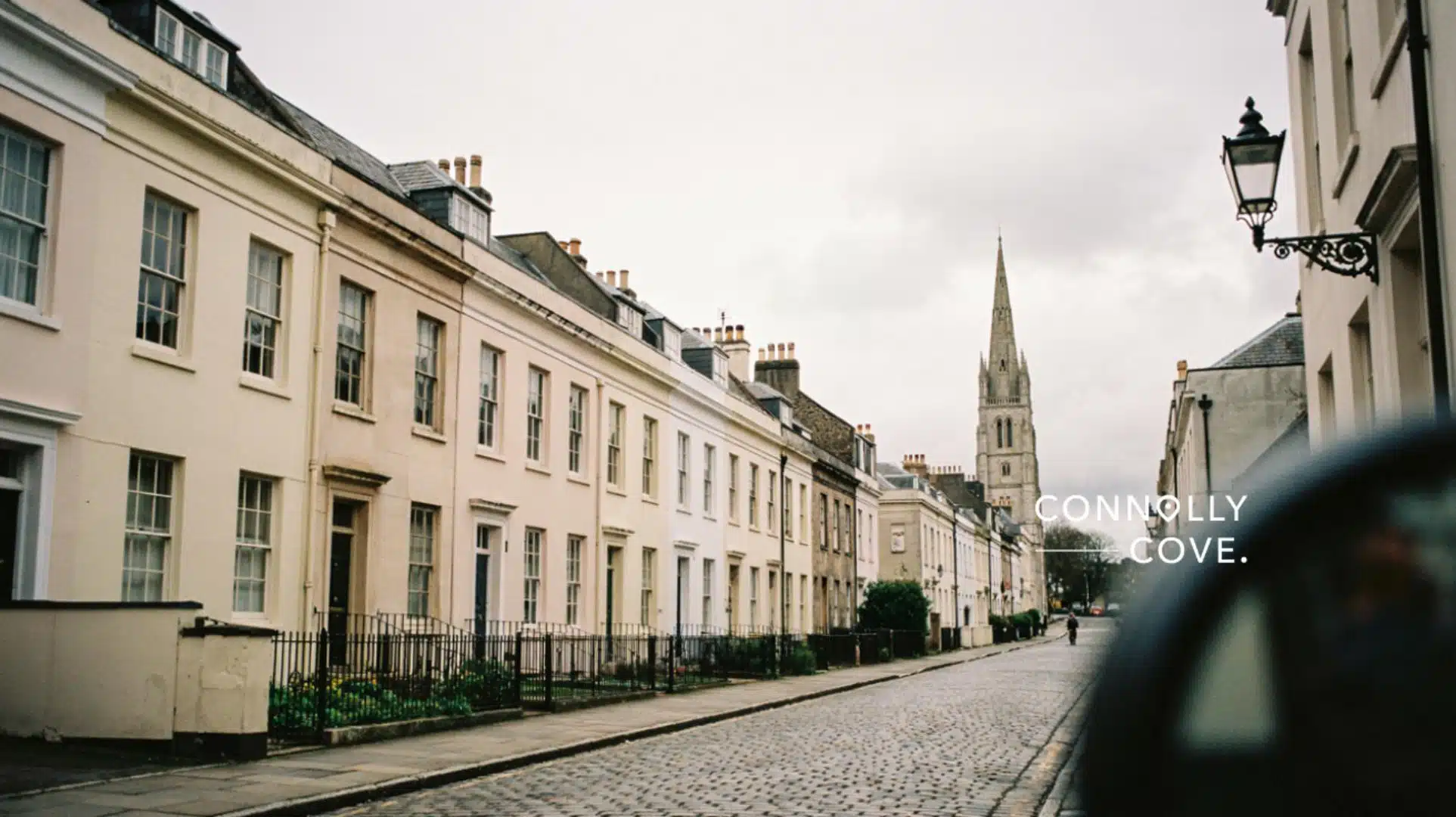
Armagh works on similar logic. Known as Ireland’s ecclesiastical capital since Saint Patrick founded a church there in 445 AD, Armagh has two cathedrals facing each other across the city centre and a Georgian core that most visitors to Ireland never see, because Dublin and Belfast usually get the itinerary instead. It’s one of several northern cities that reward a longer stop than a day trip allows.
Northern Ireland’s peace walls add a more recent layer to that idea of hidden division. Built from 1969 onwards, some are still standing today, and some communities close their gates at night even now. Walking tours led by former residents tend to give a far more honest account of that history than a coach tour ever could.
Global Cities That Escape the Crowds
Away from anything genuinely classified, some cities are secret only in the sense that most travel itineraries skip them. Matera, in southern Italy, is one of the best examples. People lived in its cave dwellings, the Sassi, until the 1950s, when the Italian government relocated residents because of poor sanitation; today those same caves house hotels, restaurants and a UNESCO World Heritage listing.
Plovdiv, in Bulgaria, claims to be one of Europe’s oldest continuously inhabited cities, with a history stretching back thousands of years under Thracian, Roman, Ottoman and Bulgarian rule in turn. Its old town sits on cobbled hills above a modern city that most European trip planners overlook entirely in favour of Sofia.
Gwangju, in South Korea, carries a different kind of significance. It was the centre of the May 1980 uprising against military rule, an event that shaped modern South Korean democracy, and the city now honours that history through memorials and museums rather than hiding from it. All three cities cost noticeably less to visit than their more famous neighbours, in similar territory to some of the destinations on ConnollyCove’s guide to the world’s cheapest places to travel.
Mythological and Lost Cities
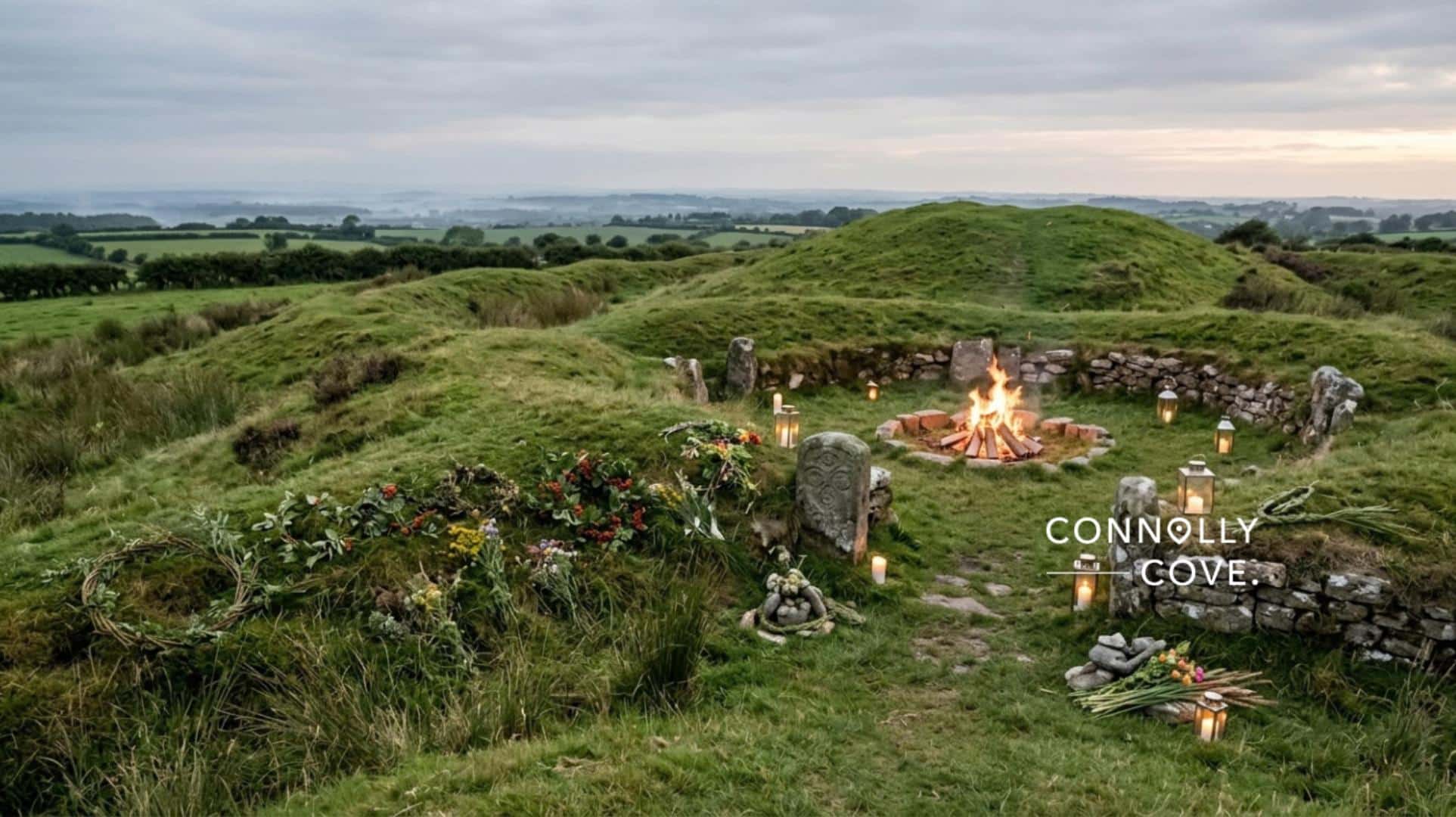
Not every secret city was ever real, and Irish folklore has one of the best examples. Hy-Brasil is a phantom island said to appear off Ireland’s west coast once every seven years before vanishing back into the mist; mapmakers marked it on charts of the Atlantic well into the 1800s, though no one has ever found it. It sits alongside the rest of Ireland’s mythological tradition, including the Tuatha Dé Danann, the legendary race said to have ruled Ireland before retreating into the sídhe, or fairy mounds, that also produced many of Celtic mythology’s best-known creatures.
Grianan of Aileach, a stone ring fort on a hilltop in County Donegal, is a real, visitable version of that same idea. It was the seat of the Uí Néill kings for centuries, and standing on its walls today, with three counties visible in every direction, it’s easy to understand why a kingdom would choose that spot for its stronghold.
Türkiye’s underground city of Derinkuyu takes the concept further underground, literally. Cut into soft volcanic rock in Cappadocia, its many levels are thought to date back well over two thousand years, and the complex could reportedly shelter thousands of people along with their livestock during raids, complete with ventilation shafts and stone doors that sealed from the inside.
Planning a Responsible Visit
Visiting any of these places well starts with research beyond a highlights reel. Closed cities like Oak Ridge and Ozersk now welcome visitors, but some sections remain restricted, so it’s worth checking current access rules before travelling rather than assuming a place is fully open just because it appears on a map now.
For overlooked cities, the best etiquette is simple: treat a quiet city the way you’d want a stranger to treat your own hometown. Shop in family-run places rather than chains, keep noise down in residential streets, and treat these as lived-in cities, not open-air museums.
Traditional Irish proverbs have plenty to say about patience and looking beyond the obvious, and that’s not bad advice for city breaks either. The best version of a place is rarely the one everyone else already knows about.
The Real Appeal of Secret Cities
Whether a city was locked away by a government or simply left off the usual travel shortlist, the appeal is the same: somewhere that hasn’t been fully explained to you yet. ConnollyCove covers cities like these across Ireland, the UK and further afield, usually with an eye on the history that made them what they are rather than just the photo opportunity.
For more of Northern Ireland’s walled towns and folklore-linked landmarks, explore ConnollyCove’s travel guides, or follow our video coverage on the ConnollyCove YouTube channel. Next time you’re mapping out a trip, leave room for at least one place you had to look up twice. That’s usually where the better story is.
FAQs
Here are quick answers to the questions people ask most often about secret cities, both the real ones and the mythological kind.
What is the most secret city in the world today?
Ashgabat in Turkmenistan and Mezhgorye in Russia are often named as today’s most restricted cities, both still limiting independent travel and photography in parts. Neither is fully closed to visitors, but both need far more planning than an average city break.
Are there any secret cities in the UK or Ireland?
Not in the military sense, but Derry’s walled centre comes close to the idea, and England’s Corsham is known for its former nuclear bunkers. Most of what counts as “secret” in Ireland and the UK is really about scale, since cities like Armagh and St Davids are genuinely small.
How do you pronounce Armagh, and what does it mean?
Armagh is pronounced ar-MAH, from the Irish Ard Mhacha, meaning “Macha’s height”, after the goddess Macha in Irish mythology. It’s one of Ireland’s oldest place names still in everyday use.
Are secret cities and overlooked cities expensive to visit?
Usually cheaper, not more expensive, since these cities haven’t built the tourist pricing that comes with fame. Matera, Plovdiv and Armagh all cost noticeably less than Rome, Sofia’s better-known rivals, or Dublin and Belfast.
When is the best time to visit hidden cities in Ireland or the UK?
Late spring and early autumn give the best mix of good weather and thinner crowds. Summer school holidays bring more visitors to even the quietest spots, so shoulder-season travel tends to suit these cities better.
Can tourists actually visit former “closed” cities like Oak Ridge or Ozersk?
Yes, both are open to visitors now, though some facilities and archives remain restricted. It’s worth checking current entry requirements before travelling, since rules around former military sites can change.