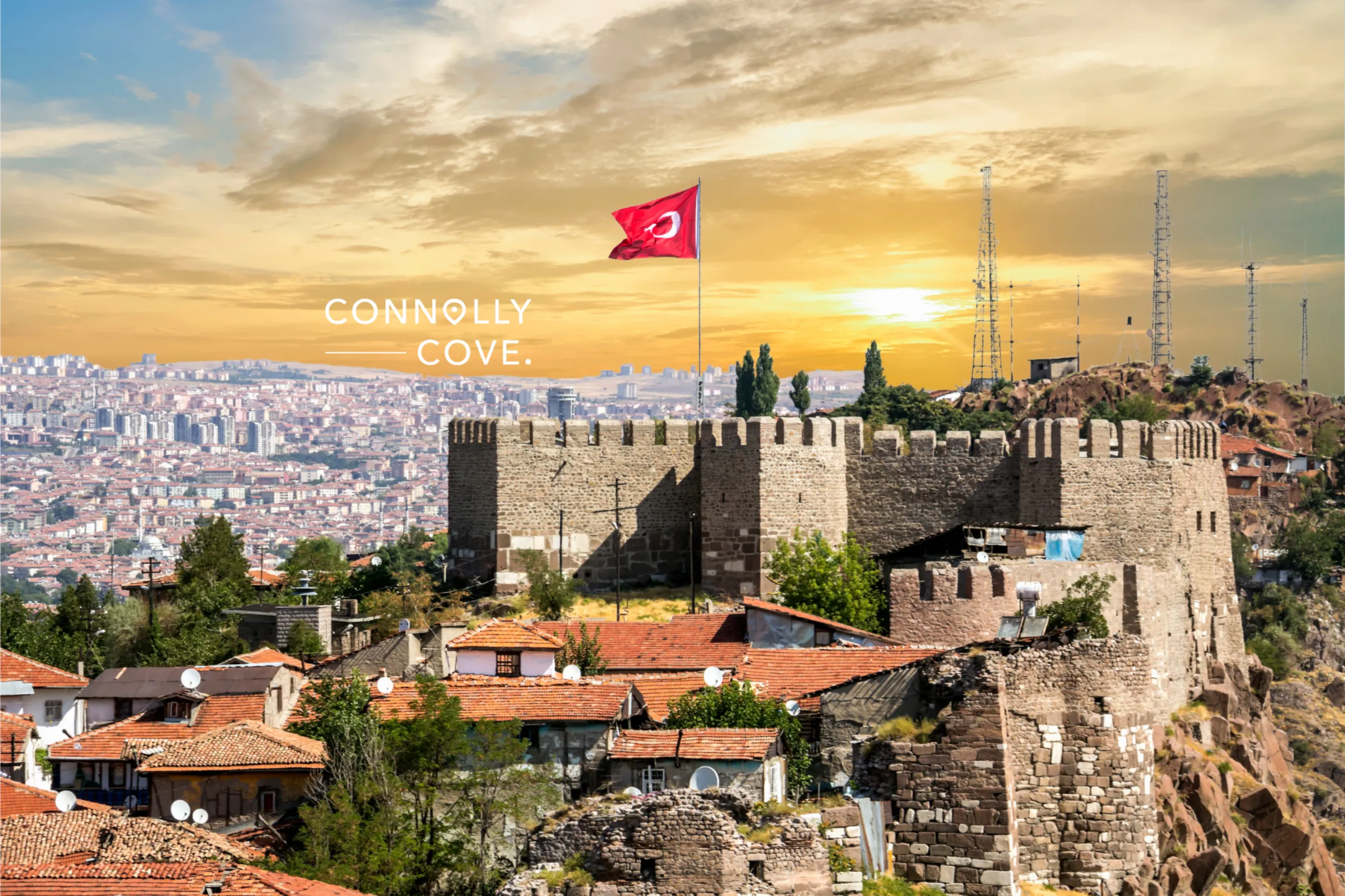
Türkiye’s castles stand as magnificent testaments to the country’s rich and vibrant history. These substantial fortifications, once towering over medieval cities, can be found in every corner of the country, each with its unique beauty and story. Nestled amid Türkiye’s diverse landscape, these castles serve as timeless guardians of the nation’s past, offering visitors an unforgettable glimpse into centuries of fascinating history.
These magnificent fortresses have witnessed centuries of change across the country’s diverse landscapes. They’ve stood through the rise and fall of empires and observed the ebb and flow of trade and culture. In this exploration of the castles in Türkiye, we journey through time, uncovering architectural marvels, historical importance, and captivating stories these castles offer. From the Hittites and Romans to the Seljuks and Ottomans, these castles provide unique insights into different cultures and eras.
Table of Contents
Historical Significance
Castles in Türkiye hold significant historical, cultural, and architectural importance for several reasons:
Strategic Defense: Many castles in Türkiye were strategically positioned to defend against external threats and invasions. They played crucial roles in protecting cities, regions, and trade routes from enemy forces throughout history. These fortifications served as strongholds during conflicts, safeguarding the inhabitants and cultural heritage of the areas they defended.
Historical Significance: Castles often date back to ancient civilisations, such as the Hittites, Urartians, and Romans, and have witnessed the rise and fall of various empires, including the Byzantine and Ottoman Empires. They are invaluable historical witnesses to the region’s complex past.
Architectural Heritage: Many castles showcase remarkable architectural and engineering achievements. They often feature well-preserved walls, towers, gates, and other structures that reflect the architectural styles and construction techniques of the periods in which they were built.
Tourism Value: Today, these castles are popular tourist attractions, welcoming visitors from around the world. They provide educational opportunities to learn about Türkiye’s history, culture, and architecture.
In summary, castles in Türkiye are living testaments to the country’s history, culture, and architectural achievements. They are tangible links to Türkiye’s rich and diverse past and offer invaluable insights into its heritage.
Must-Visit Castles in Türkiye
With its rich history and strategic location, Türkiye is home to numerous castles and fortresses that have played pivotal roles throughout the centuries. While determining the absolute “best” castle in Türkiye is challenging, here are some of the most notable ones that deserve a place on your itinerary:
Bodrum Castle
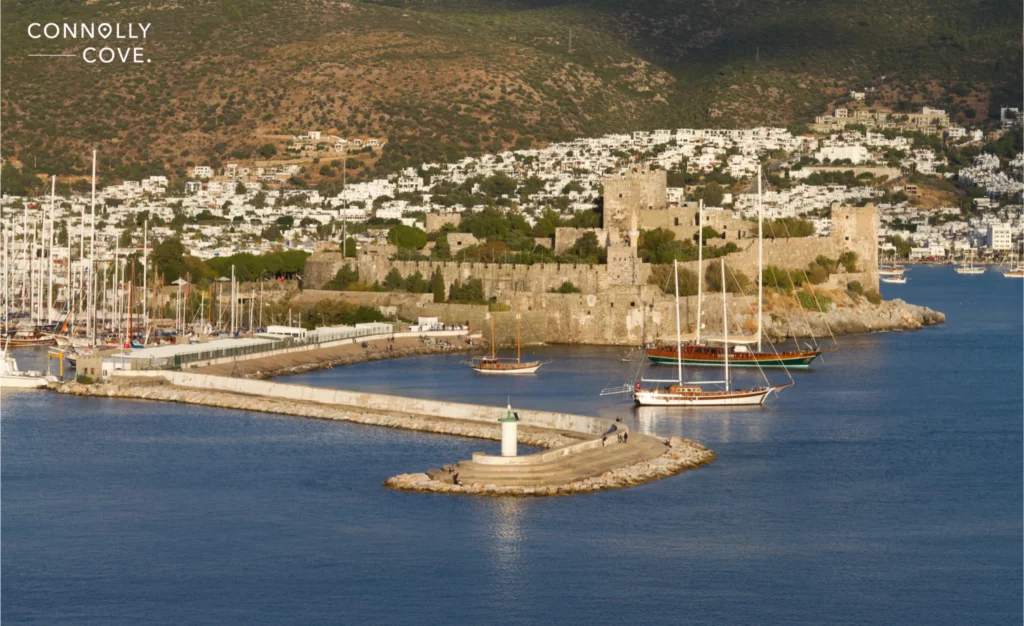
Bodrum Castle, also known as the Castle of St. Peter (Turkish: Bodrum Kalesi or Aziz Petrus Kalesi), is one of the most iconic landmarks in Bodrum, a famous coastal town on the southwest coast of Türkiye, along the Aegean Sea. This impressive castle has a unique history and has been a key attraction in Bodrum for centuries.
History: Bodrum Castle was constructed in 1402 under the orders of the Knights of St. John, a Christian military order. It was initially built as a defensive castle during the reign of the Ottoman Empire to protect the region from potential invaders, especially pirates. The castle’s construction took several decades to complete. It was initially used as a military stronghold and a prison.
Architecture: Bodrum Castle is an enthralling example of medieval architecture and a must-see for any visitor to Bodrum—a prime example of Gothic and Renaissance military architecture. It features high stone walls, brutal towers, and a deep moat. The castle’s design reflects the strategic importance of Bodrum’s location.
Museum of Underwater Archaeology: Today, Bodrum Castle is home to the Bodrum Museum of Underwater Archaeology. This museum is one of the most renowned globally and showcases an impressive collection of artefacts recovered from shipwrecks in the Aegean Sea. Some highlights include amphorae, glassware, and various archaeological finds.
Courtyards and Towers: Within the castle complex, you can explore several courtyards and towers, each with its unique character. Visitors can also climb to the top of the castle for panoramic views of Bodrum and the surrounding sea. The castle is on a peninsula overlooking Bodrum’s harbour, offering spectacular views of the town and the Aegean Sea.
Events: Besides its historical significance, Bodrum Castle is renowned for events and festivals. The castle grounds are often used for concerts, art exhibitions, and other cultural events. The castle also hosts several annual festivals, including the Bodrum Kalesi Jazz Festival and the Bodrum International Theatre Festival.
Visiting Bodrum Castle is a fantastic way to immerse yourself in the history and culture of the region while enjoying stunning vistas of the Bodrum Peninsula. The visiting hours for Bodrum’s historical sites and museums may vary depending on the season, but typically, it is open from 08:30 AM to 05:00 PM. The visiting hours may extend in summer when tourists flock to the country.
Alanya Castle
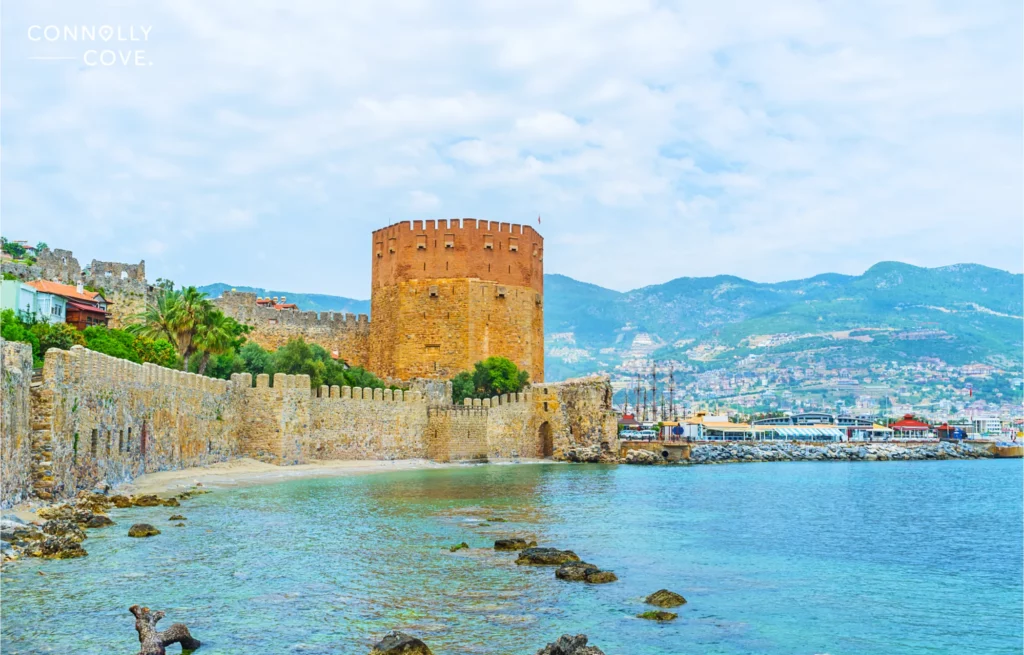
Alanya Castle, also known as Alanya Kalesi, is a historic fortress located in the coastal town of Alanya on the southern coast of Türkiye. This castle is one of the most iconic landmarks in the region and holds a significant place in Türkiye’s history and culture.
History: Most of Alanya Castle was created in the 13th century during the Seljuk Sultanate of Rûm after the city was conquered by Alaeddin Keykubad in 1220. It was part of a building campaign that included the Kızıl Kule Tower, which has become the symbol of Alanya. The Seljuks fortified and expanded the castle to protect the town of Alanya and its essential harbour.
After the Ottoman period, the castle stopped being purely defensive, and many villas were built inside the walls during the 19th century.
Architecture: The castle was built on the remains of earlier Byzantine and Roman fortifications, 250 metres high on a peninsula which is rocky and jutting into the Mediterranean Sea. It had a 4-mile-long wall dotted with 140 towers. Alanya Castle is a fine example of medieval military architecture. The design reflects the Byzantine and Seljuk styles in the building.
Within the castle walls, you can explore a complex of historic structures, including a cistern, a Byzantine church, and a Seljuk-era palace.
Panoramic Views: Alanya Castle provides a fantastic, breathtaking panoramic view. It is one of the main features of the castle. Visitors can enjoy stunning vistas of Alanya, its harbour, the Mediterranean Sea, and the Taurus Mountains from the high vantage points within the castle.
Tourism: Alanya Castle is a popular tourist destination, attracting history enthusiasts and travellers seeking beautiful scenery. It’s a picturesque exploring location with narrow streets, old stone buildings, and vibrant gardens. Visitors can find many activities to do in this unique and exciting place. The castle is open to the public from 08:00 AM to 05:00 PM.
Uçhisar Castle
Uçhisar Castle, also recognised as Uçhisar Kalesi, stands as a distinct and remarkable historical site in Uçhisar within the heart of the Cappadocia region in central Türkiye. It ranks among the most prominent landmarks in Cappadocia and is renowned for its unique conical shape resulting from the interplay of natural rock formations and ancient manufactured structures.
Some records cite that it was built in the 14th century, while other references say the castle’s creation dates back to the 12th century or earlier. Though there are different creation dates, it’s undeniable that the castle holds within its rocks a rich history.
Geological Formation: Uçhisar Castle is primarily constructed from tuff, a soft volcanic rock abundant in the Cappadocia region. Over centuries, wind and water erosion have fashioned the tuff into the distinctive conical form that characterises the castle. This natural formation provided a solid foundation for constructing a fortified fortress.
History: The castle boasts a long history that traces its roots to ancient times. Due to its vital location in the district, it served as a dwelling for various civilisations, including the Hittites and early Christians. During the Byzantine and Roman periods, it functioned as a lookout point and was fortified for defensive purposes.
Recognising the strategic significance of Uçhisar Castle, the Seljuks, and subsequently the Ottomans, expanded the site. They incorporated caves and tunnels into the complex, which served multiple purposes, including storage, habitation, and escape routes—features that can still be explored today.
Panoramic Views: The primary allure of Uçhisar Castle lies in the scenic vistas surrounding the Cappadocian terrain. Visitors can climb to the castle’s peak and relish the breathtaking prospects of the distinctive rock formations, fairy chimneys, and valleys that have made Cappadocia famous.
Cave Dwellings: A range of cave dwellings and chambers is carved from the rock within the castle. These caves served as residences for inhabitants and offered shelter during strife. Some of these caves have undergone restoration and now function as accommodations or shops.
Tourism: Uçhisar Castle is a desirable destination in Cappadocia and constitutes a customary stop for travellers exploring the region. The spot will allow you to discover the history of Cappadocia and its natural splendour while affording brilliant photography opportunities.
Uçhisar Castle is considered a UNESCO World Heritage site. Typically, the site is open from around 8:00 AM to 05:00 PM, and it may extend to 07:00 PM during the busy summer season.
Rumeli Hisarı (Rumeli Fortress)
Located on the European shores of the Bosphorus Strait in Istanbul, Rumeli Hisarı is a magnificent Ottoman fortress built in 1452 by Sultan Mehmed II. This strategic fortification played a crucial role in the Ottoman conquest of Constantinople (now Istanbul) in 1453.
Historical Significance: The fortress was specifically designed to control naval traffic through the Bosphorus, cutting off potential Byzantine reinforcements from the Black Sea during the siege of Constantinople. Paired with its sister fortress, Anadolu Hisarı, on the Asian side, Rumeli Hisarı helped create a naval blockade that proved decisive in the fall of the Byzantine Empire.
Architectural Features: The fortress features three main towers and 13 small watchtowers, with walls reaching up to 5 meters thick in some sections. Its unique design resembles the Arabic letters of Muhammad’s name, showcasing the Ottoman connection between military strategy and cultural symbolism.
Modern Attraction: Today, Rumeli Hisarı serves as an open-air museum and cultural venue. The fortress regularly hosts concerts and special exhibitions during the summer months. Its magnificent setting offers some of the most spectacular views of the Bosphorus Strait, making it a popular spot for photography enthusiasts.
Planning Your Visit to Türkiye’s Castles
Planning a castle adventure in Türkiye requires strategic timing and local knowledge. Visit in spring or autumn for ideal weather and fewer crowds. The Museum Pass Türkiye offers excellent value at £35, granting access to multiple historical sites over 15 days. For the most rewarding experience, hire a knowledgeable local guide who can reveal hidden chambers and share captivating stories not found in guidebooks. Allow at least 2-3 hours per castle, wear sturdy shoes with a good grip, and arrive early to capture the magical morning light that brings ancient stones to life.
Best Times to Visit
Spring (April-May) and Autumn (September-October) offer the most pleasant weather conditions for exploring Türkiye’s castles. During these months, you’ll enjoy mild temperatures, fewer crowds, and beautiful natural landscapes.
Summer (June-August) brings hot temperatures, especially in coastal areas and central Anatolia. While this is peak tourist season, many castles have limited shade, making exploration challenging during midday. If visiting in summer, plan your castle visits for early morning or late afternoon.
Winter (November-March) provides a unique perspective with the potential for snow-covered castles, particularly in central and eastern regions. Some sites may have reduced hours during winter months, so checking opening times is essential.
Transportation Options
Getting to Türkiye: Major international airports in Istanbul, Ankara, Izmir, and Antalya offer excellent connections to European and global destinations. Direct flights from the UK and Ireland are available to several Turkish cities.
Domestic Travel:
- Flights: Turkish Airlines and Pegasus Airlines offer comprehensive domestic networks connecting major cities.
- Buses: Türkiye’s extensive intercity bus system is comfortable, affordable, and reaches virtually every town.
- Car Hire: For maximum flexibility, especially when visiting multiple castles, hiring a car is recommended. Major international rental companies operate throughout the country.
- Tours: Organised tours to major castles are available from most tourist centres, often including transportation and guided experiences.
Castle Entrance Fees and Museum Pass
Most castles in Türkiye charge entrance fees ranging from 50-150 TL (approximately £1.20-£3.50) per person. The Museum Pass Türkiye (MüzeKart) offers excellent value for visitors planning to see multiple historical sites, providing access to most state-run museums and archaeological sites for 15 days at a cost of around 1500 TL (£35).
Practical Tips
- Wear comfortable shoes with good grip, as castle grounds often feature uneven surfaces and steep sections.
- Carry water and sun protection, especially during the summer months.
- Allow sufficient time – most castle visits require 2-3 hours to fully explore.
- Check photography policies – some museums within castles may restrict photography or charge additional fees.
- Consider hiring a local guide for deeper historical context and access to lesser-known areas.
Photography Tips for Capturing Türkiye’s Castles
Türkiye’s castles offer exceptional photography opportunities, from sweeping landscapes to intricate architectural details. Here are some tips for capturing stunning images:
Best Times for Photography
- Golden Hour: The hour after sunrise and before sunset provides warm, soft lighting that enhances the stonework and creates dramatic shadows.
- Blue Hour: Just before sunrise or after sunset offers a magical blue light that contrasts beautifully with illuminated castles.
- Seasonal Considerations: Spring brings wildflowers around many castles, while autumn offers golden landscapes, particularly in Cappadocia.
Recommended Equipment
- Wide-angle lens for capturing the entirety of these massive structures
- Telephoto lens for details and distant views
- Tripod for low-light situations, especially at sunset or for interior shots
- Polarising filter to enhance sky contrast and reduce reflections
Composition Ideas
- Frame castles within their natural surroundings to show their strategic positioning
- Include people in some shots to provide scale and bring the historical sites to life
- Look for reflections in water for castles like Bodrum Castle
- Capture the interplay of light and shadow on castle walls
- Don’t forget interior details like archways, spiral staircases, and ancient stonework
Editing and Sharing
After capturing your castle photography, consider enhancing your images with photo editing software to bring out the rich textures and colours. We recommend creating a cohesive collection that tells the story of your castle explorations.
Share your castle photography on social media with hashtags like #TurkishCastles and #TravelTurkiye, and tag @ConnollyCove for a chance to be featured on our platforms.
Digital Experience of Türkiye’s Castles
In today’s digital age, exploring these magnificent historical sites extends beyond physical visits. ConnollyCove helps you experience Türkiye’s castles through multiple digital channels:
Virtual Tours and 360° Experiences
Many of Türkiye’s most significant castles now offer virtual exploration options. These digital experiences allow you to:
- Explore castle interiors that may be difficult to access in person
- View detailed reconstructions of how castles appeared in their prime
- Experience seasonal variations and different lighting conditions
- Access educational content about historical events and architectural features
Our team at ConnollyCove can help cultural heritage sites develop engaging virtual experiences that complement physical visits and reach global audiences.
Social Media and Content Strategy
Türkiye’s castles provide exceptional content opportunities for destination marketing:
- Instagram: Spectacular castle photography drives engagement and inspiration
- YouTube: Video tours and historical documentaries showcase the scale and significance
- Pinterest: Cultural and historical information creates valuable reference content
- TikTok: Short-form videos highlighting unique features appeal to younger audiences
For cultural organisations and tourism boards, we offer comprehensive content strategy services to showcase these historical treasures effectively across digital platforms.
Website Development for Historical Sites
Many of Türkiye’s castles would benefit from an enhanced online presence. Our web development team specialises in creating:
- Mobile-responsive websites with virtual tours
- Multilingual content for international visitors
- Interactive historical timelines
- Online booking systems for special events and guided tours
- Educational resources for schools and researchers
Castle-Themed Itineraries
Discover Türkiye’s majestic fortresses with our expertly crafted castle routes. The Ottoman Fortresses Trail takes you from Istanbul’s strategic Rumeli Hisarı to coastal Bodrum Castle in just 7 days. For unique landscapes, our 5-day Cappadocia Castle Journey explores Uçhisar’s cave dwellings and Anatolia’s ancient strongholds. Coastal castle enthusiasts will love our Mediterranean route featuring Alanya’s dramatic clifftop fortress and Mamure Castle’s pristine seaside walls. Each itinerary blends UNESCO sites, panoramic viewpoints, and authentic local experiences to create unforgettable historical adventures.
The Ottoman Fortresses Route (7-10 Days)
Perfect for those interested in military history and the Ottoman Empire’s strategic defensive network. This itinerary includes:
- Rumeli Hisarı and Anadolu Hisarı in Istanbul
- Kilitbahir Castle on the Gallipoli Peninsula
- Bodrum Castle on the Aegean coast
- Alanya Castle on the Mediterranean
Cappadocia and Central Anatolia Castle Tour (5-7 Days)
Ideal for those fascinated by unique geological formations and cave dwellings:
- Uçhisar Castle – The highest point in Cappadocia
- Ortahisar Castle – Less crowded with authentic village life
- Ankara Castle – Historical heart of the capital city
- Kayseri Castle – Impressive Seljuk-era fortification
Coastal Castles Cruise (10-14 Days)
Combine historical exploration with beautiful coastal scenery:
- Bodrum Castle – With its impressive Museum of Underwater Archaeology
- Alanya Castle – Spectacular Mediterranean views
- Mature Castle – One of Türkiye’s best-preserved seaside fortresses
- Sinop Castle – Overlooking the Black Sea
Conclusion
Türkiye’s wealth and diverse history have left an indelible mark on its landscape, and its castles are magnificent guardians of its past. From the ancient marvels like Ankara Castle to the majestic coastal castles like Bodrum Castle and the captivating natural wonder of Uçhisar Castle in Cappadocia, these castles offer enthralling journeys through time and culture.
Whether you seek panoramic views, architectural marvels, or a glimpse into Türkiye’s storied past, these castles are the gateways to a world of heritage and discovery. Through careful preservation and digital documentation, these historical treasures will continue to inspire and educate visitors for generations to come.
At ConnollyCove, we’re passionate about helping travellers experience these magnificent historical sites, both through our comprehensive travel guides and by supporting cultural heritage organisations with digital marketing, content creation, and web development services. We’d love to hear about your experiences exploring Türkiye’s castles and help plan your next historical adventure.
Frequently Asked Questions
Wondering about Türkiye’s ancient fortresses? Hoşap Castle claims the title of oldest, with origins dating to the 9th century BCE. Families will find Bodrum Castle’s Underwater Archaeology Museum captivates children, while Uçhisar’s cave networks spark young imaginations. For photography enthusiasts, pack both wide-angle and zoom lenses to capture sweeping landscapes and intricate architectural details. Mobility-challenged visitors should note that while Bodrum offers some accessibility features, hilltop fortresses like Alanya present challenges. For the richest experience, consider hiring a knowledgeable local guide who can unlock hidden chambers and share fascinating historical context beyond the guidebooks.
What is the oldest castle in Türkiye?
While many fortifications have ancient foundations, the oldest relatively intact castle is generally considered to be Hoşap Castle in Van province, with sections dating back to the Urartian period (9th century BCE), though most of the current structure is from the 17th century.
Are Türkiye’s castles accessible for visitors with mobility challenges?
Accessibility varies significantly between sites. Bodrum Castle has implemented some accessibility improvements, but many hilltop castles like Alanya and Uçhisar present significant challenges. We recommend contacting sites directly before visiting or arranging through a specialised tour operator who can provide accurate accessibility information.
What should I wear when visiting castles in Türkiye?
Comfortable walking shoes with good grip are essential, as castle grounds often feature uneven surfaces. Dress in layers, as temperatures can vary significantly between exposed ramparts and interior spaces. Sun protection is important year-round, particularly in summer.
Can I visit Turkish castles with children?
Many castles make excellent family destinations. Bodrum Castle’s Museum of Underwater Archaeology particularly appeals to children, while the cave dwellings of Uçhisar Castle create a sense of adventure. Consider bringing water and snacks, and planning shorter visits with younger children.
What photography equipment should I bring?
A wide-angle lens is useful for capturing entire structures, while a zoom lens helps with architectural details. A tripod is valuable for low-light conditions inside castle interiors. Check if any museums within castles have photography restrictions or require additional permits.
Do I need a guide to visit these castles?
While independent exploration is possible, a knowledgeable guide significantly enhances the experience by providing historical context and access to areas you might otherwise miss. Many castles offer official guided tours in multiple languages, or you can arrange private guides through tour operators.