


The Ancient City of Marsa Matrouh
Updated On: March 21, 2024 by  Ahmed Samir
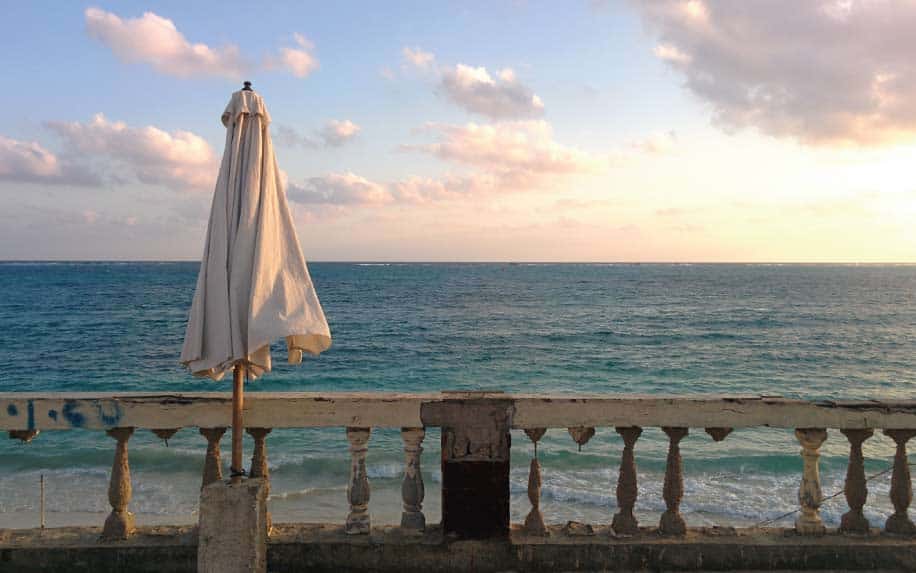
Marsa Matrouh is considered one of the beautiful tourist cities that many Egyptians and foreigners from different countries of the world visit to spend their time at its lovely beaches and hotels. Marsa Matrouh is located 200 km west of Alexandria, close to the Libyan border.
The city is well known for its long history, going back to the period of Alexander the Great, who was said to have built the city. In the old days, Marsa Matruh was called Ammonia because it was the beginning of the road leading to Siwa where there was a temple of Amun that Alexander the Great visited regularly. During the Roman era, it was an important port for the export of goods and crops to Rome.
Marsa Matruh has a moderate climate with cold winters and warm, dry summers. There are also many beaches with soft sand and beautiful crystal clear water.
Marsa Matrouh is famous with the locals for its wonderful beaches that are spread through the city, and also the archaeological and tourist attractions that people love to visit and see, especially in the summer. So, let us see the most famous places that you can visit while you vacation in Marsa Matrouh, one of Egypt’s top summer destinations.
The Most Important Archaeological and Tourist Attractions in Marsa Matrouh
Marsa Matrouh has a rich and diverse range of attractions. Here are some of the best places to visit on your Egyptian holiday.
1. Rommel’s Hideout
It is located on one of the most beautiful beaches in Marsa Matrouh. The beach is also named after Rommel and is considered one of the most popular tourist destinations in the city, where there are many water sports, such as windsurfing and skiing with games like banana boats and jet skis.
Rommel’s Hideout is a trench dug into the mountain rocks that the commander of Hitler’s guard force, used to hide in during World War II. In 1977, the cave was turned into Rommel’s Museum, where Manfred Rommel, mayor of Stuttgart, sent some belongings of his father to display in the museum. The museum contains some personal collectibles like his own coat, some photographs, and master maps, in addition to some remnants of war helmets.
The place was closed for several years due to the emergence of some cracks in the cave which represents danger, and with the beginning of the restoration work, the cave was sterilized by spraying a substance to stabilize soil particles to prevent erosion and after that, it was opened again to tourists.
2. Queen Cleopatra’s Bath
The Marsa Matrouh region witnessed a chapter of the love story of Cleopatra and Mark Antony, where some stories say that after the assassination of Julius Caesar, ruler of Rome, Queen Cleopatra invited Mark Anthony to visit Egypt, and he was impressed with the queen and married her.
The Egyptian Queen built a palace and its ruins were found next to her famous bath near the city of Marsa Matrouh. It is located about 8 kilometres northwest of the city of Marsa Matruh, and visitors to the bath can walk on the glass walkway as a crossing to the bath, which is 70 meters long until they reach the natural bath in the middle of the sea.
The makeshift rock bath in the sea is a natural swimming pool, and it is believed that this area was the resting place of Cleopatra and Mark Antony. Tourists go there to have a natural sunbath, enjoy the fresh air, calm and landscape. Queen Cleopatra’s bath consists of a huge rock in which seawater passes through naturally carved tunnels so that the water enters the rock and flows back out through its openings.
3. Libya Market
Libya Market is the largest commercial area in Marsa Matrouh. It is located in a street called Al Galaa and it consists of 350 shops. The market was called by that name because it is famous for selling products that are also sold in Libya.
It is a popular market in the city that tourists come to during the summer months to buy herbs, Bedouin products, and pure olive oil, for which the people of Siwa and Bedouins of the desert are famous. Also there, you can buy clothes, bags, and school supplies imported from abroad, which merchants sell at the cheapest prices, in addition to sanitary ware and detergents, especially for their quality and low prices, which are not found in the markets of major cities.
4. Alexandria Street
Alexandria Street is one of the largest streets in the city of Marsa Matruh, and is the main street of the city, connecting several parts of the city and in the same street, there are many shops, famous hotels, and Egyptian trade fairs. The street was named by that name due to the presence of a number of products and clothes from the city of Alexandria, as well as the fact that it has the largest number of visits from Alexandrians each year.
The street also includes the National Circus which offers shows led by the stars of the national circus and the international circus and opens its doors during the summer only.
5. Marsa Matrouh Archeology Museum
The museum is the first of its kind in Marsa Matrouh and includes about 1,000 artifacts from the Pharaonic, Roman, Coptic, and Islamic eras. It is located in the middle of the city in an area of 1560 meters, this museum was opened recently to serve the tourism movement in the city and to be an archaeological and cultural landmark there.
The first floor of the museum includes an open exhibition, with two statues of the Sphinx and statues of some of the kings and leaders who lived on the land of Matrouh, during the different historical eras, such as Ramses II, Ahmose II, and Alexander the Great. The second floor includes small statues of different sizes, hunting tools, spears, swords, coins, astronomy tools, antiquities from the Coptic era, some icons, crosses, and an old manuscript of the Bible, in addition to artefacts from Islamic times such as mashrabiyas, arabesques, carpets, and many other things.
6. El Alamein Military Museum
El Alamein Museum is located 105km on the Alexandria-Matrouh road. It contains many kinds of weapons, armour, and models of the battles of El Alamein and the forces that participated in them, as well as maps of the course of the battles, and some collectibles belonging to the leaders of the armies.
It was opened on 16 December 1965. The museum was developed in coordination with the countries that participated in the war and a hall was added, showcasing the military role of Egypt during the historical periods. The museum underwent several developments before finally reopening on the 50th anniversary of the Battle of the El Alamein on 21 October 1992.
The museum consists of 5 halls. The main hall has murals that tell stories of the war and carved pictures of the leaders of the warring armies, including the English commander Bernard Montgomery and the German commander Erwin Rommel, and war maps of the regions of North Africa.
When you enter the lobby, you will see the memorial, a work of art consisting of 6 white steps on either side of a marble staircase, symbolizing the years of World War II from 1939 to 1945, and at the top of the monument is a model of a group of white pigeons, indicating that the years of war ended in peace.
The 5 halls are named after the countries that participated in the war which are Egypt Hall, Britain Hall, Germany Hall, and Italy Hall, in addition to an open arena for displaying equipment, heavy weapons, and aircrafts.
7. Commonwealth Cemeteries
The Commonwealth Cemeteries are spread in 16 cities in Egypt, one of which is located in the city of El Alamein, on the northern coast of Egypt. There, 7,367 soldiers and officers who participated in this war were laid to rest. You can also find the names of 11,945 of the officers who went missing in the war written on the walls of the tombs. On opposite sides of the road, you’ll find the commonwealth cemetery and the Italian and German cemetery.
The Italian Cemetery is located 5 kilometres west of El Alamein city and its building is very beautiful in terms of architecture. When you visit the cemetery, you will see a chapel, a hall, a small museum, and a mosque, for visitors to the Libyan soldiers who fought on the side of Italy and 4,800 soldiers and officers are buried in the Italian cemetery, the names of the dead and more than 38,000 lost in the desert are written on the walls.
The German cemetery is located 3 kilometres west of the city of El Alamein and overlooks the seashore, it was built on a high hill and there are about 4,231 soldiers and officers buried in it and there is a hall for soldiers’ holdings.
8. Cleopatra’s Eye
It is located in Siwa Oasis, an oasis in the Western Desert that belongs to the Matrouh Governorate administratively and is located about 300 km southwest of the city of Marsa Matrouh. The oasis contains more than 200 natural springs from which water flows continuously, which are used for irrigation, drinking, treatment, and bottling mineral water bottles that are circulated throughout Egypt.
The place attracts tourists who enjoy its beautiful scenery. It was also called the eye of the sun, and sometimes it was called the eye of Juba, and this name was given to it in the Greco-Roman era and it is said that Queen Cleopatra swam in it by herself during her visit to Siwa Oasis. It is the main source of water for more than 840 square kilometres of gardens and orchards in Siwa Oasis, surrounded by palm trees on all sides, and located near the Temple of Amun, Alexander’s coronation hall, and Mount Dakrour.
9. Temple of Ramses II
One of the temples of Ramses II, who was one of the most powerful pharaohs in ancient Egypt, and dates back to the twenty-sixth dynasty. The temple is located about 24 km from Marsa Matrouh, in a place called Om El Rehem and it includes the remains of a temple with hieroglyphic inscriptions. It was discovered by the Egyptian archaeologist Labib Habash in 1942 and you will also find next to the temple the ruins of the Citadel of the Pharaoh, especially the remains of the stone wall surrounding it, which was built to protect Egypt from the attacks of the Libyan tribes.
10. Salt Cave
The cave was made of 20 tons of rock salt extracted from the ground in Siwa Oasis. Foreign experts were hired to build the cave underground in order to serve the influx of medical tourism in Marsa Matrouh.
The components of the cave are entirely made up of natural rock salt, which was used in the construction of the floors, walls, and ceiling of the cave, which makes the proportion of iodine in it very high, and gives 5 elements, including sodium, potassium, manganese and iron, and when inhaling iodine benefits the human for the thyroid gland, opens the pores of the body and treats the sinuses It also treats many skin diseases. The duration of the session inside the salt cave is 45 minutes and it can host 45 people in one session.
Youhana Nassif via Unsplash.
11. Dakrour Mountain
Dakrour Mountain is located in Siwa Oasis south of Marsa Matrouh City, it is one of the famous Pharaonic monuments in Siwa Oasis and many tourists from all over the world come to it for treatment especially from Rheumatism, rheumatoid arthritis, and rheumatoid arthritis.
In the mountain, there are two carved caves dating back to the late Pharaonic or early Ptolemaic period.
12. Temple of Amun
The Temple of Amun is located 3 km east of Siwa. It consists of three parts, the main temple, the governor’s palace, and the guards’ place, and the famous Greek fortune-teller Amon lived there. In 331 BC, Alexander the Great reportedly visited the temple after his conquest of Egypt. Inside the temple is a mosque, a minaret, rooms for priests, corridors, a hall built to receive Alexander and his coronation, and a well of holy water.
The Temple of Amun witnesses an astronomical phenomenon called the vernal equinox, where the sun is perpendicular to the temple twice a year in spring and autumn and the day and night are equal 90 days after the shortest day of the year.
13. Mountain of Death
The Mountain of the Dead is located 2 km from the Siwa area which is considered part of the Marsa Matrouh. This mountain was discovered by accident in 1944 when the people of Siwa sought shelter in the mountain during World War II.
When you visit the mountain, you will see the Tomb of Si Amon, where there are inscriptions that include a drawing representing the gods Nat standing under the sycamore tree and another tomb of Thiber Bathot and this one contains drawings and inscriptions dyed in red and inside there you will see a stone sarcophagus placed on the floor of the burial room.
14. Matrouh Corniche
The corniche is spread through the city, where you can walk in the morning and enjoy watching the beauty of the sea and the lovely nature. Then at night, you can ride something called taftaf, a small train that takes passengers on a ride along the corniche, and also you can sit at any café or restaurant along the corniche. You will love enjoying the weather especially in summer where you can walk and enjoy the fresh air.
Many people who have visited Marsa Matrouh before know that besides all these wonderful places, you can visit many wonderful beaches spread all over the city.
15. Porto Matrouh
Porto Matrouh is considered the most beautiful resort in Egypt on the shores of Matrouh, where there is a full view of the sea. The place contains the largest mall with most of the cafes and international brands and there is also a five-star hotel at the highest level.
Beaches in Marsa Matrouh
Youhana Nassif via Unsplash
1. Agiba Beach
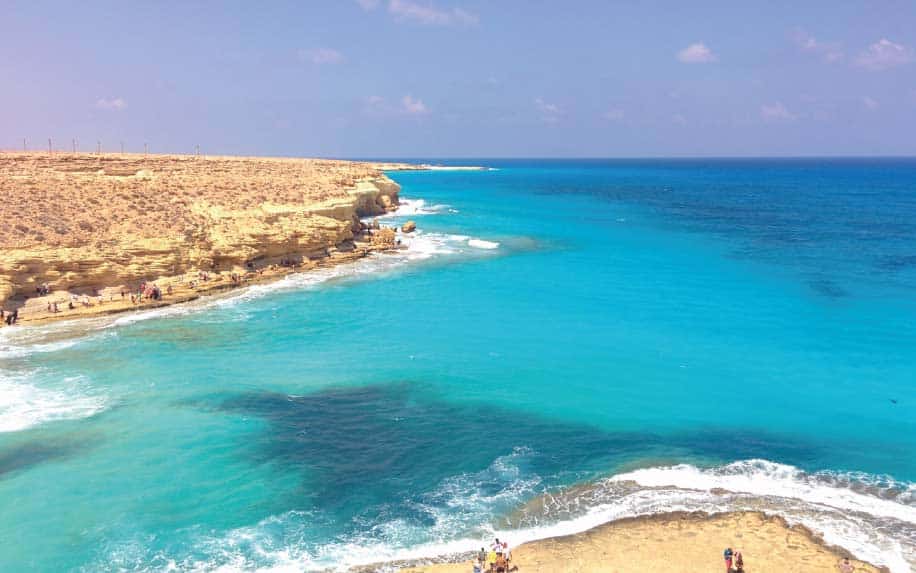
The beach is located 28 km away from Marsa Matrouh, located in the middle of a high plateau above sea level. It is also known as one of the famous beaches not only in Marsa Matrouh but in Egypt and it features beautiful nature and distinctive rocks with its crystal clear water.
2. Obeid Beach
Located 20 km away from the Marsa Matrouh and away from the noise of the city, the beach is well known for its clear and clean water and is also suitable for many water games and sports.
3. Albusite Beach
The beach was named in French Language meaning the beautiful site. Its water is clear and calm where all the visitors can enjoy a lovely day and it is located in the middle of Marsa Matrouh City.
4. El Fayrouz Beach
The beach is located about 3 km away from the city centre, and it is well known for its calm waves and it includes facilities for multiple fun water games.
5. El Gharam Beach
This is the place where the famous late singer Laila Mourad sung a famous song in one of her well-known movies and so the site is visited by many Egyptians every year. In the song, she declares her love for the city while sitting on one of the rocks on the beach which is now called the Laila Mourad rock. El Gharam Beach is the largest beach in Marsa Matrouh and it is located 17 km away from the city.
If you’re planning a trip, you’ll want to read our guide to the best adventures you can have in Egypt.
Top 10 Irish Public Holidays and Traditions to Experience on Your Ireland Holidays
Festivals and Events
18/04/2024
6 Top Mourne Camping Sites for an Unforgettable Experience Under the Stars
Northern Ireland
18/04/2024
Eostre: The Germanic Goddess of Dawn and Spring Equinox Celebrations
Mythology and Folklore
17/04/2024
Explore the Top Hotels in County Cavan for Your Ultimate Getaway
County Cavan
17/04/2024
Irish Golf: Exploring the Top Golf Courses in Ireland
Culture Exploration
17/04/2024