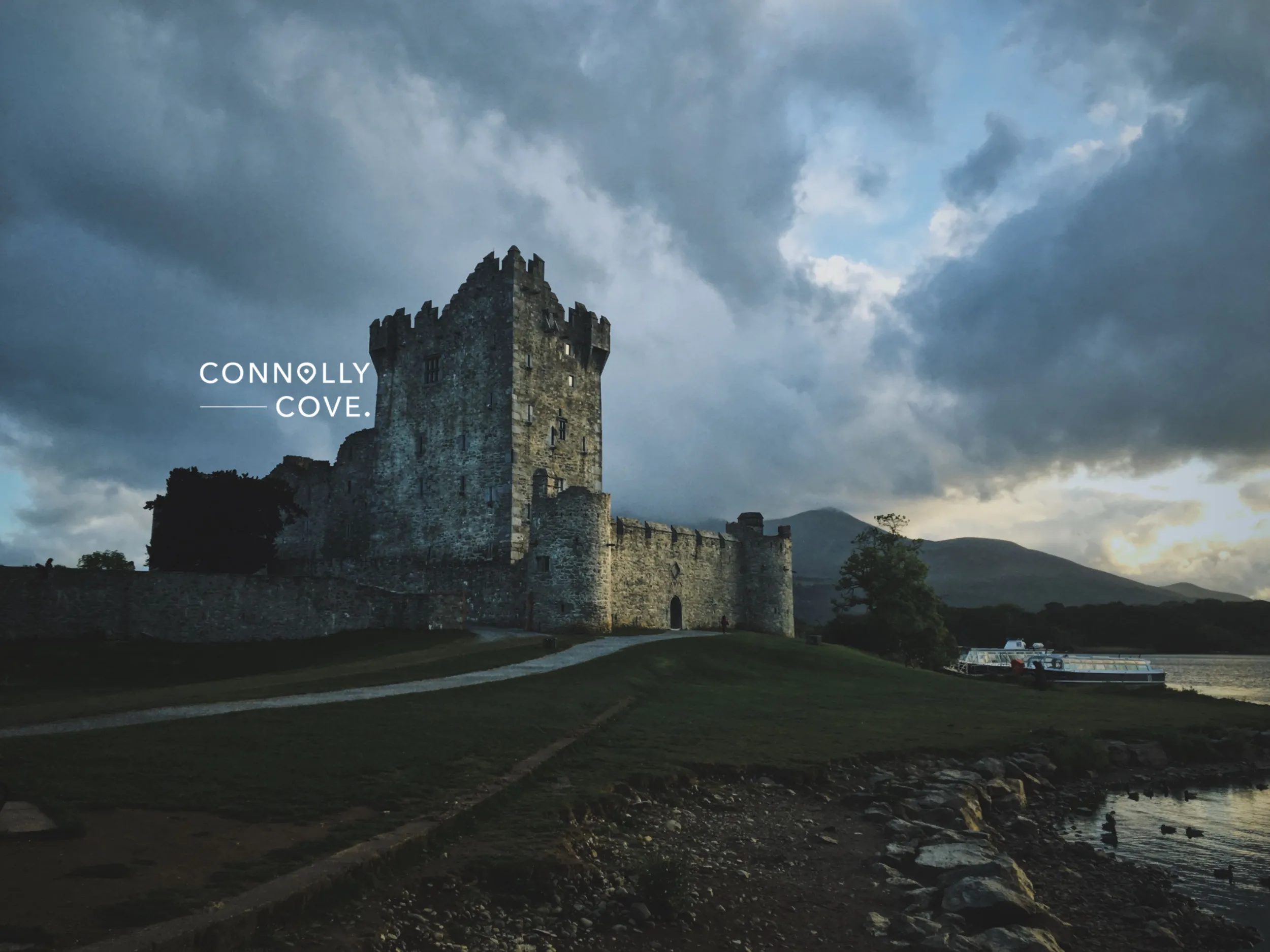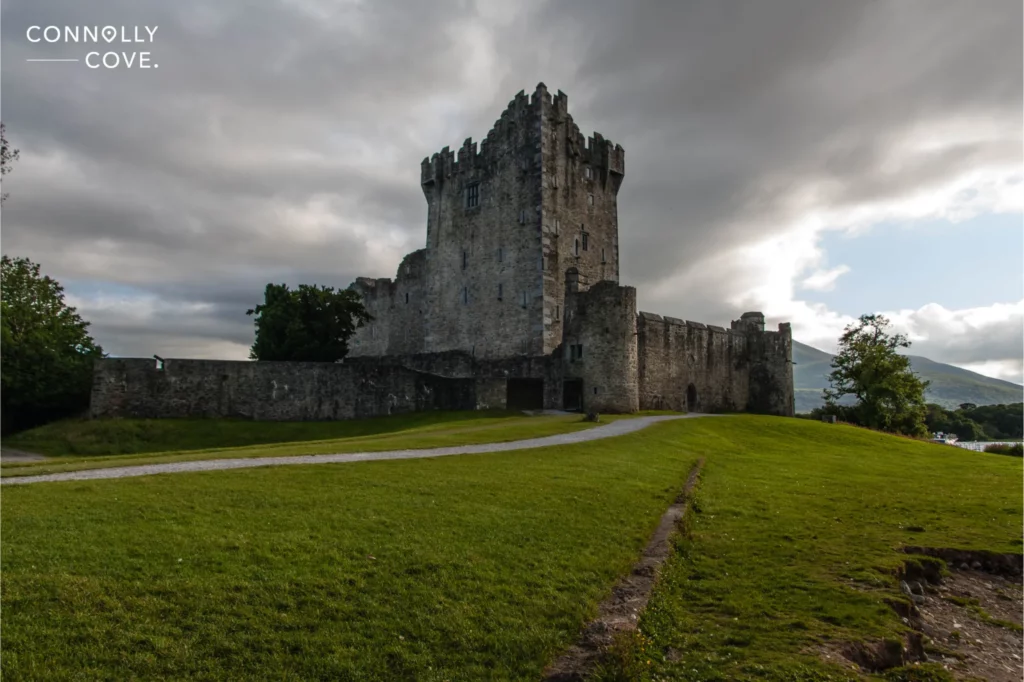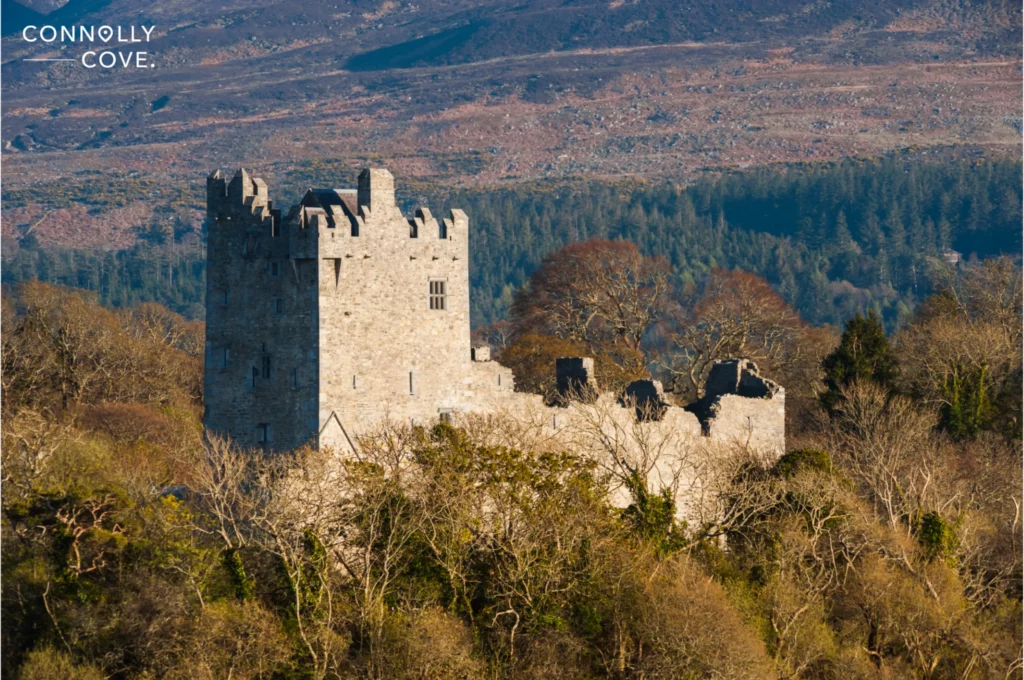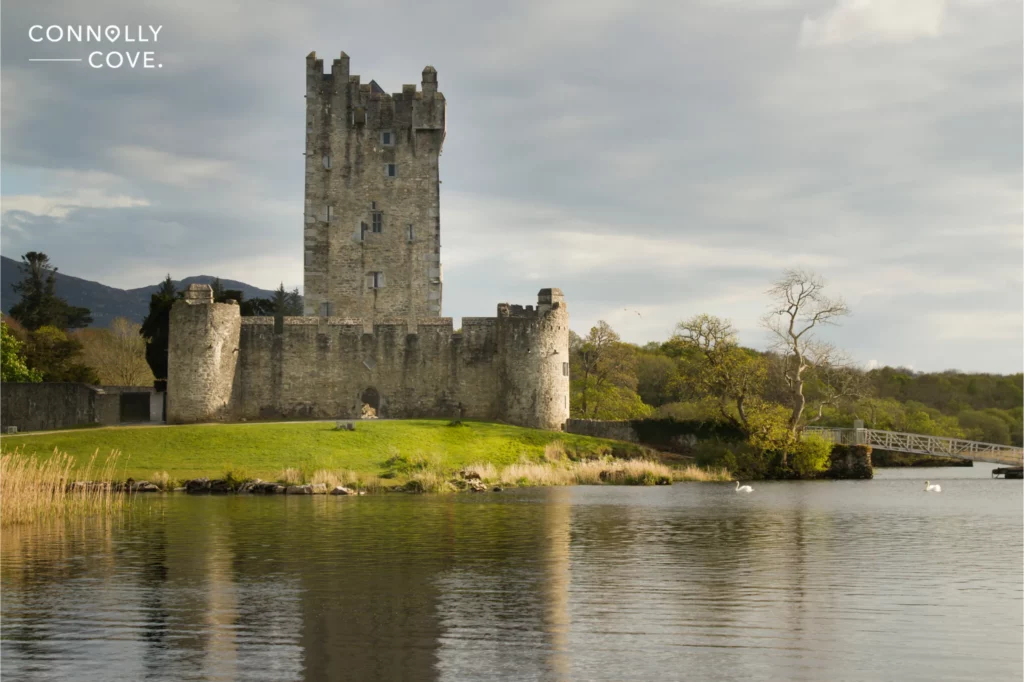


Standing majestically on the shores of Lough Leane in Killarney National Park, Ross Castle represents far more than ancient stone and mortar. This 15th-century fortress serves as a living testament to Ireland’s rich mediaeval heritage while showcasing how modern digital innovation can transform our understanding and experience of historical sites. As both a cultural landmark and a pioneer in digital heritage preservation, Ross Castle offers visitors an unparalleled blend of authentic historical immersion and cutting-edge technological enhancement.
The castle’s commanding presence against the backdrop of Ireland’s most spectacular landscape creates an atmosphere where past and present converge seamlessly. Built by the powerful O’Donoghue clan in the 15th century, this formidable stronghold has witnessed pivotal moments in Irish history, from the turbulent Tudor conquests to the relentless Cromwellian campaigns. Today, it stands as Ireland’s premier example of how digital transformation can breathe new life into heritage tourism, offering experiences that would have been impossible just a decade ago.
Visitors to Ross Castle now encounter not merely a static historical monument, but a dynamic, digitally-enhanced cultural experience that serves as a blueprint for heritage sites worldwide. Through innovative applications of web design, video production, and AI-powered interpretation tools, the castle has become a showcase for how traditional tourism can evolve to meet modern expectations whilst preserving authentic cultural narratives.
Table of Contents
Castle History & Legends
The story of Ross Castle begins in the mists of Irish legend, where history and mythology intertwine to create narratives that have captivated generations. Understanding this rich tapestry requires both traditional scholarship and modern digital tools that can bring these ancient stories to life for contemporary audiences.
The O’Donoghue Mór Legacy and Digital Storytelling
The castle’s most enduring legend centres on O’Donoghue Mór, the chieftain who built this fortress in the 15th century. According to local folklore and tales, this beloved ruler didn’t die in the conventional sense but instead vanished into the depths of Lough Leane, where he now resides in a magnificent underwater palace. The legend states that every seven years, on the morning of 1st May, O’Donoghue Mór emerges from the lake on a spectacular white horse, circling the waters to bless the land and its people.
Modern digital interpretation techniques have transformed how this legend is presented to visitors. Through augmented reality applications and immersive video content, guests can now visualise this mythical emergence whilst standing on the very shores where it allegedly occurs. This blend of ancient storytelling and contemporary technology demonstrates how digital innovation can enhance rather than diminish traditional cultural narratives.
“When we first developed the digital interpretation strategy for Ross Castle, we discovered that technology doesn’t replace authentic storytelling—it amplifies it. The legends become more vivid, more accessible, and more meaningful when visitors can interact with them through multiple sensory channels.” – Ciaran Connolly, Director of ConnollyCove Digital Heritage Solutions.
Architectural Marvel and Construction History
Ross Castle stands as Ireland’s finest example of a late mediaeval stronghold, featuring the quintessential Irish fortress architecture of a prominent keep surrounded by defensive curtain walls. The central tower house, constructed as a robust square structure, was originally enclosed by a bawn—a fortified courtyard with rounded towers positioned at each corner.
Archaeological evidence suggests that when Ross Castle was built, it represented the pinnacle of defensive architecture for its time. The castle’s design incorporated lessons learned from centuries of Irish fortress construction, combining Gaelic building traditions with Norman defensive innovations. The walls, constructed from local limestone, were built to withstand both siege engines and the harsh Atlantic weather that characterises this region.
Digital scanning and 3D modelling techniques have revealed previously unknown architectural details, including evidence of modifications made during different historical periods. These discoveries have been incorporated into virtual reality tours that allow visitors to experience the castle as it would have appeared during different eras, from its original 15th-century construction through its various modifications and eventual restoration.
The Siege of 1652 and Historical Documentation
Ross Castle’s most dramatic historical moment occurred during the Cromwellian conquest of Ireland in 1652. The castle had gained a reputation for being impregnable, leading to the famous prophecy that it could only be taken “when a ship of war can swim on the lake.” This seemingly impossible condition was fulfilled when General Edmund Ludlow transported boats overland and launched them on Lough Leane, forcing the castle’s surrender.
Contemporary digital heritage projects have utilised advanced research methodologies to uncover previously unknown details about this siege. Through digitisation of historical documents, creation of interactive timelines, and development of multimedia presentations, visitors can now experience this pivotal moment with unprecedented clarity and detail.
The siege represents not only a military defeat but also the end of Gaelic Ireland’s political independence. Understanding this context requires sophisticated interpretation that goes beyond simple historical facts to explore the cultural and social implications of this transition. Modern video production techniques and strategic content development have made these complex historical narratives accessible to visitors of all backgrounds and ages.
Digital Heritage Preservation
Ross Castle has become a pioneering example of how digital transformation can revolutionise heritage tourism whilst maintaining authentic cultural experiences. The integration of cutting-edge technology with traditional interpretation methods demonstrates the potential for digital innovation to enhance rather than replace human connection with historical sites.
Revolutionary Web Design for Heritage Sites
The digital transformation of Ross Castle’s visitor experience began with comprehensive web design and development projects that created new standards for heritage site presentation. Unlike traditional tourism websites that simply provide basic information, the castle’s digital platforms offer immersive pre-visit experiences that begin the interpretive journey before visitors even arrive on site.
Advanced website development, incorporating interactive maps, virtual reality previews, and personalised itinerary planning tools, has transformed how people prepare for and experience their visits. These digital platforms utilise responsive design principles to ensure optimal functionality across all devices, recognising that modern travellers rely heavily on mobile technology for trip planning and on-site navigation.
The website architecture employs sophisticated SEO strategies that ensure the castle’s stories reach global audiences whilst maintaining local cultural authenticity. Through strategic content writing and digital marketing approaches, the site attracts visitors who might never have discovered this remarkable location through traditional tourism channels.
AI-Powered Interpretation and Training Systems
Artificial intelligence has revolutionised how Ross Castle’s complex history is interpreted and presented to diverse international audiences. AI-powered translation systems provide real-time interpretation in multiple languages, whilst machine learning algorithms personalise visitor experiences based on individual interests and cultural backgrounds.
The implementation of AI training programmes for heritage interpretation staff has enhanced the quality and consistency of guided tours. These systems analyse visitor feedback, identify knowledge gaps, and continuously update interpretation techniques to ensure maximum engagement and educational value.
AI transformation extends beyond visitor services to include predictive maintenance systems that monitor the castle’s structural integrity, environmental management systems that preserve delicate historical materials, and crowd management algorithms that optimise visitor flow whilst protecting both guests and the historic fabric of the building.
Video Production and YouTube Strategy for Cultural Sites
Professional video production has become central to Ross Castle’s digital strategy, creating content that serves multiple purposes: educational resources for schools, promotional materials for tourism boards, and engaging social media content that reaches global audiences. The castle’s YouTube strategy demonstrates how heritage sites can build international recognition through authentic, high-quality video content.
Documentary-style productions explore the castle’s legends and history in depth, whilst shorter-format videos cater to social media audiences with attention spans adapted to digital consumption patterns. This diversified approach ensures that Ross Castle’s stories reach audiences across different platforms and demographic groups.
The success of this video strategy has established best practices for heritage tourism marketing, demonstrating how authentic storytelling combined with professional production values can create compelling content that drives visitor engagement and international recognition.
Complete Visitor Guide
Planning a visit to Ross Castle requires understanding both the traditional aspects of heritage tourism and the enhanced digital experiences now available. This comprehensive guide provides practical information alongside insights into how digital innovation has transformed the visitor experience.
Essential Visit Planning Information
Opening Hours and Seasons:
- April to October: Daily 9:30 AM – 5:45 PM
- November to March: Daily 9:30 AM – 4:15 PM (last tour 30 minutes before closing)
- Closed: 24-26 December
Admission Prices:
- Adults: €5.00 (approximately £4.30)
- Students/OAPs: €3.00 (approximately £2.60)
- Children under 12: Free
- Family tickets available
Location and Transport: Ross Castle is located 2km from Killarney town centre on the shores of Lough Leane. The castle is accessible by car (limited parking available), on foot via scenic walking paths through Killarney National Park, or by traditional jaunting car from Killarney town centre.
Digital Enhancement of the Tour Experience
The traditional guided tour of Ross Castle has been enhanced through digital interpretation tools that provide deeper context and interactive elements whilst maintaining the authentic atmosphere of this mediaeval fortress. Visitors can now access augmented reality features through smartphone applications that reveal hidden architectural details and bring historical scenes to life.
QR codes positioned throughout the castle grounds provide access to detailed historical information, audio narrations in multiple languages, and interactive content suitable for visitors of all ages. These digital enhancements complement rather than replace traditional interpretation, creating a layered experience that accommodates different learning styles and interests.
The integration of digital technology with traditional tour formats demonstrates how heritage sites can embrace innovation whilst preserving their authentic character. Professional training programmes ensure that tour guides can seamlessly incorporate digital elements into their presentations, creating cohesive experiences that feel natural rather than technologically intrusive.
Exploring the Castle Grounds and Digital Trails
Beyond the tower house itself, the castle grounds offer extensive opportunities for exploration enhanced by digital interpretation tools. Self-guided digital trails utilise GPS technology to provide location-specific information as visitors explore the curtain walls, defensive positions, and scenic viewpoints around the property.
Interactive maps available through smartphone applications highlight points of interest, provide historical context for different areas of the site, and suggest optimal routes based on visitor preferences and available time. These digital tools make the castle grounds more accessible to independent visitors whilst providing educational content that rivals professionally guided tours.
The shoreline areas around the castle offer spectacular photographic opportunities that have been enhanced through digital interpretation of the landscape’s historical significance. Visitors can access information about the ecological importance of Lough Leane, the role of waterways in mediaeval Ireland, and the legends associated with specific locations around the lake.
Boat Tours and Water-Based Experiences
The waters of Lough Leane have been central to Ross Castle’s story for centuries, and modern boat tours combine traditional scenic cruises with digital interpretation that brings the lake’s history and legends to life. Professional boat operators now utilise tablet-based interpretation systems that provide real-time information about historical events, ecological features, and mythological stories associated with specific locations.
Digital booking systems have streamlined the process of arranging boat tours, allowing visitors to coordinate castle visits with water-based experiences for comprehensive exploration of the area. Online platforms provide detailed information about different tour options, seasonal availability, and weather-dependent alternatives.
The integration of digital technology with traditional boat tours demonstrates how heritage tourism can enhance visitor experiences while preserving the authentic atmosphere that makes these locations special. GPS-guided commentary systems provide detailed information without disrupting the peaceful ambience of lake travel.
Photography & Content Creation
Ross Castle has become a premier destination for photographers and content creators, offering unlimited opportunities for capturing both traditional landscape imagery and innovative digital content that showcases the intersection of heritage and technology.
Professional Photography Opportunities and Digital Enhancement
The castle’s dramatic setting provides exceptional opportunities for professional photography, enhanced by digital tools that help photographers plan optimal shooting conditions and capture unique perspectives. Weather monitoring applications, solar positioning calculators, and tide prediction tools enable photographers to time their visits for perfect lighting and atmospheric conditions.
Prime Photography Locations:
- The Main Approach: Best captured in early morning light (7:00-9:00 AM) when mist often rises from Lough Leane
- The Boat Pier Reflection Shot: Optimal during calm weather conditions, typically early morning or late afternoon
- The Tower House Interior: Available during guided tours with permission from heritage staff
- The Curtain Wall Ruins: Dramatic silhouettes are possible during golden hour (one hour before sunset)
Digital photography workshops conducted at Ross Castle teach both technical skills and historical interpretation, showing photographers how to capture images that tell compelling stories about Ireland’s heritage. These programmes combine traditional photography instruction with digital post-processing techniques that enhance rather than manipulate the authentic character of historical subjects.
Content Creation for Digital Marketing and Social Media
Ross Castle serves as an ideal case study for effective digital marketing in the heritage tourism sector. The castle’s social media strategy demonstrates how authentic storytelling, professional visual content, and strategic posting schedules can build international recognition for cultural sites.
Content creation workshops held at the castle teach digital marketing strategies specifically adapted for heritage and cultural tourism. Participants learn how to develop content that respects cultural authenticity whilst engaging modern audiences through contemporary digital platforms.
The castle’s success in digital marketing stems from understanding that effective heritage tourism content must balance educational value with entertainment, historical accuracy with accessibility, and local authenticity with international appeal. This approach has created a template for heritage sites worldwide seeking to enhance their digital presence.
YouTube Strategy and Video Content Development
Ross Castle’s YouTube presence demonstrates best practices for heritage tourism video content, combining professional production values with authentic storytelling that resonates with diverse international audiences. The channel strategy includes multiple content formats designed to serve different audience needs and viewing preferences.
Educational content series explores the castle’s history, architecture, and cultural significance through professionally produced documentaries that rival traditional broadcast programming. These longer-format videos serve educational institutions, serious history enthusiasts, and visitors planning in-depth exploration of the site.
Shorter promotional videos optimised for social media sharing focus on specific aspects of the visitor experience, seasonal changes in the landscape, and special events or exhibitions. This diversified approach ensures that Ross Castle’s content reaches audiences across different platforms and demographic groups.
Frequently Asked Questions
Can you go inside Ross Castle?
Yes, Ross Castle offers guided tours of the interior tower house from April through October. The tours provide access to multiple floors of the castle, including the Great Hall, sleeping chambers, and defensive positions. Tours are conducted by knowledgeable heritage guides and enhanced with digital interpretation tools. During winter months, interior access may be limited due to preservation requirements and weather conditions.
The interior tour experience has been enhanced through digital technology that provides additional context and interactive elements whilst maintaining the authentic atmosphere of this mediaeval fortress. Advance booking is recommended during peak tourist seasons (July-August) to guarantee tour availability.
When was Ross Castle built and by whom?
Ross Castle was constructed in the 15th century (approximately 1420-1450) by the O’Donoghue clan, one of the most powerful Gaelic families in medieval Kerry. The castle represents a pinnacle of late mediaeval Irish fortress architecture, combining traditional Gaelic building techniques with defensive innovations learned from centuries of military development.
Archaeological evidence and digital documentation projects have revealed that the castle underwent several construction phases and modifications throughout its history. The original design included a central tower house surrounded by a fortified bawn with defensive towers, though only portions of the outer defensive works survive today.
What is the history of Ross Castle Scotland vs Ireland?
This question often arises due to confusion between Ross Castle in Killarney, Ireland, and various Scottish castles with similar names. The Irish Ross Castle in County Kerry has no direct connection to Scottish castles, though both reflect similar mediaeval fortress-building traditions across the Celtic world.
Ross Castle Killarney‘s history is distinctly Irish, centred on Gaelic clan politics, resistance to English conquest, and integration into Ireland’s national heritage system. Digital heritage projects have helped clarify these distinctions whilst exploring the broader context of Celtic castle-building traditions across Ireland and Scotland.
How long does a Ross Castle visit take?
A comprehensive visit to Ross Castle typically requires 2-3 hours, including the guided interior tour (45 minutes), exploration of the grounds and curtain walls (30-45 minutes), and time for photography and scenic appreciation. Visitors combining the castle visit with boat tours of Lough Leane should allow 4-5 hours for the complete experience.
Digital planning tools available through the castle’s website help visitors optimise their time based on personal interests, group size, and seasonal conditions. Self-guided digital trails offer flexible alternatives for visitors who prefer independent exploration at their own pace.
Is Ross Castle suitable for families with children?
Ross Castle offers excellent opportunities for family visits, with special programmes designed for children and digital interpretation tools that make historical content accessible to young visitors. The castle grounds provide safe spaces for children to explore, whilst guided tours include child-friendly elements that bring history to life through storytelling and interactive demonstrations.
Educational programmes specifically designed for families combine traditional interpretation with digital games and activities that help children understand mediaeval life and Irish history. These programmes have been developed through consultation with educational specialists and tested with diverse family groups to ensure effectiveness and engagement.
What accessibility features are available at Ross Castle?
The castle grounds are accessible to visitors with mobility limitations, though the mediaeval tower house presents challenges due to narrow spiral staircases and uneven stone floors. Digital interpretation tools provide alternative ways for all visitors to experience the castle’s interior spaces through virtual reality and detailed multimedia presentations.
Parking facilities include designated spaces for visitors with disabilities, and accessible pathways connect the main parking area to the castle grounds and scenic viewpoints around Lough Leane. Heritage staff are trained to assist visitors with special requirements and can provide detailed accessibility information for trip planning.
To plan your visit to Ross Castle and explore how digital innovation can transform heritage experiences, visit our comprehensive planning resources and discover why this remarkable fortress continues to captivate visitors from around the globe, whilst setting new standards for cultural tourism in the digital age.