Skip to content
Updated on: by Avatar image of authorEsraa Mahmoud

Horseback riding in Ireland offers more than scenic trails—it connects you with centuries of equestrian tradition woven into the Irish landscape. From windswept Atlantic beaches to ancient hunting grounds, the island presents terrain perfectly suited to exploration on horseback.

Whether you’re an experienced rider seeking challenging mountain trails or a first-timer wanting gentle countryside routes, Ireland’s diverse landscapes and native breeds create unforgettable riding experiences. The country’s equestrian centres cater to all skill levels whilst maintaining deep respect for both horse welfare and cultural heritage.

This guide examines authentic horseback riding opportunities across Ireland, from family-run stables in remote coastal regions to historic estates with generations of equestrian expertise.

Irish Equestrian Heritage: The Foundation of Quality Riding

Ireland’s relationship with horses runs deeper than tourism—it’s embedded in the national identity, rural commerce, and centuries of breeding expertise. This heritage directly impacts the quality of your riding experience, from the temperament of your mount to the routes you’ll explore.

The island produced some of the world’s most versatile equestrian breeds, each adapted to specific terrain and purposes. When you ride in Ireland, you’re partnered with horses bred for these exact landscapes, whether navigating rocky coastal paths or crossing bogland trails. This breeding tradition, maintained by small family operations and historic estates, ensures both safety and authenticity.

The Connemara Pony: Ireland’s Native Mountain Breed

The Connemara pony embodies western Ireland’s rugged character. Standing up to 14.2 hands, these sturdy animals evolved on the sparse, rocky terrain of County Galway, developing exceptional sure-footedness and calm temperaments that make them ideal for novice and experienced riders alike.

Bred to survive on minimal forage whilst working daily on small western farms, Connemaras possess remarkable stamina. Their intelligence and willingness to work with riders—rather than against them—reflects generations of close partnership with Irish farming families. When you feel the steady confidence of a Connemara beneath you on a coastal trail, you’re experiencing the result of centuries of careful breeding.

These ponies gained international recognition through their success in competitive riding, yet their true value lies in their suitability for exploring Ireland’s challenging western landscapes. They navigate bog, rock, and steep inclines with apparent ease, allowing riders to access remote areas that would challenge other breeds.

Irish Draught and Hunter Breeds: Estate Riding Traditions

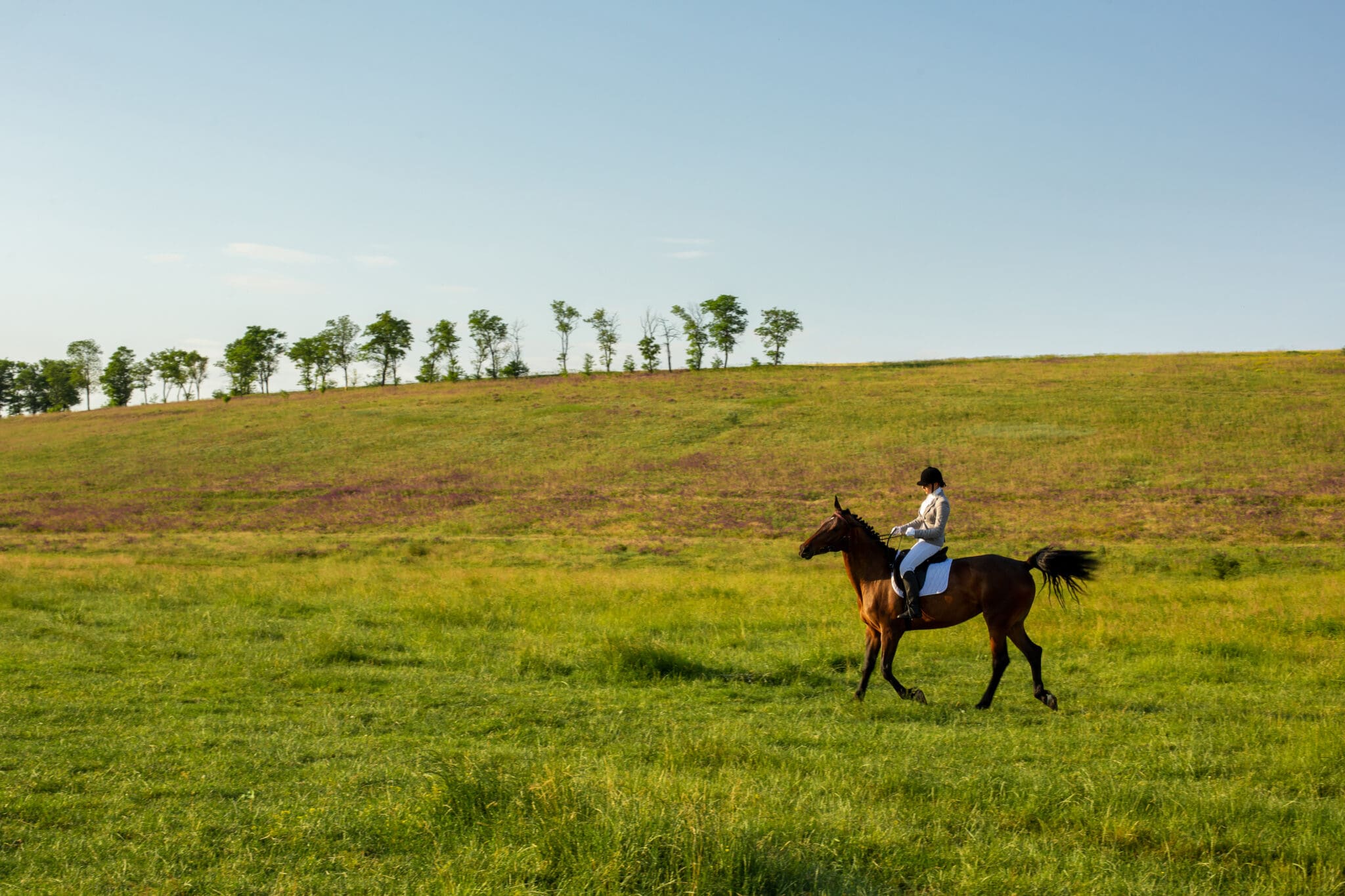
A person in dark clothing and a helmet enjoys horseback riding in Ireland, riding a brown horse across a lush green field surrounded by stone fences, with rolling hills and soft sunlight behind. The words “Connolly Cove” appear in the corner.

The Irish Draught horse represents a different aspect of the country’s equestrian heritage—the tradition of estate management and fox hunting that dominated rural Ireland’s social calendar. These larger, powerful horses were developed for farm work and hunting, combining strength with surprising agility.

Irish Hunters, often crossbreds incorporating Thoroughbred lines, dominate the country’s hunting and eventing scenes. Estates like Castle Leslie have maintained breeding programmes for generations, producing horses that excel in cross-country riding across varied Irish terrain. Their boldness over obstacles and steady temperament in groups make them popular for trail riding holidays.

This breeding expertise extends beyond bloodlines to training philosophy. Irish stable hands and riding instructors learned their craft through apprenticeships at working farms and hunting establishments, developing practical knowledge of horse behaviour and welfare that informs modern riding centres. When you ride at an Irish equestrian centre, you benefit from this accumulated wisdom.

Planning Your Riding Experience: Practical Considerations

Successful horseback riding holidays in Ireland require matching your riding ability, physical fitness, and trip duration to appropriate trails and centres. The country offers everything from two-hour introductory rides to week-long expeditions, but poor planning can result in either overwhelming challenges or disappointing experiences that fail to utilise your skills.

Irish weather patterns significantly impact riding conditions. The Atlantic climate brings frequent rain, particularly in western regions, but also creates the lush green landscapes that make Irish riding distinctive. Planning around seasonal patterns—spring wildflowers, autumn colours, winter’s dramatic skies—can enhance your experience whilst avoiding the worst weather periods.

Budget considerations extend beyond the riding itself. Multi-day riding holidays include accommodation, meals, and often transport between locations, with costs varying significantly between basic farmhouse stays and luxury estate experiences. Understanding what’s included in quoted prices prevents unexpected expenses and helps you select options that match both your budget and expectations.

Day Rides Versus Multi-Day Riding Holidays

Single-day horseback riding experiences in Ireland typically range from two-hour beach rides to full-day mountain treks. These suit travellers with limited time or those wanting to sample Irish riding alongside other activities. Expect to pay €60-120 for shorter rides, €150-250 for full-day experiences including lunch and sometimes transport from nearby towns.

Beach riding on Ireland’s western and southern coasts offers spectacular scenery with relatively straightforward terrain, making it accessible to confident beginners. Mountain and bog trails require more riding experience, as horses navigate uneven ground, steep inclines, and occasionally difficult footing. Reputable centres honestly assess required skill levels—trust these evaluations rather than overestimating your abilities.

Multi-day riding holidays provide deeper immersion in Irish landscapes and riding culture. Three to seven-day programmes typically cover 20-40 kilometres daily, traversing varied terrain whilst moving between accommodation locations. These require reasonable physical fitness beyond riding ability—six hours in the saddle, even at walking pace, demands stamina.

Budget €800-1,500 for three-day riding holidays, €1,800-3,500 for week-long programmes, with luxury estate experiences commanding premium prices. These costs usually include full accommodation, meals, riding instruction, and horse provision, though transport to the starting location remains separate.

Ethical Vetting: Choosing Responsible Equestrian Centres

Two people in riding gear enjoy horseback riding in Ireland, facing scenic green hills and mountains under a cloudy sky. Stone fences and trees dot the peaceful countryside. Connolly Cove is written in the bottom right corner.

Ireland’s equestrian tourism industry includes both excellent operations prioritising horse welfare and questionable establishments cutting corners for profit. Asking specific questions before booking helps identify centres treating horses as partners rather than commodities.

Enquire about maximum daily riding hours and rest days for horses. Reputable centres rotate their horses through work schedules, ensuring no animal works consecutive long days. They should readily discuss their horses’ backgrounds, training methods, and how they match horses to riders beyond simple weight limits.

Examine tack quality and maintenance. Well-fitted saddles and bridles that show regular cleaning and repair indicate care standards. Horses should appear well-fed without obvious injuries or poor hoof condition. Facilities should provide adequate shelter, fresh water, and appropriate pasture or stable accommodation.

Insurance coverage matters for both your protection and as an indicator of professional operation. Centres carrying comprehensive public liability insurance and requiring riders to have their own coverage demonstrate commitment to safety. They should also conduct thorough pre-ride briefings covering emergency procedures, not just basic control techniques.

Ask about group sizes and guide-to-rider ratios. Smaller groups with experienced guides who ride alongside participants—rather than simply following behind—provide safer, more educational experiences. The best centres tailor routes to actual group abilities rather than following fixed itineraries regardless of participant skills.

Regional Riding Destinations: Exploring Ireland on Horseback

Ireland’s compact size belies its landscape diversity. Within a few hours’ drive, terrain shifts from Atlantic coastal cliffs to inland limestone plains, from bog to mountain, from sandy beaches to ancient forests. Each region offers distinct horseback riding experiences reflecting local geography, history, and equestrian traditions.

Wild Atlantic Way: Connemara and Kerry Coastal Riding

The western seaboard epitomises Irish horseback riding in popular imagination—windswept beaches, dramatic cliffs, and the Atlantic stretching to America. Connemara, in County Galway, offers the quintessential experience: Connemara ponies, their native landscape, carrying riders across bog, mountain, and shore.

Beach riding along Connemara’s coastline ranks among Europe’s finest equestrian experiences. Long stretches of firm sand allow extended canters with waves breaking alongside. Trails typically combine beach sections with routes through traditional farming landscapes, providing diverse terrain within single rides. The region’s light—soft, ever-changing, sometimes brilliant—creates spectacular photography opportunities.

The Ring of Kerry, whilst heavily touristed by car, reveals a different character from horseback. Trails wind through valleys and over mountain passes inaccessible to vehicles, passing ruins and stone circles without crowds. The Iveragh Peninsula’s varied terrain suits multi-day riding holidays that showcase southwestern Ireland’s landscape diversity.

Expect challenging weather in western regions. Atlantic storms bring heavy rain and strong winds, particularly from autumn through spring. Summer offers more stable conditions but also peak tourist numbers. May, early June, and September often provide the best compromise between weather and crowds.

Northern Ireland: Causeway Coast and Mourne Mountains

Northern Ireland’s Causeway Coast rivals anywhere for dramatic coastal scenery, combining cliffs, beaches, and iconic landmarks like Dunluce Castle and the Giant’s Causeway itself. Horseback riding here provides access to sections of coastline difficult to reach otherwise, particularly between Portstewart and Ballycastle.

The region’s equestrian centres benefit from Northern Ireland’s strong agricultural heritage and the continued importance of horses in rural communities. Operators here often maintain working farms alongside tourism activities, providing an authentic rural atmosphere and knowledgeable guides with lifetime equestrian experience.

Mourne Mountains, in County Down, offer challenging mountain riding through landscapes that inspired C.S. Lewis’s Narnia descriptions. Trails cross open moorland with panoramic views across Newcastle to the Irish Sea. The terrain demands confident riding ability but rewards it with some of Ireland’s most spectacular upland scenery.

Northern Ireland’s position makes it particularly convenient for British visitors travelling by ferry from Scotland. Several equestrian centres offer collection services from Belfast or nearby ferry ports, whilst the road network provides easy self-drive access to riding locations.

Ancient East: Historical Estates and Hunting Country

Ireland’s Ancient East—counties surrounding Dublin eastward and south to Waterford—presents a different riding character from western regions. This is estate country, where the Anglo-Irish aristocracy established grand houses surrounded by designed landscapes. Many estates now offer riding holidays that immerse visitors in this historical context.

The terrain here rolls rather than towers, with rich agricultural land interspersed with ancient forests and the remains of medieval monasteries and castles. Trails often follow traditional hunting routes, crossing stone walls and hedgerows on horses bred for this exact purpose. The experience feels distinctly different from western Ireland’s wild landscapes—more cultivated, more connected to specific historical narratives, but no less authentically Irish.

Castle Leslie Estate in County Monaghan exemplifies this region’s equestrian offerings. The Leslie family has owned the estate since the 17th century, maintaining a continuous equestrian tradition. Their riding programmes utilise this heritage, taking visitors through estate woodlands and farmland whilst sharing the property’s fascinating history—including connections to Winston Churchill and John Lennon’s first meeting with Yoko Ono.

Sunny Southeast: Wexford and Waterford Coast

Ireland’s southeastern counties receive more sunshine and less rainfall than Atlantic regions, earning the “Sunny Southeast” nickname. The coast here features long sandy beaches backed by dunes rather than dramatic cliffs, creating excellent conditions for beach riding with less challenging access than western locations.

Wexford and Waterford’s equestrian centres tend toward family-run operations rather than large commercial enterprises. This creates more intimate experiences with personalised attention, though facilities may be simpler than at major estates. The region particularly suits novice riders wanting beach experiences without western Ireland’s more exposed conditions.

Rossbeigh Beach Horse Riding Centre, despite its Kerry location closer to the west, exemplifies the accessible beach riding experience that southeastern centres provide. Long stretches of firm sand accommodate extended canters, whilst the backdrop of mountains provides scenic interest beyond simple beach settings.

The southeast’s proximity to Dublin and easy ferry access from Fishguard in Wales make it convenient for short Irish trips focusing specifically on horseback riding rather than broader touring itineraries.

Premier Equestrian Centres: Where Expertise Meets Heritage

Ireland’s top equestrian centres distinguish themselves through combinations of exceptional locations, quality horses, knowledgeable guides, and—crucially—a deep understanding of how to share Irish equestrian culture with visitors. These aren’t simply businesses providing trail rides; they’re operations run by people whose lives centre on horses and who want visitors to appreciate what makes Irish riding special.

Bespoke Equestrian Ireland: Northern Coast Adventures

Bespoke Equestrian Ireland, based in County Antrim, specialises in personalised riding experiences across Northern Ireland’s stunning Causeway Coast. Unlike standardised group tours, they craft itineraries around individual riders’ abilities and interests, whether that means challenging coastal trails for experienced equestrians or gentle countryside routes for nervous beginners.

Their canvas encompasses the dramatic scenery of Northern Ireland’s north coast: the verdant rolling hills of County Antrim, windswept beaches with views toward Scotland, and the iconic landmarks that dot this coastline. Rides can incorporate stops at locations recognisable from Game of Thrones filming, adding contemporary cultural interest to ancient landscapes.

The operation’s flexibility particularly suits small groups with varied riding abilities or families wanting experiences that accommodate different skill levels. They work with local accommodation providers to create complete packages, handling logistics that allow visitors to focus entirely on the riding experience.

What distinguishes Bespoke Equestrian Ireland is its commitment to showcasing authentic northern life beyond tourist clichés. Routes pass through working farms, stop at traditional pubs, and incorporate conversations with local people who’ve spent lifetimes in these communities. This approach appeals to culturally curious visitors wanting to understand places they’re visiting, not just see them.

Castle Leslie Equestrian Centre: Estate Heritage Riding

Castle Leslie Estate in County Monaghan represents Irish equestrian tourism at its most historically grounded. The Leslie family has owned this estate since the 17th century, with equestrian activity central to the property throughout that period. They bred horses, hosted hunts, and participated in every aspect of Irish horse culture across centuries.

This deep heritage permeates the equestrian centre today. The horses come from bloodlines the estate has developed, trained by methods refined over generations. Instructors learned their craft here, often starting as children in the estate’s riding programmes. The trails cross lands shaped by horse-based agriculture and designed for equestrian use.

Castle Leslie offers varied riding programmes: introductory lessons in their extensive facilities, trail rides through estate woodlands and surrounding countryside, and multi-day holidays that combine riding with luxury accommodation in the castle itself. Their approach balances historical authenticity with modern safety standards and comfort expectations.

The estate’s setting provides more than just riding. The property includes extensive woodlands, Victorian gardens, and a lake surrounded by walking paths. Historical tours explain the family’s fascinating history—including their connection to Churchill and hosting of John Lennon and Yoko Ono. This makes Castle Leslie ideal for visitors wanting riding embedded within broader cultural exploration.

Conclusion

Horseback riding in Ireland connects you with landscapes shaped by equestrian tradition, partnering you with horses bred specifically for these terrains. From Connemara’s windswept beaches to historic hunting grounds in the Ancient East, the island offers riding experiences distinguished by both natural beauty and cultural depth. Select operators committed to horse welfare and authentic Irish hospitality, prepare appropriately for weather and terrain, and approach rides as cultural immersion rather than simple recreation.

Frequently Asked Questions

What riding experience level do I need for Irish trail riding?

Requirements vary significantly between operators and specific rides. Beach rides at walking pace suit complete beginners, whilst multi-day mountain trails require confident riders comfortable controlling horses across varied terrain.

When is the best time of year for horseback riding in Ireland?

May through September offer the most stable weather, with May and September providing the best combination of reasonable conditions and fewer tourists. July and August see peak visitors, but also the highest prices and busiest trails.

Spring wildflowers and autumn colours create stunning scenery, though expect more frequent rain. Winter riding appeals to experienced riders seeking dramatic, moody landscapes, but weather can severely impact trail conditions.

How much should I budget for Irish riding holidays?

Single-day beach rides cost €60-150 depending on duration. Full-day mountain treks run €150-250 including lunch. Three-day riding holidays with accommodation average €800-1,500, whilst week-long programmes cost €1,800-3,500. Luxury estate experiences command premium pricing. These costs usually include riding, accommodation, and meals, but not transport to the starting location or personal riding insurance.

What should I wear for trail riding in Ireland?

Hard riding hats meeting safety standards are mandatory (centres usually provide them). Riding boots or sturdy boots with defined heels prevent feet slipping through stirrups—avoid trainers. Layer clothing for changeable weather: a waterproof jacket, riding gloves, and comfortable trousers that won’t chafe. Bring extra layers in backpacks for temperature changes during longer rides. Avoid loose scarves or dangling jewellery.

Can non-riders join horseback riding holidays?

Many equestrian centres accommodate mixed groups, with non-riders occupying themselves with local attractions whilst others ride. Coastal locations offer beaches, walking trails, and fishing villages to explore. Estate-based centres typically sit near historic towns with museums and craft centres. Some operators specifically cater to mixed groups, arranging separate itineraries that converge for evening meals and accommodation.

Leave a comment

Your email address will not be published. Required fields are marked *