


County of Armagh: A Home to Northern Ireland’s Most Worth-Visiting Sites
Updated On: April 07, 2024 by  Salma Ihab
Ever heard of Northern Ireland? It is part of Ireland; however, part of the land lies in the United Kingdom. In that part of Ireland, there are several cities where you can spend time and enjoy yourself. Among those cities is the county of Armagh. The latter is medium in size, neither large nor small. It has always been referred to as a town; conversely, it became officially a city in 1994.
Queen Elizabeth II gave the city status to the county of Armagh. The county is famous for being home to two famous cathedrals. Both cathedrals bear the name of Saint Patrick. It is also known as the fourth smallest city in the United Kingdom. Besides, it is the city in Ireland that is the least populated.
The History of the County of Armagh
The county of Armagh became the dominant site of churches and rituality. Thanks to Navan Fort, it had always been a religious site for the pagans. It sits at the western edge of the county of Armagh and was used for ceremonies and ritual performances.
Mythology claims that this site was among the royal sites of Gaelic Ireland and the capital of Ulster. However, it was only a matter of time before the site was abandoned for almost two centuries.
It had not remained abandoned forever, for Saint Patrick used that site when he began spreading Christianity. He wanted to ensure the new religion reached all parts of Ireland. So, he chose a site close to the core of pagan Ulster, Navan Fort, and based his powers.
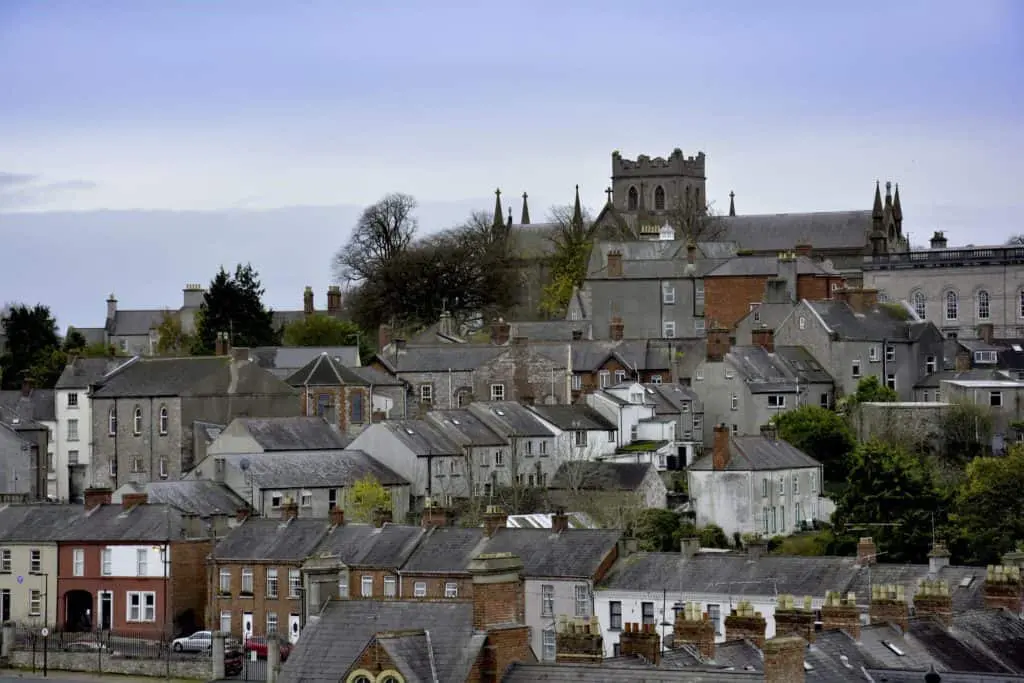
St. Patrick built the first stone of an Irish church in AD 445 on a hill near the site. That building is currently the Church of Ireland Cathedral. On the other hand, before Christianity arrived, sources claim it was a pagan sanctuary.
With the arrival of Saint Patrick, things started to be Christianized instead as part of his mission. Thus, that sanctuary became a church, and the city became a significant site for monasteries and churches.
The Foundation of Ard Mhacha
Saint Patrick happened to find Ard Mhacha near Navan Fort. The literal meaning of the site is Macha’s Height. It was named after the goddess Macha; however, the name changed to Ardmagh after Christianity. Eventually, it became the county of Armagh, and people are familiar with it now.
Daire was the son of Finnchadh. He was the one who granted St. Patrick the land on which he founded the county of Armagh. When the saint received the land, he appointed twelve men to build the town.
He started his construction process by building up a church and erecting an archbishop city. In 457, he established his main church there, which became the ecclesiastical capital of Ireland.
He also announced some people to spread the gospel around; however, he limited them to the ones educated in Armagh. Patrick always ensured that that site would be the meeting point for monks and nuns from around Ireland. For that reason, he became the Chief of the Churches of Ireland.
The Archbishop of the County of Armagh
When Saint Patrick ordered the erection of the archbishop, he wanted an archiepiscopacy in two of Ireland’s leading Christian churches. Those churches were the Roman Catholic Church and the Church of Ireland.
The archbishop is named after the naming of one of Northern Ireland’s prominent counties, Armagh. Starting from the 8th century, or maybe even earlier, the position of Comarba Patraic was introduced.
That position meant “The Successor of Patrick.” The house of the county of Armagh was founded it to hire abbots or bishops after Saint Patrick. Bishops and abbots were in two different positions during medieval times.
That was before the foundation of the successor of Patrick. On the contrary, the 12th century was the beginning of the merger between the positions of bishop and abbot.
The County of Armagh Through the Medieval and Modern Eras
The county of Armagh lived peacefully for a long time. But, in the 9th century, the Vikings raided the monastery. Their main objective was to obtain valuable goods, including silver. It was known that silver was abundantly found in monasteries and churches. Since the county of Armagh was home to Ireland’s significant monasteries and churches, it was a perfect destination for the Vikings. At that time, the monastery of Armagh also held the Book of Armagh.
What is the Book of Armagh?
The Book of Armagh is an Irish manuscript from the 9th century. It came from the monastery in the county of Armagh and is now kept in Dublin in Trinity College Library. This book is significant since it holds the oldest samples of Old Irish that survived. Battles took place due to that rare manuscript.
For example, Brian Boru invaded the island in 990. He believed the book was buried in St. Patrick’s Church’s graveyard. However, he became the High King of Ireland in 1002 until he died in 1014.
Modern Era County of Armagh
Saint Patrick had made the county of Armagh a religious site and educational centre. It remained so for as long as ever. Even people refer to that county as the city of saints and scholars. In 1608, the foundation of the Royal School took place. Besides, the Armagh Observatory in 1790.
By then, the educational tradition was still going on. It also remained till 1834, when St. Patrick’s College was founded. Archbishop Robinson founded the observatory. He established it as part of having a university in the city. However, in the ’90s, Queen’s University of Belfast opened a centre in a building that was formerly a hospital.
County of Armagh: The Murder Mile
At some point in history, people referred to the county of Armagh as the Murder Mile. That was because there was substantial violence going on in the city. It all starts at the Battle of the Somme during the First World War. At that battle, three brothers passed away; their names were unknown.
However, they all received the honour of the Thiepval Memorial to the Missing of the Somme. Some sources claim that they had a fourth brother; however, he was only wounded during the attack, but he survived.
The Irish War of Independence was also another time when life was rough in Armagh. In 1921, the Irish Republican Army assassinated a Royal Irish Constabulary sergeant in the county of Armagh.
Legends have it that the Army threw a grenade at Market Street while he was walking along. His wounds ended up killing him. Those were not the only incidents that took place in the county. Over around twenty years, a lot of different incidents took place.
Places to Visit While in the County of Armagh
The era of the Murder Mile is far behind us, and now, Armagh is safe and beautiful. Ireland is one of the countries that possess many tourist attractions. Gladly, many of them are found in the county of Armagh. So, stroll around and discover some of the world’s worth-visiting places.
4 Vicars
4 Vicars is a bistro that looks sophisticated despite its small size. Attached is a delightful terrace where you can enjoy spending time. That little pub exists inside the Georgian building.
It should be your next stop if you are looking for a delicious lunch. Besides, they have got comfy rooms explicitly made for romantic hangouts. It is one of the finest sites to visit in the county of Armagh.
Ardress House
Are you an art lover? Well, there are undoubtedly many art galleries around the county of Armagh. However, there is also a Neoclassical Manor House that you should not miss out on. The Ardress House belongs to the 17th century, located Off the B77 near Loughgall.
That house is full of ornate decoration that captures the eyes of the beholder. It also has a collection of attractive paintings. You will find a lot that will captivate you, from artistic masterpieces to the wooded grounds of the house.
Armagh City Centre
So, you are on a journey in the ecclesiastical capital of Ireland? Then, it would help if you headed to the town’s city centre. There, you will find a lot of buildings to enjoy, including the fascinating churches of Ireland. You will find the Robinson Library, Saint Patrick Cathedral, and more at that spot of the city.
Not to mention that you will enjoy strolling around the blocks, beholding the county’s beauty. Head to any of the buildings there for further education about the history and art of the county of Armagh.
County of Armagh Museum
This museum is the most popular in the county. It holds a great collection of art that exemplifies how life in the city has been through the centuries. The museum has a lot of displays that narrate stories about people’s lives. You will also come across fascinating displays like rural crafts, wedding dresses, and military uniforms.
All aspects of life are mingled within that museum’s walls, which is the most exciting part. Many human stories are linked to the displayed objects that make it hard for you to get bored. If you enjoy music, the museum provides a venue for stirring music of the pipes and contemporary arts.
County of Armagh Planetarium
The Planetarium is attached to the famous Observatory of the Armagh county and is another exciting place to visit. The Planetarium happens to offer the world one-of-a-kind experiences. It will awe you with the digital theatre that teaches you a lot about galaxies, planets, and other natural phenomena.
Bard of Armagh Festival
Unfortunately, this place does not work anymore. It used to host an annual event that showed the most intelligent Irish stories and verses. The festival was supposedly humorous and took place in November each year. But, it ended in 2016 when they performed their final show.
That festival gathered performers from around Ireland in the county of Armagh. They entertained their audiences with sarcastic and funny stories throughout their working years.
Benburb Valley Park
The county of Armagh has more than a few parks. But, this park is a great destination to spend your day at, beyond just a regular park. Through the Benburb Valley Park, the Blackwater River used to run. That river was known to be very popular for fishing salmon.
However, the fishing practice stopped after pollution passed, causing the fish’s death. Besides the river, the park has the Benburb Castle, which Shane O’Neill founded in the 17th century. There is also the Benburb Valley Heritage Center.
Brownlow House and Lurgan Park
Lurgan Park is the second largest public park in Ireland. The first one is Phoenix Park, which exists in Dublin. The second largest park surrounds a lake that reaches around 59 acres.
It also contains paths that are well-maintained and suitable for walking. On the other hand, the Brownlow house lies at the end of the park. Sources claim that the house has about 365 rooms.
The Scottish architect William Henry was the one to have built the house in an Elizabethan Style back in 1836. He built it for Charles Brownlow, whose name is given to the house. That house played significant roles in the First and Second World Wars.
The British Royal Irish Rifles used it as their headquarters during World War I. On the other hand, it was the station of the British and the American troops.
Craigavon Lakes
Want to spend a fun day full of activities? There are a lot of things to do in the county of Armagh. Head to Craigavon Watersports Center and spend the day at the facilities of Craigavon Lakes. There, you can participate in many activities including canoeing, banana boating, water-skiing, sailing, and windsurfing.
Gosford Forest Park
Forest parks are among the places that offer great entertainment and various activities in the county of Armagh. Head to Gosford Forest Park for a day of ultimate fun. It is located near Market Hill, off the A28. The Park has forest trails, a picnic area, a mock Norman Castle, and a poultry zoo.
Lough Neagh
Are you up for amazing sceneries and natural views? Spend a day out beholding the splendour of Lough Neagh. It is a vast lake where you can watch birds and walk for long miles while enjoying the scene. There is also a restaurant where you can enjoy a delicious meal and a play area for your kids.
Milford House Collection
Milford House Collection sits proudly in the county of Armagh. It is the first building in Ireland to use hydroelectricity to produce light. The house belongs to the 19th century and is deemed to be the most advanced on a technological level.
That place will also educate you about the first telephone system that the county ever used. Besides all of the technical stuff, you will enjoy unique works of art by prominent artists. Not to mention that the interior design of the house is a symbol of elegance and beauty.
Moody Boar
The Moody Boar lies in an exciting place in the county of Armagh, which opens to a vast courtyard. It also plays excellent music in the afternoons. Besides, this restaurant serves the best dishes for vegetarians; their food is also gluten-free. Interestingly, the restaurant has gardens where they grow their vegetables and herbs. You can find it at the Palace Demesne Public Park.
Navan Center and Fort
The Navan Center reveals all you need to know about Armagh’s most significant ancient monuments. Those monuments include the Navan Fort, the seat of the Kings of Ulster, and the Ancient Capital.
Visitors get to observe the history of that area through the exhibition that the Navan Center offers. The exhibition provides activities for all members of all ages and displays artefacts. You’ll be amazed by all you will get to learn about Irish mythology and the most significant Celtic characters.
The Navan Center provides other fun activities. Those activities include experiencing life as a Celt by dressing up in their attires and costumes. It is like experiencing a Celtic Halloween. This activity is suitable for children and adults alike.
You can also win prizes by completing a trail of the Navan Fort. There is also an Archaeology Discovery Room to explore and an outdoor play area for extra fun.
Orange Museum
It is commonly known as the Orange Order Museum. However, people of the county of Armagh usually refer to it as the Orange Museum. You can find this small museum in Loughgall Village, where the building was formerly a pub. Inside the museum, you will find a lot of banners, weapons, old sashes, and armbands. You will enjoy it there if you have a thing for battles and history.
Oxford Island
It is more of a peninsula of land rather than an island, despite its name. It is located on the southern edge of Lough Neagh. Oxford Island happens to be a nature reserve that shields an array of living organisms.
The habitats include wildflower meadows, shallow lake margins, a reedy shoreline, and woodland. You can also watch the birds hide or spend quality time with your loved ones at the café there.
Palace Demesne Public Park
The Palace Demesne was home to the archbishops of Ireland for centuries, from 1770 to 1970. It surrounds about 121 hectares and houses the council of the city. The palace is no longer open to the public, but visitors can spend time in the park.
This park houses the classic bistro, Moody Boar. Besides there are five gardens, known as the Garden of Senses. They give you a fantastic experience of tasting all of the five senses.
Palace Stables Heritage Centre
On the grounds of the Palace Demesne stands the ruins of the Palace Stables Heritage Center. Archbishop Robinson built the latter back in 1769. This palace is currently used for different purposes and has different facilities.
It is where the council offices lie; besides, the centre contains an office for tourists. A children’s playroom, a café, and a craft shop are among the facilities.
Peatlands Park
Peatlands Park is the best place to learn about the peat bogs of Ireland. Children are the target audience of that place, but adults are also welcome. There is a big garden with many rare plants like cotton and orchids.
You can ride a train for 15 minutes around the park; that track is used to transport the peat. The park also holds an orchard, a wood, and two lakes.
Shambles Market
Market Street is a very prominent one in the county. Every Tuesday and Friday, the Shambles Market is held. Many stalls get there where there is a lot of stuff to sell, mainly clothes.
Slieve Gullion
Here is the most picturesque and charming part of the whole county: Slieve Gullion. This mountain has a ring of foothills that surround it. People call them the Ring of Gullion; they usually climb them from Killevy or Camlough. On the lower slopes of the mountain, there is the Slieve Gullion Forest Park.
You can view the Ring of Gullion from that park, and we can guarantee you will like what you see. The meaning of Slieve Gullion is the Mountain of Culainn. The latter was a legendary Ulster warrior; the mythology usually calls him Cuchulainn.
On the other hand, Saint Monennna was the founder of a nunnery that was established in the fifth century. Down the slopes, you can find a holy well dedicated to her.
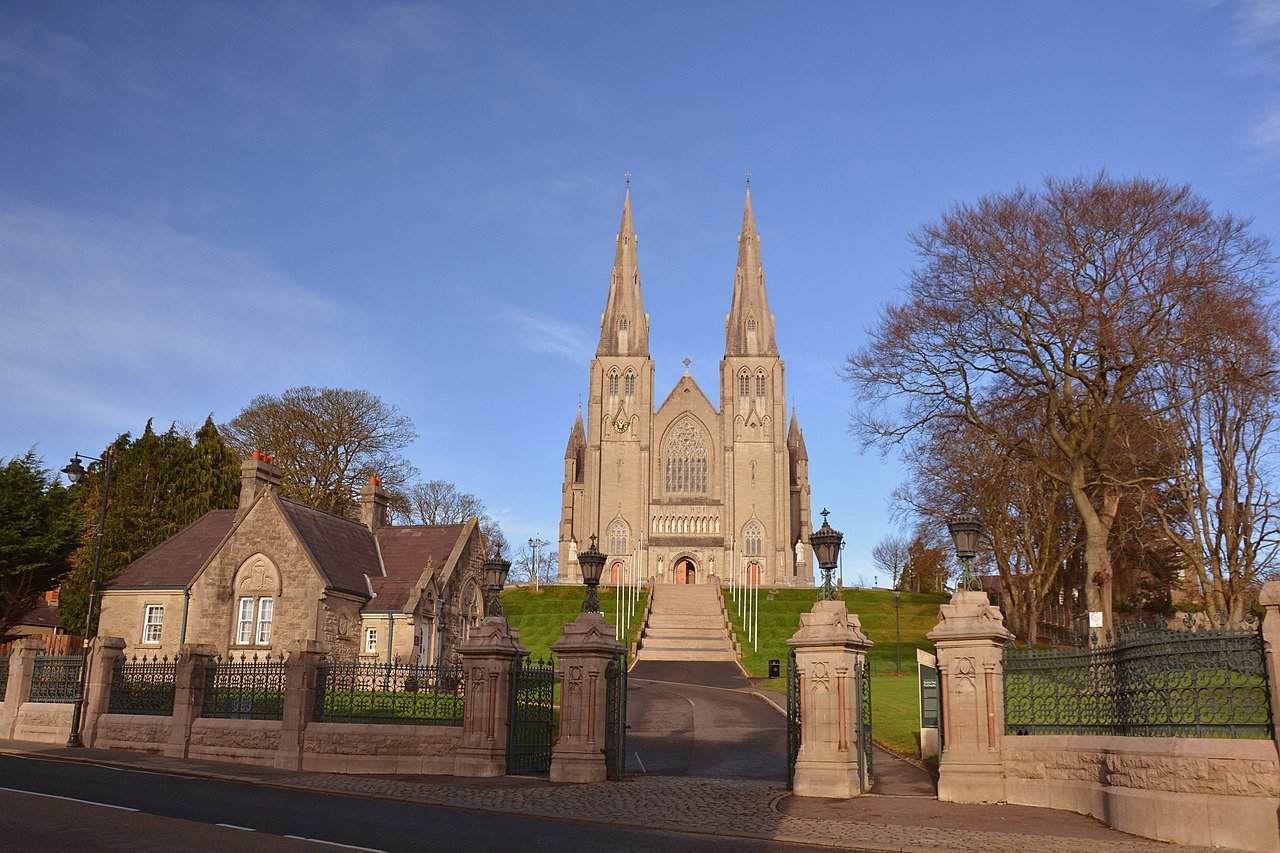
St Patrick’s Roman Catholic Cathedral
St. Patrick Roman Catholic Cathedral is one of the prominent churches in Ireland. The church is known to be beautiful and detailed, with wonderfully incredible ornate decorations. You can tour and behold its splendid design, mosaics, and sculptures made of shimmering gold leaf. Besides, the church is covered with stained-glass windows, making it even more awing to the beholders.
The church was built between 1838 and 1873. Its style is referred to as the Gothic Revival, as every part of the walls and ceiling are covered in coloured mosaics. In 1981, the church underwent some renovations that made it look more modernized than it used to be.
St. Patrick Trian Centre
Saint Patrick Trian Center is located in the heart of Armagh. It’s a modern complex that allows visitors to get involved in every detail they need to know about the county. The county is also known as the Motherhouse of Irish Christianity. You will see exciting presentations about the city’s story in that centre.
They display the story in a very entertaining and engaging way for every family member. You can actually start at that centre where you can learn about the local culture and history. The centre also contains a café to enjoy sitting at and a genealogical service for the visitors. That service lets you discover whether you have any roots in the city’s locals.
Tannaghmore Farm and Gardens
Gardens are always beautiful, but those are even extraordinary. Among the gardens lie the amazing Georgian house of Tannaghmore Farm. Interestingly, the place has a spot specified for romantic dates called the Kissing Gate. So, take your beloved one and head over there to enjoy an intimate time together.
According to legends, if you kiss your lover there, you are both destined to marry within the upcoming year. Besides romance, you can watch the trees and visit the Rare Breeds Farm. There is also a barn museum where you can take a trip.
The Argory
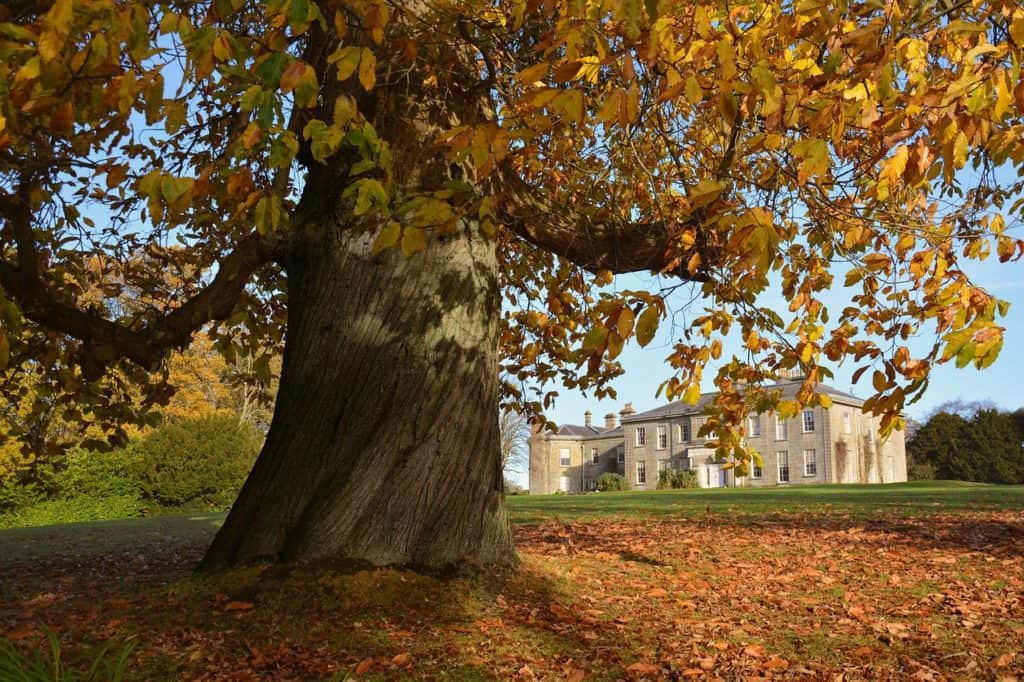
The Argory is an Irish élite house by which a wooded riverside estate surrounds it. The house was built in 1820, and currently, the National Trust runs it. The house has attractive furnishings; you can tour the place and explore the grounds. You can also explore the bookshop and gift shop there or relax at the coffee shop.
The Armagh Observatory
Do you love learning stuff about astronomy? Well, there is a place that specializes in people interested in this kind of science. The Armagh Observatory is that place; it is a very popular place around the county as well. So, you will get to hear its name a lot. Archbishop Richard Robinson founded that Observatory back in 1790. It became the leading scientific research establishment in Ireland and the United Kingdom.
The County Museum
While you are there, you have to visit the County Museum. You can find it on the east side of the Mall. You can observe a great collection of antiques and stuffed animals inside that museum. And artefacts. The gallery also houses numerous sketches, oil paintings, and pastels. They all belonged to the famous Irish Poet George Russell.
The Ring of Gullion
Remember that Ring of Gullion? Yes, it surrounds the Slieve Gullion Mountain. It dominates the landscape of the southern part of the county of Armagh. The area has several facilities for children, like an adventure play park and a story trail. There is also a coffee shop where you can enjoy your time.
Armagh is full of many great and exciting attractions and historical sites, making it a great place to visit. If you haven’t already been, add it to your list of places to explore. Also, if you have been to Armagh, we would love to hear about your experiences there!
Done with the County of Armagh? Don’t forget to check out other great places and attractions around Northern Ireland: Armagh Planetarium and Observatory|The Argory House in County Armagh| Glens of Antrim| Downpatrick Town| Exploring the village of Saintfield| Exploring Holywood Town| Carrickfergus Town
An Ultimate Guide to 6 of the Finest Castle Tours in England
England
26/04/2024
Unveiling the Most Terrifying Haunted Tours in Scotland
Scotland
25/04/2024

7 Top Amusement Parks in England for an Unforgettable Adventure
England
25/04/2024
Miami Tourism Statistics: A Comprehensive Overview of Visitor Numbers and Revenue
Travel Statistics
25/04/2024
The Enchanting Charm of Scotland Wedding Castles!
Scotland
25/04/2024