


Guildhall Derry / Londonderry – A Beautiful Building To Visit
Updated On: March 04, 2024 by  Ciaran Connolly
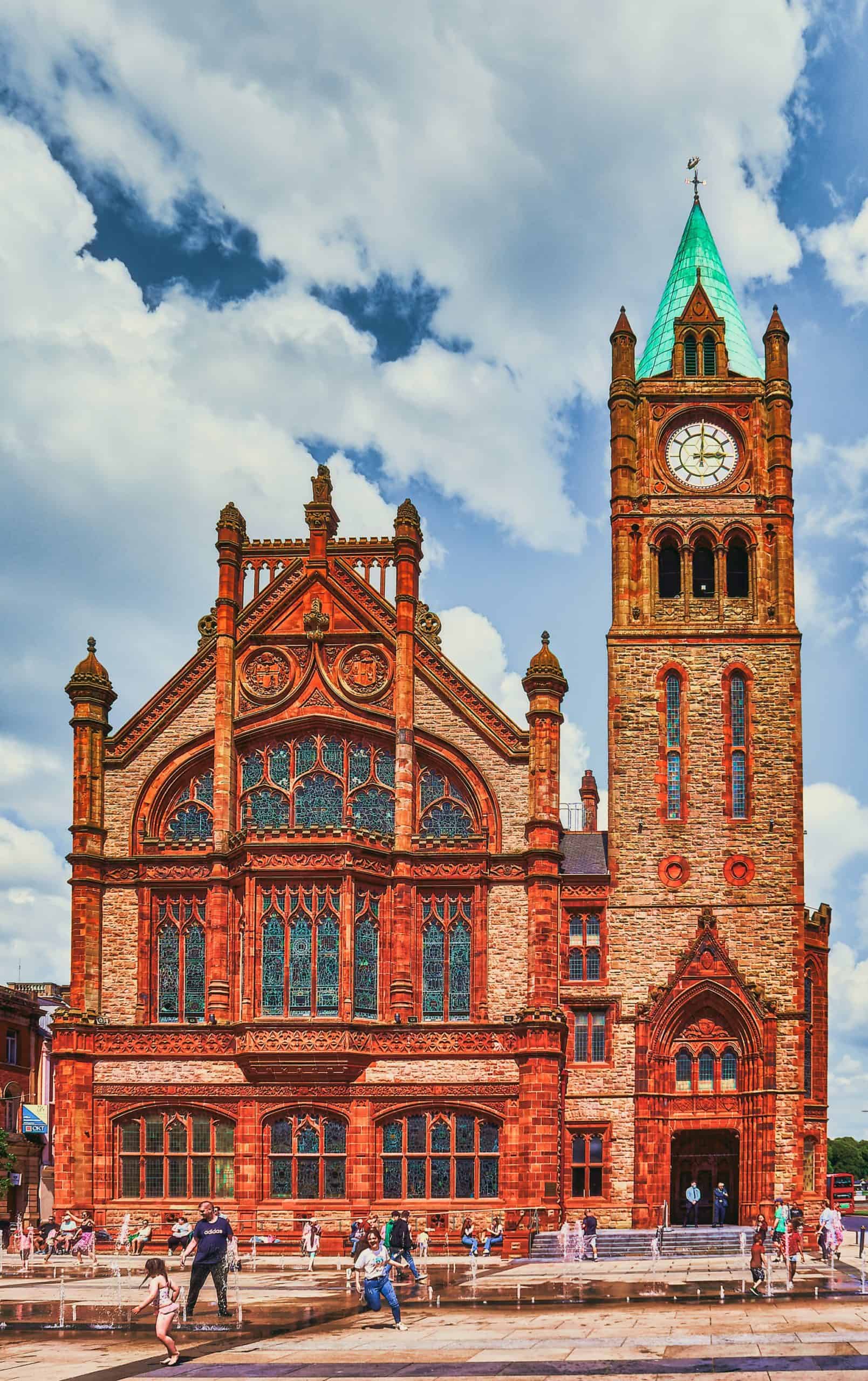
Located in Derry/Londonderry, the Guildhall building is a must-visit while travelling to the UK. (see what we did there!) Northern Ireland, For Sat Navs – use the following postcode – BT48 6DQ. It’s one of the most impressive landmarks and has been so since becoming the political centre in the 1800s.
In the heart of the city, Guildhall stands as a must-see for tourists to Derry-Londonderry, a structure that has seen numerous events and watched history in its creation.
Facts About The Guildhall
It was previously referred to as “Victoria Hall” since it was common practice to name sites in the British Empire after the reigning queen. Because of its close ties to London and its many guilds, the building’s present name honours this link.
The elected officials of the Derry and Strabane District Council convene here. Additionally, the Derry City Council chamber and the Mayor’s Parlour can be found in this building. There are often events held here – from craft fairs to weddings. Halloween is always special in Derry – and The Guildhall plays an important part in that.
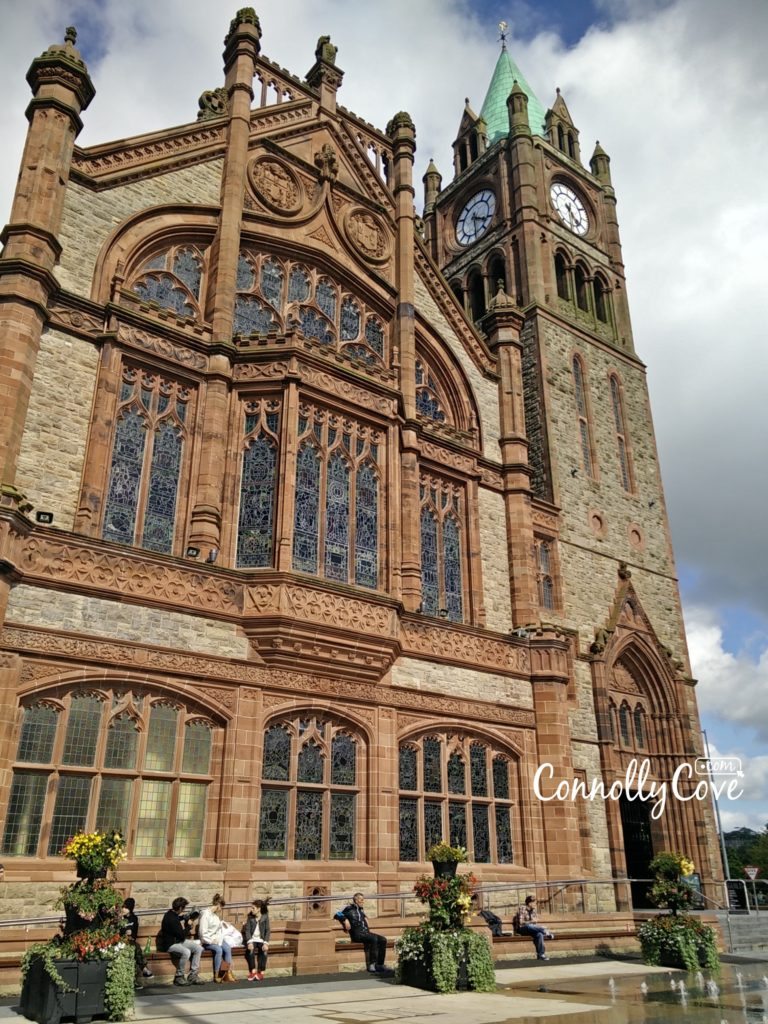
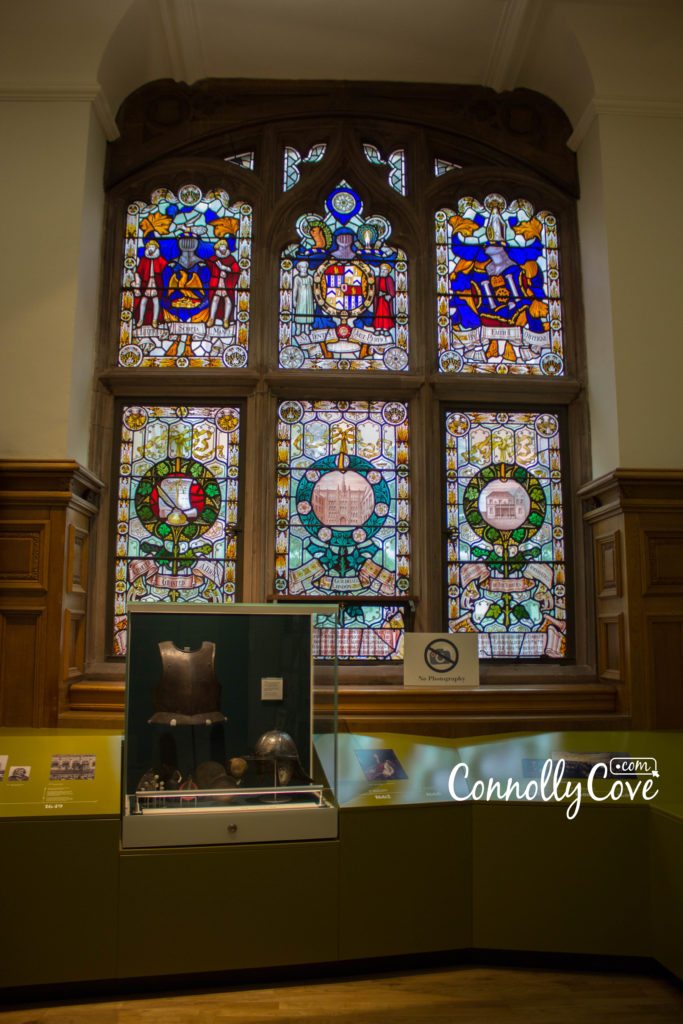
As you approach the Guildhall’s door, you’ll see a sign that reads, “The Guildhall is one of Derry’s most recognisable landmarks and has been at the heart of city life since 1890.” While walking along the hall, you’ll come across impressive painted windows and large plaques detailing the buildings and the surrounding area’s history.
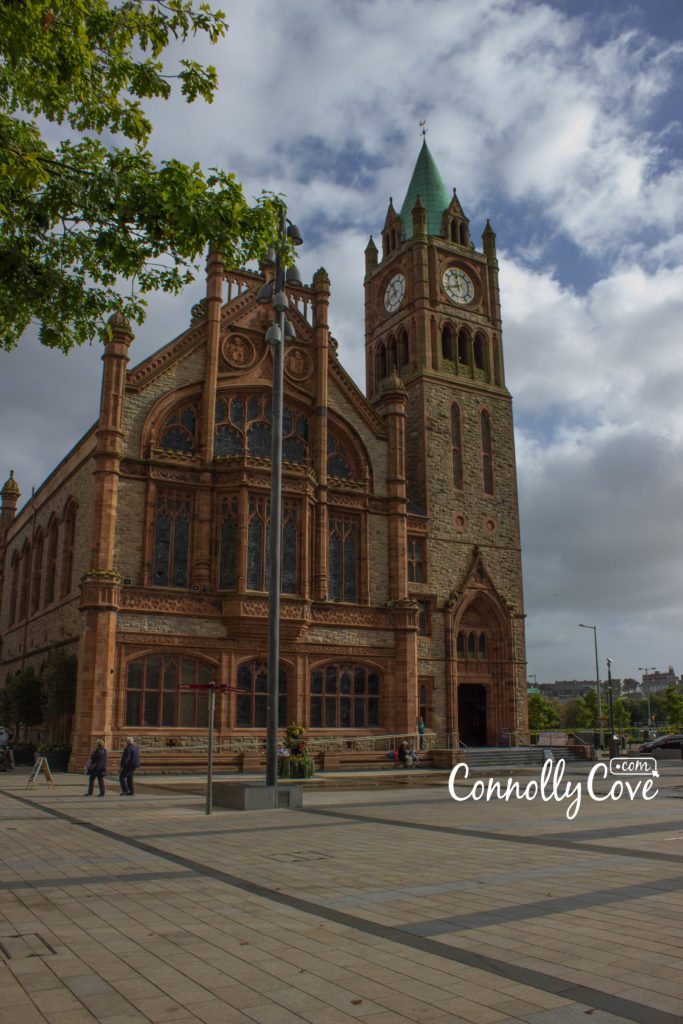
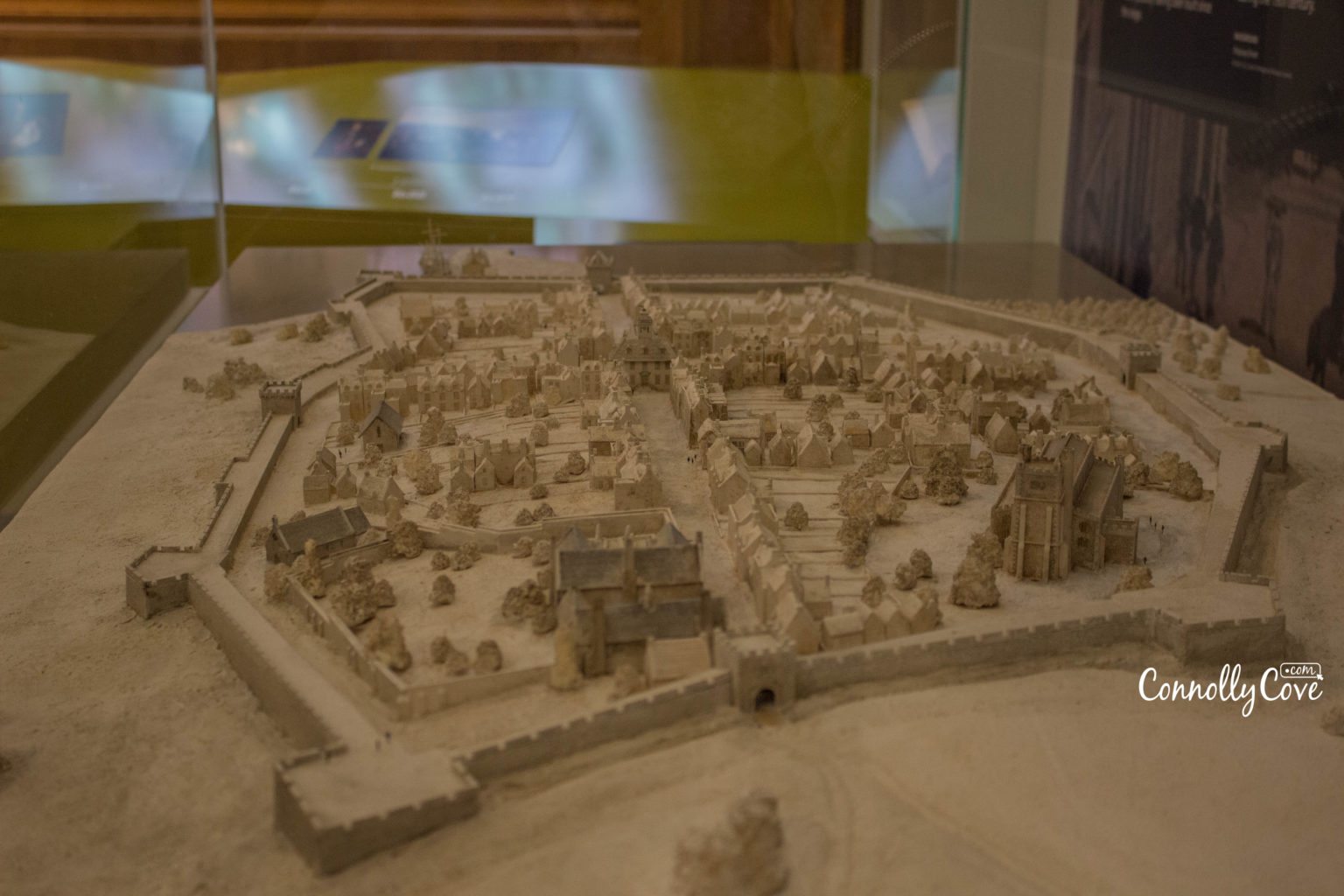
Ancient maps and descriptions are on display, as well as historical literature from the Guildhall’s collection. A maquette depicts what the area may have looked like in the past. The clock tower and neo-gothic architecture adorn the building’s façade.
The vast hall of the Guildhall has hosted various social and political events throughout the years, including Halloween carnivals, the switching on of the Christmas lights, and the Christmas European Market. The Guildhall Plaza in Derry-Londonderry is the city’s central square. As a result of its placement in the city’s commercial, cultural, and tourism sectors, it has become a significant attraction.
History & Architecture
The Honourable Irish Society initially erected it in 1890; it was demolished in a fire in 1908 and reconstructed in 1912 after it was damaged. Neo-gothic style with Tudor overtones may be seen in the red sandstone tower.
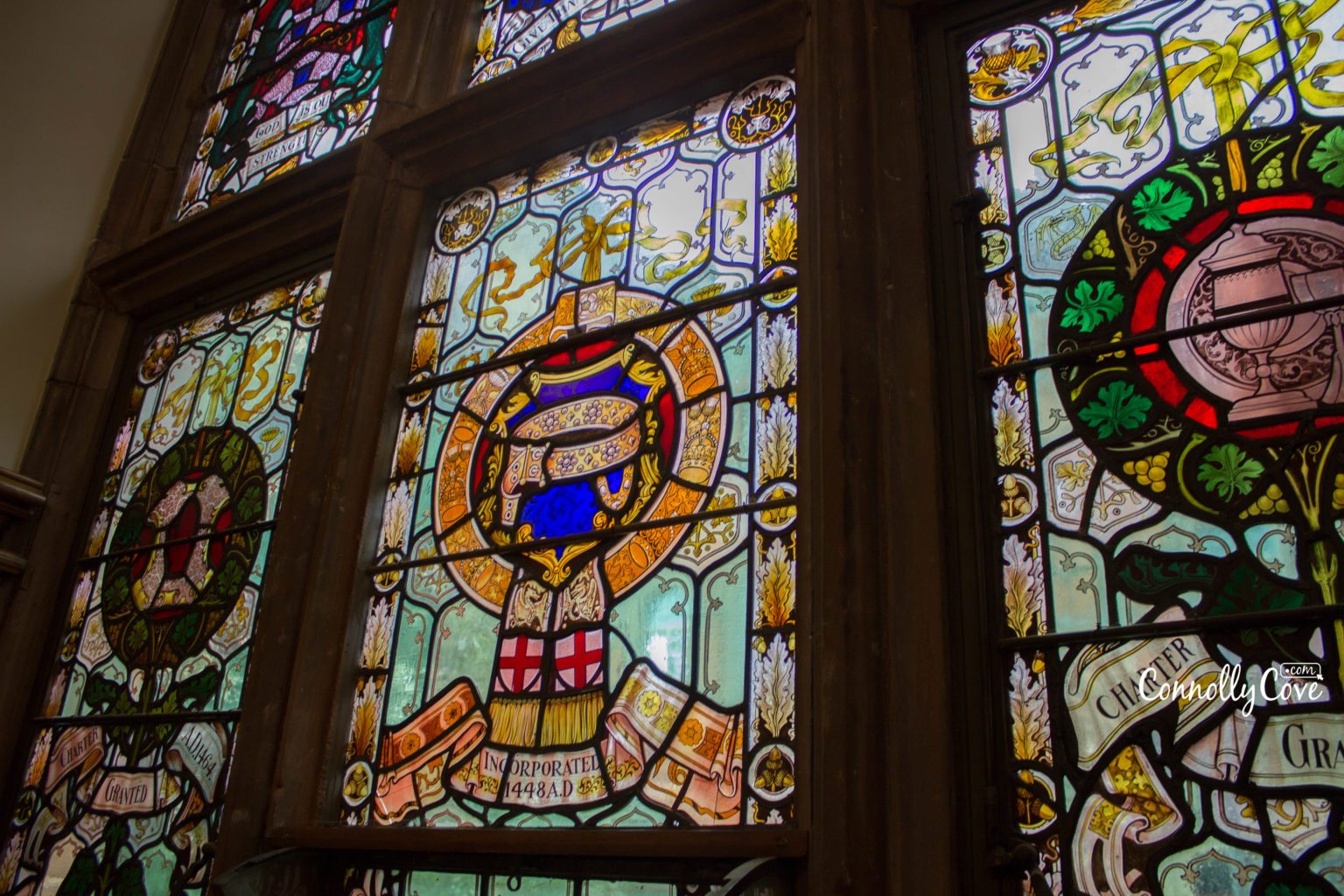
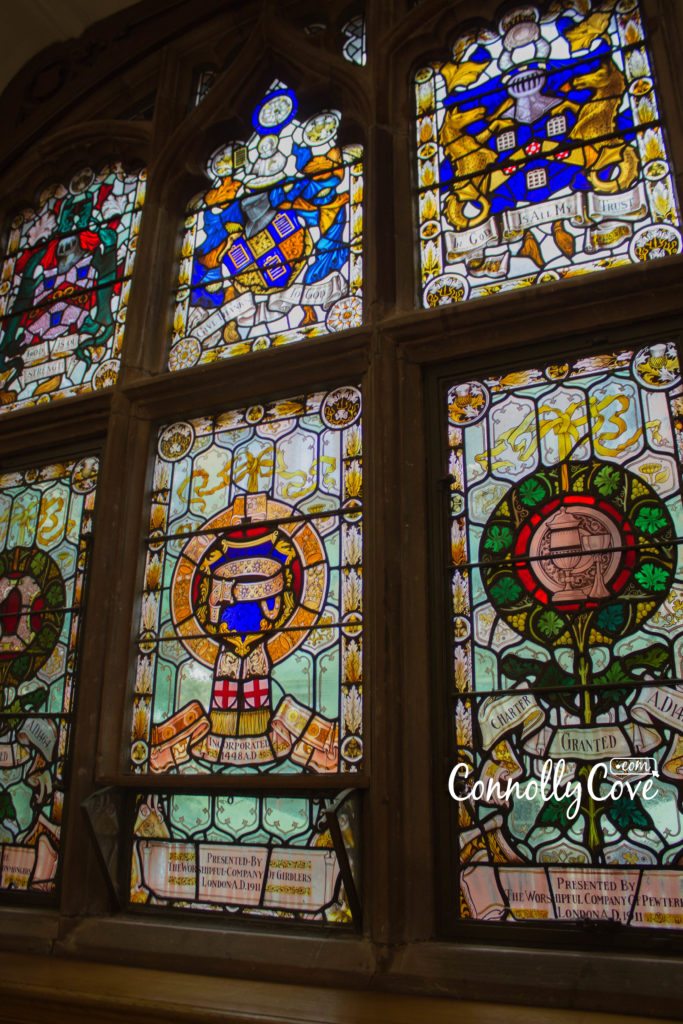
The stained glass windows of the Guildhall depicted Derry’s history and were made by the Belfast business Campbell’s. According to legend, it boasts one of Britain’s most famous clock faces. Runners-up only to Big Ben Dumfries, sandstone, marble, oak panelling, elaborate ceilings, and stained glass windows make up most of the structure.
As soon as one enters the structure, one is greeted with an enormous window exhibiting a variety of emblems from British overseas territories. It’s an opportunity to immerse yourself in Irish culture and history.
In addition to the windows provided by former mayors and other municipal officials, the building also has windows reflecting current economic trends in the city. Other windows in the building commemorate the exploits of the three Irish divisions of the British Army.
More History
Those who perished on Bloody Sunday, 30 January 1972, are honoured in the Guildhall’s most recent window. To keep the memory of those who have passed, a path of red poppies runs down the middle. Trace it from top to bottom. Moreover, it’s said that Derry City Council commissioned the window.
The restoration of Derry’s Guildhall won the Irish Georgian Society’s Conservation Awards, and Frank McDonald of the Irish Times praised the “detailed work done to the exterior in rebuilding its ornate gable, which had been leaning outwards, as well as complete repointing of the stonework and restoration of the stained glass windows,” which “impressed the jury (which included myself).”
Asking Where You Can Stay in Derry, Here is Your Ultimate Guide. Much Fun is waiting For You
Dr. Eddie McParland, one of the jury members, said, “The recarved stonework was excellent, lots of original details were kept, and the original ceiling of the council chamber was revealed.”
Construction
The Diamond portion of the Walled City in Northern Ireland was home to the Guildhall, which was first constructed in the 1600s. Unfortunately, it was destroyed in a fire, and the site was eventually transformed into a municipal plaza in its place. It took three years of construction effort to finish in July 1890.
This building’s stained glass windows, donated by numerous London companies who had held property in Ireland and hadn’t forgotten their old relationship, were featured prominently in the London Times on 21 September 1912.
In 2010, most restorations were done to the building by contractors H & J Martin, making it one of Irish landmarks. The cost of the restoration work was estimated at £3M, including the stonework, roofs, windows, stained glass, and clock.
As for the construction work done to the interior of Guildhall, it was estimated to have cost around £5M.
Awards
- Nominated in the Visitor and Interpretation Centre’s category of the Association for Heritage Interpretation’s Discover Heritage Awards.
- 2014 Conservation Award from the Irish Georgian Society.
- Regional Award and 2014 Regional Conservation Award from the Royal Institute of British Architects.
- National Stone Award for Repair and Restoration 2014 from the Stone Federation of Great Britain.
Historical Events Affecting Guildhall
- As inner conflicts spread across Northern Ireland during The Troubles, a three-decade conflict between Irish nationalists and unionists, the Guildhall was subjected to several terror attacks. In 1972, the building was severely damaged by two bombs, but it was fortunately restored and reopened in 1977.
- The Guildhall was also used as the location for the Saville inquiry, an official public investigation into the events of Bloody Sunday.
- On 27 August 1968, over one hundred demonstrators protested against housing conditions at Londonderry Corporation’s monthly meeting by occupying the Guildhall chamber.
- The building was also visited by US President Bill Clinton in 1995.
- In 2010, a time capsule containing newspapers and coins dating back to 1887 was discovered during the restoration work at the Guildhall in Derry City. The items date back to 23 August 1887 when the first foundation stones of Guildhall were built.

Related Events
- In July 2016, the Guildhall welcomed its one-millionth visitor since the restoration in 2013.
- It is home to the Feis Doire Colmcille, a well-known event that celebrates Irish culture.
- 1980: Premiere of Brian Friel’s classic play, Translations.
Comments from Visitors
With millions of visitors who have passed through this beautiful site, it has already received numerous online reviews.
For example, “Nice building with free access hosting temporary exhibitions and some permanent items in walking distance from the city centre”.
“This is a beautiful building with so much history attached in the square where a lot of events take place. Close to all”.
“This is a beautiful building both inside and out. Stand back and marvel at the architecture – as it climbs its way into the sky. You are free to look around indoors with certain areas restricted – but again a beautiful building.”
Surrounding Attractions to Check Out in Derry
Derry’s Walls
Another one of the iconic monuments in Derry is the massive city Walls on the bank of the River Foyle. Built between 1614 and 1619, the original Walls are almost perfectly preserved today.
London businessmen who were members of the Irish Society funded the construction of the Walls. The construction began under a Royal Charter issued by King James I to help control the local Irish rebels. In return, the businessmen were made even more wealthy as they were awarded large parcels of land in the region.
The Peace Bridge
The Peace Bridge is a cycle and footbridge bridge across the River Foyle in Derry, Northern Ireland. It was inaugurated on 25 June 2011, connecting Ebrington Square with the rest of the city centre.
The construction of the bridge actually has a political motivation behind it. It is mainly intended to connect the mostly unionist ‘Waterside’ with the largely nationalist ‘Cityside’ by improving access between these areas.
The construction of the bridge was jointly funded by the Department for Social Development (NI), the Department of the Environment, Community and Local Government, and matching funding, totalling £14 million. The 235-meter bridge was designed by Wilkinson Eyre, who also designed the Gateshead Millennium Bridge.
The Tower Museum
The award-winning Tower Museum is located within the city’s historic walls at Union Hall Place. Permanent exhibitions at the museum include The Story of Derry exhibition and the Armada Shipwreck – La Trinidad Valencera exhibition. Throughout the year, the museum also hosts a range of temporary exhibitions featuring interactive techniques to attract visitors.
Contact Information for The Guildhall –
Email: [email protected]
Tel: (028) 71376510
Also, do read up on the Londonderry Air – a song from the region that has travelled the world as Irish people Emigrated.
Have you had a chance to visit the Guildhall? What did you think? Let us know in the comments below.
Don’t forget to check out our other blogs that might interest you: Peace Bridge | City of Derry – Londonderry | Bogside Murals | Bishops Gate | Belfast Peace Walls

A Walk in Ireland Guide: Best Trails, Routes, and Tips
Ireland
26/04/2024
An Ultimate Guide to 6 of the Finest Castle Tours in England
England
26/04/2024
Unveiling the Most Terrifying Haunted Tours in Scotland
Scotland
25/04/2024

7 Top Amusement Parks in England for an Unforgettable Adventure
England
25/04/2024

Miami Tourism Statistics: A Comprehensive Overview of Visitor Numbers and Revenue
Travel Statistics
25/04/2024