

Skip to content
Updated on: by Avatar image of authorCiaran Connolly

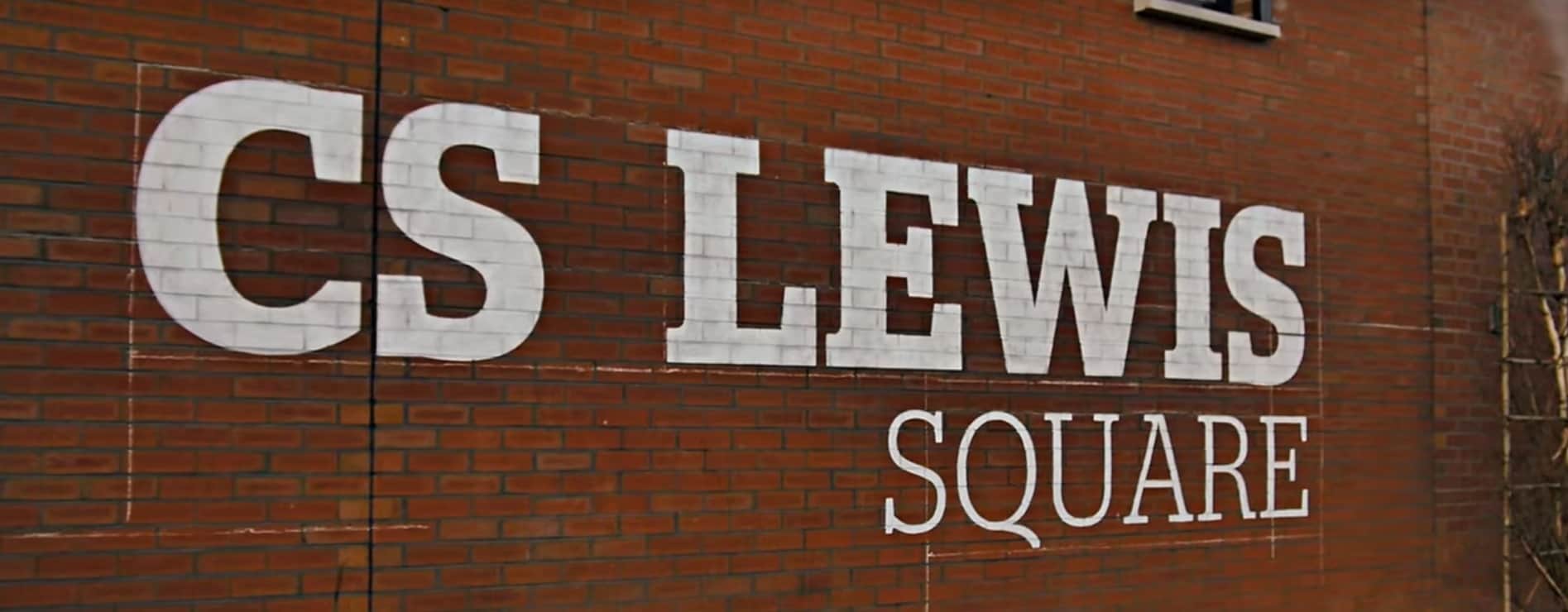
Tucked along the Connswater Greenway in East Belfast stands one of Northern Ireland’s most enchanting cultural landmarks. CS Lewis Square opened in 2016 as a £2.5 million tribute to Belfast’s most celebrated author, featuring seven magnificent bronze sculptures that bring the Chronicles of Narnia to life.

The square represents far more than a collection of statues. It sits at the heart of East Belfast’s regeneration, transforming a once-neglected riverside area into a vibrant community space where literature meets local culture. For visitors planning a Belfast itinerary, this free attraction offers an authentic glimpse into the city’s literary heritage alongside its evolving cultural identity.

The Seven Narnia Sculptures: Characters, Symbolism & Artist Maurice Harron

Irish sculptor Maurice Harron created each bronze figure to capture the essence of Lewis’s most beloved characters from The Lion, the Witch and the Wardrobe. The sculptures form a trail along the greenway, inviting visitors to walk through the story itself rather than simply viewing static monuments.

Aslan the Lion: Belfast’s Literary Guardian

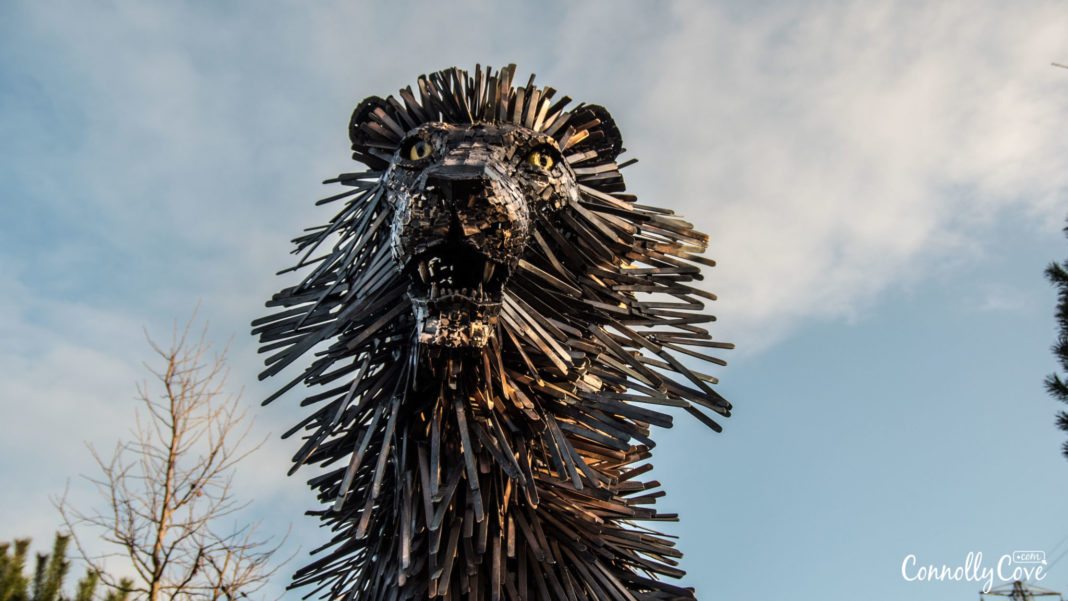
The centrepiece sculpture of Aslan commands attention with its imposing presence and intricate detail. Harron positioned the great lion facing eastward toward the city centre, creating a symbolic connection between Lewis’s fictional creation and his Belfast birthplace. Visitors often photograph themselves beside Aslan, but the sculpture rewards closer inspection. The texture of the bronze mane, the deliberate positioning of the paws, and the lion’s steady gaze all reflect the character’s dual nature as both fierce protector and gentle guide.

The sculpture stands approximately 2.5 metres tall, making it accessible for children to interact with whilst maintaining the dignity befitting Narnia’s most important character. Parents frequently lift young children onto Aslan’s back for photos, creating the wardrobe moment many readers imagined whilst reading Lewis’s descriptions.

The White Witch: Capturing Cold Tyranny in Bronze

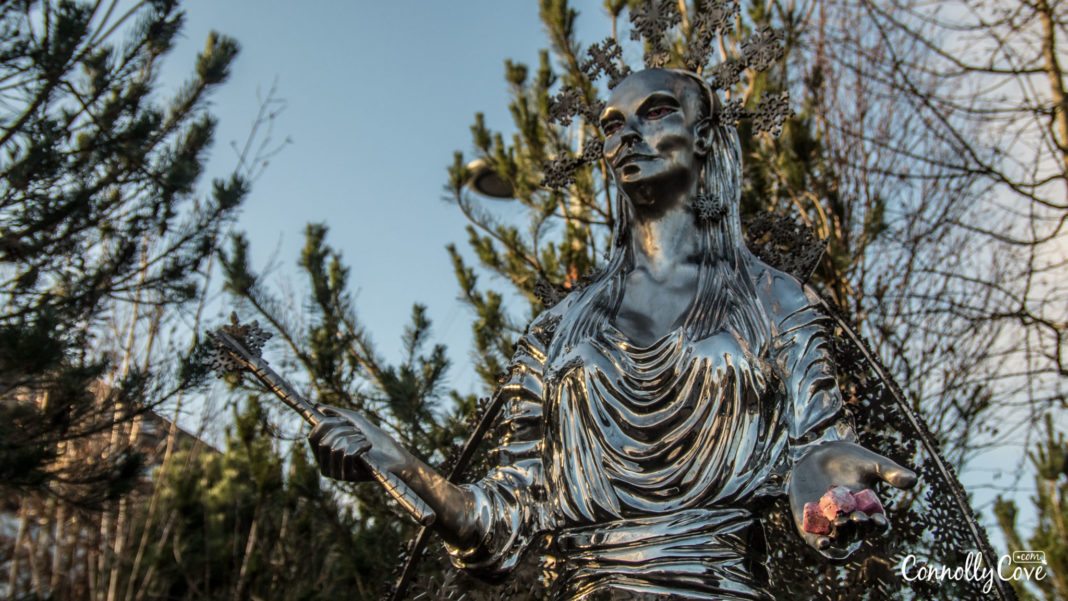
Harron’s interpretation of Jadis presents her in flowing robes that seem to ripple despite the solid bronze construction. The sculptor captured the character’s imperious stance, one hand raised as if commanding the eternal winter that held Narnia captive for a hundred years. The detailed work on her crown and the icy patterns woven into her garments demonstrate the technical skill required to translate Lewis’s literary descriptions into three-dimensional form.

Photographing the White Witch benefits from morning light, which creates dramatic shadows across the bronze folds. The sculpture’s positioning allows visitors to walk full circle around it, revealing different perspectives of the character’s commanding presence.

Mr Tumnus: The Faun Who Opened the Door

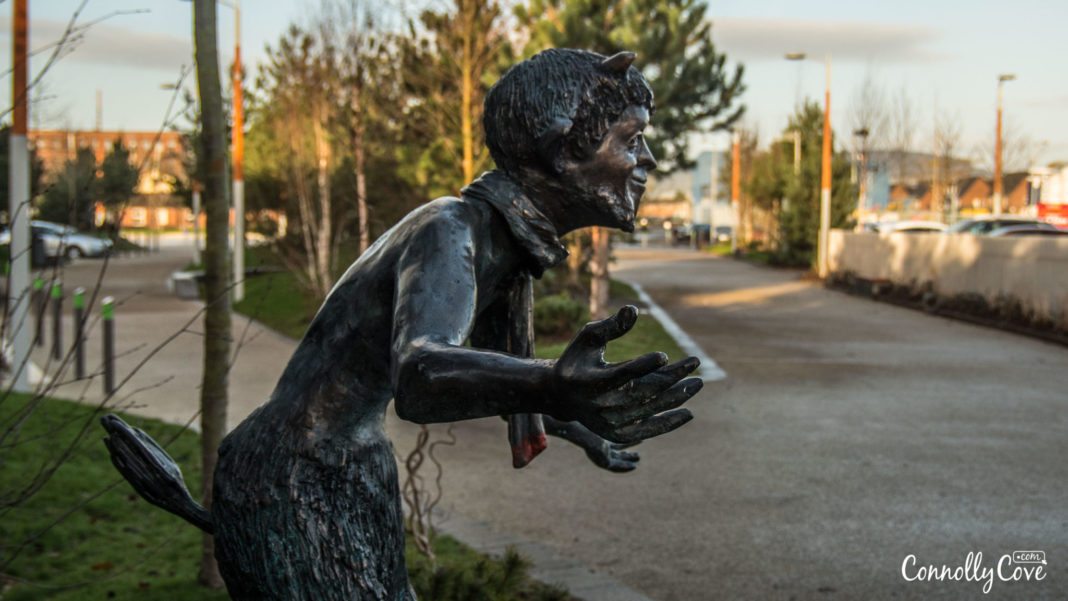
The sculpture of Mr Tumnus depicts him mid-stride with his iconic umbrella, seemingly caught in the moment of first encountering Lucy Pevensie. Harron included the parcels mentioned in Lewis’s original text, showing the faun returning from errands in the snowy woods. The sculpture’s approachable scale and friendly posture make it particularly popular with families.

Children often notice details adults miss: the texture of Tumnus’s goat legs, the careful rendering of his scarf, and the expression of gentle surprise frozen in bronze. The sculpture sits at child height deliberately, encouraging young visitors to engage directly with the character rather than simply observe from a distance.

Mr and Mrs Beaver: Partnership in Bronze

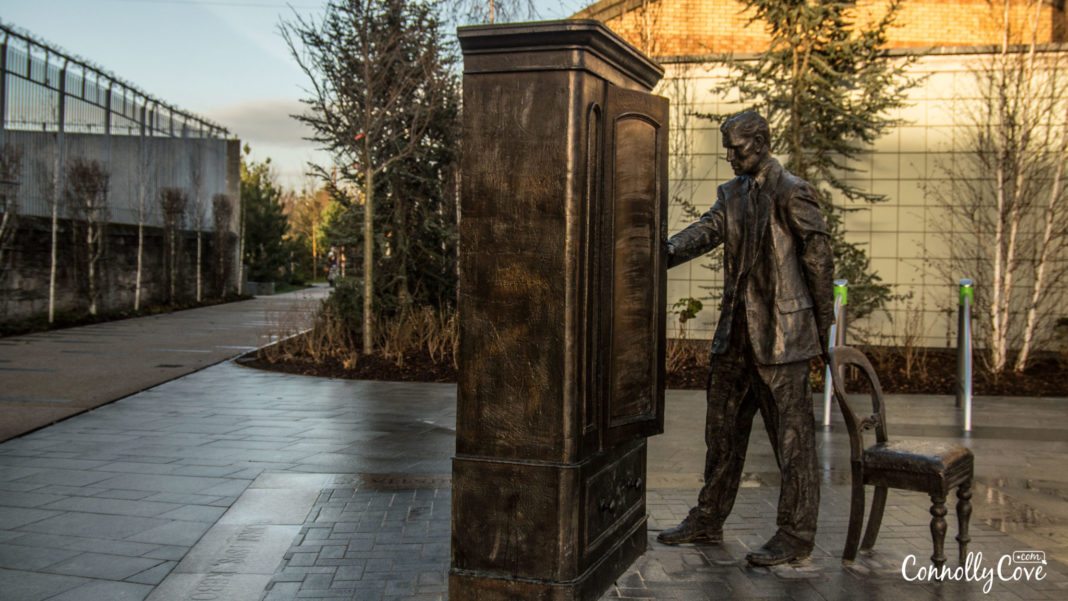
A statue of a man opening a wardrobe stands before a red brick building labeled CS Lewis Square, celebrating Author CS Lewis and his famous Chronicles of Narnia. The sky is clear and trees can be seen in the background.

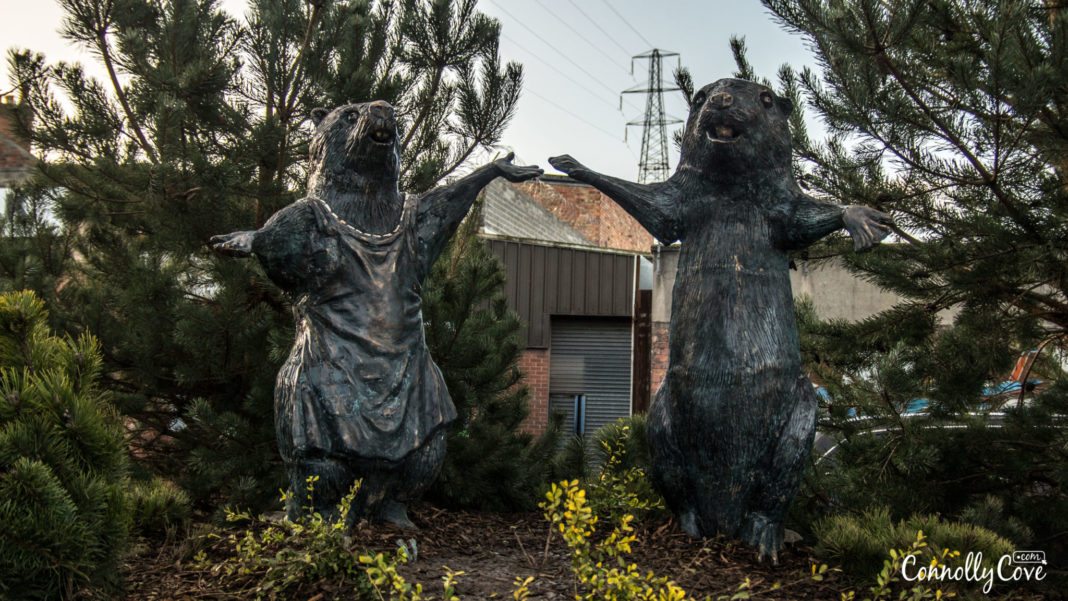
The Beaver couple appear together as they did throughout Lewis’s narrative, representing the ordinary creatures who showed extraordinary courage. Harron depicted them in working poses, Mrs Beaver with her sewing and Mr Beaver with his tools, emphasising the humble domesticity that made their bravery all the more remarkable.

The double sculpture allows visitors to appreciate how Lewis used everyday characters to ground his fantasy in recognisable virtues. The bronze captures the Beavers’ industrious nature whilst hinting at the warmth that made their dam a sanctuary for the Pevensie children during their dangerous journey.

The Robin: Small Guide, Big Significance

Perched atop a bronze branch, the Robin sculpture reminds visitors how Lewis used this small creature as the first guide leading the Pevensie children deeper into Narnia. Harron rendered the bird at actual robin size, requiring viewers to look carefully to spot it amongst the larger sculptures. This scale choice reinforces the character’s role as an easily overlooked messenger whose guidance proved essential.

Photographers seeking complete documentation of all seven sculptures sometimes miss the Robin initially, discovering it only after systematically exploring the trail. The sculpture’s modest size teaches the same lesson Lewis embedded in his narrative: pay attention to small things, for they often matter most.

Maugrim: The Threat That Drives Action

The wolf captain of the White Witch’s secret police appears in a stalking pose, muscles tensed beneath the bronze surface. Harron’s rendering captures the predatory menace Lewis described, creating the only genuinely threatening presence amongst the sculptures. The artist positioned Maugrim approaching the Stone Table, maintaining the narrative flow that visitors experience whilst walking the trail.

Children react viscerally to Maugrim’s sculpture, often stepping back before cautiously approaching for closer inspection. This response mirrors the fear Lewis intended readers to feel, demonstrating how effective sculpture can translate emotional tone across media.

CS Lewis Square Visitor Information: Getting There, Parking & Opening Times

Planning your visit to CS Lewis Square requires understanding both the site’s accessibility and its integration into Belfast’s transport network. The square operates as a public space accessible 24 hours a day with no admission fees, though visiting during daylight hours enhances both safety and photography opportunities.

Finding CS Lewis Square on Newtownards Road

A close-up of a bronze statue of a man in a suit with an eye patch, reaching his hand toward a door, set against bare trees and blue sky in Narnia Square Belfast. “Connolly Cove” is written in the lower right corner.

The square sits on Newtownards Road in East Belfast, approximately 2.5 miles from Belfast City Hall. The site occupies a prominent position along the Connswater Greenway, the riverside walking and cycling path that transformed this section of East Belfast. Clear signage directs visitors from the main road, though first-time visitors benefit from using GPS coordinates or the dedicated Belfast Visitor app for precise navigation.

Local residents know the area as “the Narnia sculptures” or simply “the Square,” and asking directions typically yields helpful responses from East Belfast natives proud of their neighbourhood’s literary connection. The EastSide Visitor Centre sits adjacent to the square, offering maps, facilities, and additional context about the regeneration project that created this cultural space.

Transport Options: Glider, Bus Routes & Belfast Bikes

Belfast’s Glider rapid transit system provides the most efficient public transport connection from the city centre. The G1 route stops directly at CS Lewis Square, with services running every eight minutes during peak hours. A single Glider journey costs £2.50, or visitors can use the mLink smartcard for better value across multiple trips. The journey from Donegall Square takes approximately 15 minutes.

Traditional Metro bus routes also serve the area, with routes 4, 6, and 26 all stopping within walking distance of the square. These services run less frequently than the Glider but offer connections from different parts of Belfast. For cyclists, Belfast Bikes maintains a docking station near the square, allowing visitors to collect or return hire bikes as part of their journey along the greenway.

Parking Near CS Lewis Square, Belfast

Street parking exists on residential roads surrounding the square, operating under standard Belfast parking regulations. Visitors should observe posted restrictions, as some streets implement resident-only parking during certain hours. The nearest paid car park sits approximately 400 metres away on Dee Street, charging standard Belfast rates of £1.50 per hour or £6 for all-day parking.

Families visiting by car often combine the CS Lewis Square trip with stops at nearby attractions, making the parking fee worthwhile for a longer East Belfast exploration. The Connswater Shopping Centre car park offers an alternative parking option, though the walk to the square takes roughly 10 minutes from there.

Accessibility for Wheelchairs and Pushchairs

The square’s design prioritised accessibility, with level paving throughout and wide pathways suitable for wheelchairs, mobility scooters, and pushchairs. The Connswater Greenway uses a traffic-free route, eliminating the hazards of crossing busy roads that complicate many Belfast attractions. Accessible toilets are available at the adjacent EastSide Visitor Centre during its opening hours.

Parents with pushchairs appreciate the smooth surfaces that make navigating between sculptures straightforward. The square’s open layout allows wheelchair users to view each sculpture from multiple angles without encountering steps or narrow passages common in older Belfast sites.

East Belfast Culture: Beyond the Sculptures into the Community

Understanding CS Lewis Square requires recognising its role within East Belfast’s broader cultural regeneration. The £45 million Connswater Community Greenway project transformed three miles of neglected riverside into a connected public space, with the square serving as its cultural anchor. This context elevates the sculptures from an isolated tourist attraction to a meaningful community asset.

The Connswater Greenway: Belfast’s Riverside Revival

The greenway follows the Connswater, Loop, and Knock Rivers through East Belfast, connecting previously isolated neighbourhoods to each other and to the city centre. The path accommodates walkers, runners, and cyclists, with carefully designed junctions that maintain the traffic-free route throughout. Local residents use the greenway daily for commuting, exercise, and recreation, creating the authentic community atmosphere that distinguishes CS Lewis Square from more contrived tourist sites.

Visitors exploring beyond the square discover pocket parks, wildlife habitats, and public art installations that extend the greenway’s cultural dimension. The route passes through areas that experienced significant industrial decline, making the regeneration’s success particularly striking. Urban planning experts often cite the Connswater Greenway as a model for post-industrial transformation, demonstrating how cultural infrastructure can catalyse neighbourhood renewal.

EastSide Visitor Centre: Gateway to Local Stories

The modern EastSide Visitor Centre provides context often missing from tourist-focused information sources. The centre’s exhibitions explain East Belfast’s industrial heritage, the peace process’s impact on these neighbourhoods, and the community consultation that shaped the regeneration project. Staff members typically come from East Belfast itself, offering insider knowledge unavailable through official tourism channels.

The centre houses facilities including accessible toilets, baby changing areas, and a small shop selling locally produced crafts and books about Belfast’s literary history. Opening hours run Tuesday through Saturday from 10 am to 4 pm, with extended hours during school holidays. Admission is free, though donations support the centre’s community programmes.

JACK Coffee Bar: Authentic East Belfast Hospitality

JACK Coffee Bar sits immediately adjacent to CS Lewis Square, offering refreshments in a space that embodies East Belfast’s unpretentious hospitality. The cafe operates as a social enterprise, providing training and employment opportunities whilst serving quality coffee and home baking. Prices reflect local rather than tourist rates, with coffees around £3 and traybakes under £2.50.

The cafe’s large windows overlook the sculptures, allowing visitors to warm up whilst maintaining their connection to the square. Local residents treat JACK as their community living room, creating an authentic atmosphere that visiting families particularly value. The cafe stocks Mr Tumnus-themed cups and Narnia-related merchandise, with proceeds supporting local community projects.

Practical Planning: Combining CS Lewis Square with Other Belfast Attractions

Maximising a Belfast visit requires strategic itinerary planning that combines CS Lewis Square with complementary attractions. The square’s location in East Belfast positions it slightly away from the main tourist concentration around City Hall and the Cathedral Quarter, making transport planning essential for efficient sightseeing.

Half-Day East Belfast Cultural Route

A focused half-day exploration can combine CS Lewis Square with several nearby cultural sites, creating a coherent narrative about East Belfast’s evolution. Begin at the square itself, allowing 45-60 minutes for sculpture viewing, photographs, and a coffee at JACK. Continue along the Connswater Greenway northward toward St Mark’s Church (15-minute walk), where Lewis’s grandfather served as rector and where the church maintains a small CS Lewis collection.

From St Mark’s, the walk to Dundela Avenue (5 minutes) allows viewing the site of Lewis’s birthplace, though only external viewing is possible as the original house no longer exists. Return via the greenway to the EastSide Visitor Centre for deeper context about the area’s regeneration, then catch the Glider G1 back toward the city centre. This route covers approximately 2.5 miles total walking and suits families with older children or active adults.

Full-Day Belfast Literary Trail

Literature enthusiasts can expand the CS Lewis focus into a comprehensive Belfast literary tour. Morning starts at CS Lewis Square as described above, then the Glider returns to the city centre for lunch in the Cathedral Quarter. Afternoon visits might include the Linen Hall Library’s Irish Studies collection, the Literary Quarter’s John Hewitt Bar (named after the poet), and the Union Theological College’s beautiful Victorian building where Lewis’s father studied.

Advanced booking enables inclusion of the CS Lewis Reading Room at the Union Theological College, though public access requires prior arrangement. The full literary trail requires comfortable walking shoes and realistic time allocation—attempting too many sites reduces each to a brief tick-box visit rather than meaningful engagement.

Family-Friendly Belfast Day Combining Indoor and Outdoor

Families visiting Belfast often seek variety that accommodates different weather conditions and children’s attention spans. CS Lewis Square works well as a morning outdoor activity, followed by indoor options if the weather deteriorates. The nearby Ulster Museum (free admission) provides several hours of child-friendly exhibits, including natural history and interactive science displays.

Alternatively, the Titanic Quarter’s attractions (approximately 15 minutes by taxi from CS Lewis Square) offer world-class indoor exploration suitable for various ages. The Titanic Belfast experience particularly impresses visitors, combining industrial heritage with innovative interpretation. This combination creates a thematically coherent day: morning exploring Belfast’s literary heritage at CS Lewis Square, afternoon discovering maritime heritage at the Titanic Quarter.

Conclusion

CS Lewis Square stands as East Belfast’s literary landmark, offering free access to seven bronze Narnia sculptures by Maurice Harron alongside an authentic community atmosphere along the Connswater Greenway. The square’s easy Glider access from Belfast city centre, combined with nearby facilities at the EastSide Visitor Centre and JACK Coffee Bar, creates a visitor-friendly experience that rewards both quick stops and extended exploration of the area’s cultural regeneration story.

FAQs

How long should I spend at CS Lewis Square?

Most visitors spend 30-45 minutes photographing the sculptures and reading the information plaques. Families with young children often stay longer as kids interact with the bronze figures. Combining the square with a walk along the Connswater Greenway or refreshments at JACK Coffee Bar extends the visit to 1-2 hours.

Is CS Lewis Square suitable for wheelchair users?

Yes, the square features level paving throughout with wide pathways suitable for wheelchairs and mobility scooters. The traffic-free Connswater Greenway provides accessible routes to and from the square. Accessible toilets are available at the adjacent EastSide Visitor Centre during opening hours (Tuesday-Saturday, 10 am-4 pm).

Can I visit CS Lewis Square in the evening?

The square operates as a public space accessible 24 hours a day. Evening lighting illuminates the sculptures after dark, creating atmospheric conditions particularly popular with photographers. Visitors should exercise standard urban safety awareness during evening visits, staying in well-lit areas and remaining alert to their surroundings.

Where can I park near CS Lewis Square, Belfast?

Street parking exists on surrounding residential roads under standard Belfast regulations. The nearest paid car park sits approximately 400 metres away on Dee Street (£1.50/hour, £6 all-day). The Connswater Shopping Centre offers alternative parking with a 10-minute walk to the square. Many visitors use the Glider G1 from the city centre instead of driving.

Are there other CS Lewis sites to visit in Belfast?

St Mark’s Church on Dundela Avenue (where Lewis’s grandfather was rector) maintains a small CS Lewis exhibition. The site of Lewis’s birthplace at 47 Dundela Avenue can be viewed externally. The CS Lewis Trail, marked with pavement medallions, links various significant locations across East Belfast. The Union Theological College’s CS Lewis Reading Room requires advance booking.

One comment on "CS Lewis Square Belfast: Narnia Sculptures, Visitor Guide & East Belfast Culture"

  • I visited CS Lewis Square in March 2020 and purchased a Mr. Tumnus cup from Jack Coffee. I’ve since lost the cup and would like to buy a new one but cannot locate the artist or cup online. Do you know who the artist might have been? The coffee shop is not responding as I try to reach out.

Leave a comment

Your email address will not be published. Required fields are marked *