


Bishops Gate – The City Gates in The Walled City – Derry/Londonderry
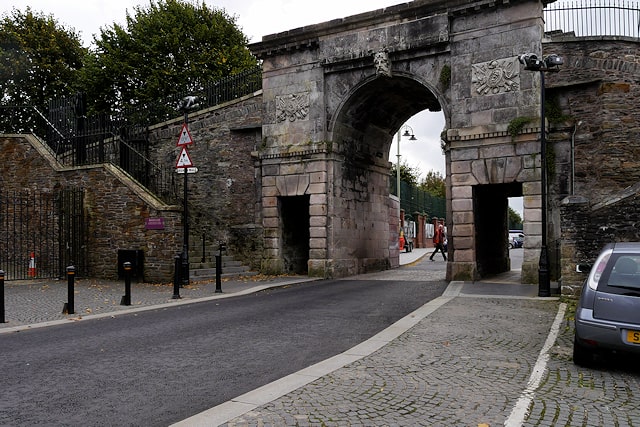
Updated On: April 07, 2024 by  Noha Nabil
Bishops Gate is a timeless sentinel, a portal to history, and an emblem of Derry/Londonderry’s rich heritage. Nestled within the ancient walls of this vibrant city, it serves not only as a physical entry point but also as a gateway to the past, inviting visitors to explore centuries of stories, conflicts, and triumphs. In this article, we explore the significance of the gate within the context of the Walled City of Derry/Londonderry, exploring its history, architectural features, and enduring legacy.
Table of Contents
A Brief History of Derry/Londonderry
Derry/Londonderry, often referred to as simply “Derry,” is a city in Northern Ireland renowned for its tumultuous history and resilient spirit. Founded in the 6th century by Saint Colmcille, Derry/Londonderry grew into a strategic stronghold due to its position on the banks of the River Foyle. Over the centuries, it witnessed Viking raids, Norman conquests, and Gaelic chieftaincies, each leaving an indelible mark on its landscape and culture.
In the 17th century, Derry/Londonderry gained prominence during the Plantation of Ulster, a settlement period by Scottish and English settlers. This era also saw the construction of the iconic city walls, commissioned by the influential London-based Irish Society. Completed in 1619, the walls encompassed the city centre, providing protection and prestige to Derry/Londonderry.
The Walled City
At the heart of Derry/Londonderry lies the Walled City, a testament to the city’s medieval origins and resilience. Spanning approximately 1.5 kilometres, the walls stand as one of the best-preserved examples of their kind in Europe, offering visitors a captivating journey through history. The walls contain seven unique gates, encapsulating centuries of architectural prowess and strategic defence.
Bishops Gate
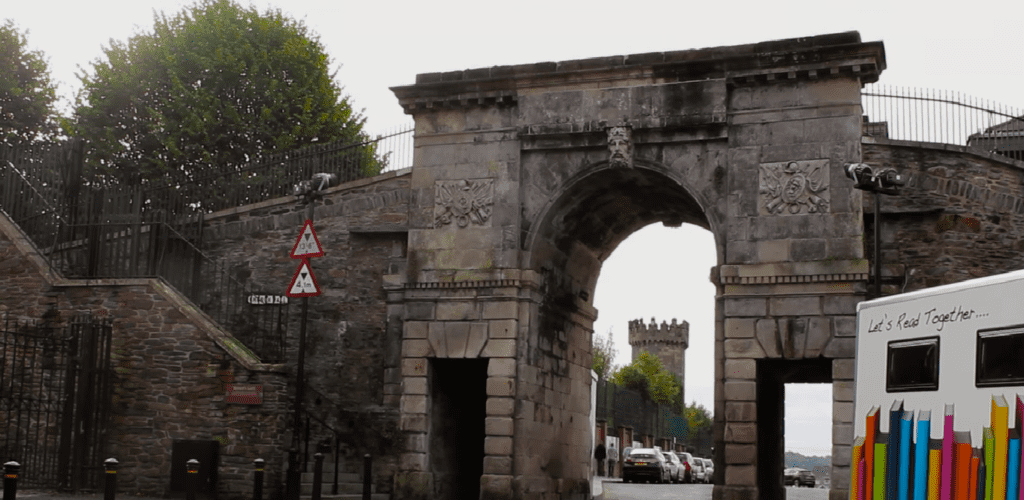
Of the seven gates adorning the city walls, the gate reigns supreme as one of the most striking and historically significant. Situated on the northwest side of the Walled City, the gate is a focal point for locals and tourists alike, drawing them into its storied past.
Architectural Marvel
Architecturally, the gate exemplifies the Elizabethan style prevalent during its construction in the early 17th century. Characterized by sturdy stone masonry, imposing towers, and intricate carvings, the gate reflects the craftsmanship of its time. Above the arch, a stone-carved statue of a bishop believed to be Saint Columba gazes out over the city, a silent guardian of Derry/Londonderry’s spiritual and cultural heritage.
Strategic Importance
Beyond its aesthetic appeal, the gate played a vital role in defending Derry/Londonderry during the conflict. With its formidable walls and strategic position overlooking the River Foyle, the gate stood as a bulwark against invading forces, ensuring the safety and security of the city’s inhabitants. During the Siege of Derry in 1689, Bishops Gate witnessed some of the most intense fighting, with its stout defences holding firm against Jacobite assaults.
Cultural Significance
Throughout the centuries, the gate has transcended its role as a mere fortification, evolving into a civic pride and identity symbol. It has been immortalized in art, literature, and folklore, becoming synonymous with the spirit of Derry/Londonderry itself. Today, the gate serves as a gathering place for community events, celebrations, and commemorative ceremonies, fostering a sense of belonging among residents and visitors alike.
Preservation Efforts
Despite the passage of time and the ravages of history, the gate stands as a testament to the enduring legacy of Derry/Londonderry. Over the years, extensive efforts have been made to preserve and protect this architectural gem, ensuring that future generations can continue to marvel at its splendour. Through conservation initiatives and heritage tourism, the gate remains a vibrant link to the past, offering invaluable insights into the rich tapestry of Northern Ireland’s history.
Attractions Near Bishops Gate
While the gate is a captivating focal point within the Walled City of Derry/Londonderry, the surrounding area boasts many attractions that further enrich the visitor experience. From historic landmarks to cultural treasures, there is no shortage of delights to discover near this iconic gateway. In this guide, we’ll explore some of the must-see attractions that complement the allure of the gate, inviting visitors to delve deeper into the rich tapestry of Derry/Londonderry’s heritage.
1. The Guildhall: Just a stone’s throw from the gate lies the majestic Guildhall, a symbol of civic pride and architectural grandeur. Built-in the late 19th century, this stunning neo-Gothic building features intricate stonework, towering spires, and a magnificent stained glass window depicting scenes from Derry/Londonderry’s history. Visitors can explore the interior, which houses a museum showcasing the city’s cultural heritage, and attend events and exhibitions in its hallowed halls.
2. The Peace Bridge: Spanning the River Foyle, the Peace Bridge stands as a symbol of reconciliation and unity in a city with a complex history. Opened in 2011, this elegant pedestrian and cycle bridge connects the bustling city centre with the tranquil surroundings of Ebrington Square. A stroll or bike ride across the bridge offers breathtaking views of the river and skyline, providing a serene escape from the urban hustle and bustle.
3. St. Columb’s Cathedral: Perched atop the historic city walls, St. Columb’s Cathedral is a beacon of spiritual solace and architectural splendour. Dating back to the 17th century, this Anglican cathedral is renowned for its graceful spire, exquisite stained glass windows, and serene interior adorned with intricate woodwork and marble monuments. Visitors can explore the cathedral grounds, attend services, or simply admire its timeless beauty from afar.
4. The Tower Museum: Immerse yourself in Derry/Londonderry’s rich history at the Tower Museum, located within the city’s historic walls. Housed in a striking modern building overlooking the River Foyle, this award-winning museum offers a fascinating journey through the city’s past, from its ancient origins to modern-day triumphs. Highlights include interactive exhibits, archaeological treasures, and multimedia presentations that bring Derry/Londonderry’s stories to life.
5. The People’s Gallery: A visit to the People’s Gallery is a must for art enthusiasts. This unique outdoor art installation showcases a series of larger-than-life murals painted on gable walls throughout the city, depicting scenes from Derry/Londonderry’s cultural, political, and social history. From poignant reflections on the Troubles to vibrant celebrations of community spirit, these murals offer a powerful testament to the resilience and creativity of the city’s residents.
When to Explore Derry/Londonderry’s Charms
The best time to visit Derry/Londonderry largely depends on personal preferences and interests. However, many travellers find that the late spring to early autumn months, particularly from May to September, offer the most favourable weather conditions for exploring the city and its surrounding attractions. During this time, temperatures are generally mild, allowing for comfortable sightseeing and outdoor activities.
Additionally, Derry/Londonderry hosts several festivals and events throughout the summer months, including the Maiden City Festival and the Banks of the Foyle Halloween Carnival. These provide an excellent opportunity to immerse oneself in the local culture and festivities. However, it’s worth noting that Derry/Londonderry’s dynamic atmosphere and rich history make it a compelling destination year-round, so visitors can enjoy its charms whenever they choose to journey to this captivating city.
Conclusion
In the heart of the Walled City of Derry/Londonderry, the gate stands as a beacon of resilience, heritage, and community. From its origins as a defensive stronghold to its modern-day role as a cultural landmark, the gate encapsulates centuries of history and tradition. Visitors pass through its arches and are transported back in time, connecting with the spirit of a city shaped by triumphs and tribulations. Bishops Gate remains a physical monument and a living testament to the enduring spirit of Derry/Londonderry and its people.

An Ultimate Guide to 6 of the Finest Castle Tours in England
England
26/04/2024

Unveiling the Most Terrifying Haunted Tours in Scotland
Scotland
25/04/2024

7 Top Amusement Parks in England for an Unforgettable Adventure
England
25/04/2024

Miami Tourism Statistics: A Comprehensive Overview of Visitor Numbers and Revenue
Travel Statistics
25/04/2024

The Enchanting Charm of Scotland Wedding Castles!
Scotland
25/04/2024