


Bogside Murals – Derry Murals – Londonderry Bogside
Updated On: April 07, 2024 by  Noha Nabil
Derry-Londonderry, a city steeped in history and resilience, boasts a treasure trove of cultural gems that tell the story of its past, present, and future. Among these, the Bogside Murals stand out as vivid testaments to the tumultuous journey of this Northern Irish city. As one wanders through the narrow streets of the Bogside neighbourhood, they are greeted by larger-than-life murals that narrate its inhabitants’ struggles, triumphs, and aspirations. In this exploration, we delve into the captivating world of the Bogside Murals, tracing their origins, themes, and enduring impact on the fabric of Derry-Londonderry’s identity.
Table of Contents
A Brief History of Derry-Londonderry and the Bogside
Derry-Londonderry, often called Derry, is the second-largest city in Northern Ireland and holds significant historical and political importance. The city is situated along the River Foyle’s banks and surrounded by stunning natural landscapes. However, its history is marked by centuries of conflict, particularly during the Troubles, a period of ethno-nationalist conflict in Northern Ireland that lasted from the late 1960s to the late 1990s.
The Bogside, a neighbourhood located just outside the city walls of Derry, played a central role in the Troubles. It was here, in August 1969, that a series of violent clashes between residents and the Royal Ulster Constabulary (RUC) marked the beginning of the Troubles. This event, known as the Battle of the Bogside, led to the deployment of British troops and further escalated tensions in the region.
The Emergence of the Bogside Murals
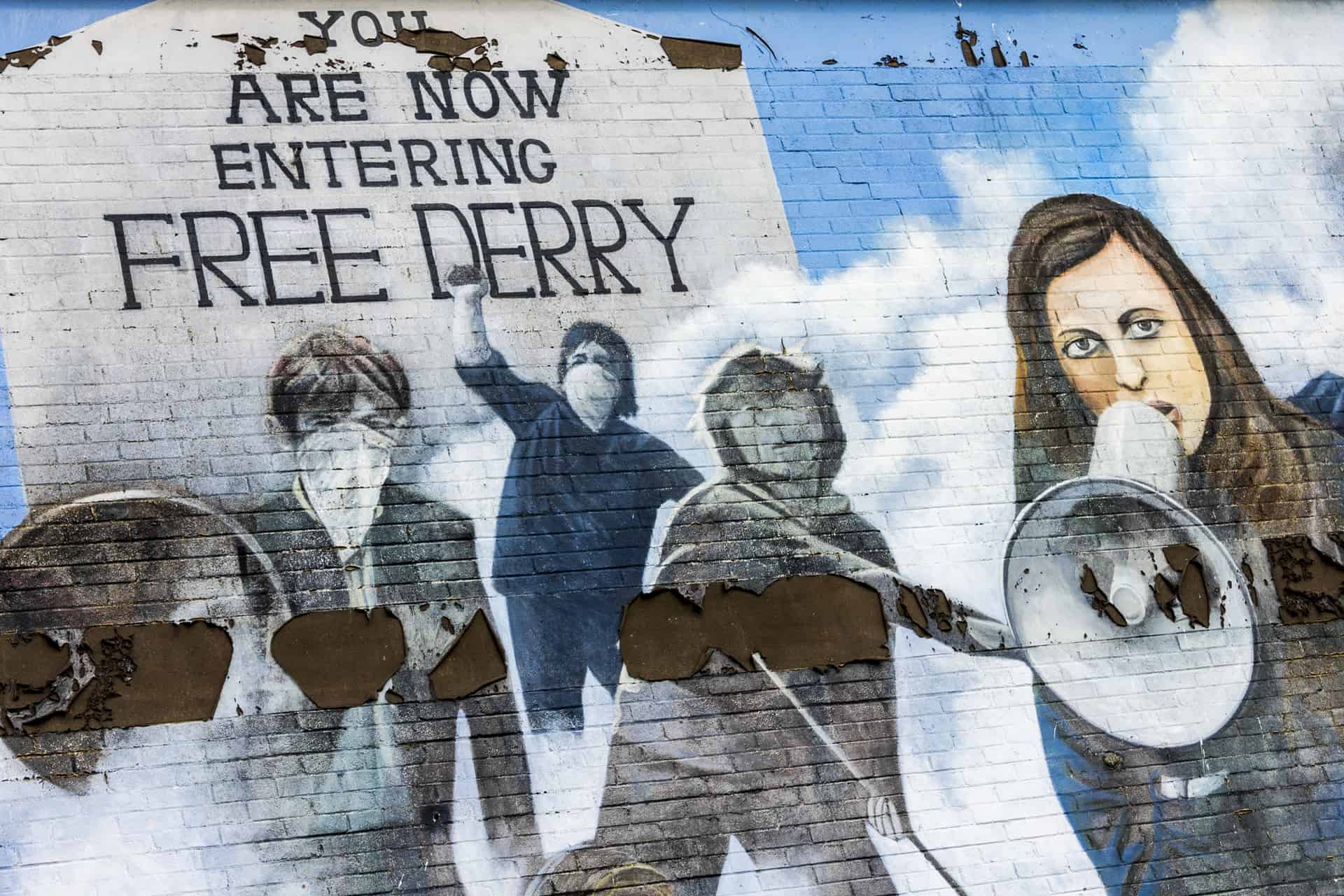
Amidst the backdrop of political unrest and social upheaval, the Bogside Murals emerged as a form of expression and resistance. Beginning in the early 1990s, local artists and community activists began painting murals on the walls of buildings throughout the Bogside. These murals served as visual narratives, depicting key moments in Irish history, celebrating cultural heritage, and advocating for social justice.
One of the most iconic murals in the Bogside is the “Bloody Sunday” mural, which commemorates the events of 30 January 1972, when British soldiers opened fire on unarmed civil rights protesters, killing 14 people. Painted by artist Tom Kelly, the mural depicts a scene from that fateful day, with images of grieving families and the words “You Are Entering Free Derry” emblazoned across the top.
Themes and Symbolism
The themes depicted in the Bogside Murals are diverse and multifaceted, reflecting the complex history and identity of Derry-Londonderry. Many murals focus on the struggle for civil rights and equality, highlighting key figures such as Martin Luther King Jr. and Nelson Mandela, who inspired the civil rights movement in Northern Ireland.
Other murals celebrate Irish culture and heritage, featuring depictions of traditional music, dance, and folklore. One mural, “The Music Makers,” showcases musicians playing traditional Irish instruments against a backdrop of vibrant colours and swirling patterns.
In addition to political and cultural themes, the Bogside Murals also explore the concept of reconciliation and healing. Several murals depict scenes of peace and unity, with images of shaking hands and messages of hope and solidarity.
Impact and Legacy
The Bogside Murals have profoundly impacted the city of Derry-Londonderry, serving as symbols of resilience and defiance in the face of adversity. They have become a significant tourist attraction, drawing visitors from around the world who admire the artistry and learn about the history behind the murals.
Moreover, the murals have played a crucial role in the peace-building process in Northern Ireland. Through their depictions of historical events and messages of reconciliation, they have helped foster dialogue and understanding between communities once divided by conflict.
Preservation and Conservation Efforts
Recently, a concerted effort has been to preserve and protect the Bogside Murals for future generations. In collaboration with government agencies and nonprofit organizations, local community groups have undertaken initiatives to restore and maintain the murals, ensuring they remain a vibrant part of Derry-Londonderry’s cultural landscape.
These efforts have included regular maintenance and conservation work, as well as educational programs to raise awareness about the murals’ significance and their role in shaping the city’s identity.
When to Experience the Bogside Murals in Derry-Londonderry
The best time to visit the Bogside Murals in Derry-Londonderry is during the warmer months of late spring and summer, typically from May to August. The weather is mild during this time, and the longer daylight hours allow for ample exploration of the murals and the surrounding area.
Additionally, summer often brings a lively atmosphere to the city, with various events, festivals, and cultural celebrations. Visitors can immerse themselves in the vibrant energy of Derry-Londonderry while admiring the striking artwork of the Bogside Murals against the backdrop of blue skies and lush greenery. However, it’s essential to remember that Derry-Londonderry can experience rainfall throughout the year, so it’s advisable to pack accordingly and be prepared for occasional showers even during the summer months.
More attractions near The Bogside Murals
Beyond the Bogside Murals’ captivating allure, Derry-Londonderry offers many attractions that beckon visitors to delve deeper into its rich tapestry of history, culture, and natural beauty. Here are some notable landmarks and experiences to explore near the Bogside Murals:
1. The Guildhall: A majestic symbol of Derry-Londonderry’s heritage, the Guildhall stands proudly on the banks of the River Foyle. With its striking neo-gothic architecture, this iconic building has served various civic functions over the years and now hosts exhibitions, events, and cultural performances.
2. The Peace Bridge: Spanning the River Foyle, the Peace Bridge is not just a feat of engineering but also a powerful symbol of reconciliation and unity. A stroll or cycle across this elegant structure offers panoramic views of the city and serves as a poignant reminder of Derry-Londonderry’s journey towards peace.
3. The Tower Museum: Located within the city’s historic walls, the Tower Museum offers an immersive journey through Derry-Londonderry’s past. From the story of the city’s origins to its role in the Siege of Derry and the Troubles, the museum’s exhibits provide valuable insights into the events that have shaped the city’s identity.
4. The Walls of Derry: Encircling the city’s historic centre, the Walls of Derry are among the best-preserved fortifications in Europe. A leisurely walk along these ancient ramparts offers a unique perspective on Derry-Londonderry’s history, with panoramic views of the city and its surroundings.
5. St. Columb’s Cathedral: Dating back to the 17th century, St. Columb’s Cathedral is a masterpiece of ecclesiastical architecture and a significant landmark in Derry-Londonderry. Visitors can explore its ornate interior, including the stunning stained glass windows and the tomb of the famous siege hero, Colonel George Walker.
6. The Craft Village: Tucked away within the city walls, the Craft Village is a charming enclave of traditional Irish crafts and artisanal wares. Visitors can browse various shops and studios, showcasing everything from handmade jewellery and textiles to ceramics and woodwork.
7. The Foyle Maritime Museum: Housed within the city’s historic walls, the Foyle Maritime Museum offers a fascinating glimpse into Derry-Londonderry’s maritime heritage. Exhibits explore the city’s seafaring past, from its role as a bustling port to its connections with the Titanic and the emigrant experience.
8. The Walled City Brewery: For those craving a taste of local flavour, the Walled City Brewery is a must-visit destination. Situated within the city walls, this award-winning brewery and restaurant offer a mouthwatering selection of craft beers and contemporary Irish cuisine, all served in a vibrant and welcoming atmosphere.
From historic landmarks to cultural treasures and culinary delights, the attractions near the Bogside Murals promise an enriching and unforgettable experience for visitors to Derry-Londonderry. Whether exploring the city’s storied past or embracing its vibrant present, there is something to captivate and inspire every traveller who ventures into this dynamic corner of Northern Ireland.
Conclusion
The Bogside Murals are enduring symbols of resilience, resistance, and reconciliation in Derry-Londonderry. Through their powerful imagery and poignant messages, they tell the story of a community that has faced adversity with courage and determination.
As Derry-Londonderry continues to evolve and grow, the Bogside Murals serve as a reminder of the city’s past struggles and a testament to its enduring spirit. They are a testament to the power of art to inspire, educate, and unite, and they continue to inspire visitors and residents alike with their beauty and significance.
FAQs
Are there any specific events or festivals that coincide with the best time to visit?
Yes, summer often brings a lively atmosphere to Derry-Londonderry, with various events, festivals, and cultural celebrations. Visitors can enjoy a range of activities and immerse themselves in the city’s vibrant energy while exploring the Bogside Murals.
How much time should I allocate for visiting the Bogside Murals?
The time needed to explore the Bogside Murals can vary depending on individual preferences and interests. On average, visitors typically spend 1 to 2 hours admiring the murals and photographing. However, those interested in delving deeper into the history and significance of the murals may choose to allocate more time for their visit.
Are there guided tours available for the Bogside Murals?
Yes, guided tours of the Bogside Murals are available and are a popular option for visitors who want to gain a deeper understanding of the artwork and its historical context. Knowledgeable guides provide insightful commentary and share stories about the murals, the artists, and the events that inspired them.

The Kingdom of Ireland: King Henry VIII’s Declaration as the King of Ireland
Ireland
19/04/2024

The Truth about the Claddagh Ring Curse: Debunking Myths and Exploring the Symbolism
Mythology and Folklore
19/04/2024
Top 10 Irish Public Holidays and Traditions to Experience on Your Ireland Holidays
Festivals and Events
18/04/2024

6 Top Mourne Camping Sites for an Unforgettable Experience Under the Stars
Northern Ireland
18/04/2024

Eostre: The Germanic Goddess of Dawn and Spring Equinox Celebrations
Mythology and Folklore
17/04/2024