When most people think of Cambridge, the prestigious university immediately springs to mind. Yet this remarkable city offers so much more than its academic reputation suggests. As cultural explorers who have spent years uncovering the authentic stories behind Europe’s most fascinating destinations, we at ConnollyCove have discovered that Cambridge represents a unique confluence of intellectual heritage, ancient traditions, and living history that resonates deeply with anyone seeking genuine cultural experiences.
Cambridge has been shaped by eight centuries of scholars, poets, and pioneers who have fundamentally changed our understanding of the world. From Isaac Newton’s revelations about gravity to Watson and Crick’s unravelling of DNA’s secrets, this city has witnessed breakthrough moments that altered human history. But beyond these towering achievements lies a rich tapestry of cultural traditions, architectural marvels, and hidden corners that tell equally compelling stories.
What sets Cambridge apart from other historic English cities is how seamlessly it weaves together ancient and modern, scholarly and pastoral, formal and intimate. You can punt along the same river where medieval monks once travelled, explore colleges where traditions stretch back to the 13th century, and discover pubs where wartime pilots left their mark on history. This is a city that rewards the culturally curious traveller who seeks depth beyond the postcard-perfect facades.
Table of Contents
Cultural Heritage & Ancient Roots
Cambridge’s story begins long before its famous university took shape, rooted in a landscape that has witnessed human settlement for over two millennia. Understanding this deeper cultural context transforms a visit from simple sightseeing into a genuine exploration of England’s layered heritage.
The Romans established a settlement here around 70 AD, recognising the strategic importance of this crossing point on the River Cam. Archaeological evidence throughout the city reveals traces of Roman roads, buildings, and burial sites that speak to a thriving community. The very name ‘Cambridge’ derives from ‘Granta-bridge’, referring to the river crossing that has defined the settlement since ancient times.
The medieval period saw Cambridge transform from a modest market town into a centre of learning and religious devotion. The arrival of Augustinian canons in the 12th century marked the beginning of Cambridge’s scholarly tradition, decades before the university’s official founding in 1209. These religious communities established the intellectual framework that would eventually flourish into one of the world’s great universities.
The Celtic Connection
What many visitors don’t realise is Cambridge’s subtle but significant connections to Celtic heritage. The Iceni tribe, led by the legendary Queen Boudica, controlled much of this region before Roman conquest. Archaeological discoveries continue to reveal Iron Age settlements and Celtic artefacts throughout Cambridgeshire, connecting this scholarly city to Britain’s pre-Roman cultural foundations.
The very landscape around Cambridge—its ancient field systems, river courses, and settlement patterns—reflects centuries of Celtic and Anglo-Saxon influence. Walking the paths along the River Cam, you’re following routes that have been used for over a thousand years, connecting you to generations of travellers, traders, and scholars who have shaped this remarkable place.
Architectural Evolution Through the Ages
Cambridge’s buildings tell the story of English architectural development across eight centuries. The city showcases evolution from Norman solidity through Gothic innovation to Renaissance refinement and Victorian grandeur. Each college represents not just an educational institution but a chapter in the ongoing story of English cultural expression.
The transition from medieval to Renaissance ideals becomes particularly evident when comparing older foundations like Peterhouse (1284) with later establishments like Trinity College (1546). These architectural changes reflect broader cultural shifts—from medieval scholasticism to Renaissance humanism, from religious to secular learning, from insular to international perspectives.
Essential Cambridge Experiences
Cambridge offers experiences that cannot be replicated anywhere else in the world. These are not merely tourist attractions but authentic cultural encounters that connect visitors to the city’s living heritage.
The University of Cambridge
Established in 1209, the University of Cambridge stands as one of the world’s most influential educational institutions. Its impact extends far beyond academic achievement into realms of scientific discovery, literary creation, and cultural innovation that have shaped global civilisation.
Walking through the university precincts reveals architectural marvels that span centuries. King’s College Chapel represents the pinnacle of Perpendicular Gothic architecture, its soaring stone vaulting and magnificent stained glass creating an atmosphere of transcendent beauty. The chapel’s construction, spanning nearly a century, reflects the ambitions and devotions of medieval England’s most powerful monarchs.
Trinity College showcases Renaissance grandeur, its Great Court forming the largest enclosed courtyard in Europe. The college’s Wren Library houses treasures including Newton’s original manuscripts and medieval illuminated texts that chronicle centuries of intellectual achievement. Standing in these halls, you’re surrounded by the physical legacy of minds that reshaped human understanding.
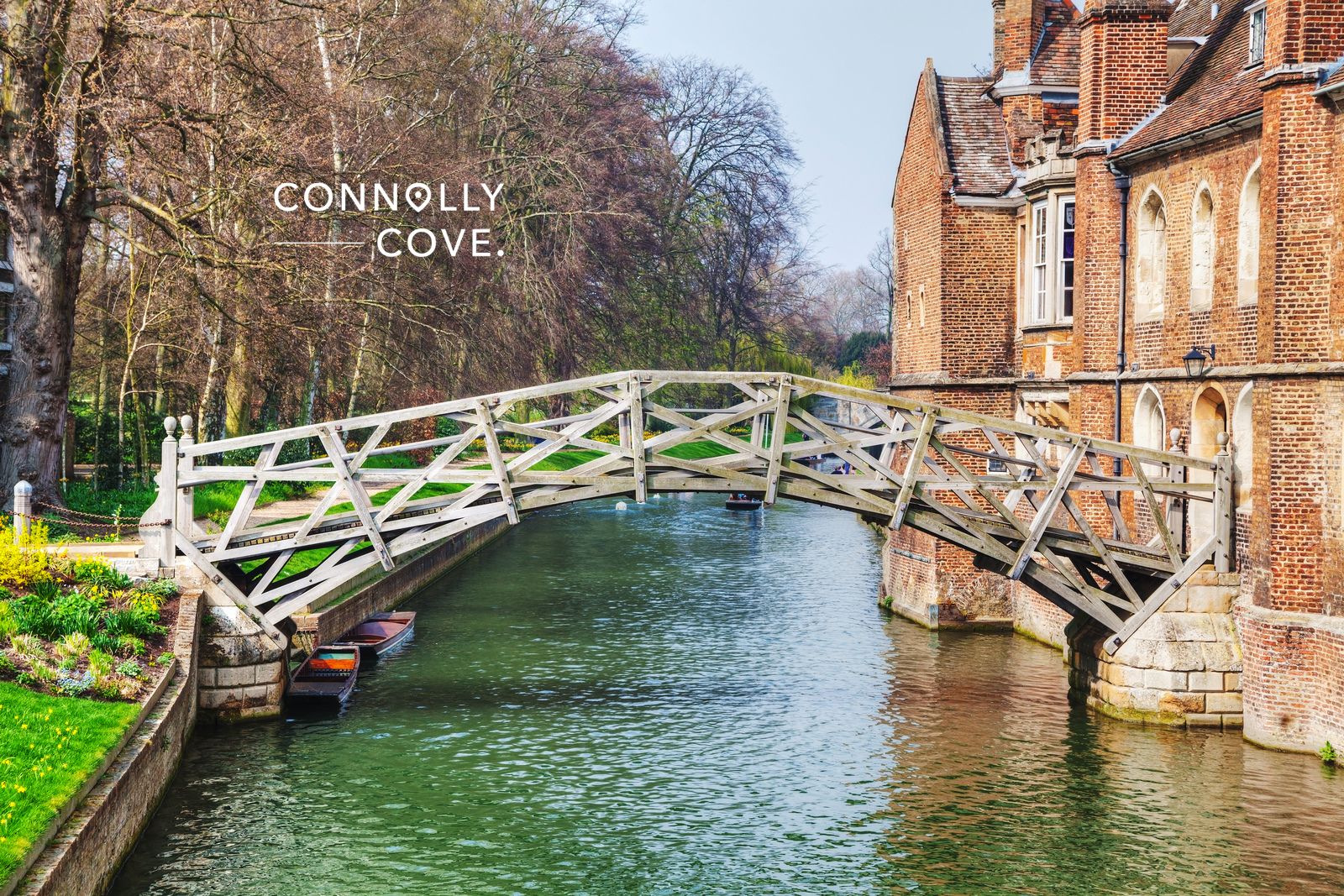
St John’s College offers perhaps the most romantic vista in Cambridge, its Bridge of Sighs creating a perfect frame for the River Cam flowing beneath. The college’s Second Court demonstrates early 17th-century architectural harmony, while its newer buildings show how tradition adapts to contemporary needs.
The Backs
The Backs represent Cambridge at its most pastoral and serene. This stretch of parkland along the River Cam provides the perfect backdrop for the colleges’ rear facades, creating some of England’s most photographed and painted views.
More than just scenic beauty, the Backs reveal how Cambridge has been planned and preserved across centuries. The careful maintenance of open spaces, the positioning of bridges, and the relationship between buildings and landscape demonstrate a deep understanding of environmental harmony that modern urban planners still study and admire.
Punting along the river offers an entirely different perspective on these famous views. The gentle rhythm of pole against riverbed, the changing angles of college spires and bridges, and the peaceful progression past willow trees and meadows create an almost meditative experience that connects you to countless generations who have enjoyed these same waters.
The Fitzwilliam Museum
The Fitzwilliam Museum deserves recognition as one of Britain’s finest cultural institutions. Founded in 1816 through the vision of Richard Fitzwilliam, the museum houses collections that span five millennia of human creativity and achievement.
The museum’s Egyptian collection rivals that of the British Museum in quality and historical significance. Standing before 4,000-year-old sarcophagi and examining intricate papyrus scrolls provides a direct connection to one of history’s greatest civilisations. The Greek and Roman galleries showcase classical art that influenced Western culture for over two millennia.
European paintings represent artistic development from medieval illumination through Renaissance mastery to Impressionist innovation. Works by Titian, Rubens, and Monet hang in galleries designed to showcase their beauty and cultural significance. The museum’s applied arts collections—ceramics, textiles, and decorative objects—reveal how human creativity has enhanced daily life across cultures and centuries.
Cambridge Botanic Garden
Established in 1762, Cambridge Botanic Garden represents over 250 years of botanical research and horticultural excellence. This living laboratory spans 40 acres of meticulously planned landscapes that showcase plant diversity from across the globe.
The garden serves multiple purposes: scientific research, conservation, education, and public enjoyment. Walking through themed sections—from alpine rockeries to tropical glasshouses—provides insight into plant adaptation, evolution, and human cultivation. The systematic beds demonstrate botanical classification systems that help us understand the natural world’s complexity.
Seasonal changes make every visit unique. Spring brings spectacular displays of bulbs and flowering trees, summer showcases herbaceous borders at their peak, autumn offers stunning foliage colours, and winter reveals structural beauty in evergreen collections and architectural plants.
Hidden Historical Treasures
Beyond Cambridge’s famous attractions lie lesser-known gems that offer equally compelling insights into the city’s rich heritage. These hidden treasures reward curious explorers who venture beyond conventional tourist routes.
The Eagle Pub
The Eagle holds unique significance in both wartime history and scientific achievement. During World War II, RAF and USAAF airmen stationed at nearby bases gathered here, leaving their signatures, squadron badges, and messages on the pub’s ceiling. This graffiti, now carefully preserved, provides poignant testimony to young men who faced uncertain fates in Europe’s skies.
The pub gained additional fame in 1953 when Francis Crick announced the discovery of DNA’s structure to fellow drinkers. The very table where Watson and Crick discussed their Nobel Prize-winning research remains a pilgrimage site for scientists and visitors interested in momentous discoveries that changed our understanding of life itself.
The Round Church
The Church of the Holy Sepulchre, known locally as the Round Church, represents one of England’s four surviving round churches. Built around 1130, its circular design echoes the Church of the Holy Sepulchre in Jerusalem, reflecting medieval pilgrim traditions and Crusade-era religious fervour.
The church’s Norman architecture provides insight into 12th-century building techniques and religious symbolism. Its survival through eight centuries of religious change—from Catholic to Protestant to modern Anglican traditions—demonstrates how sacred spaces adapt while maintaining their essential character.
Kettle’s Yard
Kettle’s Yard offers an intimate encounter with 20th-century art and design philosophy. Created by Jim Ede between 1957 and 1973, this house-museum demonstrates how art can be integrated into daily life rather than confined to formal gallery spaces.
Ede’s vision transforms everyday objects—pebbles, glass, natural forms—into artistic arrangements that complement works by Ben Nicholson, Barbara Hepworth, and Henri Gaudier-Brzeska. The house’s atmosphere encourages contemplation and personal response rather than academic analysis, offering a refreshing alternative to traditional museum experiences.
Great St Mary’s Church
Great St Mary’s Church serves as the University Church, hosting significant ceremonies and providing spiritual focus for academic life. Its tower offers Cambridge’s finest panoramic views, revealing the city’s layout and the relationship between ancient and modern elements.
The church’s history intertwines with university development and English religious evolution. Sermons preached here influenced theological thought, while the building itself demonstrates Gothic Revival architecture adapted to Protestant worship patterns. Climbing the tower provides both physical exercise and a historical perspective on Cambridge’s growth across centuries.
Market Square
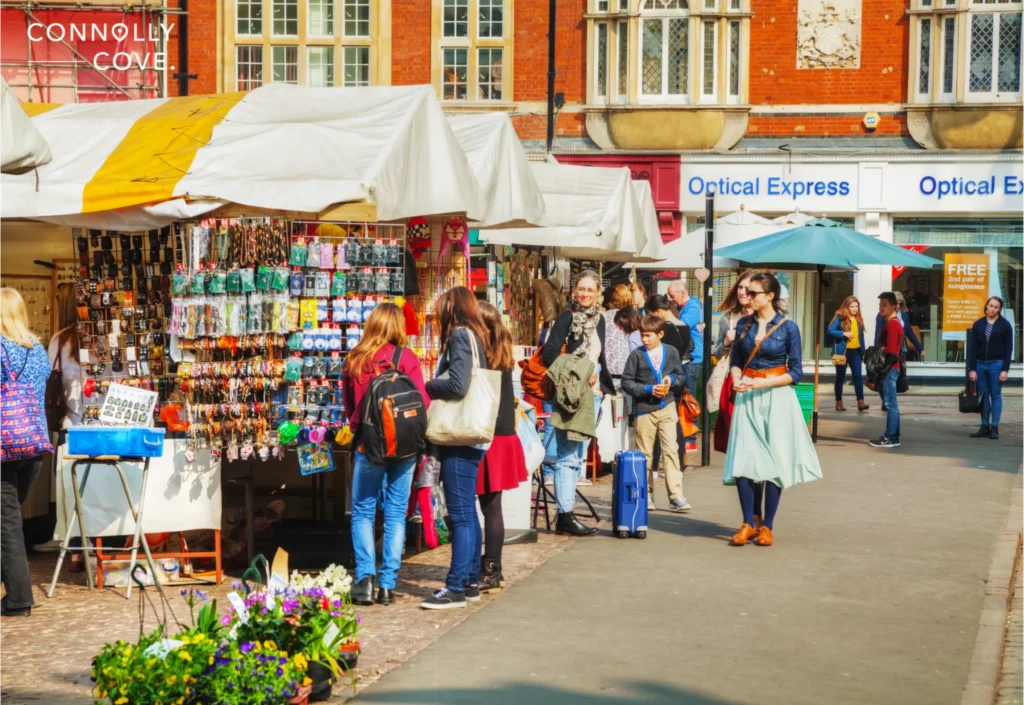
Market Square has served as Cambridge’s commercial heart for over 800 years. The daily market continues medieval trading traditions while adapting to contemporary needs and tastes. Stalls selling local produce, international foods, clothing, and crafts create a vibrant atmosphere that connects past and present commercial life.
The square’s surrounding architecture tells stories of civic pride and commercial success. Great St Mary’s Church anchors the western end, while the Senate House demonstrates 18th-century classical influence on university architecture. This juxtaposition of sacred, secular, and commercial buildings reflects Cambridge’s complex identity as both a university town and a thriving community.
Seasonal Travel Planning
Cambridge reveals different aspects of its character throughout the year, making timing an important consideration for visitors seeking specific experiences or atmospheres.
Spring & Summer Experiences
Spring transforms Cambridge into a celebration of renewal and natural beauty. College gardens burst into flower, creating spectacular displays that complement Gothic architecture with natural colour and fragrance. The famous Cherry Tree Walk at Christ’s College becomes a tunnel of pink blossoms, while daffodils carpet the Backs in golden waves.
Summer brings punting season to its peak, with perfect weather for river exploration and outdoor dining. Long daylight hours allow extensive walking tours, while warm evenings create ideal conditions for enjoying riverside pubs and college chapel services. The absence of students during vacation periods provides access to normally restricted areas and a more tranquil atmosphere for contemplation.
Autumn & Winter Discoveries
Autumn offers Cambridge at its most photogenic, with mature trees throughout the city displaying spectacular foliage colours. The contrast between golden leaves and honey-coloured stone creates perfect conditions for photography and reflective walking. Cooler temperatures make indoor attractions like museums and libraries particularly appealing.
Winter reveals Cambridge’s more intimate character. Shorter days and dramatic lighting emphasise architectural details often lost in summer’s brightness. Christmas services in college chapels showcase choral traditions at their finest, while cosy pubs provide perfect refuges from cold weather. The academic year brings energy and atmosphere as students return to fill streets and buildings with intellectual vitality.
Cultural Connections Guide
Cambridge’s influence extends far beyond its physical boundaries through connections to global culture, scientific achievement, and artistic creation. Understanding these connections enriches any visit by revealing how local experiences connect to worldwide heritage.
Literary Cambridge
Cambridge has nurtured literary talent across centuries, from medieval chroniclers to contemporary novelists. Trinity College alone has produced Lord Byron, Alfred Tennyson, and Vladimir Nabokov, while King’s College claims E.M. Forster and Zadie Smith among its graduates.
Walking through college courts and libraries connects visitors to spaces where great works were conceived and written. The Wren Library houses manuscripts that shaped English literature, while college chapels provided settings for poetry that still resonates with readers worldwide.
Scientific Heritage
Cambridge’s scientific legacy encompasses discoveries that fundamentally changed human understanding. Newton’s Laws of Motion emerged from his studies at Trinity College, while Darwin’s Theory of Evolution developed during his time at Christ’s College. The Cavendish Laboratory produced Nobel Prize winners who unlocked atomic secrets and developed technologies that power our modern world.
Visiting sites associated with these discoveries provides a direct connection to moments when human knowledge took revolutionary leaps forward. Standing in rooms where breakthrough thinking occurred creates powerful awareness of how individual insight can transform collective understanding.
Cultural Philosophy and Education
Cambridge represents educational ideals that have influenced institutions worldwide. The tutorial system, college life, and integration of research with teaching established models copied globally. The university’s commitment to academic freedom and intellectual curiosity demonstrates values that remain relevant to contemporary educational challenges.
“When we first explored Cambridge’s cultural connections, we discovered how deeply this city has influenced global thinking about education, research, and intellectual community. These traditions give contemporary visitors a richer understanding of what genuine learning environments can achieve.” – Ciaran Connolly, Founder of ConnollyCove
International Connections
Cambridge’s influence extends across continents through alumni who have shaped politics, science, arts, and culture worldwide. Understanding these connections reveals how local traditions and values have contributed to global development and continue to influence contemporary affairs.
The city’s ongoing role as an international education centre brings together students, researchers, and visitors from every continent, creating a cultural exchange that enriches both Cambridge and the global community. This cosmopolitan atmosphere adds contemporary relevance to historical traditions.
Current Seasonal Conditions & Visitor Information
Cambridge experiences vary significantly with seasons, making timing crucial for optimal visits. Understanding current conditions and seasonal patterns helps visitors plan experiences that match their interests and expectations.
Spring Conditions (March-May)
Spring arrives gradually in Cambridge, with early bulbs appearing in February and peak flowering extending through May. College gardens reach their finest displays during April and early May, when tulips, cherry blossoms, and emerging tree foliage create spectacular photographic opportunities.
Weather can be unpredictable, with warm sunny days alternating with cool, showery periods. Visitors should pack layers and waterproof clothing while being prepared for sudden temperature changes. The academic term means colleges are active with student life, creating a vibrant atmosphere, but potentially limiting access to some areas.
Summer Patterns (June-August)
Summer brings Cambridge’s most reliable weather and peak tourist season. Longer daylight hours allow extensive exploration, while generally dry conditions favour outdoor activities like punting and walking tours. College gardens maintain their beauty through summer, though spring’s dramatic flowering gives way to mature foliage and herbaceous displays.
July and August see reduced student presence during vacation periods, providing access to areas normally restricted during term time. However, increased tourist numbers mean popular attractions can become crowded, particularly during weekends and school holidays.
Autumn & Winter Experiences (September-February)
Autumn offers perhaps Cambridge’s most photogenic season, with mature trees throughout the city displaying spectacular colour. October typically provides the finest weather for photography and outdoor exploration, while November brings more unsettled conditions but dramatic lighting effects.
Winter transforms Cambridge into a more intimate experience. Shorter daylight hours emphasise architectural details and create atmospheric conditions perfect for indoor attractions. College chapels showcase choral traditions through Christmas services, while traditional pubs provide cosy refuges from cold weather.
Planning Your Cambridge Journey
Creating a meaningful Cambridge experience requires balancing famous attractions with hidden discoveries, structured touring with spontaneous exploration, and individual interests with collective cultural heritage.
Transportation & Practical Considerations
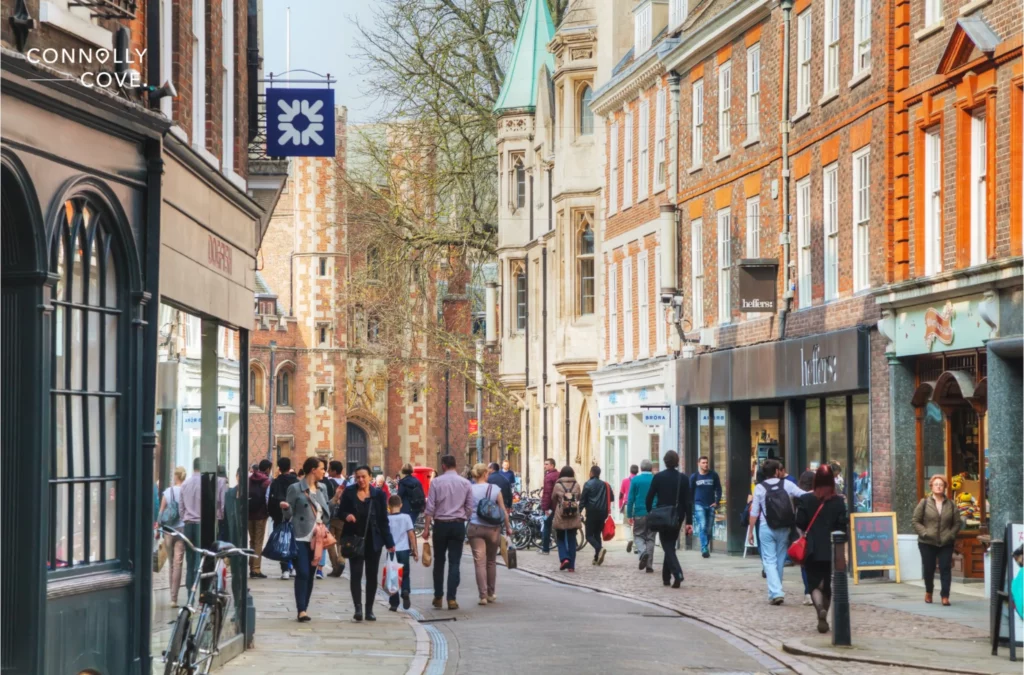
Cambridge remains easily accessible from London and major UK cities, with regular train services providing comfortable travel options. The city centre’s compact size makes walking the preferred exploration method, though bicycle hire offers an authentic local transport experience.
Advance booking for college visits during peak season ensures access to restricted areas, while flexibility allows a response to weather conditions and personal discoveries. Many attractions offer combined tickets or special programmes that provide enhanced value and deeper cultural context.
Accommodation & Local Integration
Staying within Cambridge’s historic centre provides immediate access to cultural attractions and an authentic local atmosphere. However, the city’s limited accommodation requires advance booking, particularly during graduation periods and major university events.
Local pubs, independent cafes, and traditional markets offer opportunities to experience contemporary Cambridge life alongside historical exploration. Engaging with locals—from college porters to market stallholders—often reveals insights and recommendations unavailable through guidebooks.
Beyond Cambridge
Cambridge serves as an excellent base for exploring wider East Anglian culture and history. Grantchester Village offers literary connections and a rural English atmosphere within easy walking distance. Ely Cathedral provides one of England’s finest Norman religious buildings, while Imperial War Museum Duxford showcases aviation history in authentic wartime settings.
These connections reveal how Cambridge functions as part of a broader cultural landscape, with influences and relationships extending throughout the region and beyond. Understanding these connections enriches the appreciation of Cambridge’s role in English and global heritage.
Cambridge represents far more than a single destination—it embodies educational ideals, cultural values, and intellectual traditions that continue shaping our contemporary world. Whether you spend a day or a week exploring its streets, colleges, and hidden corners, the city offers experiences that resonate long after your visit ends. The key lies in approaching Cambridge with curiosity, respect, and openness to the unexpected discoveries that await around every ancient corner.