


From Stone to Sky: Gaudi’s Basilica de la Sagrada Familia
Updated On: March 21, 2024 by  Yasmin Elwan
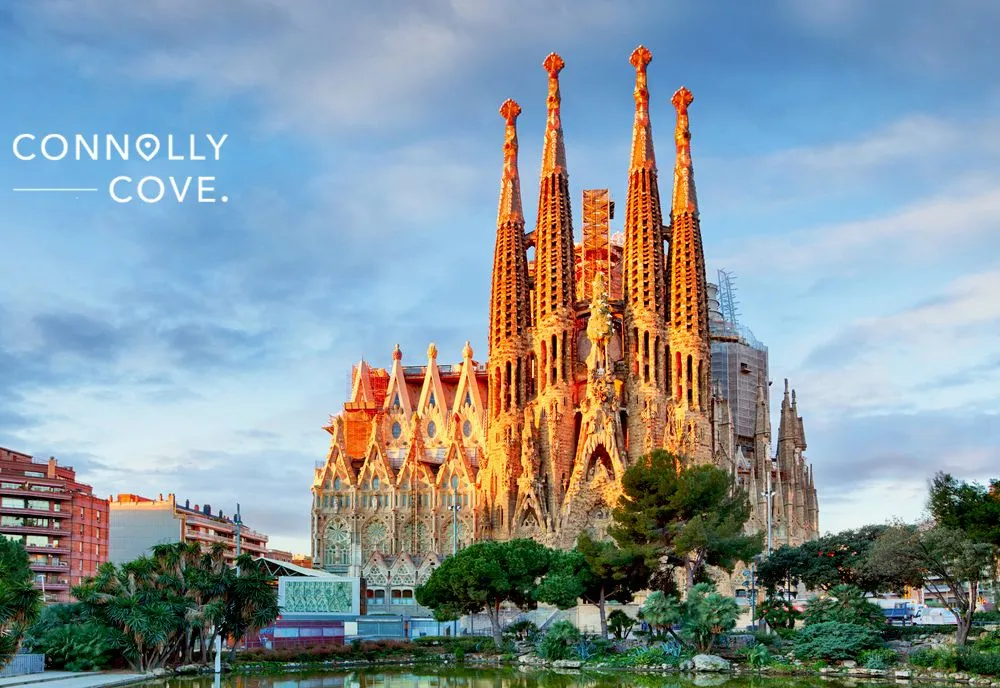
Heading to Barcelona? Lucky you! You will get a fantastic chance to feast your eyes on one of the world’s most iconic attractions, the majestic Basilica de la Sagrada Familia. This architectural marvel is a true masterpiece, where history, creativity, and spirituality intertwine like old friends at a reunion. Millions of tourists flock from every corner of the globe to explore this UNESCO World Heritage Site, snap pictures, try Spanish delicacies at nearby eateries, and take in its charm.
Gaudi’s Creative Genius
First things first, let’s tip our hats to the man behind the magic – Antoni Gaudi. This brilliant mind was no ordinary architect; he was a visionary, a maverick, like Picasso in the world of architecture. Gaudi had this knack for mixing styles like a mad scientist concocting a secret formula.
When you look at the Sagrada Familia, you’ll see elements of Modernisme, Gothic Revival, and Art Nouveau all thrown into the architectural melting pot. It’s like he said, “Let’s chuck the rulebook out the window and create something as quirky as possible.”
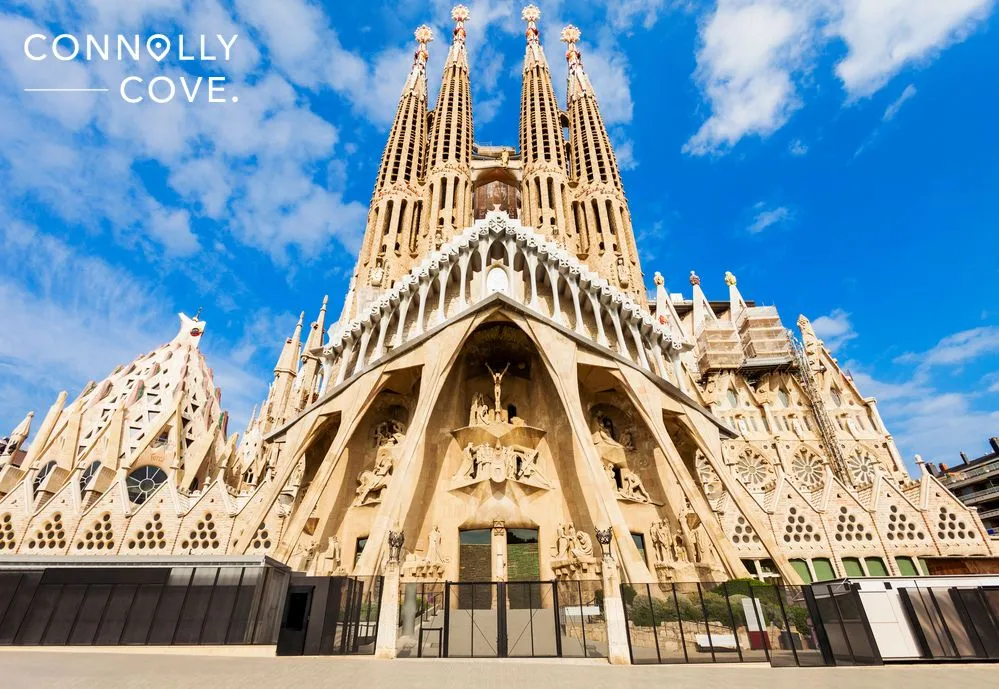
But it’s not just about architectural styles; it’s about symbolism. Gaudi wasn’t content with just making a pretty building; he wanted to tell a story, a spiritual one at that. When you gaze at the facades, you’ll notice an intricate blend of sculptures and biblical scenes. It’s like a visual novel of the Bible, where every stone tells a tale.
The Nativity Facade is like opening the first page of a book with its birth and childhood scenes of Jesus. Move to the Passion Facade, and you’ll see a dramatic plot twist with scenes of Jesus’s crucifixion. And finally, the Glory Facade is like the grand finale, with the promise of salvation and heavenly bliss.
Construction History
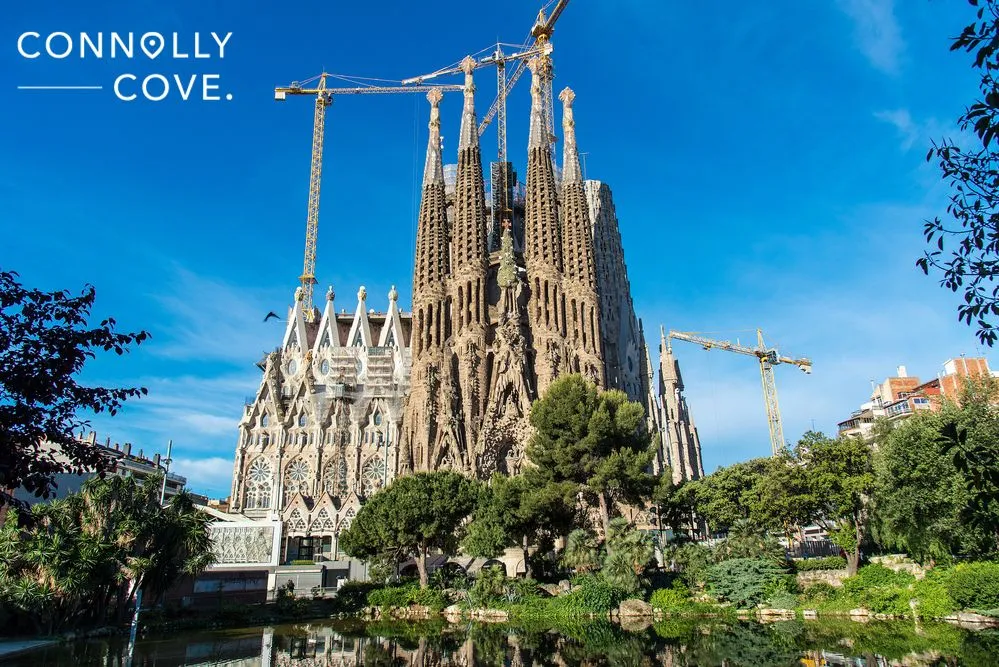
Now, here’s where things get even more intriguing. The Basilica de la Sagrada Familia isn’t just an architectural marvel; it’s a lesson in patience and perseverance. You see, construction began way back in 1882. Yep, you heard that right – the late 19th century.
It’s like a never-ending story that’s been passed down through generations. But here’s the kicker: it’s still not finished. That’s right, folks, it’s the construction project of the century that’s been going on for well over a hundred years. It’s like watching paint dry but on an epic scale.
Why the delay, you ask? Well, let’s just say it’s been a rollercoaster ride. Wars, funding issues, and the odd creative difference have all played their part in slowing things down. But fear not; it’s not all doom and gloom. The current plan is to have this architectural jigsaw puzzle completed by the mid-2020s, which, given its history, is like seeing a unicorn.
Imagine, in just a few years, we might finally witness the big reveal of Gaudi’s ultimate vision. So, don’t be disheartened by the slow progress; remember, patience is a virtue.
Th Interior Grandeur of the Basilica de la Sagrada Familia
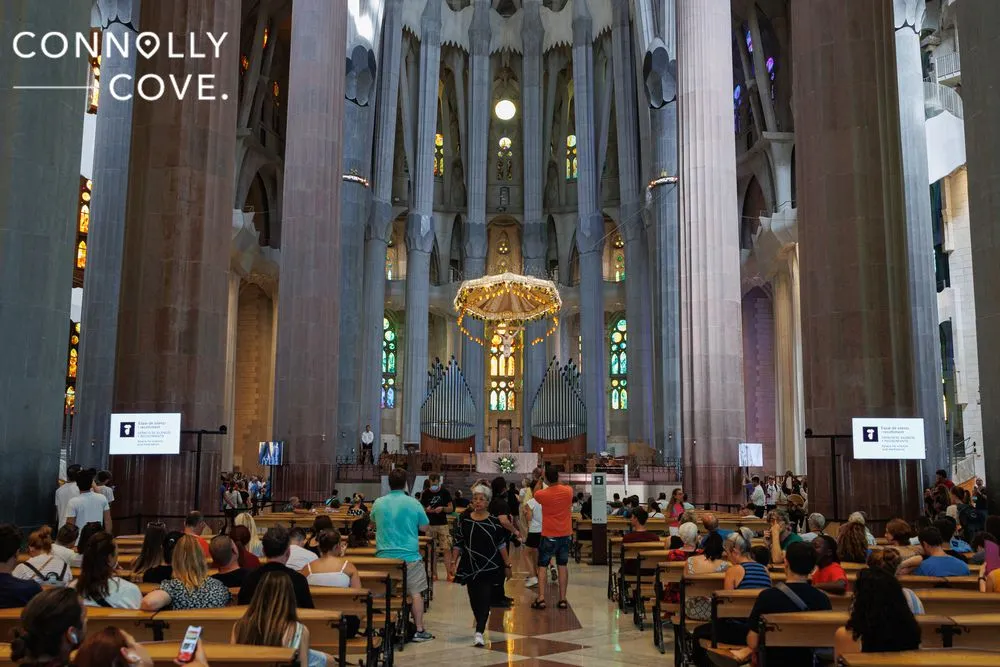
First off, the sheer scale of this place will leave you gobsmacked. It’s like entering a Tardis – bigger on the inside than it seems on the outside. The soaring columns reach for the heavens, and the play of light through the stained glass windows is out of this world. Gaudi was a mastermind of natural light, and the way it dances around the interior is unmatched.
The nave, oh the nave! It’s like the icing on the cake. The central space of the basilica is a visual feast, with intricate details that’ll have you scratching your head in amazement. The columns are like ancient trees, and the vaulted ceiling is a masterpiece in its own right. You’ll feel like you’ve walked into a fairy tale castle with a touch of steampunk chic.
But it’s not just about the aesthetics; it’s about the spiritual vibe that permeates the air. Whether you’re religious or not, the atmosphere is serene as a Buddhist monk in meditation. It’s like a breath of fresh air in the heart of a bustling city.
Sagrada Familia as a Spiritual Centre
Many folks see the Basilica de la Sagrada Familia as a place where you can find their zen, regardless of their religious background. It’s like a safe haven where you can escape the hustle and bustle of everyday life and tap into a deep well of tranquillity. When you step inside, you can’t help but feel a sense of inner peace that’s as refreshing as a brisk morning walk.
But don’t just take my word for it; chat with the locals, and they’ll tell you stories about how they come here to recharge their batteries spiritually. It’s a place that speaks to the soul, and the locals know it.
Now, if you’re lucky enough to visit during a religious ceremony, you’re in for a treat. Whether it’s a holy communion service, a Sunday international mass, or a choral extravaganza, the atmosphere is thicker than custard. It’s like a spiritual concert that’ll give you chills down your spine.
Culture, Tourism, and Legacy
The Basilica de la Sagrada Familia is a tourist magnet of the highest order, with over 4.5 million visitors flocking to its awe-inspiring gates yearly. Barcelona wouldn’t be the same without its iconic masterpiece, a cultural cherry on top of the city’s already trendy scene.
But it’s not just tourists who are smitten; even notable dignitaries and celebrities have paid their respects to this architectural wonder. From royals like Queen Sofia of Spain to celebrities like George Lucas, the basilica has hosted its fair share of ‘A-list’ visitors. It’s like a ‘who’s who’ of famous faces who’ve come to admire Gaudi’s legacy.
And let’s not forget the locals. For them, the Basilica de la Sagrada Familia isn’t just a landmark; it’s a part of daily life. Many have their own stories and anecdotes about the basilica – from childhood memories of playing in its shadow to witnessing its ever-evolving grandeur. It’s like a family heirloom passed down through generations, something that holds a special place in the hearts of Barcelona’s residents.
Navigating the Basilica de la Sagrada Familia
When visiting the iconic Basilica de la Sagrada Familia in Barcelona, there are a few key aspects to keep in mind. From securing your tickets in advance to choosing the optimal time for your visit, exploring the towers for breathtaking views, and indulging in local eateries and souvenirs, this guide will provide you with the insider knowledge needed for an unforgettable experience.
The Lowdown on Tickets
First things first, you’ll need a ticket, and trust me, you don’t want to leave it to chance by queuing up on the day. Book your tickets online in advance, and you’ll be sitting pretty with a confirmed entry time. It’s like having your cake and eating it too – convenience at its finest.
Now, there are different ticket options, so choose wisely. The basic entrance ticket, priced at approximately 25 euros for adults and 13 euros for children in 2023, grants access to the basilica’s main nave, allowing you to admire its architectural wonders up close.
But if you want the full monty experience, opt for a guided tour. At around 33 euros for adults and 18 euros for children, this option provides insightful commentary on the history, design, and highlights of the Sagrada Familia as you explore its enchanting interiors.
For a bird’s-eye view of Barcelona’s cityscape, don’t miss the opportunity to ascend the Sagrada Familia’s towers. Ticket prices vary, ranging between 29 to 49 euros for adults and 20 to 42 euros for children, offering an unforgettable perspective of this architectural gem against the backdrop of Barcelona’s skyline.
Timing is Everything: When to Visit
Remember, the early bird catches the worm, and the same goes for the Basilica de la Sagrada Familia. Visit in the morning to beat the crowds and have a more intimate experience with the basilica. Plus, the morning light filtering through the stained glass windows is as pretty as a picture.
Don’t Skip the Towers: A Bird’s Eye View
Now, here’s a nifty tip – don’t skip the towers. Climbing the towers of the Basilica de la Sagrada Familia is a breathtaking adventure that adds another layer of awe to your Barcelona visit. As you start the ascent, you’ll find yourself winding through narrow stone passages like a secret explorer discovering hidden treasures. The towers stand tall at approximately 170 metres above the city, promising panoramic views that are as spectacular as a fireworks display.
The journey to the top is as exhilarating as the destination itself. You’ll take an elevator part of the way, but the last leg involves a winding staircase. Don’t worry; it’s not as daunting as it sounds, and it’s well worth the effort. As you emerge at the summit, Barcelona spreads out below you like a patchwork quilt. The shimmering Mediterranean, the intricate city grid, and the architectural wonders of Gaudi are all laid out before your eyes.
The entire experience typically takes around 30 minutes to an hour, depending on how much time you spend taking in the views and capturing photos. It’s like a brief but enchanting journey through the heart of Barcelona’s architectural and natural beauty, making it an adventure you’ll treasure for a lifetime.
Visitor Amenities: Fueling Up and Souvenirs
After all that exploring, you’ll probably be as hungry as a bear, so head to the nearby eateries for some tapas magic. There’s nothing like filling your boots with delicious Spanish fare. And if you’re looking for souvenirs, the gift shops are like Aladdin’s cave. You’ll find everything from Gaudi-inspired trinkets to one-of-a-kind mementos. For a unique culinary experience, try one of the following places:
- Tuscania Food & Wine: This Italian gem is like a slice of Tuscany in Barcelona. With an extensive wine list and mouthwatering pasta dishes that’ll make you say “Mamma mia,” it’s perfect for a romantic dinner or a casual meal with friends. Be sure to pair your meal with a local Spanish wine for a taste explosion.
- Puertecillo Sagrada Familia: This cosy eatery offers a blend of Spanish and Mediterranean cuisine that’s fit for a king. The seafood paella is a showstopper, and the patatas bravas are like crispy bites of heaven. Whether you’re a seafood lover or a tapas enthusiast, Puertecillo won’t disappoint.
- Chill Bar & Grill: As the name suggests, this place is all about chilling and indulging in delicious delicacies. From grilled sandwiches to the finest sangria, it’s the perfect place for a light dinner. The laid-back atmosphere is ideal for unwinding after a day of sightseeing.
- Las Ramblas: Located just a stone’s throw from La Sagrada Familia, Las Ramblas is a food court where you’ll find a variety of cuisines, from Spanish to Asian, all in one street. It’s a bustling spot, ideal for those who can’t decide on just one type of cuisine.
- Casa Calvet: If you’re in the mood for something a bit more upscale, Casa Calvet is the bee’s knees. This Michelin-starred restaurant is like fine dining at its finest. The tasting menu is a gastronomic journey through Catalan cuisine, and the wine selection is impeccable.
How is the Basilica de la Sagrada Familia Maintained?
Preserving the iconic Sagrada Familia cathedral is an arduous task, and ongoing efforts are nothing short of remarkable. The Mediterranean climate’s humidity and sporadic rain, coupled with air pollution, can erode the delicate stone façade over time. Mass tourism, while a testament to its popularity, also poses a threat.
To combat these challenges, a dedicated team of experts continually works on restoration and conservation. Cutting-edge technology, including 3D laser scanning, aids in monitoring the basilica’s structural integrity. Teams meticulously clean and repair the intricate façade, ensuring its longevity.
Collaboration is key, and the Sagrada Familia works hand-in-hand with organisations and experts specialising in conservation. Their collective efforts aim to strike a balance between preserving Antoni Gaudi’s vision and adapting to contemporary needs.
What Else Can You Do in Barcelona?
While visiting La Sagrada Familia is undoubtedly the highlight of the Eixample district in Barcelona, there are plenty of other exciting activities and attractions to explore in this vibrant city. Here are some fantastic options:
- El Born Culture and Memory Centre: Located in the heart of the El Born district, this cultural centre is like a time capsule that transports you back to medieval Barcelona. It’s housed in a beautifully restored market building and offers a fascinating glimpse into the city’s history, particularly during the War of Spanish Succession.
- The Kiss of Freedom Mural: Nestled in the Gothic district, the Kiss of Freedom mural is like a beacon of hope. Joan Fontcuberta put this beauty together using a whopping 4,000 photos of folks from Barcelona. It’s like a big, heartfelt reminder that when people come together with love, there’s nothing they can’t do.
- Parc Güell: This iconic park, also designed by the legendary architect Antoni Gaudí, is like a whimsical wonderland. From the colourful mosaics to the quirky architecture, Parc Güell is a feast for the eyes. Stroll through the park’s winding paths, take in the panoramic views of Barcelona, and feel like you’ve stepped into a fairytale.
- Casa Milà (La Pedrera): Just a short walk from La Sagrada Familia, you’ll find another masterpiece by Antoni Gaudí. Casa Milà, also known as La Pedrera, is a unique modernist building with an undulating stone façade and an interior that offers a glimpse into the architect’s genius.
- Passeig de Gràcia: This elegant avenue is famous for its high-end shops, luxury boutiques, and remarkable architecture. Stroll along Passeig de Gràcia to admire more modernist buildings and soak up the upscale atmosphere.
- Casa Batlló: Another Gaudí gem, Casa Batlló, showcases the architect’s creativity with its marvellous design and fantastical interior. It’s a short distance from La Sagrada Familia and well worth a visit.
- The Gràcia District: Just a short walk northwest of Eixample, the Gràcia district offers a more local, bohemian vibe. Explore its charming squares, cultural events, and unique shops.
- Casa de les Punxes: This castle-like building is a lesser-known architectural gem in Barcelona. It’s often less crowded than Gaudí’s famous works, allowing for a more intimate experience.
In the amazing tapestry of Barcelona’s architectural wonders, the Basilica de la Sagrada Familia is like the vibrant brushstroke that steals the show. As we bid adieu to this extraordinary journey through stone and spirit, remember that Gaudi’s masterpiece, with its surreal spires and kaleidoscopic windows, is a story you’ll carry with you – a story of dreams, devotion, and a touch of architectural magic.

Dark and Stormy Cocktail at The Spaniard Belfast
Northern Ireland
05/05/2024

Cernunnos: Exploring the Ancient Celtic God of Nature and Wilderness
Culture Exploration
05/05/2024

360 Degree Video of Knockagh Monument, Antrim
County Antrim
05/05/2024
Top 13 Must-See Museums in Amsterdam
Netherlands
05/05/2024

Top 10 London Castles: A Medieval Day Trip Guide
England
04/05/2024