

18 Best Things to Do in Dusseldorf for a Splendid Vacation
Updated On: April 22, 2024 by  Raghda Elsabbagh
Dusseldorf, nestled along the serene banks of the Rhine River in western Germany, is a city that often flies under the radar when travellers think of Germany. But let us tell you, this cosmopolitan gem is like stumbling upon a treasure chest. With a rich historical heritage dating back to the 13th century and a modern, cosmopolitan spirit that is palpable in every corner, Dusseldorf has established itself as a must-visit destination for those seeking a different shade of Germany’s rich cultural palette.
Whether you’re an art connoisseur, a history geek, a foodie, or just a wanderer in search of adventure, Dusseldorf, this vibrant metropolis in the heart of North Rhine-Westphalia, is like a box of assorted chocolates — there’s something for everyone. In this article, we will provide you with a comprehensive guide to the best things to do in Dusseldorf. Prepare for a rollercoaster of history, culture, and entertainment — Dusseldorf style!
Historical Significance of Dusseldorf
Dusseldorf is ancient, dating back to the 13th century, as a sleepy fishing village. But hold on; things took a wild turn when it became the residence of the Elector Palatine in the 17th century.
Its strategic location transformed Dusseldorf into a centre of political and economic importance. Over the centuries, wars, industrialisation, and much hustle and bustle later, Dusseldorf emerged as the vibrant metropolis we see today. Its historical significance lies in this growth journey from a modest village to a thriving modern city.
Cultural Heritage and Influences
Now, let’s talk culture. Dusseldorf’s got it all, like a cultural buffet, from carnival celebrations that’ll make you shake your hips to local traditions as old as your grandma’s cookie recipe. Additionally, the city has been deeply influenced by the Enlightenment era — it’s like the city’s intellectual phase — producing notable poets, philosophers, and artists that’ll make you scratch your chin and ponder the mysteries of life.
Dusseldorf also stands as a beacon of modernism, thanks to the influential Dusseldorf School of Photography and its impact on contemporary art. Moreover, with an international community and some strong business ties, the city’s culinary scene is like a taste bud world tour. Plus, they’ve got festivals that’ll make you dance, sing, and eat like there’s no tomorrow.
Visit Dusseldorf’s Art and Museums
Art enthusiasts, let’s dive into Dusseldorf’s art and museum scene, shall we? Think of these museums as the city’s beating heart, pumping creativity into the very soul of the place and giving its cultural identity a kick of artistic flair. These museums are like the local rock stars, shaping Dusseldorf’s artistic landscape and giving it a dash of pizzazz.
You see, these places aren’t just dull repositories of art; they’re buzzing hives of culture and creativity. They’re not just about preserving artwork; they’re all about hosting lectures, workshops, and events that make you scratch your chin, ponder the mysteries of art, and get your creative ideas flowing.
1. The Kunstpalast (Art Palace)
First up, we have got the Kunstpalast or the Art Palace. If you are into art, this place is your Shangri-La. It is like you have entered a virtual time-travelling machine and went back in time to see European paintings, sculptures, and decorative arts spanning from the Middle Ages till today. Rubens, Van Gogh, and other artistic legends have their works adorning the walls there. It’s basically a centuries-old party where everyone’s invited!
2. K21 Kunstsammlung Nordrhein-Westfalen
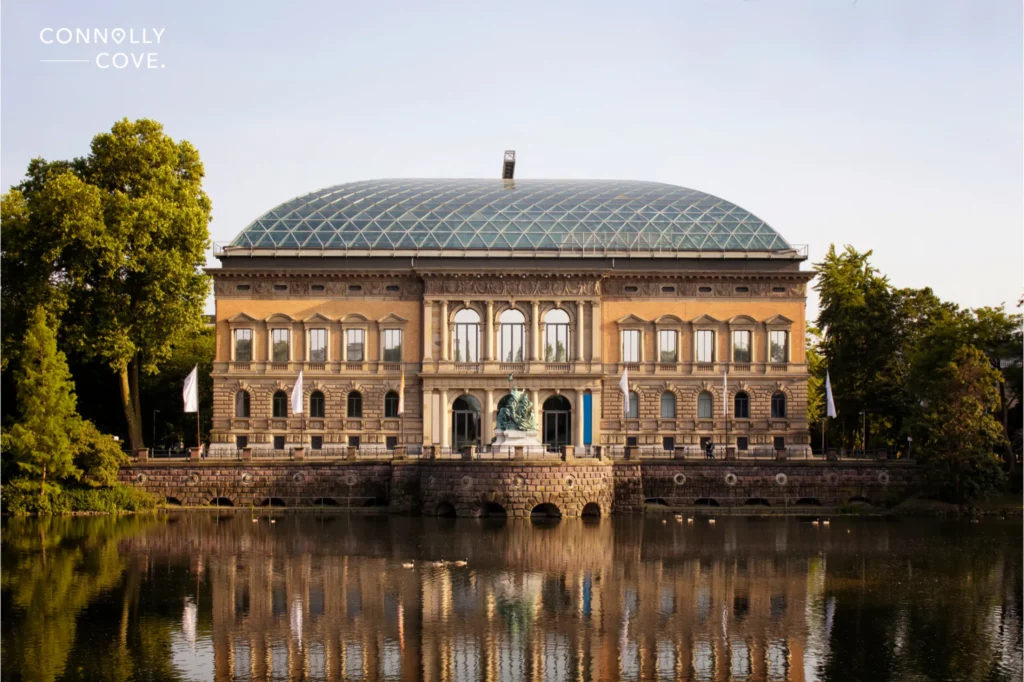
If you’re the type who thinks modern art is all about squiggly lines and perplexing installations, then the K21 Kunstsammlung Nordrhein-Westfalen is your cup of tea. It’s not just about the art inside; it’s a work of art itself. With glass elevators giving you jaw-dropping views and an open staircase that’s like an art piece of its own, you’re in for an immersive experience. Here, contemporary art isn’t just framed; it’s a living, breathing entity that’ll make you ponder and appreciate the weird and wonderful.
3. Museum Kunstpalast
Wait, there’s more! The Museum Kunstpalast is where art meets everyday life. It’s like a treasure trove of applied arts and design, from ceramics and textiles to fashion and jewellery. This place is all about craftsmanship and design excellence, and it’s like a time capsule that shows you how style and design trends have evolved over the years and how they shaped society. Here, art isn’t just on canvas; it’s woven into the very fabric of daily life. Imagine learning about history and culture through jewellery and textiles or a fancy quilt — now that’s what we call a unique perspective!
So, for an artistic adventure in Dusseldorf, these museums are your ticket to exploring the city’s creative soul. Get ready to be inspired and maybe even a little baffled by the magic of art!
Visit Dusseldorf’s Historic Landmarks
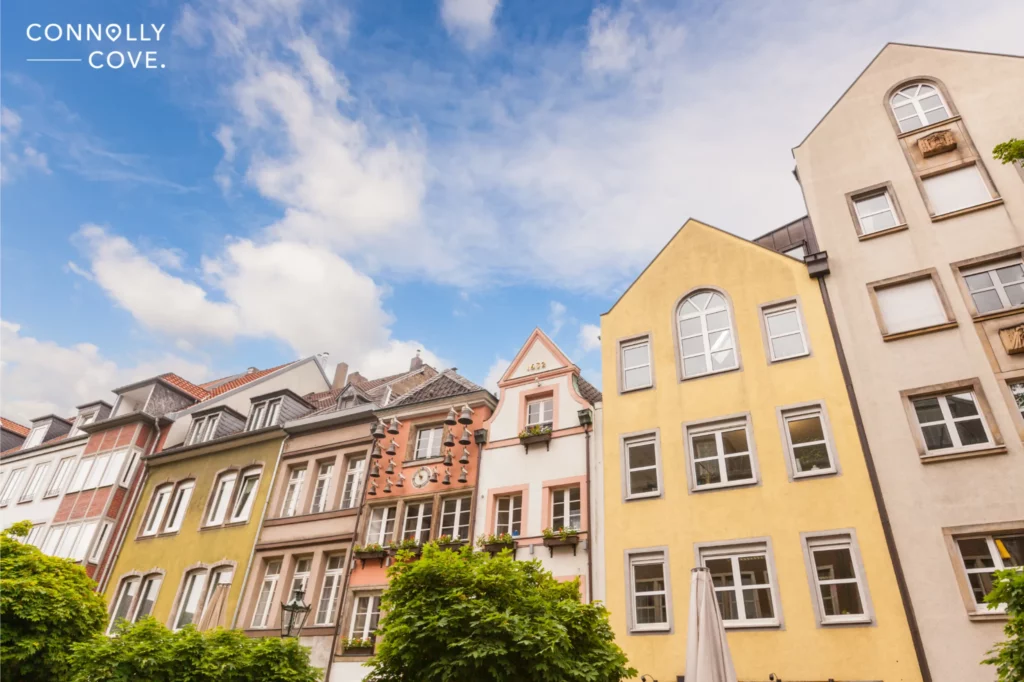
Dusseldorf is like a history book with pages that turn from medieval origins to futuristic dreams. The city’s got a knack for preserving the past and its rich heritage with one hand while giving a big bear hug to the future with the other. It’s like holding onto your grandma’s recipes while rocking the latest tech gadget.
In Dusseldorf, history is etched in the timeworn stones of the Altstadt and the opulent design of Schloss Benrath, while the iconic Rheinturm and the cutting-edge architecture of the MedienHafen represent its progress and modernity. Historic landmarks stand in juxtaposition to modern architectural wonders; history and progress walk hand in hand, creating a unique tapestry of culture and innovation.
4. Altstadt (Old Town)
Let’s start our time-travelling adventure in the Altstadt, in the city’s heart. This place has been around since the 13th century, and it’s seen it all, from wars to fires to the passage of time. It’s like a stubborn old-timer who refuses to let go of its charm.
Meander through its cobblestone streets lined with centuries-old buildings, where every building has a story to tell. Its architectural highlights include the stunning St. Lambertus Church and the Schlossturm, an imposing castle tower that once served as a prison. Walking there, you can’t help but feel you’re walking through the pages of a history book past the echoes of bygone eras. You’ll definitely be captivated by the enduring charm of Dusseldorf’s Old Town.
5. Rheinturm (Rhine Tower)
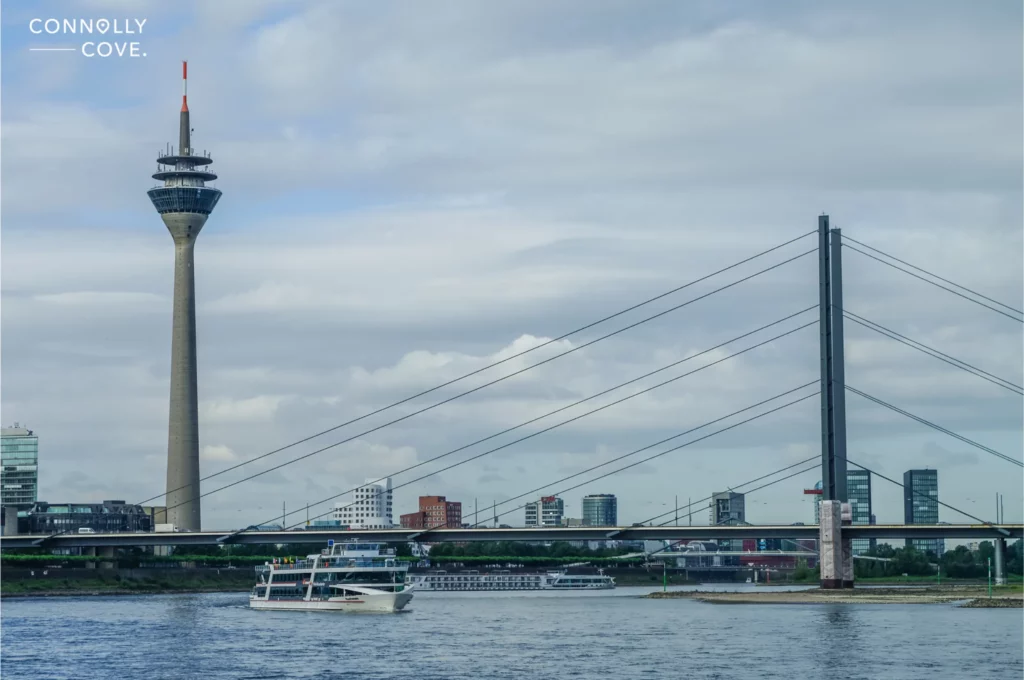
In a city relatively as flat as a pancake, you can’t miss the Rheinturm’s futuristic design that punctuates Dusseldorf’s skyline with its iconic architecture — it’s like a spaceship in the middle of a village.
Designed by Harald Deilmann, this telecommunications tower is a marvel of modern engineering. But the real magic happens inside. Hop on a glass elevator that’ll make your stomach do somersaults, and you’ll reach an observation deck with panoramic views of the city.
6. Schloss Benrath (Benrath Palace)
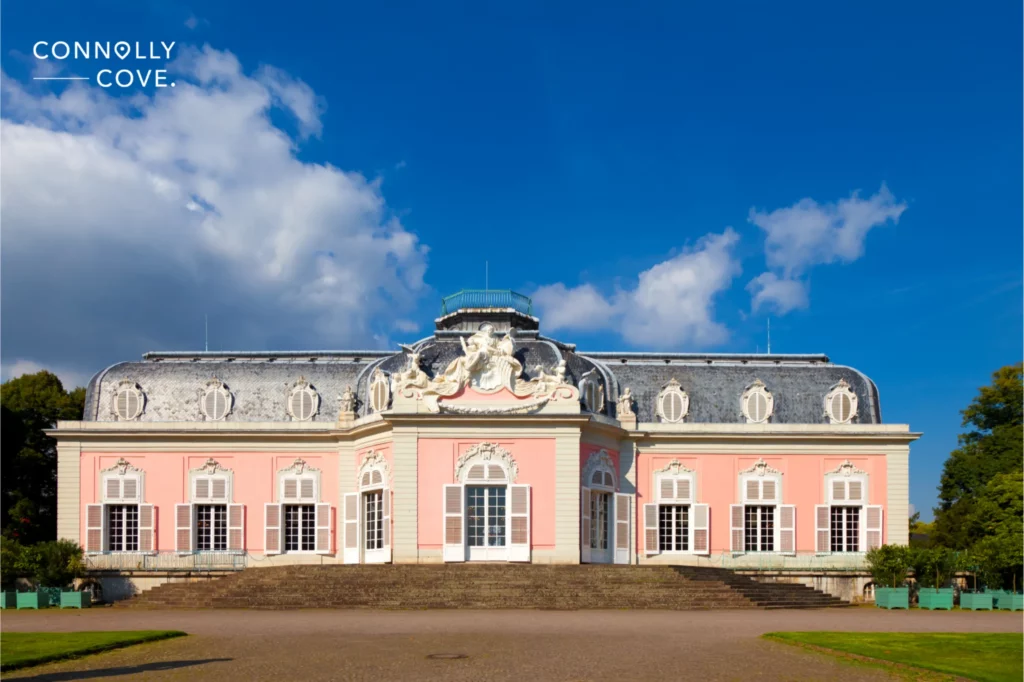
The next stop is Schloss Benrath, a Rococo masterpiece that stands as proud as a peacock. This palace, designed by Nicolas de Pigage, was built in the 18th century and reflects its era’s opulence, elegance, and aristocratic splendour.
The palace’s sumptuous interior is adorned with ornate details, like a palace straight out of a fairytale. The meticulously landscaped lush gardens, with water features and sculptures, create a picturesque backdrop.
7. The MedienHafen (Media Harbour)
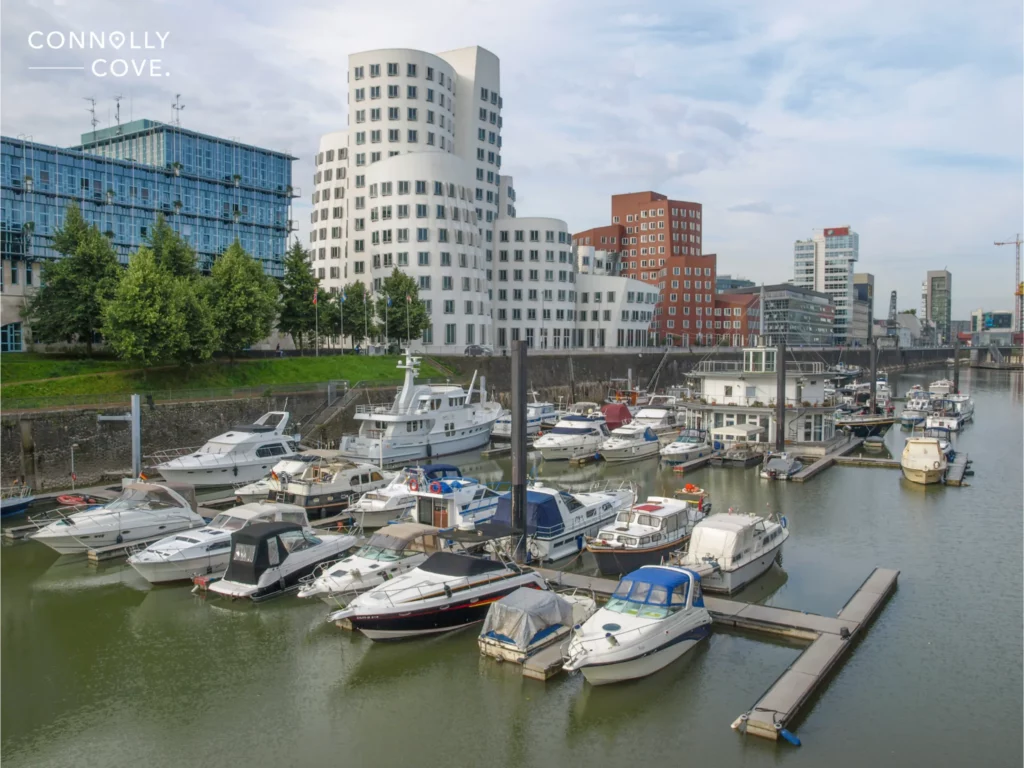
The MedienHafen, or Media Harbor, is a striking example of contemporary architecture that has been vital in revitalising Dusseldorf, designed by the coolest architects in town. Frank Gehry and David Chipperfield waved their magic wands and turned a neglected harbour into a dynamic hub of modern design, now attracting businesses, creative industries, and visitors alike. It’s like old meets new, and they decided to dance together. This place shows how Dusseldorf embraces innovation while keeping its unique identity intact.
So there you have it, our little tour through Dusseldorf’s historic and modern landmarks. Get ready to be wowed and maybe even a tad jealous of the architects’ creativity. Dusseldorf has it all — from history that whispers in your ear to modernity that shouts from the rooftops!
Dusseldorf’s Culinary Delights
Fellow foodies, Dusseldorf is a city that takes its dining seriously. So, get ready to loosen that belt because food in Dusseldorf is so good that your waistline might just stage a little rebellion.
In Dusseldorf, eating isn’t just about satisfying your hunger and filling your belly; it’s practically a way of life. They call it “Rheinische Lebensart,” it’s like a fancy term for “food is life.” Locals here are all about taking it slow, savouring each bite like the last piece of chocolate in the box, and having conversations that flow like a lazy river. Imagine this: you’re sitting at a table piled high with mouthwatering goodies, and everyone’s chatting, laughing, and having a jolly good time. It’s like a delicious symphony of flavours and camaraderie.
8. Traditional German Cuisine
It would be best if you first dived into the traditional German cuisine. Rheinischer Sauerbraten, basically pot roast marinated in a tangy sauce, is like a flavour explosion in your mouth. And Himmel un Ääd, a hearty mix of mashed potatoes and applesauce, is like a warm hug from your grandma. You’ll find these delights in cosy taverns in the historic Altstadt. Savour the essence of Dusseldorf’s culinary heritage while rubbing shoulders with friendly locals — history never tasted so good!
9. International Cuisine and Diversity
If you’re feeling adventurous, Dusseldorf has a whole world of flavours waiting for you. Thanks to the city’s international community and business ties, you can hop from Japanese sushi bars in Little Tokyo to Mediterranean restaurants along the Rhine. It’s like a culinary tour around the globe without ever leaving the city limits. And if you’re feeling fancy, fusion eateries are where international and local flavours collide in a glorious food explosion.
So, when you’re in Dusseldorf, remember the golden rule: don’t rush your meals. Take your sweet time, savour every bite, and soak up the warm and welcoming atmosphere. Food here is more than just sustenance; it’s a celebration of life’s simple pleasures. Get ready to eat, drink, watch your waistline grow, and be joyous in true Rheinische Lebensart style!
Dusseldorf’s Shopping and Fashion
Shopaholics, listen up! Dusseldorf is the fashion capital, or shall we say, the catwalk of North Rhine-Westphalia. This city doesn’t just follow fashion; it sets the trends that fashionistas worldwide will be drooling over. And it’s not just about looking good; it’s practically an art form here.
So, if you’ve got an eye for style or just appreciate the art of dressing well, Dusseldorf’s fashion scene is about to blow your socks off.
10. Königsallee (Kö)
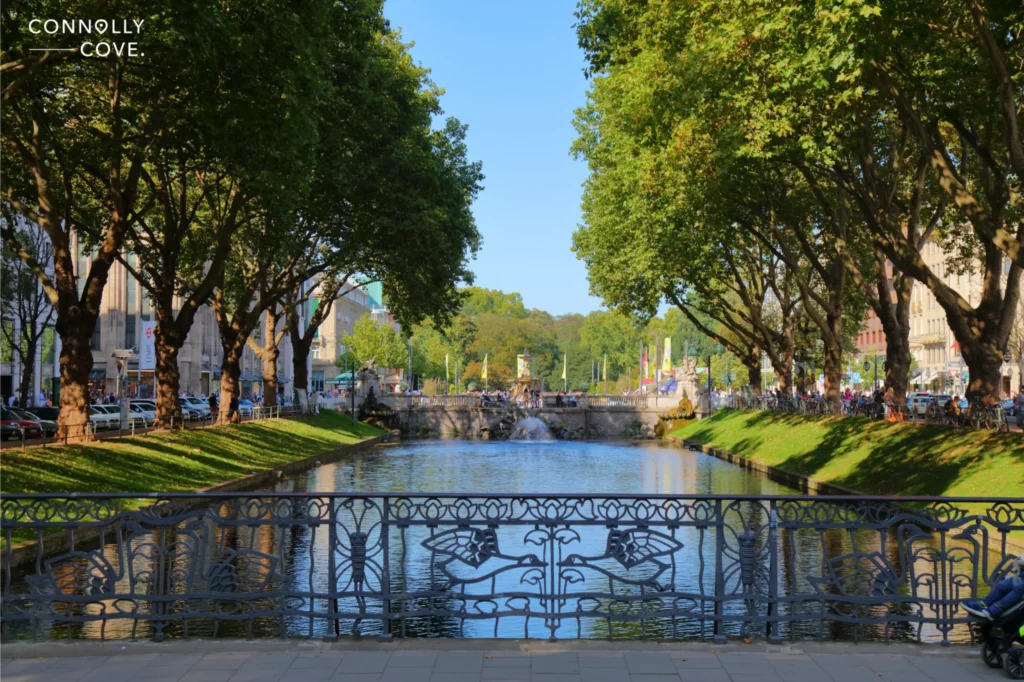
First stop, we’ve got Königsallee, or as the locals call it, “Kö.” It’s like the fashion runway of your dreams. All German cities usually have a famous shopping street with many local and international brands. Still, this high-end shopping area is synonymous with luxury and elegance.
Imagine strolling down a boulevard lined with trees, a picturesque canal in the middle, and luxury boutiques on both sides. We’re talking big names like Chanel, Louis Vuitton, and Tiffany & Co. It’s so posh that even the sidewalk looks like it’s dressed to impress. And guess what? Shoppers from all over the globe flock here for the ultimate retail therapy. So, whether you’re here to splurge on designer fashion or just soak in the classy vibes, Kö is a shopping paradise that’ll make your heart skip a beat. Get ready to shop till you drop, our stylish friend!
11. Schadowstraße
If you want a more diverse shopping experience, Schadowstraße has it all. It’s like the shopping buffet of Dusseldorf, right in the city’s heart. You’ve got everything here, from department stores that’ll make your wallet shiver to speciality shops where you can find that one-of-a-kind treasure. You’ll be bouncing from store to store, exploring high-street fashion, electronic gadgets, cosmetics — you name it!
Parks and Outdoor Activities
If you’re an outdoor enthusiast, hold onto your sneakers because Dusseldorf won’t fail to impress. Its parks, gardens and river embrace the city from every edge, making it an oasis for rewinding and relaxation.
12. Hofgarten
First, we’ve got the Hofgarten, an oasis of calm right in the city’s heart, dating back to the 18th century. Here, you can escape into the lap of nature amidst lush green lawns, ornate fountains, and charming rose gardens that’ll make you feel like you’ve stepped into a fairy tale. It’s the perfect place for a leisurely walk or finding a quiet nook to get lost in a good book. And the best part? You’re surrounded by nature without even leaving the city. It’s like urban relaxation at its finest!
13. The Rhine Promenade
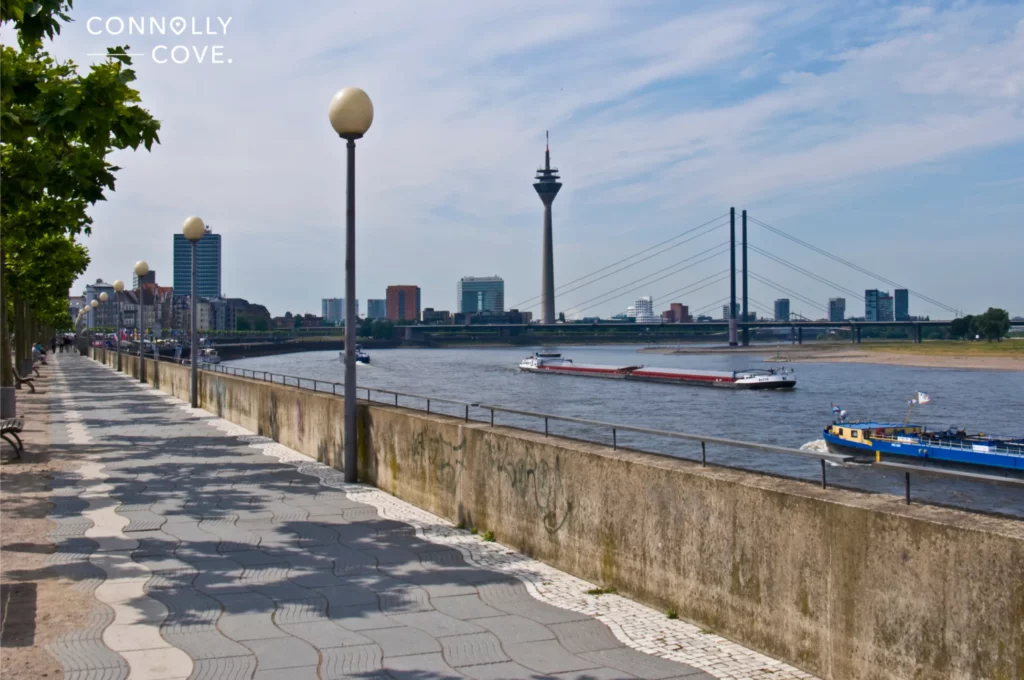
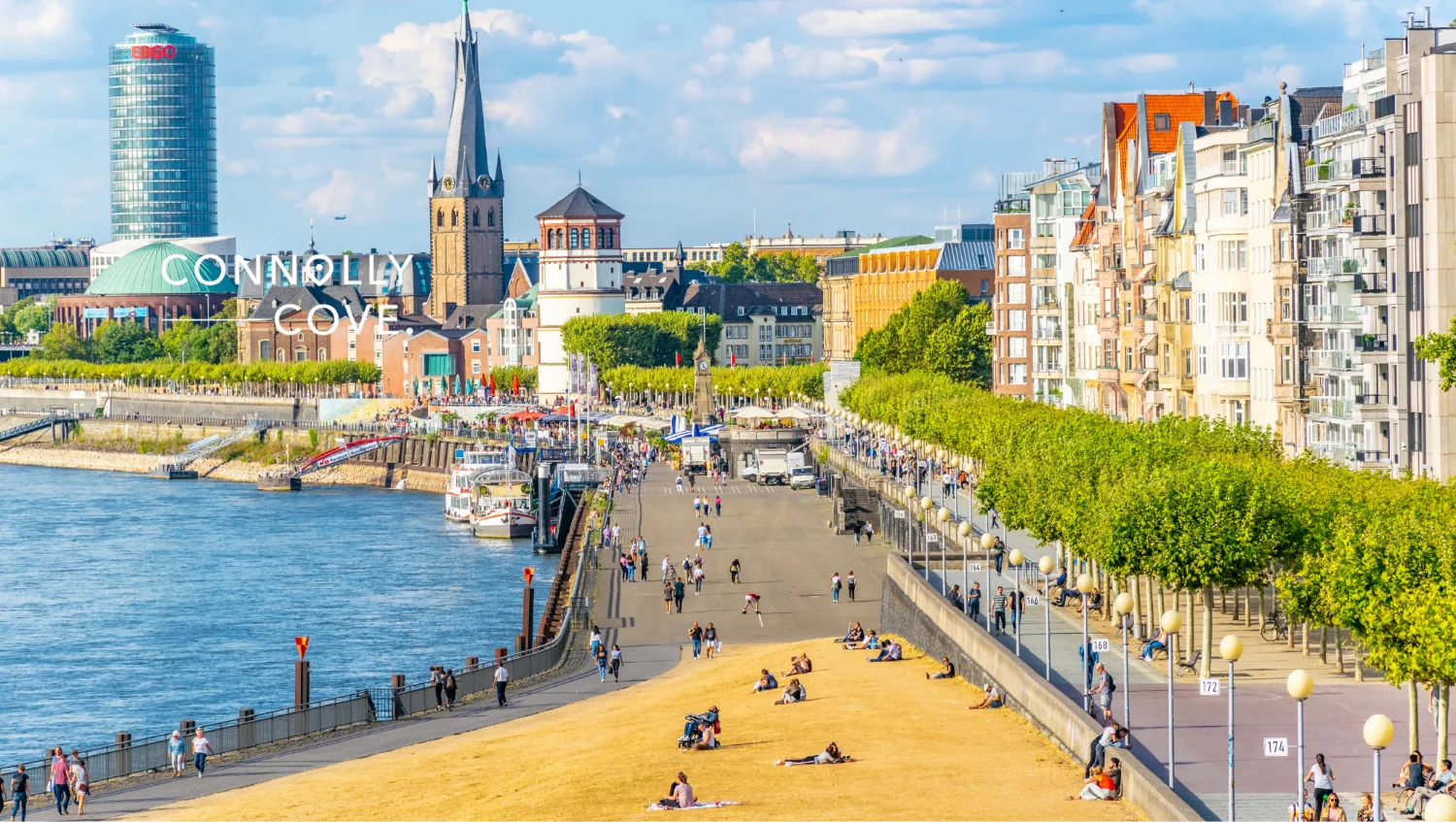
The Rhine Promenade is more than just a riverbank; it’s the Dusseldorf’s lifeline, where the city meets the water in a spectacular union of culture and nature. Stroll along this picturesque promenade, and you’ll get front-row seats to one of nature’s grand spectacles: the majestic Rhine River. Its shimmering waters reflect the city’s skyline like a mirror. But wait, there’s more! You can cycle, jog, have a riverside picnic, or just soak up that fresh breeze. Want a different perspective? Hop on a boat tour and see the city from a whole new angle.
And if all that sightseeing works up an appetite, don’t worry; charming cafes and bars are waiting to quench your thirst. It’s like the ultimate outdoor hangout, where you can sip a sunset drink while watching riverboats glide by. Cheers to that!
14. Nordpark
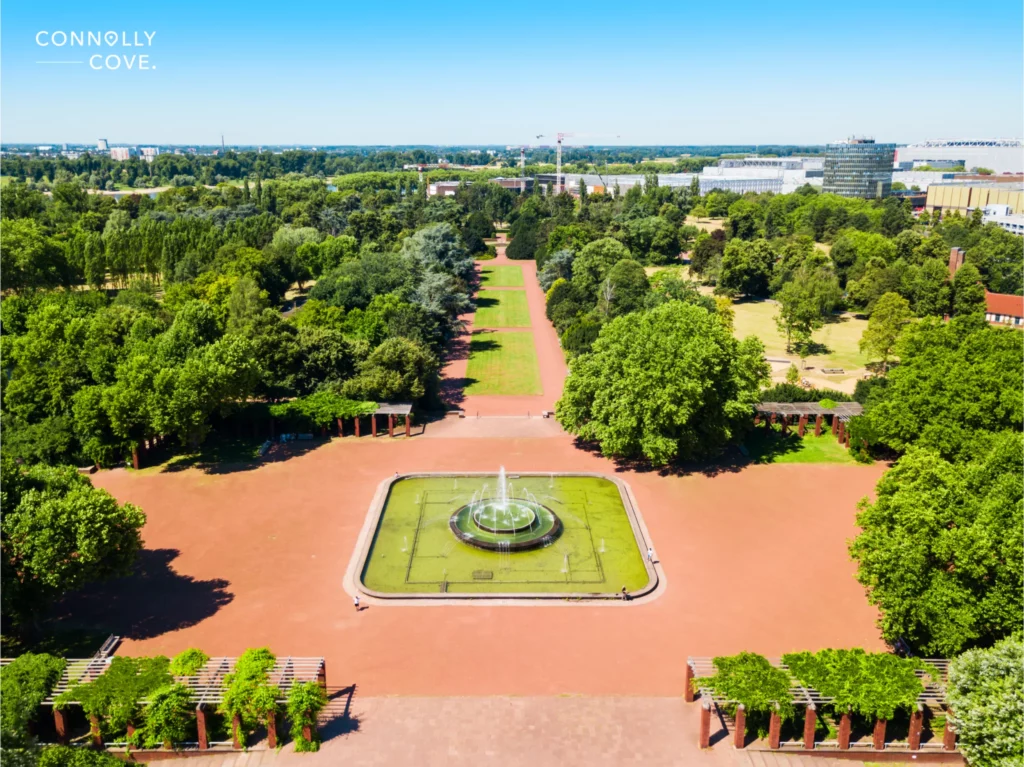
If you’re up for something different, Nordpark has your back. This vast park is not just about open green spaces; it’s home to lush botanical gardens. Its meticulously landscaped Japanese garden, with its tranquil ponds, arched bridges, and Zen-like serenity, makes you feel like you’re in the Far East.
But hold on, Nordpark is family-friendly too. There are playgrounds, picnic spots, and even a mini-golf course. And if you’re feeling adventurous, rent a bike and explore the park’s winding paths or enjoy a chill picnic surrounded by nature.
15. Cycling in Dusseldorf
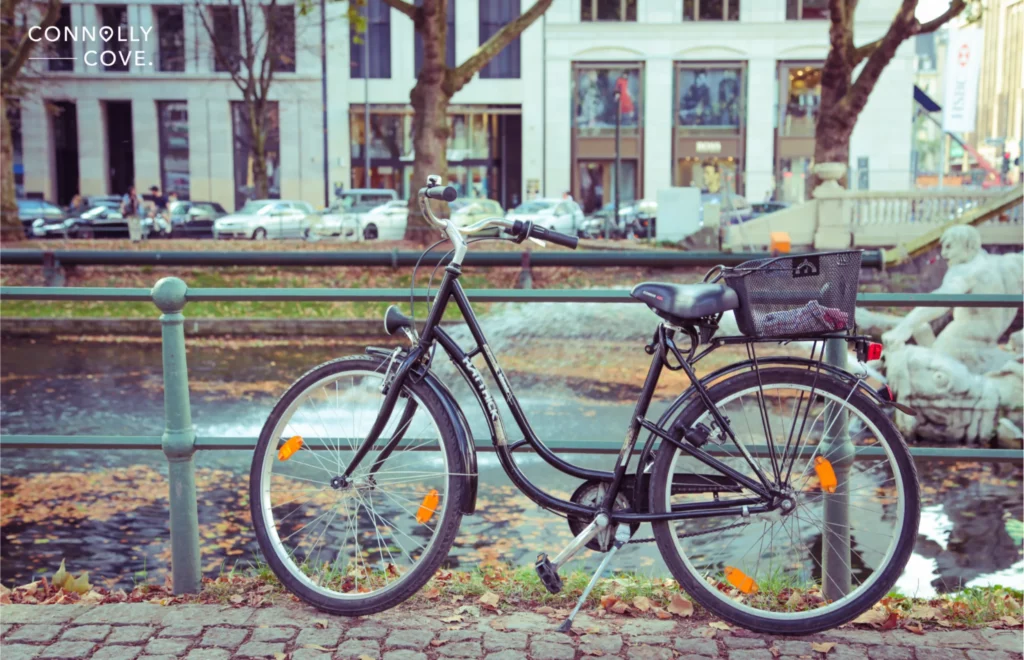
Whether you’re an avid cyclist or just a casual rider, grab a bike and pedal your way through Dusseldorf; the city welcomes cyclists with open arms. Its bike-friendly infrastructure, including dedicated lanes and bike-sharing programs, makes it ideal for two-wheeled adventures.
You can explore the city at your own pace, discovering hidden corners, picturesque neighbourhoods, and scenic river routes. So, grab your helmet, and let’s roll!
Dusseldorf’s Festivals and Events
Dusseldorf loves to celebrate, like that friend who never misses a chance to throw a lively party. The city’s festivals aren’t just events; they’re like the heartbeats of Dusseldorf’s vibrant culture. They’re the life of the party, drawing visitors from everywhere and making the city buzz with excitement. And let’s not forget about the economic boost they give — it’s like the city’s bank account getting a happy little bonus.
But it’s not all about the money. These gatherings are like giant family reunions where Dusseldorfers gather to celebrate their shared traditions. It’s all about the warm and festive vibes; you can’t help but get caught up in the spirit. Get ready to party like a Dusseldorfer!
16. Dusseldorf Carnival (Karneval)
First up, we’ve got the Karneval, and let us tell you, this is a festival that’ll make your head spin faster than a whirligig on a windy day. Dusseldorf bursts into colour during the annual Karneval, a tradition that dates back to the 17th century. It kicks off on 11 November at 11:11 AM sharp, and the party doesn’t stop until Ash Wednesday. People of all ages ditch their everyday clothes for wild costumes, and the streets burst into colours. There are parades, music, and laughter everywhere you turn.
17. Japan Day (Japan-Tag)
Dusseldorf is home to one of the largest Japanese communities in Europe. In homage to its strong ties with Japan, Dusseldorf has a soft spot for all things Japanese, and the Japan Day event is a love letter to that connection.
From sushi that’ll make your taste buds dance to taiko drum performances that’ll give you goosebumps, it’s a day where Dusseldorf transforms into a little slice of Japan. With martial arts demos, Ikebana flower arrangements, and folks dressed up as their favourite anime characters, this event offers a delightful blend of East and West.
18. Christmas Markets
Like all German cities, Dusseldorf’s Christmas Markets or Weihnachtsmärkte pop up throughout the city, transforming it into a wonderland of twinkling lights with the sweet aroma of freshly baked gingerbread infusing the air. Head to the Altstadt or Königsallee for the grandest of them all, and you’ll find handcrafted ornaments, seasonal treats, and even open-air ice skating.
With its rich history, vibrant culture, and welcoming spirit, Dusseldorf is a city that transcends expectations and will have you saying “Guten Tag” to unforgettable experiences. So, what are you waiting for? Get packing, our fellow fried, and get ready to fall in love with this hidden gem of Germany. Dusseldorf is waiting to welcome you with open arms!
Famous Haunted Houses in Egypt: Spooky Stories for Halloween
Destinations
27/04/2024
St. Paul’s Cathedral – London Attractions
England
27/04/2024
Great Scotland Yard – London Attractions
England
27/04/2024

Bangor Town: The Colorful Open House Festival
Northern Ireland
27/04/2024
Must-See Casablanca
Africa
27/04/2024