


Petra: Unearthing the Secrets of the Rose City
Updated On: April 22, 2024 by  Marwa Abdel Moniem
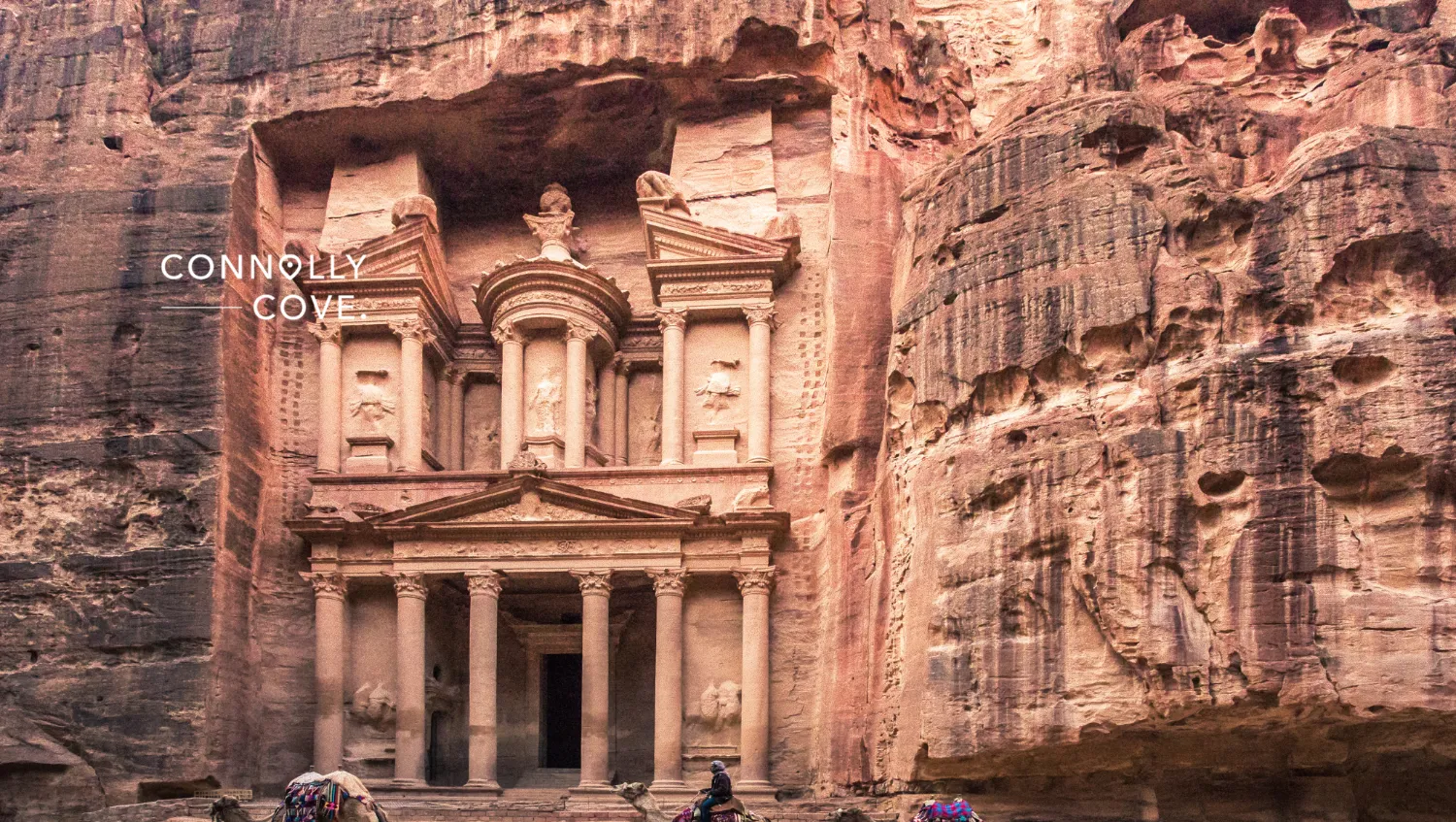
Have you ever heard of Petra—the ancient city carved into the rose-red cliffs of Jordan’s desert? Well, an adventure traveller should not miss this city. You will know that for yourself once you are done reading this article that will highlight all the highlights you need to know before you go.
It does not need too much brainstorming before you make the right decision to visit Petra. Why would you need to think twice about a place where ancient wonders and natural marvels intertwine? That’s what Petra is like.
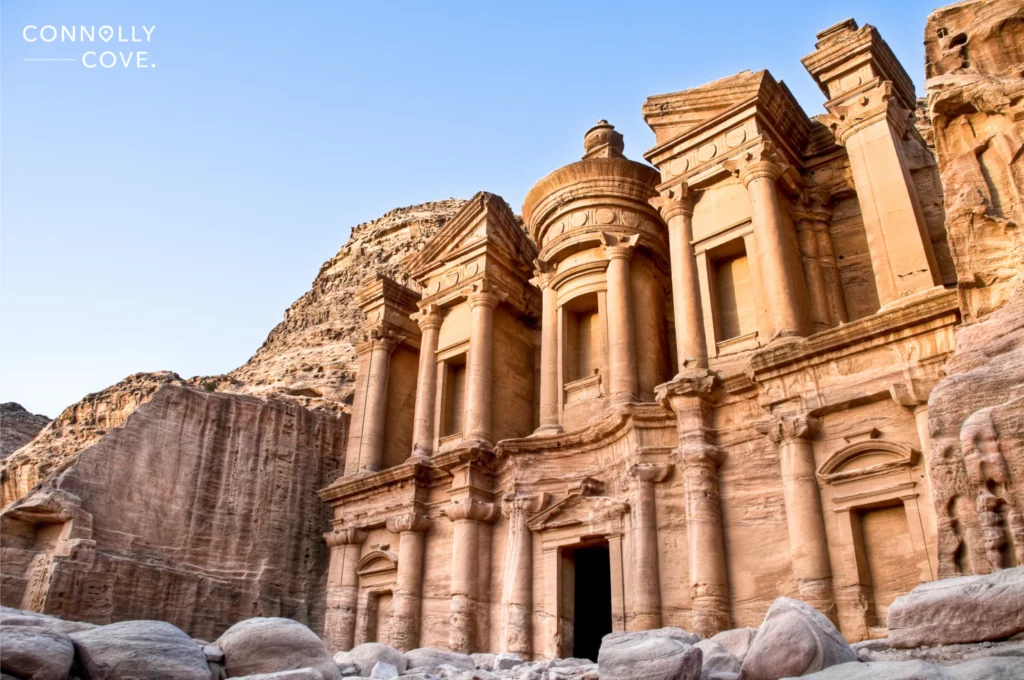
Table of Contents
The History of Petra
The history of Petra spans several centuries and is a testament to the ingenuity and creativity of its builders. Throughout history, this city was the homeland of three peoples, starting from the Edomites to the Nabateans and then to the Romans.
However, Petra’s history can only be traced back to the Nabateans, an Arab people who settled in the area around the 6th century BCE. It is one of the oldest cities that is believed to have been built by the Nabateans in 312 BCE.
The Nabateans were nomadic traders who were skilled in controlling water resources, which allowed them to thrive in the otherwise arid region. Petra’s strategic location at the crossroads of two popular routes that linked the Red Sea and the Dead Sea and the Arab Gulf and Gaza contributed to its prosperity.
The Nabateans levied taxes on caravans passing through the city, which made it a wealthy trading hub. They also carved impressive structures into the sandstone cliffs, including temples, tombs, and a remarkable theatre.
In 106 CE, Petra was annexed by the Roman Empire and became a vital frontier city. The Romans added their own architectural elements, such as the collonaded street and a Roman-style theatre, further enriching the city’s architectural diversity. The city’s importance as a trading centre waned during this period due to changing trade routes.
By the 7th century CE, the city had largely been abandoned. Although local Bedouin communities knew about Petra, it remained unknown to the Western world until the early 19th century. In 1812, Swiss explorer and orientalist Johann Ludwig Burckhardt disguised himself as a Bedouin and infiltrated the city. His rediscovery of its stunning architecture captured the imagination of scholars and explorers.
The Red Rose City
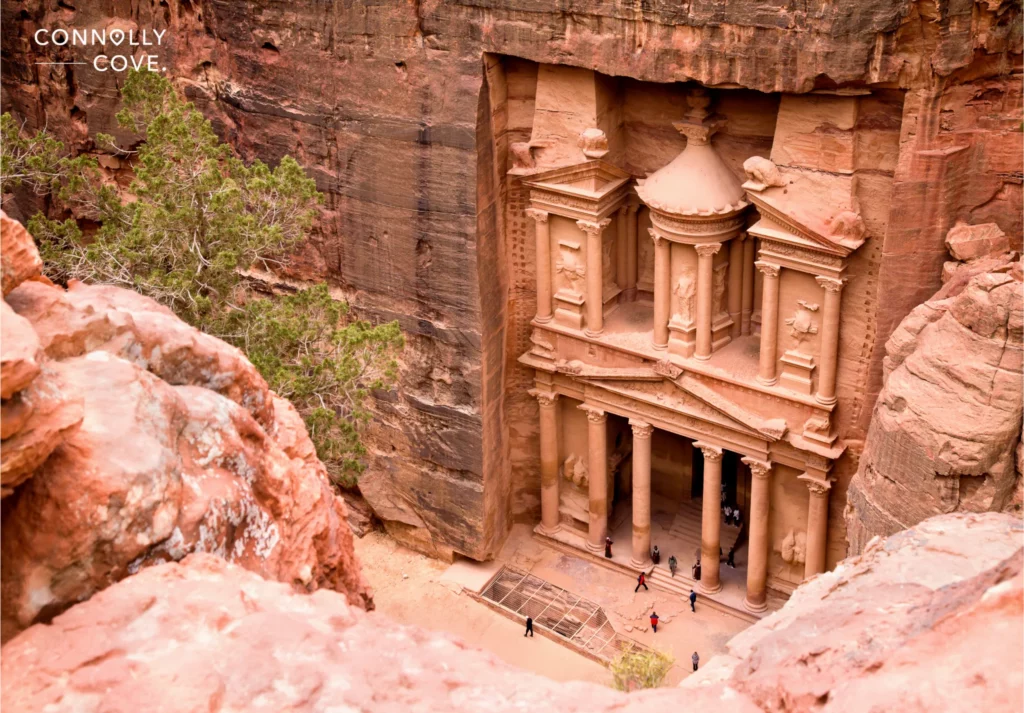
“Match me such a marvel save in Eastern clime, a rose-red city half as old as time.”
Poet and Victorian traveller Dean Burgon describes the stunning archaeological site of Petra, which is known for its intricate rock-cut architecture and its rose-red sandstone cliffs.
Petra is often referred to as the “Rose City” in reference to the colour of the stone from which it is carved. The rose-red hue, combined with the natural beauty of the surrounding landscape, makes Petra an aesthetically stunning and surreal destination.
Another interpretation of the word “Petra” is “rock” or “stone” in Greek. This is quite fitting, as the city was literally carved into the rock, hidden from the prying eyes of invaders. The city’s secretiveness and hidden nature add to its allure and mystique.
Petra was also known as the “Lost City” because, despite its historical significance, the Jordanian city was “lost” to the Western world for centuries. After the decline of the Nabatean kingdom, it gradually faded into obscurity, known only to local Bedouin tribes, until it was rediscovered in the 19th century by Swiss explorer Johann Ludwig Burckhardt.
Giving You All the Good Reasons Why to Visit Petra
Nestled amidst the breathtaking desert landscapes of southern Jordan, Petra is an archaeological marvel in every sense of the word. This ancient Nabatean city is indeed a timeless wonder of rock-cut architecture.
Fun fact: Only 15 per cent of Petra has been explored. Most of the city is still underground, which means more is yet to be unearthed. However, with the little discoveries made, Petra is awe-inspiring and offers photo opportunities that would make your heart dance.
The city is located about 240 kilometres south of the Jordanian capital and 120 kilometres north of Aqaba. There is no “Welcome to Petra” sign. To reach the city you will have to go through a narrow corridor that extends for about 1 kilometre. This is the Siq.
The Siq: Your Gateway to the City
This gorge is a natural geographical wonder created by the forces of water erosion and now serves as the main entrance into the heart of Petra. The Siq is a winding, narrow canyon with towering cliffs that rise on both sides to heights up to 80 metres.
The sandstone walls of the Siq feature a dazzling array of colours and patterns. The rock strata range from vibrant reds and oranges to earthy browns and greys. Remnants of the Nabatean civilisation, including rock-cut carvings, inscriptions, and sculptures, are found along the way to this mysterious city.
One of the most famous features is the “Obelisk Tomb” and the “Bab as-Siq Triclinium,” which served as a dining area for ancient travellers. The big moment is yet to come at the end of the gorge as visitors exit the Siq to behold the iconic “Al Khazneh”.
Arabic for “treasury”, the Al Khazneh is another breathtaking wonder. It is a grand, ornate graveyard carved into the rose-red cliffs. This 40-metre-high monument, which seems to be the entrance to a castle, is one of the most famous tombs in the Jordanian city.
The Tombs of Petra
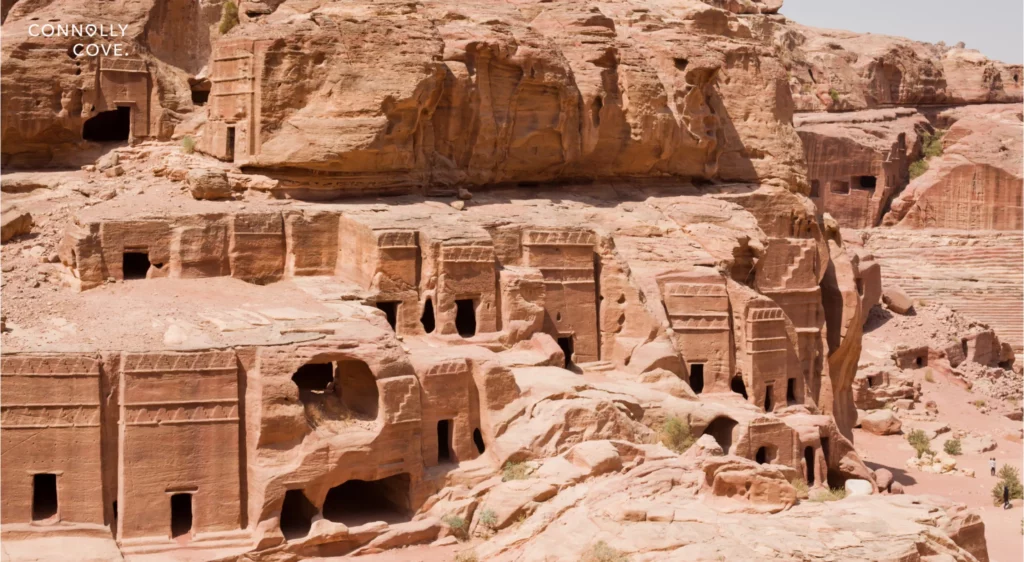
Petra is renowned for its remarkable collection of rock-cut tombs, estimated to reach around 600. These tombs were carved directly into the rose-red cliffs and served as burial sites for the city’s elite.
Did you know that Petra has more tombs than the Valley of the Kings in Egypt’s Luxor, which is home to only 63 fascinating tombs? In fact, the Nabateans built their city in a way that would guarantee it aligned with the sun, and so light would reach their sacred places.
The Beauty of Petra by Night
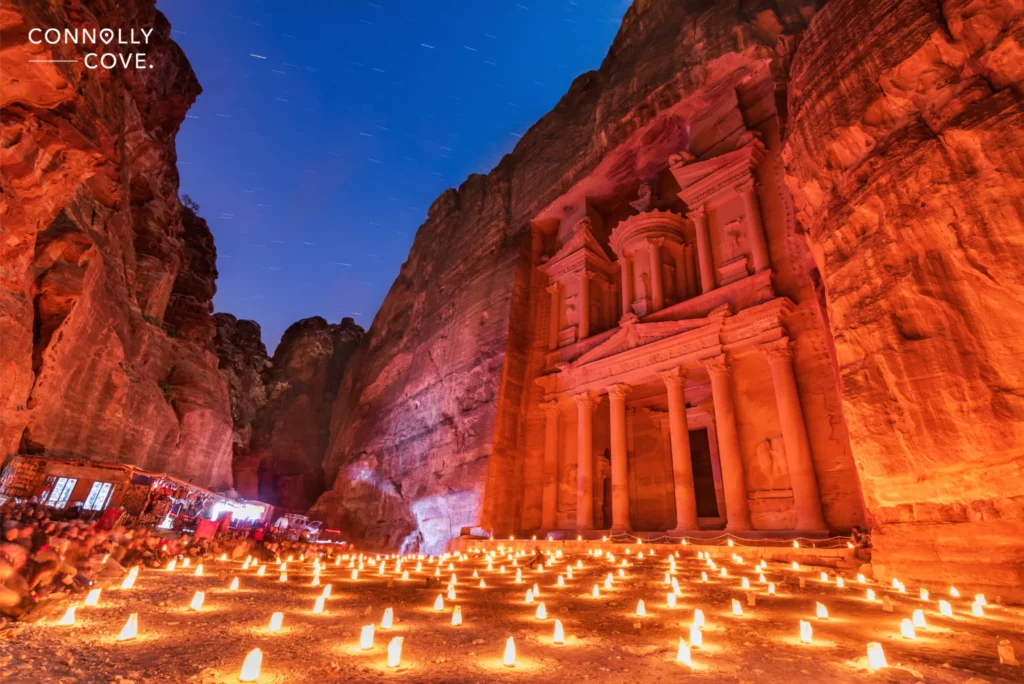
“Petra by Night” is a magical and enchanting experience that allows visitors to witness the ancient city of Petra illuminated by the soft glow of thousands of candlelit luminaries. This extraordinary event takes place after sunset and begins at the entrance to the Siq.
As visitors embark on this astounding journey, they are given a candlelit bag to carry, which adds to the mystical atmosphere. The Siq is naturally dramatic, but by night, it becomes even more outstanding as the candles cast dancing shadows on the rock walls.
Venturing deeper into that passage, the visitors get to catch glimpses of Al Khazneh (the Treasury), the city’s most famous monument, illuminated in the distance. The anticipation builds with each step, and finally, as you emerge from the Siq, the sight of the Treasury bathed in the warm, golden light of hundreds of candles is genuinely excellent.
As you sit in front of the Treasury, you can listen to stories and legends told by a local guide, adding a layer of cultural and historical depth to that beautiful experience.
Petra by Night is a mesmerising blend of history, culture, and natural beauty. The flickering candlelight adds a touch of romance and mystery to an already stunning location. This extraordinary event takes place every Monday, Wednesday, and Thursday evening. It is a must for anyone visiting the city.
A UNESCO World Heritage Site
In 1985, UNESCO decided that Petra was a World Heritage Site, given its cultural and historical significance, as well as its remarkable architectural achievements. The incredible rock formations made it one of the New Seven Wonders of the World in 2007.
“One of the most precious cultural properties of man’s cultural heritage.”
UNESCO’s description of Petra
UNESCO status has led to increased preservation efforts to ensure that the city’s legacy will be appreciated for generations to come. This city is by far one of Jordan’s most visited attractions by tourists; why shouldn’t you be one?
A City Offering Such an Inspiring Location for Filmmakers
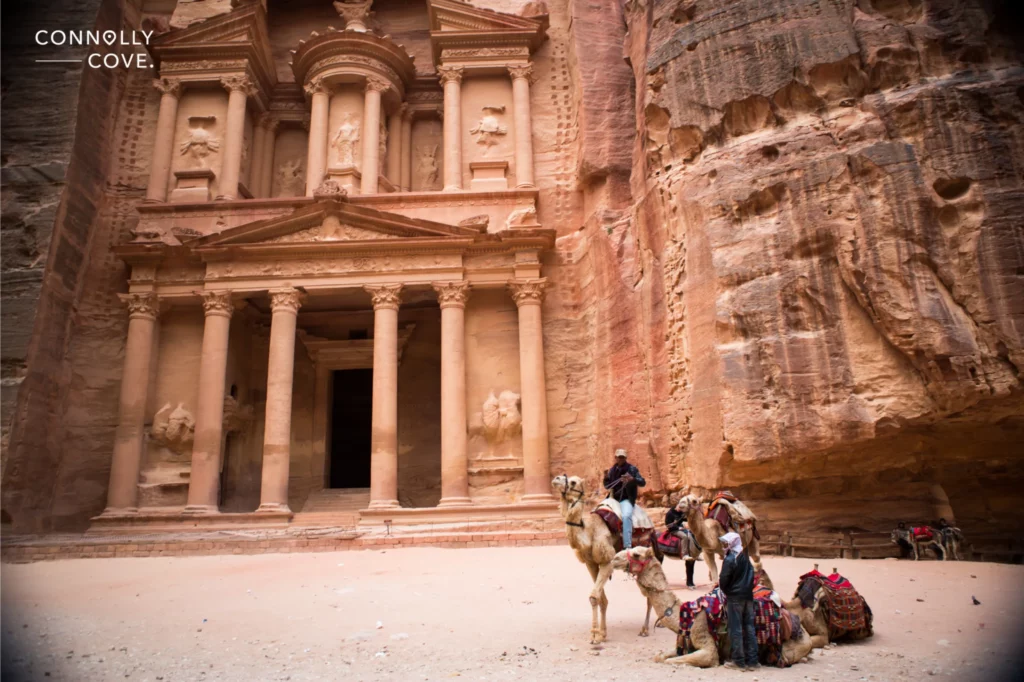
Petra’s combination of natural beauty and historical authenticity has drawn filmmakers to get their cameras rolling there. It seemed the perfect location to transport the audience to different times and places.
The city’s ancient architecture provides filmmakers with an authentic backdrop for historical and adventure films. Its unique rock-cut tombs, temples, and amphitheatre make it an ideal location for movies set in ancient civilisations.
It has been featured in numerous films. In 1989, the Jordanian city gained worldwide fame as the filming location for Indiana Jones and the Last Crusade. Petra served as the fictional resting place of the Holy Grail. The climax of the movie takes place at the Treasury, making it an iconic setting in cinematic history.
Other famous movies have used Petra as a filming location, such as Transformers: Revenge of the Fallen in 2009, The Mummy Returns in 2001, and Red Planet in 2000. These films have further solidified the Jordanian city’s reputation as a cinematic gem.
A Journey Back in Time
Petra is more than just a tourist experience; it’s a journey back in time and a magical encounter with one of the world’s most extraordinary archaeological wonders. It is a place where history and beauty converge under the starry desert sky. Petra will forever stand as a testament to the remarkable achievements of the past and a source of inspiration for the future.

The Life and Legacy of Robert the Bruce: Scotland’s Heroic King
Scotland
02/05/2024

Unveiling the Meaning of the Celtic Motherhood Knot
Culture Exploration
02/05/2024

The Town of Killybegs: The Amazing Gem of Donegal
County Donegal
02/05/2024

Belfast Giants: An Irish Sport Success Story
Ireland
02/05/2024

The Meaning and Power of the Irish Blessing Prayer
Culture Exploration
02/05/2024