


Derek Mahon: Ireland’s Leading Modern Poet
Updated On: November 07, 2023 by  Ciaran Connolly
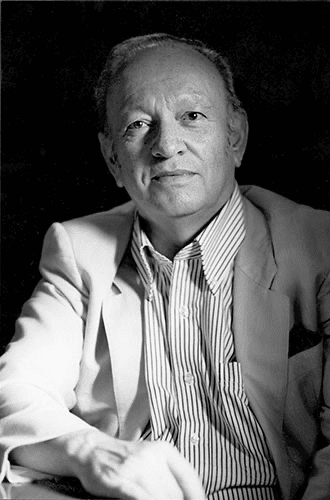
Derek Mahon is a widely known poet of the modern literary world. Loving Literature from a young age, his talent showed. However, as a young adult, was unsure if Literature was something he should pursue. As the years have passed his poetry has been studied in schools across Ireland, the UK, and beyond. We, literature lovers, are glad that he did not give up his passion, and has blessed us with many poetry collections to enjoy.
Early Life, Education, and Discovery of Talent
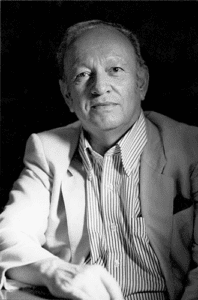
Sourced: The Gallery Press
Derek Mahon was born on 23 November 1941 and is a well-known Irish poet and author. He was born and raised in Belfast, and his father and grandfather worked at Harland and Wolff, the shipyard which is most famous for the ship named Titanic.
As a young boy, Derek Mahon always loved literature, and throughout his education, this passion grew. He first attended Skegoneill Primary school and the Royal Belfast Academical Institution. While attending the Royal Belfast Academical Institution the young Derek Mahon published his first poems in the school magazine. Following this, he attended Trinity College Dublin. Here he studied English, French, and Philosophy between 1960 and 1965. While at Trinity College Dublin, he edited Icarus, which is the student-run magazine at this university. Following his studies here, he moved to Paris and studied at the Sorbonne. He continued his travels in 1966 when he made his way through the U.S. and Canada.
Upon returning to Belfast, Derek Mahon spent a year teaching at Belfast High School. While teaching here, he published his first collection of poems. Unable to find a teaching job, Derek Mahon returned to Toronto in 1966, it was at this age of 25 that he began to question his life, and what his father thought: “I think it’s about time I started believing in God or Sound Business Principles” (The Poetry of Derek Mahon, Hugh Haughton). His father had wanted him to be finished with the poetry long ago. Thankfully, he continued writing, becoming one of the most renowned poets of the modern world.
Throughout his life, he travelled across many countries including the USA, Canada, Belgium, France, and Germany. In 1967 he started seeing his wife Doreen Douglas, and he married her 5 years later, and they had two children. Following, Mahon became in first Writer Fellow at Trinity College Dublin in 1986, he achieved his Master’s and was awarded an honorary Doctorate in Letters from this same institution.
He is now enjoying his life living in Kinsale, County Wexford, he took many day trips to Donegal to see the famous disused shed from his poetry.
Leading Poet of his time in both Ireland and beyond…
You can read all about Derek Mahon in his biography ‘After the Titanic: A Life of Derek Mahon’, which was written by Stephen Enniss. This intimate biography will give you a deep understanding of the origins of Derek Mahon’s poetry, and how his life and defeating difficult situations throughout his life has shaped his art.
Throughout his literary career, Derek Mahon has written several collections of poems, his first collection was published in 1965, called ‘Twelve Poems’. However, it wasn’t until 1966 that Mahon was pushed to write his first full collection of poems, ‘Night-Crossing’. This influence came from Nobel Laureate Seamus Heaney, after his success of ‘Death of a Naturalist’ in 1966.
Return to Ireland in Spring 1967, ‘After the Titanic’ poem was published. It was later published in his collection ‘Collected Poems’ in 1999. Interestingly it was originally entitled ‘As God is my Judge’ then ‘The Soliloquy of Bruce Ismay’, and it was originally prefaced by a note explaining that the poem was spoken by the chairman of the White Star Line, which owned the Titanic, who was rumoured to have escaped the sinking ship disguised as a woman. The national disaster of the sinking Titanic was personal to Mahon as his grandfather worked on the boilers, however, in the poem, Mahon decides to associate himself with the man held responsible (the owner).
“As I sat shivering on the dark water
I turned to ice to hear my costly
Life go thundering down in a pandemonium of…”
Throughout Mahon’s literary career he has written many amazing collections. However, from all of them, some of his best poems have to be ‘The Thunder Shower’, ‘Grandfather’, ‘Rage for Order’, ‘The Banished Gods’, ‘Kinsale’, ‘Antarctica’, ‘A Disused Shed in Co. Wexford’, ‘As It Should Be’, ‘Ecclesiastes’, ‘Everything is Going to be Alright’, ‘Rising Late’, ‘Achill’, ‘Afterlives’, ‘An Autumn Wind’, ‘Courtyards in Delft’, ‘Glengormley’, ‘Lapis Lazuli’, ‘Lives’, ‘Monochrome’, ‘The Window’,
Throughout his literary career, Derek Mahon has written poems for different people and occasions. He wrote the poem ‘Data’ which was published in The New Yorker on 13 August 2018, you can read it here. He also has written poems about Climate Change, he wrote the poem ‘Listen to the Leaves’ in 2015, and it is one of Ecopoems. As well as many amazing poetry collections since his first in 1966. Some of his most famous collections are ‘Antarctica’ which was published in 1985, ‘New Collected Poems’ which was published in 2011, ‘New Selected Poems’ which was published in 2016, ‘The Snow Party’ which was published in 1975, and his newest collection ‘Against the Clock’ was published in 2018. His poetry has delighted readers for years, and we cannot wait for more!
Derek Mahon has also written books, he published ‘The Yellow Book’ in 1997. He also wrote ‘New York Time’ (2018). This was written and published especially with the Kilkenny Arts Festival. It is based on the version that appeared in his collection ‘New Collected Poems’. It is a newly written version of The Hudson Letter which was first published in 1995 by The Gallery Press.
Derek Mahon Awards
Throughout his impressive literary career, it is no surprise that one of Ireland’s best and most famous poets has won many awards. Here we have listed some of his prestigious awards:
Before publishing his first collection ‘Night-Crossing’, he was awarded the 1965 Eric Gregory Award.
In 2008 his poem ‘life on earth’ was shortlisted for the 2009 international Griffin Poetry Prize, and was the winner of the 2009 Irish Times Poetry Now Award
He won the David Cohen Prize for Literature in 2007.
Twice, in 2006 and 2009 he won the Poetry Now Award
In 2001 he was awarded an honorary Doctorate from NUI
If you enjoyed reading about one of Ireland’s most famous poets, please enjoy more about Ireland’s amazing writers, authors, and poets:
William Butler Yeats: A Poet’s Journey | Irish Author: Cecelia Ahern – Book and Film Success | Successful Authors from Derry – James Burke & More | Samuel Beckett: An Irish Author | Oscar Wilde: His Journey, Fame and Downfall | James Joyce: His Life, Work and Legacy

Discover The Mystery of the Paviland Red Lady: Unearthing Its Secrets
Culture Exploration
29/04/2024
Downpatrick Town: Saint Patrick’s Final Resting Place
Northern Ireland
29/04/2024
Breton Language: Safeguarding the Rhythmic Pulse of Brittany’s Celtic Heart
Culture Exploration
29/04/2024

The Enchanting Helen’s Bay Beach – Northern Ireland
Northern Ireland
29/04/2024
Discover The Mythical Valkyrie Horses: Steeds of Legend
Mythology and Folklore
28/04/2024