


Downpatrick Town: Saint Patrick’s Final Resting Place
Updated On: April 16, 2024 by  Ciaran Connolly
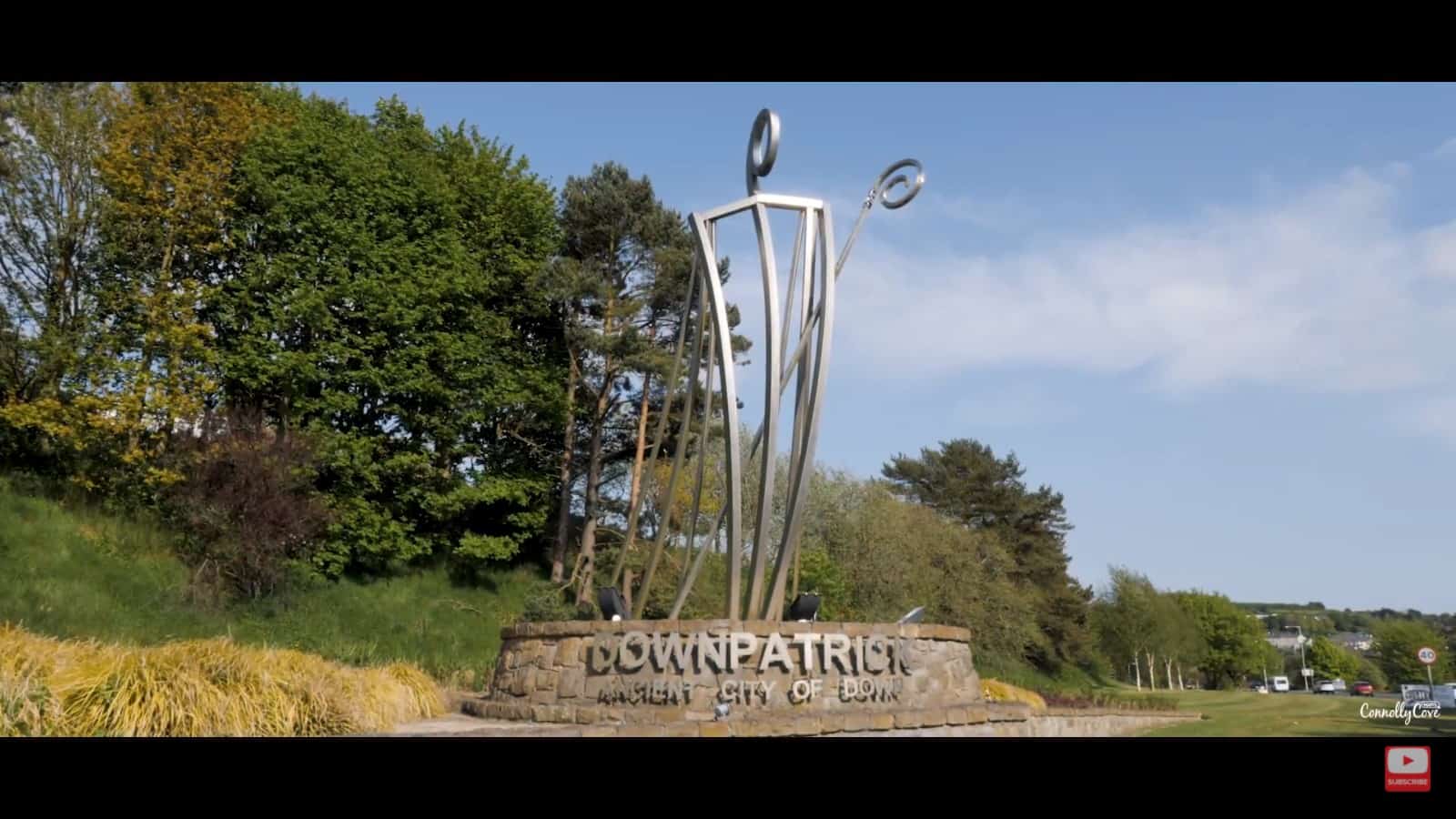
Downpatrick, also known in Northern Ireland as Dún Pádraig, had its name inscribed in history books since almost 130 AD. This historical town stood against the trials of time and continued to develop through the years. Today, it is a major inspirational, religious, recreational center.
Stick around to discover Downpatrick Town with us, and whether or not it relates to one of the most famous patron saints in the world; Saint Patrick.
A little history about Downpatrick Town
It was not clear when humans first settled in Downpatrick Town. However, discoveries revealed houses dating back to the Bronze Age, as well as a settlement dating back to the Neolithic Age on the site of the Cathedral Hill.
The town is rich in historical events since the ruling of the Ulaid, since it served as a stronghold for this powerful group of dynasties. Up until John de Courcy, a Norman knight, received a grant from Henry II of England granting him Ulster, and the knight marched over to the town and took it over, in 1177. The highlight of the Middle Ages is the Gaelic alliance to retrieve Down from the British, resulting in the Battle of Down, which ended by a horrible defeat.
During the 18th and 19th centuries, significant improvements took place at Dún, such as the building of a quay and a grain store in 1717 and the Southwell school in 1733. The building of the Down House Infirmary was in 1767, moved to another building, until it eventually settled in the Downe Hospital building since 1834.
During the 1820s, many of the restrictions imposed on Catholics through the United Kingdom, were lifted. The most important lifted restriction is in the Emancipation Act of 1829, which allowed Catholics to become members in the parliament in the House of Commons in Britain. The main advocator for the Emancipation is The Liberator, barrister Daniel O’Connell, who was later honored at a dinner fest attended by members of all religious factions.
Today, Downpatrick Town is a recreational and commercial hub, with many attractions to visit and enjoy around the town, as well as being a major commuter town. The town is also a great sports’ center for many Irish and global sports, such as the Gaelic games, Cricket, Rugby in addition to being home to the Downpatrick & District Snooker Billiard League.
Downpatrick and Saint Patrick
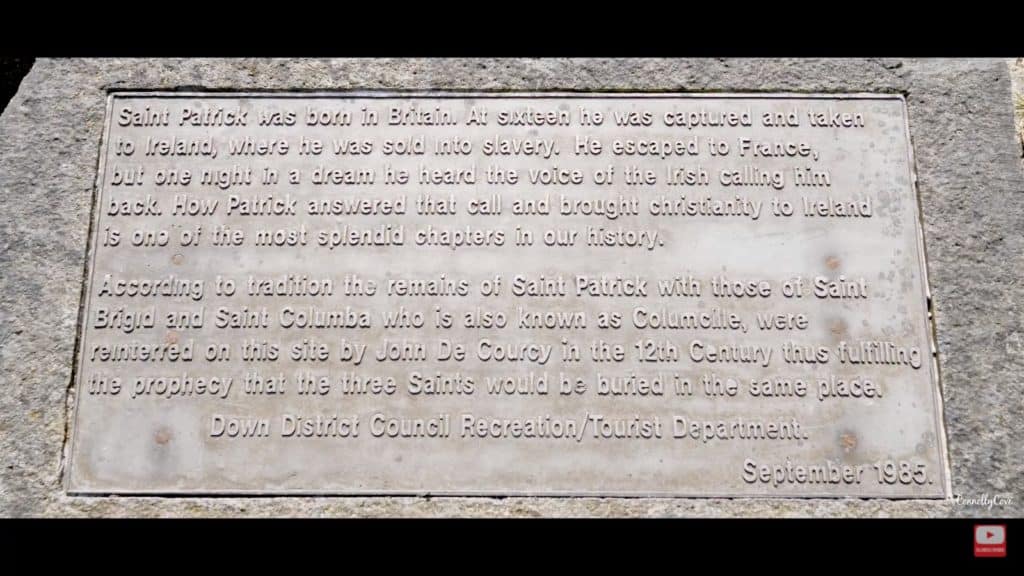
If the meaning of its name is Patrick’s Fort, it’s only natural that Downpatrick be the last resting place of Ireland’s patron saint, Saint Patrick. Some say that Saint Patrick lived for some time in Downpatrick during the 5th century, while others claim he was only buried there, on Cathedral Hill, after his death. Later on, Down Cathedral was buried, involving the alleged burial place.
The Patron Saint of Ireland is celebrated on St. Patrick’s Day, a world famous celebration that venerates the saint, every year on March 17th. His grave remains, to this day, a popular pilgrimage place for many faithful from around the world. Although, Downpatrick celebrates the saint for one day, some other counties, such as Newry, Down District Council and Mourne have extended the celebrations for an entire week.
Here’s what you can see and do in Downpatrick town.
What to see in Downpatrick Town
One of the most important landmarks to visit in Downpatrick is Saint Patrick’s believed grave, where he’s buried in the Down Cathedral. There are several other historical places that you can visit as well, such as the Down Arts Centre, the Inch Abbey and Quoile Castle.
- Down Cathedral:
Dedicated to the Holy Trinity, Down Cathedral was built on Cathedral Hill, standing as a center of Downpatrick town and overlooks the town. The cathedral is home to crosses from the 9th, 10th and 12th centuries, which are still preserved inside until today. During its life, the cathedral underwent restoration works in 1790 and between 1985 and 1987.
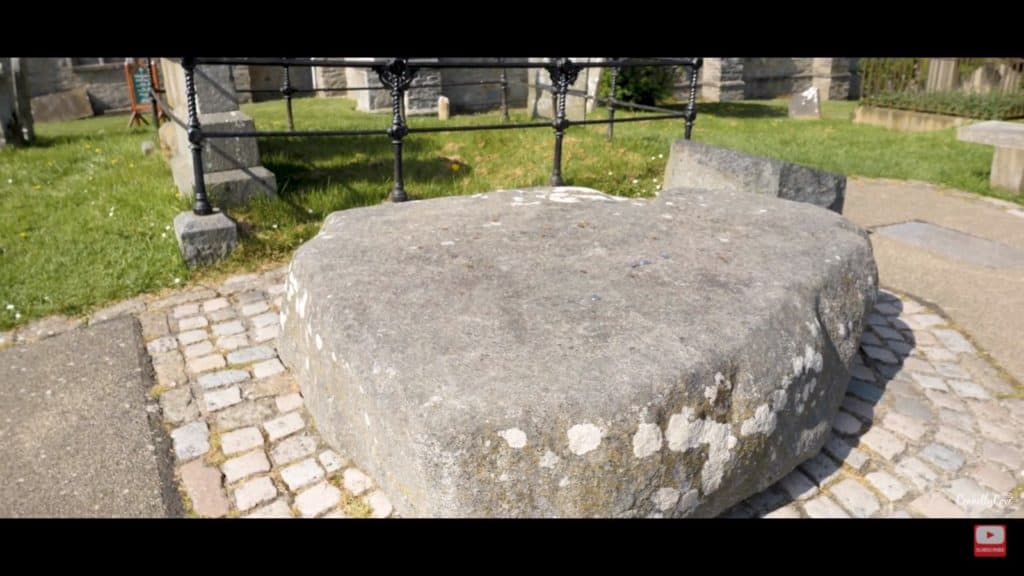
The cathedral is said to be home of the burial ground of Ireland’s patron saint; Saint Patrick. However, the Mourne granite stone which marks the grave was put in its current place in 1900. A replica of a high cross that is made of granite, stands outside the east end, while the original, which dates back to either the 10th or the 11th century, is on display in the Down County Museum since 2015.
- Saint Patrick’s Grave:
One of the reasons why people decide to visit Downpatrick is because Saint Patrick is buried here in the town cathedral. People come to the cathedral to check out the grave of the legend that was Saint Patrick.
St. Patrick’s Day is a famous celebration held in Northern Ireland in Downpatrick. This celebration is held through an annual cross-community parade which goes through the centre of the town. Back in time, this celebration was actually held for one day only, but in the recent years it was extended to include the whole week, bringing family events and history exhibitions for the public.
- Down Arts Centre:
Originally serving as a municipal building in Downpatrick, this building was home to the Downpatrick Urban District Council. The Gothic Revival style of the building saw its construction with red brick and was finished in 1882. Since the formation of the Down District Council in 1974 with its offices in Stangford Road, the building no longer served as the Downpatrick Urban District Council meeting place.
Following a fire in 1983 and restoration works the next year, the building was allocated to the Down Arts Centre starting from 1989. Further restoration works took place between 2011 and 2012, to refurbish the building overlooking Irish Street and Scotch Street. The building is listed as a Grade B1 building.
- Saint Patrick Visitor Centre:
Opened in 2001, the Saint Patrick Visitor Centre is the only permanent exhibition of Ireland’s patron saint; Saint Patrick. The centre in Downpatrick is located below Down Cathedral and is open to visitors all days of the year. The centre has various interactive halls focusing on the actual events of the life of Saint Patrick and Christianity, rather than the legends surrounding him.
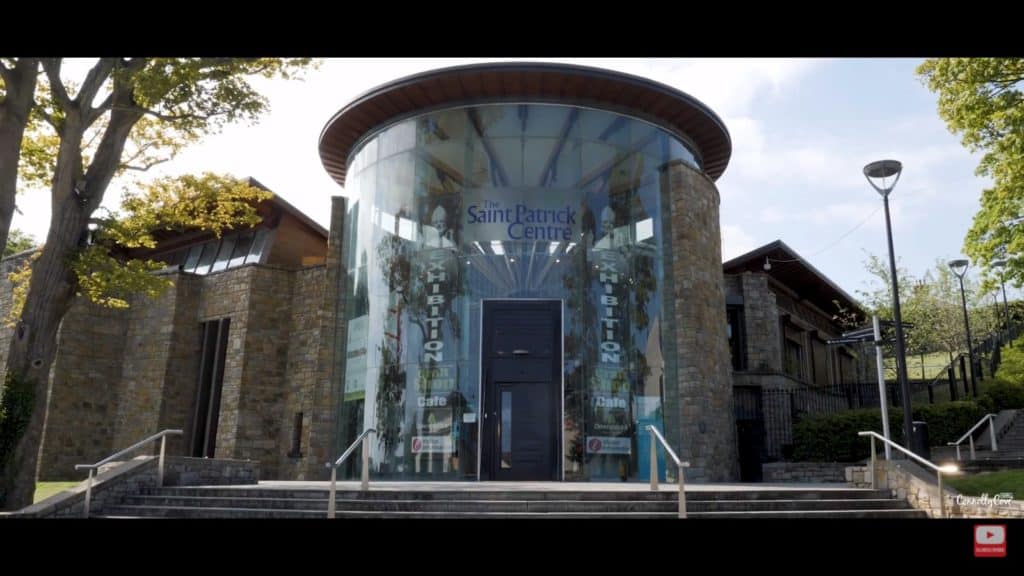
There are several exhibitions in the centre including Ego Patricius, which use the words of Saint Patrick describing the arrival of Christianity and its evolvement in Ireland. There is artwork and metalwork from the early Christian Era, in addition to exhibitions showcasing the impact Irish missionaries had during this period in Europe.
Beside the exhibition rooms, there’s a café, a craft shop, a tourist information centre and an art gallery.
- Quoile Castle:
This late 16th century castle was built using split-stone rubble with sandstone dressing, is located around 2.5 kilometers from Downpatrick town. The castle remained in use until the 1700s, and housed 7 sixpence pieces that were made of silver, dating back to the time of Elizabeth I, which were discovered in 1986.
- Inch Abbey:
Built on the ruins of a previous monastery from the 9th to the 12th centuries, Inch Abbey was founded by John de Courcy, an Anglo-Norman knight who arrived in Ireland in 1176. The current abbey lies in ruins just outside Downpatrick, and it was built by De Courcy as penance for destroying Erenagh Abbey in 1177.
Inch Abbey takes its name from “inis”, an Irish word that means “island”, as in when the monastery was built in the 12th century, it was surrounded by the River Quoile back then. You can get to the abbey through the Inch Abbey Railway Station.
- Down County Museum:
Once the Down County Gaol, the Down County Museum in Downpatrick is located in English Street on the Mall. County Grand Jury of Down ordered the construction of the museum, and construction to be supervised by Marquess of Downshire, the Hon Edward Ward and the Earl of Hillsborough, between 1789 and 1796. During its lifetime, the building once served as the barracks of the South Down Militia.
- Downpatrick Racecourse:
One of two racecourses in Ireland, the first race taking place at Downpatrick Racecourse dates back to 1685. This racecourse is located just outside the town, while the second racecourse is Down Royal, near Lisburn in Northern Ireland.
Horse racing in Ireland is run as an All-Ireland basis, where Ireland is referred to as a whole and under the jurisdiction of Horse Racing Ireland. The Downpatrick Racecourse currently hosts only the National Hunt Racing.
- Downpatrick & County Down Railway:
This historical railway dates back to 1859, when the first railway opened to the public in Downpatrick. It was later closed for commercial use in 1950. Preservation works on the railway didn’t start until 1985, on the Belfast and County Down Railway to Belfast.
Of the preserved historical heritage of the railway are Ireland’s biggest collection of carriages dating back to the Victorian era, railcars with 3 steam engines and eight diesel-run locomotives. The Downpatrick & County Down Railway connects the town with several historical places and landmarks such as the Inch Abbey.
- Struell Wells:
These holy wells are located almost two and a half kilometers east Downpatrick and they appeared in historical writings since 1306. The current surviving buildings are estimated to date back to 1600, and are still used until today by people seeking cures as a pilgrimage site. Pilgrimages between the 16th and 19th centuries to Struell were documented, as pilgrims visited the place on Saint John’s Eve and the Friday before Lammas.
Where to stay in Downpatrick?
- Denvir’s Coaching Inn (English Street 14 – 16, Downpatrick, BT30 6AB):
Less than half a kilometer from Down Cathedral, rooms in this inn are warmly decorated to make you feel at home. It is highly rated in many categories including hospitality, cleanliness, location, comfort and value for money.
- Ballymote Country House (Ballymote House 84 Killough Road, Downpatrick, BT30 8BJ):
This cozy bed and breakfast is the perfect place to make you feel welcomed. It is in close proximity of Down Cathedral and River Quoile. Reservations at Ballymote include a delicious full English and Irish breakfast, with vegetarian, vegan and gluten-free options. Ballymote Country House was rated as “Exceptional” by many visitors.
- The Mulberrys B&B (20 Lough Road, Crossgar, Downpatrick, BT30 9DT):
This beautiful bed and breakfast offers you a colorful and bright garden view, where you can enjoy a quiet afternoon. A great number of visitors rated the place as “Exceptional” through all its services, especially that all room reservations include breakfast, whether continental, English or Irish.
We hope you enjoyed this guide to the beautiful town of Downpatrick, have you ever been there? And what was your experience like? Do share it with us in the comments below!
Check out some of our other blog post that might interest you such as Downpatrick Museum, Down Cathedral – St. Patricks Grave, Saintfield.
Top 10 Irish Public Holidays and Traditions to Experience on Your Ireland Holidays
Festivals and Events
18/04/2024

6 Top Mourne Camping Sites for an Unforgettable Experience Under the Stars
Northern Ireland
18/04/2024

Eostre: The Germanic Goddess of Dawn and Spring Equinox Celebrations
Mythology and Folklore
17/04/2024

Explore the Top Hotels in County Cavan for Your Ultimate Getaway
County Cavan
17/04/2024

Irish Golf: Exploring the Top Golf Courses in Ireland
Culture Exploration
17/04/2024