
Valkyrie horses turn up constantly in fantasy art, tattoos and video games, usually winged and glowing white. The original Norse sources tell a stranger story: winged horses never actually appear in the mythology, and the earliest surviving reference to a “Valkyrie’s horse” is carved into a Swedish runestone as a kenning, a poetic riddle, for a wolf.
This guide covers where Valkyrie horses actually appear across Old Norse poetry, prose and stone carving, clears up a common mix-up with an unrelated goddess’s horse, and points to the museums and Viking heritage sites in Ireland and Scandinavia where you can see this imagery for yourself. ConnollyCove has covered Viking-era heritage along Ireland’s east and south coasts before, and this piece draws that research together with the primary Old Norse material.
Table of Contents
What Are Valkyries, and Did They Ride Horses?
Valkyries are the “choosers of the slain” in Norse mythology, tasked with selecting warriors killed in battle to join Odin in Valhalla. Whether they rode horses depends heavily on which source you read and when it was written, since the surviving material spans several centuries and multiple shifts in how Valkyries were imagined.
In the Poetic Edda, heroic poems such as Helgakviða Hjörvarðssonar describe Valkyries riding past a burial mound while a man watches from nearby, so there is a genuine textual link between Valkyries and horseback riding. But this sits alongside older material, including the Rök runestone, where Valkyries are tied more closely to wolves and carrion birds circling a battlefield than to any horse. The image of a Valkyrie was never fixed in one form. It moved across generations of oral storytelling, formal skaldic verse, and later prose written down after Christianity had already reshaped how these stories were recorded.
Where Are Valkyrie Horses Found?
Valkyrie horses appear in three main places: Old Norse poetry, later prose retellings, and carved stone monuments from Sweden and Gotland. Each source shows something slightly different, and knowing which is which clears up most of the confusion floating around online.
In poetry, the Poetic Edda’s heroic poems mention Valkyries travelling by horse, generally in scenes where they’re observed from a distance rather than described in close detail. The Rök runestone, by contrast, isn’t really about a horse at all. Its inscription uses the phrase “the horse of the Valkyrie” as a kenning, a compressed metaphor typical of skaldic verse, and the thing it’s actually describing is a wolf feeding on a battlefield strewn with fallen kings. If you’re tracing the phrase “Valkyrie horse” back to its origin, this runestone is genuinely where the trail starts, and what it’s describing is a wolf rather than a horse in any literal sense.
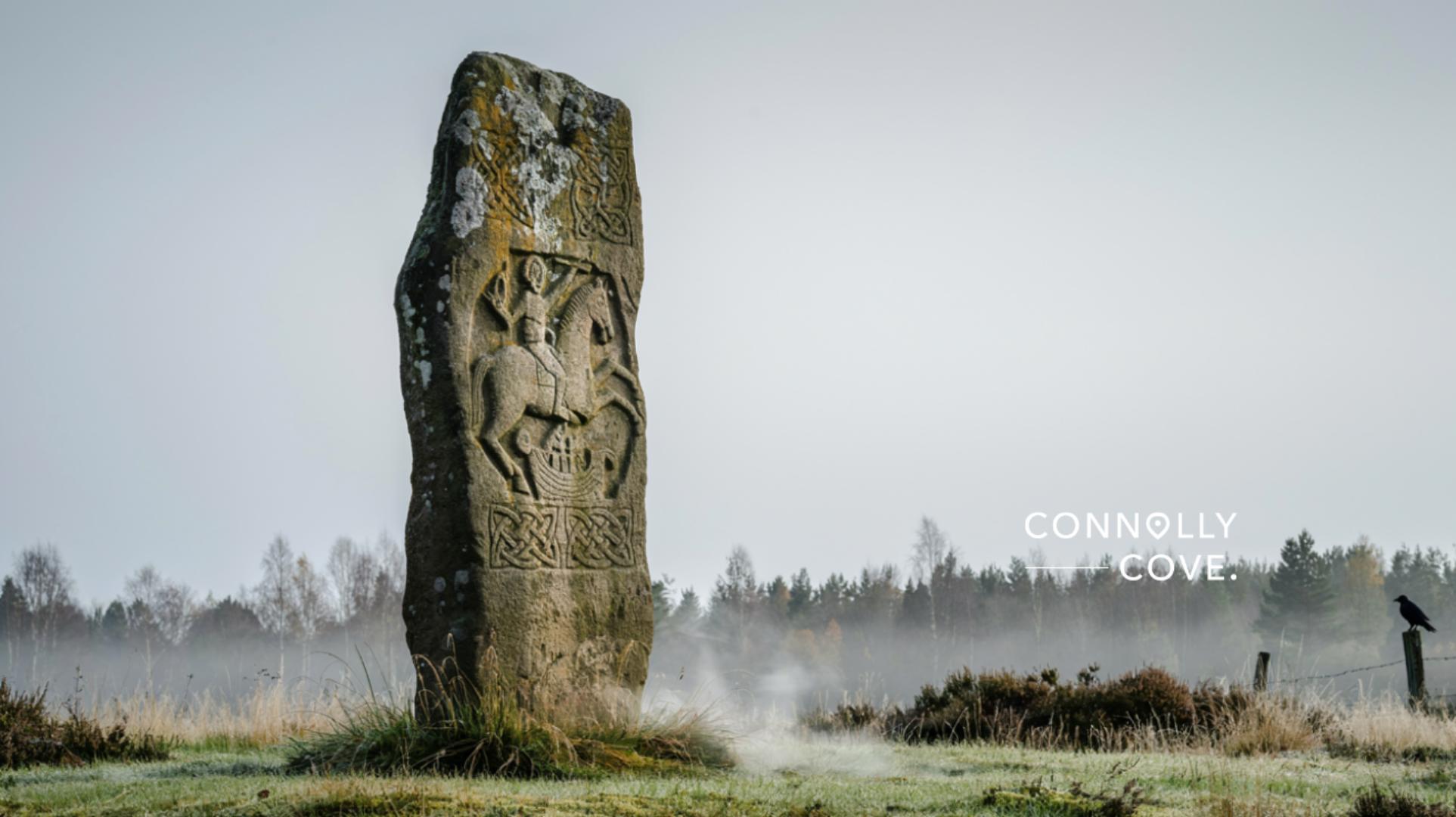
In stone carving, the clearest physical images tied to Valkyries and horses are the Gotland picture stones, particularly the Tjängvide stone, now held in a Swedish museum collection. These stones show a female figure holding out a drinking horn, welcoming a rider on an eight-legged horse into a scene generally read as Valhalla. Most scholars connect that eight-legged horse to Sleipnir, Odin’s own mount, or to a deceased warrior arriving on horseback, rather than to a horse belonging to the Valkyrie who greets him.
In prose, Snorri Sturluson’s 13th-century Prose Edda is where a good deal of today’s online confusion actually originates, and it deserves its own explanation.
The Hófvarpnir Mix-Up
Hófvarpnir is not a Valkyrie’s horse. It belongs to Gná, a separate goddess who runs errands across the worlds for Frigg and rides a horse described as able to travel “through the air and over the sea,” according to the Prose Edda. Mythology sites and horse-breed blogs frequently conflate Gná with the Valkyries, since both are relatively minor female figures associated with flight and messenger-like roles, but they’re kept entirely distinct in every surviving source. If you’ve come across Hófvarpnir described as “the Valkyrie’s horse” anywhere online, that’s the mix-up, and it’s worth correcting given how often it gets repeated as fact.
Did Valkyries Ride Winged Horses?
No. Winged horses don’t appear anywhere in Old Norse material, and this is one of the clearest gaps between the myth and its modern retellings. That image comes from Pegasus in Greek mythology and was grafted onto Valkyries much later, largely through 19th-century Romantic art and Richard Wagner’s opera Die Walküre, whose “Ride of the Valkyries” did more than almost any other single work to cement the flying, winged-horse image in popular culture. The Norse sources instead give the Valkyries themselves the supernatural ability to travel through air and over water. The horses they’re occasionally shown riding are ordinary in appearance, without wings or any other embellishment.
Where to See Valkyrie Imagery Today
The Gotland picture stones and related Viking Age carvings sit mainly in Swedish museum collections, with the Tjängvide stone among the best-known examples of a rider being welcomed into the afterlife. For anyone travelling specifically to see the source material, Stockholm’s museum holdings are the main draw.
There’s also a genuine Irish connection worth making here. Viking settlement left a real mark on Ireland’s east and south coasts, and sites like Dublinia in Dublin and the Viking Triangle in Waterford, close to the excavated settlement at Woodstown, put Norse mythology in an Irish context rather than a purely Scandinavian one. These sites tell the story of Norse settlers who lived, traded and eventually intermarried with Irish communities, carrying their myths, including the Valkyries, with them.
“When we’ve walked the Viking Triangle in Waterford, what strikes you is how ordinary the connection feels once you know it’s there. These weren’t distant, abstract myths. Norse settlers lived on this coastline for generations, and their stories travelled with them.” — Ciaran Connolly, Founder of ConnollyCove
Is There a Real “Valkyrie Horse” Breed?
No officially recognised horse breed called the “Valkyrie horse” exists. A search will turn up a few individually named racehorses and some breeders using “Valkyrie” as a marketing name for powerfully built horses, but there’s no registered breed standard behind it. The closest genuine historical link is the Icelandic horse, which descends from stock brought over by Norse settlers and remains largely unchanged since the Viking Age.
Valkyries and the Morrígan: A Celtic Parallel
Ireland has its own battlefield goddess with strikingly similar duties. The Morrígan, a figure from Irish mythology, shapeshifts, appears on battlefields, and is associated with crows and ravens hovering over the dead, much as Valkyries and their wolf-and-raven associations mark out a battlefield in Norse tradition. Readers interested in the wider cast of figures from this tradition can explore ConnollyCove’s guide to Celtic mythological creatures.
Both mythologies lean on animal companions, wolves and ravens for the Valkyries, ravens and crows for the Morrígan, to mark death and the uncertain transition into whatever comes after. Neither goddess figure needed a horse to do her job; the horse imagery in both traditions arrived later, shaped by outside artistic influence rather than the earliest sources. Anyone drawn to how different cultures picture the underworld might also enjoy ConnollyCove’s piece on the Tuatha Dé Danann, the mythological beings said to have preceded Ireland’s human inhabitants.
Ireland’s Viking history means these two traditions genuinely overlapped on the ground rather than existing as a neat comparison drawn centuries later. Norse settlers arriving in Dublin, Waterford and Limerick brought their mythology into a country that already had its own well-developed body of battlefield and death folklore, including beliefs still traceable today in places like Ireland’s fairy trees.
FAQs
Quick answers to the questions people usually ask about Valkyrie horses.
Where are Valkyrie horses found in Norse mythology?
They’re found in the Poetic Edda’s heroic poems, in the 13th-century Prose Edda, and in kennings carved on runestones such as the Rök stone. The clearest physical images of riders arriving in the afterlife are Gotland picture stones like the Tjängvide stone.
Did Valkyries actually ride winged horses?
No. Winged horses don’t appear in Old Norse sources at all. That image comes from the Greek myth of Pegasus and was popularised much later by 19th-century Romantic art and Wagner’s opera.
Is Hófvarpnir a Valkyrie’s horse?
No. Hófvarpnir belongs to Gná, a separate goddess who serves Frigg. The mix-up between Gná and the Valkyries is common online but isn’t supported by the original texts.
Is there a real Valkyrie horse breed?
No recognised breed carries that name officially. Some individual horses and breeders use “Valkyrie” informally in marketing, but there’s no established breed standard behind it.
How does the Valkyrie compare to Irish mythology?
The Morrígan, a battlefield goddess in Irish mythology, plays a similar role to the Valkyries, appearing on battlefields and marking death, often alongside ravens or crows. Ireland’s real Viking settlements mean these traditions genuinely crossed paths historically.
Where can I see Viking heritage connected to this in Ireland?
Dublinia in Dublin and the Viking Triangle in Waterford, near the excavated site at Woodstown, are the two main places to explore Ireland’s Viking Age history in person.