

Planning a 10-day trip across the United Kingdom means choosing between depth and breadth. You could spend those days slowly absorbing the culture of two nations, or push yourself to experience all four countries that make up this diverse archipelago.
The UK offers everything from London’s historic pubs to Edinburgh’s festival energy, from the Cotswolds’ village charm to Belfast’s maritime heritage. Each destination tells a different story, and 10 days gives you just enough time to scratch beneath the surface—if you plan wisely.
This guide for a 10-day itinerary presents two distinct itineraries: one focused on cultural immersion in England and Scotland, the other tackling the ambitious goal of visiting all four UK nations. Both routes include detailed logistics, realistic budgets, and the kind of authentic experiences that transform tourists into travellers.
Table of Contents
Choosing Your 10-Day UK Route: What Works Best for You
The first decision shapes everything else: do you want depth or coverage? Most 10-day UK itineraries focus exclusively on England and Scotland because the geography makes sense. Adding Wales and Northern Ireland requires internal flights or lengthy ferry crossings that eat into your precious time.
Your choice depends on what matters most. If you’re drawn to the idea of saying you’ve visited all four nations, the logistics become part of the adventure. If you’d rather spend an entire afternoon in a York tea room or hike properly through the Scottish Highlands, the two-nation route gives you that breathing room.
Understanding the Time vs Immersion Trade-Off
The classic England-Scotland route lets you move at a pace that allows for discovery. You can wander into a Cotswolds pub at lunch and end up chatting with locals for two hours. You can explore Edinburgh’s closes without constantly checking your watch. The slower rhythm means you actually remember the details later.
The four-nations route operates differently. You’ll cover more ground, tick off more locations, and experience greater cultural diversity. But you’ll also spend more time in transit, deal with more accommodation changes, and make harder choices about what to skip. Some travellers thrive on that energy. Others find it exhausting.
Transport Considerations for UK Travel
Rail travel works brilliantly for the England-Scotland route. The train from London to Edinburgh takes about four and a half hours, letting you watch the countryside roll past while enjoying a proper cup of tea. Regional rail connections reach most major attractions, and the network generally runs on time.
Adding Northern Ireland to your itinerary complicates things. You’ll need to fly from Edinburgh or take a ferry from Scotland or northwest England. Both options work, but they require planning. Budget airlines offer cheap flights if you book ahead, while ferries provide a more leisurely crossing with your luggage securely stowed.
Driving gives you flexibility but comes with challenges. UK roads are narrower than you expect, speed cameras are everywhere, and petrol costs more than most visitors anticipate. If you’re used to driving on the right, the adjustment takes concentration. That said, having a car in rural areas like the Cotswolds or the Scottish Highlands opens up possibilities that public transport simply can’t match.
Budget Expectations Across Different Routes
A mid-range 10-day UK trip typically costs between £1,800-£2,500 per person (roughly €2,100-€2,900), depending on your accommodation choices and dining habits. That includes transport, lodging, meals, and attraction entry fees.
The England-Scotland route tends to cost slightly less because you’re not paying for internal flights. Accommodation in cities like Edinburgh and York ranges from £80 to £150 per night for decent hotels. Budget travellers can find hostels or B&Bs for £40-£60, while those wanting more comfort might spend £200+ on boutique hotels.
Adding Northern Ireland doesn’t necessarily increase costs dramatically—Belfast accommodation is often cheaper than Edinburgh—but those internal flights add up. A return flight from Edinburgh to Belfast typically costs £60-£120 if booked in advance, though prices spike during peak season.
The Classic 10-Day Route: England & Scotland Deep Dive
This itinerary prioritises cultural immersion over geographical coverage. You’ll visit four major destinations, spending enough time in each to move beyond the obvious tourist attractions and discover the rhythms of local life.
Starting in London makes practical sense for most international visitors. The city serves as a natural gateway, with two major airports and excellent onward rail connections. From there, you’ll head northwest to the Cotswolds, then north to York, before finishing in Edinburgh. The route flows logically, with each leg taking between two and four hours by train or car.
Days 1-3: London Beyond the Landmarks
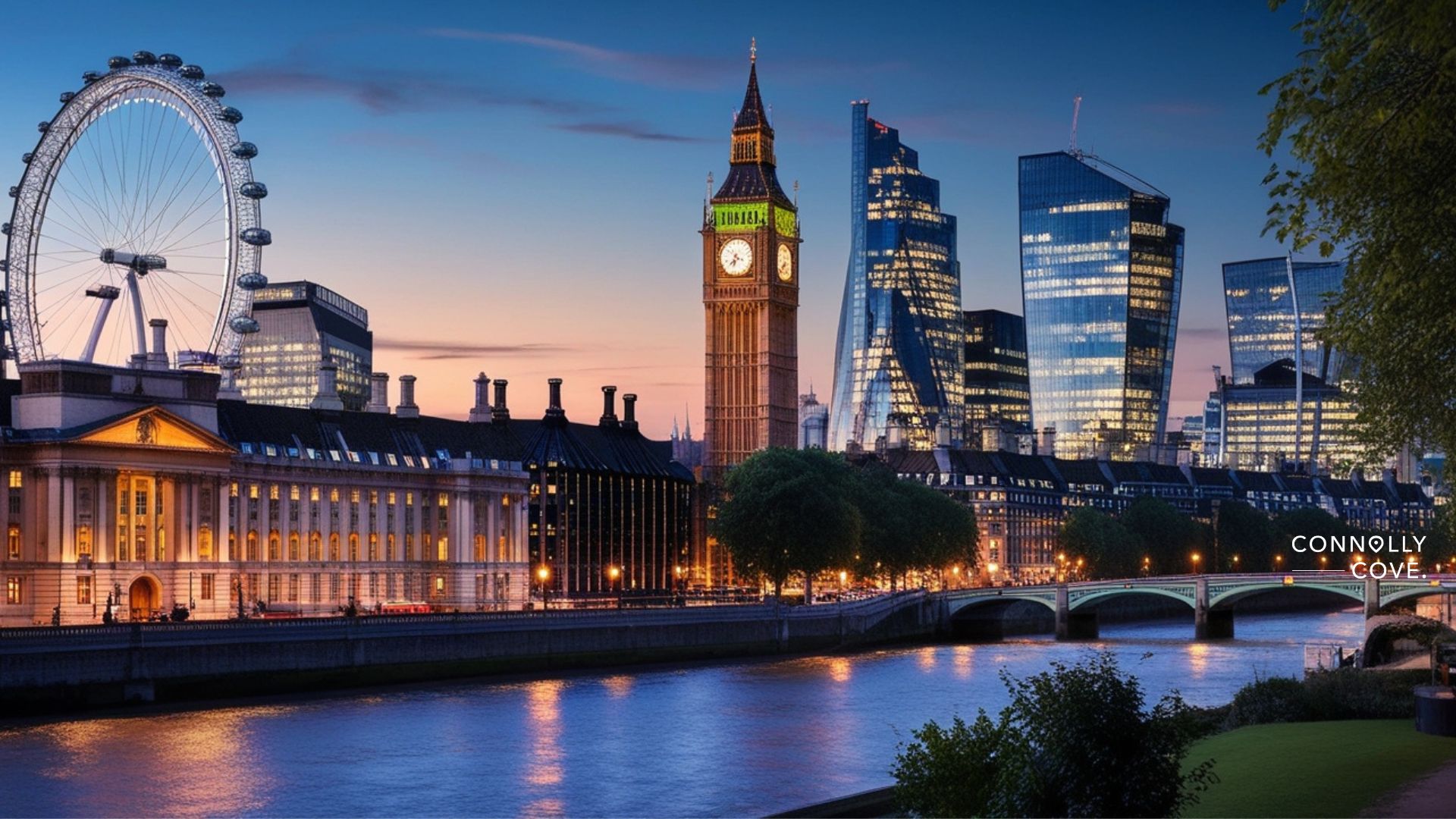
London rewards the curious. Yes, you should see Westminster and the Tower of London—they’re iconic for good reason. But the city reveals itself in quieter moments: market mornings in Borough, late afternoons in Bloomsbury’s hidden squares, evenings in Soho’s side streets.
Skip the London Eye queue. Instead, walk along the South Bank from Tower Bridge to Westminster, stopping at second-hand book stalls and street food vendors. The National Theatre often has last-minute tickets for excellent productions, and the view from the bar at the top of the building rivals any tourist viewpoint.
The City of London (the square mile of the old medieval city) operates on a different frequency than Westminster or the West End. On weekdays, it thrums with financial energy; on weekends, it empties out, revealing ancient churches and hidden courtyards. St. Dunstan in the East, a bombed church converted to a public garden, offers unexpected peace just metres from busy thoroughfares.
Pub culture deserves attention. Not the tourist traps around Covent Garden, but proper local pubs where the bar staff know their regulars. The George Inn near Borough Market has been serving drinks since the 17th century. Order a pint, find a corner, and watch London life unfold around you.
Days 4-5: The Cotswolds’ Village Character

The Cotswolds represent everything people imagine when they picture the English countryside: honey-coloured stone cottages, rolling hills, and cream teas in gardens. The reality mostly lives up to the fantasy, though you need to choose your villages carefully to avoid coach tour crowds.
Bourton-on-the-Water and Bibury get overwhelmed with visitors, especially during summer. Instead, explore Painswick, where the churchyard yew trees have been shaped for centuries, or Stow-on-the-Market, which functions as an actual working town rather than a tourist attraction. These places have tea rooms and gift shops, but they also have butchers, bakers, and locals going about normal life.
Walking paths crisscross the region, letting you hike between villages through farmland and ancient woodland. The Cotswold Way runs for 102 miles, but you don’t need to tackle the whole thing. A four-hour walk from one village to another, stopping at a country pub for lunch, captures the region’s appeal perfectly.
Local food producers dot the landscape. Farm shops sell cheese made on-site, rare-breed pork from named pigs, and vegetables picked that morning. This isn’t just marketing—the Cotswolds has maintained small-scale farming in ways that much of Britain has lost. Buying your picnic lunch directly from producers connects you to the landscape in ways that supermarkets never could.
Days 6-7: York’s Layered History
York compresses 2,000 years of history into a compact, walkable city centre surrounded by medieval walls. You can circle the entire city on those walls in about two hours, getting rooftop views into gardens and down narrow streets.
The Minster dominates the skyline, as it has for eight centuries. But York’s real appeal lies in the layers beneath: Roman foundations visible through glass floors in modern shops, Viking artefacts in the Jorvik Centre, medieval guildhalls still operating. The city never threw anything away; it just built on top.
The Shambles, often called Britain’s best-preserved medieval street, warrants a visit despite the crowds. The buildings lean toward each other across the narrow lane, their upper floors almost touching. The street once housed butchers—the word “shambles” originally meant a meat market—and the wide windowsills served as display counters for cuts of meat.
Evening brings out York’s ghostly reputation. Ghost walks run nightly, ranging from historical to theatrical. The city has legitimate claims to being England’s most haunted, with documented paranormal activity going back centuries. Whether you believe in ghosts or not, the tours provide excellent historical context delivered with dark humour.
Days 8-10: Edinburgh’s Festival City Spirit
Edinburgh operates on two levels, literally and figuratively. The Old Town perches on volcanic rock, its medieval streets climbing steeply up to the castle. The New Town—built in the 18th century, so not that new—spreads elegantly across the valley below, all Georgian symmetry and spacious squares.
The Royal Mile runs from the castle down to Holyrood Palace, lined with tourist shops selling tartan and whisky. But step into the closes (narrow alleyways) that branch off, and you’ll find quieter Edinburgh: tiny courtyards, hidden cafes, the kind of bookshops where you can browse for an hour undisturbed.
Arthur’s Seat, an extinct volcano in the middle of the city, offers Edinburgh’s best view. The hike takes about 45 minutes up, rewarding you with 360-degree panoramas across the city, the Firth of Forth, and the surrounding hills. Go in the late afternoon when the light softens, and you’ll understand why Edinburgh inspired so many writers and artists.
Whisky tastings happen everywhere, but the Scotch Whisky Experience near the castle provides solid education along with samples. You’ll learn why Scottish whisky (never Scotch whiskey—the spelling matters) varies so dramatically by region, from the peaty monsters of Islay to the smooth Speysides. Even if you’re not a whisky drinker, understanding the role it plays in Scottish culture and economy adds depth to your visit.
The Ambitious Four Nations Discovery Route
This itinerary requires more logistical planning and faster transitions, but it delivers something rare: a genuine taste of all four UK nations within a single trip. Most 10-day UK itineraries ignore Northern Ireland entirely and give Wales short shrift. This route addresses both.
The challenge lies in covering the distances efficiently. You’ll need to make peace with spending more time in transit and less time in each location. But if your goal is understanding how the UK fits together as a political and cultural entity, this route delivers that perspective in ways the England-Scotland loop cannot.
Days 1-3: London and Rapid Northward Movement
London again serves as the starting point, but this time you’ll move through it more quickly. Focus on one or two areas rather than trying to cover the whole city. South Kensington’s museum quarter (Natural History, Science, Victoria & Albert) offers world-class collections within walking distance of each other.
Alternatively, spend a day in Greenwich, away from central London’s intensity. The Royal Observatory, the Cutty Sark, and the National Maritime Museum cluster together, telling Britain’s maritime and scientific history. The Greenwich foot tunnel under the Thames provides a memorable crossing, emerging on the Isle of Dogs with its contrast of historic docks and modern skyscrapers.
By the evening of day three, you’ll want to be heading north. An overnight train to Glasgow or Edinburgh saves accommodation costs and maximises your time. Alternatively, fly from London City Airport to Edinburgh—the flight takes just over an hour, and both airports sit close to their city centres.
Days 4-5: Scotland’s Urban and Highland Contrast

Edinburgh deserves at least a full day, even on this compressed schedule. Prioritise the castle and the National Museum of Scotland, both of which provide concentrated doses of Scottish history and culture. The museum is free, and its rooftop terrace offers surprising views across the city.
Glasgow makes an excellent alternative or addition. Scotland’s largest city has a grittier, more industrial character than Edinburgh, with exceptional art collections (the Kelvingrove is free and outstanding) and some of Britain’s best Victorian architecture. The contrast between the two cities reveals Scotland’s internal diversity.
A day trip into the Highlands sounds ambitious, but it works if you’re willing to start early. Coach tours to Loch Ness or Glen Coe depart from both Edinburgh and Glasgow, returning in the evening. The scenery—mountains, lochs, moorland—delivers that classic Scottish landscape even on a rushed schedule. You won’t get deep into the Highlands, but you’ll understand why they captivate visitors.
Days 6-7: Belfast and Northern Ireland’s Coastal Drama
Flying from Edinburgh to Belfast takes about an hour, with multiple daily flights on budget carriers. Book ahead, and you’ll pay £40-£60 return. Alternatively, ferries run from Cairnryan in southwest Scotland to Belfast, taking about two hours. The ferry costs more but works well if you’ve hired a car and want to keep it.
Belfast surprised many first-time visitors. The city has transformed dramatically over the past three decades, moving past its troubled history while still acknowledging it. The Titanic Quarter, built around the shipyard where the famous liner was constructed, tells that story through excellent museums and restored industrial buildings.
The political murals in west Belfast—the Falls Road and Shankill areas—provide powerful insight into Northern Ireland’s past and present. Black taxi tours, driven by locals with deep personal connections to the history, offer nuanced perspectives you won’t get from guidebooks. The murals themselves are striking: large-scale street art that documents decades of conflict and reconciliation.
The Causeway Coast, about 90 minutes north of Belfast, delivers dramatic scenery. The Giant’s Causeway (40,000 hexagonal basalt columns formed by ancient volcanic activity) is the headline attraction, but the entire coastline rewards exploration. The Carrick-a-Rede rope bridge, Dunluce Castle ruins, and the Bushmills whiskey distillery all cluster within a few miles.
Days 8-10: Final UK Stops and Departure Planning
The route back to your departure point depends on where you’re flying out. If leaving from London, you’ll need to fly or take the ferry from Belfast to Liverpool or Glasgow, then continue south. This transit day can feel like dead time, but it’s also an opportunity to add one more destination.
Manchester works well as a stopover. The city has reinvented itself multiple times, from Roman fort to industrial powerhouse to modern cultural centre. The People’s History Museum tells Britain’s labour and democratic history, while the extensive canal system (Manchester has more canals than Venice) offers peaceful walks through the city centre.
Liverpool presents another option, especially for Beatles fans or those interested in maritime history. The Albert Dock area has been beautifully restored, housing several museums, including The Beatles Story and the excellent Merseyside Maritime Museum. The ferry across the Mersey, immortalised in song, still runs regularly and provides great city views.
Wales could slot in here if you’re flying from Cardiff or have extra time. Cardiff Castle in the city centre showcases 2,000 years of history, from Roman fort to Victorian Gothic fantasy. The National Museum is free and excellent. If you have a car, the Brecon Beacons National Park sits just 40 miles north, offering hiking and scenery within easy reach of the capital.
Essential Planning: Logistics, Costs, and Cultural Context
Successful UK travel requires more than booking flights and hotels. The details—transport connections, tipping customs, seasonal timing—can make the difference between a smooth trip and a frustrating one.
British efficiency is real but operates on its own terms. Trains generally run on time, but replacement bus services during engineering works can throw off careful plans. Museums offer world-class collections for free, but popular exhibitions require advance booking. Pubs serve excellent food now, but kitchens close at 9 PM, earlier in rural areas.
Realistic Budget Breakdown for 10 Days
Mid-range travel in the UK costs approximately £180-£250 per day per person (€210-€290), including everything from accommodation to meals to transport and attractions. That assumes you’re staying in decent hotels or good B&Bs, eating one proper meal per day in restaurants, and not skimping on experiences.
Accommodation forms your largest single expense. London hotels cost £100-£200 per night for mid-range options in decent locations. Edinburgh runs slightly cheaper at £80-£150. Regional cities like York, Belfast, or Cardiff offer better value, with comfortable hotels available for £60-£100. B&Bs typically cost 20-30% less than hotels but include breakfast, which saves money.
Food prices vary dramatically by choice. A pub lunch costs £12-£18, while a nice dinner easily reaches £40-£60 per person with drinks. Supermarkets like Tesco or Sainsbury’s sell excellent meal deals (sandwich, crisps, drink) for £3-£5, perfect for picnic lunches. Coffee culture is strong—expect to pay £3-£4 for a proper coffee in most cities.
Transport costs depend entirely on your choices. An anytime train ticket from London to Edinburgh costs over £200, but advance purchase fares drop as low as £40. The 16-25 Railcard or Senior Railcard save a third on most fares if you qualify. Driving means fuel (about £1.50 per litre), parking fees in cities (£15-£30 per day), and potential congestion charges (£15 in London).
Attractions add up quickly if you’re not careful. Many of Britain’s best museums are free (British Museum, National Gallery, National Museum of Scotland), while major attractions charge £15-£35 for entry. Historic palaces and castles cost £25-£35. Budget £20-£30 per day for attractions unless you’re spending full days in free museums.
Navigating British Cultural Norms
Tipping confuses many visitors. British culture expects tips for table service in restaurants (10-15% is standard) but not for counter service in pubs or cafes. Some restaurants add a discretionary service charge to the bill—check before tipping extra. Taxi drivers expect £1-£2 or rounding up to the nearest pound. Hotel porters appreciate £1-£2 per bag.
Pub etiquette matters more than you might think. Order at the bar—table service is rare in traditional pubs. Pay when you order, not at the end. Don’t expect ice in your drinks or free water (tap water is free if requested, but many pubs now charge for bottled water). If someone buys you a drink, you’re expected to buy the next round.
Queuing is practically a religion. British people queue for everything, from buses to museum entrances to pub bars. Jump the queue and expect pointed looks at minimum, verbal correction at worst. The queue forms a line; it doesn’t cluster around the entrance.
Personal space matters. British culture maintains more physical distance than many other cultures, especially with strangers. Standing too close in conversation or pushing past people without saying “excuse me” marks you as rude. The British apologise constantly, even when something isn’t their fault—it’s a social lubricant, not an admission of guilt.
Seasonal Considerations for UK Travel
Summer (June-August) brings the best weather and the worst crowds. Edinburgh in August is magical during the Festival, but accommodation prices double and advance booking is essential. London attractions have hour-long queues. The Scottish Highlands get busy, and the midges (tiny biting insects) can make outdoor activities miserable in still conditions.
Spring (April-May) and autumn (September-October) offer the best balance. Weather is unpredictable—expect rain gear at all times—but temperatures stay mild, and attractions are less crowded. Gardens bloom beautifully in spring. Autumn brings stunning colours to places like the Scottish Highlands and the Lake District.
Winter (November-March) means short days—sunset by 4 PM in December—and frequent rain. But Christmas markets in cities like Edinburgh, Manchester, and Cardiff create a festive atmosphere. Hotels cost less, attractions have no queues, and you’ll see Britain going about normal business rather than catering to tourists.
The weather requires a different mindset than that of continental Europe. British weather changes rapidly and unpredictably. Four seasons in one day isn’t a cliché; it’s a meteorological reality. The Gulf Stream keeps temperatures moderate, but constant Atlantic weather systems mean rain can arrive anytime. Dress in layers, carry waterproofs, and accept that some days will be damp.
Conclusion
A 10-day UK itinerary demands choices. You can’t see everything, visit every recommended restaurant, or tick off every historic site. Success means accepting those limitations and crafting an experience that matches your interests and energy levels.
The routes outlined here provide frameworks, not prescriptions. Adjust them based on what matters to you. Love literature? Add Stratford-upon-Avon or the Lake District. Obsessed with castles? Wales offers dozens within easy reach of Cardiff. Food-focused? Stay longer in Edinburgh or dedicate time to the West Country’s farm-to-table scene.