


Unveiling the Mysterious Tales of the Haunted Tower of London

Updated On: April 20, 2024 by  Ciaran Connolly
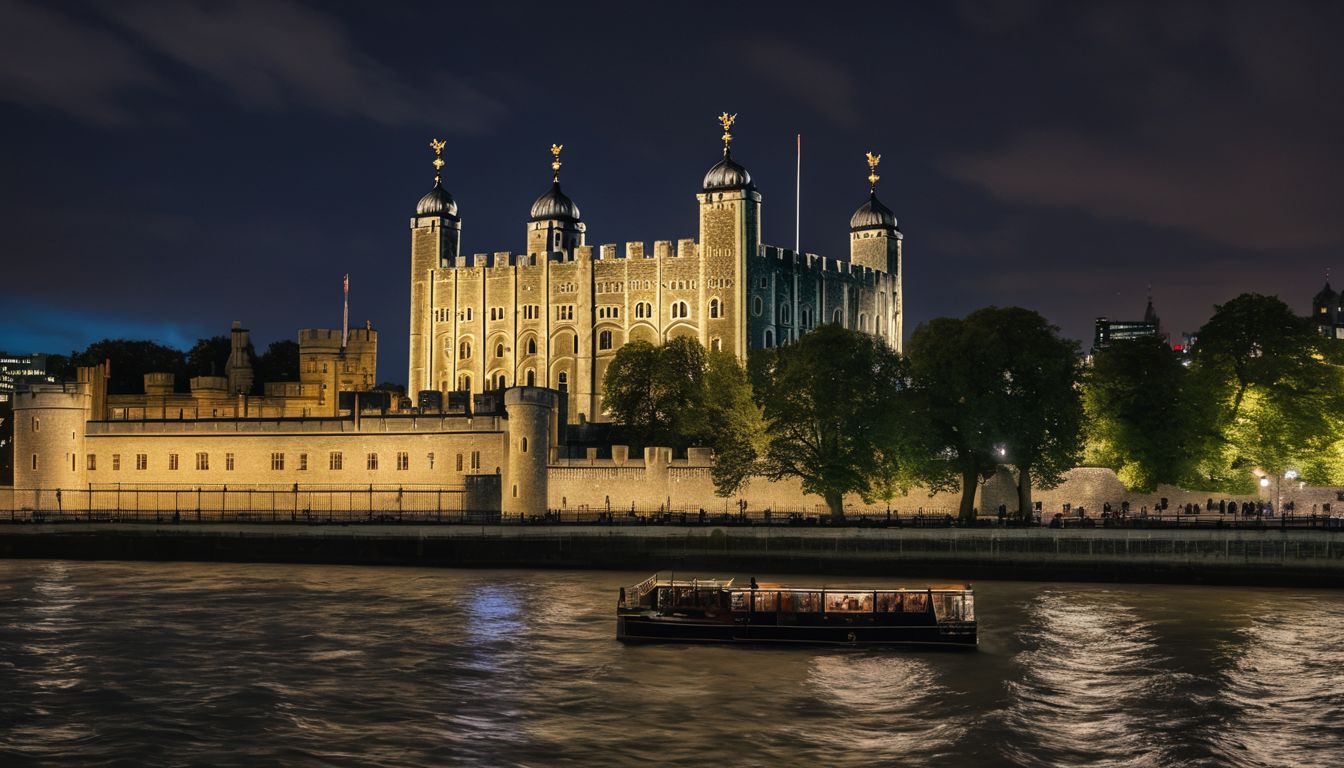 Tower of London overlooking the Thames River at night.
Do tales of phantoms and the supernatural spark your interest? I must admit, they certainly tickle my curiosity. The alluring stories that seem to float around historical landmarks have always held an uncanny charm for me.
It was in this quest to debunk these otherworldly accounts, that chanced upon the Tower of London – a symbol etched deep within Britain’s history. Allow me to be your guide through its shadowy hallways, unravelling eerie narratives and inexplicable events that lend the Tower its repute as one of Earth’s most haunted fortresses.
Fancy plunging into an ocean of spectral encounters?

Key Takeaways
- The Tower of London is famous for its dark and haunted history, with stories of ghosts and paranormal encounters.
- Some of the notable ghosts that haunt the Tower include Anne Boleyn, Queen Elizabeth I (The White Lady), the Young Princes, The Grey Lady, Guy Fawkes, Sir Walter Raleigh, Margaret Pole, and Lady Jane Grey.
- Visitors to the Tower can experience bone-chilling encounters and explore its eerie atmosphere through guided tours. It is a popular tourist attraction for history buffs and thrill-seekers alike.
The Ghosts of the Tower of London
The Tower of London is said to be home to a number of haunted spirits, including the ghostly procession of Anne Boleyn and the chilling White Lady.
Anne Boleyn’s Procession
Anne Boleyn’s ghost has a spot in the spooky tales of the Tower. She was the wife of King Henry VIII. Her end came when she lost her head on orders from the king. Many people say they have seen her spirit in the Tower grounds.
She is often seen walking near where she died, near Chapel Royal of St Peter Ad Vincula. Some also report seeing Anne holding her head under her arm as she walks around. A shock, right? There are even times when people claim to see a full parade led by Anne herself at night! This tale makes any visit to the tower quite eerie and exciting! Think about it: a real queen’s ghost might be just around you!
The White Lady
One of the ghostly figures that haunts the Tower of London is known as The White Lady. She is said to be the spirit of Queen Elizabeth I, who ruled during the 16th century. The White Lady is often seen wearing a flowing white gown and carrying a lit candle.
She has been spotted in various parts of the Tower, including the Chapel Royal and along the battlements. It is believed that she appears to bring good luck or warn of impending danger.
Her presence adds an eerie element to the already mysterious atmosphere of this historic landmark.
The Young Princes
In the Tower of London, there are tales of two young princes who met a mysterious and tragic end. These princes were Edward V and Richard, Duke of York. They were only 12 and 9 years old when they disappeared in 1483.
It is believed that they were imprisoned in the Tower by their uncle, Richard III, who wanted to secure his claim to the throne. Their fate remains unknown, but their spirits are said to haunt the tower to this day.
Visitors have reported seeing ghostly figures of two young boys in white nightgowns wandering through the corridors, playing games together as if trapped in an eternal limbo. The haunting of the Young Princes adds an eerie layer to the already dark history of the Tower of London and leaves us with questions about what truly happened to them all those centuries ago.
The Grey Lady
One of the most famous ghosts that haunts the Tower of London is known as The Grey Lady. According to legend, she is believed to be the ghost of Lady Jane Grey, who was imprisoned and executed in 1554.
Visitors claim to have seen her wandering through the corridors of the tower, dressed in a grey gown with a sorrowful expression on her face. Some even say they’ve heard her weeping softly as she wanders.
Lady Jane Grey’s tragic story has captivated many over the years, making The Grey Lady one of the most well-known and haunting apparitions at this historic site.
The Smothering Force
One of the chilling ghostly tales associated with the Tower of London is that of the Smothering Force. This mysterious and eerie presence is believed to have haunted a particular room in the White Tower.
According to legend, anyone who slept in that room would experience an overwhelming feeling of suffocation during the night. It is said that several unfortunate souls met their untimely demise due to this unexplained force.
Visitors have reported feeling a heavy weight on their chest while inside the room, as if someone or something was pressing down on them. The Smothering Force adds another layer of darkness and fear to the already haunting atmosphere of the Tower, leaving visitors both fascinated and terrified by its enigmatic presence.
The Grizzly Bear
One of the eerie tales that haunts the Tower of London is the story of the Grizzly Bear. Legend has it that during Queen Elizabeth I’s reign, a grizzly bear was kept as part of the menagerie in the Tower.
This fearsome creature allegedly escaped from its enclosure and terrorized both visitors and guards alike. The sight of this massive beast roaming through the halls would have been truly terrifying.
Although there are no sightings or encounters with the Grizzly Bear reported today, it adds to the dark and mysterious atmosphere of this haunted landmark. History buffs will be captivated by this tale, imagining what it must have been like to come face-to-face with such a powerful and dangerous creature within these ancient walls.
Guy Fawkes
One of the most infamous ghosts that haunts the Tower of London is Guy Fawkes. He was a member of the Gunpowder Plot in 1605, with the goal of blowing up Parliament. However, his plan was discovered, and he was arrested while guarding the explosives in a cellar beneath the House of Lords.
Today, his ghost is said to wander through the Tower’s halls and chambers, dressed in dark clothing and carrying a lantern. Visitors have reported hearing his footsteps and feeling an eerie presence when they are near his former cell.
It’s a chilling reminder of England’s history and the desperate actions taken by those who sought to change it.
Sir Walter Raleigh
Sir Walter Raleigh, a key figure in British history, is said to haunt the Tower of London. His ghost is often seen wandering in the Bloody Tower where he was imprisoned for 13 years.
Known as an explorer and favorite of Queen Elizabeth I, Raleigh’s spirit is said to be seen near the window from which he would watch his wife walking in the garden below. He met a tragic end when he was executed on charges of treason.
As a history buff, it’s fascinating to imagine encountering the ghostly presence of such a significant historical figure during a visit to the Tower of London.
Margaret Pole
Margaret Pole is one of the many ghosts said to haunt the Tower of London. She was a noblewoman who fell out of favor with King Henry VIII and was accused of treason. Margaret was imprisoned in the Tower and eventually executed by beheading.
Her ghost is said to appear as a sorrowful figure, wandering the halls where she once lived. Visitors have reported feeling a sense of sadness and unease when near her presence, making Margaret’s apparition one of the most chilling encounters at the Tower.
Lady Jane Grey
Lady Jane Grey, also known as the Nine-Day Queen, is one of the ghosts said to haunt the Tower of London. She was a teenage girl who was forcibly placed on the throne for a brief period in 1553.
Her reign ended tragically when she was overthrown and eventually executed at the age of only 16. According to ghostly legends, Lady Jane Grey’s spirit has been seen wandering around the Tower, wearing a white gown and carrying her head in her hands.
It is believed that she lingers in sorrow and regret for her short-lived time as queen. Her haunting presence adds another layer of intrigue to the Tower’s dark history.
Arbella Stuart
Arbella Stuart, another ghost that haunts the Tower of London, was a lady with a tragic fate. As a cousin to Queen Elizabeth I and a possible heir to the throne, Arbella’s life was filled with political intrigue and uncertainty.
She suffered from being caught up in power struggles between rival factions, which ultimately led to her imprisonment in the Tower. It is said that Arbella’s spirit still lingers within its walls, forever trapped by her untimely demise.
Visitors may catch glimpses of her ethereal presence as they explore this historic site haunted by dark history and mysterious tales.
The Faceless Young Woman
One of the haunting tales associated with the Tower of London is that of the Faceless Young Woman. It is said that she appears as a ghostly figure, dressed in white, wandering through the corridors and rooms of the tower.
Despite her ethereal appearance, what makes her truly eerie is her lack of facial features – no eyes, nose or mouth can be seen on her face. The origins of this mysterious spirit remain unknown, but some speculate that she may have been a victim of foul play within the tower’s walls.
Whether it be murder or an unfortunate accident, her presence lingers as an unsettling reminder of the dark history held by this ancient fortress-turned-prison.
The Nameless Thing
There is a ghost at the Tower of London that has an eerie reputation, known only as “The Nameless Thing.” Its presence is felt rather than seen, lurking in the shadows and sending chills down visitors’ spines.
This mysterious entity is said to bring feelings of unease and dread to those who encounter it. While not much else is known about this nameless spirit, its haunting presence adds to the overall atmosphere of mystery and paranormal activity surrounding the Tower of London.
The Haunting of the Tower of London
Experience the bone-chilling encounters and unexplained phenomena that have made the Tower of London one of the most haunted places in Britain.
Terrifying Tourist Attraction
Visiting the Tower of London can be a bone-chilling experience. As one of the most haunted places in the world, this historic landmark attracts both history buffs and thrill-seekers alike.
Here, you can walk through dark corridors and stand in ancient prison cells where notorious criminals were held captive. The Tower’s eerie atmosphere is enhanced by spine-tingling tales of ghostly apparitions that have been witnessed by many visitors over the years.
From the shadowy figure of Anne Boleyn to the mysterious disappearance of the Princes in the Tower, each corner holds its own terrifying legend. So if you’re looking for an unforgettable and hair-raising adventure, brace yourself for a journey into paranormal activity at this haunting tourist attraction.
Chilling Tales from the Past
Step into the dark and haunting history of the Tower of London, where chilling tales from the past come alive. As you wander through its ancient halls, you can’t help but feel a shiver down your spine.
The stories of treason, murder, and execution echo in every corner. From the mysterious disappearance of the Princes in the Tower to Anne Boleyn’s ghostly figure that lingers on, each tale is more bone-chilling than the last.
The Tower’s eerie atmosphere will leave even the bravest souls trembling with fear. As a history buff or nature lover, exploring these enigmatic tales is an opportunity to uncover secrets that have long been hidden within its walls.
Evidence and Witnesses of the Paranormal Activity
I have discovered that there are many witnesses and pieces of evidence supporting the existence of paranormal activity at the Tower of London. Visitors and staff members have reported seeing ghostly figures, hearing unexplained noises, and feeling strange sensations throughout the tower’s halls and rooms.
Some people claim to have captured mysterious orbs or apparitions in their photographs while touring the tower. Additionally, there are historical accounts from credible sources that document encounters with these supernatural occurrences dating back centuries.
With such a rich history and countless stories of eerie encounters, it’s no wonder that the Tower of London is renowned as one of the most haunted places in the world.

Conclusion
Unveiling the mysterious tales of the haunted Tower of London takes us on a chilling journey through history. From Anne Boleyn’s shadowy figure to the ghostly presence of the Princes in the Tower, these paranormal encounters leave visitors captivated and intrigued.
The Tower stands as a testament to its dark past, attracting tourists who dare to delve into its eerie stories and unexplained phenomena.
FAQs
1. What is the Haunted Tower of London?
The Haunted Tower of London is a historic site famous for its ghost stories, spooky legends and supernatural encounters related to UK’s history.
2. Are there real ghost sightings at the Haunted Tower of London?
Yes, many people have shared eerie stories about terrifying hauntings and mysterious disappearances linked to this haunted landmark in London.
3. Why is the Tower of London considered among the most haunted castles?
Due to its history filled with torture and execution, it has become a source for many terrifying spirits and historical hauntings that fuel its reputation as one of the most haunted castles.
4. Can I visit these supernatural phenomena attached places in London?
Absolutely! The Haunted Tower of London remains open as one of the top spooky attractions showcasing Britain’s dark past revealing spooky legends and mysteries.
5. Can you share an example from Mysterious Tales connected to this place?
One such tale speaks about historical mysteries tied up with notable figures who vanished under strange conditions or have seen haunting their previous living quarters till date.

Discover the Irish American Gangs: Their Rise and Notorious History
Culture Exploration
05/05/2024
Temple Church – London Attractions
England
05/05/2024

Abbey Ruins – Moore Hall – County Mayo
County Mayo
05/05/2024

Dark and Stormy Cocktail at The Spaniard Belfast
Northern Ireland
05/05/2024

Cernunnos: Exploring the Ancient Celtic God of Nature and Wilderness
Culture Exploration
05/05/2024