

Updated on:
by
 Cove Team
 Cove Team
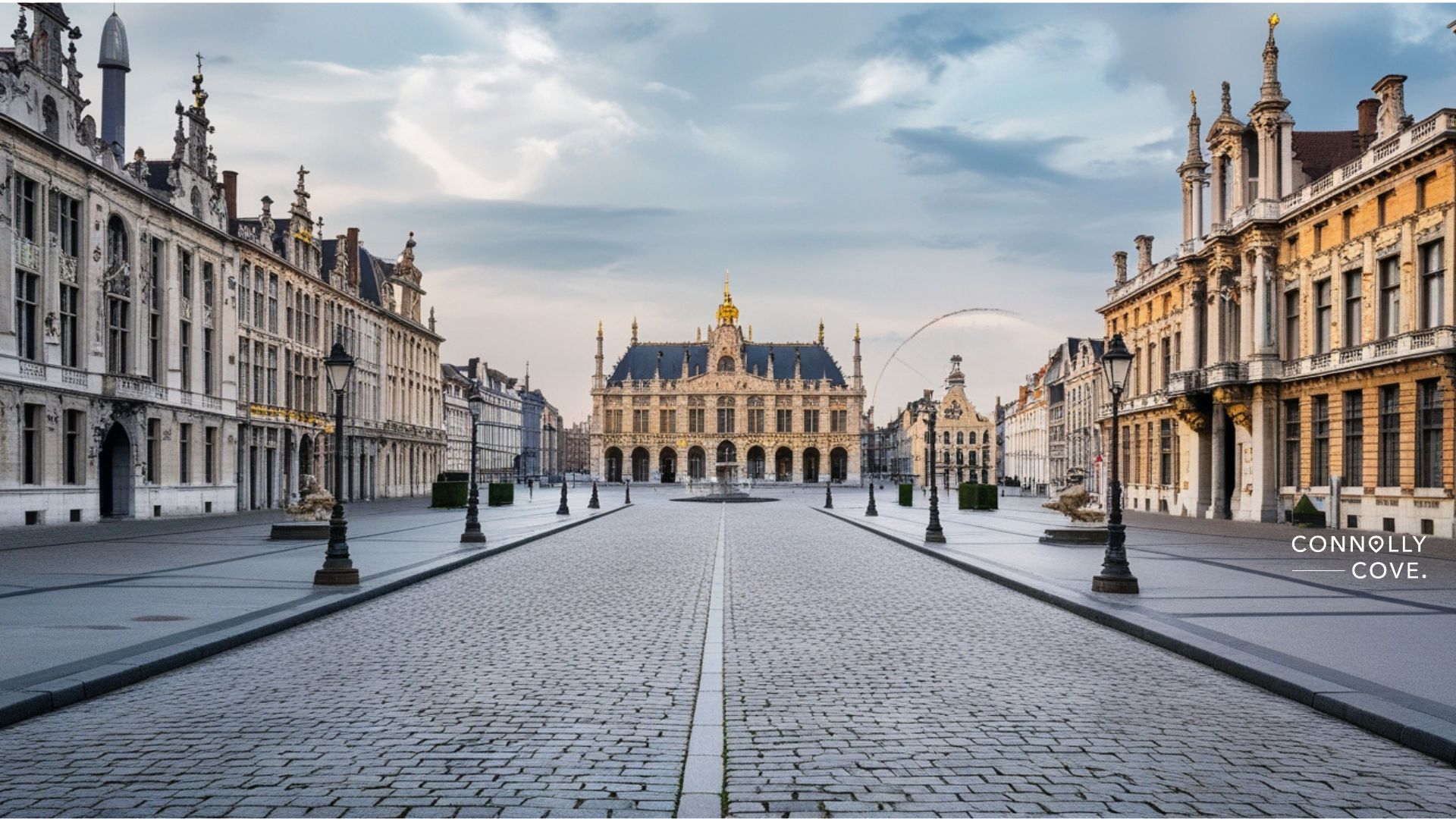
Brussels sits just two hours from London by Eurostar, making it one of Europe’s most accessible day trip destinations. The Belgian capital offers medieval architecture, world-renowned chocolate, exceptional Art Nouveau heritage, and enough cultural depth to satisfy even the most curious travellers.
Planning a successful day trip to Brussels from London requires precision timing and strategic routing. The journey itself becomes part of the adventure, whisking you from St Pancras International through the Channel Tunnel into the heart of continental Europe. This guide provides everything needed to transform a quick visit into a rich cultural experience, complete with logistics, insider recommendations, and time-saving strategies that make the most of your limited hours.
Whether you’re documenting content for social media, scouting filming locations, or simply exploring Belgian culture, this itinerary balances iconic landmarks with authentic local experiences.
Table of Contents
Planning Your Day Trip to Brussels from London
The logistics of a London to Brussels day trip determine success before you even board the train. Understanding Eurostar operations, border control procedures, and Brussels’ transport network transforms an ambitious plan into a smooth cultural exploration.
Eurostar Booking Strategy
Book Eurostar tickets two to three months ahead for the best fares, particularly during the summer or Christmas market season. Early morning departures from London around 7:00 AM maximise your time in Brussels, while return trains typically leave Brussels Midi around 8:00 PM. This schedule provides roughly eight hours in the city after accounting for travel time and station transfers.
Download the Eurostar app for mobile boarding passes and real-time departure information. Standard Premier tickets offer more spacious seating and complimentary meals, though Standard class remains perfectly comfortable for the two-hour journey. Arrive at St Pancras International at least 45 minutes before departure to clear UK exit and Belgian entry border controls.
The Eurostar experience itself offers opportunities for content creators. The modern terminals, sleek trains, and dramatic moment of entering the Channel Tunnel provide strong visual storytelling elements. Many digital agencies document these transitions to showcase seamless European connectivity.
Essential Pre-Trip Preparation
Pack light for a day trip from London to Brussels, prioritising comfortable walking shoes and weather-appropriate layers. Belgian weather shifts quickly, so bring a compact umbrella even on sunny mornings. A small backpack works better than wheeled luggage for navigating cobblestone streets and metro stations.
Exchange or withdraw a moderate amount of euros before travelling, though most Brussels establishments accept contactless card payments. UK cards work throughout Belgium, but inform your bank of travel plans to avoid declined transactions. Some smaller chocolate shops and market stalls prefer cash, so keep €20-30 in small denominations handy.
Consider purchasing a Brussels Card if your Brussels day trip from London includes multiple museums. The card provides free entry to over 30 attractions plus unlimited public transport for 24, 48, or 72 hours. Calculate whether the card saves money based on your specific planned activities. Most day-trippers find individual tickets more economical unless visiting three or more major museums.
Understanding Brussels Transport
Download the STIB-MIVB app before your day trip to Brussels for real-time public transport information and mobile ticketing. Brussels operates an integrated network of metro, trams, and buses, all accepting the same tickets. A single journey ticket costs €2.50, while a 24-hour pass costs €8.00, representing better value if making three or more trips.
The metro connects Brussels Midi station to the city centre in approximately 10 minutes. Take either Line 2 or Line 6 to Gare Centrale (Central Station), positioning you within walking distance of the Grand Place and major attractions. Validate tickets using the orange machines before boarding to avoid fines.
Brussels remains highly walkable within the historic centre, with most landmarks clustered in a compact area. The distance from Grand Place to the Atomium represents the only journey requiring public transport. Many content creators and digital marketing professionals appreciate Brussels’ pedestrian-friendly layout when scouting locations or documenting urban environments.
The Perfect Day Trip Itinerary to Brussels from London
This time-optimised itinerary focuses on Brussels’ historic core while incorporating authentic local experiences beyond typical tourist routes. The schedule assumes an early morning Eurostar departure and evening return, providing approximately eight hours of exploration time.
Morning Arrival and Grand Place Discovery
Arrive at Brussels Midi station by mid-morning and immediately head to the metro. Store any luggage in station lockers (approximately €7 per day) to move freely throughout your Brussels from London day trip. The journey to Gare Centrale takes 10 minutes, depositing you steps from the magnificent Grand Place.
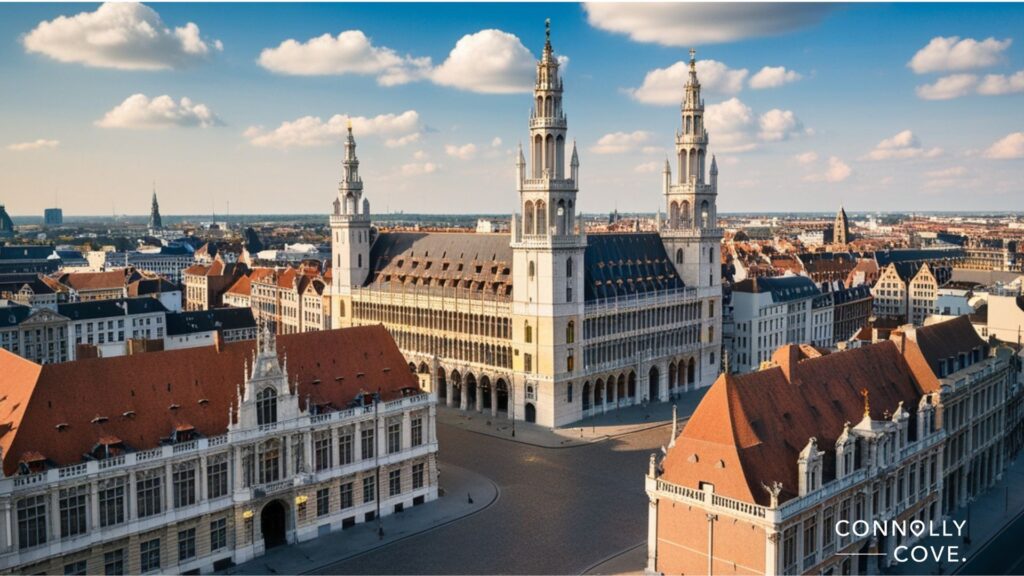
Emerge from the metro to find yourself in Brussels’ medieval heart. The Grand Place ranks among Europe’s most beautiful squares, its guild halls showcasing Flemish Baroque architecture at its finest. Visit early to avoid crowds and capture photographs without obstruction. The morning light particularly favours the ornate gold detailing on building facades.
Walk around the square’s perimeter, noting how each guild hall represents a different trade or craft. The Broodhuis (King’s House) dominates the square’s eastern side, housing the Brussels City Museum. “Understanding a city’s architecture tells you everything about its economic history,” notes Ciaran Connolly, founder of ConnollyCove. “The Grand Place reveals Brussels’ medieval wealth through every carved detail.”
The nearby Galeries Royales Saint-Hubert provides Brussels’ most elegant shopping arcade. This glass-roofed gallery, completed in 1847, influenced similar structures across Europe. Browse luxury chocolate shops, independent bookstores, and traditional Belgian lace boutiques. The galleries offer excellent protection from the rain while maintaining the morning’s cultural focus.
Discovering Iconic Brussels Landmarks
Manneken Pis stands just a minute’s walk from Grand Place, though the tiny bronze fountain often surprises first-time visitors with its modest scale. This cheeky statue has represented Brussels since 1618, accumulating over 1,000 costumes now displayed in the City Museum. Queue times vary throughout the day, but the statue’s location en route to other attractions makes stopping convenient.
Continue toward Place Royale and the Museums Quarter, where Art Nouveau architecture begins appearing alongside classical buildings. Brussels pioneered this organic architectural style in the late 19th century, with Victor Horta creating revolutionary designs that influenced global architecture. Several Horta buildings survive in the area, their flowing lines and innovative use of iron and glass visible from the street.
The Royal Palace opens to visitors during the summer months (late July through September), providing rare access to Belgian royal state rooms. Outside of summer, admire the palace’s neoclassical facade and the adjacent Place des Palais. The surrounding area houses Belgium’s federal parliament buildings, giving the neighbourhood a distinctly governmental atmosphere.
The Magritte Museum deserves at least 90 minutes for anyone interested in surrealist art. René Magritte, Belgium’s most famous painter, created dreamlike images that continue to influence visual culture globally. The museum’s extensive collection traces his artistic development while explaining surrealism’s philosophical foundations. Pre-book tickets online to avoid entrance queues, particularly during weekends.
Authentic Belgian Lunch Experience
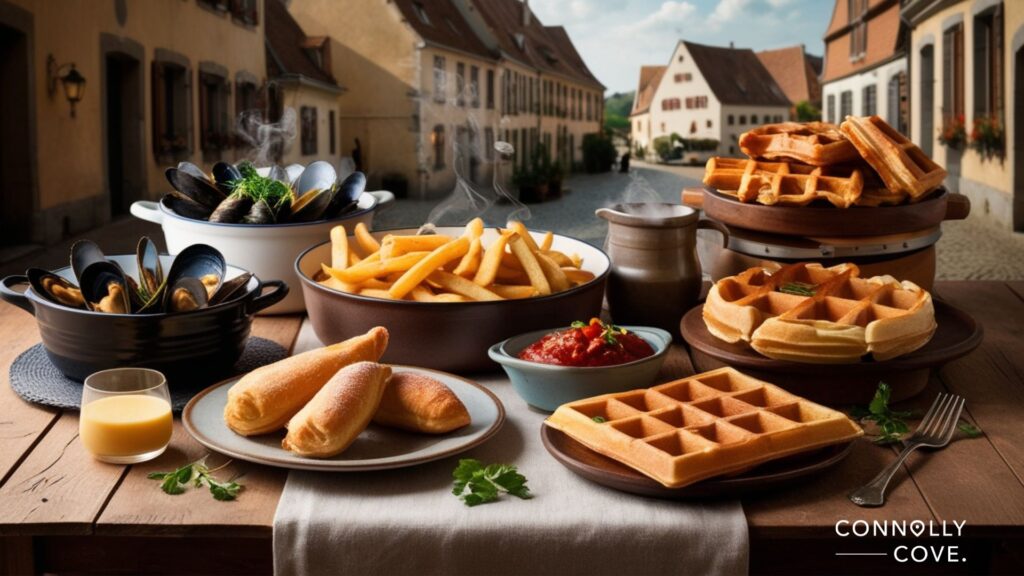
Proper Belgian cuisine extends far beyond waffles and chocolate. A day trip to Brussels from London provides opportunities to experience genuine local food culture, from traditional brasseries to legendary chip shops. The lunch hour offers perfect timing to rest your feet while sampling Belgian specialities.
Seek out a fritkot (chip stand) for Belgium’s national dish: perfectly fried potatoes with sauce. Maison Antoine near Place Jourdan remains Brussels’ most celebrated fritkot, serving since 1948. Order a cone of frites with andalouse sauce and eat standing at the outdoor counter as locals do. The quality difference between Belgian frites and standard chips becomes immediately apparent.
Alternatively, sit down in a traditional brasserie for moules-frites (mussels and chips). This classic combination appears on nearly every Belgian menu, with mussels steamed in white wine, garlic, and herbs. Chez Léon, operating since 1893, specialises in this dish while maintaining reasonable prices despite its tourist-area location. A pot of moules-frites typically costs €15-20, with Belgian beer adding €5-7.
Brussels’ lunch culture moves slowly compared to London’s grab-and-go approach. Factor 60-90 minutes for a proper sit-down meal, using this time to plan your afternoon route. Many restaurants offer fixed-price lunch menus providing better value than dinner pricing. Digital marketing professionals often use these meal breaks to capture authentic food content or scout potential filming locations for culinary content.
Afternoon Cultural Exploration
The afternoon hours allow deeper exploration of Brussels’ distinctive character. Choose between museum visits, neighbourhood walks, or focused chocolate shopping based on personal interests. The compact city centre permits changing plans spontaneously without losing significant time.
The Musical Instruments Museum occupies a stunning Art Nouveau building with rooftop cafe views across Brussels. The collection spans centuries of musical development, with audio guides allowing visitors to hear instruments as they examine them. The combination of architectural beauty and unique subject matter makes this museum memorable even for those with limited musical knowledge.
The Sablon neighbourhood, uphill from the city centre, attracts antique collectors and chocolate connoisseurs. Place du Grand Sablon hosts a weekend antiques market while the surrounding streets house prestigious chocolate makers. Pierre Marcolini, Wittamer, and Laurent Gerbaud all maintain shops here, offering tastings and beautifully packaged pralines. Budget €15-30 for a small box of quality Belgian chocolates.
Must-See Gems in Brussels
Brussels balances world-famous landmarks with hidden discoveries that reveal local character. This section explores both essential sites and lesser-known attractions worth including in a Brussels day trip from London.
Historical and Architectural Highlights
The Grand Place forms Brussels’ undisputed centrepiece, but understanding its history enriches the experience considerably. The square originated as a medieval market but was almost entirely destroyed during the French bombardment in 1695. Guild members immediately funded reconstruction, creating the unified Baroque ensemble visible today. UNESCO recognised this remarkable achievement with World Heritage status in 1998.
Each guild hall tells specific stories through its decorative program. The Brewers’ Guild displays a golden statue of their patron saint, while the Boatmen’s Guild shows a ship prow projecting from its facade. Studying these details reveals Brussels’ economic foundations and the pride medieval craftsmen took in their trades. The Brussels City Museum inside the Broodhuis provides additional context through exhibits on city history.
The Atomium represents Brussels’ modernist architectural contribution, built for the 1958 World’s Fair. This 335-foot structure replicates an iron crystal magnified 165 billion times, with nine spheres connected by tubes containing escalators. The top sphere offers panoramic Brussels views while the lower spheres house exhibitions on 1950s design and Belgian innovation. The Atomium’s distance from central Brussels (accessible via metro Line 6) makes inclusion in a day trip itinerary challenging unless skipping other museums.
Art and Cultural Institutions
The Royal Museums of Fine Arts complex houses Belgium’s premier art collection across six museums. The Old Masters Museum displays Flemish painting from the 15th to 18th centuries, including works by Bruegel, Rubens, and Van Dyck. The Magritte Museum, dedicated entirely to surrealist René Magritte, occupies a connected building. A combination ticket (€18) provides access to multiple museums, though thoroughly seeing even one museum requires 2-3 hours.
The Belgian Comic Strip Centre celebrates Belgium’s enormous influence on comic art. Tintin, the Smurfs, and Lucky Luke all originated with Belgian creators, making comics a serious cultural form here rather than children’s entertainment. The museum occupies another Victor Horta-designed Art Nouveau building, combining architectural significance with pop culture history. Interactive exhibits explain comic creation while showcasing original artwork from famous series.
Brussels’ smaller, specialised museums often provide more memorable experiences than major institutions. The Museum of Natural Sciences houses the world’s largest dinosaur gallery, featuring 30 Iguanodon skeletons discovered in a Belgian coal mine. The Chocolate Museum traces cacao’s journey from Central America to Belgium while offering demonstrations of chocolate-making techniques. These focused museums typically require only 60-90 minutes, fitting more easily into day trip schedules.
Street art has transformed several Brussels neighbourhoods in recent years, particularly around the Saint-Géry and Marolles areas. A dedicated comic strip walk features over 50 building-sized murals depicting famous Belgian comic characters. These outdoor artworks create excellent content opportunities for digital creators while costing nothing to view. Several Brussels street art tours operate specifically for photographers and content creators seeking distinctive urban backdrops.
Culinary and Shopping Experiences
Belgian chocolate shops appear on nearly every Brussels corner, but quality varies dramatically. Avoid chains like Leonidas in favour of artisan chocolatiers who make pralines on-site. Neuhaus invented the filled chocolate praline in 1912 and maintains high standards across its Brussels locations. Mary Chocolatier and Laurent Gerbaud receive consistent recognition from chocolate professionals for innovation and quality.
The Sunday morning market on Place du Châtelain offers an authentic local shopping experience largely ignored by tourists. Vendors sell regional cheeses, charcuterie, fresh produce, and prepared foods in a neighbourhood setting. Arrive hungry and sample Belgian specialities like boudin blanc sausage or aged Chimay cheese. The market operates year-round except during the August holidays.
Beer shopping deserves careful planning, given airline liquid restrictions and bottle weight. Belgian beer culture offers depth found nowhere else globally, with most bars stocking 50-100 different beers. Delirium Café holds the Guinness World Record with over 2,000 beers available, though the overwhelming selection sometimes confuses newcomers. For takeaway, Bière Artisanale near Grand Place stocks carefully curated Belgian craft beers with knowledgeable staff providing recommendations.
Hidden Local Favourites
The Parc du Cinquantenaire, slightly outside the main tourist circuit, provides Brussels’ most impressive public space. This park centres on a massive triumphal arch celebrating Belgian independence, flanked by museums dedicated to military history, automotive history, and art. The park itself offers landscaped gardens, fountains, and recreational spaces where locals jog, picnic, and relax. The adjacent European Quarter houses EU institutions, though their modern architecture contrasts sharply with historic Brussels.
The Bois de la Cambre extends into the Sonian Forest, creating an unexpected natural escape within city limits. While a full forest walk exceeds day trip time constraints, the park’s northern edge remains accessible from central Brussels in 15 minutes by tram. On sunny days, locals cycle, paddleboat on the lake, or simply enjoy Belgium’s surprising green spaces.
Belgian culture values good beer, food, and conversation over rushing between attractions. A successful Brussels day trip from London balances sightseeing with moments to simply observe daily Belgian life. Sitting at an outdoor cafe with an afternoon beer allows appreciation of Brussels’ relaxed European rhythm that contrasts with London’s intensity.
Practical Essentials for UK Day-Trippers
Beyond itinerary planning, certain practical considerations determine whether a day trip from London to Brussels succeeds smoothly or encounters frustrating obstacles. These essentials cover contingencies and local customs that transform a visit from adequate to excellent.
Weather Preparedness and Seasonal Considerations
Brussels experiences a maritime climate similar to London’s, meaning weather unpredictability regardless of season. Summer temperatures average 20-25°C, though rain remains possible year-round. Winter hovers around 5-10°C with occasional snow. Check forecasts before departing, but prepare for conditions to change throughout the day.
A lightweight, waterproof jacket becomes an essential carry-on regardless of the morning weather. Brussels’ cobblestone streets become slippery when wet, making sturdy walking shoes with good traction necessary for safe navigation. Women’s fashion boots without proper grip prove treacherous on wet cobblestones. Comfortable footwear matters more than style when walking 10,000+ steps across uneven historic surfaces.
Spring brings famous Belgian flower displays, with the Grand Place occasionally carpeted in elaborate floral designs. The Flower Carpet event occurs biannually in August, drawing enormous crowds. Christmas markets transform Brussels from late November through early January, creating an enchanting atmosphere but also attracting peak visitor numbers. A Brussels day trip from London during these special events requires an advance Eurostar booking and patience with crowds.
Summer provides the longest daylight hours and the warmest temperatures, making outdoor exploration most pleasant. Late afternoon stays light until 9:00 PM during June and July, allowing maximum sightseeing time. Spring and autumn offer milder temperatures and fewer tourists, creating ideal conditions for photography and content creation without crowd interference.
Communication and Language
Brussels functions as a bilingual city, with both French and Dutch serving as official languages. Street signs, metro announcements, and official documents appear in both languages, sometimes causing initial confusion. Most Brussels residents speak functional English, particularly in tourist areas, restaurants, and shops. Attempting basic French or Dutch phrases demonstrates respect, though English usually resolves communication successfully.
Learn essential French phrases: “Bonjour” (hello), “Merci” (thank you), “Excusez-moi” (excuse me), “Parlez-vous anglais?” (Do you speak English?), and “L’addition, s’il vous plaît” (the bill, please). In Dutch-speaking areas, equivalent phrases use “Goedendag,” “Dank u,” “Pardon,” “Spreekt u Engels? ” and “De rekening, alstublieft.” Brussels centre leans toward French, though the linguistic divide carries political significance.
Mobile phones work throughout Belgium for UK visitors, though Brexit ended automatic roaming inclusion for most providers. Check your carrier’s EU roaming policy before travelling. Many providers now charge £2-5 per day for European use, or offer bolt-on packages for short trips. Free wifi appears in many Brussels cafes, restaurants, and public spaces, though security varies.
Money and Payment Considerations
Belgium uses the euro, requiring currency exchange or ATM withdrawals for UK visitors. Exchange rates fluctuate, so compare options before departing London. Post Office and major banks typically offer better rates than airport exchange counters. Brussels ATMs provide reasonable rates, but check your bank’s foreign withdrawal fees, which can add 2-3% to transaction costs.
Contactless card payment appears universally throughout Brussels, from major retailers to small cafes. Most establishments accept Visa and Mastercard without minimum purchase amounts. Some smaller vendors prefer cash, particularly market stalls and traditional chip shops. Carry €20-30 in small denominations for these situations, plus tipping in cash-preferred service contexts.
Belgian tipping customs differ from UK expectations. Service charges appear included in restaurant bills, though rounding up or leaving small change (€1-2) for good service remains appreciated. Taxi drivers expect 5-10% tips, while hotel porters receive €1-2 per bag. Bar service rarely receives tips unless ordering complex cocktails or receiving exceptional attention.
Budget approximately €100-150 for a comfortable Brussels day trip from London, covering transport, meals, museum entries, and shopping. This assumes mid-range choices rather than luxury options. Budget travellers can reduce costs by bringing snacks, choosing fritkots over restaurants, and focusing on free attractions like architecture walks. Luxury experiences like Michelin-starred dining or premium chocolate shopping naturally increase daily spending.
Conclusion
A day trip to Brussels from London delivers concentrated European culture, distinctive architecture, and authentic Belgian experiences in a tightly packed timeframe. The Eurostar connection transforms this journey from ambitious to achievable, while careful planning ensures you capture Brussels’ essential character without rushing between crowded tourist traps. Focus on the walkable historic centre, embrace Belgian food culture, and allow time to simply observe daily life in this complex, multilingual capital that serves as Europe’s unofficial administrative heart.


