
Flower Festivals: An Appreciation of Beauty, Life and Peace
Updated On: November 09, 2023 by  Aya Radwan
Flowers are a special language, where even the different colours of the same flower have different meanings. They symbolise hope, beauty, purity, even balance and spirituality. As scientists estimate the number of flower species to be nearly half a million, it’s only logical that we celebrate this generosity from nature by holding flower festivals.
In this article, we will travel between Earth’s continents to bring you some of the flower festivals we believe you must check.
How did flower festivals begin?
Flower festivals began as small gatherings of aristocrats, botanists and scientists to enjoy the delicate varieties of flowers. This hobby turned into a social need where the new botanic discoveries had to be shared with the public, which resulted in the creation of flower festivals. While Alexandre Dumas’ novel, The Black Tulip, narrates the competition of growing a black tulip in 1850 Netherlands, the oldest known flower festival in the world from 1,600 years ago, in the Chinese city of Hangzhou.
Flower Festivals around the World
During flower festivals, a wide array of flowers decorates the streets and gardens in every country. Every flower festival has a unique history which reflects the country’s cultural scene.
Batalla de Flores – Spain
The Battle of the Flowers is Cordoba’s way of welcoming the blooming and colourful season of Spring. After the first battle took place in the 1940s, the fluctuating political scene in Spain halted the festivities until the 1980s, when Spain became a democracy. Wonderful flower floats roam Cordoba’s Paseo de la Victoria, with flower princesses chanting and throwing flower carnations at the spectators, who throw them back, hence the festival’s interesting name.
Batalla de Flores is an introduction to Cordoba’s Patio Festival, which continues the showcasing of local flowers and plants. Cordoba’s unique homes have patios decorated with beautiful flowers, and during the Patio Festival, locals open their homes to visitors to explore and experience the beauty of these flowers. Local monuments, such as the 14th-century Viana Palace and Las Capuchinas, also open their doors to visitors.
- Duration: Last Sunday of April.
- Location: Cordoba.
Bloemencorso Bollenstreek – The Netherlands
The Netherlands is known for organising one of the world’s largest flower festivals every year. The Bloemencorso Bollenstreek began as the locals attempted to pull their lives together after the atrocities of WWII; human souls longed for hope and normal life again. This created the perfect environment for the flower festival to bloom. What began as a procession of some flower garlands and decorated hand trucks turned into a multiple-day festival where the flower parade crosses more than five towns.
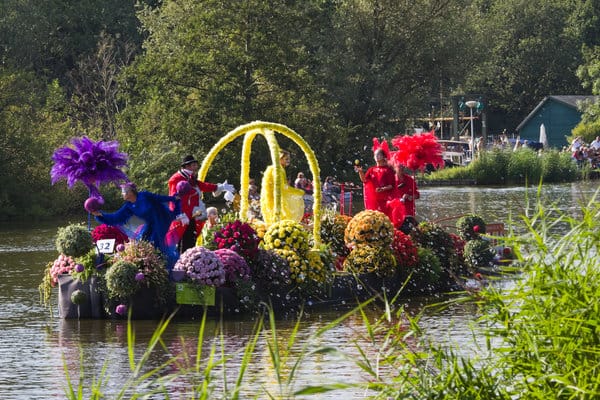
The multiple-day festival gives spectators the opportunity to watch the making of the flower floats, and you can even lend the volunteers a hand. The beautiful array of tulips, daffodils and hyacinths come every year from the Bulb District, especially for this festival. The Illuminated Parade gives you the opportunity to see the flower floats in a new light at night. Bloemencorso Bollenstreek ends in the city of Haarlem, a city with rich floral history.
- Duration: End of April.
- Location: From Noordwijk to Haarlem.
Brussels Flower Carpet – Belgium
The Gothic architecture of Brussels’ heart embraces the 70-metre-long flower carpet every two years in an epic display of dahlias and begonias. This flower display isn’t made by competitors but rather by volunteers who work together to create this magnificent showpiece in just six hours. Brussels got her first flower carpet in 1971 when a local architect aimed at showcasing his work accidentally started a new floral tradition.
You can admire the flower carpet for almost four days after its creation. The Tapis de Fleurs de Bruxelles, the organiser, brought in jazz music, a nightly light and sound show and fireworks to entertain spectators as they marvelled at the beauty of the flower carpet. The latest carpet creation in 2022 paid homage to the first carpet back in 1971, where volunteers recreated the original carpet that started it all.
- Duration: 15 August, every two years.
- Location: Grand Place, Brussels, Belgium.
Chiang Mai Flower Festival – Thailand
The Thai city of Chiang Mai celebrates the end of the cold season with an extravagant flower festival, where flower parades and unique local flowers are shown-off, and a Flower Queen is chosen with the tunes of rock music blaring in the background. The forty-year-old festival draws in a growing number of visitors every year, both locals and foreign tourists. The floral creations of the festival reflect the culture and diversity of nature in Thailand, which is a strong incentive for local tourism and the economy.
The festival’s first day is an agricultural festival, with a vibrant showcase of local plants as well as flowers, as an introduction to local plants for tourists. The following two days bring the Flower Parade, with live music, local dancers, students and bands on each side. By the end of the festival, the organisers choose the best flower float as the winner of the festival’s competition.
- Duration: First weekend of February, for three days.
- Location: Chiang Mai.
Europa Cup for Florists – Europe
The Europa Cup, or the European Florist Championship, is the most competitive flower festival in the world. Professional florists from across Europe gather in the festival’s chosen city to create and bring their most innovative and colourful floral creations to life. The cup’s first edition in 1967 aimed at comparing the skills and innovative thinking of florists from across the continent who competed in best transferring their creative thinking to the public.
Although the Europa Cup for Florists is a fierce test of creativity and imagination, it also tests the participants in their knowledge of the latest techniques and trends in flowering and floristry. The International Floristic Organisation, known as Florint, chooses the new location of each edition and the competition theme the participants will have to follow. The two-day competition results in six finalists, from which one is chosen as the Europa Cup Champion.
- Duration: 26th to 28th August, every four years.
- Location: Changing location across Europe.
Festa da Flor – Portugal
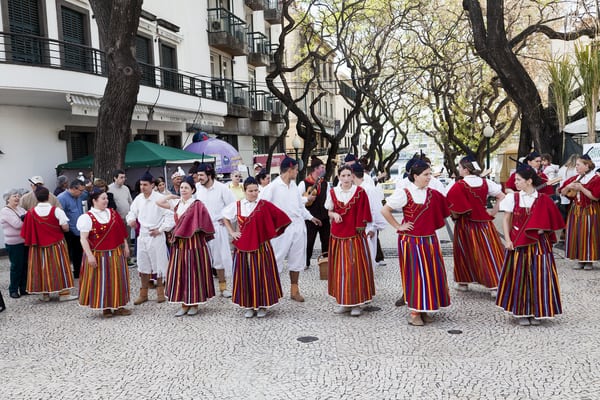
When the organisers of the Flower Festival in 1954 debated the winner of the best flower installation, they didn’t imagine the massive success the festival would accomplish. As a result, the festival’s name changed to Festa da Flor and has taken place every year since then. The Regional Directorate of Tourism took over the organisation of the event in 1979 and began adding one new segment after another to benefit from the festival’s incredible turnout.
Festa da Flor still has the same objective as its predecessor, the Flower Festival, which is to celebrate hope with an emphasis on blooming flowers and vibrant colours. Not only do participants create outstanding floral masterpieces and carpets, but performers also dress up as flowers and accompany the flower parade. Children are the star of the Flower Parade as they accompany it through the city’s streets. The other two highlights of Festa da Flor are the Wall of Hope, a colourful wall decorated with flowers to advocate for a better world for everyone, the other one is the Tropical Flowers Exhibition, which focuses on the diversity of tropical flowers.
- Duration: May.
- Location: Funchal, Madeira.
Floriade Flower Festival – Australia
Commonwealth Park in the Australian capital, Canberra, shows off its delicate and fancy floral designs during the annual flower festival. The festival’s name derives from the Latin word Floriat, in reference to using flowers to design with. Floriade was initially a one-time celebration in 1988 to commemorate the 200th anniversary since British ships arrived at Australian shores and to celebrate Canberra’s 75th birthday. However, due to the festival’s success and impressive turnout, the organisers decided to make the festival a yearly celebration.
What distinguishes Floriade from other flower festivals around the world is using flowering bulbs. The bulbs are the star of the show, and each year, the designs follow the chosen theme for the festival. Artistic sculptures, recreational activities, live music, artistic performances and cultural celebrations accompany creative floral designs in the festival. Two of Floriade’s interesting features are its gnome decorating competition and the showcasing of flower installations during the night, also known as NightFest.
- Duration: 16 September to 15 October.
- Location: Canberra.
Infiorata Flower Carpet Festival – Italy
Approximately 100 days after Lent, the 40-day period of fasting before Easter, followed by Easter celebrations, comes Corpus Domini. The symbolic celebration of Christ’s Last Supper with his disciples before being crucified. In June 1625, the Vatican’s florist, Benedetto Drei, suggested using flowers as decorations on Saint Peter’s and Paul’s Day. This event marked the beginning of Italy’s Infiorata Flower Carpet Festival.
Although Italy celebrates the festival, its time normally varies from one location to another, and it sometimes varies from one year to another. Florists around Italy compete to create the most beautiful flower mosaics; they draw their designs using chalk first, then they use whole flowers, both fresh and dried, and flower petals to bring life into their drawings. They also use soil, wood cuttings and coffee beans to laminate the designs and outline them. The endless flower mosaic lines the streets of the cities during the festival, which resembles creating wonderful carpets out of flowers.
- Duration: Third weekend of May (Sicily), the day of Corpus Domini in Lazio and Umbria.
- Location: Across Italy, especially in Sicily, Lazio and Umbria.
The Flower Fair – Egypt
Egypt’s Flower Fair is one of the most anticipated fairs in the country. The month-long fair is now ninety years old and has succeeded over the years in bringing together flower enthusiasts from across the country. The first flower festival in Egypt dates back to 1914, which took place upon orders from Sultan Hussein. In 1934, the Ministry of Agriculture held the first official edition of the fair, which continues to this day.
More than 200 participants take part in the fair, with exhibitions of flowers, florists, gardening supplies, decorative plants, tree plantings, cactus, landscape companies and new irrigation systems. Unlike the other festivals on our list, this festival allows you to buy displayed flowers or plantings. The fascinating exhibitions and installations allow you to take great pictures, and you can find a wide range of local products from Aswan, Nubia and neighbouring Sudan.
- Duration: 27 May, for a month.
- Location: Agricultural Museum, Dokki, Cairo.
Medellín Feria de las Flores – Colombia
Festival of the Flowers is the highlight of Medellin’s social calendar, with symbolism deep-rooted in Colombian history. The first festival in 1957 celebrated the Virgin Mary and the end of slavery in Colombia. Participants carried bouquets of flowers on their backs to mirror how slaves, referred to as silleteros, used to carry aristocrats up steep hills. Forty men from Santa Elena’s subdivisions participated in the festival’s first edition, carrying the flower arrangements to the Metropolitan Cathedral, where the festival’s exposition was held.
While the festival originally took place in May, the independence of Antioquia prompted the organisers to change it to July to pay homage to Antioquian tradition. Over the following years, the administration added several other segments to the festival’s program to reflect the country’s cultural scene. They added the International Flower Pageant, the Orchids’ Exposition, musical concerts, the Old and Classic Automobile Parade and the Cavalcade. Local cultural institutions such as museums and theatres coordinate their cultural agendas with that of the flower festival to shed more light on the festival’s significance in the city.
- Duration: 28 July to 7 August.
- Location: Medellín.
Rose Parade Flower Festival – The US
Contrary to the general idea of spring/summertime flower festivals, the Rose Parade Flower Festival in Pasadena takes place on New Year’s Day. First held in 1890, the festival’s main goal was to celebrate the warm and inviting winter in the State of California, as opposed to the freezing season on the other side of the continent, in New York City. As a result of the variety of participating flowers in the first few festivals, the organisers added the name The Tournament of Roses to the festival’s main name. The festival starts at 8:00 am on New Year’s Day or on 2 January if New Year’s falls on a Sunday.
To entertain the growing attendance every year, equestrian units accompany the flower floats and the tunes of marching bands. After the flower parade is over, the Rose Bowl American football college game takes place, which the organisers initially added to help raise funds for the flower festival. The festival’s theme changes every year to reflect the values the festival’s committee likes to promote. Each tournament’s president chooses the parade’s Grand Marshall, which can be any public figure from war veterans to news anchors to actors, while the tournament’s administration chooses the Rose Queen and Rose Princesses that make up the tournament’s Royal Court.
- Duration: New Year’s Day.
- Location: Colorado Boulevard, Pasadena, California.
Mackinac Lilac Festival – The US
You can find lilacs all across the US; however, this delicate flower’s longevity thrives on the perfect weather in Mackinac Island. Ever since the Victorian Age and lilacs found a new home in America, as they came over from Eastern Europe, and everyone tried their hands at growing them. Common lilacs vary between various shades of white, cream, pink and purple, and sometimes the gradient colours of the petals have brushes of more than one colour. Common lilacs normally stand for confidence and renewal, and some of their colours have more specific meanings, such as white which represents purity, and bluish lilacs, which represent tranquillity.
The Mackinac Lilac Festival began in 1949 and celebrates the island’s unique variety of lilacs. Surprisingly, some of the lilac trees on the island today are original plants from the Victorian Age, which adds to the festival’s significance among flower festivals in the country. Locals celebrate lilacs by decorating a beautiful parade, the Lilac Parade, to conclude the ten-day festival, with the island’s horses leading the way with the flower floats. Mackinac Island doesn’t allow entry of private cars, which makes the horse-drawn lilac parade one of the last remaining in the USA.
- Duration: Second Friday of June, for ten days.
- Location: Mackinac Island, Michigan.
Shibazakura Festival – Fuji, Japan
Similar to Sakura, Shibazakura has petals that look like those of cherry blossoms, hence their Japanese name, which literally translates to “lawn cherry”. Paintings of white, pink and purple transform the festival’s venue into a divine flower gallery for feasting eyes. Shibazakura is known as Phlox Moss in English. When we trace the origin of this creeping flower in Japan, we discover the first phlox came from Virginia, USA and spread into Europe and Asia during the 18th century. Phlox Moss made its debut at the Shibazakura Flower Festival in 2008.
Several other flowers intertwine with phlox moss in creating wondrous flower paintings at the festival, such as tulips, anemones and muscaris. Shibazakura Flower Festival is an ideal occasion to marvel at the beauty of the Five Lakes and Mount Fuji, which majestically towers over the lakes and flower fields. The ideal time to visit is early in the morning and during the May stretch of the festival. Make sure to check the surrounding food stalls for some sumptuous Japanese snacks.
- Duration: 15 April to 28 May.
- Location: Fuji Motosuko Resort.
Hiroshima Flower Festival – Japan
What symbolises peace and renewal more than a flower? The Hiroshima Flower Festival started in 1977 with the aim of painting the city’s face with blooming flowers as a promotion of peace, bringing people and cultures together. The festival takes place during a busy week of national holidays in Japan, known as Golden Week, which begins on 29 April for a week. Flower parades and shows roam the festival’s venues.
The city hosts a Yosakoi, a celebratory festival dance competition with 100 teams participating while flower floats move around the city; the Peace Park illuminates unique flower formations and light shows. Additionally, the festival includes a fashion show, a concert and talk shows. Returning for its 46th edition, this year’s Hiroshima Flower Festival returns after pausing for four years because of COVID-19, under the theme of Power of Flowers.
- Duration: 10th, 11 June 2023.
*Starting next year, the Hiroshima Flower Festival will return to its usual time, 3 May to 5th. The change in date this year is due to the G7 Summit being held in the city.
- Location: Hiroshima Peace Memorial Park, Peace Boulevard and other local attractions.
We hope we were able to bring a little spring into your holiday with our choices.
Exploring Aillwee Caves in County Clare, Ireland
County Clare
01/05/2024
Visiting Glasgow | Ultimate Travel Guide
Scotland
01/05/2024

Discovering Ireland | Explore County Tyrone
County Tyrone
01/05/2024
10 Charming Irish Towns You Must Visit
Ireland
01/05/2024

The Art of Solomon’s Knot: Complete Guide
Culture Exploration
01/05/2024