


5 Amazing Must-See Flower Fields In Europe
Updated On: November 07, 2023 by  Ciaran Connolly
Spring is such a lovely time of year in Europe. There is sun, warm weather and the big bloom of all the plants and flowers. Europe is overflowing with gorgeous flowers and gardens. Gardens have long been a part of European history dating as far back as the 1500’s. Having lavish gardens has been a point of pride and a symbol of status and wealth. Gardens that are now open to the public were once private gardens of the rich and noteworthy.
Some of the best gardens reside in the more mild climate European countries as they are easier to maintain and also where much of royalty and those of status would have presided. If botany, history and royalty tickle your fancy, consider taking a tour of these must-see gardens.
The Gardens At Versailles
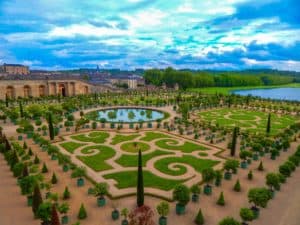
Let’s start with the obvious. Versailles has to be one of the most gorgeous places on the planet. The palace and the gardens, if nothing else can surely be described as grand. Louis XIV not only renovated the entire palace to his liking but he believed the gardens were just as important. The gardens on first account are massive. The whole view of the fountains and carved out canal can be seen from the hall of mirrors inside the palace. The gardens took multiple architects, artists, and designers to envision and plan. Not to mention that the king had to oversee every last detail of the project. It took thousands of men to build and even when finished would have to be replanted and resoiled every 100 years or so.
Though the palace has since been occupied by various other inhabitants, the gardens have been restored to that of Louis XIV’s original vision. Today the gardens are beautifully maintained and well-kept. Hundreds of thousands of visitors come to view the palace and gardens every year. Rather than buying tickets to the museum and the gardens, you can wander in through the side of the palace and walk the grounds. The former king of France did a stunning job at creating a magical and mystical garden. With hidden fountains and statues it’s no wonder that these gardens are some of the most visited gardens in the world.
Keukenhof Gardens In Netherlands
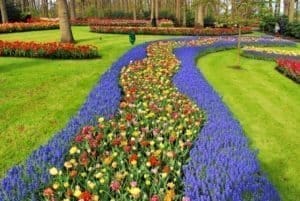
Did you know that the tulip is the national flower of the Netherlands? Well, if you didn’t… It becomes quite apparent when arriving at Keukenhof. With the largest flower gardens in the world, the Keukenhof gardens are a must-see destination. The gardens were originally part of Keukenhof Castle. The castle lay on over 200 hectares of land and therefore allowed for the extravagant gardens. In 1857 two landscape architects by the names of Jan David Zocher and Louis Paul Zocher (father and son) designed the garden to the layout it is today. However, in 1949 tulip bulbs were transported in and in 1950 the gardens were made open to the public. With a stunning and massive display of tulips, these gardens were an instant hit.
Unfortunately, due to Covid-19, Keukenhof is closed for the 2021 season. The gardens will re-open in March of 2022. The gardens are only open for a limited amount of time so make sure to make this a priority.
Kew Gardens In London
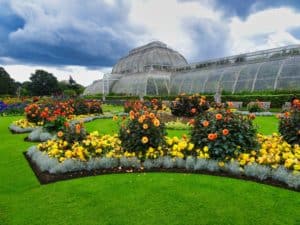
The Kew Gardens are part of the Royal Botanical Gardens and therefore are stunningly well-kept and host not only a variety of flowers, but also plants and various fruit and vegetables. It was named by UNESCO as one of the most diverse gardens in the world. Established in 1759 by Princess Augusta, the garden has seen many different care-takers and styles over the years. The garden is well organized and easy to navigate once you enter. Kew gardens also give you an update as to which gardens are the best at the moment. However, there are gardens for all seasons and for many different cultures. With Kew having the largest variety of plants, there are gardens dedicated to japanese landscapes, bamboo gardens, fruit and vegetable plants, and even carnivorous plants! Kew gardens is stunning in the execution and display of these widely cultural gardens.
You can visit Kew gardens Monday through Friday from 10AM-6PM and on the weekends they extend their hours to 8PM. Along with the gardens there are also cafes and restaurants that harvest the goods the gardens provide. With a real sense of farm-to-table, these cafes give the perfect end to your time at these incredible gardens.
Boboli Gardens In Florence

The Boboli gardens have spanned over 4 centuries and gone through many changes. Throughout the year, the Boboli gardens have been transformed with each new royal that enters the Pitti Palace. The gardens are home to old oak trees, sculptures and gorgeous fountains. Beginning with an amphitheater, the Boboli gardens set the tone for an over-the-top italian experience. With all of it’s grandeur these gardens are an absolute must in Italy. However, make sure to give yourself enough time to truly explore these massive grounds.
The Boboli gardens are open year round and usually open from 8AM to 7PM. There are plenty of different passes and tickets you can purchase for the gardens. However, admission overall is relatively cheap; with tickets only costing 6 euro. It’s not about the price though as the gardens and the history behind them are beyond worth it.
Luxembourg Gardens In France

The Luxembourg gardens are modeled after the Boboli gardens. The gardens are similar in the sense that they contain grand fountains and intricate sculptures. The gardens boast both french and english styles and are separated by fountains and geometric gardens. There are 106 statues. These gardens also offer a variety of activities such as chess games, and driving mechanical boats in the fountains.
The Luxembourg gardens are open to the public from half 7 in the morning until half 4 or 9PM in the evening depending on the season. These gorgeous gardens are not to be missed. While taking the time to see France, make sure to take the time to visit the Luxembourg gardens.
European gardens are home to some of the best gardens in the world. With the history of royal families, palaces and castles there are plenty of gardens to visit. These are just some of the must-see gardens of Europe. But there is no doubt that no matter where you decide to travel, there will be a beautiful garden to spend some time in.

7 Top Amusement Parks in England for an Unforgettable Adventure
England
25/04/2024

Miami Tourism Statistics: A Comprehensive Overview of Visitor Numbers and Revenue
Travel Statistics
25/04/2024

The Enchanting Charm of Scotland Wedding Castles!
Scotland
25/04/2024

London in June: An Ultimate Guide to 13 Unmissable Events and Festivals
United Kingdom
25/04/2024

The Perfect Day Trip from London: Where Will Your Adventure Take You?
United Kingdom
25/04/2024