


Dunluce Castle – Incredible Medieval Castle on Cliffs in County Antrim
Updated On: March 04, 2024 by  Ciaran Connolly
The Impressive Dunluce Castle County Antrim
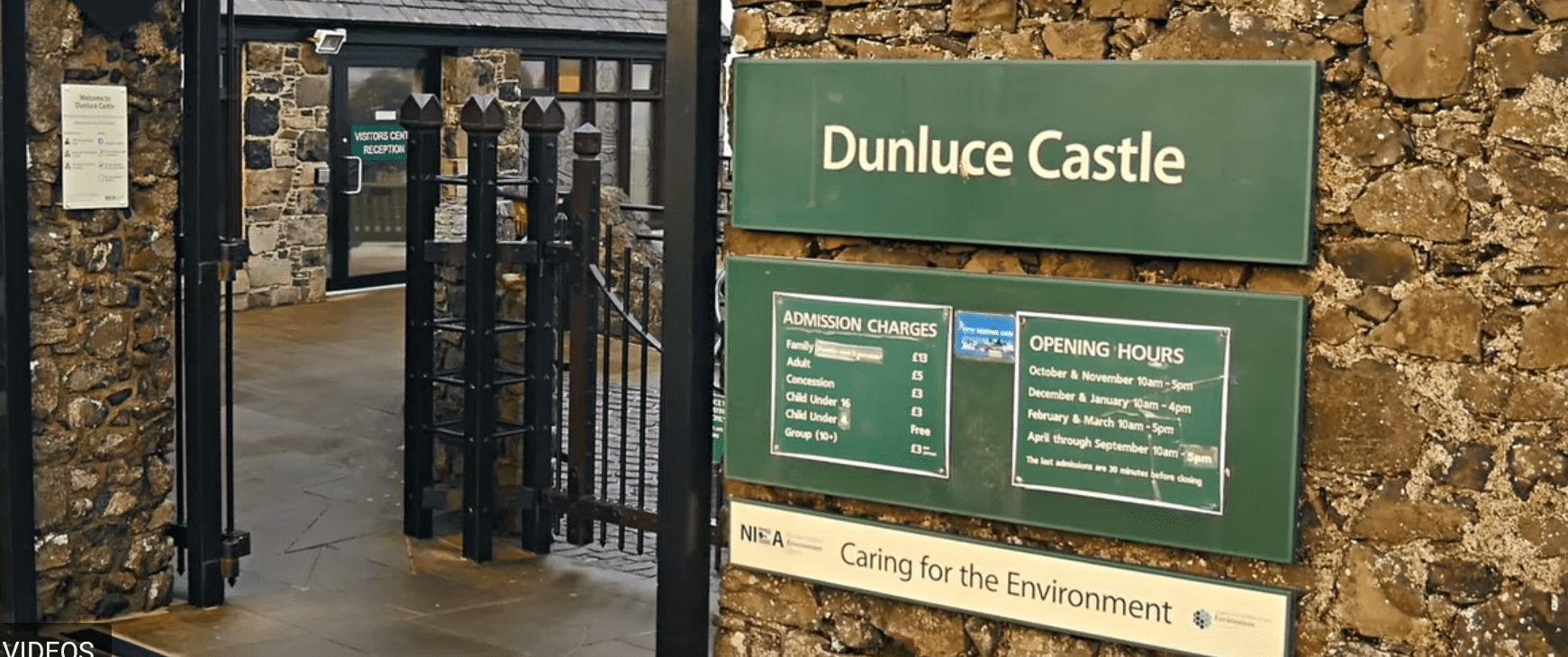
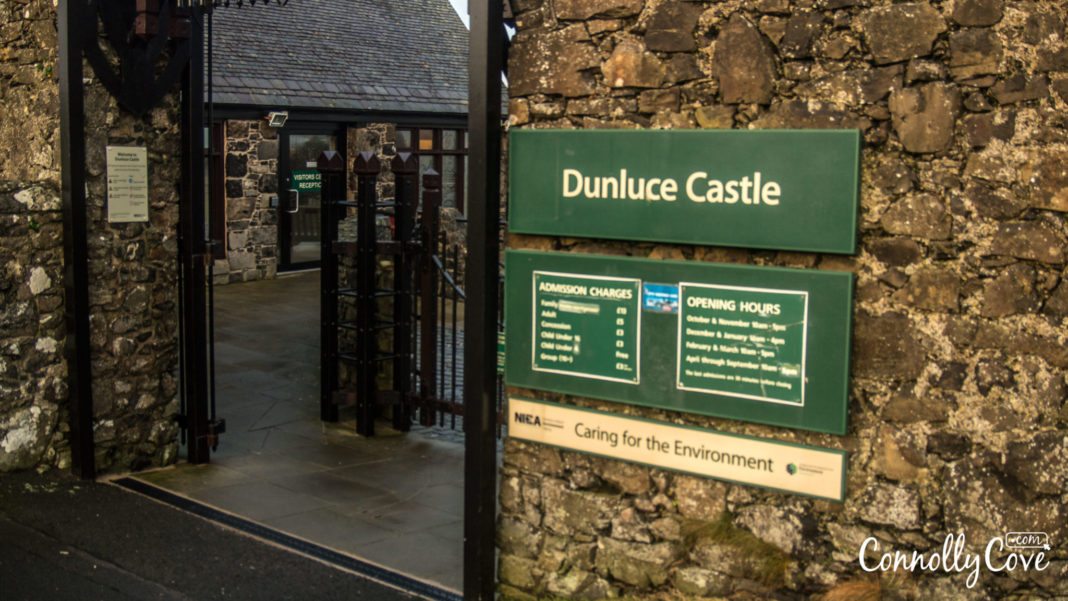
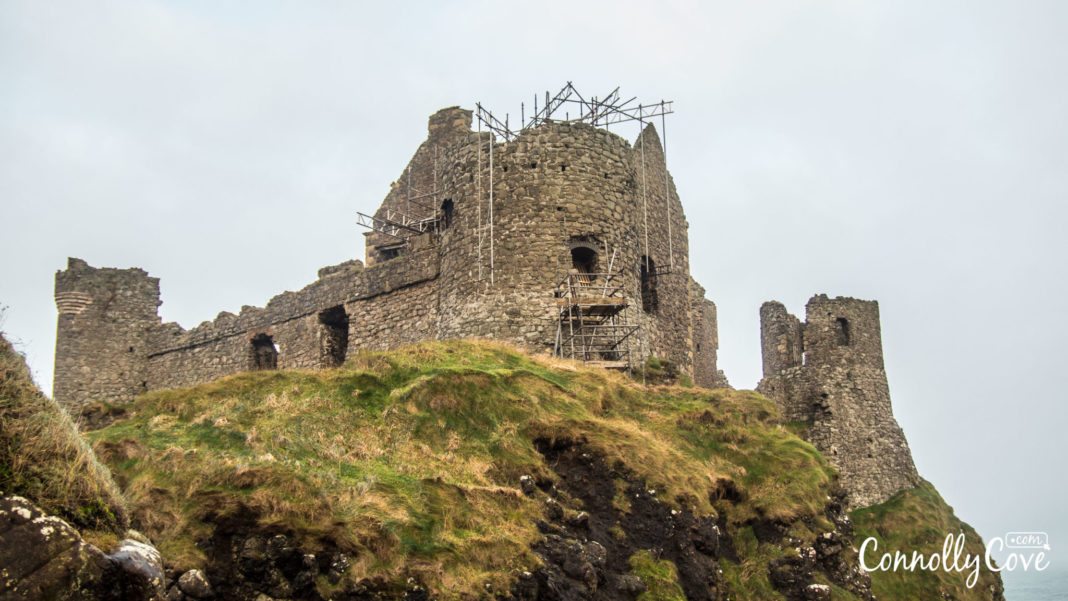
Dunluce Castle County Antrim is a must-visit for anyone visiting or living in Northern Ireland. Its location is incredible, and the crumbling ruins are impressive. Have a look at our photos and videos and decide for yourself. Whilst they don’t compare to a personal visit, they definitely are the next best thing! Dunluce Castle is opened daily between 10.00 and 17.00 (Last entry 16.30). To get to this location – enter 87 Dunluce Road, Bushmills – BT57 8UY into your sat nav.
What does the name Dunluce mean?
The name ‘Dunluce’ translates into ‘fort of the fort’, however, no one knows the meaning of the earlier name ‘Dunliphis’.
History of Dunluce Castle County Antrim
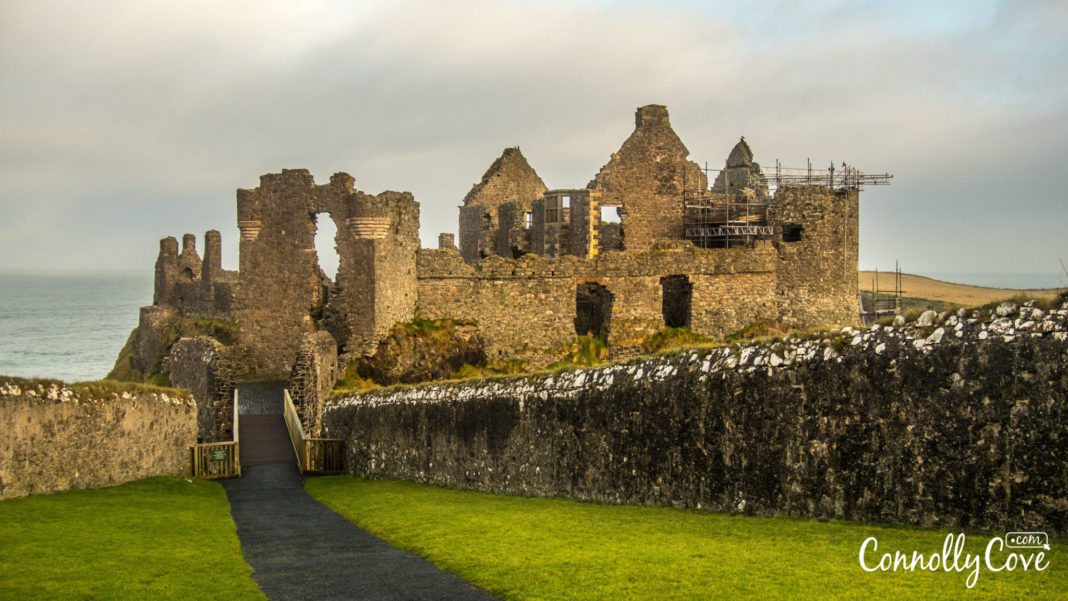
In the 13th century, Richard Óg de Burgh, the 2nd Earl of Ulster, built the first castle at Dunluce. Historical resources first document the castle in 1513, which was in the hands of the McQuillan family. The McQuillans were the Lords of Route beginning from the 13th century until they lost two major battles against the MacDonnells during the 16th century.
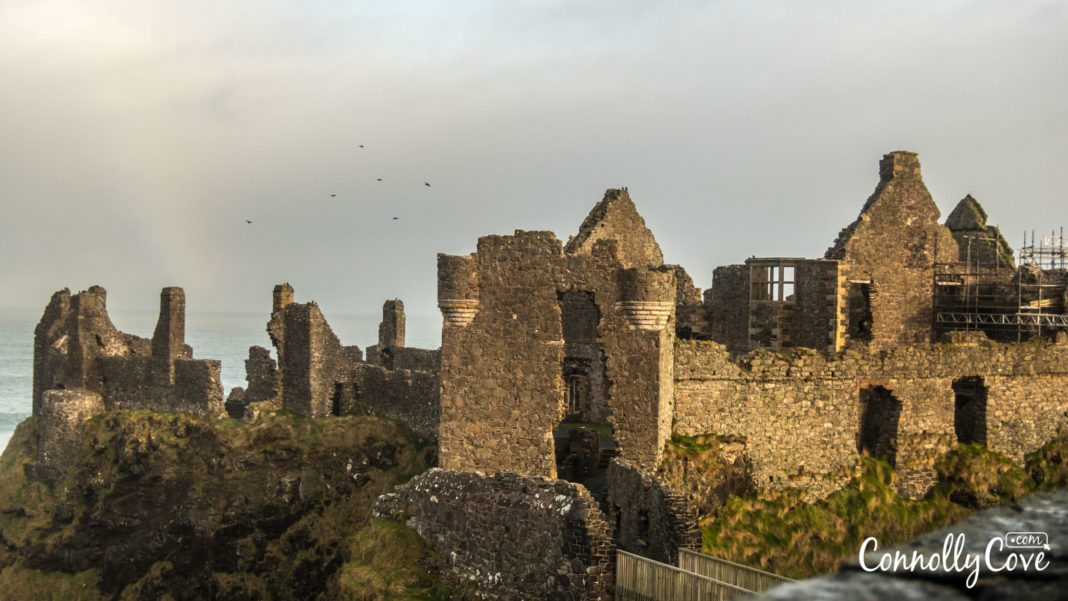
Situated one hundred feet above the ocean, Dunluce Castle County Antrim was the seat of the chief of Clan MacDonnell of Antrim and the Clan MacDonald of Dunnyveg. In 1584, the Sorley Boy MacDonnell seized the Antrim Glens, swearing allegiance to Queen Elizabeth I, and consequently, his son Randal was made 1st Earl of Antrim by King James I.
Four years later, a ship from the Spanish Armada called the Girona was shipwrecked on the rocks nearby. The ship was taken apart as the cannons were installed in the gatehouses. The rest of the cargo was sold, and the funds were used to restore and expand the castle.
Although the castle dates back to the 13th century, a sou-terrain has been discovered in the area that dates back to 1,500 years ago.
Legends of Dunluce Castle County Antrim
This historic castle has been the site of numerous battles: over a one-hundred-year period, it was besieged numerous times. It is also a location of many legends. A local legend states that at one point, part of the kitchen next to the cliff face collapsed into the sea. According to a widely known legend, when the kitchen collapsed, only a kitchen boy survived the crash, as he was sitting in the only corner of the kitchen that did not collapse.
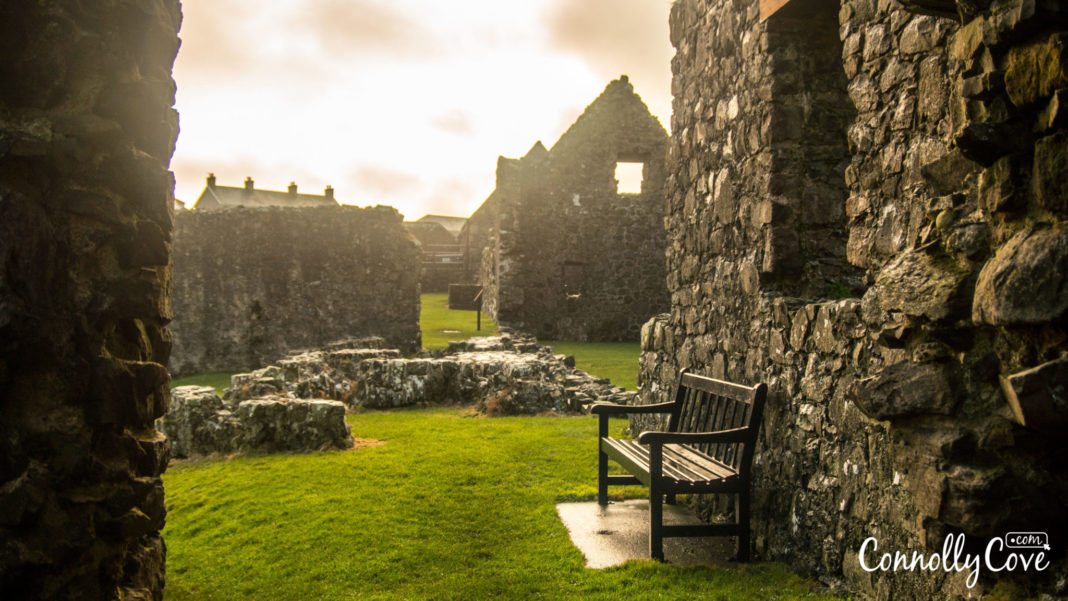
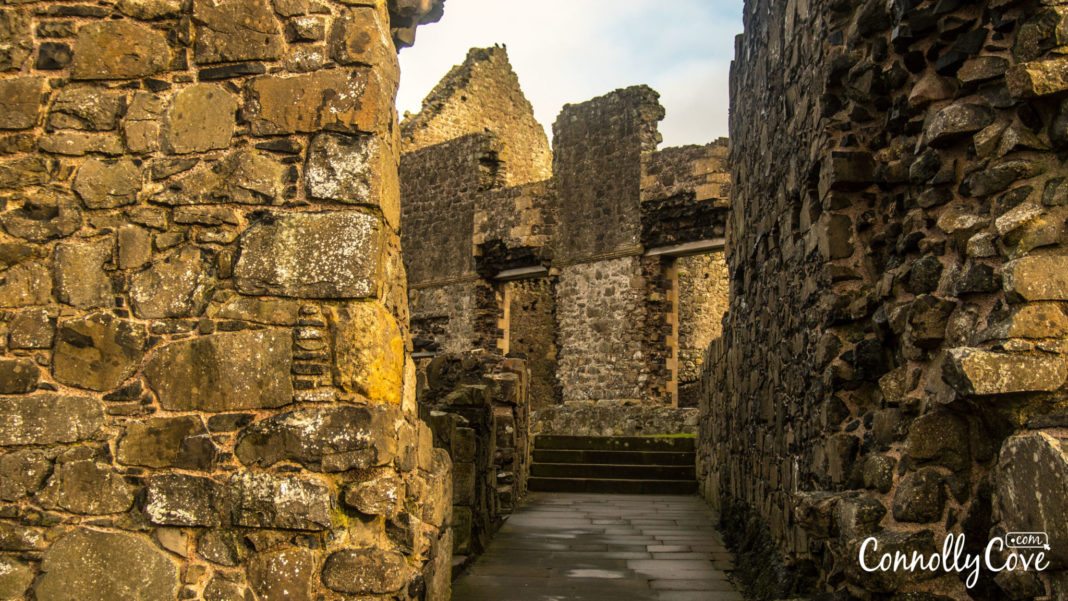
However, the kitchen is still intact and situated next to the manor house. You can still see the oven, fireplace and entryways in it. It wasn’t until sometime in the 18th century that the north wall of the castle building collapsed into the sea.
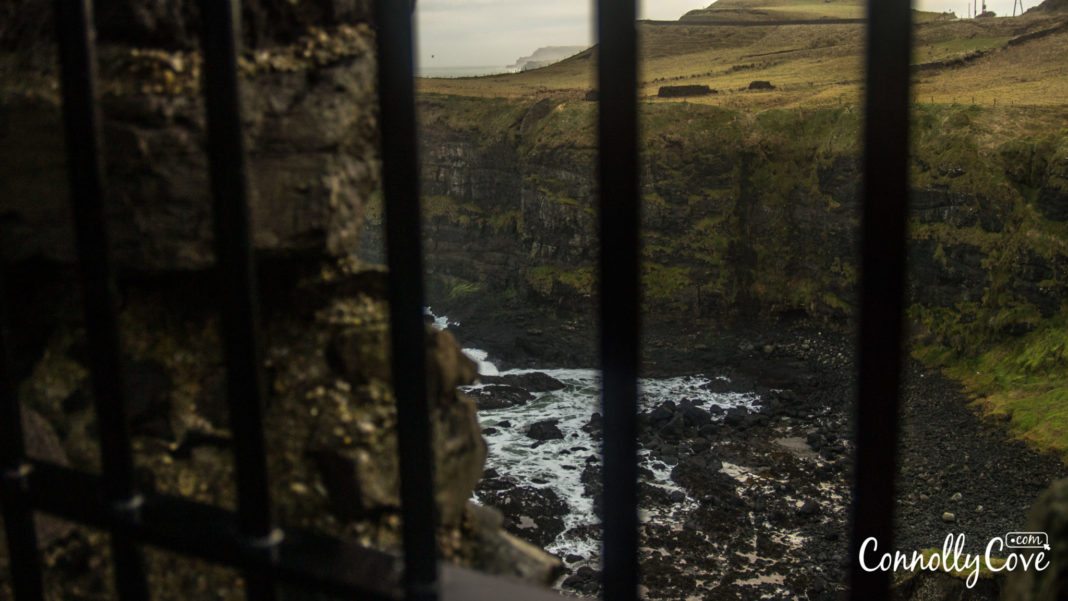
Another story revolves around Maeve Roe, who was locked away by her father in the castle’s north-eastern tower for refusing to marry her suitor. However, she managed to escape with her true love and fled to Mermaid’s Cave, where they fled by boat, but they were dashed against the cliffs. Maeve’s ghost is said to haunt her prison tower still.
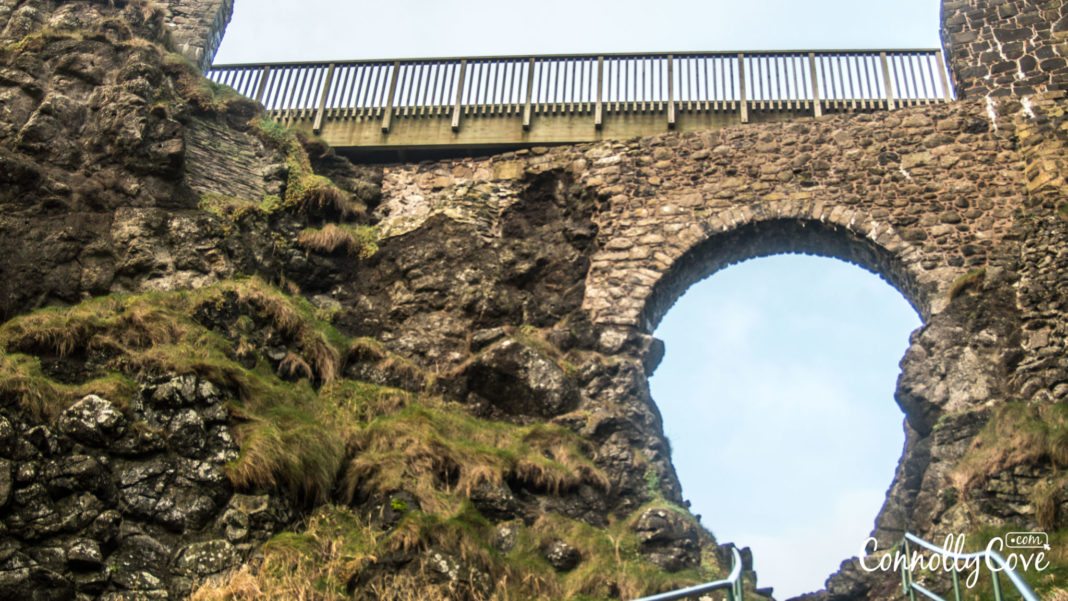
Another legend involves the MacDonnells, who, after their expulsion, besieged the castle more than once until their forces climbed into the corner towers and hanged the English captain. His ghost is also said to haunt a tower.
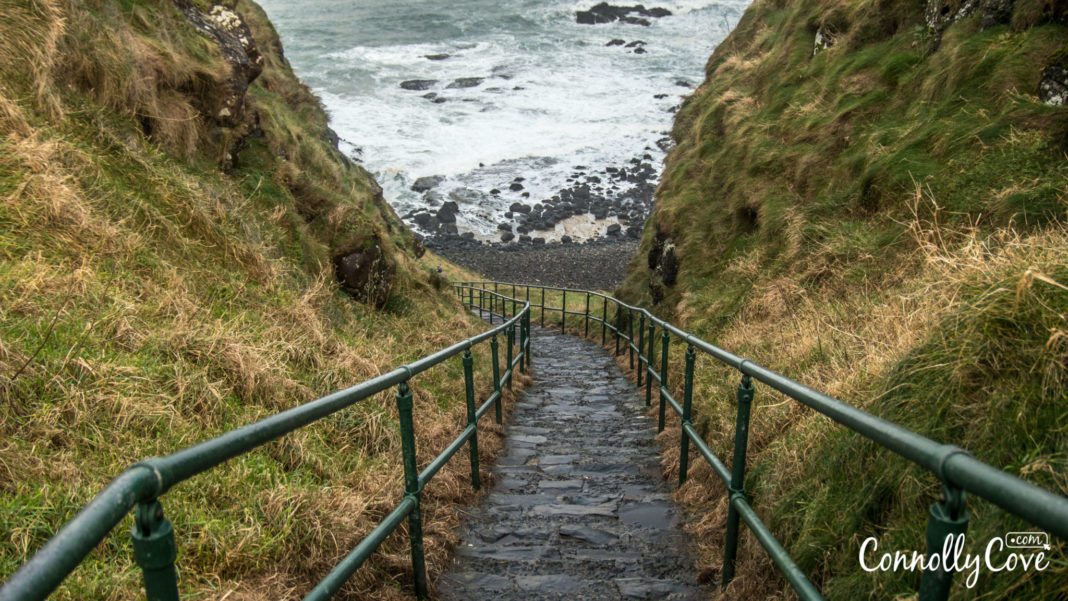
Dunluce Castle served as the seat of the Earl of Antrim until 1690. Afterwards, the castle sadly fell into ruin.
In 2011, archaeological excavations conducted in the area discovered the remains of the town of Dunluce, which was destroyed during the Irish uprising of 1641.
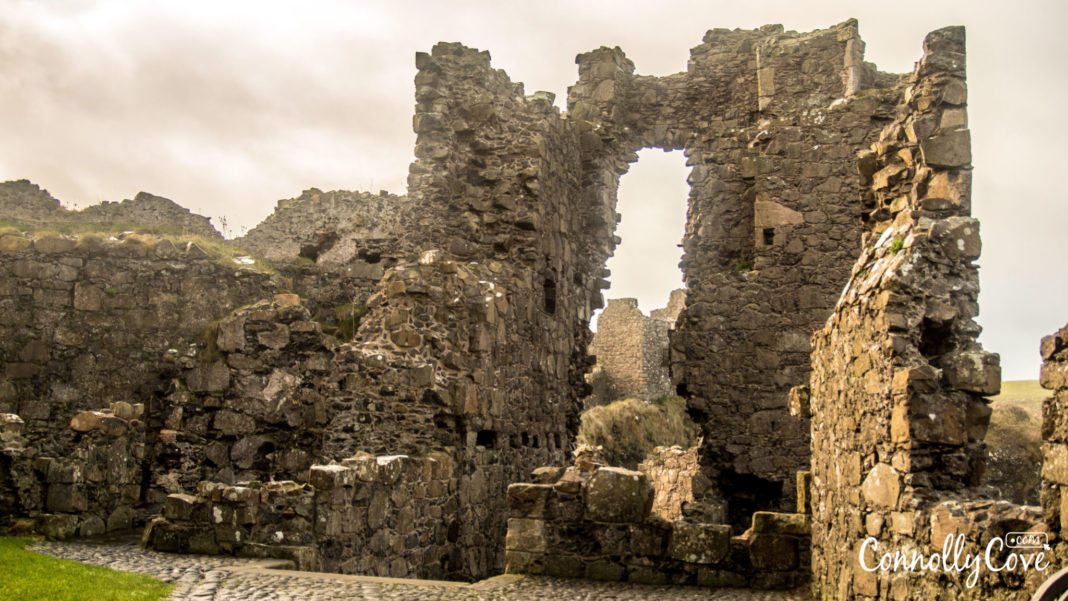
The Town of Dunluce
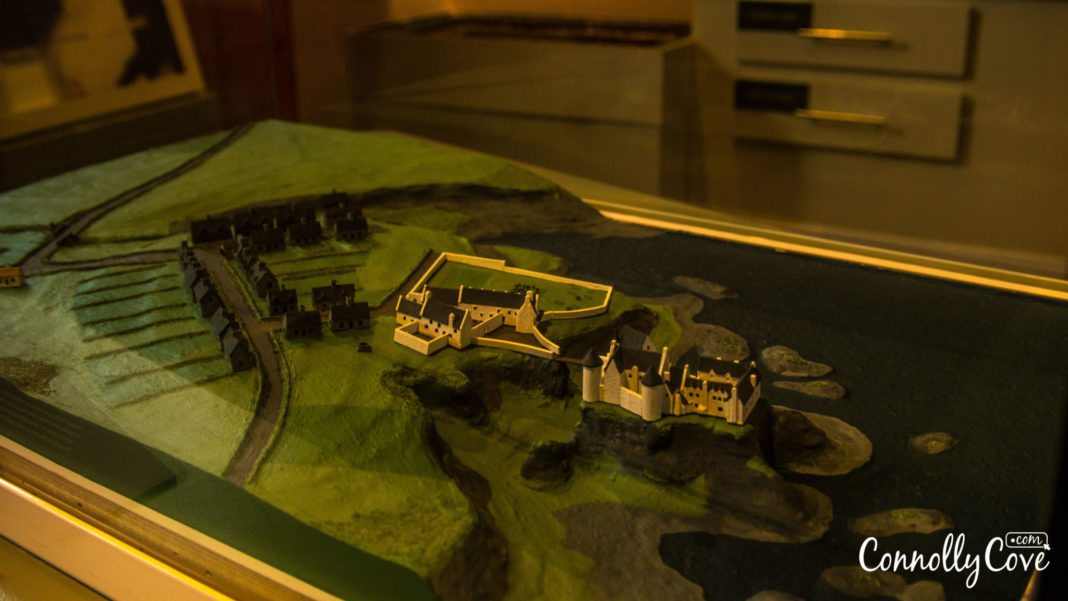
The town was built in 1608 by Randall MacDonnell, the first Earl of Antrim. It may have contained innovative housing during the early 17th century, including indoor toilets, which had barely been introduced in the rest of Europe, as well as a complex street network based on a grid system.
Visitors to the area can explore the cobbled streets and a Scottish merchant’s house, a blacksmith’s forge, a courthouse and a dungeon. There is also plenty of evidence of wealth and luxury, including coins from the period of Elizabeth I and Charles I.
One of the iconic historical figures linked to the castle is Winston Churchill, who once owned the estate. It was passed on to his family.
Literary Works Inspired by Dunluce Castle County Antrim
The castle has inspired many literary works over the years, including the orchestral tone poem Dunluce (1921) by Irish composer Norman Hay. It is also thought to be the inspiration behind Cair Paravel in CS Lewis’ Chronicles of Narnia (1950–1954). The castle is also the subject of a 1990s song named “Dunluce Castle”, written by George Millar and sung by the Irish Rovers.
Dunluce Castle County Antrim and Game of Thrones
The Dunluce Castle has also been featured in the HBO hit drama series Game of Thrones, doubling as the stronghold of Pyke on the Iron Islands. Since its appearance on the show, Dunluce Castle County Antrim has become one of the most popular attractions on the Causeway Coast. The Game of Thrones series has found the perfect location with Dunluce Castle, offering those real-life medieval features. If you are a fan of Game of Thrones, then you’ll want to find out more about the filming locations in Northern Ireland right here.
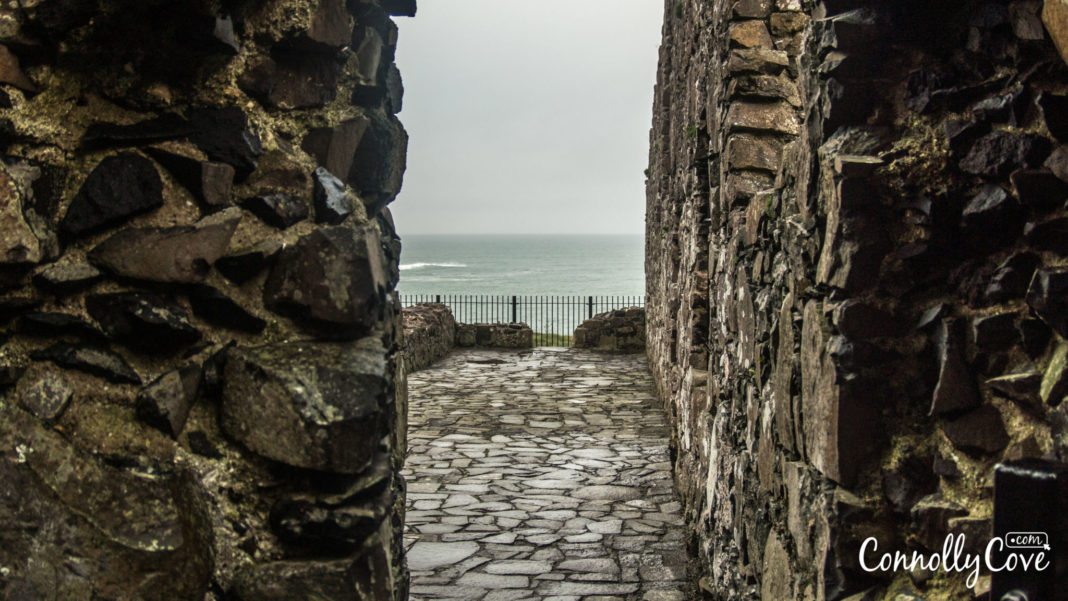
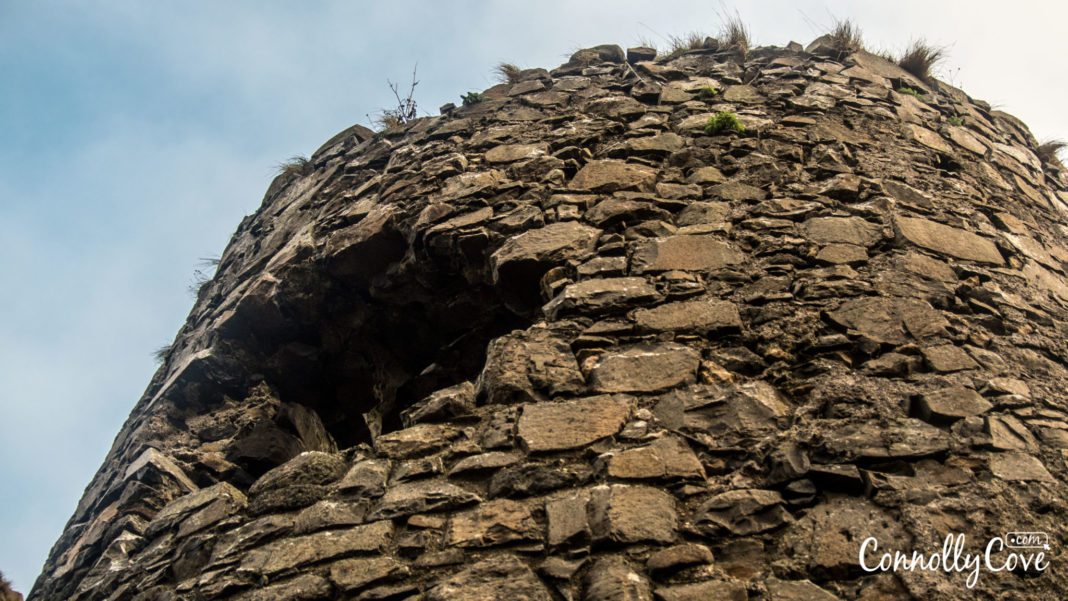
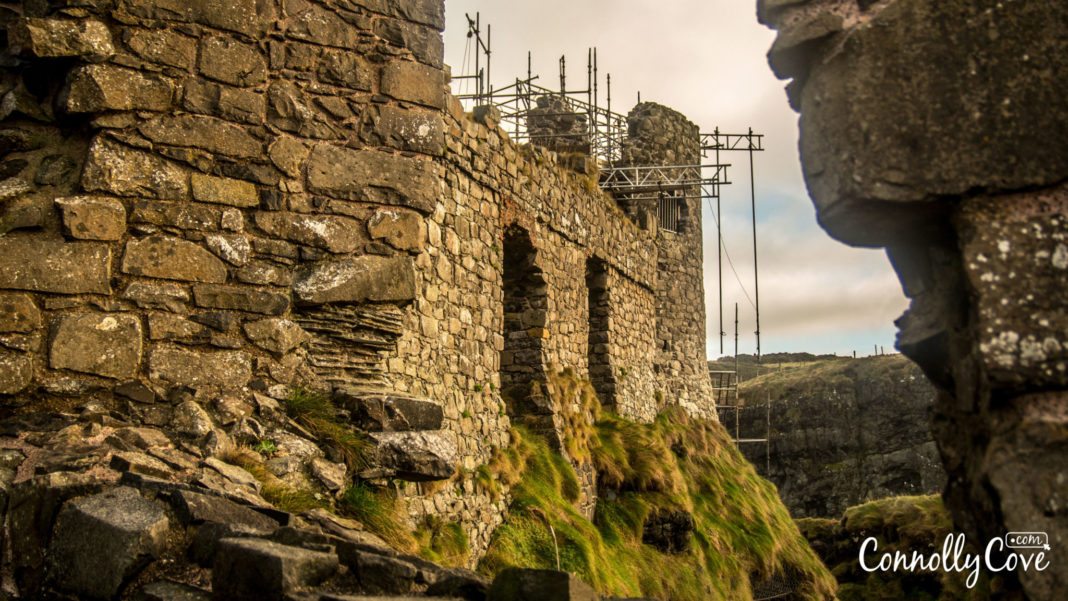
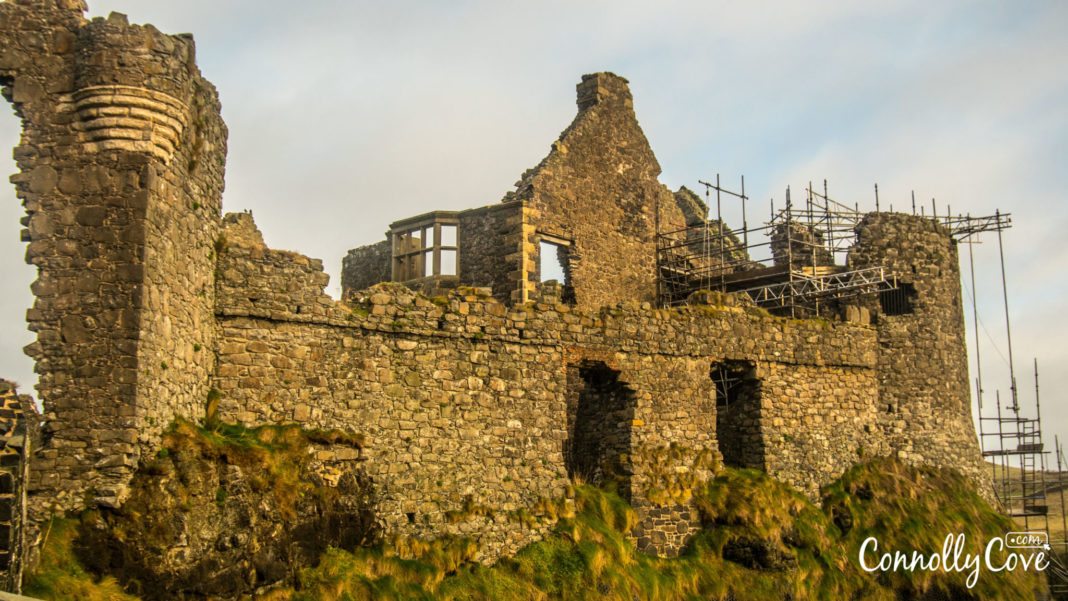
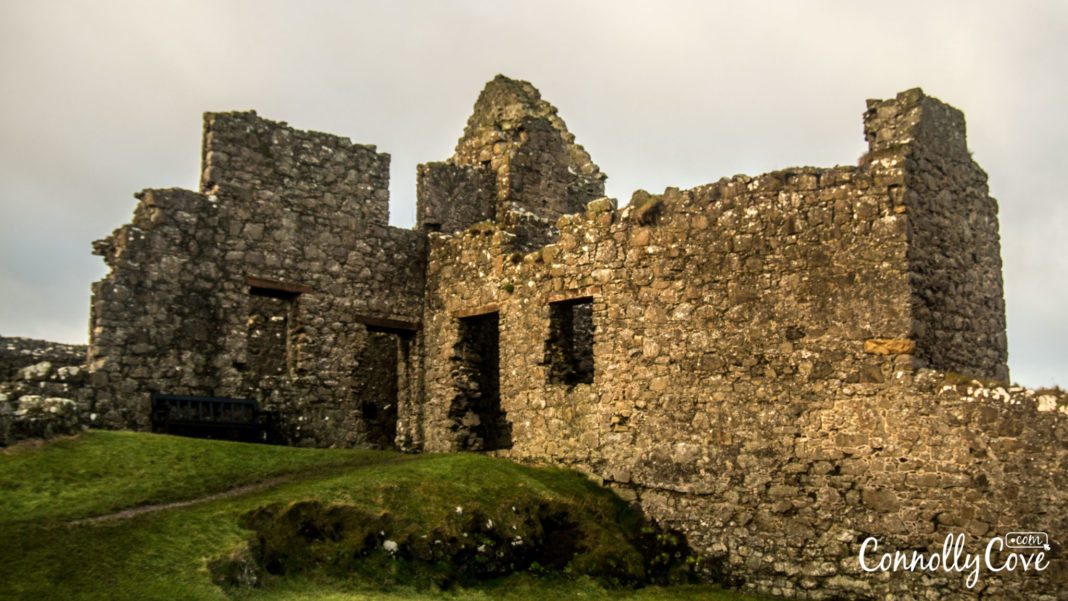
More Amazing photos from the castle:
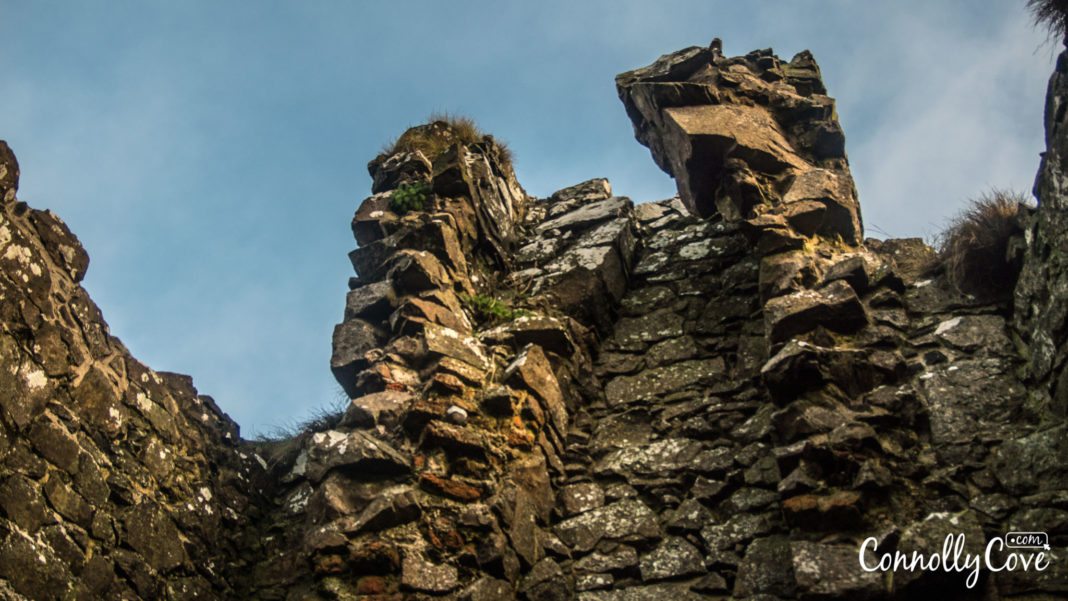
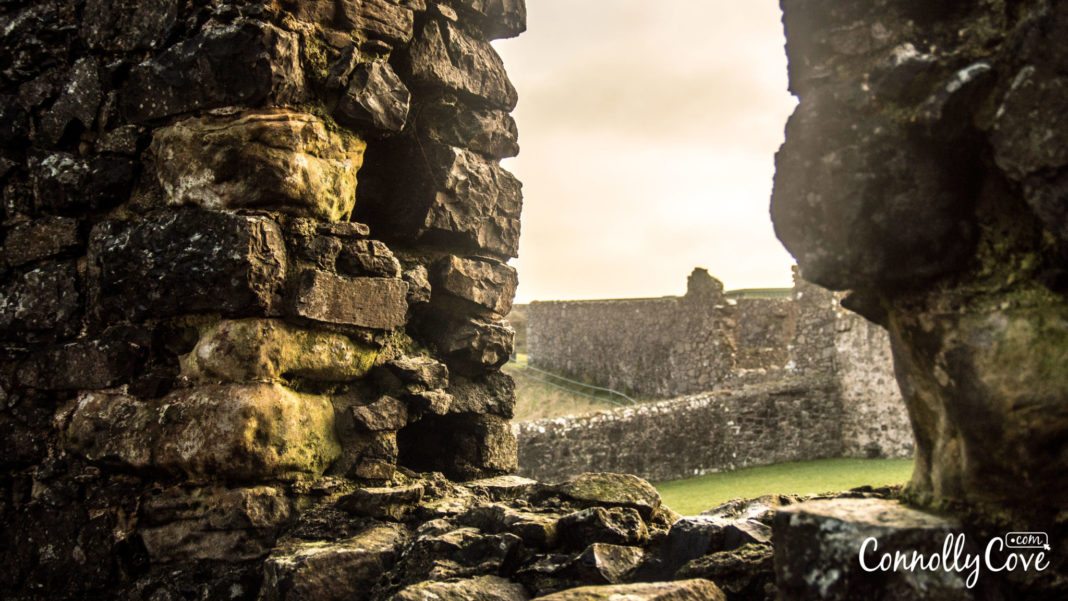
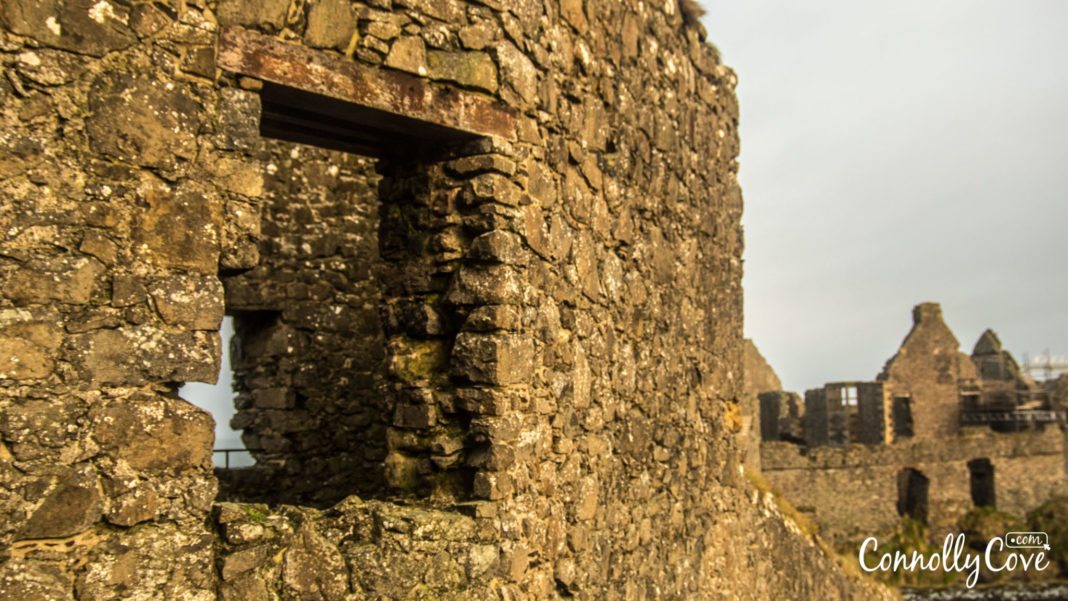
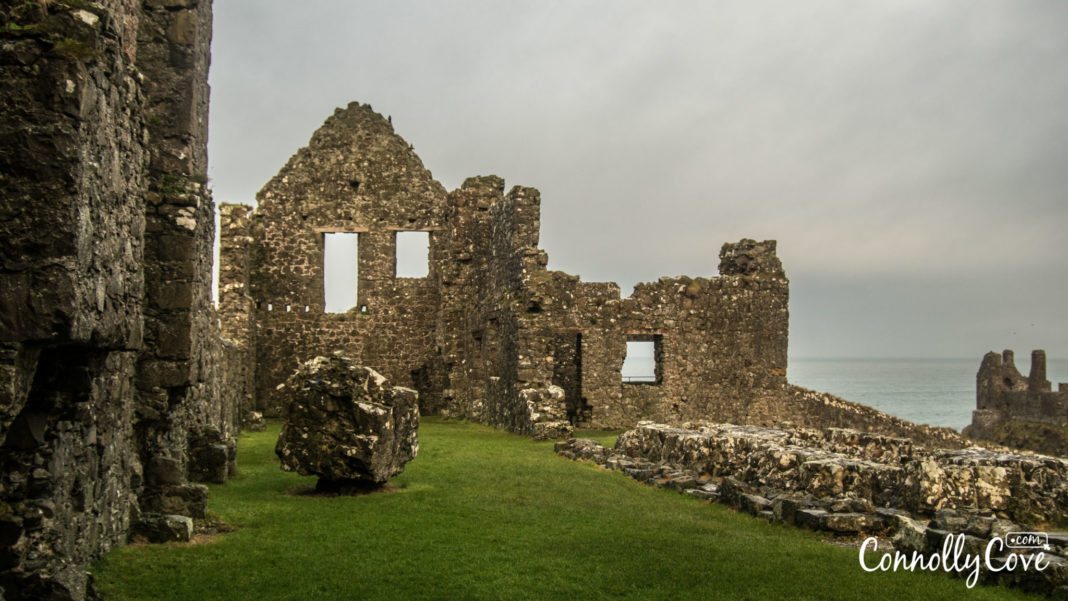
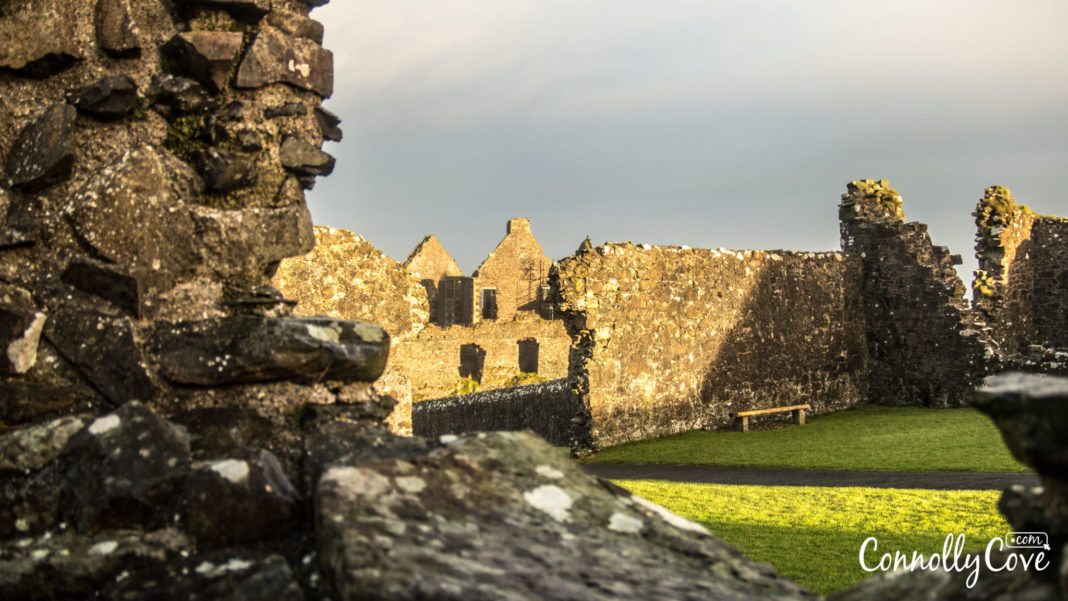
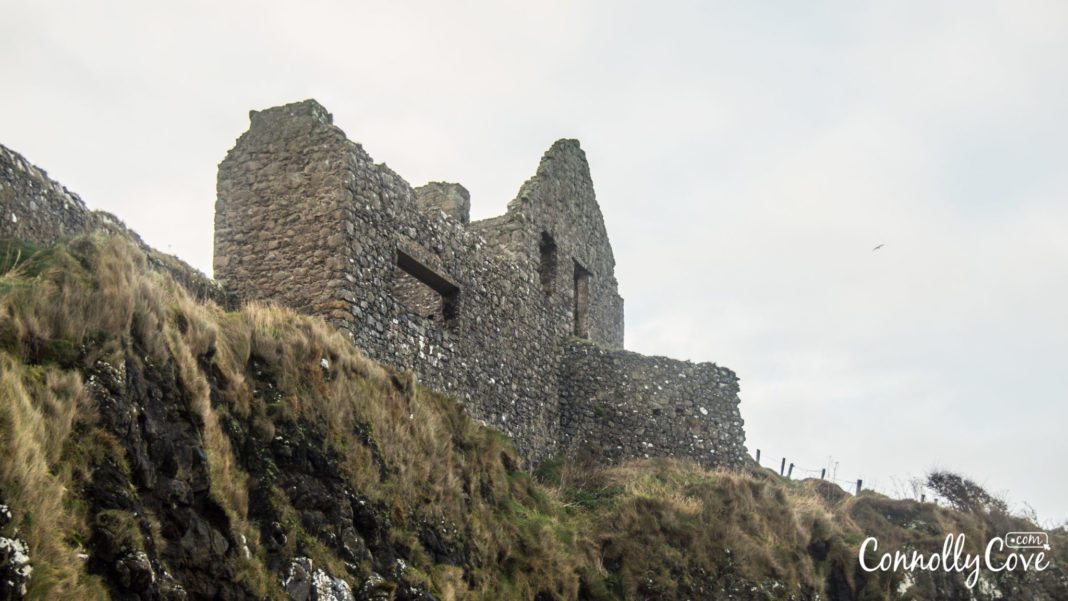
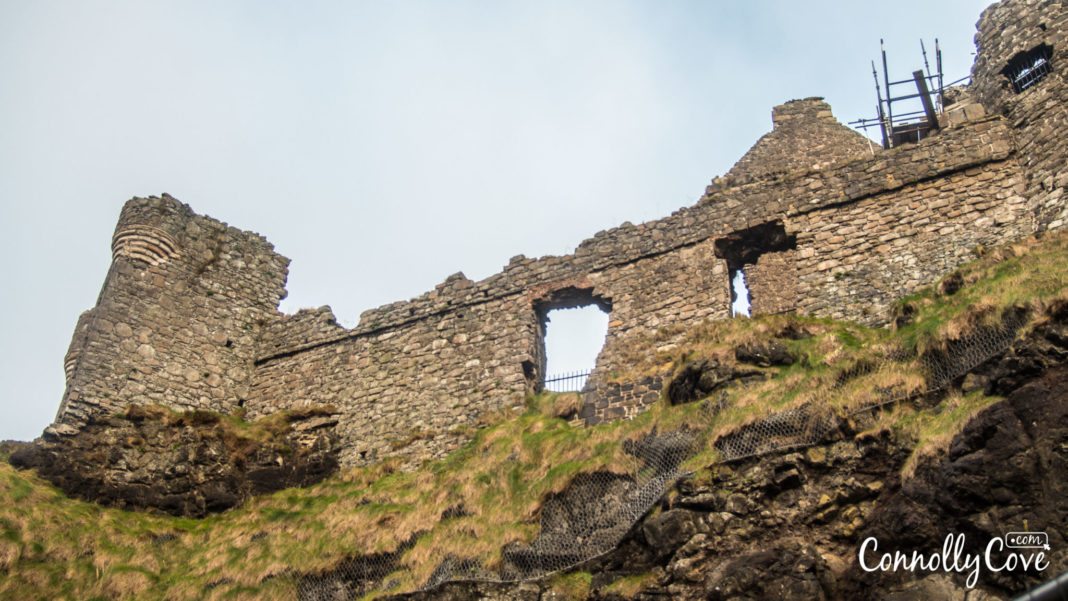
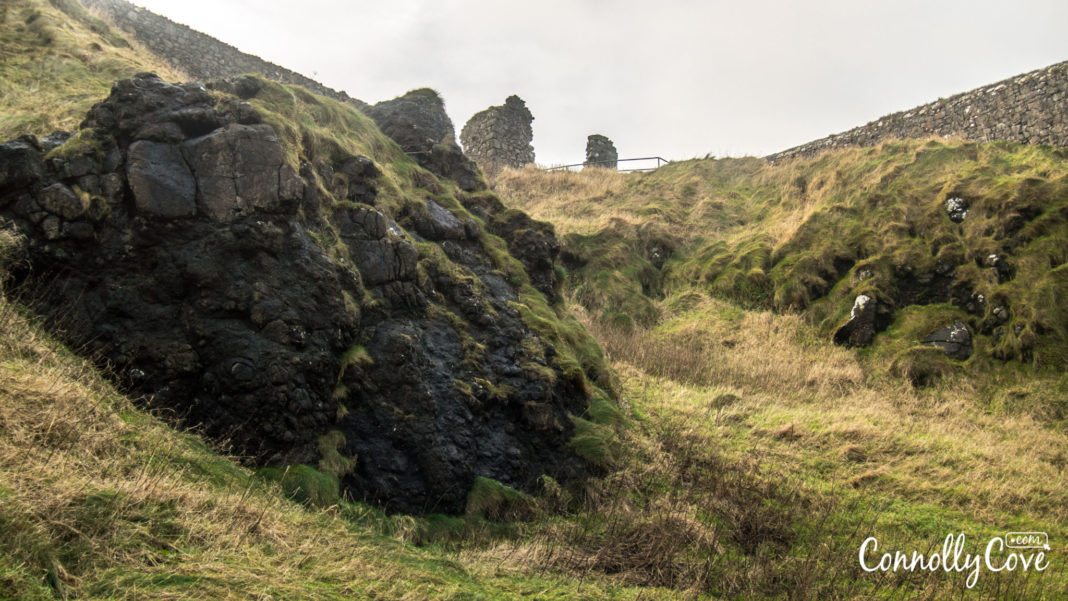
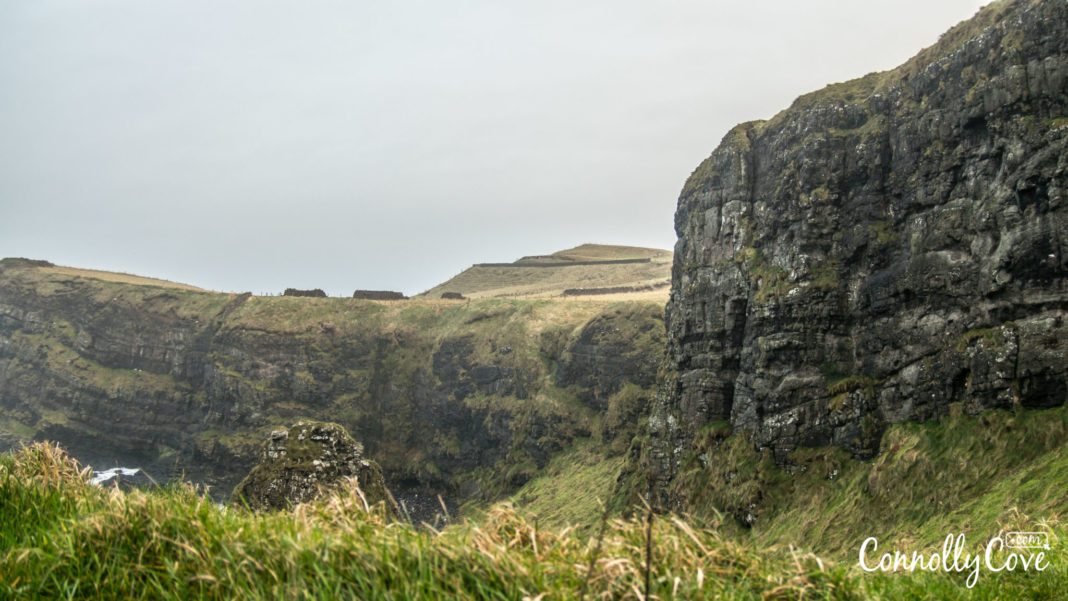
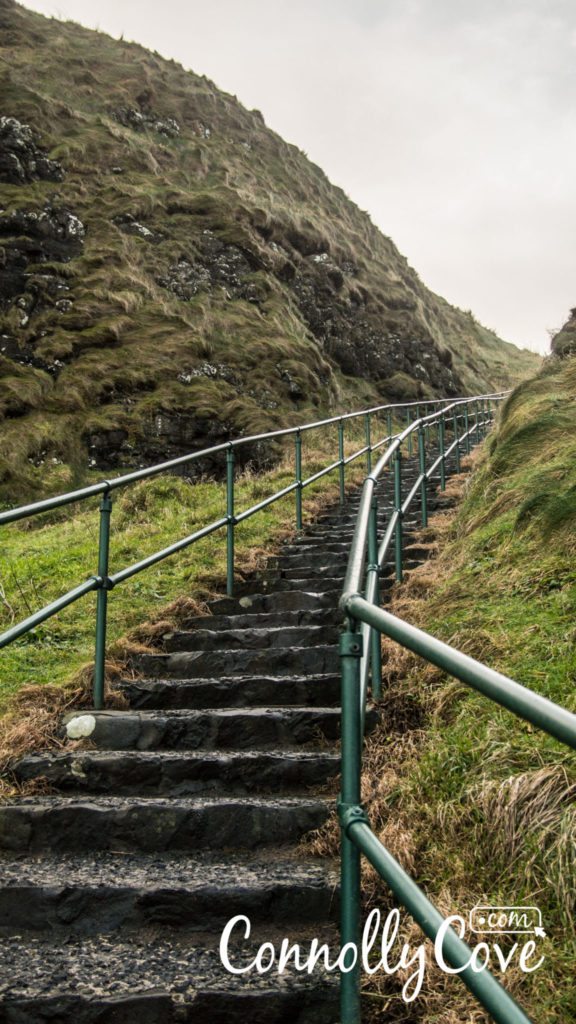
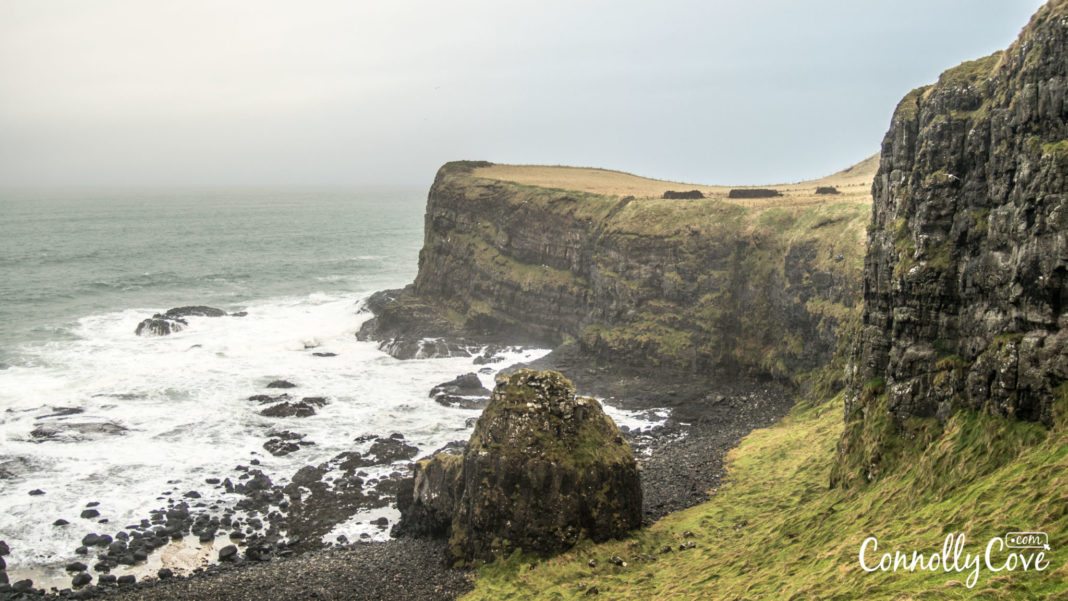
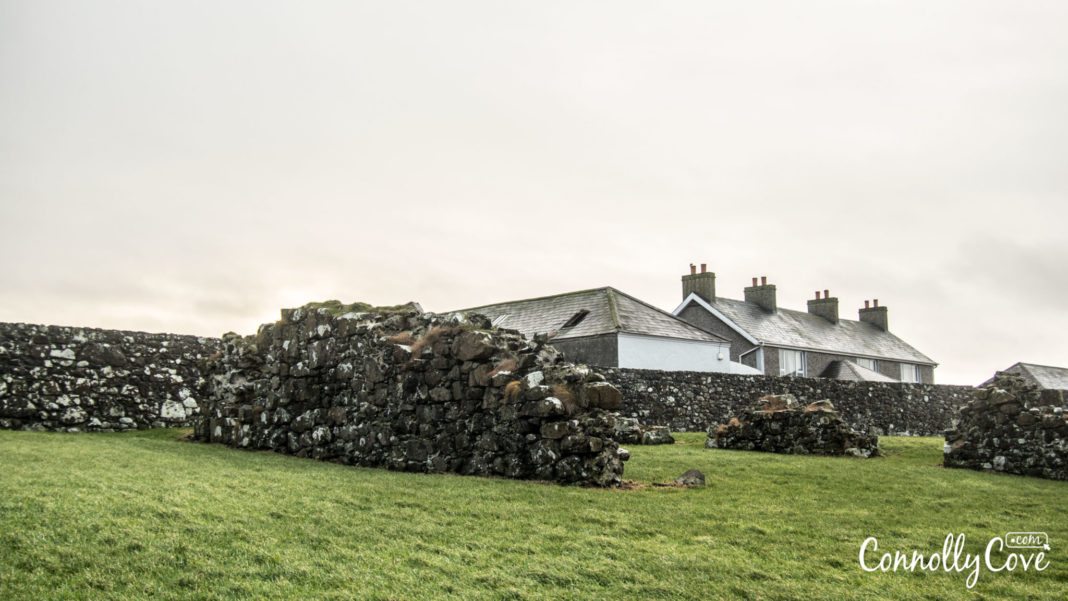
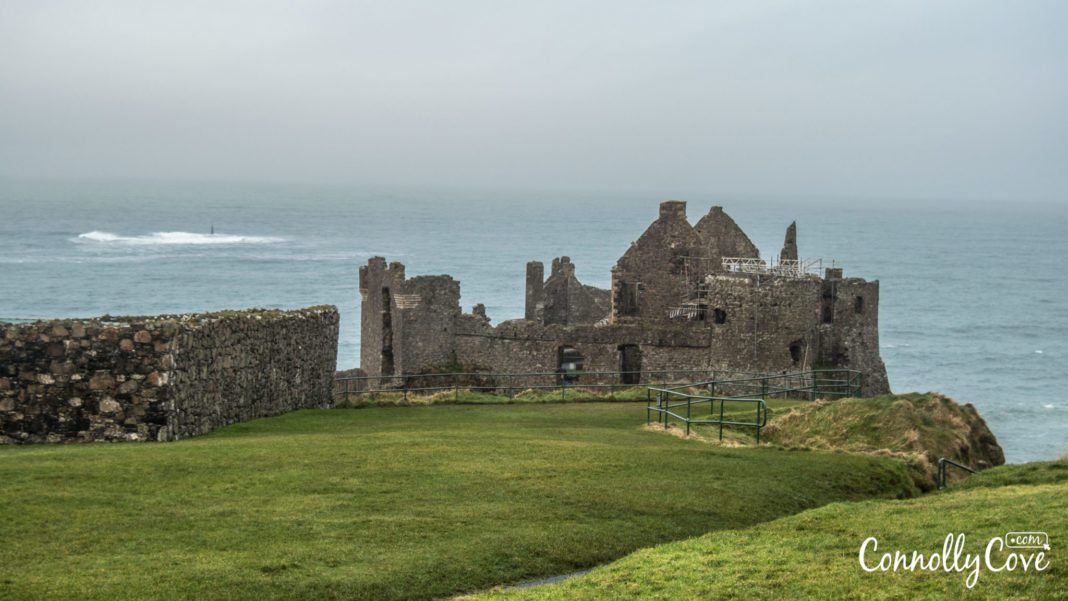
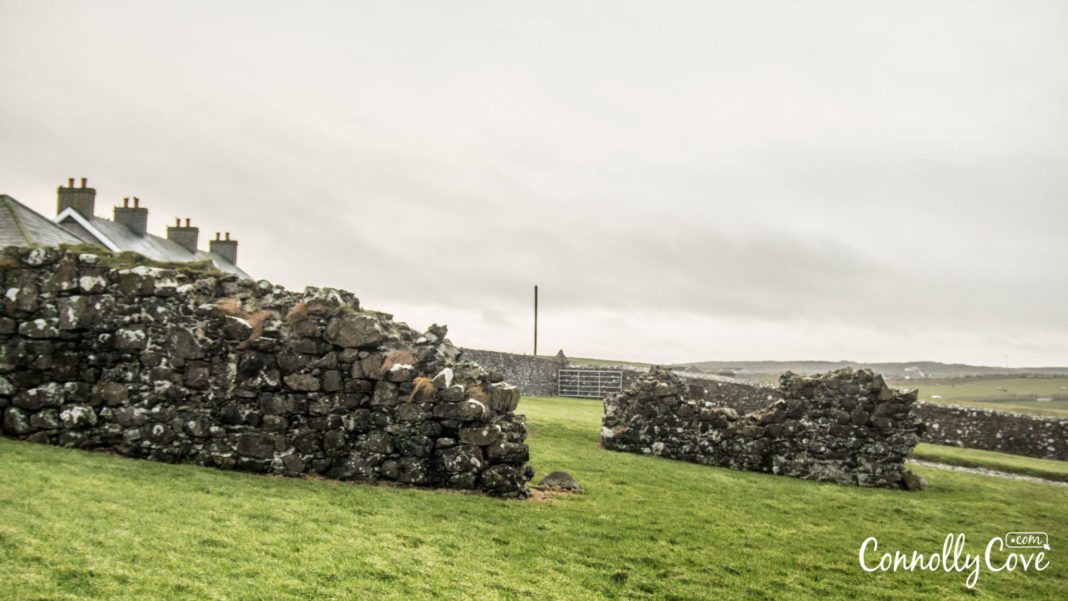
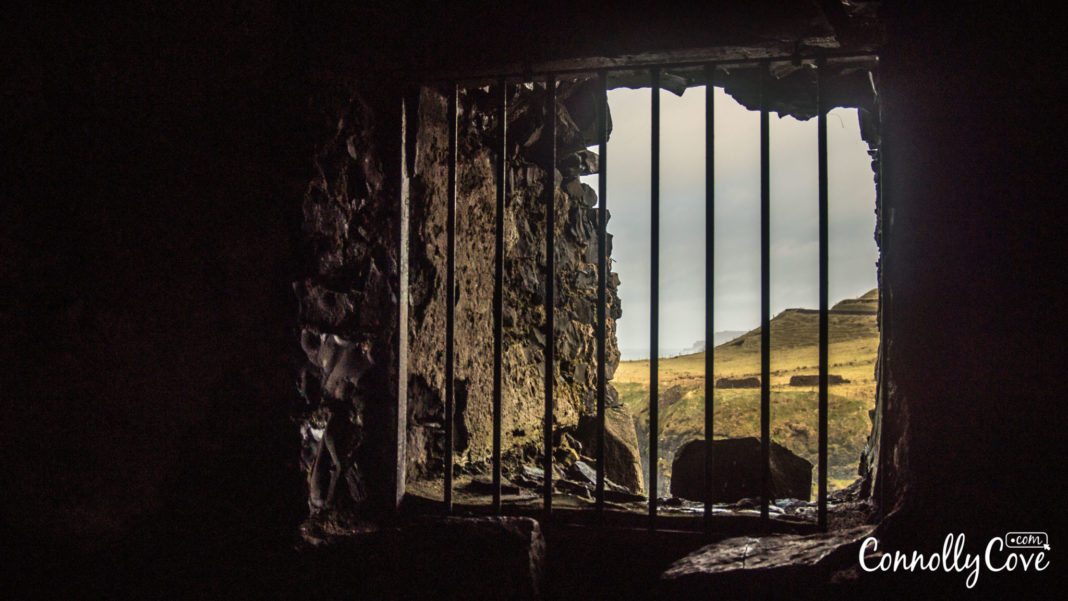
Bushmills Town
You can visit the lovely nearby Bushmills Town. Bushmills is a village on the north coast of County Antrim, Northern Ireland with 1,319 inhabitants, according to the 2001 Census. The village owes its name to the River Bush and to a large watermill that was built there in the early 17th century.
Originally known as Portcaman, the village dates back to the Norman era (1150-1520). Bushmills is classified as a village by the Northern Ireland Statistics and Research Agency (NISRA) and is best known as the location of the Old Bushmills Distillery.
Bushmills Town History
The first known record of the village was in William Boyd of Dunluce’s will, dating back to 9 December in 1624. The will essentially gave permission for John Logan to erect a mill, which was established in 1608. When Dunluce Castle and the nearby village came to ruin and became abandoned in the mid-1600s, the parishes of Dunluce and Portcaman merged together.
The Macnaghten family of Dundarave was responsible for building a market, a hotel, a courthouse, a grain store, and numerous houses in 1828. Their estate house was built by Sir Charles Lanyon. It was originally called Bushmills House but was changed in 1847 to Dundarave.
Further additions were made to Bushmills by the Macnaghtens, including a town square that was added to the market and a new bridge that was built in 1840. These improvements resulted in an increase in the population, and by 1891, it was just over 1000 persons.
Numerous mills were also built along the River Bush and the Bushmills Distillery. With the development of the Giant’s Causeway in the 1700s, Bushmills began welcoming more and more visitors.
In 1883, the world’s first hydroelectric railway began operating from Bushmills to the seaside resort of Portrush.
Make sure to check out our 360-degree video of Dunluce Castle below:
Dunluce Castle County Antrim Visiting Times and Prices
Anyone who wishes to visit the famous Dunluce Castle can do so from 10 pm to 6 pm every day from March to September. November to February, opening times are from 10 am to 4 pm daily. The last entrance is strictly half an hour before closing time.
The cost of visiting Dunluce Castle is £5.00 for adults and £3.00 for children aged between 4 and 16. You can also purchase a family ticket that includes two adults and two children for £13.00.
You can also book a guided tour in advance if you wish to get a more personal experience as staff take you around the site and fill you in on its fascinating history. Even when Dunluce Castle County Antrim is closed, you can still walk around the site and take in the stunning views on offer as well as check out the wishing well and mermaid cave.
Have you ever been to Dunluce Castle County Antrim? Or is it on your list of places to visit? Let us know in the comments below!
Don’t forget to check out other places and attractions around Northern Ireland: Game of Thrones Filming Locations| Giants Causeway| Glens of Antrim| Bishops Gate| Peace Bridge Derry| Dundrum Castle| Castlewellan Forest Park| Fun Things to do in Northern Ireland|
The Ultimate Guide for London One Day Tours!
England
27/04/2024

Key Insights: Global Medical Tourism Statistics and Market Growth Analysis
Travel Statistics
26/04/2024

The Irish Mafia: A Closer Look at Organised Crime Syndicates
History and Heritage
26/04/2024

The Ultimate Guide to Eating Out in Ireland: Tips and Recommendations
Food and Cuisine
26/04/2024
Plan Your Perfect Trips to Northern Ireland: A Guide to the Best Tours and Vacation Packages!
Northern Ireland
26/04/2024