
Updated On: December 09, 2023 by  Noha Basiouny
As the winter chill sets in and the holiday spirit takes over, December emerges as a magical time to embark on city breaks around Europe. From the classical music concerts in Vienna and the charming cobblestone streets of Strasbourg to the vibrant urban landscapes of Barcelona and the fairy-tale-like atmosphere of Stockholm, cities come alive with festive decorations, twinkling lights, and a palpable sense of joy.
Whether you are seeking a snowy escapade, a cultural retreat, or a culinary adventure, these cities of Europe offer an array of experiences that suit every traveller’s preference and promise to captivate their hearts and leave them with lasting memories.
In this article, we are taking you on a journey through four of the most enchanting European destinations, where the combination of winter magic and holiday cheer creates an unforgettable backdrop for a memorable escape.
Let’s hop into it.
1. Vienna, Austria: A Living, Breathing Masterpiece
Although snuggling in a warm bed on a cold December day is an ultimate wish for almost everyone in the northern hemisphere, it would be a complete waste of resources and may even potentially qualify as a punishable offence in a city like Vienna, which ultimately transforms into a radiant spectacle of beauty unveiling its most enchanting and picturesque self.
In December, Vienna adorns itself with a blanket of twinkling lights. The historic architecture, from the imperial splendour of Hofburg Palace to the ornate details of St. Stephen’s Cathedral, takes on a magical glow, intertwining the spirit of the season seamlessly with the city’s timeless charm.
So here is your one-day itinerary for a delightful December city break in Vienna:
Morning
December days in Vienna are noticeably short, accounting for only 8.5 hours of daylight, where the sun rises at around 7:36 AM and sets as early as 4:02 PM. So the earlier you start your day, the better if you want to enjoy a wonderful one-Viennese-day city break.
Begin with a leisurely Viennese breakfast at a traditional coffeehouse like Café Hawelka. Take your time to savour a cup of rich coffee and a delicious pastry. Around 9:30 AM, head to the heart of Vienna to pay a visit to the iconic St. Stephen’s Cathedral. An hour is sufficient to marvel at its Gothic architecture and even climb to the top for panoramic views of the city.
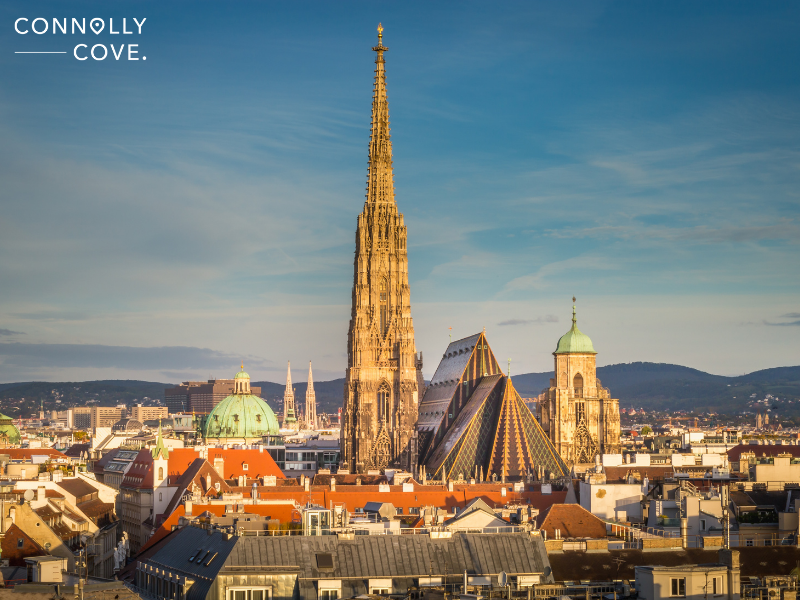
Located right outside St. Stephen’s Cathedral is the Christmas Market at Stephansplatz, which is next on your list of attractions to visit. You can wander through the market, experience the festive atmosphere, shop for handmade crafts, and indulge in some seasonal treats.
Afternoon
Early afternoon is the best time to visit the iconic Hofburg Palace. If you are not into history, this is the former imperial palace of the Habsburgs, where you can explore the Sisi Museum and the Imperial Apartments and gain insights into Austria’s royal history.
By 1:30 PM, after this much sightseeing and walking, you will probably feel hungry and need to grab a bite. Enjoy a traditional Austrian lunch at a Heuriger in Grinzing or Neustift. These wine taverns offer a cosy atmosphere and authentic Austrian dishes.
Now that you have got a boost of energy, it is time to continue your one-day city break. At 3:00 PM, you can visit Belvedere Palace and take a leisurely stroll through its beautiful gardens. You will be stunned by the winter landscape and perhaps explore the palace’s art collection.
At 4:30 PM, it is time for another coffee break, but this time at Café Demel. Known for its exquisite pastries and desserts, this place is a perfect spot to relax and indulge.
Evening
Viennese evenings are enchanting and a never-to-miss experience. At 6:00 PM, head to the Vienna State Opera to enjoy classical music or opera. Make sure you purchase tickets in advance. Conclude your day at Naschmarkt, Vienna’s famous outdoor market, to enjoy a diverse range of cuisines at one of the many restaurants or food stalls.
At around 9:30 in the evening, take a final stroll through the beautifully lit streets of Vienna. Relish the Christmas decorations and soak in the festive atmosphere.
2. Strasbourg, France: A Timeless Allure
Being too charming to be overshadowed by Paris itself, Strasbourg unfolds even more enchanting and captivating grandeur during the holiday season and becomes a literally fairytale destination that bewitches the senses. In fact, the city is affectionately nicknamed the Capital of Christmas for its magical ambience and longstanding tradition of hosting one of the oldest and most charming Christmas markets in Europe.
This all makes a city break in the heart of Strasbourg, with its half-timbered houses and cobblestone streets, an irresistible experience. Every nook and cranny of the city during December exudes an incredible warmth and festive cheer. So here is how to spend your one-day city break in Strasbourg.
Morning
No matter where you are coming to the city from, let that be Paris, any other French city, elsewhere in Europe or even from the very Far East, just make sure you arrive in Strasbourg as early as possible to make the most of your time there.
You may start off at 8:30 AM by visiting the Strasbourg Cathedral or the Cathédrale Notre-Dame de Strasbourg—do not confuse this with the Cathédrale Notre-Dame de Paris that is 491 kilometres away. The Strasbourg Cathedral is a marvellous feat of Gothic architecture and one that was declared a UNESCO World Heritage Site as well.
At 9:30 AM, it is time for your morning coffee if you have not already had it by this time. Almost all local cafés have various coffee options, each with a majestic name that makes you feel as elegant as a member of the Royal Family when you pronounce it correctly. As you indulge in your French coffee, consider trying a traditional Alsatian treat like a Kougelhopf.
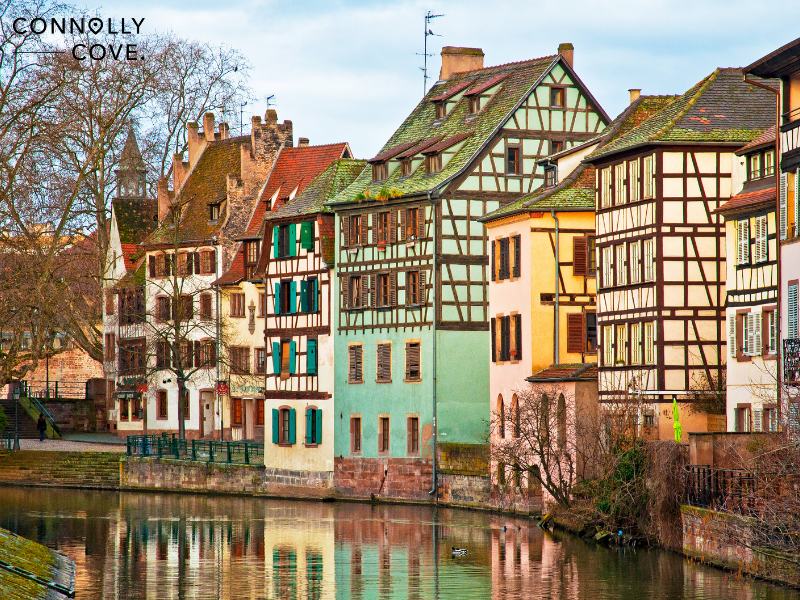
Next is to take a stroll through La Petite France. This is a charming and picturesque neighbourhood featuring timber-framed houses and canals. In December, the area gets even more spectacular with hundreds of festive decorations.
Once you hear the it-is-noon-woohoo chimes coming from a nearby church, you are up to your first culinary experience of the day. So head to a traditional Alsatian Winstub, which is basically a wine but a French wine, tavern, for lunch. Local specialities like Flammekueche (Alsatian pizza) or Choucroute (sauerkraut dish) are a must-try.
Afternoon
The pièce de résistance—I guess you can work out what that means—in the afternoon is the Strasbourg Christmas Market or the Christkindelsmärik. Known for its impressive Christmas tree, the Christkindelsmärik is the oldest and one of the most impressive Christmas markets in Europe, dating back to the 16th century.
This magical spectacle turns the whole city into a holiday wonderland with its charming stalls, twinkling lights, and festive decorations and blankets its centre with the aromas of spiced mulled wine, savoury Alsatian delicacies, and the sweet notes of holiday melodies— an experience that will add rich and lively memories to your visit.
While you are there already, make sure you walk around the Place Broglie. This is one of the main squares in Strasbourg that is located right at the heart of the Christmas Market.
Once you have gotten tired of walking, it is time to take a relaxing boat tour on the Ill River to view Strasbourg’s landmarks from a unique perspective. Batorama is an online service that offers fairy cruises at somewhat reasonable prices, with trips lasting between 45 and 70 minutes.
Evening
In the evening, sometime between 7:00 and 8:00 PM, you can enjoy a delightful dinner at a little local cosy restaurant. Consider places that serve Alsatian specialities to indulge in the local cuisine and complete your fantastic Strasbourg-in-December city-break experience.
If you still have a bit of energy after dinner, it is an excellent idea to explore the city at night and take a final look at the dreamy, enchanting holiday lights.
3. Barcelona, Spain: A Unique Catalan Experience
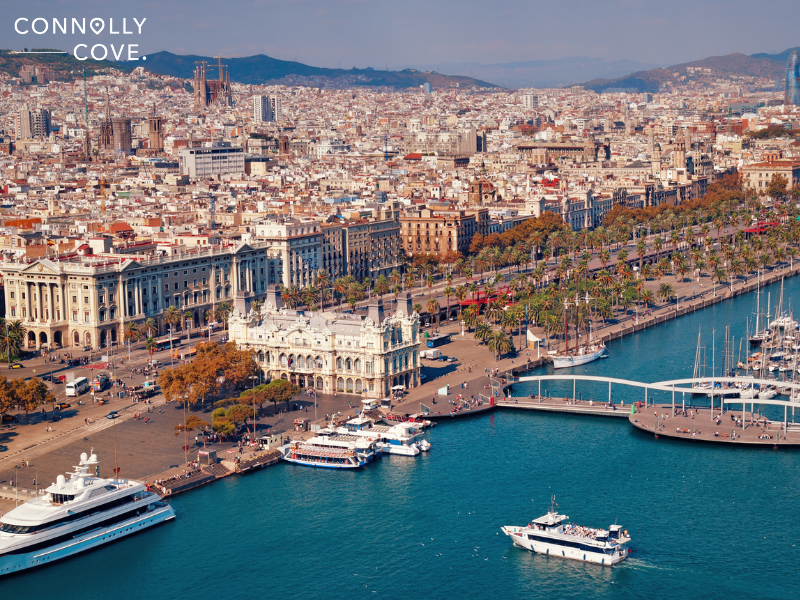
Unlike many other European cities, Barcelona enjoys relatively mild winter weather in December. While it is not beach season, temperatures are generally moderate, making it comfortable for outdoor activities. It rarely snows there, especially in December and around Christmas time, which may give the city a different holiday feel than the regular snowy stereotype.
Another point that makes this very Spanish city rather charming is that it is less crowded in December, for its peak tourist season falls between June and August. This means you can enjoy a fantastic Christmas city break and visit popular attractions with way fewer queues and a more relaxed atmosphere.
So here is the best one-day city break you can spend in Barcelona.
Morning
First things first, breakfast. Begin your day with a hearty breakfast at one of Barcelona’s famous brunch spots. Brunch & Cake is known for its delicious and Instagram-worthy breakfast dishes. Do not forget your morning coffee to charge for all the sightseeing we have planned for you.
After your delicious breakfast, head to the Sagrada Família, Barcelona’s most iconic basilica and a masterpiece of the renowned Catalan architect Antoni Gaudí. Take a tour of the interior and marvel at the stunning architecture, which the morning sunlight makes it rather breathtaking.
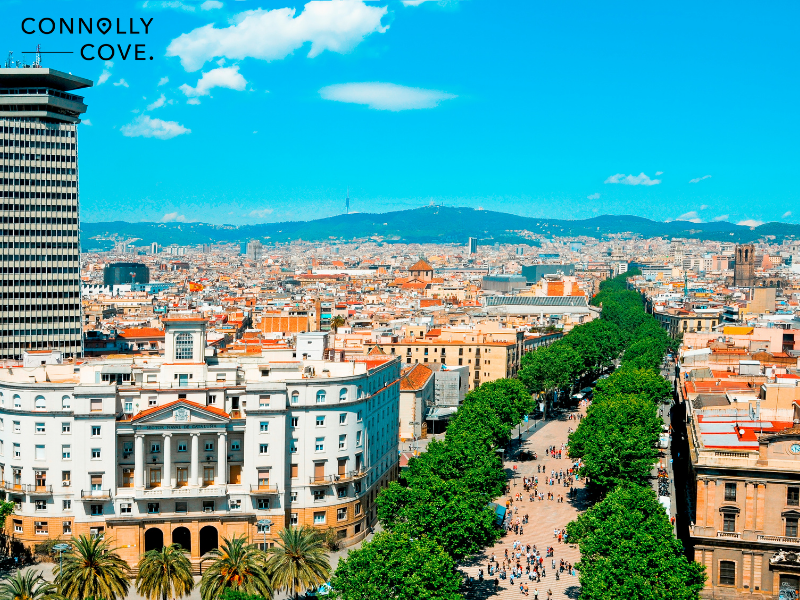
When you have already had enough of the basilica, walk down the elegant Passeig de Gràcia, known for its high-end shops and Modernist architecture. Make sure to see Casa Batlló and La Pedrera, two more Gaudí-designed buildings. Then stroll down Las Ramblas, Barcelona’s most famous pedestrian street, and enjoy the sights, sounds, and smells of the city.
Afternoon
At around 1:00 PM, head to La Boqueria Market off La Rambla for a diverse lunch experience. You can try various Spanish and Catalan dishes, including seafood, such as Calamares a la Andaluza and Mejillones al vapor, tapas, and local fruits.
Moving on to more strolling and sightseeing, amble through the narrow streets of the Gothic Quarter or the Barri Gòtic if you want to impress some locals. While you are there, do not forget to pay a visit to the Picasso Museum. It houses one of the largest collections of artworks by the 20th-century legendary Spanish artist Pablo Picasso.
If you have some more time, you may also visit the Barcelona Cathedral and the Santa Maria del Mar church and explore more charming medieval alleys.
Next is to take a look at the city from above by taking a cable car up to Montjuïc, a hill overlooking Barcelona. Visit the Museu Nacional d’Art de Catalunya, which houses a collection of Catalan art from the Romanesque to the 20th century.
Evening
Now it is time to wind down a little, so take a relaxing walk along Barceloneta Beach and marvel at the beauty of the Mediterranean waters, then head to the nearby Park Güell to enjoy the sunset views over the city. The park, another Gaudí creation, offers unique architecture, vibrant mosaics, and panoramic views.
Once you have felt a little rested, it is time to experience the lively El Born district for dinner. Choose from the many tapas, bars and restaurants in the area for a taste of Catalan cuisine. Indulge a traditional Catalan dish like paella or escudella i carn d’olla.
End your day at Montjuïc to catch the Magic Fountain show. The colourful water and light display is a mesmerising way to conclude your day in Barcelona. Enjoy a flamenco show, the traditional Spanish dance. There are usually many flamenco shows to choose from in the city.
4. Stockholm, Sweden: A Magical, Short Dream
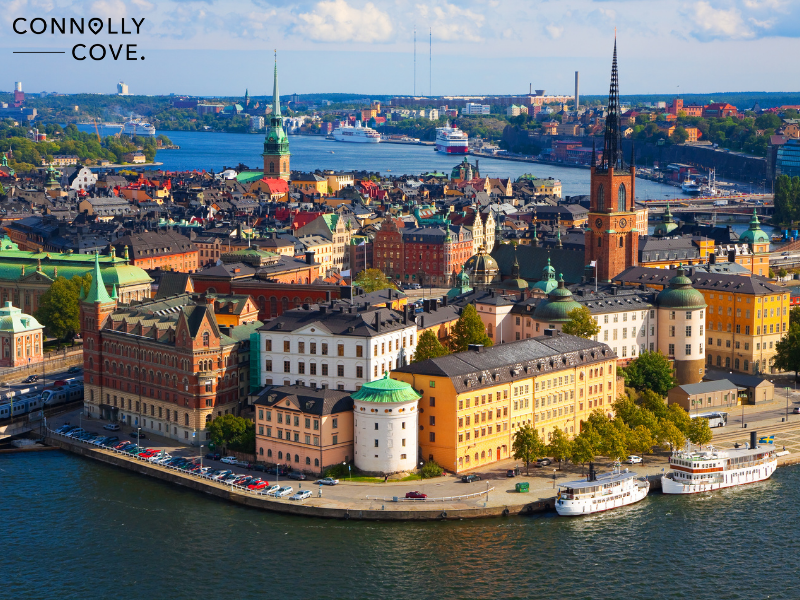
Stockholm is pretty much unlike anything we have mentioned so far, and there are plenty of reasons that make it so. The city, for instance, is situated on 14, count them, 14 islands connected by bridges that all together create a stunning archipelago. The city has countless waterways, parks, and green spaces that contribute to its beauty and offer plenty of opportunities for outdoor activities.
Stockholm also pretty consistently ranks high in global quality of life indices. It is known for its excellent public transportation, clean environment, and a strong emphasis on social welfare. The concept of “lagom,” which translates to “just the right amount” or “balance,” is ingrained in Swedish culture and contributes to a harmonious and sustainable lifestyle.
Another thing that makes this very Swedish city pretty remarkable is its location at the top of the northern hemisphere, which makes its winter days kind of short. On a freezing cold December day in Stockholm, the sun rises at around 8:37 AM and sets at no later than 2:56 PM, which accounts for roughly six and a half hours of daylight.
So you can imagine what a December city break in Stockholm is like, or you can read on to find out.
Morning
Begin your Stockholm experience with a traditional Swedish breakfast at Vete-Katten. This is a historic pastry shop and café from the 1920s. Over the years, Vete-Katten, which translates to “Wheat-Cat” in English, has become an iconic institution in Stockholm and is known for its traditional Swedish pastries, cakes, and classic coffeehouse atmosphere.
After breakfast, you can wander through Stockholm’s Charming Old Town (Gamla Stan) with its narrow cobblestone streets, colourful buildings, medieval architecture, and historic sites. Immerse yourself in culture and history by visiting the Royal Palace, yes, the official residence of the Swedish royal family.
Since you are in Stockholm already, you should not miss visiting the Nobel Museum located at the heart of Gamla Stan. Take the chance to learn about the Nobel Prize, its laureates, and their achievements.
Afternoon
Around noon, you can stop for a little coffee break or, if you are peckish, some lunch. Indulge in a traditional Swedish dish at a cosy café or restaurant in Gamla Stan. Sample local delicacies to try include smörgås (open-faced sandwiches), köttbullar (meatballs), or gravlax (cured salmon).
When you have recharged your batteries, head to the Vasa Museum to see the remarkably preserved 17th-century warship Vasa. This is an impressive maritime museum that provides insight into Sweden’s naval history. You can complete the experience by embarking on a captivating boat tour through Stockholm’s archipelago and capturing breathtaking views of the city skyline and the surrounding islands.
Then it is time for another culinary experience or a fika break. Indulge in Swedish hot chocolate and delectable pastries like kanelbullar (cinnamon buns) or semla, a cardamom bun stuffed with whipped cream and delicious almond paste.
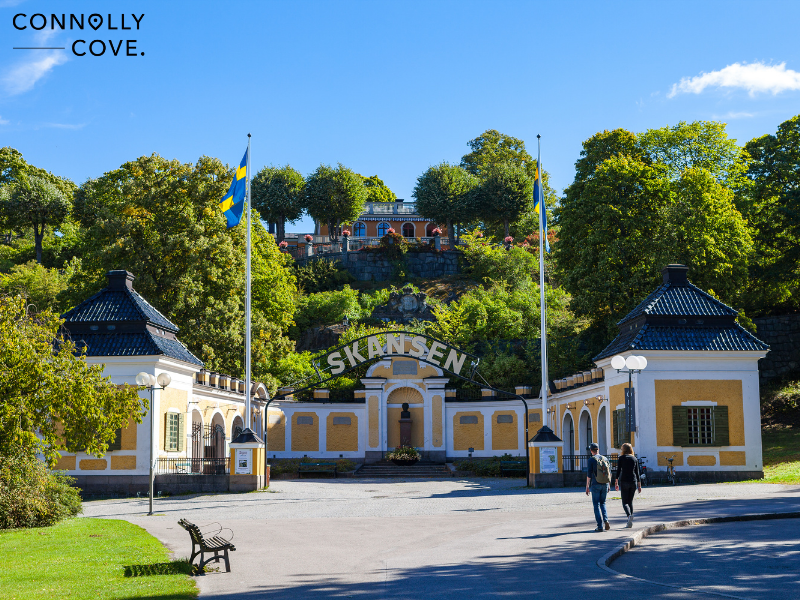
In the late afternoon, you may visit Skansen, an open-air museum showcasing traditional Swedish life. In December, Skansen features a Christmas market and festive decorations.
Evening
As it starts to get dark, head to Djurgården, where you can explore the Christmas market. Enjoy the festive atmosphere, shop for local crafts, and try Swedish holiday treats. Take a stroll along Stockholm’s beautifully decorated streets and squares to enjoy the city’s Christmas lights and decorations.
For dinner, go to the trendy district of Södermalm and choose a restaurant like Pelikan for classic Swedish cuisine or venture into one of the many international eateries in the area. Then, end your day with a visit to the Icebar in the Nordic C Hotel. Experience a unique bar where everything, including the glasses, is made of ice.
One-day December city breaks in Europe are a delightful way to experience the unique charm and festive atmosphere that each destination has to offer during the holiday season. From the Christmas markets of Vienna and the historic streets of Strasbourg to the refreshing strolls of Barcelona and the cosy cafés of Stockholm, each of these cities offers a memorable and enchanting experience for a brief winter getaway that creates lasting memories.
The Dying Gaul: Unraveling the Meaning and History of an Ancient Roman Masterpiece
History and Heritage
29/04/2024

Discover The Mystery of the Paviland Red Lady: Unearthing Its Secrets
Culture Exploration
29/04/2024

Downpatrick Town: Saint Patrick’s Final Resting Place
Northern Ireland
29/04/2024
Breton Language: Safeguarding the Rhythmic Pulse of Brittany’s Celtic Heart
Culture Exploration
29/04/2024
The Enchanting Helen’s Bay Beach – Northern Ireland
Northern Ireland
29/04/2024