


Museum of Naguib Mahfouz: A Glimpse into the Extraordinary Life of the Nobel Prize Winner
Updated On: November 08, 2023 by  Noha Basiouny
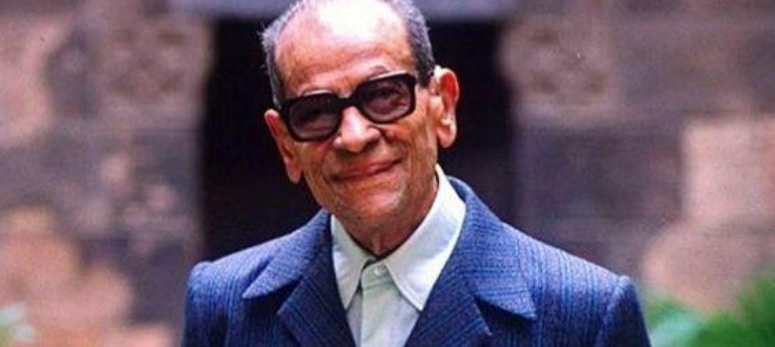
Thursday, October 13, 1988, Egyptian writer Naguib Mahfouz goes to al-Ahram newspaper. He does some work, sees some friends, and has a little chit-chat with them, mostly about the Nobel Prize winners who are to be announced on the same day. “We will read about it in the newspaper tomorrow.” He says. After a while, he is done with his work so he heads back home, has his lunch, and goes to have a nap, like always.
A few minutes in, the phone rings. Then his wife rushes to his room “Wake up! You have just won the Nobel Prize.” Mahfouz looks at her, eyes half-open, and says angrily that he did not like people waking him up to tell him bad jokes!
But the phone rings again. There is Mohammad Pasha this time, the journalist at al-Ahram. Mahfouz picks up the phone “Yes”, he says. “Congratulations”, Pasha replies. “What about?” still believing this is all a joke. A bad joke. “Sir!” Pasha says in excitement. “You have won the Nobel Prize!”
“That must be a silly prank.” Mahfouz thinks, assuming that someone was impersonating the notable journalist. He goes back to his bed, totally confused and uncertain. Then someone knocks at the door. His wife opens and Mahfouz walks out of his room, in his pyjamas, to check it out. He sees a tall, foreign man with a couple of other men. Mahfouz thinks the tall man is a journalist until one of the companions says “Mr. Mahfouz. This is the Ambassador of Sweden!”
It was not that Naguib Mahfouz did not believe he would win the Nobel Prize, nor was he too proud to think it was just a normal thing to happen. He just did not give it much attention. “Otherwise, I would have been obsessed with it, getting unbelievably nervous year after year as I waited in vain to be awarded.”
The literature genius inherently knew the secret to success: forget about the end result. Instead, he put his heart and soul into the process. Well, the lifetime journey. He was more into writing than creating a one-hit—though he did have numerous hits. Mahfouz was incredibly consistent with writing simply because he lived to write.
That said, Mahfouz did feel deeply grateful and appreciated to win the Nobel Prize. “The Nobel Prize has given me, for the first time in my life, the feeling that my literature could be appreciated on an international level. The Arab world also won the Nobel with me. I believe that international doors have opened and that from now on, literate people will consider Arab literature also. We deserve that recognition.” said Mahfouz after being awarded.
In July 2019, the Museum of Naguib Mahfouz was opened in Tekeyyet Abud Dahab in al-Azhar neighbourhood, very near to Mahfouz’s birthplace and where many of his famous novels and stories took place. More about the museum to come.
But who is Naguib Mahfouz?
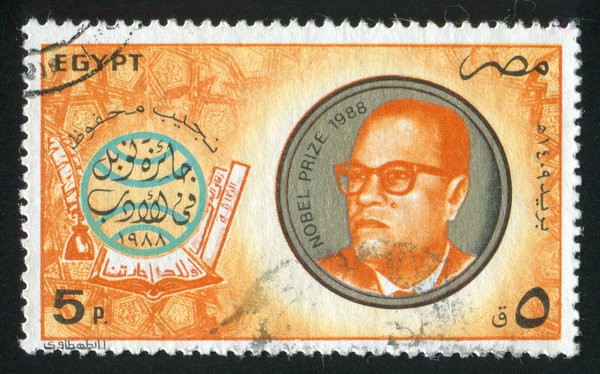
Naguib Mahfouz is the 20th-century prominent Egyptian writer who won the 1988 Nobel Prize for literature, aged 76, becoming the second Egyptian and the only Arab writer to win the world’s most prestigious award. The distinctiveness of Mahfouz’s work is attributed to multiple factors one top of which is his deep, preternatural talent in creating fictional realms with profound, rich, and complex characters that are yet never hard to understand nor to engage with. His rhetorical writing, vivid descriptions, and perfect storytelling are so captivating that readers cannot help but go on reading.
Mahfouz’s well-described realms stemmed from the lives of the Egyptians with a good background of the political circumstances at the time of each story. Since the 20th-century was a hot period in Egypt’s modern history, one can easily track the political as well as the social changes that the society witnessed over a course of a hundred years just by reading Mahfouz’s work.
That, for instance, was very clear in his novel Qushtumor in which he tells the story of three lifelong friends who participated in the revolution of 1919 and described their lives all the way until they voted for the referendum of 1981 to choose Hosny Mubarak as the new president of Egypt.
Mahfouz led a long artistically prolific life of over 70 years that started as early as the 1930s and continued all the way until 2004, only two years prior to his death. In such a long successful life, Mahfouz published a total of 55 non-fiction books, 35 novels, 15 stories, 8 plays, 26 movie scripts, 2 biographies, more than 335 short stories, and hundreds of newspaper columns. His talent was unmatched. He was so incredibly consistent and dedicated that for a long period he used to write a book every year. Even those long multiple-hundred-page novels were published consecutively.
Born in the neighbourhood of al-Gammalya in Old Cairo in 1911, Naguib Mahfouz started writing at the age of seventeen and published his first book in 1939. As his talent gradually unfolded, his works had gotten deeper and richer.
Then there was a period of inactivity precisely from 1949 to 1956 in which Mahfouz did not publish any books. Some attribute that to the disturbance of the political situation in Egypt after the Palestine War in 1948 followed by the Revolution/Coup of 1952 and the military overthrowing King Farouk and taking over the country.
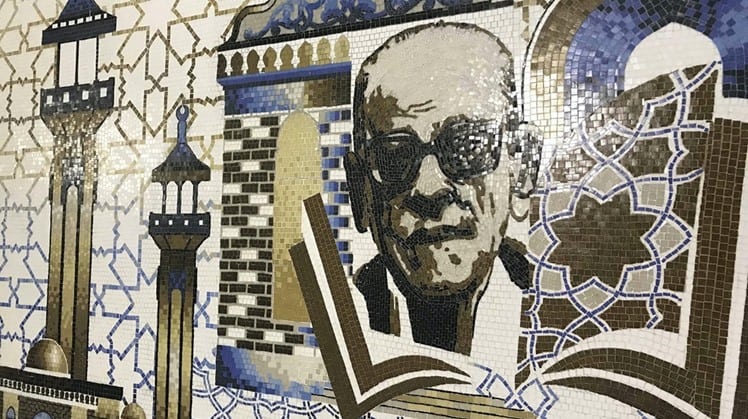
However, Mahfouz made a magnificent comeback in 1956 and 1957 when he wrote and published the Trilogy of Cairo, his top and most epic work ever of over 1500 pages. It was originally published in three volumes Palace Walk, Palace of Desire, and Sugar Street which tell the story of three generations of the al-Jawad’s family.
In 1959, Mahfouz published his second masterpiece Children of Alley (also titled Children of Gebelawi) which sparked public controversy and was banned from publication for a period of time. Because of that dispute, two young men with a knife attacked Naguib Mahfouz in October 1995. Thank God, the writer did not die but unfortunately, his neck nerves were severely injured, disallowing him to write except for a few minutes a day.
Other great books by Mahfouz are New Cairo, The Road, The Harafish, Adrift on the Nile, Karnak Cafe, The Beginning and the End, Miramar, and The Thief and the Dogs.
Interestingly, Mahfouz did not fly to Sweden to receive the Nobel Prize during the ceremony that was organised in December of the same year. Some say he was just never into flying and others claim he had aerophobia. Instead, Mahfouz sent his two mature daughters Om Kulthoum and Fatima to take on such responsibility. He also asked journalist and writer Mohamed Salmawy to give a speech in Arabic first on behalf of him during the ceremony.
Ironically, Mahfouz was compelled to fly to London a year later, in 1989, to have a heart operation!
Many of Mahfouz’s books were translated into multiple languages including English, French, and Spanish and are available for purchase on Amazon in paperback, hardcover, and Kindle editions.

Museum of Naguib Mahfouz
There was no better place to host the Museum of Naguib Mahfouz than a historic house in the same neighbourhood where the writer spent his childhood and a long period of his adult life. This is also where many of his novels were set.
The museum opened in late 2019 in one of Cairo‘s old buildings that were established in the 18th century and belonged to Prince Mohamed Abud Dahab who was a military leader at the time. The museum in and of itself is a beautiful example of 18th-century architecture. It consists of two floors, each having a main wide hall in the middle and multiple rooms on each side.
Each room in the museum shows a side of Mahfouz’s life. Two rooms, for instance, contain the writer’s personal desk, table, and bookshelves with hundreds of books that belonged to him. Another room shows tens of awards, medals, ribbons, and honours which he received over the course of his life. Most room walls are covered by texts that elaborate on the various stages of Mahfouz’s outstanding career.
The museum is open daily from 9:00 am to 5:00 pm except on Tuesdays. Given the important site of the museum, multiple attractions are nearby and are only a few-minute distance on foot. These attractions include al-Azhar Mosque and al-Hussein Mosque, two terrific architectural masterpieces and holy places that tourists should not miss. In addition, there are multiple Egyptian cafes in the area, one of which is the famous al-Fishawy Cafe whose establishment dates back to 1797.
So…
Literature is as important as history to explore a country, and this is another thing Egypt is pretty abundant with. One of the writers who led the literary revolution in 20th-century Egypt was Naguib Mahfouz whose talent, just like that of Om Kulthoum and Mohamed Abdul Wahab, has crossed time to reach more and more generations that cannot help but stand in awe at his brilliant works.
You can get to know more about Naguib Mahfouz by reading his books which you can find in multiple languages on Amazon and by paying his museum in Old Cairo a visit if you happen to make it to the capital city.

Unveiling the Most Terrifying Haunted Tours in Scotland
Scotland
25/04/2024

7 Top Amusement Parks in England for an Unforgettable Adventure
England
25/04/2024

Miami Tourism Statistics: A Comprehensive Overview of Visitor Numbers and Revenue
Travel Statistics
25/04/2024

The Enchanting Charm of Scotland Wedding Castles!
Scotland
25/04/2024

London in June: An Ultimate Guide to 13 Unmissable Events and Festivals
United Kingdom
25/04/2024