


Arlington National Cemetery: An Ultimate Guide to the Most Honoured Resting Place in the USA
Updated On: November 10, 2023 by  Courtney Augello
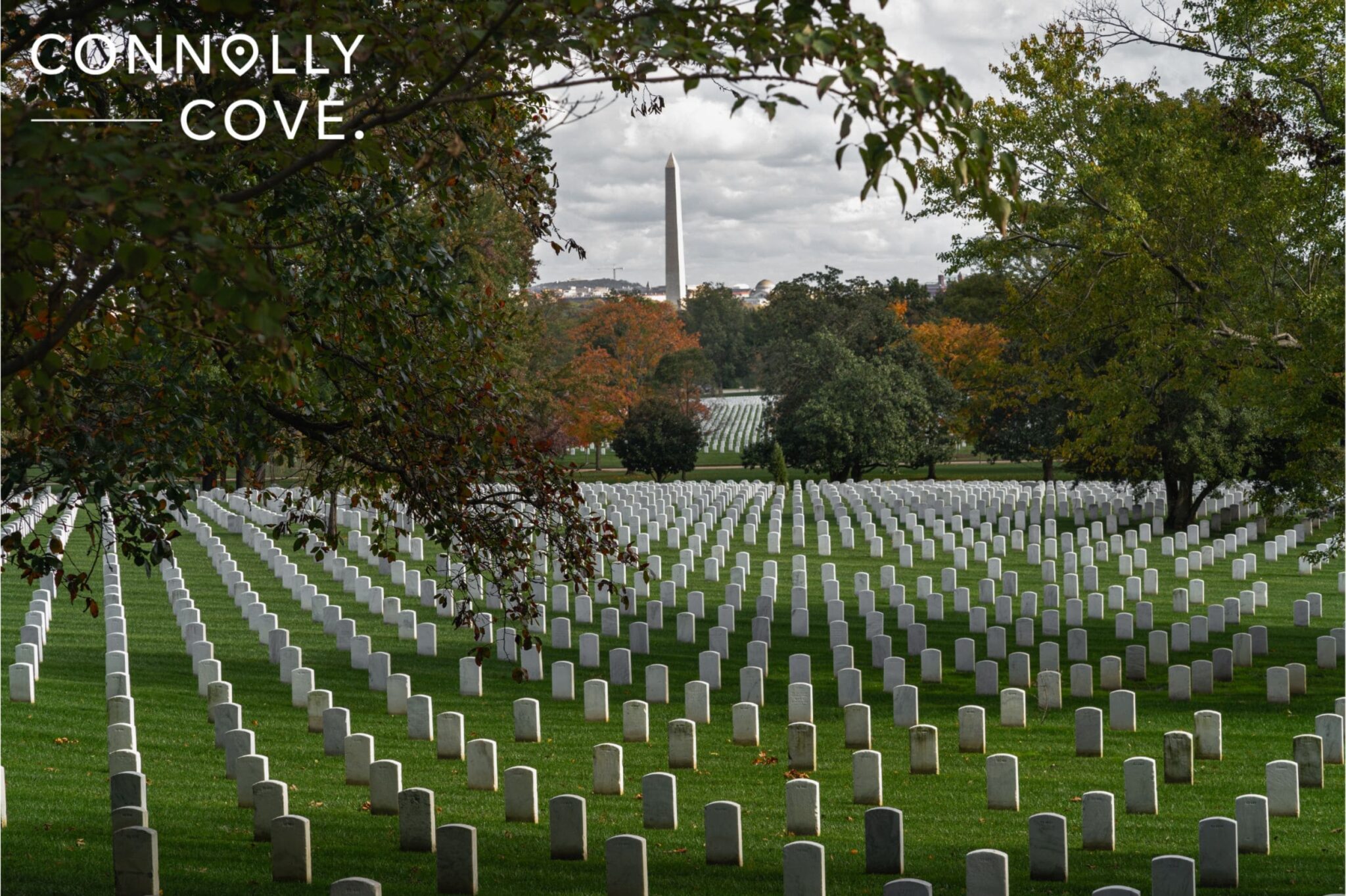
Located along the Potomac River, Arlington National Cemetery symbolises the history, sacrifice, and enduring values of the United States. The cemetery is a stark reminder of the sacrifices made by those who have served the USA and a testament to unity in times of division.
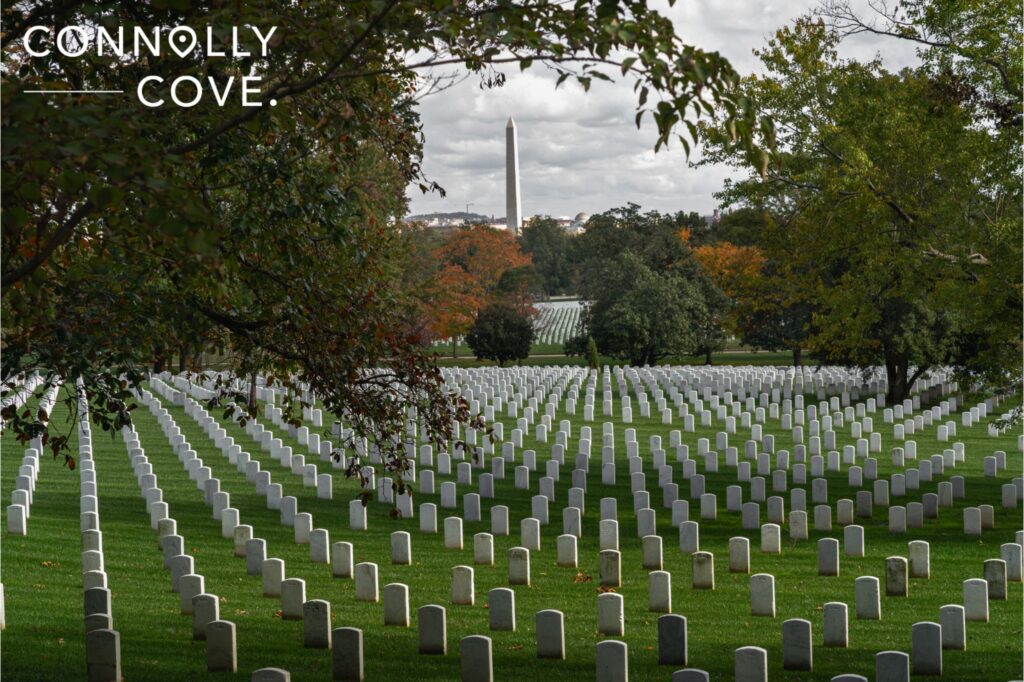
Arlington National Cemetery is bursting with history and deep symbolism. To help you explore it fully, we’ve delved into the history, significance, and attractions that make Arlington National Cemetery a destination for visitors from across the globe.
Table of Contents

What is Arlington National Cemetery?
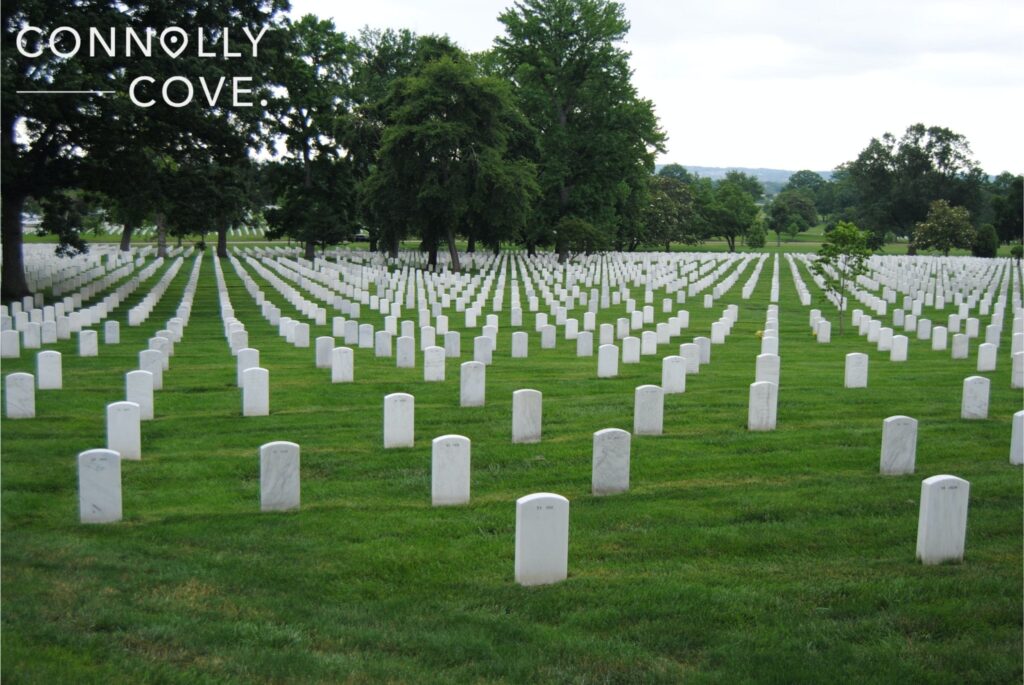
Arlington National Cemetery, located just across the Potomac River from Washington, D.C., is a hallowed ground that is a testament to the United States’ history, sacrifices, and enduring values. The cemetery encompasses 624 acres of land, making it one of the largest national cemeteries in the United States.
Over the years, it evolved into a place of national significance, a symbol of unity, and a tribute to the men and women who have given their lives in service to their country.
The Role of Arlington as a National Cemetery
Arlington’s primary role is to provide a final resting place for military personnel, veterans, and their eligible family members. It serves as a place of reverence and remembrance, embodying the nation’s commitment to honouring its fallen heroes.
In addition to veterans from every U.S. conflict since the Civil War, the cemetery also houses the remains of former presidents, distinguished public figures, and astronauts. This diverse array of interments highlights its status as a national shrine and the nation’s gratitude and respect for those who have served.
Principles and Values
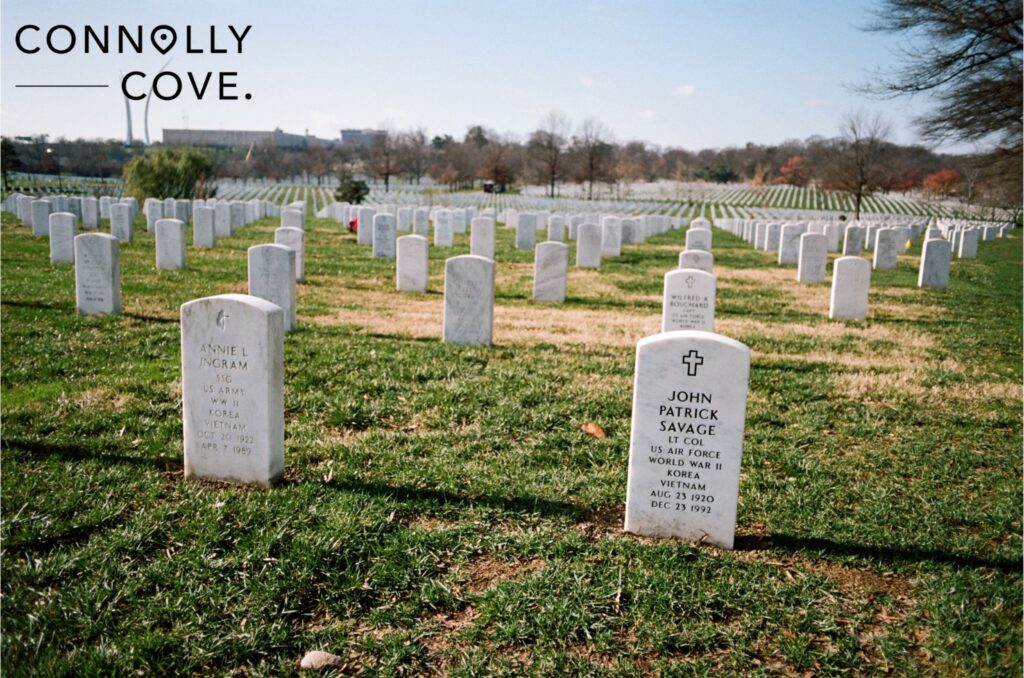
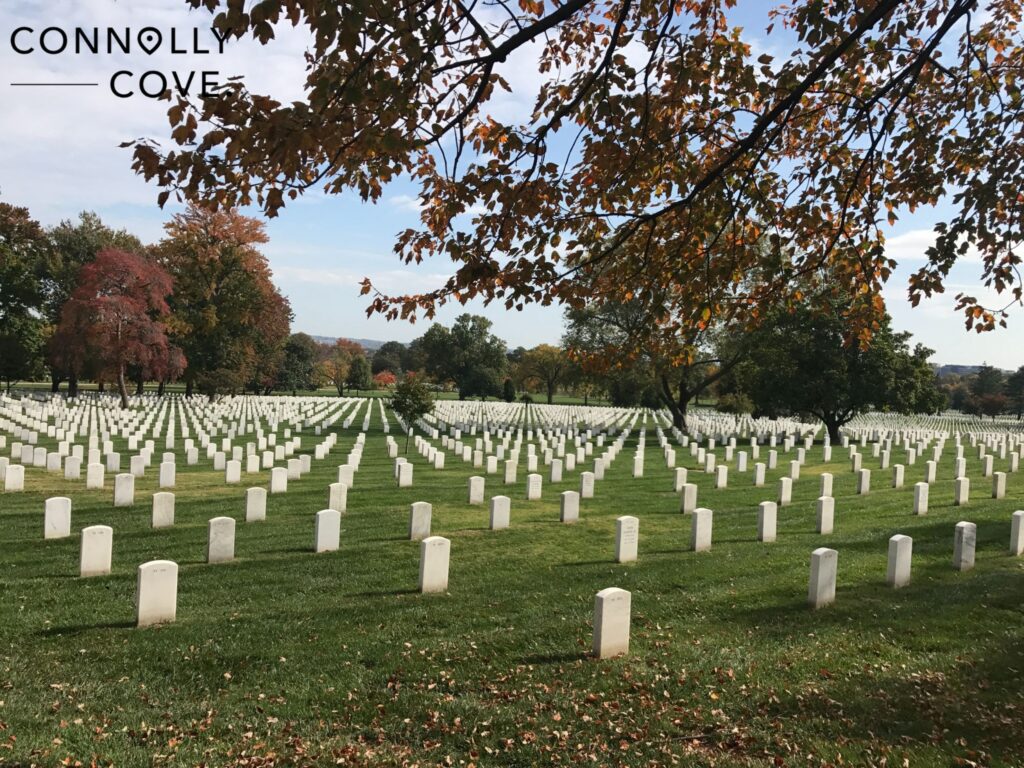
Arlington National Cemetery embodies core principles and values that are integral to the American identity. It is a tangible symbol of patriotism, sacrifice, and duty. The values of honour, integrity, and selflessness are reflected in every gravestone and memorial, reminding visitors of the sacrifices made by those who rest there.
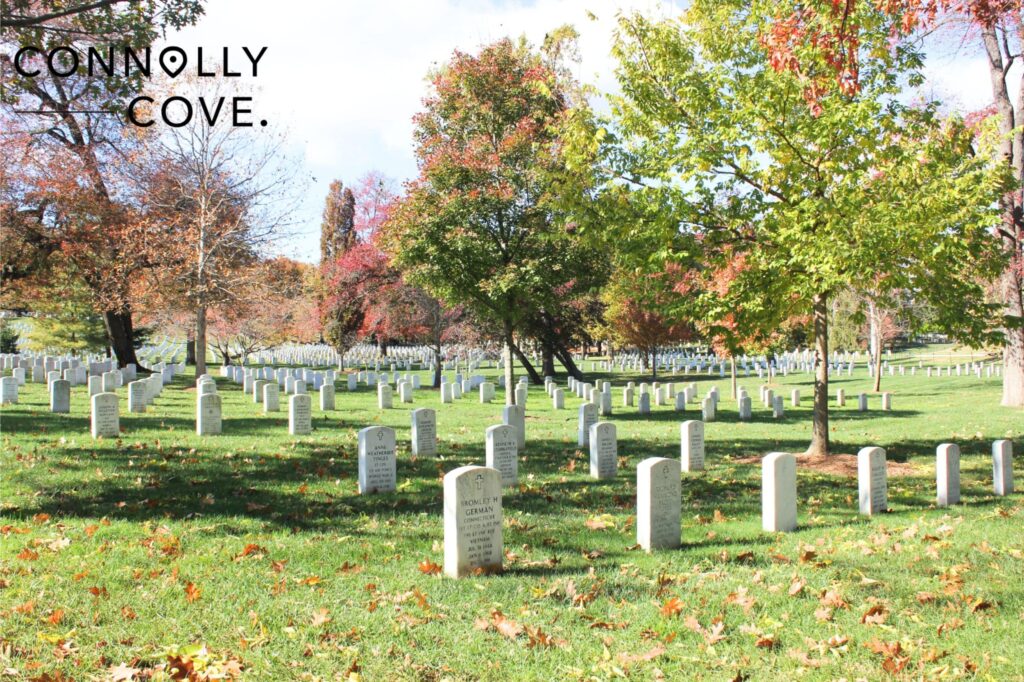
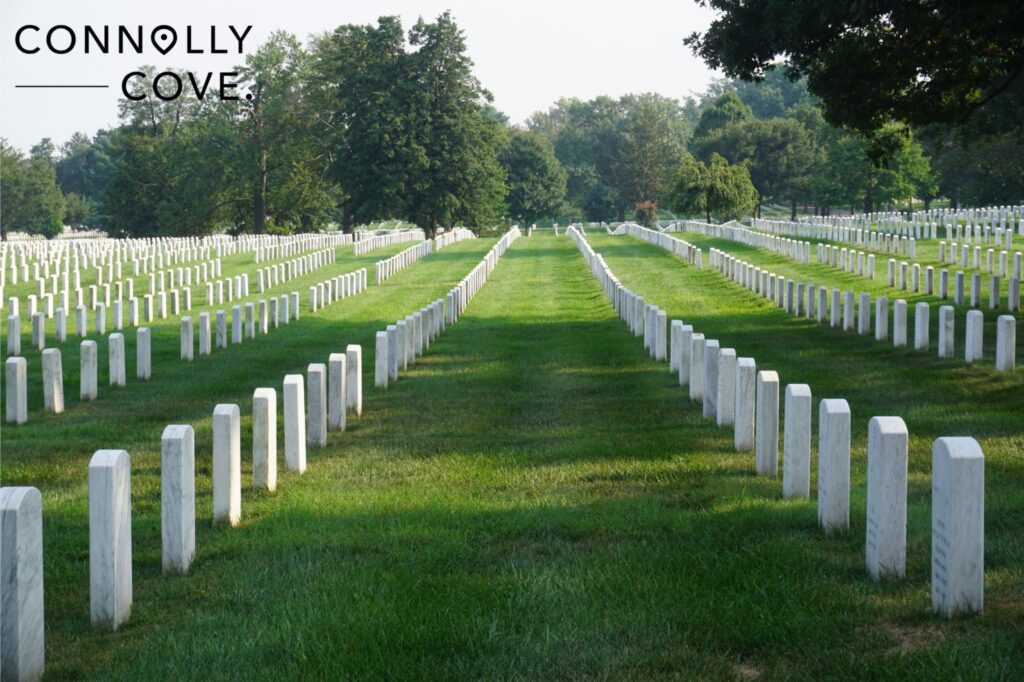
Moreover, Arlington serves as a powerful reminder of the nation’s commitment to the ideals of freedom, democracy, and unity. Its rows of white headstones, meticulously maintained grounds, and solemn ceremonies convey the enduring principles of respect, duty, and loyalty that underpin the American spirit.
Where is Arlington National Cemetery?
Arlington National Cemetery is located in Arlington, Virginia. The surrounding area is steeped in historical context, adding to its significance. The land on which the cemetery stands was originally the estate of Confederate General Robert E. Lee before the Union Army seized it during the Civil War and turned it into a burial ground for Union soldiers.
This act held strategic importance, allowing Union forces to control the high ground overlooking Washington, D.C. Over time, the cemetery evolved from a wartime necessity into a national symbol of honour and remembrance.
The nearby Arlington House, which once served as Lee’s residence, is now a museum and serves as an important historical landmark.
Transportation Options
Accessibility to Arlington National Cemetery is facilitated by a range of transportation options. The cemetery is well-connected to major highways, making it easily reachable by car.
Additionally, Arlington Cemetery Station, a dedicated Metro station on the Washington Metro system’s Blue Line, provides convenient access for those using public transportation. Shuttle services, guided tours, and pedestrian pathways within the cemetery further enhance the experience and accessibility for people of all ages and mobility levels.
The closest airport to Arlington National Cemetery is Ronald Reagan Washington National Airport (DCA). This airport is just a few miles from Arlington, Virginia, making it the most convenient option for far-away tourists planning to visit the cemetery or the nearby Washington, D.C. area.
Proximity to Washington, D.C.
Arlington National Cemetery’s proximity to Washington, D.C., is one of its defining features. The United States’ capital is just a stone’s throw away, and the cemetery’s location on the Virginia side of the Potomac River offers panoramic views of the iconic Washington skyline.
This proximity makes it easily accessible to tourists and allows visitors to seamlessly integrate a visit to Arlington National Cemetery into their Washington, D.C., sightseeing itinerary.
The combination of these two destinations underscores the interconnectedness of national history and the values enshrined at the cemetery, making it an essential stop for tourists seeking a deeper understanding of the United States’ history.
History of Arlington National Cemetery
The history of Arlington National Cemetery is deeply intertwined with the origins and early history of Arlington as a burial ground. The land on which the cemetery now stands was originally owned by George Washington Parke Custis, the adopted grandson of President George Washington and the step-grandfather of Robert E. Lee.
Custis had constructed Arlington House on the estate, which was not only his family home but also a place of historical and cultural significance. Upon Custis’s death in 1857, the property passed to his daughter, Mary Anna Randolph Custis Lee, who was married to Robert E. Lee.
The Impact of the American Civil War
The American Civil War marked a pivotal moment in the cemetery’s history, transforming it from a private family estate into a national burial ground. In 1861, as the Civil War erupted, Union forces seized the estate for its strategic location overlooking Washington, D.C.
Over the course of the war, the grounds of Arlington became a resting place for Union soldiers who had perished in battle. The first military burial occurred in May 1864, when Private William Henry Christman was interred there. As the war raged on, the cemetery’s growth accelerated, cementing its role as a national cemetery.
Development and Expansion
The development and expansion of Arlington National Cemetery over the years have been both significant and continuous. By the end of the Civil War, over 16,000 Union soldiers were buried on the grounds.
Recognising its importance as a site of national remembrance, efforts were made to acquire the land legally, and it was officially designated as a national cemetery on June 15, 1864. Subsequent years saw the addition of monuments and memorials, including the Tomb of the Unknown Soldier in 1921.
Today, Arlington National Cemetery spans 624 acres and remains an active burial site for military personnel, veterans, and their eligible family members.
Significant Graves at Arlington National Cemetery
The Tomb of the Unknown Soldier
Arlington National Cemetery is home to numerous significant graves and tombs, each with its own unique history and importance. The Tomb of the Unknown Soldier is one of the cemetery’s most revered and iconic sites.
This tomb represents the nation’s deep gratitude and respect for the unidentified soldiers who made the ultimate sacrifice in defence of their country. It was established in the aftermath of World War I, a conflict marked by unprecedented casualties and the challenge of identifying fallen soldiers.
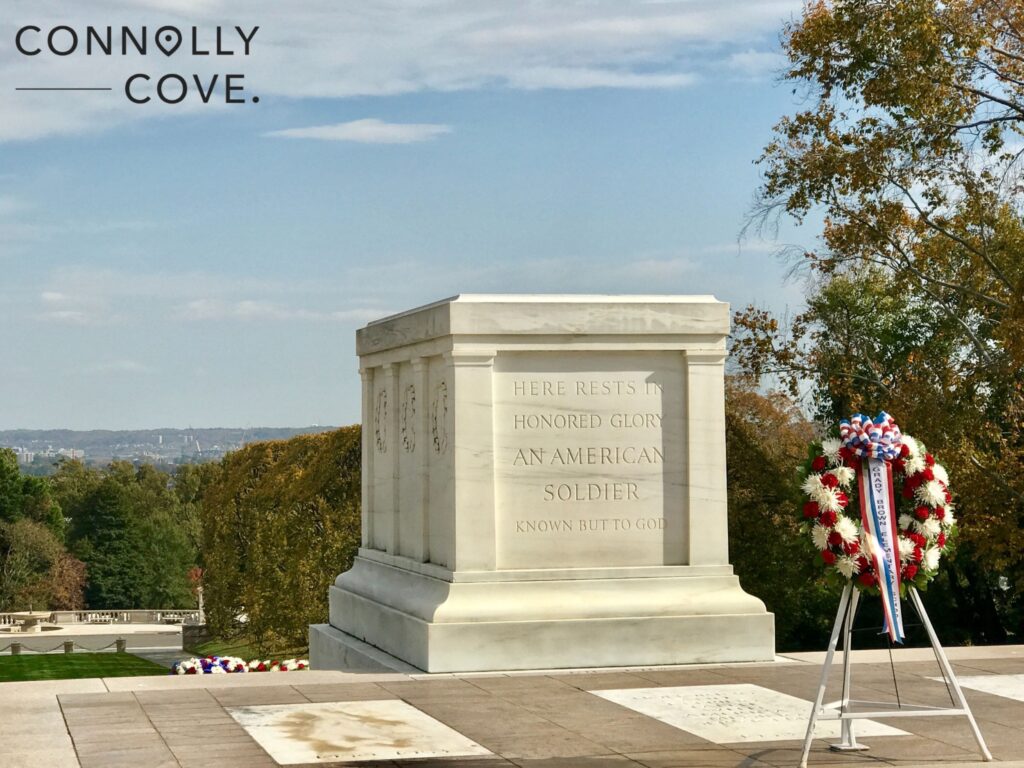
The tomb itself was dedicated on November 11, 1921, and it contains the remains of an unidentified American soldier who symbolically represents all who have died in service to the United States.
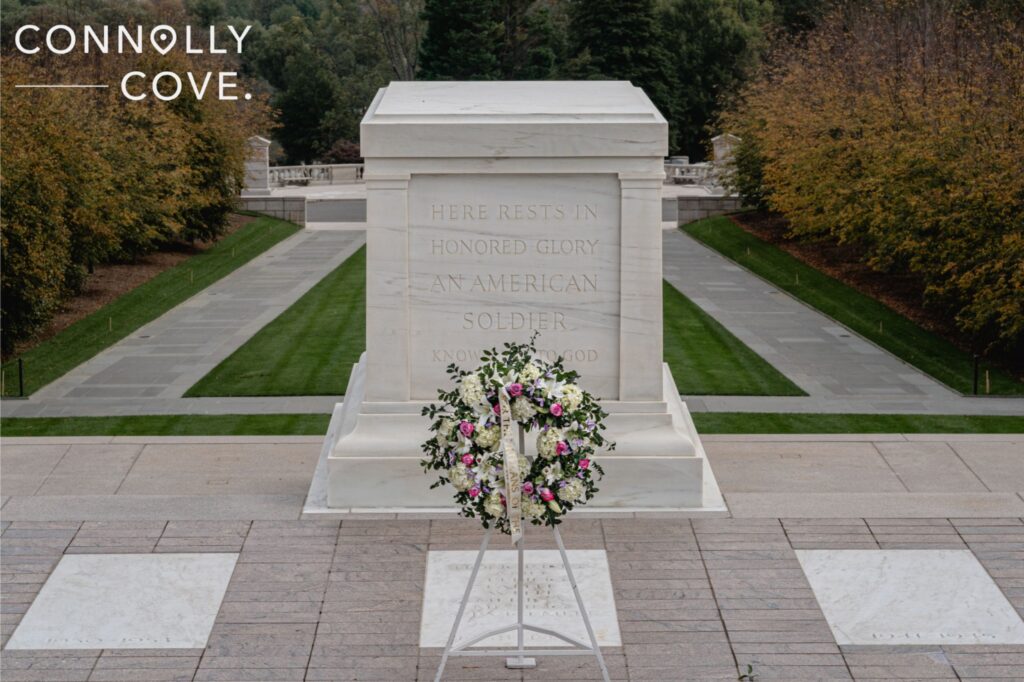
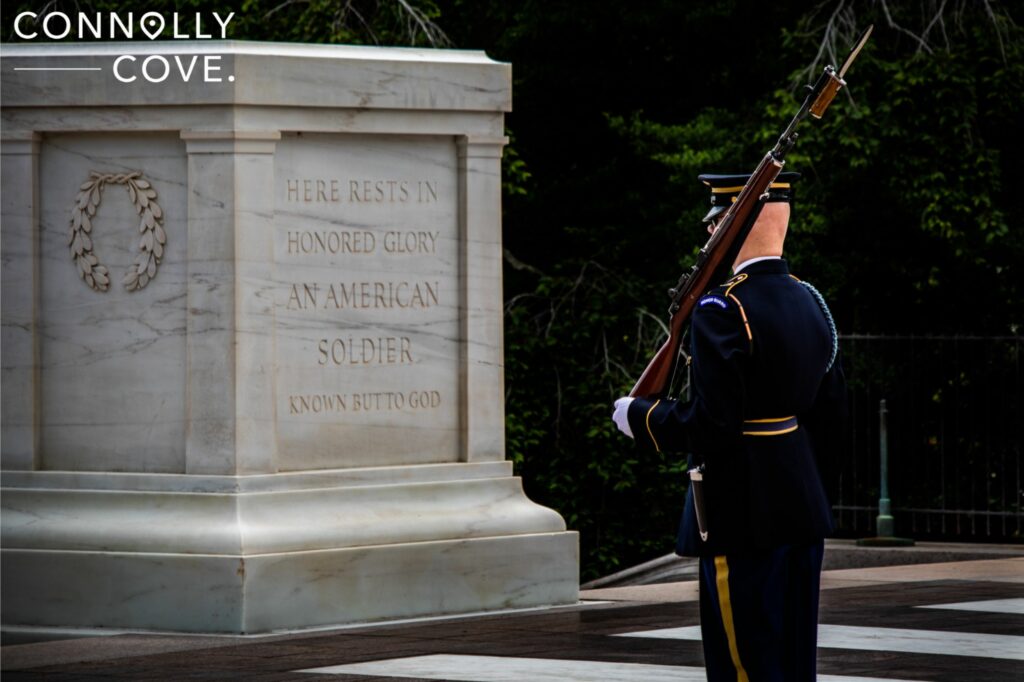
The tomb is inscribed with the words “Here Rests in Honored Glory an American Soldier Known but to God,” a poignant testament to the anonymity of those who gave their lives. Visitors from around the world come to pay their respects, and it remains a focal point for ceremonies and tributes.
The Changing of the Guard Ceremony
The Changing of the Guard ceremony is integral to the Tomb of the Unknown Soldier’s legacy. This meticulously choreographed ritual occurs at the tomb 24 hours a day, 365 days a year, regardless of weather conditions.
The Changing of the Guard is a symbol of unwavering commitment and respect. It involves a precise sequence of movements, including measured steps and the presentation of arms. The ceremony is a profound display of respect and is conducted in complete silence, allowing visitors to reflect on the significance of the tomb and the sacrifices it represents.
John F. Kennedy’s gravesite
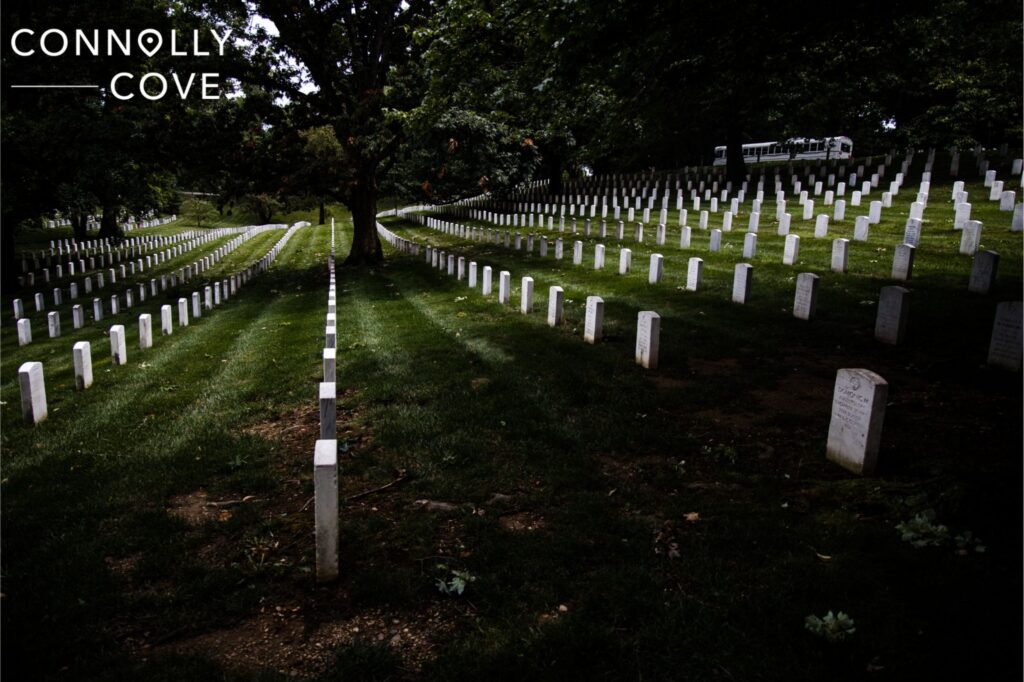
Among the significant graves and tombs at Arlington National Cemetery, the final resting place of President John F. Kennedy holds a prominent and poignant position. Situated on a gentle slope overlooking Washington, D.C., President Kennedy’s gravesite is a testament to his legacy and a symbol of a nation’s collective grief.
John F. Kennedy was the 35th President of the United States, serving from 1961 until his tragic assassination in 1963. His presidency was marked by the challenges of the Cold War, the Cuban Missile Crisis, and the civil rights movement.
Kennedy’s leadership and charisma left an unforgettable mark on the United States and the world. His assassination in Dallas, Texas, on November 22, 1963, shocked the nation and the world, plunging America into mourning.
His burial at Arlington serves as a place of pilgrimage for countless visitors who come to pay their respects to a leader who inspired a sense of hope and purpose during a critical period in American history. The eternal flame at his gravesite, lit by Jacqueline Kennedy, symbolises the enduring spirit of his vision and ideals.
Other Notable Graves and Memorials
Famous Military Figures and Leaders
Arlington National Cemetery is not only a place of national honour but also a final resting place for famous military figures and leaders who have played pivotal roles in shaping the course of American history.
Among the notable graves is General George S. Patton, one of World War II’s most renowned and charismatic military leaders. His burial site is marked by a simple white cross, like many others in the cemetery, but it serves as a reminder of his legendary leadership and unbreakable spirit.
Another prominent figure interred at Arlington is General John J. Pershing, the commander of the American Expeditionary Forces in World War I. His presence at the cemetery signifies the contributions of American forces in the Great War.
Memorials to Wars and Conflicts
Arlington National Cemetery is also home to a series of memorials dedicated to various wars and conflicts in which the United States has been involved. The impressive World War II Memorial, completed in 1997, honours the millions who served during that global conflict.
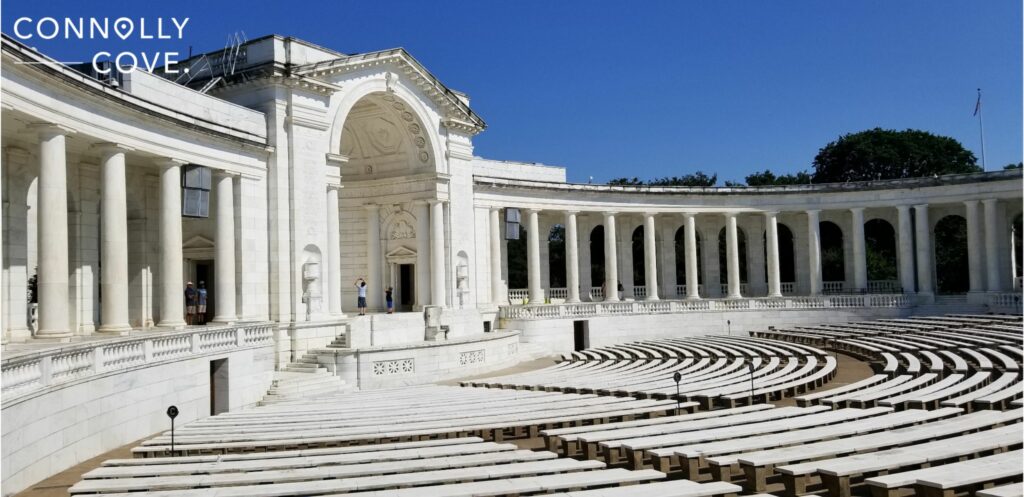
Nearby, the Space Shuttle Challenger Memorial pays tribute to the astronauts who tragically lost their lives in the Challenger disaster in 1986. The Memorial Amphitheater, with its Tomb of the Unknown Soldier, is a solemn tribute to all who have served in the U.S. armed forces.
The Women’s Memorial
The Women in Military Service for America Memorial is a testament to the significant and often overlooked contributions of women in the U.S. military. Dedicated in 1997, this memorial serves as a symbol of recognition for the millions of women who have served in various branches of the armed forces throughout American history.
The memorial’s design incorporates elements of history and modernity, featuring a ceremonial entrance with a reflecting pool and an education centre that chronicles the stories and achievements of women in the military.
It is a tribute to the courage, dedication, and patriotism of women who have served their country, challenging traditional gender roles and breaking new ground in the armed forces. The Women’s Memorial is a reminder of the evolving role of women in the military and their vital contributions to the nation’s defence.
The Changing of the Guard at Arlington National Cemetery
The Changing of the Guard ceremony at Arlington National Cemetery is a time-honoured tradition that originated in the early 20th century. Its evolution can be traced back to 1926 when the Army established a ceremonial guard to protect and honour the Tomb of the Unknown Soldier.

Initially, the ceremony was relatively simple, but it has grown in complexity and precision over the years. The modern rendition of the ceremony, as we know it today, was established in 1937.
Since then, the Changing of the Guard has become a daily ritual, representing the solemn respect for the unidentified fallen and the enduring commitment of the U.S. military to honour its heroes.
Symbolism and Precision
The Changing of the Guard at Arlington National Cemetery is characterised by meticulous precision and deep symbolism. The ceremony is carried out by the soldiers of the 3rd U.S. Infantry Regiment, known as the Old Guard, chosen for their exceptional discipline and dedication.
The guards, dressed in immaculate uniforms, perform a precisely choreographed sequence of movements, including the measured steps of the guards, the presentation of arms, and the ceremonial rifle inspection.
The sentinel, who keeps vigil at the tomb, remains stoic and unwavering, reflecting the highest level of professionalism and respect. The symbolism of the ceremony is profound, signifying the nation’s unwavering commitment to honouring its fallen soldiers and ensuring that their sacrifices are never forgotten.
Tourist Attractions Near Arlington National Cemetery
The Arlington House
Among the notable tourist attractions near Arlington National Cemetery is the Arlington House, also known as The Robert E. Lee Memorial. This historic mansion is situated atop a hill within the cemetery’s grounds and offers visitors a window into American history.
The Arlington House holds a significant historical background, as it was once the home of Confederate General Robert E. Lee, the famed military leader of the Confederate Army during the American Civil War. Visitors can explore its rich history, view its carefully preserved interior, and enjoy panoramic views of the cemetery and Washington, D.C., skyline.
The house and its grounds provide a fascinating perspective on the complexities of the Civil War era, offering a chance to reflect on the personal and national sacrifices that define this period of American history.
It is a living monument to the nation’s commitment to reconciliation and remembrance, making it an essential stop for those exploring the historical and cultural heritage of Arlington National Cemetery.
The Marine Corps War Memorial
A short distance from Arlington National Cemetery stands the Marine Corps War Memorial, often called the Iwo Jima Memorial. This iconic monument pays tribute to the valour, sacrifice, and determination of the United States Marine Corps during World War II, particularly the Battle of Iwo Jima.
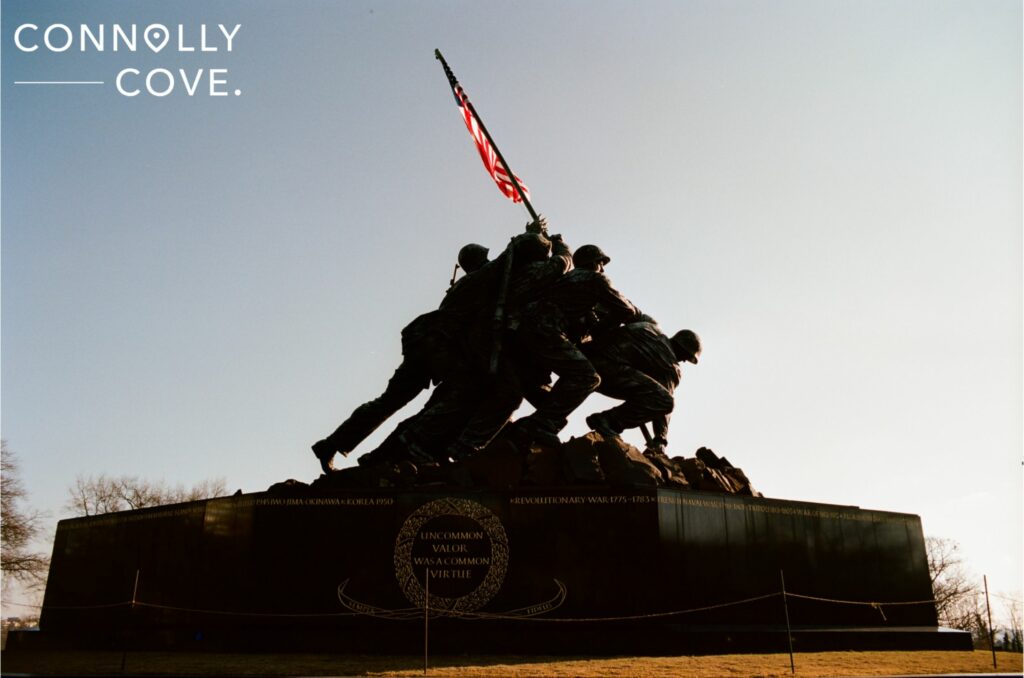
The Marine Corps War Memorial was dedicated on November 10, 1954, to honour the Marine Corps’ 179th anniversary. It depicts one of the most iconic moments of World War II: the raising of the American flag on Mount Suribachi during the Battle of Iwo Jima in February 1945.
The monument was inspired by a Pulitzer Prize-winning photograph taken by Joe Rosenthal. It symbolised the courage, camaraderie, and tenacity of the Marines who fought in the Pacific theatre during the war.
The monument is striking, with a colossal bronze sculpture of six Marines hoisting the American flag atop a mountain-like pedestal. The figures are positioned to capture the intense moment of the flag-raising.
The monument’s scale and attention to detail evoke a sense of awe and respect, drawing visitors from across the USA and around the world. The Marine Corps War Memorial is a powerful symbol of the sacrifices made by the Marine Corps and all military branches during World War II.
Fort Myer
Fort Myer, located adjacent to Arlington National Cemetery, is a site of great historical significance. Originally established during the Civil War as Fort Whipple, it has played a pivotal role in the nation’s defence and has a storied past.
One of the notable attractions at Fort Myer is the Fort Myer Historic District, which includes beautifully preserved historic buildings and quarters dating back to the late 19th century. Among these structures is the iconic Sheridan Gate, a grand entrance to the fort that pays tribute to General Philip H. Sheridan, a prominent Civil War figure.
Visitors can also explore the Fort Myer Chapel, a charming Gothic-style chapel built in 1933, which offers a peaceful sanctuary for reflection and meditation.
Fort Myer is perhaps best known for being home to the U.S. Army’s elite ceremonial units, including the Old Guard and the U.S. Army Band, known as “Pershing’s Own.” These units perform military ceremonies and provide musical support at official events in the Washington, D.C., area.
Additionally, Fort Myer is home to the Twilight Tattoo, a free, open-air military pageant and concert held during the summer months, showcasing the precision and skill of military drill teams, bands, and historical reenactments.
National 9/11 Pentagon Memorial
Also near the Arlington National Cemetery is the National 9/11 Pentagon Memorial, a sombre and respected site that serves as a powerful tribute to the tragic events of September 11, 2001.
The National 9/11 Pentagon Memorial is located on the grounds of the Pentagon, the headquarters of the U.S. Department of Defense, which was one of the targets of the September 11th attacks.
On that fateful day, American Airlines Flight 77 crashed into the western side of the Pentagon, claiming the lives of 184 people. The memorial was designed to honour each of these victims and the thousands who lost their lives at the World Trade Center in New York City and in a field in Pennsylvania.
The design of the memorial is deeply symbolic. It consists of 184 illuminated benches, each representing a victim of the Pentagon attack. The benches are arranged according to the birth years of the victims, creating a timeline that allows visitors to reflect on the passage of time and the lives cut short.
In the direction of the Pentagon’s impact point, a wall of 85 illuminated stainless steel panels bears the victims’ names. A reflecting pool and serene landscaping provide a tranquil setting for contemplation and remembrance.
George Washington’s Mount Vernon
Located a short drive from Arlington National Cemetery is George Washington’s Mount Vernon, the historic estate of the first President of the United States. Mount Vernon holds a significant place in American history and offers visitors a glimpse into the life and times of the nation’s founding father.
The history of Mount Vernon dates back to the mid-18th century when George Washington inherited the estate from his older half-brother, Lawrence. Over the years, Washington transformed Mount Vernon into a thriving plantation with a grand mansion, lush gardens, and a functioning distillery.
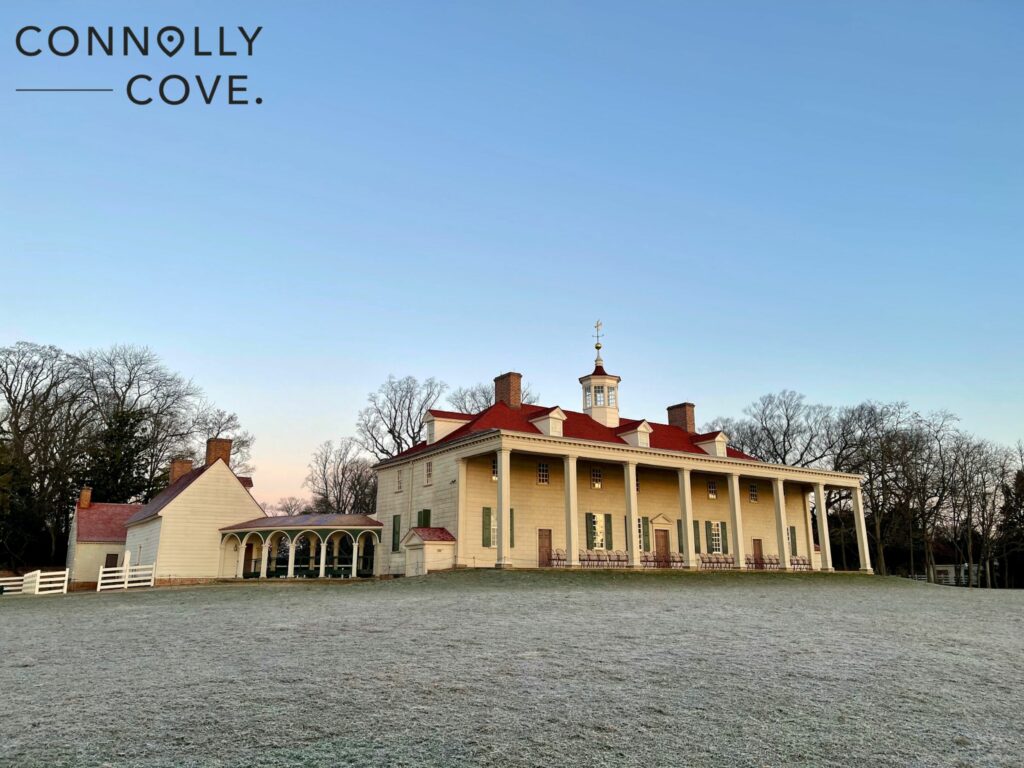
The mansion is a meticulously preserved example of 18th-century architecture and interior design. Visitors can explore the rooms where George Washington and his family lived, gaining insights into his daily life, leadership, and contributions to the United States.
The estate’s gardens and landscapes are equally captivating, featuring beautifully maintained grounds, including the Upper Garden, the Lower Garden, and the famous Bowling Green.
In 2007, a new distillery was opened on the estate based on Washington’s original distillery and passion for spirits. It produces whiskey and brandy using 18th-century techniques, allowing visitors to learn about the role of distillation in Washington’s life and the early American economy.
Guided Tours
Guided tours of Mount Vernon offer a comprehensive experience for visitors eager to delve into the history of the estate. Knowledgeable guides lead tours of the mansion, providing historical context and anecdotes about George Washington’s life and the era in which he lived.
Additionally, visitors can explore the outbuildings, including the reconstructed distillery and gristmill, which showcase the economic and agricultural aspects of Mount Vernon. The estate also offers guided tours of the gardens and grounds, highlighting the horticultural practices and plant varieties that were integral to daily life during Washington’s time.

Arlington National Cemetery is an Unforgettable Destination
Arlington National Cemetery is a solemn testament to the valour, sacrifice, and enduring values that define the United States of America. Its rich history, dating back to the tumultuous days of the American Civil War, showcases the nation’s commitment to honouring those who have given their lives while serving their country.
In the shadow of the nation’s capital, Arlington National Cemetery serves as a place of reflection, honour, and education. As tourists explore the rows of white headstones and witness the Changing of the Guard, they are reminded of the American ideals of freedom, democracy, and honouring the fallen.
If you’re visiting the Eastern United States, check out our blog on Massachusetts USA: 12 Great Attractions in the Bay State.

The Triquetra: Exploring the Meaning and History of the Trinity Knot
Culture Exploration
05/05/2024

An Exciting Brief History of Ireland
Ireland
05/05/2024
The National Gallery in London- London Attractions
England
05/05/2024
Trafalgar Square – London Attractions
Europe
05/05/2024

English Warriors: Legacy and Warfare
History and Heritage
04/05/2024