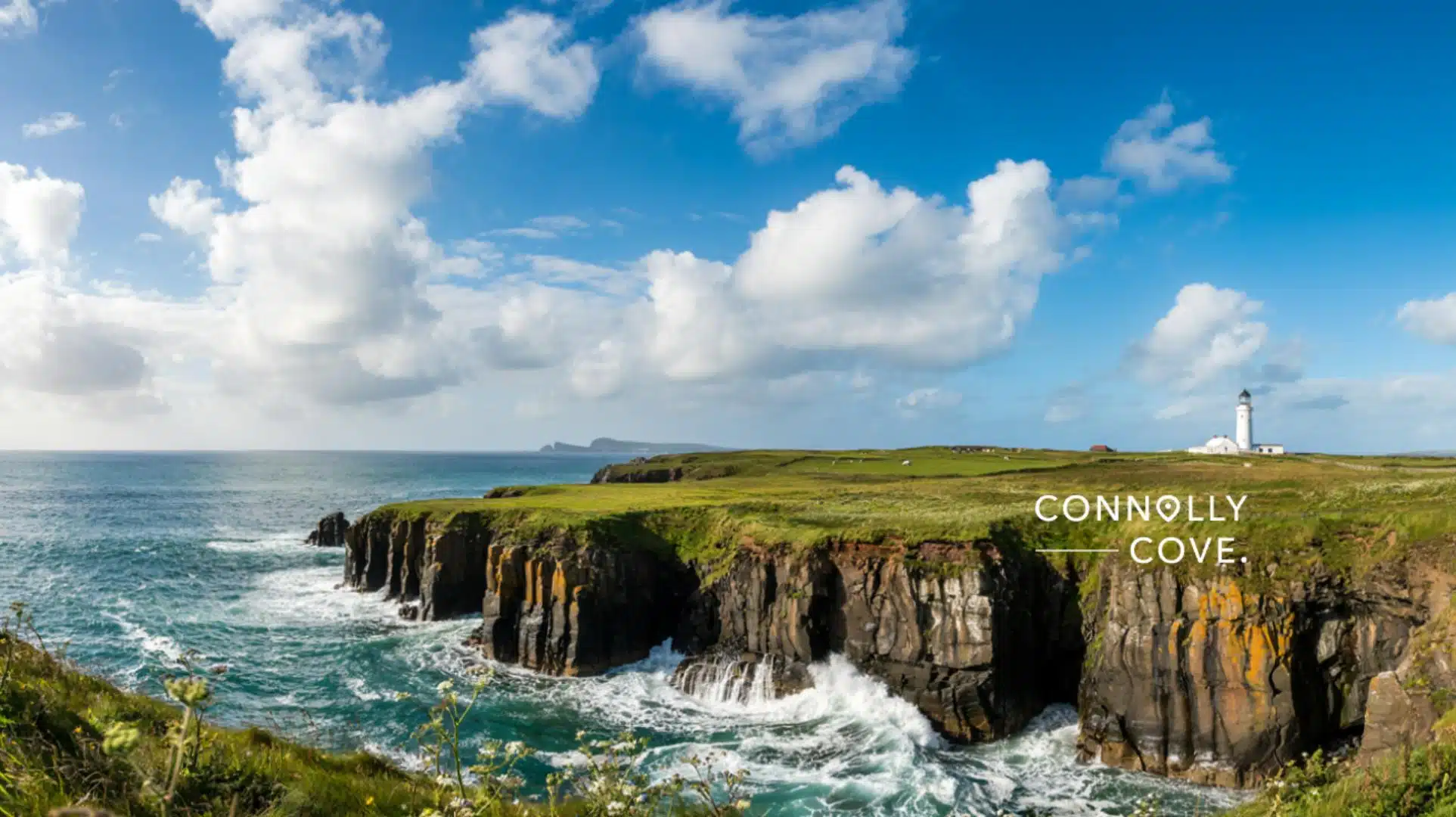

Tory Island sits nine miles off the coast of County Donegal, further from the Irish mainland than almost anywhere else people still call home year-round. Roughly 150 islanders live across West Town and East Town, holding onto a way of life built on fishing, the Irish language and a fierce independence from the mainland.
This is a place where Celtic mythology, early Christian history and modern art sit within a few square kilometres of each other. Balor of the Evil Eye is said to have ruled from its cliffs, Colmcille founded a monastery here in the sixth century, and a self-taught school of painters put Tory on the map of European art. Travellers who make the crossing find a Gaeltacht community that has outlasted storms, emigration and the loss of its own king.
Table of Contents
The Legend of Balor and the Fomorians
Tory Island’s name is inseparable from Balor of the Evil Eye, the one-eyed giant of the Fomorians who, according to the Lebor Gabála Érenn, ruled the island before his defeat by his own grandson Lugh. Dún Bhaloir, a ruined promontory fort on the island’s north side, is still pointed to as Balor’s stronghold, where cliffs drop straight into the Atlantic. What’s left today is a narrow neck of rock and earthworks rather than anything resembling a castle, which somehow makes the story feel more believable rather than less. It’s one of the oldest surviving stories among Celtic mythology’s creatures, predating much of the pantheon later grouped under the Tuatha Dé Danann.
Islanders tell the tale slightly differently depending on who’s telling it, which is fairly normal for oral tradition passed down for well over a thousand years. What stays constant is the geography: the fort, the cliffs, and the sea that supposedly swallowed a giant.
St Colmcille and the Tau Cross
Christianity reached Tory Island in the sixth century when Colmcille founded a monastery here, and the ruins and cross-slabs from that period are still the reason many history-minded visitors make the crossing. The most debated of these is the Tau Cross, a T-shaped stone cross with no exact match anywhere else in Ireland. A small early Christian graveyard survives close by, still in occasional use, which gives the site a working feel rather than a museum one.
Its design has led some historians to point toward links with early Egyptian Coptic Christianity, though that connection is contested rather than settled. We’d rather flag this as an open question than state it as fact, since no direct documentary evidence ties the two traditions together. It’s the kind of debate that makes the extra hour at the round tower and cross worth it.
The King of Tory: A Tradition Without an Heir
Tory Island elected its own king for centuries, a ceremonial figure who welcomed the ferry, settled disputes and represented the island to the outside world. The last to hold the title, Patsy Dan Rodgers, died in October 2018 after more than two decades in the role, and islanders have not elected a successor since.
That gap matters more than most travel guides let on. The kingship of Tory isn’t folklore dressed up for visitors; it’s a working tradition that has simply gone quiet, and nobody on the island seems in a hurry to fill it. In practice, day-to-day island matters now run through the local community council and cooperative rather than through any single figurehead, which suits some islanders fine and unsettles others. When Rodgers died, the way the community marked his passing drew on the same Irish farewell traditions found across Donegal and the rest of the country, and much of that language of grief is still spoken here today.
“Standing at Tory’s pier, you notice there’s no one there to greet you in the old way anymore, and that absence says as much about the island’s story as any of the myths does.” — Ciaran Connolly, Founder of ConnollyCove
Life in the Gaeltacht: Toraigh’s Living Irish Language
Tory Island, or Toraigh in Irish, is one of the smallest Gaeltacht communities left in the country, and Irish is the language people actually speak to each other here, not a subject taught for visitors’ benefit. The island’s isolation has helped preserve a distinct Ulster Irish accent that linguists travel here to record. The island’s small primary school still teaches through Irish, though numbers have fallen as families have moved to the mainland for work and secondary schooling.
That isolation cuts both ways. Ferries can be cancelled for days at a time in winter, and the school roll has shrunk over the past decade. We’ve covered the story of the Irish language in more depth elsewhere, and Tory is one of the clearest examples of how geography alone can keep a language alive. Older residents still greet visitors with phrases drawn from traditional Irish proverbs, reaching for the same well-worn sayings their parents used.
Derek Hill and the Tory Island Painters
Tory Island’s art colony began almost by accident in 1956, when the English painter Derek Hill visited and began teaching locals to paint what they saw around them. James Dixon, a Tory fisherman with no formal training, became the movement’s best-known name, and his bold, instinctive style is still compared to Alfred Wallis, the self-taught Cornish painter working a similar patch of coastline decades earlier.
The tradition continues through the island’s small gallery, where visitors can see work from Dixon and the painters who followed him, alongside occasional exhibitions on the mainland in Donegal that bring the collection to a wider audience. It’s a rare thing: a genuine, unbroken folk-art movement still producing work on the same island where it started.
Getting to Tory Island
The only way to reach Tory Island is by ferry from Magheroarty pier, with a shorter summer crossing sometimes available from Bunbeg. The journey takes roughly forty-five minutes to an hour, and it’s genuinely rougher than the brochures suggest. Booking ahead is worth doing in July and August, when demand outstrips the ferry’s capacity on good-weather days.
Sailings depend entirely on the weather, and it’s common for the service to be suspended for several days running in autumn and winter. Anyone touring the wider Donegal coastline before or after the crossing should build a buffer day into their plans rather than book a tight connection. Cash is essential once you’re on the island, since card facilities are limited, and motion sickness tablets are worth packing regardless of the forecast.
Things to See and Do
Beyond the Tau Cross and the art gallery, Tory Island rewards slow walking rather than a checklist. The cliffs at the island’s western end shelter breeding seabirds, including puffins through early summer, and the old lighthouse and Balor’s Fort both sit along walkable coastal paths, including a route locals call the Wishing Stone walk.
Divers exploring the clear water around the island are part of a newer, smaller strand of tourism, alongside birdwatching trips built around the puffin season. For anyone building a wider island-hopping trip, Tory sits comfortably alongside Ireland’s other remarkable islands as one of the most remote and least crowded options on the west coast.
Visiting in Winter
Winter on Tory Island is a genuinely different trip to the one most guides describe, and it’s worth knowing that before you book. Ferries can be cancelled for a week or more when Atlantic storms roll in, the hotel and hostel run reduced hours, and daylight is short.
None of that makes winter a bad time to go; it just means building in slack. The island’s broadband hub has, in recent years, made short off-season stays more workable for anyone able to bring their work with them, which is a newer angle on island life that older guides rarely mention. Bring cash, bring layers, confirm sailings the morning of travel rather than the week before, and treat the crossing itself as part of the experience rather than a formality to get through.
What Tory Island Teaches Visitors About Staying Power
Most Irish islands lost people steadily through the twentieth century, and several were abandoned outright. Tory never was, largely because islanders refused a government resettlement offer in the 1970s and rebuilt after some of the worst storms in living memory. That decision is the quiet thread running through everything else on the island: the language that never stopped being spoken, the art that kept being made, and a kingship that islanders may yet decide to revive on their own terms rather than anyone else’s.
For a traveller, that history changes what the visit is for. This isn’t a heritage site being preserved for tourists; it’s a small, working community that happens to sit on top of some of the oldest stories in Irish mythology. Go for the myths and the paintings, but stay long enough to notice that the island itself is still very much being written.
Planning Your Visit?
ConnollyCove is an Ireland-based travel and culture platform documenting Gaeltacht communities like Tory alongside the country’s wider mythology and travel coverage. For more of the Atlantic coast, explore our guide to the Wild Atlantic Way, or visit our YouTube channel for video journeys along Ireland’s western edge.
Frequently Asked Questions
Quick answers to what travellers ask most before visiting Tory Island.
Is there still a King of Tory Island?
No. The title has been vacant since Patsy Dan Rodgers died in 2018, and islanders have not elected a successor.
How do you get to Tory Island?
By ferry from Magheroarty pier in County Donegal. The crossing takes roughly forty-five minutes to an hour.
Can you visit Tory Island in winter?
Yes, but ferry sailings are frequently cancelled during Atlantic storms, sometimes for a week or more.
Can you stay overnight on Tory Island?
Yes. The island has a small hotel and hostel, though rooms are limited and book up quickly in summer.