Article Summary
What this article covers: Star Wars in Ireland’s five confirmed filming locations, Skellig Michael’s real UNESCO history, and how to visit each site.
Who this is for: Star Wars fans planning a trip to Ireland, and travellers interested in the Wild Atlantic Way’s connection to the films.
Key takeaway: Skellig Michael earned its UNESCO status decades before Star Wars arrived, and four other Irish locations, not just the famous island, were used across the two films.
Expert insight:
People assume the whole Ahch-To sequence was filmed on Skellig Michael itself, but the reality is more interesting. Production only had two days per film on the island, so most of what audiences actually see was filmed somewhere else entirely, built or found to stand in for it. The real story is as much about Malin Head and a local man’s homemade Millennium Falcon as it is about the island itself.
Ciaran Connolly, Founder of ConnollyCove
Quick facts:
- Skellig Michael was designated a UNESCO World Heritage Site in 1996, long before it appeared in Star Wars
- Filming on Skellig Michael itself was limited to two days per film, due to the site’s protected status
- Five confirmed Irish filming locations exist across the two films: Skellig Michael and Ceann Sibéal in Kerry, Malin Head in Donegal, Loop Head in Clare, and Brow Head in Cork
Table of Contents
Star Wars in Ireland means one island above all others: Skellig Michael, which appeared briefly at the end of The Force Awakens in 2015 and far more extensively throughout The Last Jedi in 2017, playing Ahch-To, Luke Skywalker’s island exile. But Star Wars in Ireland isn’t limited to that one location: production also filmed at four other sites across Kerry, Donegal, Clare and Cork. This guide covers Skellig Michael’s real history, all five confirmed filming locations, and how to actually visit them.
Skellig Michael’s Real History
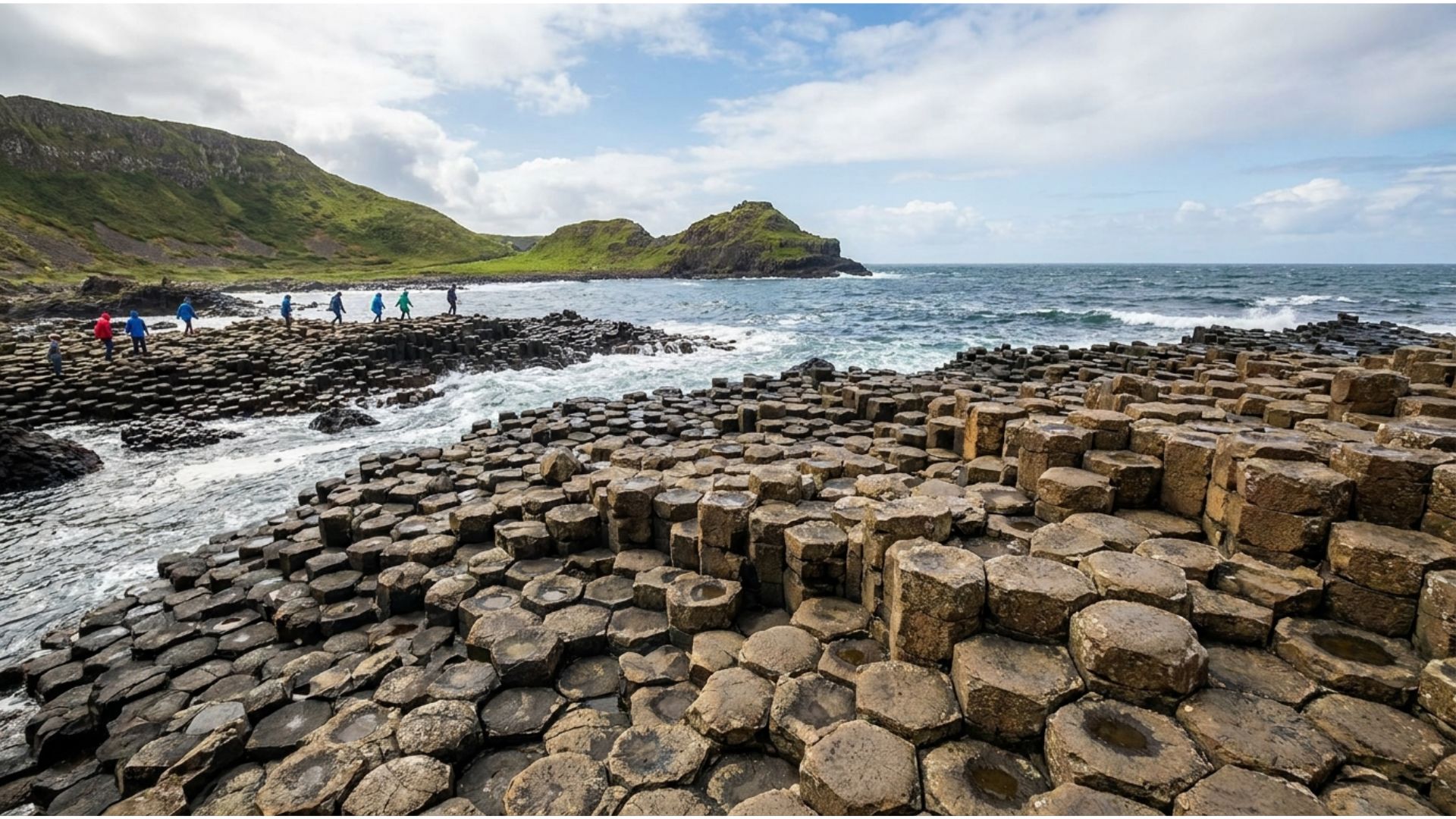
Skellig Michael is a steep, pyramidal island roughly 12 kilometres off the Iveragh Peninsula in County Kerry, home to an early Christian monastery founded sometime between the sixth and eighth centuries. Monks built the settlement’s surviving stone beehive huts, oratories and terraces into the island’s sheer rock, reachable today by roughly 600 stone steps. UNESCO inscribed the site as a World Heritage property in 1996, recognising it as an exceptionally well-preserved example of early medieval Christian monasticism practised in genuine isolation, decades before Star Wars in Ireland became a phrase anyone used. UNESCO’s official listing for Skellig Michael covers the site’s full history and conservation status.
The island is only accessible by boat between May and October, weather permitting, and landing numbers are strictly limited to protect both the monastic remains and the island’s significant seabird population, including the puffin colony that inspired the porgs in The Last Jedi. Filming itself was limited to just two days on the island for each film, which is part of why the story of Star Wars in Ireland actually involves four other locations standing in for Ahch-To. Heritage Ireland’s own visitor information for Skellig Michael, managed by the Office of Public Works, covers current landing restrictions and safety guidance in more detail than any third-party guide can reliably provide, since these change from season to season.
Little Skellig, the smaller neighbouring island, is entirely off-limits to visitors and serves instead as one of the world’s largest gannet colonies, with an estimated 30,000 breeding pairs. Boats to Skellig Michael typically pass close enough to Little Skellig for a good view of the colony without ever landing there, which is worth knowing if wildlife is as much a draw as the Star Wars connection itself.
The Five Confirmed Star Wars in Ireland Filming Locations
Skellig Michael, County Kerry: Star Wars in Ireland’s Most Famous Site
For anyone researching Star Wars in Ireland specifically, Skellig Michael provided the exterior shots of Ahch-To itself and Luke Skywalker’s final scene in The Force Awakens, along with several key moments in The Last Jedi, including Rey’s arrival and her early exchanges with Luke.
Ceann Sibéal (Sybil Head), County Kerry
Because access to Skellig Michael itself was so limited, production built a full-scale replica of the island’s beehive huts and Jedi temple at Ceann Sibéal on the Dingle Peninsula in 2016, using it for Rey’s training scenes in The Last Jedi. The set was dismantled after filming, since the site sits on private farmland, but the headland itself remains freely accessible via the Slea Head Drive. ConnollyCove’s guide to the Dingle Peninsula covers the wider area.
Malin Head, County Donegal
Malin Head, Ireland’s most northerly point on the Inishowen Peninsula, hosted the Star Wars in Ireland franchise’s Millennium Falcon landing sequence in The Last Jedi, filmed in May 2016. The Falcon replica itself, a 12-by-12-metre structure, was built on site by local craftsman Eddie Gallen and his team, transported over from England in sections and assembled with considerable secrecy, since none of the local community knew what was actually being constructed at the time. ConnollyCove’s guide to County Donegal and ConnollyCove’s guide to things to do in Donegal cover the wider region.
Loop Head, County Clare
For Star Wars fans specifically, production spent three days at Loop Head Lighthouse filming Rey’s dive into the cave sequence in The Last Jedi, the film’s equivalent of a confrontation with the dark side. The lighthouse and surrounding cliffs remain open to visitors year-round.
Brow Head, County Cork
Brow Head, mainland Ireland’s southernmost point in West Cork, rounds out the Star Wars in Ireland map, contributing additional coastal footage for The Last Jedi, adding visual variety to Ahch-To’s overall look beyond what Skellig Michael and Malin Head alone provided.
Visiting the Star Wars in Ireland Locations
For anyone planning a Star Wars in Ireland itinerary, boat trips to Skellig Michael run only from May to October and require booking well in advance through a licensed operator, since landing numbers are capped to protect the site. For the wider Star Wars in Ireland trail, independent travel between the other four locations is straightforward by car, though the distances involved, particularly the drive north to Malin Head, are longer than they might first appear on a map. ConnollyCove’s guide to the Wild Atlantic Way covers the coastal route connecting most of these sites, and ConnollyCove’s guide to County Kerry and guide to Killarney cover the region closest to both Skellig Michael and Ceann Sibéal in more depth.
Irish weather is a genuine factor at every one of these sites: expect wet, windy conditions with little warning, particularly at exposed coastal locations like Malin Head and Brow Head, and always check forecasts before setting out.
A single trip covering all five Star Wars in Ireland locations is a genuinely large undertaking, running the length of the country from Kerry to Donegal and back down to Cork. Most visitors reasonably pick one or two locations to combine with a wider trip rather than attempting all five in a single itinerary, and Skellig Michael itself, given its limited season and booking requirements, is usually the one worth planning furthest in advance if it’s a priority at all.
Beyond Star Wars: Ireland’s Other Filming Locations
Star Wars in Ireland is only part of a bigger picture: the country’s dramatic coastline has drawn film and television productions well beyond this one franchise. ConnollyCove’s guide to Vikings filming locations and guide to The Last Kingdom’s real filming locations cover two other major productions that made similar use of Ireland’s landscape, and ConnollyCove’s collection of Irish folklore from County Kerry covers the older stories attached to this same coastline long before any film crew arrived.
Why Star Wars in Ireland Chose Skellig Michael
Director Rian Johnson and the production team behind Star Wars in Ireland weren’t simply looking for a dramatic coastline when Skellig Michael was chosen; the island’s genuine, centuries-old monastic architecture gave Ahch-To a sense of real, lived-in history that a purpose-built set couldn’t easily replicate.
The beehive huts, terraces and steps weren’t designed to look ancient for a camera; they are ancient, built by monks who had no idea their isolated settlement would one day double as the edge of a galaxy far, far away. That authenticity is part of why the production went to the considerable trouble of replicating the huts at Ceann Sibéal rather than building an entirely invented structure elsewhere, preserving at least the visual character of the real monastery even where filming on the actual island wasn’t possible.
Conclusion
Star Wars in Ireland tells a story bigger than one island: Skellig Michael earned its UNESCO status for reasons that have nothing to do with Star Wars at all, and the four other locations used across the trilogy, Ceann Sibéal, Malin Head, Loop Head and Brow Head, are each worth visiting on their own terms rather than purely as a film pilgrimage. Together they cover a genuinely wide stretch of Ireland’s west and south coasts.
Explore More of Ireland’s Coast
ConnollyCove covers destinations along Ireland’s coastline in more depth. Explore the guide to Grianan of Aileach in County Donegal or things to do in Dingle, or watch our YouTube channel for more on Ireland’s filming locations.
Frequently Asked Questions
Is Skellig Michael really in Star Wars?
Yes. It appears briefly at the end of The Force Awakens and more extensively in The Last Jedi, playing Ahch-To, Luke Skywalker’s island retreat.
What are all the Star Wars in Ireland filming locations?
Five confirmed sites: Skellig Michael and Ceann Sibéal (Sybil Head) in County Kerry, Malin Head in County Donegal, Loop Head in County Clare, and Brow Head in County Cork.
Can you visit the Star Wars in Ireland filming locations?
Yes, though access varies. Skellig Michael requires a licensed boat tour booked well in advance, with landings limited to May through October. The other four sites are freely accessible by car year-round.
Why did production build a replica set instead of filming everything on Skellig Michael?
Skellig Michael’s protected status limits filming to just two days per film. Production instead built a full-scale replica of the island’s beehive huts at Ceann Sibéal on the Dingle Peninsula for the more extensive scenes required in The Last Jedi.
Are the porgs based on a real animal?
Yes. Puffins nest on Skellig Michael in large numbers and repeatedly appeared in frame during filming. Rather than remove them digitally, the production designed the porgs as a creative solution inspired directly by them.
Who built the Millennium Falcon replica at Malin Head?
Local craftsman Eddie Gallen and his team built and assembled the 12-by-12-metre structure on site in 2016, transported from England in sections.
When was Skellig Michael designated a UNESCO World Heritage Site?
In 1996, recognising the island’s exceptionally preserved early Christian monastic settlement, decades before any film production arrived.