


Article Summary
What this article covers: This guide compares the seasonal ice and snow hotels of Sweden, Norway and Finland. It explains how they are built, what a night in a cold room involves, and how to reach them from Ireland and the UK.
Who this is for: First-time visitors weighing up an Arctic winter trip, travellers deciding between an ice room and a glass igloo, and readers curious about the Viking and Sámi history of the far north.
Key takeaway: Book one night in a cold room and stay warm for the rest of the trip. The art and the silence of an ice hotel are the reason to go, and a second night on the ice adds little to either.
Expert insight: “Newgrange was built to catch a few minutes of solstice light each December, and the ice hotels of Lapland are built to last a few months before the Torne River takes them back. Both tell you how much the northern winter has shaped the way people build.”, Ciaran Connolly, Founder of ConnollyCove
Quick facts:
- The first Icehotel grew out of a 1989 ice art workshop in Jukkasjärvi, Sweden, led by two sculptors from Japan.
- Cold rooms in the main Scandinavian ice hotels are held at roughly minus four to minus eight degrees Celsius, regardless of the temperature outside.
- None of the standard cold rooms has a toilet, so guests use a heated building next door during the night.
Table of Contents
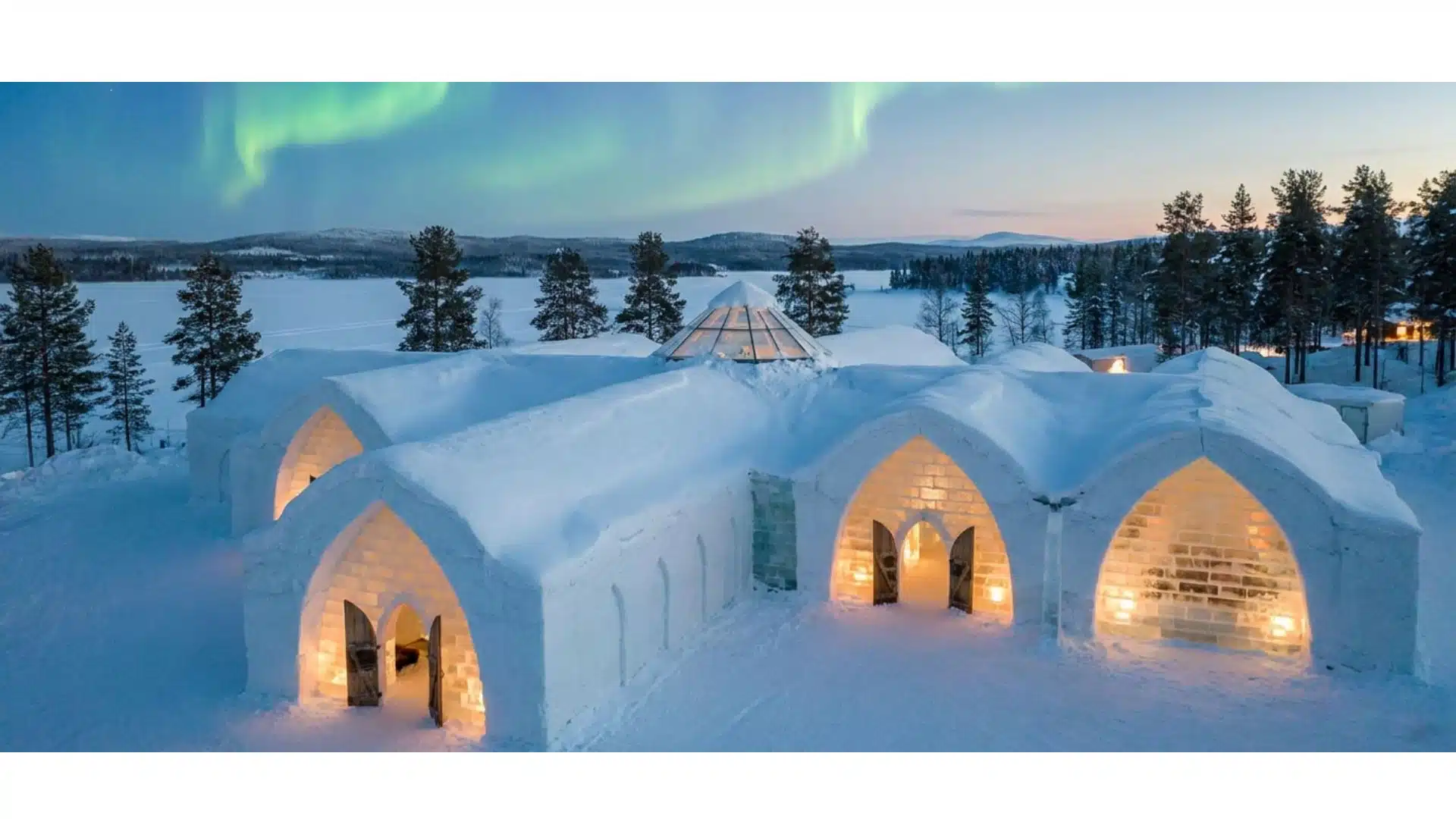
Scandinavia’s ice hotels are built fresh every winter from river ice and packed snow, then left to melt away each spring. The tradition started at Jukkasjärvi in Swedish Lapland, where the original Icehotel and the year-round Icehotel 365 stand on the banks of the Torne River. Further north, Norway has the Sorrisniva Igloo Hotel outside Alta and the Snowhotel in Kirkenes, while Finland pairs the Kemi SnowCastle with the heated glass igloos of Lapland. ConnollyCove, the Ireland-based travel and culture platform, has set these properties side by side for travellers from Ireland and Britain who want to know which one fits their plans before booking.
A night on the ice is only part of the appeal. Each hotel in this guide lies within Sápmi, the homeland of the Sámi people, in the same northern region that sent the Viking sailors who later founded Dublin. Our introduction to Scandinavia and its Viking past traces how closely the far north and the island of Ireland are linked. The sections that follow deal with the practical questions first, then trace those older connections from the Arctic back to Irish shores.
Ice Hotels in Scandinavia at a Glance

The Icehotel in Sweden is the largest and most artistic of the Scandinavian ice hotels. Sorrisniva in Norway is the more intimate choice, and Finland suits travellers who care more about seeing the aurora from a warm bed. The table compares the main properties on the points that most often decide a booking. Opening dates and prices change every season, so check each property’s own site before you book flights.
| Property | Country | Nearest town | Season | Cold room temperature | Recommendation |
|---|---|---|---|---|---|
| Icehotel | Sweden | Kiruna | December to April | About -5 to -8°C | First choice for ice art and scale |
| Icehotel 365 | Sweden | Kiruna | All year | About -5°C | Choose for a summer visit |
| Sorrisniva Igloo Hotel | Norway | Alta | Mid-winter to early April | About -4 to -7°C | Choose for a smaller, quieter stay |
| Snowhotel Kirkenes | Norway | Kirkenes | Winter (confirm dates) | Confirm with hotel | Choose to combine with a far north-east Norway trip |
| Kemi SnowCastle | Finland | Kemi | Winter (confirm dates) | Confirm with hotel | Choose to pair with Finnish Lapland |
| Glass igloos | Finland | Various | Mostly winter | Heated | Choose for aurora viewing in comfort |
Icehotel and Icehotel 365 in Swedish Lapland
Jukkasjärvi is where the idea of an ice hotel began, and it remains the place to go if you want to see ice treated as an art form. The village lies roughly 17 kilometres east of Kiruna, on the banks of the Torne River, and invites artists to rebuild the hotel there every winter.
The story starts with an art event rather than a hotel. Yngve Bergqvist, drawing on the Japanese ice sculpting tradition, brought artists to a workshop in Jukkasjärvi in 1989 with two professional sculptors from Japan as instructors, and the following winter a mould-built igloo went up on the frozen Torne River. From that igloo grew what Visit Sweden describes as the first ice hotel in the world.
How the Torne River Becomes a Hotel
The Icehotel is made from the river it stands beside, and it returns to that river every spring. Around March each year, the team harvests ice from the frozen Torne River and stores it in a nearby production hall for the following season. From November, around 30 artists from different countries and disciplines arrive in Jukkasjärvi to build their designs. Much of the structure uses “snice”, a mix of Torne River ice, snow and air that is poured into arch-shaped moulds and left to set.
The clarity of Torne River ice gives the art suites their glassy look. When spring comes, the seasonal building melts, and the water flows back into the river, so no two winters at Jukkasjärvi look the same.
Art Suites and the Ice Church
The art suites are the main reason to choose the Icehotel over its neighbours. A different artist designs each one, and the rooms work as a temporary gallery during the day, when visitors who are not staying overnight can walk through them. More than 500 artists have worked on the hotel’s different versions over the years, and the designs range from carved figures to purely abstract forms.
The Icehotel also builds a ceremony hall each season. Reverend Jan-Erik Kuoksu of the Jukkasjärvi parish started the ice church. Like the hotel, it stands for only a few months, and selected artists design a new one each winter. Couples who want to marry there should contact the hotel well before the season.
Icehotel 365 and Solar Cooling
Icehotel 365 lets you sleep among ice art in summer, which no seasonal ice hotel can offer. It has been open since 2016, and it is kept at minus five degrees Celsius all year. The hotel regulates the temperature with solar panels, which work well this far north because the summer sun barely sets.
A summer visit changes the trip completely. Instead of snowmobiles and dog sledges, you can hike or take to the river. Our guide to hiking under the midnight sun covers the Swedish trails nearby, including Abisko National Park. In winter, the traditional activities around Jukkasjärvi include snowmobile safaris across frozen lakes and husky sledging through the forest, both of which the hotel can arrange.
Norway’s Ice Hotels: Sorrisniva and Kirkenes
Norway’s two main snow hotels are smaller than the Icehotel and sit much closer to the coast, so they are easy to combine with a fjord or Northern Lights trip. If you are building a wider itinerary, our guide to city breaks in Norway covers the northern cities that pair well with a night on the ice.
Sorrisniva Igloo Hotel on the Alta River
Sorrisniva is the choice for travellers who want an ice hotel with a strong local identity. It stands on the Alta River outside Alta in Finnmark, and the owners and staff do the building themselves each winter. Each year has its own theme, and past themes have included Sámi culture, the Vikings, the Alta River and Arctic life.
The hotel also has its own chapel. It is a real chapel, consecrated every year by the bishop and decorated with ice crucifixes and angels. For sleeping, the sleeping bags are rated to minus 30 degrees Celsius, and the igloo stays at around minus four to minus seven inside even when it drops to minus 35 outdoors. Our list of adventurous things to do in Norway covers the activities that fill the days around a stay here. bookaltabookalta
Snowhotel Kirkenes in the Far North-East
Kirkenes is the more remote of Norway’s snow hotels, in the far north-east of the country close to the Russian and Finnish borders. Check the hotel’s room types and season dates directly, as they depend on how early the snow settles. Travellers heading this far north often add a few days in Tromsø, and our travel guide to Tromsø covers its museums, reindeer experiences and aurora tours.
Finnish Lapland: Snow Castles and Glass Igloos

Finland’s strength is the glass igloo, a heated cabin with a glass roof that lets you watch the sky from bed. It suits travellers who want the Arctic without sleeping at minus five. Finnish Lapland also has the Kemi SnowCastle on the Gulf of Bothnia, which is rebuilt each winter in the same spirit as the Swedish and Norwegian hotels. Our guide to the top places to visit in Finland covers Lapland alongside the lakes and the south.
Ice Room or Glass Igloo
An ice room is the better choice for art and atmosphere, and a glass igloo is the better choice for comfort and aurora watching. Many travellers book one night of each.
| Factor | Ice room | Glass igloo | Recommendation |
|---|---|---|---|
| Temperature | About -5°C | Heated | Igloo for anyone who sleeps cold |
| Ice art | Carved walls and sculptures | None | Ice room for the art |
| Aurora viewing | Not from bed | Through the roof | Igloo for the Northern Lights |
| Toilet | In a separate warm building | Usually inside | Igloo for convenience |
| Ideal length of stay | One night | Two or more nights | Combine one of each |
What a Night in an Ice Hotel Is Really Like
A night in a cold room is comfortable if you follow the hotel’s advice, and you mostly feel the cold when you get in and out of the sleeping bag. The rooms have no heating and no plumbing, so the evening follows a routine that the staff explain on arrival.
Sleeping Bags, Reindeer Hides and What to Wear
The bed is a block of ice with a mattress on top, covered with reindeer hides for insulation. Icehotel cold rooms are kept at around minus five to minus eight degrees, and the hotel provides a thick thermal sleeping bag and a reindeer skin. Guests are usually told to wear a single thermal base layer, socks and a hat inside the bag, because extra layers make you sweat and then feel colder.
Keep your phone and camera inside the sleeping bag, because batteries drain quickly at these temperatures. Leave your luggage in the warm building, where the hotels provide lockers and changing rooms.
The Middle-of-the-Night Toilet Trip
There is no toilet in a standard cold room, and this is the question first-time guests ask most. At the Icehotel, shared changing rooms, toilets and saunas are in the warm building next to the hotel. If you wake in the night, you pull on a fleece and boots, walk the short corridor to the warm building, and climb back into the bag as quickly as you can. Sorrisniva works the same way: the toilet, changing rooms and sauna are in a heated building next door.
Only the deluxe suites at Icehotel 365 have a private warm bathroom with a sauna. If the night-time walk would spoil the trip for you, those suites are worth the higher price.
One Cold Night, the Rest Warm
Plan one night on the ice and spend the rest of the trip in a warm room, chalet or cabin. Most Icehotel guests sleep one night in a cold room and the rest in warm rooms, and the warm rooms at all the main properties make it easy to split a stay. Chalets and log cabins around Kiruna, Alta and Lapland give you fires, proper showers and somewhere to dry your gear after a day of sledging.
Sámi Culture in the Lands Around the Ice Hotels

Every ice hotel in this guide stands in Sápmi, the Sámi homeland, and knowing a little of its culture changes how the reindeer hides on your bed look. Reindeer herding remains central to Sámi livelihood and identity across Norway, Sweden and Finland, and the herds still move between seasonal grazing grounds.
ConnollyCove has written in more depth about the Sámi, Europe’s Indigenous people of the Arctic, including how herding families still follow the seasonal migration of their herds. When you visit, look for activities run by Sámi families or businesses rather than generic reindeer rides, so that the money stays with the herders. Our guide to Indigenous cultures of the Arctic Circle explains how to tell the difference and what respectful visiting looks like.
The Viking Thread Between Scandinavia and Ireland
Irish travellers have a closer link to ice hotel country than most visitors realise, because the Vikings who settled Ireland came from these northern lands. The National Museum of Ireland explains that Vikings from Norway, Sweden and Denmark first attacked Irish monasteries, then settled and built towns at Dublin, Waterford and Limerick that grew into today’s cities.
You can trace that story at home before or after your Arctic trip. Our guide to Viking sites in Ireland covers Dublinia beside Christ Church Cathedral and Waterford’s Viking Triangle. Objects from the 1970s and 1980s excavations at Wood Quay are shown in the Viking Ireland exhibition at the National Museum of Ireland, Archaeology. For the wider history, ConnollyCove’s account of how the Vikings shaped Ireland explains what they brought, from coinage to towns.
Celtic and Norse Mythology Side by Side
Norse and Irish mythology grew up separately. The two traditions met through Viking-age settlement and trade, and readers who know both soon notice figures that seem to mirror each other. Historians have set the Norse god Tyr beside the Irish king Nuada, and Odin beside the Irish champion Lugh. Nuada was a king of the Tuatha Dé Danann, and our guide to the Tuatha Dé Danann tells his story in full.
For the Norse side, our piece on the fjords of Norway and Viking lore follows the sea routes from western Norway to Ireland. To compare the creatures of the two traditions, start with our guide to legendary creatures of Celtic mythology and our look at the Valkyrie horses of Norse legend.
Northern Lights Over the Ice Hotels and Over Ireland
The ice hotels sit well inside the zone where the aurora appears most often, so a clear night in mid-winter gives you a far better chance than anywhere in Ireland. Jukkasjärvi, Alta and Kirkenes are all far from city light, and the hotels can book guided aurora outings for guests.
Ireland does get displays, though they are rarer and fainter. Sightings have recently been reported in Mayo, Donegal and Antrim. Met Éireann explains that oxygen about 100 kilometres up gives the greenish-yellow glow, while nitrogen produces blue or purple. ConnollyCove’s guide to seeing the aurora borealis around Ireland lists the counties with the darkest north-facing skies. Our feature on Indigenous cultures under the Northern Lights covers how Arctic peoples have understood the lights.
Getting There From Ireland and the UK
Kiruna is the airport for the Icehotel, Alta for Sorrisniva, Kirkenes for the Snowhotel, and Rovaniemi or Kemi for Finnish Lapland. From Ireland, the usual route is a flight to a Scandinavian hub and a domestic connection north. Most travellers land at Stockholm Arlanda and take a short domestic flight to Kiruna, roughly 15 to 20 minutes from the hotel.
Seasonal flights from Britain sometimes go direct to Lapland airports in winter, while travellers from Dublin and Belfast normally connect through Stockholm, Oslo or Helsinki. Overnight trains also run north from Stockholm to Kiruna, which makes the journey part of the trip. Budget for three currencies if you plan to cross borders, since Sweden uses the krona, Norway the krone and Finland the euro. For a city stop on the way, our round-up of winter city breaks in Europe includes Nordic capitals that work as a first night.
Current Conditions and Seasonal Information
Mid-winter to March is the most reliable time for a seasonal ice hotel, because the buildings are complete, the snow is deep, and the nights are long enough for the aurora. December has the shortest days and the most festive atmosphere. March brings more daylight for activities and is often the most comfortable month for a first visit.
Seasonal ice hotels usually open in stages from December and close in early April, when the thaw begins. The Icehotel Winter season runs from December to April, and Icehotel 365 is the only option for a summer stay. Outside temperatures can fall far below the indoor minus five, so pack proper winter boots, a down jacket and woollen layers even if you hire outer clothing on site.
Cold rooms are limited, and the best art suites go first, so book several months ahead for January to March. Children are welcome at most properties, but some advise against cold rooms for very young children, so check the age guidance before booking. For official information on the original hotel and the region, see Visit Sweden’s guide to the Icehotel.
Planning Your Arctic Ice Hotel Trip
The simplest plan is one night in a cold room at the Icehotel or Sorrisniva and two or three warm nights nearby. During the day, mix sledging and aurora watching with a Sámi-run activity. That gives you the art, the silence and the northern sky without asking too much of anyone who feels the cold.
ConnollyCove covers travel from Ireland to destinations across the world, with Irish heritage at the centre of everything we publish. For the Viking side of your home trip, read our Dublin travel guide. If Iceland is next on your Arctic list, try our guide to things to do in Reykjavik, and watch the ConnollyCove YouTube channel for video guides from Ireland and beyond.
FAQs
Where do you go to the toilet in an ice hotel?
You walk to a heated building next door, because standard cold rooms have no plumbing. Only some deluxe suites at Icehotel 365 have a private warm bathroom.
How cold is it inside an ice hotel?
Cold rooms stay at roughly minus four to minus eight degrees Celsius, depending on the hotel. The thermal sleeping bags supplied are rated well below that, so most guests sleep warmly.
How much does it cost to stay in an ice hotel in Sweden?
Prices vary by season and room type, and cold rooms cost more than warm rooms. Check the Icehotel’s own site for current rates, as they change each winter.
Do Scandinavia’s ice hotels melt every year?
Yes, the seasonal buildings melt each spring and are rebuilt the following winter. Icehotel 365 in Sweden is the exception, as it stays frozen all year.


