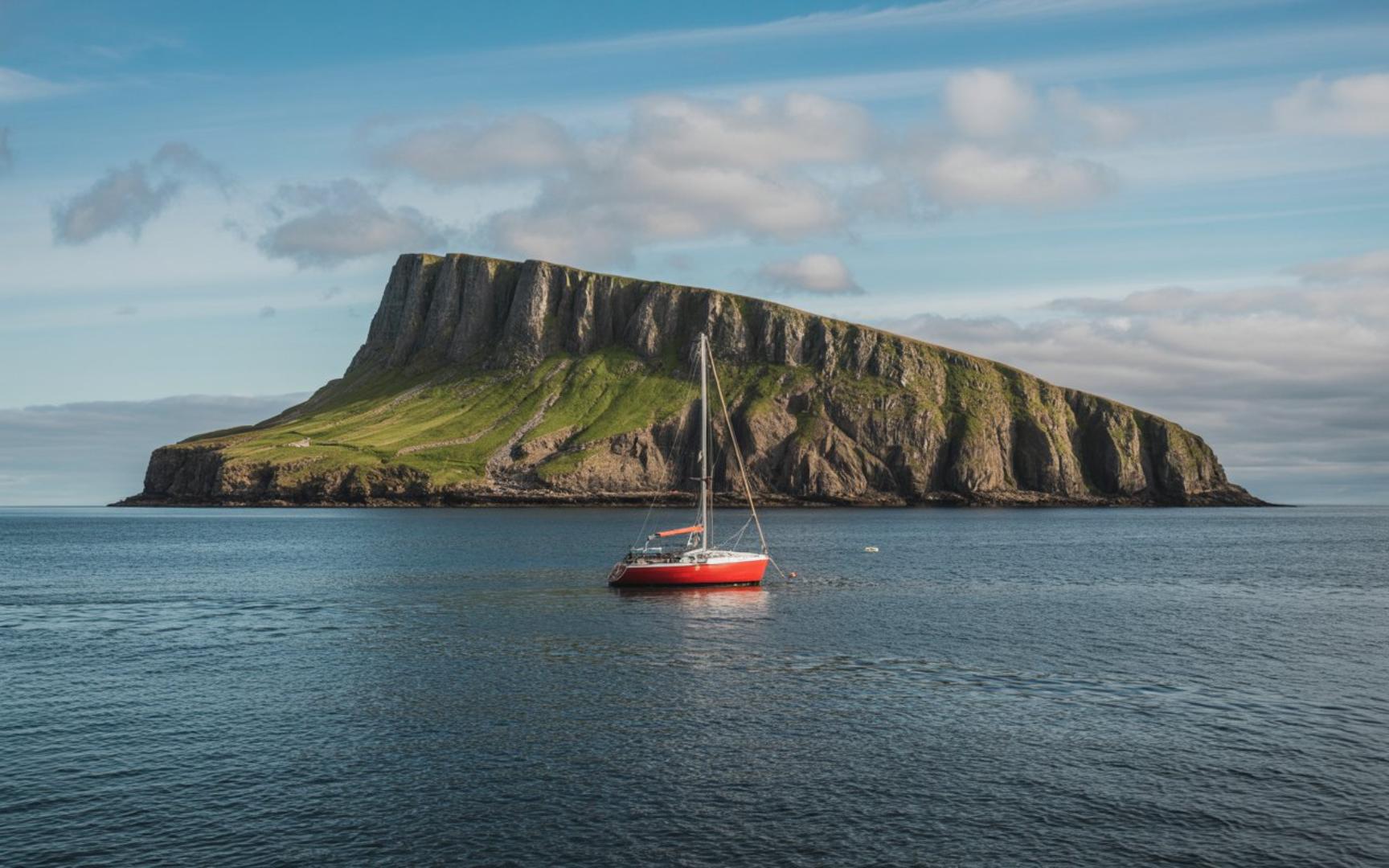

Rathlin Island, Northern Ireland’s only permanently inhabited offshore island, sits nine kilometres off the Antrim coast and feels like a different world from the moment the ferry pulls away from Ballycastle. Its distinctive L-shape, dramatic cliffs, and slow pace of life set it apart from anywhere else on the island of Ireland. Around 150 people call Rathlin home year-round, and that small community gives the island a character that no wildlife guide or heritage trail can fully capture.
For travellers exploring the Causeway Coast, Rathlin offers something the mainland cannot: genuine remoteness paired with genuine depth. Whether you’re here for the puffins nesting at the RSPB West Light Seabird Centre, the archaeology of a coastline shaped by Vikings and Scottish kings, or simply the quiet that settles over the harbour once the day-trippers leave, Rathlin delivers. ConnollyCove has covered Northern Ireland destinations extensively, and Rathlin remains one of the most rewarding. For a wider itinerary, our guide to date ideas in Belfast is a strong starting point.
Table of Contents
Getting to Rathlin Island: Ferry Routes and What to Know
The ferry from Ballycastle Harbour is the only way to reach Rathlin Island. Rathlin Island Ferry operates two vessels with different crossing times and capacities, so choosing the right one matters depending on your plans.
The Two Ferry Options
| MV Kintra II (Fast) | MV Spirit of Rathlin (Slow) | Notes | |
|---|---|---|---|
| Crossing time | 25 minutes | 40 minutes | Weather-dependent |
| Vehicles | No | Most visitors travel foot passengers | Check the current policy before booking |
| Dogs | Yes (on leads) | Yes (on leads) | Most visitors travel as foot passengers |
Summer sailings (April to September) run up to ten times daily in each direction. Winter services are reduced to around five sailings daily. Book in advance during peak season, particularly on weekends and public holidays. Ballycastle Harbour has ample free parking, including spaces for blue badge holders. Both vessels have accessible boarding.
The Spirit of Rathlin is the car ferry, but private vehicles are generally restricted to residents and those with accessibility needs. Most visitors travel as foot passengers and hire bikes or use the Puffin Bus on the island itself. For practical booking information, check the Rathlin Island Ferry official timetables.
Essential Booking Tips
Strong winds can delay or cancel crossings on the Rathlin Sound, which is one of the fastest tidal channels in Europe. Pack layers regardless of the season, bring motion sickness tablets if you’re susceptible, and always have a flexible plan for the return journey. Checking the forecast the day before is worth doing.
Wildlife on Rathlin Island: Puffins, Seals, and the Golden Hare
Rathlin’s wildlife is the primary draw for most visitors, and rightly so. The island supports one of Ireland’s largest seabird colonies and is home to a subspecies found nowhere else on earth.
The RSPB West Light Seabird Centre
The RSPB West Light Seabird Centre sits at the island’s western tip, inside what is often called the “upside-down lighthouse” — a structure built into the cliff face with its light at the bottom rather than the top. During puffin season (late April to mid-July), the viewing platform offers close-range sightings of thousands of birds, including puffins, razorbills, guillemots, and kittiwakes. The Puffin Bus runs from Church Bay to the centre during the season, taking around 15 minutes.
Rathlin Wildlife Calendar
| Species | Best Months | Where to Look |
|---|---|---|
| Puffins | Late April – July | RSPB West Light Seabird Centre |
| Razorbills & Guillemots | May – July | West Light cliff ledges |
| Atlantic Grey Seals | Year-round | Mill Bay and rocky shores |
| Rathlin Golden Hare | Best in Spring | Inland grassland areas |
| Barnacle Geese | October – March | Coastal fields |
The Rathlin Golden Hare
One detail most travel guides skip: Rathlin is home to a distinct subspecies of Irish hare known locally as the golden hare, named for its unusually pale, golden-brown colouring. Its isolation on the island for thousands of years has produced subtle genetic differences from mainland Irish hares. Photographers who time a spring visit well may spot them in the grassland areas away from Church Bay. It’s a wildlife encounter that requires patience and rewards it.
Layers of History: Vikings, Scottish Kings, and the 1575 Massacre
Rathlin’s history is considerably darker and richer than its reputation as a puffin-watching destination suggests. The island, known in Irish as Reachlainn — a name most likely connected to the sea — has been inhabited for around 6,000 years. Its position in the North Channel made it a strategic and contested place for much of that time.
795 AD: The First Viking Raid in Ireland
Rathlin holds a grim distinction in Irish history: it was the site of the first recorded Viking raid in Ireland in 795 AD. Norse raiders attacked the island’s early Christian monastery, setting the pattern of coastal raiding that would define the following century. The island changed hands repeatedly between Gaelic Irish clans and Scottish lords across the medieval period, reflecting its geographic position as a bridge between the Kingdom of Dál Riata in north-eastern Ireland and the western isles of Scotland.
Robert the Bruce and the Cave
The most famous legend connected to Rathlin involves Robert the Bruce, who sought refuge on the island in 1306 after his defeat at the Battle of Methven. According to the story, Bruce watched a spider repeatedly attempt to spin its web inside a cave near the island’s coast. Its persistence inspired him to continue fighting, leading to his eventual victory at Bannockburn in 1314. Bruce’s Cave is marked on the island, though historians note that the cave’s specific location is not definitively verified. The legend connects to a much older pattern of Irish and Scottish mythology in which persistence and nature intersect — something ConnollyCove explores in its guides to creatures of Celtic mythology.
The 1575 Massacre
The darkest moment in Rathlin’s recorded history came in July 1575, during the Elizabethan conquest of Ulster. English forces under the Earl of Essex attacked the island, killing several hundred people who had taken refuge there — including women, children, and elderly members of the MacDonnell clan. It was a deliberate act of colonial violence, and one that is rarely given the historical weight it deserves in mainstream travel coverage. Visiting the island with that history in mind adds a very different dimension to its quiet beauty.
Modern Life on Rathlin: A Community of 150
Around 150 people live on Rathlin Island year-round, making it Northern Ireland’s only permanently inhabited offshore island. That population gives Rathlin a functioning community identity that distinguishes it from purely managed heritage or nature sites. There is a school, a community hall, a health centre, and an active group of farmers and fishermen who have worked the island’s land and waters across generations.
The LIFE Raft Project
One of the most significant ongoing conservation efforts on Rathlin is the LIFE Raft project (Rathlin Ark for the Future), which has focused on eradicating invasive predators, particularly brown rats, that threaten the ground-nesting seabird colonies. The project has had measurable results in protecting puffin and Manx shearwater nests. It reflects a genuine commitment from both the island community and conservation bodies to maintaining the biodiversity that makes Rathlin worth visiting. RSPB Northern Ireland publishes ongoing updates on the programme.
Exploring the Island: Trails, Lighthouses, and Getting Around
Rathlin has three lighthouses: the West Light (upside-down, with the RSPB seabird centre), the East Light, and the Rue Point Lighthouse at the island’s southern tip. Each is worth seeing if you have a full day. The island has a small network of marked walking trails ranging from easy coastal paths to longer clifftop routes.
Bike Hire or the Puffin Bus?
Most visitors choose between hiring a bike from Church Bay or using the Puffin Bus service that runs to the West Light during seabird season. Cycling gives you more flexibility and access to quieter parts of the island; the bus is better if you’re short on time or visiting with young children. The roads are quiet, the terrain is mostly gentle, and cycling along the cliff edges with the North Atlantic visible below is a genuinely memorable experience.
Seasonal Conditions and When to Visit
Late April to July is peak season for seabird watching, with puffins as the headline attraction. This period sees the highest ferry frequency and the most visitors. If you prefer a quieter experience, September and October offer excellent walking conditions, barnacle geese arriving for winter, and the chance to have the trails largely to yourself. The island’s Dark Sky Community designation makes it worth considering an overnight stay in autumn for stargazing, when cloud cover cooperates.
Staying on Rathlin: Accommodation for Every Type of Traveller
Most visitors treat Rathlin as a day trip, but staying overnight changes the experience significantly. Once the last ferry returns to Ballycastle, the island quiets completely. The Manor House Hotel offers a historic option with harbour views. Arkell House provides a B&B with full Irish breakfasts made from local produce. For self-catering, Druim Apartments and Shore House offer well-equipped cottages with coastal views. Budget travellers can use Rathlin Island Hostel near Church Bay.
For those who want the rawest experience, Church Bay Campsite offers basic facilities with dramatic scenery, while Rathlin Glamping Pods provide heated accommodation with panoramic views if you want comfort alongside the wilderness.
“Is it worth staying overnight?” is one of the most common questions we hear about Rathlin at ConnollyCove, and the answer is yes — if you want to experience the island rather than check it off a list. The ferry schedule determines your day; staying means you set the pace instead. It connects to a broader philosophy of travel that we explore in our coverage of Irish proverbs, many of which reflect that same wisdom about slowing down.
Plan Your Visit to Rathlin Island
Rathlin Island is one of the most distinctive places in Northern Ireland, and it rewards those who treat it as more than a half-day box to tick. Whether you’re coming for the puffins, the history, or simply the quiet, give yourself a full day at minimum. Overnight stays turn a memorable day trip into something that stays with you. ConnollyCove covers Northern Ireland’s coastline, culture, and heritage in depth — explore more via our Northern Ireland travel guides or visit our YouTube channel for video coverage of the Causeway Coast and beyond.
Frequently Asked Questions About Rathlin Island
Rathlin Island raises questions before you even board the ferry — from puffin season timing to whether staying overnight is worth it. Here are the answers to what travellers ask most.
How do you get to Rathlin Island?
The ferry from Ballycastle Harbour is the only public route to Rathlin. Rathlin Island Ferry operates two vessels: the MV Kintra II (passenger-only, 25 minutes) and the MV Spirit of Rathlin (car ferry, 40 minutes). Book online in advance, particularly during the summer. Ballycastle is roughly a two-hour drive from Belfast and sits along the Causeway Coastal Route.
Can you take a car to Rathlin Island?
Vehicle access is generally restricted to island residents and blue badge holders. Most visitors travel as foot passengers and use the Puffin Bus, hire bikes from Church Bay, or walk. The island’s road network is small enough that you don’t need a car to reach the main attractions on a full-day visit.
When is the best time to see puffins on Rathlin Island?
Puffins are typically present from late April through mid-July, with peak numbers in May and June. The RSPB West Light Seabird Centre is open during this period, and the Puffin Bus runs from Church Bay to the viewing platform. Arriving early in the morning gives you the best light and the quietest conditions before the ferry crowds arrive.
Is Rathlin Island in Northern Ireland or the Republic?
Rathlin Island is part of Northern Ireland, which is part of the United Kingdom. It falls within County Antrim, with Ballycastle as its nearest mainland town. Visitors from the Republic of Ireland do not need a passport, but should be aware that currency, mobile roaming, and VAT are governed by UK rules on the island.