Skip to content
Updated on: by Avatar image of authorEsraa Mahmoud Review By: Raghda Elsabbagh

Imagine standing in a lush Amazonian rainforest one moment, then watching a rocket thunder into space the next, all whilst paying in Euros. This is French Guiana, South America’s most intriguing paradox and one of the continent’s most underrated destinations.

French Guiana (or Guyane to locals) isn’t just another tropical territory. It’s an official département of France, seamlessly blending European infrastructure with raw Amazonian wilderness. From the European Space Centre launching satellites into orbit to pristine nature reserves sheltering jaguars and scarlet macaws, this unique corner of South America offers explorers something truly different.

At ConnollyCove, we’ve documented diverse cultural landscapes across the globe, and French Guiana stands out for its striking contrasts. Whether you’re fascinated by cutting-edge space technology, drawn to untouched rainforest ecosystems, or curious about the fusion of Creole, Maroon, and Amerindian cultures, this comprehensive guide reveals why French Guiana deserves a place on your travel radar.

Understanding French Guiana: Geography, History & Identity

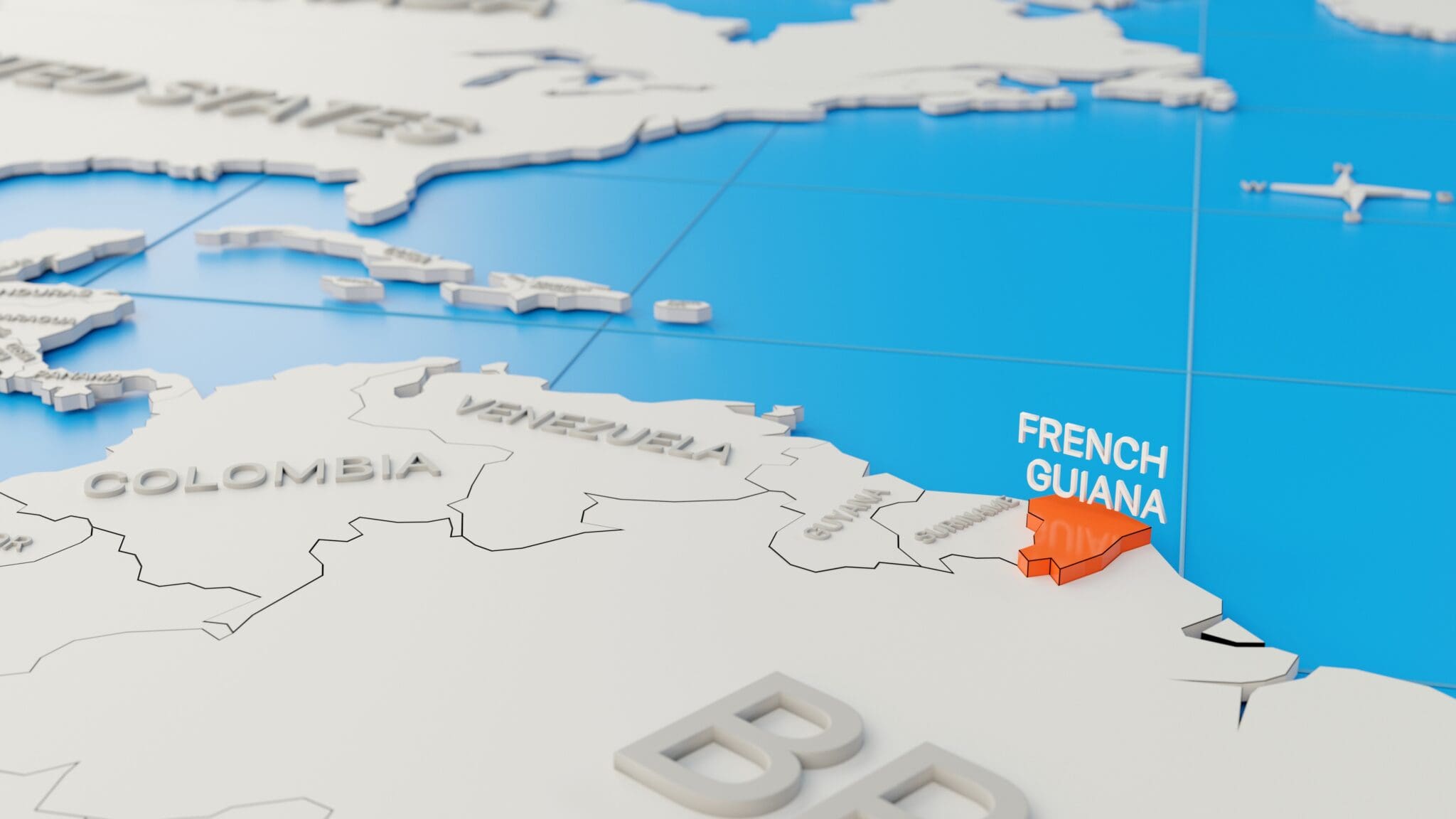
French Guiana occupies a unique position in South America, geographically South American but politically European. Since 1946, it has been an integral part of the French Republic and an Outermost Region of the European Union. This means the Euro is the currency, French is the official language, and EU regulations apply to this slice of Amazonian rainforest.

The territory shares borders with Brazil to the south and east, and Suriname to the west. The Atlantic Ocean forms its northern boundary, with a coastline of approximately 378 kilometres. Dense tropical rainforest covers over 90% of French Guiana’s 83,534 square kilometres, making it one of the most biodiverse regions on Earth.

From Penal Colony to Space Port

French Guiana’s history carries the weight of its past as one of history’s most notorious penal colonies. Between 1852 and 1953, France transported approximately 70,000 prisoners to the territory, with many sent to the infamous Îles du Salut, including Devil’s Island. The brutal conditions, tropical diseases, and isolation resulted in a staggering death rate.

“When filming our documentary on colonial history in the Americas, French Guiana presented a particularly compelling narrative. The transformation from one of the world’s harshest prison systems to Europe’s gateway to space represents an extraordinary shift in purpose and identity.” – Ciaran Connolly, Founder of ConnollyCove

The establishment of the Guiana Space Centre (Centre Spatial Guyanais) in Kourou during the 1960s fundamentally transformed the territory’s economy and international profile. Today, the spaceport generates significant employment and positions French Guiana as a crucial player in global space exploration.

Life in the Eurozone: Economy and Travel Costs

Travelling to French Guiana requires adjusting expectations around costs. Unlike neighbouring South American countries where budget travel is standard, French Guiana’s prices align more closely with metropolitan France. A hostel bed that might cost €10-15 in Brazil or Suriname starts at €40-50 in Cayenne. Meals, transport, and activities reflect European pricing standards.

The high cost of living stems from French Guiana’s reliance on imports and generous French subsidies. The territory’s GDP per capita significantly exceeds that of its neighbours, though unemployment remains higher than mainland France. The space industry, timber, fishing, and growing tourism sector form the economic backbone.

For visitors, this Eurozone status offers advantages: reliable infrastructure, excellent healthcare, and seamless banking for EU citizens. British and Irish travellers will find using contactless payments and withdrawing cash straightforward, though it’s worth notifying your bank beforehand to avoid any issues.

Best Places to Visit in French Guiana

French Guiana offers remarkable diversity within its compact borders. From vibrant capital streets to untouched wilderness, these are the destinations that define the territory’s unique character.

Cayenne: The Colourful Capital

Cayenne defies expectations of what a capital city in the Amazon should be. Rather than feeling isolated or underdeveloped, it presents a distinctly Caribbean-meets-French character, with colourful colonial buildings, bustling markets, and a genuinely multicultural atmosphere.

The Place des Palmistes serves as Cayenne’s heart, surrounded by palm trees and facing the striking yellow façade of the Hôtel de Ville (town hall). Nearby, the Musée Départemental Alexandre Franconie houses fascinating exhibits on Guianese history, from indigenous cultures through the colonial period to contemporary life.

The Marché de Cayenne provides an authentic slice of daily life. Early morning visits reward explorers with vendors arranging pyramids of tropical fruits, fresh fish from the Atlantic, and bundles of unfamiliar vegetables. The market’s covered section offers prepared foods and local specialties, making it an excellent spot for breakfast or lunch.

Food enthusiasts will appreciate Cayenne’s unique culinary scene. French boulangeries sit alongside Creole restaurants serving rich seafood stews like blaff (fish in a spicy broth) and colombo (curry influenced by South Asian flavours). The blend of French technique with Caribbean and South American ingredients creates dishes found nowhere else.

For those interested in how digital content captures cultural destinations authentically, Cayenne’s markets and colonial architecture present excellent opportunities for photography and videography. The interplay of light through market stalls at dawn or sunset colours reflecting off colonial buildings demonstrate the visual storytelling potential of lesser-known destinations.

Îles du Salut: History on the Atlantic

The Salvation Islands, Île Royale, Île Saint-Joseph, and Île du Diable (Devil’s Island), sit approximately 11 kilometres off the coast near Kourou. These islands witnessed some of history’s darkest chapters as penal colonies, yet today they offer a haunting yet beautiful destination for day trips.

Ferry services from Kourou take around one hour to reach the islands, with most visitors focusing on Île Royale. The crumbling prison buildings, guard towers, and isolation cells stand as powerful reminders of the suffering endured here. Guided tours provide context about famous prisoners including Alfred Dreyfus and Henri Charrière (whose book Papillon dramatised prison life, though many details were fabricated).

Between the historical sites, nature has reclaimed much of the islands. Walking trails wind through coconut palm groves and tropical forest, with viewpoints overlooking the Atlantic. The islands support populations of agoutis (large rodents), iguanas, and numerous seabirds. Beaches offer swimming opportunities, though currents can be strong.

The islands aren’t solely a grim memorial. They’ve become an important tourist attraction, generating income whilst preserving memory. Several buildings now house small museums, and a simple restaurant operates on Île Royale. Overnight stays aren’t possible, making this strictly a day-trip destination.

From a content creation perspective, the Îles du Salut present complex storytelling challenges, balancing respect for the historical tragedy with the natural beauty that now defines them. This location exemplifies how digital content must navigate sensitive subjects whilst providing valuable information to visitors.

Guiana Space Centre: Witnessing History

The Centre Spatial Guyanais (CSG) near Kourou represents one of French Guiana’s most distinctive attractions. As Europe’s spaceport and a crucial facility for global space agencies, it offers visitors the rare opportunity to witness rocket launches and tour a working spaceport.

The location near the equator provides significant advantages for space launches. Earth’s rotation creates faster speeds at the equator, allowing rockets to use less fuel or carry heavier payloads. The eastward launch trajectory over the Atlantic ensures safety, with no populated areas in the path.

Planning Your Launch Visit

Witnessing a launch requires planning. The European Space Agency and Arianespace maintain launch schedules on their websites, typically announcing dates several weeks in advance. Launches occur year-round but can experience delays due to technical issues or weather.

Official viewing is possible from several designated sites. The Jupiter Control Centre observation area, located three kilometres from the launch pad, offers the closest public viewing with guided commentary. Free public viewing sites include Toucan Hill and several beaches south of Kourou, though these lack facilities and commentary.

For launches after dark, the spectacle intensifies dramatically. The rocket’s flames illuminate the jungle, and the ground-shaking roar arrives seconds after the visual ignition. Photographers should bring tripods and long lenses, though the experience proves so overwhelming that many forget about their cameras entirely.

Between launches, guided tours operate on weekdays, requiring advance booking. Tours visit the Jupiter Control Centre, the Ariane 5 integration building, and various historical sites. Multilingual guides explain the complex engineering, international cooperation, and future missions planned from this facility.

The Space Museum in Kourou complements the tour with exhibits on space exploration history, rocket technology, and satellite applications. Interactive displays engage younger visitors whilst technical specifications satisfy space enthusiasts.

“Digital storytelling around space exploration requires balancing technical accuracy with emotional impact, something we focus on extensively when training clients in video production and content strategy. The visceral experience of a rocket launch creates powerful content opportunities if captured and presented effectively.” – Ciaran Connolly, Founder of ConnollyCove

For organisations interested in showcasing technological and scientific subjects through digital media, the space centre demonstrates how complex topics can engage broad audiences through strategic content approaches, something we specialise in through our digital training and AI transformation services.

Kaw Swamp: Into the Wetlands

The Kaw Nature Reserve, located about 50 kilometres southeast of Cayenne, protects 94,000 hectares of wetlands, flooded forests, and savannas. This UNESCO Biosphere Reserve offers French Guiana’s best wildlife viewing opportunities, particularly for caimans, birds, and if exceptionally fortunate, jaguars.

Access to Kaw requires a boat, with most visitors joining guided tours departing from the village of Kaw or from Roura. Tours typically last three to four hours, gliding through narrow channels lined with towering trees and aquatic vegetation. Early morning and late afternoon tours provide the best wildlife encounters.

Black caimans, South America’s largest predator, bask along the waterways. These prehistoric-looking reptiles can exceed four metres in length, though they’re generally not aggressive towards humans. Guides spot them easily, their eyes reflecting torchlight during evening tours.

The reserve hosts over 530 bird species. Toucans, macaws, herons, and the bizarre hoatzin (a prehistoric-looking bird) appear regularly. Serious birders should bring binoculars and field guides, though guides identify most species confidently.

Jaguars roam Kaw’s forests, though sightings remain rare. Capybaras, giant otters, howler monkeys, and numerous frog species appear more regularly. Night tours offer different experiences, with caimans’ eyes glowing red in torch beams and the jungle’s nocturnal symphony reaching full volume.

The Kaw experience contrasts sharply with the space centre, representing French Guiana’s other face, where nature dominates and human presence barely registers. This duality makes the territory particularly interesting for content creators exploring themes of technology versus nature, development versus preservation.

Tumuc-Humac Mountains: The Remote Frontier

The Tumuc-Humac Mountains straddle French Guiana’s southern border with Brazil. These remote, heavily forested mountains represent true wilderness, reaching them requires significant planning, expense, and commitment to adventure.

Access typically involves chartering small aircraft to jungle airstrips, then trekking with indigenous guides. Several tour operators in Cayenne specialise in multi-day expeditions into this region, though these aren’t budget-friendly options.

The mountains harbour incredible biodiversity, with countless species yet to be formally documented. Indigenous communities including the Wayana people maintain traditional lifestyles in scattered villages, though contact should always occur through proper channels respecting their autonomy and customs.

These mountains attract serious adventurers rather than casual tourists. Expeditions require good fitness, tolerance for basic conditions, and flexibility when logistics change, which they frequently do in such remote areas. The rewards include experiences of pristine rainforest, encounters with indigenous culture, and stories few others can share.

Saint-Laurent-du-Maroni: River Town

Located on the Maroni River forming French Guiana’s western border with Suriname, Saint-Laurent-du-Maroni offers a laid-back riverside atmosphere quite different from Cayenne’s energy.

The town served as the main transportation hub for prisoners heading to the penal colonies. The Camp de la Transportation, the former administrative centre for the prison system, now operates as a museum. The preserved buildings and exhibits provide sobering insights into the logistics of this brutal system.

The Maroni River itself forms a natural boundary and cultural bridge. Boat trips upriver visit traditional Maroon villages, communities descended from escaped African slaves who established independent settlements in the jungle centuries ago. These communities maintain distinct languages, customs, and artistic traditions.

Saint-Laurent’s market reflects its border location, with goods and people crossing between French Guiana and Suriname daily. The mix of cultures, French, Creole, Maroon, Amerindian, Brazilian, and Surinamese, creates a fascinating social mosaic that changes the atmosphere compared to coastal towns.

Exploring French Guiana’s Wild Heart

Beyond specific destinations, French Guiana’s greatest treasure is its wilderness. Over 90% forest cover makes this one of the world’s most pristine ecosystems, supporting biodiversity that rivals any location globally.

Wildlife Encounters and Conservation

French Guiana’s forests shelter jaguars, giant anteaters, tapirs, several primate species, and over 720 bird species. The coastal areas and offshore islands support nesting sea turtles, whilst rivers teem with fish species from tiny tetras to massive arapaimas.

Several protected areas offer access to this biodiversity. The Trésor Nature Reserve near Kaw focuses on wetland ecosystems. The Nouragues Nature Reserve, accessible only by helicopter or river, provides research station accommodation for scientists and occasional tourists. The Amana Nature Reserve protects crucial sea turtle nesting beaches.

Wildlife viewing requires patience and often professional guides. Self-guided exploration in primary rainforest can be dangerous without jungle experience, trails disappear quickly, wildlife poses potential threats, and tropical diseases remain concerns.

Responsible tourism plays an increasingly important role in conservation financing. Tour operators who employ local guides, minimise environmental impact, and contribute to community development deserve support over those cutting corners on sustainability.

Practical Considerations for Nature Exploration

Visiting French Guiana’s natural areas requires preparation. Yellow fever vaccination is mandatory, and malaria prophylaxis is recommended for jungle areas. Insect repellent with high DEET concentrations proves essential, as does long-sleeved clothing despite the heat.

The climate is consistently hot and humid, with two rainy seasons (December-January and April-July). The August-November period offers the driest weather, though “dry” remains relative in a rainforest. Rain gear should always accompany excursions.

Quality tour operators maintain proper equipment, trained guides, and emergency protocols. Checking reviews and credentials before booking proves essential, particularly for multi-day jungle expeditions. The local tourist board maintains lists of certified operators.

Cultural Tapestry: People, Language & Traditions

French Guiana’s cultural complexity rivals its ecological diversity. Indigenous groups, French settlers, Africans brought as slaves, Maroons who escaped slavery, Chinese and South Asian contract labourers, and recent immigrants from Brazil, Haiti, and Suriname have created a unique social fabric.

Languages and Communication

French is the official language, used in government, education, and formal contexts. Practically, many Guianese speak French Guianese Creole (Guyanais) in daily life, a language with French vocabulary but distinct grammar and syntax.

Various communities speak additional languages. Maroon groups speak Aluku, Ndyuka, or Paramaccan (English-based creoles). The Hmong community, who arrived as refugees in the 1970s, maintains their language. Indigenous groups speak languages including Kaliña, Wayana, and Teko.

For visitors, French proves essential for navigation. English speakers exist in tourism contexts, but assuming English won’t work outside major hotels and tour companies proves wise. Basic French phrases open doors, particularly in smaller communities.

This linguistic diversity presents both challenges and opportunities for content creators. Producing multilingual digital content or implementing proper translation workflows becomes crucial for businesses operating in such environments, skills we develop through our digital training programmes.

Culinary Traditions

French Guianese cuisine demonstrates the territory’s cultural fusion brilliantly. French technique meets Caribbean, African, Brazilian, and Asian influences.

Seafood dominates coastal areas. Fresh-caught fish prepared as blaff (poached in spiced broth), court-bouillon (in tomato-based sauce), or simply grilled exemplify Creole cooking. Shrimp, crab, and various fish species arrive at markets daily.

Colombo, originally from Sri Lankan immigrants, has become a Guianese staple, a curry-like dish typically featuring chicken or seafood with vegetables. The spice blend differs from Indian curry, incorporating distinctive Caribbean flavours.

Chinese restaurants, reflecting the substantial Chinese community, serve excellent food combining traditional Chinese dishes with local adaptations. The Hmong community maintains market gardens supplying fresh vegetables and operates restaurants in Cayenne.

Bush meat, whilst controversial from conservation perspectives, features in traditional cuisine. Agouti, peccary, and other forest animals appear in markets and menus, though visitors might prefer sticking with sustainably sourced proteins.

For digital content around food and culture, French Guiana offers rich possibilities, showcasing fusion cuisine, documenting traditional cooking methods, or exploring how globalisation affects food cultures in remote locations.

Festivals and Celebrations

Carnival represents French Guiana’s biggest annual celebration, running from Epiphany through Ash Wednesday. The festivities rival Brazil’s famous Carnival, with elaborate costumes, parades, and street parties transforming Cayenne. Each weekend features different themes, with groups spending months preparing costumes and floats.

The Maroon communities celebrate their heritage through various festivals. The Maroon Day (October 10) commemorates the struggles and achievements of escaped slaves. These events feature traditional music, dance, and storytelling passed through generations.

French holidays including Bastille Day (July 14) are observed with official ceremonies and celebrations. The mix of French republican traditions with tropical Caribbean atmosphere creates unique celebrations quite unlike metropolitan France.

Planning Your French Guiana Adventure

Successfully visiting French Guiana requires more planning than many South American destinations, but the effort yields rich rewards.

Visa Requirements and Entry

French Guiana follows the same visa regulations as France. EU/EEA citizens enter freely with valid ID. UK citizens (post-Brexit) can visit visa-free for up to 90 days within a 180-day period.

US, Canadian, Australian, and New Zealand citizens also enjoy visa-free entry for short stays. Citizens of many other countries require Schengen visas, applied for at French embassies or consulates.

All visitors should carry comprehensive travel insurance covering medical evacuation, as serious medical emergencies may require evacuation to Martinique or metropolitan France.

Getting There and Around

Cayenne-Félix Eboué Airport receives flights from Paris (approximately 8 hours direct), several Caribbean islands, and Suriname. Air France operates regular Paris flights, whilst Air Caraïbes connects to Guadeloupe and Martinique.

British and Irish travellers typically connect through Paris, making this a long journey. Checking connecting flight times and overnight options proves worthwhile, particularly with luggage.

Internal transport options remain limited. Cayenne to Kourou sees regular shared taxi services (transport collectif), but reaching other destinations requires private transport. Hiring a 4×4 vehicle makes sense for extended exploration, though costs are high and roads often challenging.

Public transport exists within Cayenne but doesn’t extend far beyond. Many tour operators include transport in packages, which often proves more economical than independent arrangements.

When to Visit: Seasonal Considerations

French Guiana lacks dramatic seasonal variation, it’s consistently hot and humid year-round. The key distinction lies in rainfall patterns.

The primary dry season (July-November) offers the most pleasant conditions for visiting. Rainfall decreases, humidity drops slightly, and outdoor activities become more comfortable. This coincides with European summer holidays, meaning higher tourist numbers and prices.

The short dry season (February-March) provides a window between the two rainy periods. Visiting during this time avoids crowds whilst still enjoying reasonable weather.

The rainy seasons (December-January and April-July) bring frequent heavy downpours. Whilst these usually don’t last all day, they can disrupt activities and make jungle travel challenging. Some remote areas become completely inaccessible.

For rocket launches, schedule matters more than weather. Checking launch schedules on ESA’s website and booking accommodation early for popular launches (particularly Ariane flights) proves essential.

Accommodation Options

Cayenne offers the widest accommodation range, from budget guesthouses to business hotels. Expecting European-standard amenities at corresponding prices proves realistic.

Kourou’s accommodation serves primarily business travellers and space industry workers, though options exist across price ranges. Booking well ahead for launch periods prevents disappointment.

Smaller towns offer limited choices, often just one or two basic hotels or guesthouses. Some villages offer homestays or carbets (simple shelters), providing authentic experiences though basic comforts.

Camping is possible in some areas, though facilities remain minimal. Tour operators running jungle expeditions provide hammocks and mosquito nets, with accommodation an integrated part of the package.

Budget Considerations

French Guiana ranks among South America’s most expensive destinations. Daily budgets should align more with Western Europe than with neighbouring countries.

Budget travellers might manage on €60-80 daily, staying in the cheapest accommodation, eating at markets and food stalls, and limiting paid activities. This requires significant compromise on comfort.

Mid-range travellers should budget €120-180 daily, allowing comfortable hotels, restaurant meals, and regular tour activities. This provides a decent experience without constant financial stress.

Those preferring comfort should plan on €200+ daily. Quality hotels, regular restaurant dining, and multiple tours quickly consume budgets at French pricing levels.

Multi-day jungle expeditions, helicopter tours, and remote area visits command premium prices. A week-long Tumuc-Humac expedition could exceed €2,000 per person excluding flights.

Health and Safety Considerations

French Guiana requires yellow fever vaccination certificates for entry from most countries. Malaria prophylaxis is recommended for jungle areas, though not typically necessary for coastal regions.

The medical facilities in Cayenne meet French standards, but costs are high without proper insurance. Remote areas lack medical facilities entirely, making evacuation insurance essential.

Crime exists, particularly in Cayenne. Sensible precautions, securing valuables, avoiding isolated areas after dark, using official taxis, apply as in any city. French Guiana is generally safe compared to many destinations, but complacency invites problems.

The jungle presents natural hazards: venomous snakes (though bites are rare), insects carrying diseases, strong currents in rivers, and simply getting lost. Proper guides, preparation, and respect for the environment minimise risks.

Connecting Through Digital Content: The ConnollyCove Approach

French Guiana exemplifies destinations where effective digital content creation bridges gaps between cultures, environments, and audiences. The territory’s unique characteristics, European infrastructure in Amazonian wilderness, cutting-edge technology alongside indigenous traditions, multiple languages and cultures coexisting, create rich storytelling opportunities.

Creating compelling content around such destinations requires balancing information density with engagement. Websites need clear navigation, mobile optimisation, and fast-loading media. Video content must capture the sensory overwhelm of launch viewing or jungle immersion whilst remaining accessible to diverse audiences. SEO strategies must account for multiple search intents, from “where is French Guiana” to “best time to visit Kaw swamp.”

At ConnollyCove, our work documenting global cultural landscapes taught us that authentic content creation requires physical presence, cultural sensitivity, and technical expertise. Whether producing video content for tourism boards, developing digital marketing strategies for cultural organisations, or training teams in content creation workflows, we’ve found that the technical tools matter less than understanding context.

For businesses in the travel, cultural heritage, or tourism sectors, French Guiana offers lessons in positioning niche destinations. Effective digital presence for such locations requires:

Strategic SEO focusing on long-tail keywords and specific user intents rather than broad competition Visual content that conveys experiences impossible to fully describe in text Multi-platform strategies recognising that different audiences discover destinations through different channels Content that balances practical information with emotional engagement

Our digital transformation services help organisations implement these strategies, whilst our training programmes ensure teams can maintain and evolve their digital presence as platforms and audience expectations change.

The space centre particularly demonstrates how to make technical subjects accessible. Their tour approach, combining visual spectacle, expert explanation, hands-on elements, and inspirational context, provides a model for any organisation communicating complex topics to general audiences.

Frequently Asked Questions About French Guiana

Where is French Guiana located?

French Guiana sits on the northeastern coast of South America, bordered by Brazil to the south and east, Suriname to the west, and the Atlantic Ocean to the north. Despite its South American location, it’s an overseas département of France and part of the European Union.

What language is spoken in French Guiana?

French is the official language. Many residents also speak French Guianese Creole (Guyanais) in daily life. Various communities speak additional languages including Maroon creoles, Hmong, and indigenous Amerindian languages. English is not widely spoken outside tourist contexts.

Is French Guiana expensive to visit?

Yes, French Guiana is one of South America’s most expensive destinations due to its status as a French département. Prices align more closely with Western Europe than with neighbouring countries. Budget travellers should expect to spend €60-80 daily minimum, with mid-range travel costing €120-180 daily.

What is French Guiana famous for?

French Guiana is renowned for the European Space Centre (Centre Spatial Guyanais) in Kourou, from which Ariane rockets launch satellites into orbit. It’s also known for its notorious history as a penal colony including Devil’s Island, and for containing some of South America’s most pristine Amazon rainforest.

When is the best time to visit French Guiana?

The July-November period offers the driest weather and most comfortable conditions, though it’s consistently hot and humid year-round. February-March provides another window of drier weather. If witnessing a rocket launch is your priority, check the launch schedule as these occur throughout the year regardless of season.

Do I need a visa for French Guiana?

Visa requirements follow French regulations. EU/EEA citizens need only valid ID. UK citizens (post-Brexit) can visit visa-free for up to 90 days within 180 days. US, Canadian, Australian, and New Zealand citizens also enjoy visa-free entry for short stays. Many other nationalities require Schengen visas.

What vaccinations do I need for French Guiana?

Yellow fever vaccination is mandatory and border officials will request your certificate. Malaria prophylaxis is recommended for jungle areas. Ensure routine vaccinations are current, and consider hepatitis A and typhoid vaccinations. Consult a travel medicine specialist at least six weeks before departure.

What currency does French Guiana use?

The Euro (€) is the official currency. Credit and debit cards are widely accepted in cities and tourist areas, though cash remains necessary for smaller establishments and markets. ATMs are available in major towns, and UK/Irish bank cards typically work without issues.

Can you swim in French Guiana beaches?

Swimming is possible at some beaches, though strong currents and murky water affect many coastal areas. Beaches near Cayenne including Rémire-Montjoly see local use. The Îles du Salut offer clearer water and safer swimming. Always check local conditions and follow guidance about currents and marine life.

What wildlife can I see in French Guiana?

French Guiana’s forests and wetlands support incredible biodiversity including jaguars, giant anteaters, tapirs, various monkey species, black caimans, and over 720 bird species. The Kaw swamp offers excellent wildlife viewing opportunities. Sea turtles nest on certain beaches during nesting season (April-August).

French Guiana: Where Wilderness Meets Technology

French Guiana challenges travellers’ expectations at every turn. It’s expensive where South America usually proves affordable. It launches spacecraft where indigenous tribes maintain centuries-old traditions. It requires patience to reach yet rewards those who make the effort with experiences found nowhere else.

This isn’t a destination for those seeking easy beach holidays or straightforward backpacking routes. It suits adventurous souls comfortable with higher costs, willing to navigate language barriers, and genuinely curious about unique cultural and environmental encounters.

The territory’s future appears to balance preservation with development carefully. As space industry importance grows and eco-tourism expands, maintaining the wilderness that defines French Guiana becomes increasingly crucial. Visiting now means experiencing this balance before mass tourism potentially changes dynamics.

For those fascinated by the intersection of nature and technology, tradition and modernity, or simply seeking destinations off the beaten path, French Guiana delivers. From the roar of rocket engines to the calls of howler monkeys, from Creole markets to space control centres, this unique territory offers perspectives on our world found nowhere else.

Ready to explore more of the world’s most fascinating cultural destinations? Visit ConnollyCove for in-depth guides on Celtic heritage, European travel, and global cultural exploration. For organisations seeking to enhance their digital presence in the travel and cultural sectors, discover how our web design, content strategy, and video production services can bring your story to life.

Leave a comment

Your email address will not be published. Required fields are marked *