


Portstewart, Northern Ireland: A Seaside Beauty on the Atlantic Ocean
Updated On: April 21, 2024 by  Aya Radwan
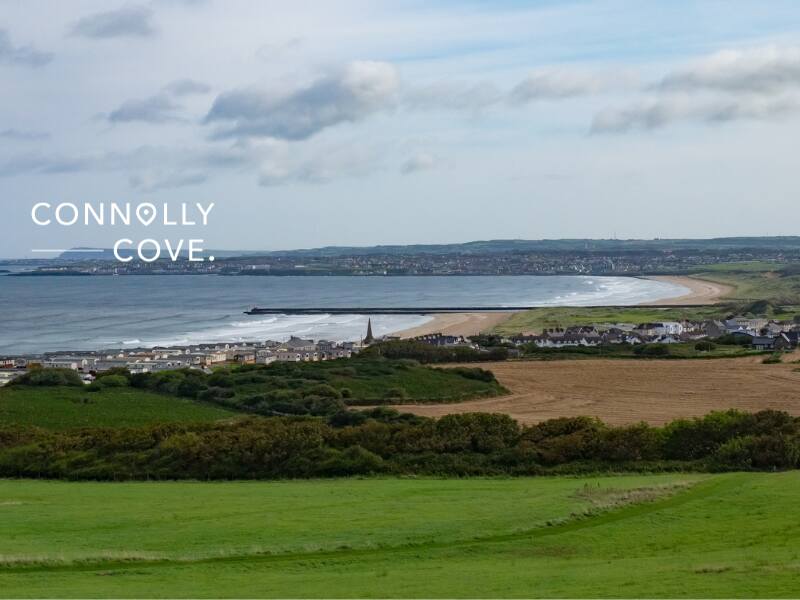
The seaside town in County Londonderry is a beautiful rustic and refreshing resort. With a magnificent Atlantic beach and harbour, this little down established its name in the hospitality business in Northern Ireland centuries ago. Portstewart has been a popular tourist destination since the Victorian era and continues to attract local and worldwide tourists just the same.
We begin to learn about Portstewart, the town’s rich history and harbour and tourist destination. Then we bring you the exciting things to do in and around this seaside resort town.
What is the history of Portstewart?
Port na Binne Uaine used to be Portstewart’s name before it was obtained by a Lieutenant named Stewart in the mid-18th century. However, history says that it was John Cromie who founded and named the town after his maternal relatives by the end of the 19th century. Cromie’s great effect on Portstewart exceeds giving the town its famous name; he was responsible for the flourishing of the tourism and hospitality industry in the town in the mid-19th century.
Portstewart attracts tourists and students alike. The former love to enjoy the town’s magnificent attractions and possibly hop into a car to one of the numerous landmarks surrounding the town. The latter love to pay the town’s grammar school, the Dominican College Portstewart a visit. The famed school, which focuses on helping students ask questions and think, stands on the edge of a cliff that overlooks the Atlantic Ocean.
Top things to do in Portstewart
If you’re planning on visiting Portstewart, you’ll need to know the town’s best places to visit and what you can do there. The local town hall, the Portstewart Town Hall, used to house the town’s famed library, which was one of the top destinations for locals and tourists to visit alike. However, due to severe damage to the building, the library is now located at Station Road.
Portstewart Strand
You know those long sandy beaches that seem infinite and draw you in more as you spend time trotting along their coasts? Portstewart Strand is one of those magnificent beaches in Ireland with its 3-kilometre-long coast over the Atlantic Ocean. This popular destination in Northern Ireland attracts visitors from around the island and abroad.
The activities you can enjoy there are endless. Apart from taking a lengthy and relaxing stroll to enjoy digging your feet in the beach’s fine grains, you can build sand sculptures, relax on the sand or enjoy a variety of water activities. Portstewart Strand, like many popular tourist attractions in Northern Ireland, attracted the filming cast of Game of Thrones, who filmed the fight scene of the Dornish guards and Jamie Lannister and Bronn in season five.
Flowerfield Arts Centre
If you feel like heading out to a beautiful and spacious park where you can relax, the kids can have a great time, and you can enjoy the local artistic scene, Flowerfield Arts Centre in Flowerfield Park is your desired destination. This multi-genre arts centre is a cultural beacon in Portstewart. The arts centre brings you a wide variety of creative activities that will captivate you and the kids alike.
You can choose from a selection of activities to participate in, such as painting, colouring, pottery, a 3D printing session at the FabLab and a ceramics studio. If you don’t feel like diving in, you can admire the exhibited art work at the gallery. The arts centre also acts as an exhibition room and conference centre, where you can book any session that you’re interested in online.
Portstewart Golf Club
Golf courses are designed to take you through intricate green tricky spots. However, the Portstewart Golf Club was built in the heart of Northern Ireland’s marvellous nature. This historic golf club dates to the end of the 19th century, making it one of the oldest golf clubs in the country. The founding of the club predates golf playing in the course by five years, and the course had only nine holes at the time. In the first quarter of the 20th century, in 1934, the course was upgraded to eighteen holes. Today, the club’s total hole count is 54.
Portstewart Golf Club hosted various tournaments over the years. These include the Open Championship in 1951, the British Girls Championship in 2006, the Amateur Championship in 2014 and the Dubai Duty Free Irish Open Championship in 2017. Luckily, you can book a visit to the club online, which also allows you to choose the course you wish to spend the day at.
Top things to do around Portstewart
The vicinity of County Londonderry carries between its borders some of the world’s magical wonders. However, Portstewart doesn’t overlook numerous locations of historical Londonderry; the town is near many outstanding landmarks that are worth visiting. These amazing places are not far from Portstewart either. So, if you’re around for a visit, make sure to stop by these additional landmarks.
Giant’s Causeway, County Antrim
When you set an eye on the Giant’s Causeway, you will truly feel that a giant once trod these steps and ended up destroying the massive location. Legend has it that two giants, Fionn mac Cumhaill from Ireland and Benandonner from Scotland, were to duel at the location of the causeway. The story then splits between two hypotheses; the first said Fionn beat his rival, while the second said that Fionn disguised himself and Benandonner fled the scene and destroyed the causeway to prevent Fionn from chasing him.
The natural basalt formation has been a popular tourist attraction since the 17th century. Hexagonal stepping stones are intricately along the remainder of the stones, which vary between four, seven and eight sides. Interestingly enough, the stepping stones on the surface disappear as they go deeper into the sea, almost as if you’re walking into the deep. While mythological theories are entertaining, ancient volcanic fissure eruption caused the formation of the steps, resulting in a magnificent natural wonder.
The Dark Hedges, County Antrim
Once upon a time, in the last quarter of the 18th century, a man named James Stuart built a house that carried his wife’s name, and to create a unique entrance, he ordered the planting of 150 beech trees. We have no idea if the eerie feeling this formation of trees gives is the same one Stuart aimed for or not, but he certainly hit the spot. The famous interlocking trees made an ideal filming spot for J. R. R. Tolkien’s masterpiece, Game of Thrones. This feature on TV increased the worldwide visitor count to the Hedges, making them some of County Antrim’s popular attractions.
The Dark Hedges‘ dark history precedes appearing on The Game of Thrones. The trees are rumoured to be haunted by a female spirit whom we have no idea who she is. Some allege she was one of Stuart’s housemaids who died mysteriously, while others claim she was Stuart’s daughter. Some claim the spirit joins others on Halloween to instil fear in the hearts of visitors, while others claim the ghost is the Grey Lady, who travels back and forth between the trees’ folds, crannies and nooks.
Carrick-a-Rede, County Antrim
Do you feel like crossing from one mountain to another, with the overlapping sea waves crashing over the rocks beneath you? Then, you should attempt crossing the Carrick-a-Rede bridge. The bridge that connects mainland Northern Ireland to Carrickarede. We don’t know when exactly locals began to build bridges between the two lands, but there are records of a rope bridge in the same spot at the end of the 19th century.
The bridge went through numerous stages until it reached its current form. What we know is a single handrail and large gaps between the steps in the 1970s. It wasn’t until 2000 that a newer one was built to withstand 10 tonnes, followed by a newer version in 2004. Heyn Construction built the current wire in 2008, which undergoes regular inspection and restoration to keep the bridge safe for visitors. The Carrick-a-Rede Bridge attracts visitors from all over the world, who’d love to experience the thrill of the crossing.
Dunluce Castle, County Antrim
This majestic castle stands atop steep slopes, which made it an ideal fortification location since the 13th century. Since its early years, Dunluce Castle was the seat of the clan chieftain. First, it was the McQuillans, then the MacDonnells and, lastly, the MacDonalds from the 13th up to the 16th century. Dunluce Castle defended the area from numerous vicious attacks; granted, it was the castle’s location that helped it win many battles. However, it was also the castle’s location that made it a common target for invaders and the seat of ruling. the MacDonnell remained the Earls of Dunluce until the Battle of the Boyne stripped them from their belongings in the late 17th century.
Legend has it a town developed around the castle, Dunluce Town, at the beginning of the 17th century, which was also named the Lost Town of Dunluce. This name was due to the invisibility of the town after the 17th-century Irish Uprising. Randall MacDonnell built the town around the castle before the Plantation of Ulster. Even though archaeologists discovered some of the town’s buildings, more than 90% of the town remains undiscovered. Dunluce Castle joined The Dark Hedges in appearing on The Game of Thrones, where it carried the name of Castle Pyke, the seat of the Greyjoys.
Old Bushmills Distillery, County Antrim
The world-renowned Irish whiskey brand dates to 1608, even though the parent company of the distillery dates back to the late 18th century. Distillation history in the area goes back as far as the mid-13th century when Sir Robert Savage of Ards declared he boosted his soldiers’ power by giving them acqua vitae. It wasn’t until four centuries later that Sir Thomas Phillips obtained a whiskey distillation license from King James I.
The current Bushmills label fluctuated years after its opening and going into the 19th century. The owners sold the distillery in 1860 before it was ravaged by a fire 25 years later. Five years later, the brand began exporting its product to the USA on board its steamship, SS Bushmills, which also visited Singapore, Hong Kong and Yokohama. Since then, the distillery has had several owners, but the brand continued to grow strong. Today, Bushmills Distillery is a famous tourist attraction in Ireland and opened its second distillery, Causeway Distillery.
Titanic Belfast, County Londonderry
You know it, the RMS Titanic might’ve set sail from Southampton, England, but the imagination of the mighty ship came true in Belfast at the hands of shipbuilders Harland and Wolff. The mighty liner failed to complete her maiden voyage after hitting an iceberg and sank into the ocean. Nobody doesn’t know the fate of the RMS Titanic, but not everybody knows that this once mighty ship has two twin sisters, the RMS Olympic and the HMHS Britannic.
Titanic Belfast introduces you to everything you need to know about the currently-lying deep in the North Atlantic Ocean ship. The museum brings its visitors a colourful ride through Belfast’s history before the construction of the ship, the construction and launch of the RMS Titanic, the ship’s fit-out, her maiden voyage, sinking and the aftermath of the world’s biggest peacetime ship sinking in seven different showrooms. The remaining two showrooms bring the unbelievable legends and myths surrounding the sinking of the ship; we remember hearing something about a Pharaoh’s curse, and the last room brings visitors to the ship as she is now, more than 3,000 metres below the ocean surface.
Mussenden Temple, County Londonderry
This epitome of exquisite beauty, not just in its unique circular design but in witnessing countless pledges of love over the years. The Mussenden Temple stands on an, unfortunately, eroded sea cliff that overlooks the Atlantic Ocean. The pleasant wedding gift contained a one-of-a-kind library, which Earl Frederick 4th or Bristol constructed as a wedding gift to his cousin, Frideswide. He even instructed that a fire kept burning in the basement to preserve the books from the dampness of the weather and the ocean.
Can you believe you once could drive a car through this temple? Now, the National Trust-owned temple is merely the circular building and the Downhill Castle, together form the Mussenden Temple and Downhill Demesne. The magic building offers breathtaking views over Portstewart, Magilligan Point and Portrush in County Londonderry, and Inishowen in County Donegal.
We hope you enjoyed your time with us at this beautiful and calming seaside beauty and the surrounding area.
The Life and Legacy of Robert the Bruce: Scotland’s Heroic King
Scotland
02/05/2024

Unveiling the Meaning of the Celtic Motherhood Knot
Culture Exploration
02/05/2024
The Town of Killybegs: The Amazing Gem of Donegal
County Donegal
02/05/2024

Belfast Giants: An Irish Sport Success Story
Ireland
02/05/2024
The Meaning and Power of the Irish Blessing Prayer
Culture Exploration
02/05/2024