
Off to Greece? Pin the Best 3 Airports in The City
Updated On: November 27, 2023 by  Marwa Abdel Moniem
Planning a snap visit to Greece? Let us know where exactly you are heading, and we will tell you which airport to land at and what attractions you should visit in this country full of ancient wonders, civilisation and natural beauty.
Where to arrive is an essential part of your short visit to any of the gems of Greece, and there are many. Athens, the capital, is your number one destination if you have yet to go on trips there. How about the Island of Crete as a second option or Thessaloniki as a third?
Having decided on your whereabouts, you should now consider what airport to arrive at to save more vacation time that would otherwise be consumed in flights and transportation. Read on to learn about your suitable landing spot!
Table of Contents
Athens International Airport
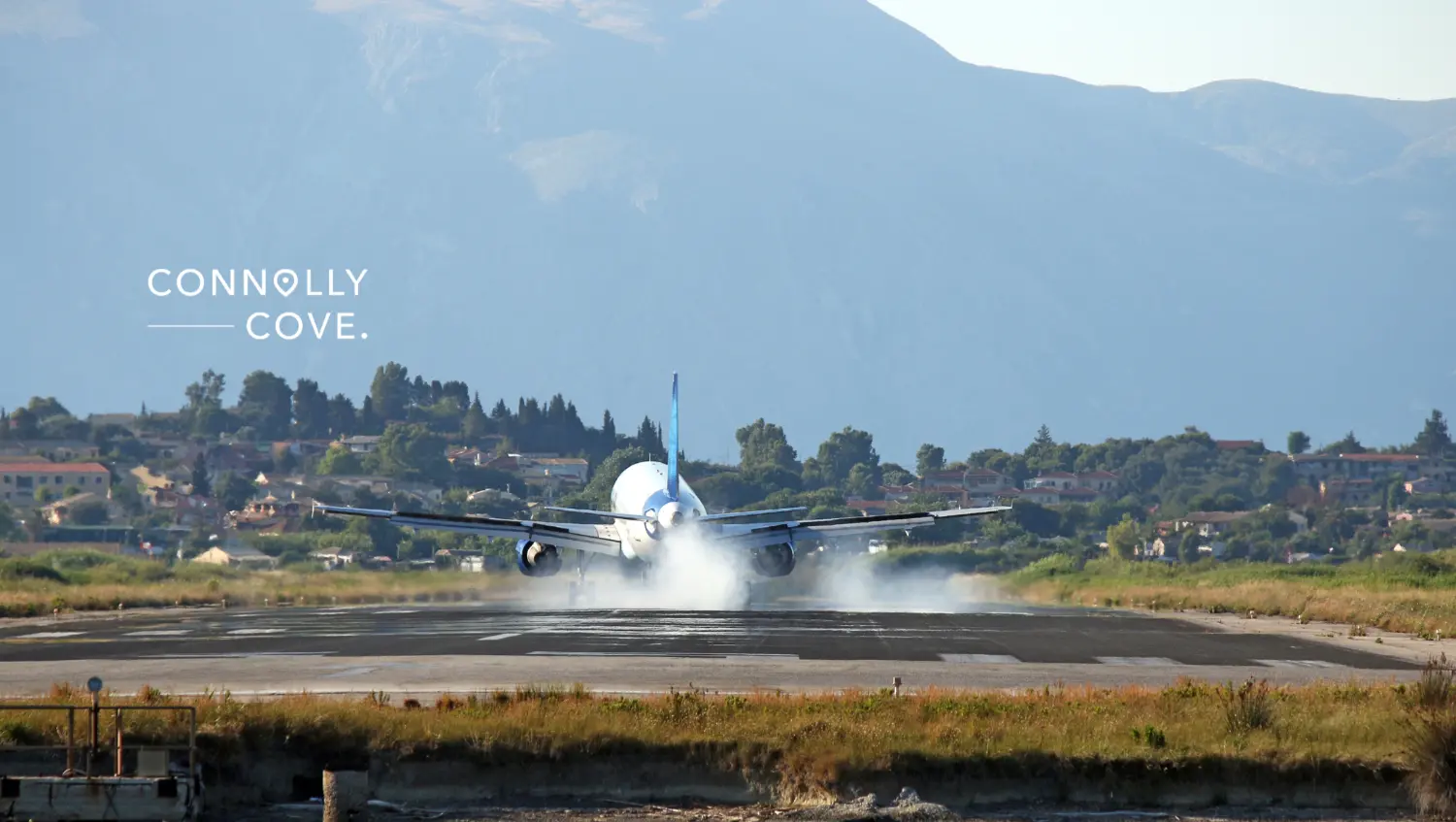
Your flight is landing at Athens International Airport (ATH)—the biggest airport in Greece and the one-and-only in the capital. If it’s your first visit, don’t worry; we have your back covered here.
The Greeks call it “El. Venizelos”, and it is about 33 kilometres away from the city centre. Athens International Airport is home to Aegean Airlines, Greece’s flag carrier. It is a good choice if you are seeking a direct flight to the capital.
Ranked among the busiest in Europe, this airport has a main and a satellite terminal, both connected through an underground link, and its passenger traffic is reported to reach some 25 million. That’s a massive figure for two terminals! But it tells of how fascinating Greece is.
Still at the airport, you might be a lucky passenger and catch one of the cultural fairs that are held occasionally at the terminal, such as the Acropolis Exhibition, which shows visitors a glimpse of the historical marvels of the city.
Athens International Airport is both eco-friendly and passenger-friendly, and it has been multi-awarded for its top-rated services that take into consideration travellers with disabilities.
The terminals have plenty of retail stores and duty-free areas —shopaholics would definitely rejoice at that! It also features several cafes and restaurants, pharmacies and a chapel. Information kiosks could be easily spotted. Children could also have some fun at any of the playgrounds at the airport. Meet and greet services are also obtainable upon request for a fast-track process.
Your journey from the airport to the city centre can never be easier, with multiple options for a stress-free ride. You name it, they have it! You can choose from airport taxis, car rentals, public buses and metro trains.
Must-sees in Athens
“Athens, the eye of Greece, mother of arts and eloquence.”
John Milton: Paradise Regained (1671), Book IV, line 240.
Athens is a city steeped in history and culture, and many landmarks reflect this rich heritage. Read on for a closer look at some of the famous attractions in the capital of Greece.
The Acropolis
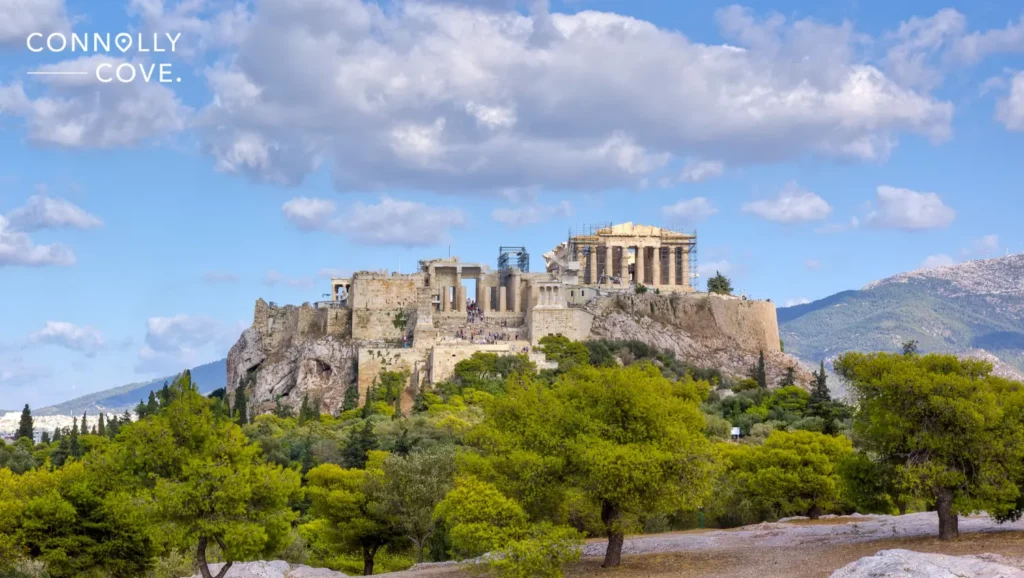
This is what one calls a showstopper. A symbol of the Greek civilisation standing on a rock —the Acropolis. If you’re already there, you are in the heart of Athens, where you can have unobstructed views of the city from the top of a hill that is 156 metres high.
Having reached the top of that hill, you are at the Parthenon, a 5th-century temple that was dedicated to the goddess Athena. It is considered one of the finest examples of ancient Greek architecture. The Emple of Erechtheion and the Nike Temple are other sites found on the Acropolis. No wonder it was the religious and political centre of Athens in ancient times.
Remember to visit the Acropolis Museum at the foot of the mountain. It houses the findings of the Athenian Acropolis and the archaeological remains of its temples. The Acropolis is a must-see in Athens!
Loiter around the Pláka, Monastiráki Square, and Central Market!
Good shoppers and foodies will find their cravings in the Plaka—a place where you can step back in time and experience the true heart of Athens. This is the oldest historical neighbourhood of Athens. Located below the Acropolis hill, the Plaka is famous for its narrow streets, whitewashed houses, and traditional Greek atmosphere. The streets are lined with small shops that sell traditional Greek handicrafts, souvenirs, and clothing.
There are also several coffee shops and restaurants where you can enjoy a meal or a drink while watching the world go by. You might also like to walk through the streets and soak in the authentic atmosphere of Athens.
Do you want to try another shopping experience? Consider visiting Monastiraki Square in the city centre of Athens. This vibrant and lively square is known for its bustling flea market, which takes place every Sunday.
The flea market sells a wide variety of items, including antiques, souvenirs, and household goods. It is a great place to find bargains on almost all the products.
The name “Monastiraki” means “little monastery” in Greek. This name is derived from the small monastery that once stood there. This square is also famous for its cafes and restaurants, which serve traditional Greek food.
Steps away from Monastiraki lies the central market, aka the Varvakeios Agora. Stepping into the Central Market is like stepping into a world of its own. The air is thick with the aroma of fresh produce, spices, and grilled meats.
The stalls are overflowing with an abundance of colourful fruits and vegetables, glistening seafood, and succulent meats. The market has been in operation since the late 19th century, and it’s a popular destination for locals and tourists alike. It is a great place to experience the authentic flavour of Athens.
National Garden of Athens
Nature lovers gather here! The National Garden of Athens is an excellent choice to have a break in the lap of nature after long hours of sightseeing. This large park in the centre of Athens serves as the lungs of the city.
It is the perfect place to walk around and enjoy wooded areas. The garden houses a wide range of plants, including over 500 species of trees and shrubs that extend about 15.5 hectares.
The garden also includes some ancient ruins, a duck pond, a small zoo, a botanical museum, a cafe, a children’s library, and a playground. It is the go-to place for families and nature enthusiasts.
Heraklion Airport
Heading to Crete? Your flight should be bound to Heraklion Airport, one of three on the island of Crete. It is the largest and is only 4 kilometres away from the city centre of Heraklion, the capital of Crete. This airport is the second largest in Greece.
HER Greece, as typed on your ticket, has only one terminal and heavy air traffic, especially during summer. You will find a bank and a currency change office at this terminal. So, non-European visitors needn’t worry about securing euros for their vacation.
With a passenger capacity of about 15 million, Heraklion Airport is the busiest in this region. It services more than 40 airlines, which makes it a good landing choice for passengers from many departure points worldwide.
This airport is close to many popular highlights in Heraklion, making it a good base for exploring the city, which is packed full of history. If you choose Crete, book and look for the official code HER.
Get one of the many public buses carrying passengers to the city centre from the airport. You may opt for rides offered by different car rental agencies. The drive from the airport to the city centre is not such a big deal; it is like a walk in the park!
Must-sees in Heraklion
Heraklion is a bustling port city with a rich history and culture. This makes it one of the preferred tourist destinations in Greece. We will tell you about some of the top must-visits in Heraklion. So, read on!
The Palace of Knossos
Emerging from the mists of time, the Palace of Knossos stands as a majestic testament to the once-thriving Minoan civilisation. Nestled amidst the fertile plains of Crete, Knossos is about 9,000 years old and has left the palace with many cultural layers from the Neolithic through the Byzantine. It is something to see for history buffs!
The palace itself is a marvel of engineering and artistry. Its multi-level structure is adorned with vibrant frescoes and intricate carvings. This four-storey palace has stone staircases, the grand one leading to the royal apartments. Only the two upper levels have been restored.
Besides its winding staircases, the palace also features hidden passageways and secluded chambers, where, as the Greek myth goes, the Minotaur (a half-man, half-bull creature) was imprisoned.
Knossos was not only a royal residence but also an administrative, commercial and cultural centre of the Minoan state. Today, the palace is located about 6 kilometres from Heraklion city centre. It is a must-see!
The Morosini Fountain
This Venetian fountain is one of the landmarks in Heraklion. Dating back to 1628, the Morosini Fountain is now positioned in the city centre in Lions Square. It was constructed to supply the city with water, which was much needed back then.
The fountain has four marble lions designed to release water from their mouths. The basin below features lobes and reliefs based on Greek mythology.
Today, the Morosini Fountain is a place to relax and experience local life in Heraklion. Many café tables are found around the fountain for visitors to have a sip while enjoying the scene of the area and its shops. The Morosini Fountain is one of the top attractions in Heraklion.
The Cathedral of St. Minas
This is the spiritual part of the journey. Visit the St. Minas Cathedral and marvel at the awe-inspiring architecture that dates back to the 19th century. Dedicated to Egyptian-born Saint Menas, this cathedral is the biggest in Crete and one of the largest in Europe.
Designed to serve as the seat of the Archbishop of Crete, the Cathedral of St. Minas is situated in Venizelos Square. A small church of Agios Minas is found in the proximity of the cathedral.
This large three-nave cathedral has a majestic dome decorated with traditional Byzantine frescos. It has two bell towers and a magnificent chandelier. The interior walls and vaults are Greco-Byzantine in style. It is a hallmark of Heraklion that shouldn’t be missed!
Thessaloniki Airport
If Thessaloniki is your stop in Greece, your flight should land at Thessaloniki Airport—the only aviation hub in this region. Thessaloniki is Greece’s third largest airport and the main airport of Northern Greece.
In operation since 1930, Thessaloniki Airport has two terminals that are connected via a footbridge. It serves over 30 airlines, including Aegean Airlines and Olympic Air. Among the amenities at Thessaloniki Airport are the duty-free areas, charging stations and free Wi-fi. The airport provides luggage wrapping and storage services.
There are limited transit options from this airport to Thessaloniki’s city centre. But you should not worry because the location of the airport near the city, about 13 kilometres away, makes the rides short. Shuttle buses are available every 25 minutes to ferry passengers from the airport to the city centre in 40 to 50 minutes, depending on the time of the ride. That guaranteed, you should now think of the attractions awaiting you in Thessaloniki.
Must-Sees in Thessaloniki
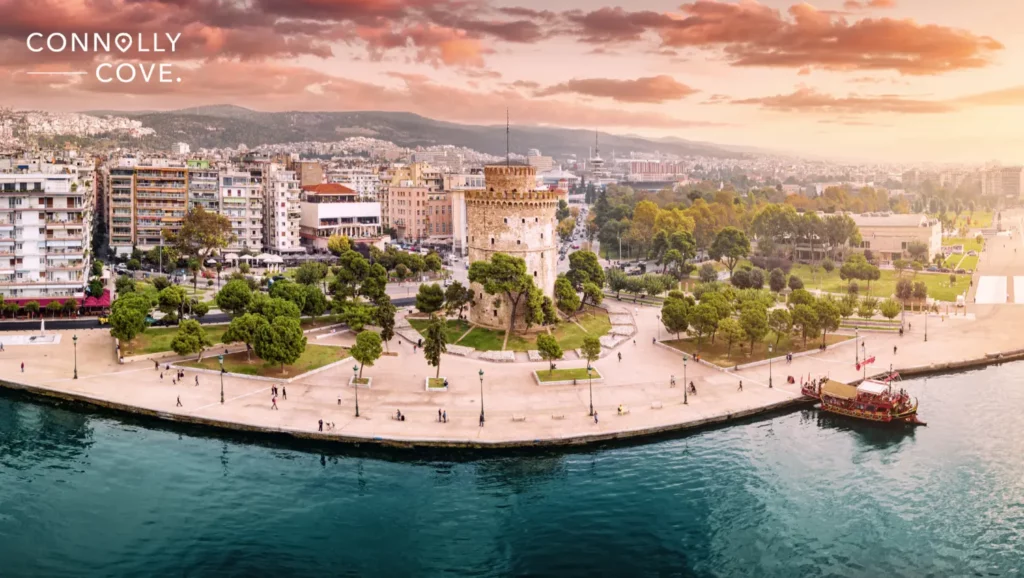
Now, this is a city easy to love, with the endless shades of blue along its stunning coastlines and its cobblestone alleys that smell so old. Welcome to the co-capital of Greece, which is home to rich history and fine food.
Named after the sister of Alexander the Great, Princess Thessaloniki, the city is the cradle of cultural diversity and mischievous history. In a clash of ancient Greek, Roman, Byzantine and Ottoman empires, the identity of Thessaloniki was shaped.
It is also one of the most affordable places to holiday in Greece, so it is very friendly for those visiting on a budget. Known for its hospitable people, Thessaloniki will give you a feeling of being at home away from home. You will lose yourself in this easy-going city, which is full of colourful streets and kind-hearted people. Here are some insider tips about the best places to visit in Thessaloniki.
Ano Poli: Thessaloniki’s Old Town
Welcome to the former Ottoman quarter! Here, you will find the house where the late Turkish leader Kemal Ataturk was born and raised toward the end of the 19th century. Many stone and Balkan houses of the Ottoman era are lining the cobblestone alleys in this part of the city, known as the Old Town.
Ano Poli, meaning “Upper Town” in Greek, is the historic district of Thessaloniki. It is located on a hill overlooking the city centre and is known for its narrow, winding streets, traditional houses, and Byzantine churches. It is a great place to wander and get lost in the maze of roads. If you want to taste authentic Greek culture, be sure to visit Ano Poli.
The Archaeological Museum of Thessaloniki
Art and history devotees, this place is for you! Unique Roman, Greek and Byzantine artefacts are shown in a picturesque representation in one place—the Archaeological Museum of Thessaloniki.
This is the central museum of northern Greece and one of the most popular tourist destinations in Thessaloniki. The collections niched at the museum include items from the prehistoric era to the end of antiquity.
The masterpiece of the museum is the Derveni krater, which was unearthed from the tombs of Derveni and has been on display at the museum since its inauguration in 1962. The Archaeological Museum of Thessaloniki is a must-see for travellers interested in the history and culture of Greece.
The Epanomi Beach
One of the most iconic beaches within reach of Thessaloniki is Epanomi. This beach is an off-the-radar gem that is only a 40-minute drive from Thessaloniki. Epanomi is the most frequented beach in this region, with vacationers and tourists gathering to enjoy its powder-soft sand and shallow waters.
If you’re looking for a fun and relaxing beach vacation, Epanomi is an excellent option. The beach is clean and well-maintained. Epanomi is the perfect place to escape the hustle and bustle of daily life and get sun-kissed.
Greece’s airports are gateways to a land of ancient history, stunning beaches, and delicious food. With various airports to choose from, travellers can easily find the perfect stop for their needs. Whether you’re looking for a convenient airport near your destination or a scenic airport with stunning views, Greece has an airport for you.
Exploring Aillwee Caves in County Clare, Ireland
County Clare
01/05/2024
Visiting Glasgow | Ultimate Travel Guide
Scotland
01/05/2024
Discovering Ireland | Explore County Tyrone
County Tyrone
01/05/2024
10 Charming Irish Towns You Must Visit
Ireland
01/05/2024

The Art of Solomon’s Knot: Complete Guide
Culture Exploration
01/05/2024