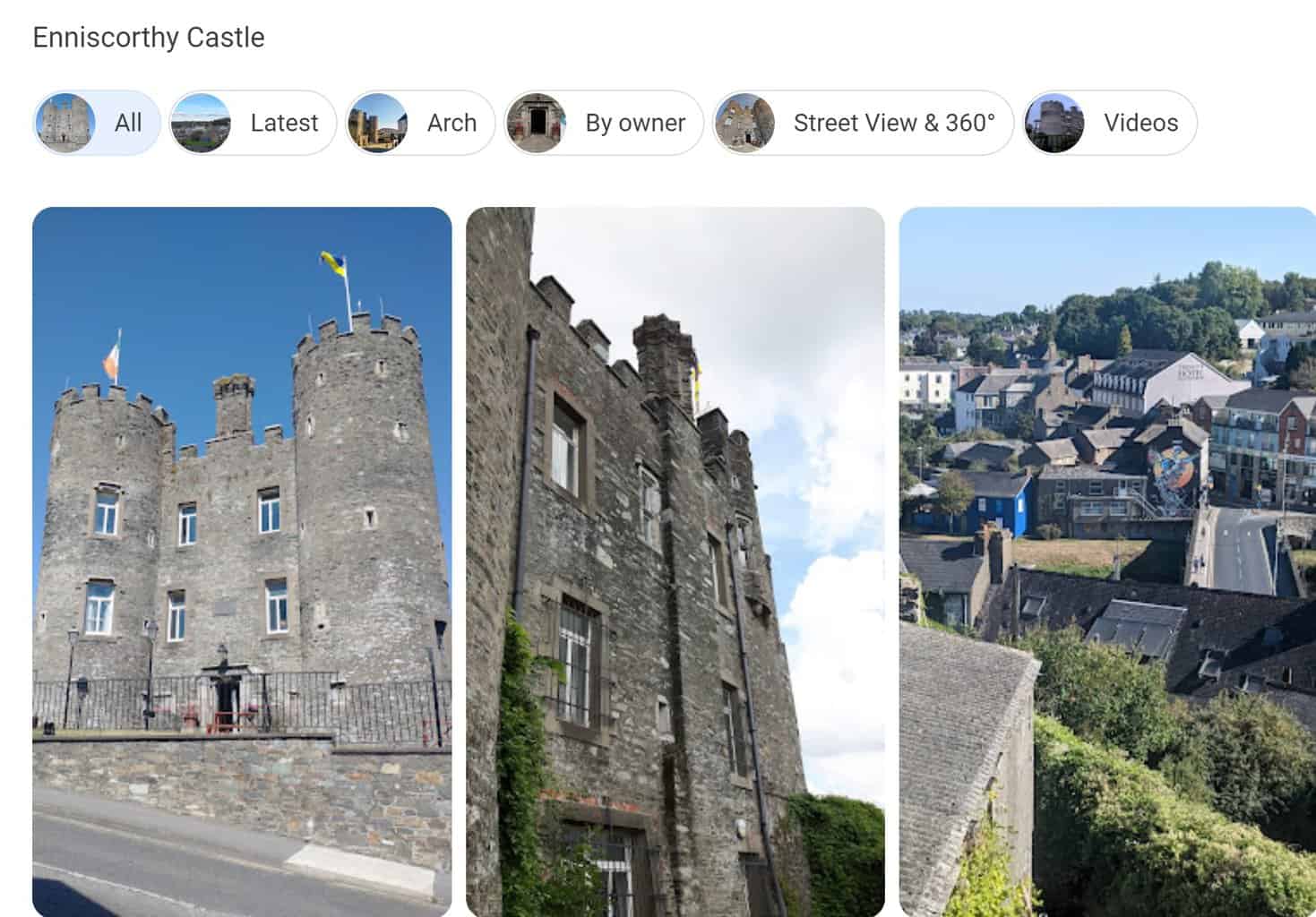


Built in 1190, Enniscorthy Castle is in Enniscorthy town, County Wexford. It has a rich history, having been the home of many families, prisoners, and armies over its long lifetime.
From 1190 to the mid-1370s, the castle was occupied by Anglo-Norman families. This was until 1375 when the MacMurrough Kavanagh dynasty forcefully took it. Nearly 200 years later, in 1569, the castle was burnt down after a raid on the town of Enniscorthy.
Henry Wallop rebuilt the castle after Royal Appointment because the town had considerable wealth from surrounding areas known as ‘The Black Country’.
Table of Contents
Historical Background
Norman Origins
Enniscorthy Castle was built in 1190 by Philip de Prendergast and his wife Maud, two Norman settlers. The Normans were known for their formidable castle-building skills, and Enniscorthy Castle is a prime example of their architectural prowess. The castle was constructed on a strategic site overlooking the River Slaney, which provided both a natural defence and a means of transportation.
The original structure was likely a motte-and-bailey castle, a standard fortification used by the Normans. The motte was a large earth mound with a wooden or stone keep on top, while the bailey was an enclosed courtyard typically surrounded by a wooden palisade and a ditch. Over time, the wooden structures were replaced with stone, creating the more durable and imposing castle we see today.
Medieval Enhancements
Throughout the medieval period, Enniscorthy Castle underwent several modifications and enhancements. The castle’s keep was fortified, and additional defensive structures, including thick stone walls and battlements, were added. These changes were necessary to withstand the conflicts and sieges during this tumultuous period.
In the 14th century, the castle came into the possession of the powerful Rochfort family, who further enhanced its defences. The Rochforts were influential figures in Irish history, and their tenure at Enniscorthy Castle marked a period of relative stability and prosperity for the region.
Architectural Features
The Keep
The keep is the most prominent feature of Enniscorthy Castle. This large, rectangular tower was the heart of the castle and served as the primary residence for the lord and his family. The keep was designed to be both a residence and a last line of defence in case of an attack. Its thick stone walls and narrow windows made it difficult for attackers to breach, while the elevated position provided a vantage point for archers and lookouts.
Inside the keep, several floors were connected by a spiral staircase. The lower floors were used for storage and as living quarters for the castle’s garrison, while the upper floors housed the lord’s private chambers and the great hall. The castle’s great hall was the centre of life, where feasts, meetings, and ceremonies were held.
The Curtain Walls and Towers
Surrounding the keep were the curtain walls, which enclosed the castle’s courtyard. These walls were fortified with towers at strategic points, providing additional defence and a platform for archers. The towers were cylindrical or square in shape and had multiple levels, with narrow slit windows for archers to fire arrows while remaining protected.
The main entrance to the castle was through a fortified gatehouse designed to be heavily defended. The gatehouse typically had a portcullis, a heavy wooden or metal gate that could be raised or lowered, and a drawbridge that could be pulled up in times of danger.
The 1798 Rebellion
One of the most significant events in Enniscorthy Castle’s history was its role in the 1798 Rebellion, a major uprising against British rule in Ireland. British forces used The castle as a garrison and became a focal point of conflict during the rebellion.
The Rebellion and the Castle
In May 1798, Irish rebels, inspired by the ideals of the French and American revolutions, launched an insurrection against British rule. Enniscorthy was a key strategic location, and British troops quickly occupied the castle to defend against the rebel forces. After intense fighting, the rebels managed to capture the town, and the castle fell into their hands.
The capture of Enniscorthy Castle was a significant victory for the rebels and boosted their morale. However, their success was short-lived. British reinforcements soon arrived, and after several days of fierce combat, the rebels were forced to retreat. The castle came under British control again, but the 1798 Rebellion left a lasting impact on the region and its people.
19th and 20th Century Transformations

The Castle’s Transformation
In the 19th century, Enniscorthy Castle underwent a significant transformation. The Roche family acquired the castle and undertook extensive renovations to convert it into a more comfortable residence. The medieval structure was updated with modern amenities, and the interior was refurbished to reflect contemporary tastes.
During this period, the castle also served various civic functions. It was used as a courthouse and a gaol (jail), reflecting its continued importance in the local community. The castle’s role as a centre of administration and justice underscored its enduring significance in Enniscorthy.
The Castle as a Museum
In the 20th century, Enniscorthy Castle was transformed once again into a museum. The Irish government acquired and restored the castle to preserve its historical features. The museum opened in the 1960s, allowing visitors to explore the castle’s rich history and learn about the events that shaped the region.
The Castle Today
Visitor Experience
Today, Enniscorthy Castle is a popular tourist attraction, drawing visitors from Ireland and beyond. The museum housed within the castle offers a fascinating glimpse into its history, with exhibits covering everything from its Norman origins to its role in the 1798 Rebellion.
Visitors can explore the castle’s various rooms and towers, each of which has been carefully restored to reflect different periods in the castle’s history. The great hall, with its impressive fireplace and medieval decor, provides a sense of what life was like for the castle’s inhabitants. On the other hand, the dungeon offers a more sombre view of the castle’s past, highlighting its use as a place of imprisonment.
Educational Programmes
Enniscorthy Castle also offers a range of educational programmes for schools and groups. These programmes are designed to engage students with the castle’s history and architecture, providing hands-on learning experiences. Workshops, guided tours, and interactive exhibits help bring the past to life and make history accessible to a younger audience.
Events and Activities
The castle hosts various events throughout the year, from historical reenactments to cultural festivals. These events celebrate the rich heritage of Enniscorthy and provide entertainment for visitors of all ages. The annual 1798 Rebellion commemoration is one of the highlights, featuring reenactments of key battles and ceremonies honouring the rebels who fought for Irish independence.
The Future of Enniscorthy Castle
Preservation Efforts
Preserving Enniscorthy Castle for future generations is a priority for local authorities and heritage organisations. Ongoing conservation efforts ensure the castle’s structural integrity and historic features are maintained. These efforts include regular maintenance, restoration work, and modern technology to monitor the castle’s condition.
Enhancing the Visitor Experience
Plans are also in place to enhance the visitor experience at Enniscorthy Castle. This includes updating exhibits, improving accessibility, and expanding educational programmes. The aim of continually strengthening the castle’s offerings is to attract more visitors and give them a deeper understanding of Ireland’s history.
Visit Enniscorthy Castle
Anyone can visit the castle, although guided tours can be pre-booked. Visitors can learn about the castle and the surrounding area, including Enniscorthy Town. There are also different exhibitions around the castle where visitors can learn about the different periods of the castle and town.
Visitors can also visit the castle’s roof, which offers amazing views over Wexford, stretching to the nearby countryside and Vinegar Hill. There is also a permanent exhibition for Eileen Gray, a renowned designer and architect born in the late 1800s.
Opening Times
- Monday to Friday – 9:30 am – 5 pm
- Saturday and Sundays – 12 pm – 5 pm
Admission Prices
- Adult – €6
- Seniors & Students – €5
- Child (under 16) €4.00
- Family ( 2 Adults & up to 3 Children) €15.00
Group tours can also be booked in advance. Groups of over ten can receive group rates. Just contact Enniscorthy Castle for booking details.
Nearby is Vinegar Hill. Admission to Vinegar Hill is free. There is also the Rebellion experience. Integrated tickets for the Rebellion Experience and Enniscorthy Castle. They are below.
Integrated Prices:
- Adult – €10
- Seniors & Students – €8
- Family* – €25
(*A family ticket is for two adults and up to three children)
Facilities Available
- Wheelchair Friendly
- Toilets Available
- Disabled Toilet
- Parking Including Disabled
- Baby Changing Facilities
- Service Animals Welcome
Conclusion
Enniscorthy Castle is not just a historical monument but a symbol of the resilience and endurance of the Irish people. From its Norman origins to its role in the 1798 Rebellion and its transformation into a modern museum, the castle has played a significant role in the history of County Wexford and Ireland.
As visitors walk through its ancient halls and explore its towering battlements, they are transported back in time, gaining a deeper appreciation for the events and people that have shaped this remarkable place. Enniscorthy Castle stands as a testament to Ireland’s rich and complex history, inviting all who visit to explore its storied past and celebrate its enduring legacy.
4o
Have you ever visited Enniscorthy Castle? Let us know your experience in the comments below.
Other interesting blogs: Legend of Edinburgh Castle | Blarney Castle, County Cork | Why Visit Ireland | Irish Castles | Carrickfergus Castle, NI | Belfast Castle