


Cairo Tower: A Fascinating Way to See Egypt From A Different View – 5 Facts and More
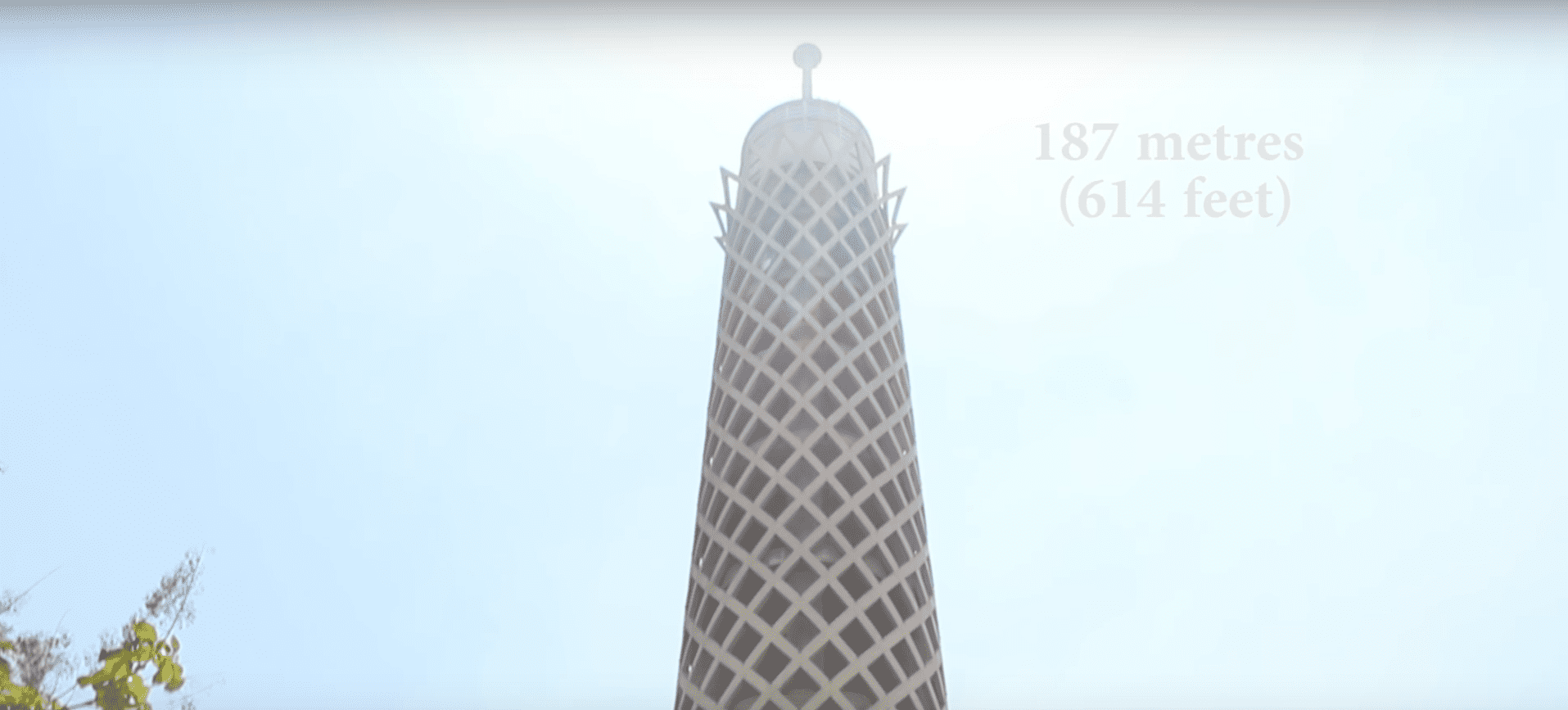
Updated On: April 20, 2024 by  Salma Ihab
Egypt is one of the countries worldwide with many tourist attractions. Whenever someone thinks of heading to Egypt for a quick visit, they usually pass by the significant capital, Cairo. However, people tend to believe that Egypt’s history lies in the cities located at its borders.
While that is partially true, Cairo consists of more than a few mesmerizing landmarks. Aside from the Great Pyramids of Giza, there is the Cairo Tower. It is a place that you do not want to miss while in Egypt. We’ll get you introduced to the whole story behind this magnificent tower.
A Brief about the Cairo Tower
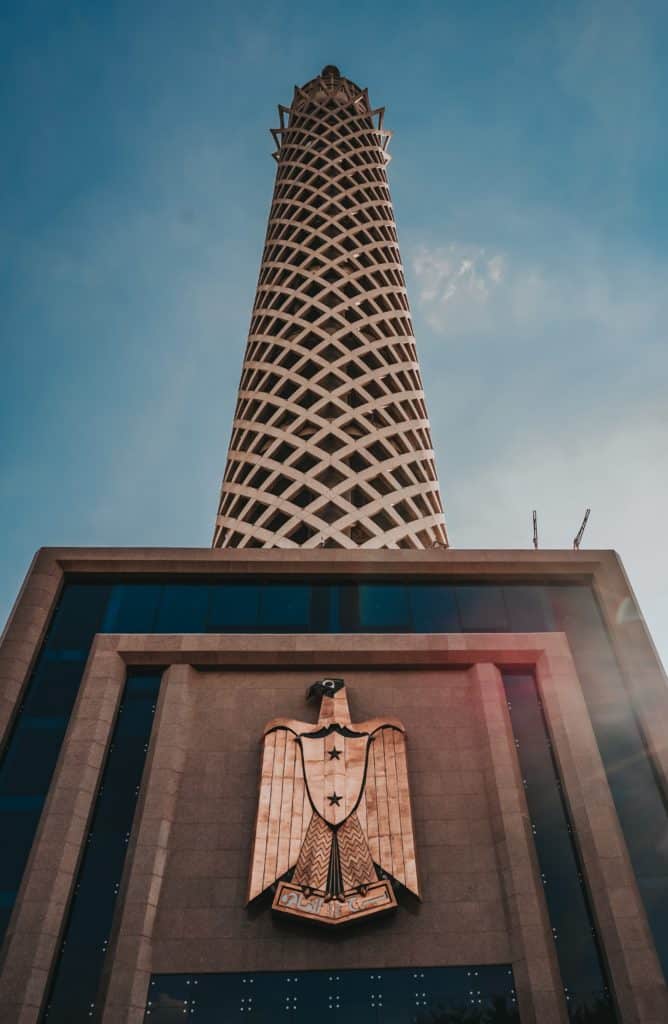
Before going back to the foundation of this tower, we’ll take you through a summary that may help you to know more about it. The Cairo Tower is known in Arabic as Borg Al-Qahira; the literal meaning of the English name.
The local people in Cairo usually call it “Nasser’s Pineapple.” Cairo Tower has been the tallest building in North Africa for over half a century; it is 187 meters tall. Before that, it remained the tallest tower in Africa until the Hillbrow Tower came into being.
Again, it is Cairo’s second most famous landmark, right after the Great Pyramids of Giza. The location of this tower lies in a district called the Gezira. Gezira is an Arabic word that means Island in English; the tower sits on an island in the Nile River. So, that was where the name of the district came from.
What makes this place famous is the location. It is close to Downtown Cairo, the Nile River, and other famous districts in Cairo. These districts include the Islamic district of Cairo. It is where people go to visit Khan Al Khalili Bazaar and take a tour around the magnificent street, El Moez.
Architectural Features
The Cairo Tower’s design is a fusion of traditional Egyptian motifs and modernist architecture, reflecting the country’s ancient heritage and aspirations for the future. The tower’s sleek, elongated form is reminiscent of a lotus flower, a symbol of rebirth and regeneration in ancient Egyptian mythology.
At the top of the tower, visitors are treated to a revolving observation deck that offers panoramic views of Cairo and the surrounding landscape. From this vantage point, one can marvel at the juxtaposition of ancient monuments, such as the Pyramids of Giza and the Sphinx, with modern skyscrapers and bustling streets below.
The tower’s exterior is adorned with intricate latticework patterns inspired by traditional Islamic art, adding to its visual appeal and cultural significance. Illuminated at night, the Cairo Tower becomes a beacon of light that illuminates the city skyline, casting a glow that can be seen from miles away.
Hillbrow Tower
Before Cairo Tower came to life, the Hillbrow Tower was on the list of the tallest structures in Africa. The tower is located in the Hillbrow district in Johannesburg, South Africa.
It was the tallest structure, and the tower height reached 269 meters, around 883 feet. Hillbrow Tower managed to be the tallest in Africa for around 45 years. It was also among the tallest structures worldwide; however, when the Mount Isa Chimney in Queensland, Australia, was built in 1978, it was not on top of the list anymore.
The tower of Hillbrow took three years to be ready for the world to see. The construction started in 1968 and lasted until 1971. Before the popularity of the name Hillbrow, the tower was known as JG the Strijdom Tower.
It was the name of the South African Prime Minister. Again, the tower’s name changed to the Telkom Jo’burg Tower in 2005, but it became famous as the Hillbrow Tower for its location.
Political Intervention
Although the Cairo Tower is a tourist attraction and one of Cairo’s most significant landmarks, the reason behind its existence was purely political. The former Egyptian President, Gamal Abdel Nasser, came up with the idea of constructing such a structure.
In time, the United States had provided Egypt with six million dollars. It was a personal gift to gain their support against the Arab world. Refusing to accept the bribe, Abdel Nasser overtly scolded the American government. As a result, he transferred the money entirely to the Egyptian government and used it to build the magnificent tower.
Above and beyond, the tower’s location was also among Abdel Nasser’s plans. Cairo Tower rises near the Nile River; the Embassy of the United States is visible just across the Nile. He succeeded in creating a symbol that signifies the unity of the Arab world and their resistance against the U.S.
About Gamal Abd El Nasser
Gamal Abdel Nasser was one of Egypt’s most popular presidents. He was the second President to rule Egypt after the Royal Period vanished. His political career started in 1952 when he revolted against the kingdom.
Abdel Nasser was the first to present the idea of extensively improving the land. He was introduced only one year after the revolution he led.
Two years after the revolution, he took down the Muslim Brotherhood organization. Unfortunately, one of its members attempted to murder him but, luckily, failed. After that incident, he was why Muhammad Naguib, the first president of Egypt, was under house arrest. Shortly, he became the official president of Egypt in 1956.
Amenities of Cairo Tower
The tower became effortlessly very attractive to foreigners and locals alike for more than a few reasons. The construction took almost seven years, and the designer was Naoum Shebib, a brilliant Egyptian architect.
The tower takes the shape of a pharaonic lotus plant, for its frame is intentionally partially open outwards. This lotus is intended to make the structure an iconic symbol of Ancient Egypt.
Another facility that attracts tourists is the rotating restaurants at a high tower point, where the great Cairo has an amazingly breathtaking view. The rotation can take up to one hour or more. That allows you to view Egypt from a higher point and at a greater angle.
The Spectacular View
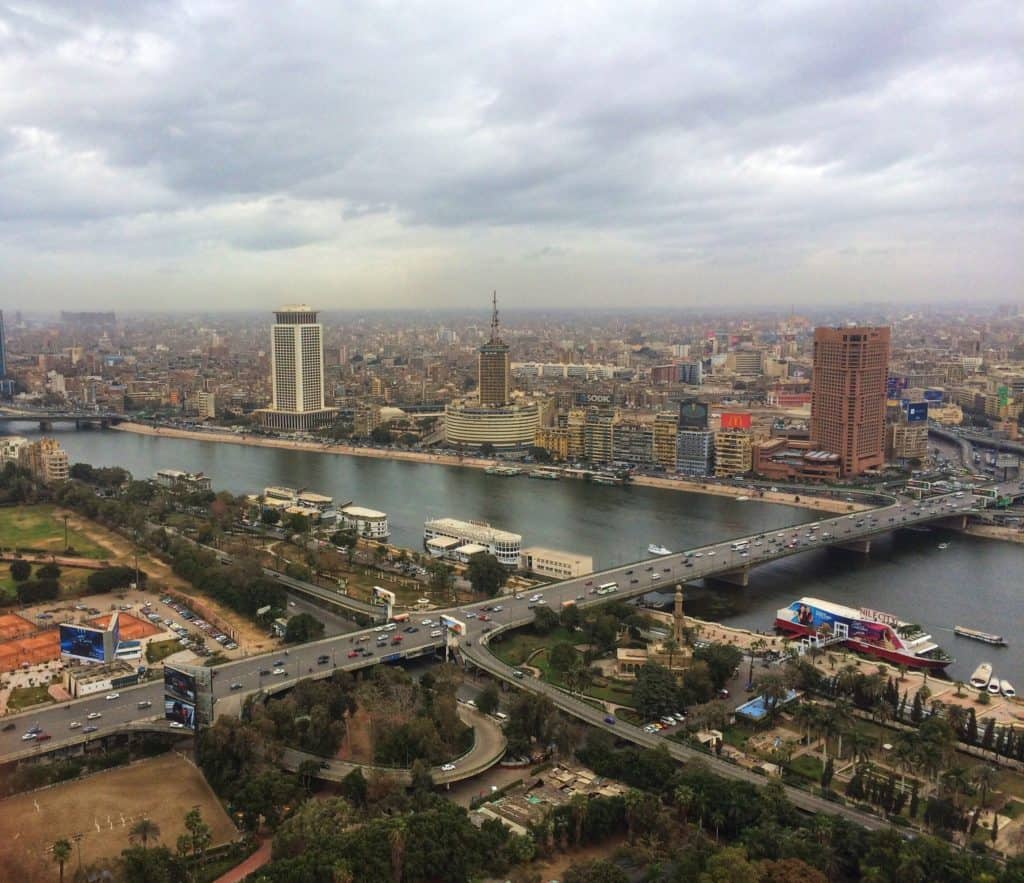
Since Cairo Tower is one of the tallest structures in the world, it grants Egypt a fantastic feature. The reason behind its being a tourist attraction is that you can see Cairo from its highest point. The view is breathtaking, for the tower consists of 16 floors, but actually, the tower seems higher. The latter is because the tower lies on a granite base. The Pharaohs used the same material to build their temples and other structures.
Get ready to reach Egypt’s sky just by visiting one of its most prominent landmarks, Cairo Tower. You’ll have fun watching the city from up there and indulge in the delicious dishes at the restaurant.
Preserving Egypt’s Legacy: Conservation and Sustainability
As a symbol of Egypt’s progress and modernity, the Cairo Tower also embodies a commitment to environmental sustainability and conservation. In recent years, efforts have been made to enhance the tower’s energy efficiency and reduce its carbon footprint by implementing green technologies and practices.
These initiatives aim to minimize the tower’s environmental impact from solar panels to energy-efficient lighting systems while ensuring its continued relevance in the 21st century. By embracing sustainable development principles, the Cairo Tower serves as a model for responsible urban growth and stewardship of natural resources.
Visiting the Cairo Tower
Visiting the Cairo Tower is a must-do experience for those planning a trip to Cairo. Whether you’re a history buff, an architecture enthusiast, or simply seeking unparalleled city views, the tower offers something for everyone.
Tickets to the observation deck can be purchased on-site, with discounts available for students, seniors, and large groups. Visitors are advised to arrive early to avoid long queues, especially during peak tourist seasons.
Once at the top, take your time soaking in the breathtaking vistas and capturing memories that will last a lifetime. Whether you’re admiring the city’s skyline by day or watching the twinkling lights illuminate the night, the Cairo Tower promises an unforgettable experience that will leave you spellbound.
Conclusion
In the heart of Cairo, amid the bustling streets and ancient monuments, the Cairo Tower stands as a symbol of Egypt’s enduring spirit and progressive vision. From its humble beginnings as a bold architectural experiment to its current status as a beloved cultural icon, the tower has witnessed the ebb and flow of history, remaining a steadfast beacon of hope and inspiration for generations to come.
As visitors ascend its heights and gaze out upon the sprawling metropolis below, they are reminded of the timeless allure of Egypt, where the past and present converge in a harmonious dance. In the shadow of the Cairo Tower, the story of Egypt unfolds, inviting all who dare to dream to join in its celebration of heritage, culture, and innovation.
Have you ever visited the Cairo Tower in Egypt? Let us know your experience in the comments below.
More Amazing Egyptian Blogs: Cairo’s Orman Gardens | The Pharaonic Village Giza | The History of Alexandria | Downtown Cairo History | Al Azhar Park, Old Cairo

A Walk in Ireland Guide: Best Trails, Routes, and Tips
Ireland
26/04/2024

An Ultimate Guide to 6 of the Finest Castle Tours in England
England
26/04/2024

Unveiling the Most Terrifying Haunted Tours in Scotland
Scotland
25/04/2024

7 Top Amusement Parks in England for an Unforgettable Adventure
England
25/04/2024

Miami Tourism Statistics: A Comprehensive Overview of Visitor Numbers and Revenue
Travel Statistics
25/04/2024