

Article Summary
What this article covers: After-hours museum tours and evening openings, how public museum lates differ from private out-of-hours access, what they cost, and where to find them across Ireland, the UK and the wider world.
Who this is for: Travellers planning a city break who want time with a collection without the daytime crowds, anyone weighing up a free museum late against a paid private tour, and visitors to Ireland looking for cultural experiences that run past closing time.
Key takeaway: An after-hours museum visit falls into one of three bands, free public lates, ticketed out-of-hours tours at roughly £20 to £40, and private access starting in the hundreds. Knowing which one you are booking matters more than which museum you pick.
Expert insight: “The first time we walked through a gallery with almost nobody else in it, the thing that struck us was the sound. You hear your own footsteps on the floor, and objects that had felt like wallpaper during the day suddenly hold you. That is the whole argument for going at night, and it costs nothing on Culture Night,” says Ciaran Connolly, Founder of ConnollyCove.
Quick facts:
- Culture Night, or Oíche Chultúir, is an all-island event held each year on the third Friday of September, with all participating events free to the public.
- Culture Night is organised by the Arts Council with local authorities across the island of Ireland.
- Cloakrooms and main cafés are routinely closed during out-of-hours events, so large bags are often refused at the door.
Ireland gives you one of the best after-hours museum experiences anywhere, and it is free. That is the starting point for this guide, because most articles on this subject send you straight to London or New York and never mention that hundreds of Irish museums, galleries, castles and civic buildings open their doors late for one night every September. If you are planning a cultural trip, our Dublin travel guide and our guide to Northern Ireland attractions both pair well with what follows.
Table of Contents
The pull of a museum after closing is easy to understand and harder to book than most people expect. Prices run from nothing at all to several thousand pounds, the terminology is inconsistent between institutions, and the practical rules change once the building stops operating normally. ConnollyCove is an Ireland-based travel and culture platform, and this guide sets out what the different formats are, what each one realistically delivers, and where to find them.
What Is an After-Hours Museum Tour?
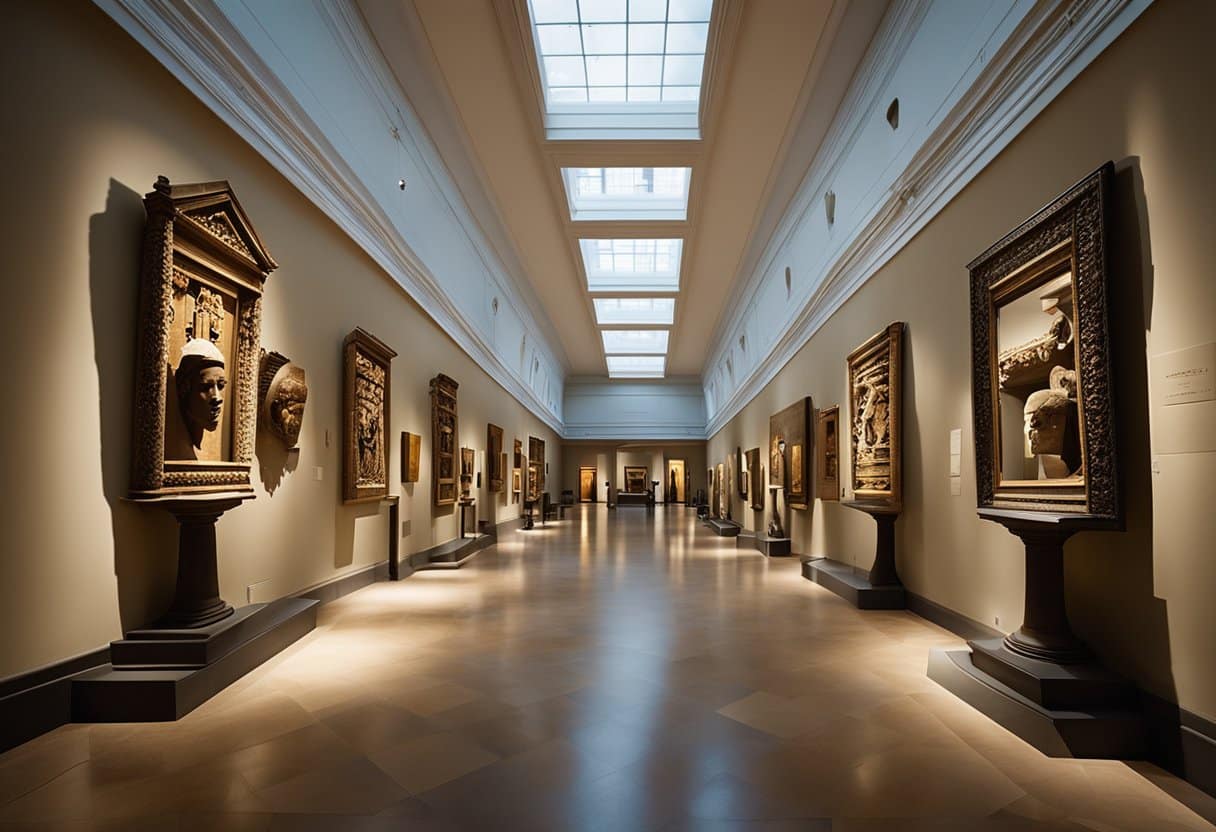
An after-hours museum tour is any organised access to a museum outside its standard public opening times, either before the doors open in the morning or after they close in the evening. It covers free city-wide late openings, ticketed small-group tours led by a guide or docent, and private hire of a gallery for a single group.
The confusion comes from the fact that all three get described with the same phrases. “Museum lates”, “after dark”, “out of hours” and “night tours” are used interchangeably by institutions that mean very different things by them. Booking the wrong one is the most common way people end up disappointed.
Museum Lates Versus Private Out-of-Hours Access
A museum late is a public evening opening. The building stays open to anyone until somewhere between 20:00 and 22:00, usually on a fixed day each month, often with live music, talks, workshops or performance running alongside the permanent collection. Entry is free or low cost. Crowds can be substantial, and at popular institutions a late evening can be busier than a weekday afternoon.
Private out-of-hours access works the other way. Numbers are capped, commonly between ten and twenty people, a guide leads the group, and the galleries are otherwise empty. You pay for the emptiness. The British Museum’s morning out-of-hours tours are the best known example of the format in these islands, and our British Museum visitor guide covers the collection itself in more detail.
Why Darkness Changes What You See
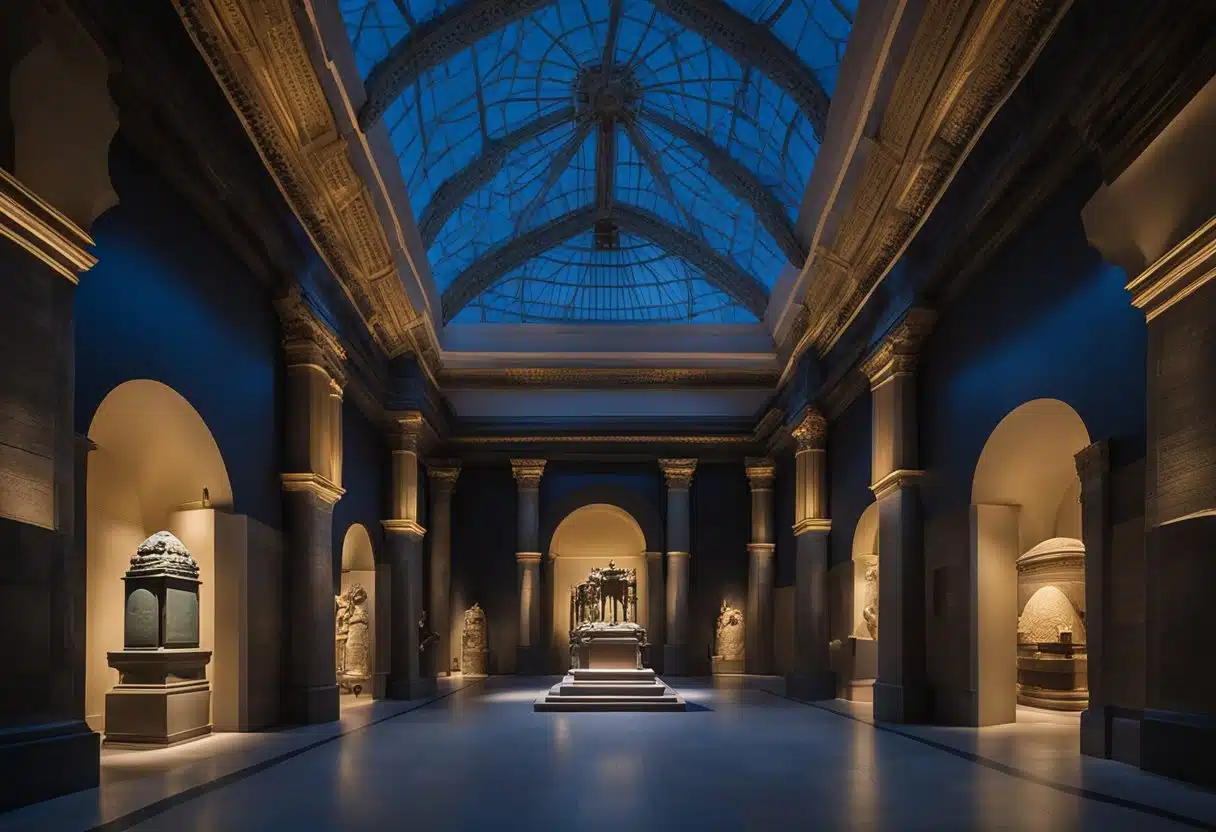
Low light changes the way objects read. Gold, glass and polished stone hold light in a way they do not under full daytime illumination, and anything displayed in a case stops competing with reflections off the room. Acoustics change too. A gallery with twelve people in it sounds nothing like the same room with four hundred.
There is a practical reason behind the atmosphere as well, covered further down under conservation lighting. Museums are not dimming the lights purely for effect.
The Experience Spectrum: Formats, Access and Cost
Three tiers cover nearly everything sold as an after-hours museum experience. Work out which tier you want before you start looking at venues, because the price gap between them is enormous and the experiences have almost nothing in common.
| Tier | Typical cost | Group size | Atmosphere | Best for |
|---|---|---|---|---|
| Public museum lates | Free to around £10 | Open public | Social, busy, programmed events | A night out with culture attached |
| Ticketed out-of-hours tours | Roughly £20 to £40 | 10 to 20 | Quiet, guided, focussed on a few galleries | Seeing a specific collection properly |
| Private and curator-led access | £150 to £350 per person, buyouts far higher | Your group only | Empty galleries, bespoke route | Special occasions, serious collectors, small groups |
Two things are worth saying plainly about the top tier. First, a full private buyout of a major institution runs into thousands and is priced for corporate clients, not travellers. Second, several commercial operators market “empty museum” experiences that are in fact ordinary late-entry tickets timed to the last admission slot. That is a legitimate tactic, and you can do it yourself for the price of a standard ticket. Paying a large markup for it is a different matter. Check exactly what access your ticket buys before you book.
Costs quoted here are indicative bands drawn from publicly advertised programmes. Prices change, and each institution sets its own, so confirm on the museum’s own website.
Culture Night: Ireland’s Free Night of Open Doors
Culture Night, known in Irish as Oíche Chultúir, is the largest after-hours cultural event on the island of Ireland, and every event on the programme is free. It runs on the third Friday of September each year, organised by the Arts Council alongside local authorities, and the 2026 edition took place on 18 September. Full listings for each year go up on the official Culture Night website as venues confirm their programmes.
What makes it different from a commercial night tour is the range of buildings involved. National museums open late, but so do county libraries, artists’ studios, archives, courthouses, castles and civic chambers that are closed to the public for the rest of the year. The Office of Public Works opens heritage properties across the country with extended evening access. Dublin alone has run several hundred separate events in a single night.
“Culture Night is the one evening when the buildings people walk past every day are actually open, and nobody is charging at the door. We have stood in a county archive at nine at night with a queue out into the street. That does not happen in a normal week,” says Ciaran Connolly, Founder of ConnollyCove.
Northern Ireland takes part as well, though the programme there is smaller and has historically been strongest in Derry. ConnollyCove produces in-depth guides to Irish heritage and Celtic mythology, and Culture Night is the single easiest way for a visitor to see the inside of a working cultural institution without paying for it.
Planning around it: the date moves each year with the third Friday, so check before committing travel. Popular venues in Dublin and Cork operate booking systems that open a week or two in advance and fill quickly. Everything else works on a walk-in basis, which means picking three or four venues within walking distance of each other and accepting that you will not see everything.
Belfast and Northern Ireland After Dark
Belfast’s heritage venues run on standard daytime hours for most of the year, with evening access concentrated around festivals and one-off programmes. Plan accordingly, and check each venue directly instead of assuming a late opening exists.
The Ulster Museum in the Botanic Gardens is the obvious anchor for an evening visit, with free general admission and collections covering archaeology, art, natural history and the Troubles. Titanic Belfast extends its hours through the summer season, and the last admission slot of the day is consistently the quietest across its nine galleries. Out at Cultra, the Ulster Folk Museum runs seasonal evening events on its outdoor site, which changes the place completely once the light goes and the hearth fires in the cottages become the main source of illumination.
Crumlin Road Gaol is the Belfast site most built for darkness. The Victorian prison runs after-dark and paranormal tours through its C-wing, the tunnel under the road to the courthouse and the condemned man’s cell, and the atmosphere in there at night is a genuine step beyond the daytime tour. Booking is essential and the evening slots are the first to go.
For building an evening into a wider itinerary, our Belfast tours guide and our Belfast must-see list cover what pairs well with a late museum visit. Couples working to a budget will find our Belfast date ideas useful, since several of the free cultural venues work perfectly as an evening out.
Dublin’s Evening Heritage
Dublin has the highest concentration of free and low-cost cultural venues on the island, which makes it the best value city in Ireland for evening culture even outside Culture Night. Several of the major institutions charge nothing for general admission.
The Chester Beatty at Dublin Castle holds one of the finest collections of Islamic, East Asian and European manuscripts outside their regions of origin, and entry is free. The National Museum of Ireland at Kildare Street holds the Tara Brooch, the Ardagh Chalice and the bog bodies, and is also free. Trinity College’s Old Library and the Book of Kells operate timed entry and are ticketed, with late slots generally quieter than the morning rush.
Kilmainham Gaol is the Dublin equivalent of the Crum for atmosphere, and the Little Museum of Dublin runs small guided sessions that work well in a compressed evening. Our full list of things to do in Dublin sets out how these fit together geographically, which matters when you are working to a two or three hour evening window.
Global After-Hours Museum Tours
The large international institutions were running evening programmes long before the term “museum lates” existed, and the formats vary by city. Here is what to expect at the ones travellers ask about most.
The British Museum, London. Ticketed out-of-hours tours run before the building opens, covering a small number of galleries in a capped group, with room numbers published in advance so you know exactly what you are seeing. Friday evening late openings are separate and free with the standard admission.
The Louvre, Paris. The museum operates late openings on fixed evenings each week. The Mona Lisa attracts a crowd at any hour, so the value of a late visit at the Louvre is in the Egyptian, Near Eastern and Islamic art wings, which empty out considerably.
The Metropolitan Museum of Art, New York. The Met extends its hours on certain evenings, and separately offers private viewings through membership tiers and partner operators. The genuinely empty Met is a private hire product with a price to match.
Washington, DC. The Smithsonian institutions and the National Gallery of Art run recurring evening programmes with live performance and talks. Solstice evening events extend hours further than usual.
Houston Museum of Natural Science. The After Dark series turns a standard visit into an evening event with hands-on activities, and the museum has run overnight programmes among the exhibits.
Beyond the marquee names, Edinburgh, Glasgow, Manchester and Oxford all have institutions running regular evening series, and they are consistently easier to book than the London equivalents. Our Scotland road trip guide covers the Edinburgh and Glasgow collections in more depth.
Programmes and schedules change seasonally at every institution listed here. Treat the above as a description of the formats, not a timetable, and confirm on each museum’s own site.
Night, Darkness and the Celtic Year
Ireland has a longer relationship with organised darkness than the museum sector does, and it is worth understanding if you are timing a cultural trip here.
Samhain, pronounced “SOW-in”, marked the end of the harvest and the beginning of the dark half of the year, held from sunset on 31 October. Tradition held that the boundary between this world and the Otherworld stopped working properly on that night. The whole idea that darkness is a threshold rather than simply an absence of light runs through the four Celtic fire festivals and through the creatures that populate them.
This matters practically, because Ireland’s biggest after-dark cultural programming clusters in late October rather than in the museum lates calendar. Derry’s Halloween festival turns the seventeenth-century city walls into an after-dark trail of installations drawn from Celtic mythology, and the Púca Festival works the ancient sites around Athboy and Trim in County Meath at night. Our round-up of Halloween events across Northern Ireland covers what runs where.
If the creatures in those installations are unfamiliar, our guide to legendary creatures of Celtic mythology is the place to start, and Celtic creatures in modern Ireland maps them to places you can actually visit. Based in Ireland, ConnollyCove covers travel destinations across the globe whilst documenting Irish cultural traditions in depth.
Know Before You Go: The Practical Rules Nobody Publishes
Museums operate differently once the building is closed to the general public, and the changes catch people out. These three catch the most.
The Cloakroom Problem
Cloakrooms and bag-drop facilities are usually closed and unstaffed during out-of-hours events, because the staff who run them have gone home. Security at the door will commonly refuse wheeled suitcases, large rucksacks and oversized umbrellas with no alternative offered and no refund. Travellers arriving straight from an airport or a train station are the ones this hits.
Bring a small bag you can carry through the galleries. If you are travelling with luggage on the day, use a station locker first.
Conservation Lighting
Low lighting during evening events is a conservation requirement, not a mood setting. Light causes cumulative and irreversible damage to organic materials, which is why watercolours, textiles, manuscripts, photographs and dyed objects are displayed at strictly limited light levels and often on rotation. Flash photography, torches and phone lights are prohibited around them for the same reason.
The upside for visitors is that objects displayed under those conditions genuinely look better in a dark room than a bright one. Gold leaf and pigment on vellum read completely differently under low, focussed light.
Accessibility After Hours
Historic buildings often consolidate security during evening events, which can mean secondary lifts locked off and auxiliary step-free routes closed. Main accessible entrances usually stay open, but the internal route between galleries may be longer or involve stairs that are avoidable during the day.
Contact the venue directly before booking if step-free access matters. Most will arrange a staff escort for lifts that are otherwise closed, but only if they know you are coming.
Seasonal Timing and Booking
September and October are the strongest months for after-hours cultural access across Ireland and the UK. Culture Night lands on the third Friday of September, European Heritage Open Days run across the same period, and Samhain and Halloween programming fills late October. Sunsets are early enough for a genuine night atmosphere and the summer crowds have gone.
November to February brings the quietest galleries of the year and the shortest days, which suits the experience well. Programming is thinner, and opening hours at smaller heritage sites contract or stop entirely.
March to May sees programmes restart, with lengthening evenings that reduce the after-dark feeling at venues relying on natural light.
June to August gives you extended summer opening at the major attractions, but daylight until well past nine in Ireland means an “evening” visit is not a dark one.
Booking lead times: free lates that require timed entry typically release tickets one to two weeks ahead. Ticketed out-of-hours tours with capped numbers commonly sell out four to eight weeks in advance, and longer around Halloween. Private tours need longer still. Arrival windows are enforced strictly, because once the exterior doors are locked there is nobody on the desk to let latecomers in.
How to Choose the Right Evening Visit
Start with what you want from the night. If you want atmosphere, company and something happening, a public late is the right choice and you should not pay extra for anything. If you want to look at objects properly, a capped out-of-hours tour at £20 to £40 is the best value in the whole category. If the occasion is the point, private access delivers it, and you should confirm in writing exactly which galleries are included.
Then narrow by collection instead of by institution. Sixty to ninety minutes is the standard length of a guided evening tour, and that is not enough time for the British Museum or the Met in any meaningful sense. A single gallery, properly, beats a forced march through five. The same applies to a free late. Pick two venues within walking distance and give each of them an hour.
Planning Your Visit?
ConnollyCove produces practical travel guides and cultural coverage for destinations across Ireland and worldwide. If an evening museum visit is going into a wider trip, start with our Irish traditions guide for cultural context, or the Dublin and Belfast destination guides for the practical planning. Our YouTube channel documents these places on film if you want to see the interiors before you book.
FAQs
What is the difference between a museum late and a private after-hours tour?
A museum late is a free or low-cost public evening opening where anyone can walk in until around 20:00 to 22:00, usually with talks, music or performance programmed alongside the collection. A private after-hours tour is a ticketed experience with capped numbers, commonly ten to twenty people, led by a guide while the building is otherwise closed. The first is a social event with a museum attached. The second is access to an empty gallery.
What does Oíche Chultúir mean?
Oíche Chultúir is the Irish for Culture Night, and it is the official name used alongside the English one. It is Ireland’s all-island cultural evening, held on the third Friday of September, when museums, galleries, libraries, studios and historic buildings across the island open late and admit the public free of charge. The programme is organised by the Arts Council with local authorities.
How much should I budget for an after-hours museum tour?
Budget nothing for a public museum late, since most are free or charge a nominal admission. Institutional out-of-hours tours led by a docent typically fall between £20 and £40 per person. Small-group private tours with a specialist guide commonly run from £150 to £350 per person, and full gallery buyouts start far higher and are priced for corporate hire. Confirm current pricing with the institution directly, since these bands shift year to year.
Can I leave my luggage in the cloakroom during an out-of-hours tour?
In most cases no. Cloakrooms and bag-drop desks are normally closed and unstaffed outside standard opening hours, and security will refuse suitcases, large rucksacks and oversized umbrellas at the door without offering an alternative. Bring only a small bag you can carry through the galleries, and use a station locker if you are travelling with luggage that day.