
St. Patrick’s Day, traditionally a celebration awash with green attire and shamrock-adorned festivities, is undergoing a transformation. As environmental consciousness grows, nations around the world are embracing sustainable practices to honour the Irish patron saint. From reducing waste to promoting eco-friendly decorations, these seven countries are leading the charge in creating a greener St. Patrick’s Day.
Beyond the iconic parades and traditional revelry, these forward-thinking nations are demonstrating that celebrating heritage and protecting the planet can harmoniously coexist. By adopting eco-conscious initiatives, they are setting a positive example for others to follow, inspiring a global shift towards more sustainable celebrations.
As the world becomes increasingly aware of the impact of human activities on the environment, it is heartening to witness the integration of eco-friendly practices into beloved cultural traditions. These seven countries have proven that St. Patrick’s Day can be a catalyst for positive change, inspiring communities to embrace sustainability and create a greener future for generations to come.
Table of Contents
Top 7 Countries Turning Green for St. Patrick’s Day
From the vibrant streets of Dublin to the bustling cities of North America and beyond, St. Patrick’s Day is a global celebration. Traditionally marked by parades, green attire, and festive revelry, the holiday has evolved to embrace a more environmentally conscious approach. As awareness of climate change grows, countries worldwide are adopting eco-friendly initiatives to ensure this joyous occasion leaves a lighter footprint on the planet. Let’s explore how seven countries are turning green for St. Patrick’s Day, demonstrating that celebrating heritage and protecting the environment can go hand-in-hand.
Ireland & Northern Ireland
St. Patrick’s Day, celebrated annually on March 17th, holds a special place in the hearts of the Irish, both within the Republic of Ireland and Northern Ireland. While its roots lie in religious observance, commemorating Ireland’s patron saint, the day has evolved into a vibrant celebration of Irish culture, heritage, and identity, enjoyed by locals and embraced by millions worldwide.
Contrary to common perception, St. Patrick’s Day hasn’t always been the globally recognised festivity it is today. For centuries, it was primarily a religious occasion marked by church services and quiet reflection. The 20th century saw a shift towards a more outward celebration of Irish culture, with parades, traditional music and dance, and, of course, the now-ubiquitous green attire becoming hallmarks of the day.
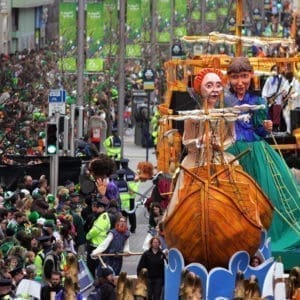
In Dublin, the Republic’s capital, St. Patrick’s Day transforms into a multi-day festival. The city comes alive with a vibrant street carnival atmosphere, with the official St. Patrick’s Festival typically running for four days, culminating on March 17th with a spectacular parade showcasing Irish arts, music, and culture. Throughout the festival period, traditional music sessions fill pubs and concert halls while Irish dance troupes showcase their skills with intricate footwork and dazzling costumes.
Belfast, the capital of Northern Ireland, also embraces the festivities, albeit with a nuanced perspective reflecting the region’s complex relationship with Irish identity. While many revel in the lively pub atmosphere, spirited parades, and traditional music sessions, celebrations in Belfast often reflect a blend of cultural influences, showcasing the diversity of this part of the island.
Beyond the major cities, towns and villages across both the Republic and Northern Ireland come alive with their own unique celebrations. From local parades featuring marching bands and community groups to intimate gatherings in cosy pubs filled with the sounds of traditional music, St. Patrick’s Day offers a chance to experience the warmth and hospitality for which the Irish are renowned.
Whether one chooses to embrace the lively spirit of the cities or seek out the more intimate traditions of rural Ireland, St. Patrick’s Day offers a unique window into the soul of a nation, celebrating its history, its people, and its enduring cultural legacy.
Germany
While not traditionally associated with St. Patrick’s Day festivities, Germany has witnessed a growing enthusiasm for the Irish holiday, particularly in urban centres with strong Irish communities or a fondness for Irish culture. While not a nationwide celebration on par with Ireland itself, German cities like Munich offer a unique twist on the Emerald Isle’s patron saint’s day.
Munich, in particular, has become known for its lively St. Patrick’s Day celebrations. The city boasts a sizeable Irish community and a plethora of Irish pubs, many of which go all out for the occasion. Revellers can expect lively music sessions, copious amounts of Guinness, and a sea of green as locals and visitors alike don the colours of the Irish flag. While not one of Europe’s largest, Munich’s St. Patrick’s Day parade adds to the festive atmosphere, with marching bands, traditional dancers, and floats celebrating Irish heritage.
Beyond the traditional pub gatherings and parades, Munich adds a unique German flair to the celebration. The iconic Olympic Tower and the modern Allianz Arena, home to Bayern Munich football club, are bathed in green light, showcasing the city’s solidarity with the Irish festivities. Each year, other landmarks and buildings join the green illumination, creating a spectacle that blends Bavarian architecture with Irish pride.
While Munich might be the epicentre, other German cities have also witnessed a rise in St. Patrick’s Day events. Irish pubs in Berlin, Hamburg, Cologne, and other major cities often organise special events with live music, traditional food and drink, and, of course, ample opportunity to raise a toast to the patron saint of Ireland.
It’s important to note, however, that St. Patrick’s Day celebrations in Germany remain largely centred around specific communities and venues. Unlike in Ireland or countries with large Irish diasporas, March 17th doesn’t significantly impact daily life or hold official holiday status in Germany.
Nonetheless, the growing popularity of St. Patrick’s Day celebrations across Germany highlights the universal appeal of Irish culture and the power of festivities to bring people together, even across cultural borders.
Italy
While images of green beer and shamrock decorations might dominate depictions of St. Patrick’s Day, these festivities are not a widespread tradition in Italy. Contrary to a common misconception, Saint Patrick himself was not Italian. He was born in Roman Britain in the late 4th century AD, an area that corresponds to present-day England and Wales. His association with Ireland stems from his later life as a missionary and bishop in that region.
Italy’s connection to St. Patrick’s Day stems primarily from the presence of Irish expatriates and visitors seeking to celebrate their cultural heritage. In larger cities like Rome, Milan, and Florence, one might find Irish pubs offering special events for the occasion. These pubs often cater to those seeking a taste of home, with traditional music, Irish beers, and a lively atmosphere reminiscent of celebrations across the Emerald Isle.
Outside these niche venues, however, St. Patrick’s Day passes largely unnoticed in Italy. It is not a public holiday, and most Italians would likely associate March 17th more with the approach of spring than with leprechauns or green attire. This isn’t to say that Italians are indifferent to Irish culture; rather, it reflects the distinct cultural traditions and celebrations that shape the Italian calendar.
For those seeking a raucous St. Patrick’s Day celebration in continental Europe, Italy might not be the ideal destination. However, travellers and expatriates missing a taste of home on March 17th can often find a welcoming haven in the familiar warmth and conviviality of an Irish pub, offering a small slice of Emerald Isle merriment amidst the backdrop of Italian culture.
Ultimately, St. Patrick’s Day in Italy serves as a reminder that the global reach of cultural celebrations is often filtered through local customs and traditions. While not a national holiday, it offers a subtle nod to the presence of Irish communities and the enduring appeal of Irish culture, even in the heart of the Mediterranean.
USA
From coast to coast, the United States transforms into a vibrant tapestry of green each March 17th as cities big and small embrace the spirit of St. Patrick’s Day. While rooted in Irish heritage, the celebration has become a cultural phenomenon in America, a testament to the enduring legacy of Irish immigrants and the infectious joy of a good party.
The historical ties run deep. Irish immigration to America stretches back to the 1700s, with a significant wave arriving between 1820 and 1860, driven by factors like economic hardship and the Great Famine. Today, millions of Americans claim Irish ancestry, making it one of the most prevalent heritages in the country, though no longer the second most common as it once was.
While the exact origins are debated, Boston lays claim to holding the first St. Patrick’s Day parade, dating back to either 1737 or a few years prior, depending on historical interpretation. New York City followed suit in 1766, cementing the parade as a key element of the celebration. These early events were likely modest affairs compared to the massive spectacles they’ve become, drawing millions of spectators to cities like New York, Chicago, and Boston today.
Chicago’s St. Patrick’s Day celebration is perhaps most iconic for its unique tradition: dyeing the Chicago River green. This spectacle, dating back to the 1960s, sees the river transformed into a vibrant emerald hue using an environmentally friendly, vegetable-based dye. This visual feast, combined with the city’s lively parade featuring traditional music, dancing, and floats celebrating Irish culture, solidifies Chicago’s position as a hub for St. Patrick’s Day revelry.
Across the nation, cities embrace the day with parades showcasing Irish pride, often highlighting the contributions of Irish Americans to local communities. Pubs overflow with patrons enjoying traditional music, raising a glass of Guinness (or green beer!), and donning green attire, from shamrock hats to full-on leprechaun costumes. Even cityscapes transform, with buildings illuminated in green, a testament to the holiday’s widespread appeal.
St. Patrick’s Day in the United States reflects a fascinating cultural fusion – a celebration of Irish heritage that has transcended its origins to become woven into the fabric of American tradition. It’s a day for merriment, reflection on the immigrant experience, and a reminder of the unifying power of shared traditions.
Australia
While not celebrated with the same fervour as in its homeland, St. Patrick’s Day has found a place within Australia’s multicultural tapestry, a nod to the significant Irish heritage woven into the nation’s history. From early convict transports to waves of migration during the Great Famine, the Irish have left an undeniable mark on Australian society and identity.
Though often overshadowed in the national narrative by the arrival of the First Fleet, the contributions of Irish convicts transported to Australia from the late 18th century onwards were substantial. These men and women, often convicted of minor crimes or driven by desperation, played a crucial role in the colony’s early development, their labour and resilience shaping the landscape and society.
The mid-19th century saw another wave of Irish immigration to Australia, driven by the devastating potato famine. Seeking a new life and escaping unimaginable hardship, these migrants further enriched the cultural fabric, bringing with them traditions, language, and a strong sense of community. Today, it’s estimated that around 10% of Australians claim some Irish ancestry, a significant figure that underscores the enduring presence of Irish heritage.
St. Patrick’s Day celebrations in Australia reflect this heritage, albeit with a distinctly Australian flavour. Major cities like Sydney and Melbourne host vibrant parades, drawing crowds adorned in green attire and showcasing the country’s multicultural spirit. Marching bands, Irish dancing troupes, and community groups proudly display their heritage while the streets come alive with music, laughter, and a touch of Emerald Isle mischief.
Beyond the parades, numerous Irish pubs, a mainstay in cities and towns across the country, transform into hubs of celebration. Revellers gather to enjoy traditional music, raise a glass of Guinness, and soak in the craic (Irish for fun and good times). Community centres and cultural organisations often host events celebrating Irish music, dance, and storytelling, offering a deeper dive into the richness of Irish heritage.
While not a public holiday in Australia, St. Patrick’s Day offers a moment to acknowledge the significant contributions of the Irish diaspora to the nation’s development and cultural identity. It’s a celebration of heritage, resilience, and the enduring power of cultural connections, reminding Australians of the diverse origins that have shaped their nation.
Japan
While not a traditional Japanese celebration, St. Patrick’s Day has found a niche following in the Land of the Rising Sun, primarily among Irish expatriates, cultural enthusiasts, and those simply seeking a unique festive experience. Unlike countries with strong historical ties to Ireland, Japan’s engagement with the holiday is more about embracing cultural exchange and the universal appeal of a good celebration.
Tokyo, Japan’s bustling capital, has emerged as the focal point for St. Patrick’s Day festivities. The city is home to a small but active Irish community, as well as a growing number of pubs and restaurants catering to those seeking a taste of Irish culture. These establishments often organise special events for March 17th, offering traditional music, Irish food and drink, and a lively atmosphere reminiscent of celebrations back in the Emerald Isle.
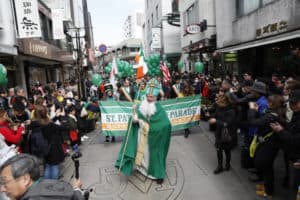
Over the years, Tokyo has also hosted various St. Patrick’s Day parades, though their scale and frequency have varied. These parades, often organised by local Irish associations or cultural groups, feature a mix of traditional elements like Irish dancing and music, along with a distinctly Japanese flair. Participants might include local marching bands, sports teams, and even groups showcasing Japanese interpretations of Irish dance or music.
Beyond Tokyo, other major cities like Osaka and Yokohama have also seen a rise in smaller-scale St. Patrick’s Day events, often centred around Irish pubs or cultural centres. These events typically attract a mix of expats, locals interested in Irish culture, and those simply looking for a lively atmosphere and a chance to experience something different.
It’s important to note that St. Patrick’s Day celebrations in Japan remain very much a niche phenomenon. The holiday holds no official status and passes largely unnoticed by the majority of the Japanese population. The cultural distance between Japan and Ireland, both geographically and historically, means that the day lacks the deep-rooted traditions and widespread recognition it enjoys in other parts of the world.
Nonetheless, the presence of these celebrations, however small in scale, highlights the global reach of Irish culture and the growing interest in cultural exchange within Japan. For those seeking a traditional, all-encompassing St. Patrick’s Day experience, Japan might not be the first destination that springs to mind. However, for those curious to see how the Emerald Isle’s patron saint is celebrated in the Land of the Rising Sun, it offers a unique and often unexpected cultural fusion.
From the bustling streets of Dublin to the unexpected revelry of Tokyo, it’s clear that St. Patrick’s Day has transcended its Irish roots to become a truly global celebration. Whether you’re seeking the electric atmosphere of a traditional parade, the warmth of an Irish pub overflowing with music, or a chance to experience how different cultures interpret the Emerald Isle’s heritage, there’s a corner of the world waiting to welcome you on March 17th. So, embrace the spirit of adventure, grab your greenest attire, and dive into the unique festivities that each destination has to offer.