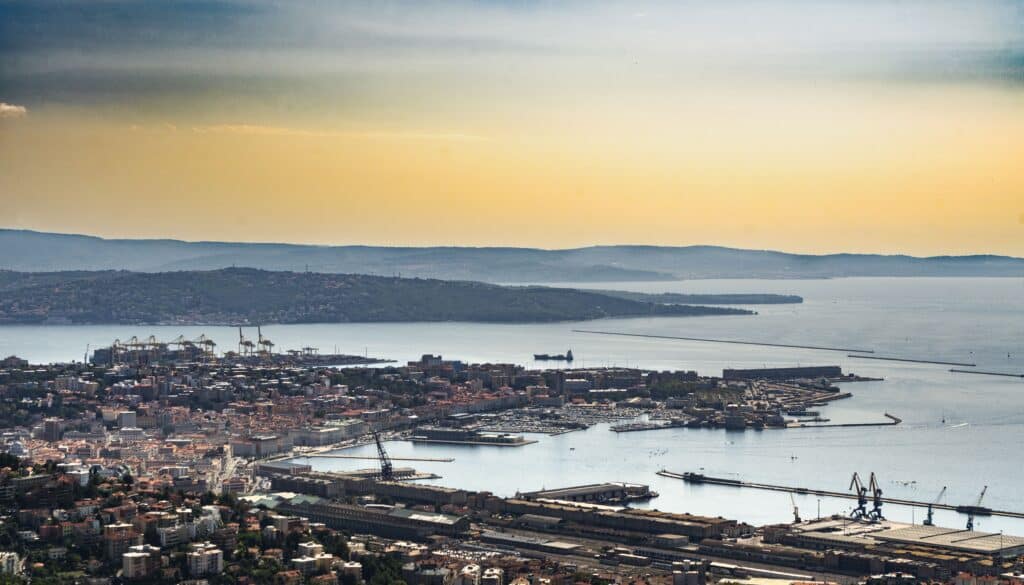


Nestled in the northeastern corner of Italy, bordering Slovenia and Croatia, the cosmopolitan city Trieste is a captivating city that blends Mediterranean charm with Central European influences. With its stunning coastal location, rich history, and vibrant culture, Trieste offers a unique and unforgettable experience for travellers.
From its picturesque harbour and historic architecture to its world-class museums and delicious cuisine, Trieste has something to offer everyone. Whether you’re a history buff, a foodie, or simply seeking a relaxing getaway, this charming city will leave a lasting impression.
In this article, we will explore eight must-see places in Trieste, highlighting the city’s most iconic landmarks, cultural attractions, and hidden gems. From the grand Piazza Unità d’Italia to the enchanting Miramare Castle, these destinations showcase the best of what Trieste has to offer.
Table of Contents
Places to Visit in the Cosmopolitan City Trieste
Trieste, a captivating city nestled on the Italian-Slovenian border, offers a unique blend of Mediterranean charm and Central European influences. Here are eight must-see places that showcase the best of what Trieste has to offer
1. Piazza Unità d’Italia
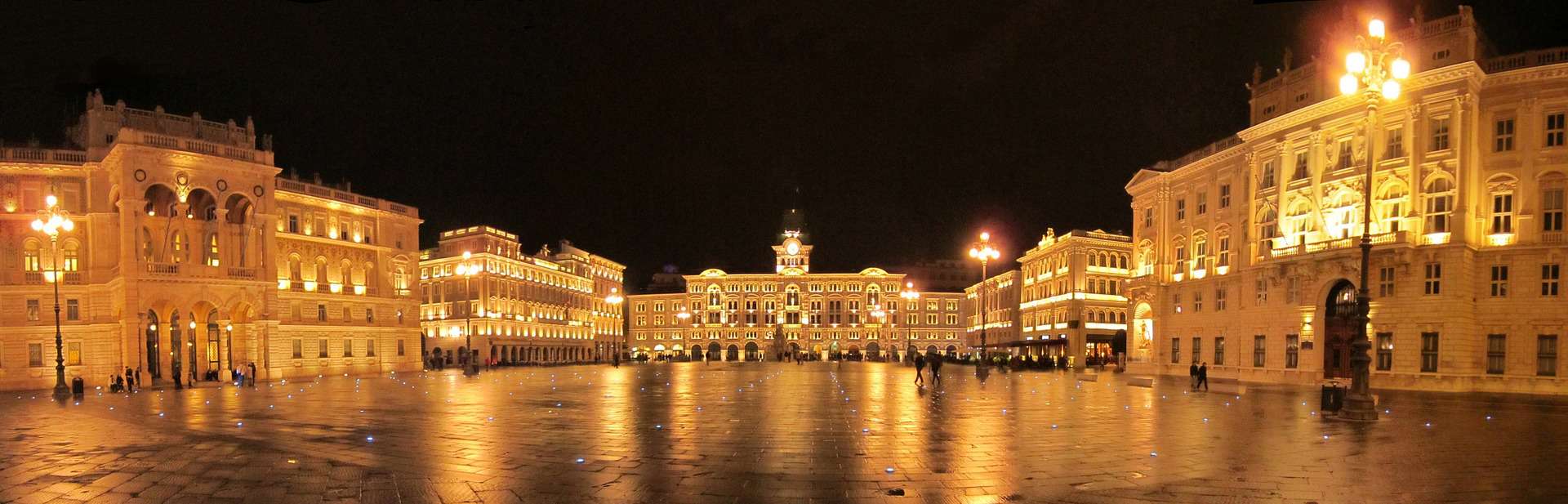
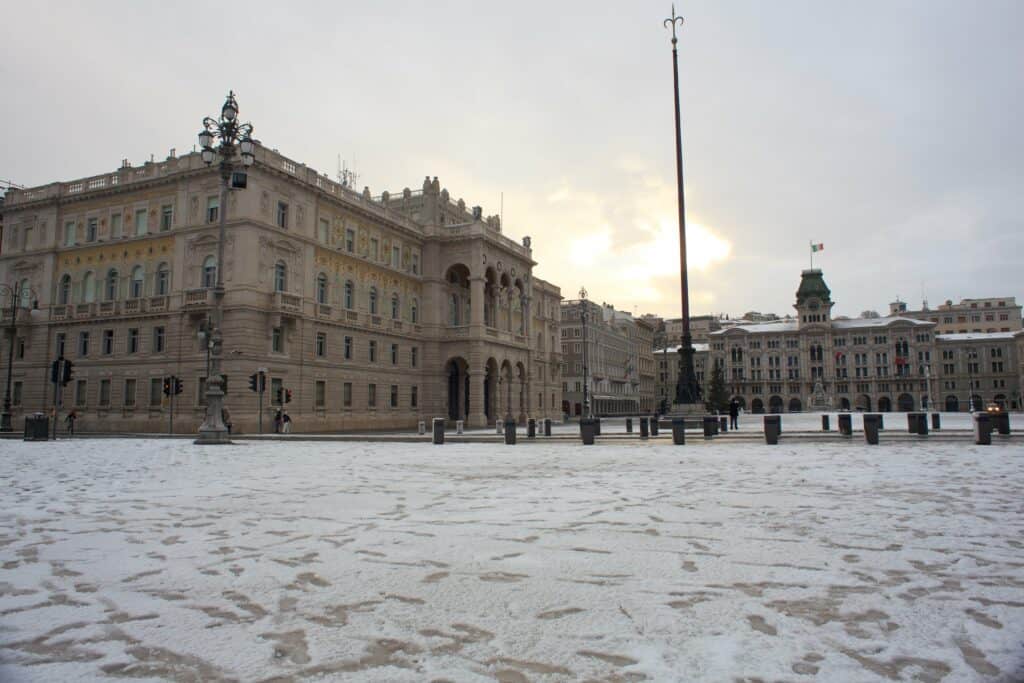
Piazza Unità d’Italia, a grand expanse overlooking the shimmering Adriatic Sea, stands as the heart of Trieste, a city where history and modernity intertwine. This expansive square, a testament to the city’s rich past and its enduring spirit is a vibrant hub of activity, drawing visitors into a world of architectural grandeur, lively cafes, and captivating history.
The square’s origins lie in the city’s 19th-century transformation under the Habsburg Empire. As Trieste flourished as a vital port, Piazza Unità d’Italia emerged as a symbol of progress and a showcase for the city’s architectural prowess. Today, the square is a testament to this era, adorned with majestic buildings that speak of a bygone era. The imposing Palazzo del Governo (Government Palace), a grand edifice with a commanding presence, stands proudly on the square’s northern edge, while the elegant Palazzo Lloyd, once a hub of maritime trade, reflects the city’s historical connection to the sea.
Piazza Unità d’Italia is more than just a collection of historical buildings. It is a place where life unfolds in a vibrant symphony of activity. The square bustles with locals and visitors alike, drawn by its charm and energy.
Cafes with charming outdoor terraces beckon travellers to linger over steaming cups of coffee, savouring the Mediterranean sunshine and the bustling atmosphere. Restaurants offering a delicious array of local and international cuisine invite diners to indulge in a leisurely meal surrounded by the sounds and sights of the square.
Beyond its architectural grandeur and lively atmosphere, Piazza Unità d’Italia also plays a vital role in the city’s social and cultural life. The square frequently transforms into a stage for public events, hosting everything from lively concerts and open-air festivals to political rallies and community gatherings.
The square serves as a unifying force, bringing together the people of Trieste and offering a platform for celebration, reflection, and dialogue.
2. Visit the James Joyce Museum/ Museo Joyce
Nestled amidst the charming streets of Trieste, Italy, lies a treasure trove for fans of James Joyce: Museo Joyce. This unique museum, dedicated to the life and works of the Irish literary giant, offers a captivating journey through his time in the city, a period that profoundly shaped his creative output.
Opened in 2004, Museo Joyce is housed within a beautifully restored historic building, its elegant facade hinting at the cultural riches that lie within. Upon entering, visitors are greeted by a thoughtfully curated exhibition that immerses them in Joyce’s world.
The museum’s primary focus is on Joyce’s years in Trieste, from 1904 to 1915. During this period, Joyce, then a young aspiring writer, found himself deeply connected to the city’s vibrant intellectual and artistic circles. He frequented its cafes, immersed himself in its multilingual atmosphere, and honed his craft amidst the city’s unique blend of Italian and Central European influences.
Through a mix of interactive displays, multimedia presentations, and original artefacts, the museum brings Joyce’s time in Trieste vividly to life. Visitors can explore the cafes he frequented, such as the historic Caffè San Marco, where he would engage in lively discussions with fellow writers and intellectuals. They can delve into his personal life through letters, photographs, and other memorabilia, gaining insights into his relationships, struggles, and triumphs.
The museum also explores Joyce’s literary journey, showcasing the development of his writing style and the influences that shaped his masterpieces. Visitors can trace the evolution of his works, from early short stories to the complex narrative structures of “Ulysses” and “Finnegans Wake,” gaining a deeper appreciation for his literary genius.
Museo Joyce is more than just a collection of exhibits; it is a space where Joyce’s legacy continues to resonate. It offers a unique opportunity to understand the writer beyond his literary achievements, to experience his life in Trieste, and to appreciate the profound impact the city had on his creative spirit.
3. Visit the Cattedrale di San Giusto Martire
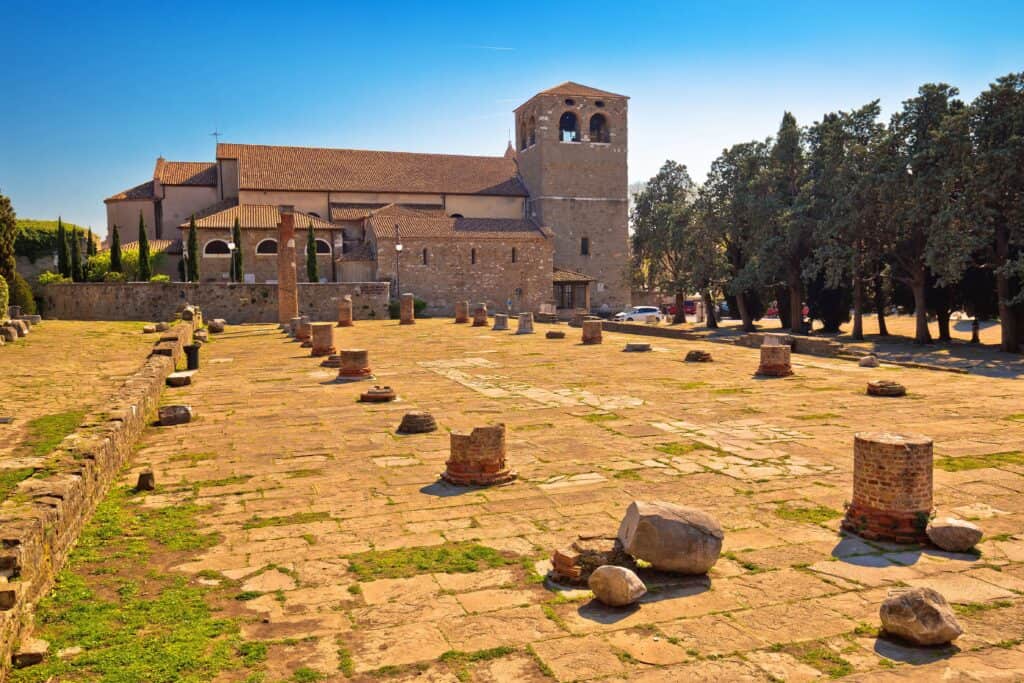
Perched atop the hill of San Giusto, overlooking the vibrant city of Trieste, stands the imposing Cattedrale di San Giusto Martire, a testament to the city’s rich history and enduring faith. More than just a place of worship, this grand cathedral is a captivating fusion of architectural styles and artistic treasures, offering a glimpse into the evolution of Trieste’s cultural landscape.
The cathedral’s origins can be traced back to the 6th century when it was first erected on the site of Roman propylaea, remnants of the ancient Roman city that once thrived in this region. These Roman structures, once serving as grand gateways to the city, were incorporated into the cathedral’s foundations, a symbolic merging of the city’s past and present. However, it was during the Romanesque period that the cathedral truly took shape, acquiring its distinctive architectural features, including the imposing bell tower that dominates the city skyline.
Walking through the cathedral’s grand entrance, one is immediately struck by the sheer scale and grandeur of the space. The interior is a symphony of light and colour, with sunlight streaming through the stained-glass windows, casting an ethereal glow upon the intricately decorated walls. The cathedral’s Romanesque heritage is evident in the vaulted ceilings, the sturdy columns, and the simplicity of the architectural forms, creating an atmosphere of timeless beauty and reverence.
However, the cathedral’s artistic treasures are not limited to the Romanesque era. Over the centuries, various artistic styles have left their mark on the cathedral’s interior, enriching it with a diverse tapestry of artistic expressions. The walls are adorned with frescoes from the Renaissance period, depicting scenes from the Bible and the lives of saints.
Among the cathedral’s most prised possessions are its stunning stained-glass windows. These windows, dating back to the 19th century, are not mere decorative elements; they are masterpieces of artistry, showcasing the skill and craftsmanship of the glassmakers of that era. The windows depict biblical scenes and religious figures, bathed in a kaleidoscope of colours, transforming the cathedral’s interior into a luminous sanctuary.
4. Visit Parco della Rimembranza sul Colle di San Giusto

Nestled on the verdant slopes of San Giusto hill, overlooking the bustling city of Trieste, lies a place of quiet contemplation and solemn remembrance: Parco della Rimembranza. This memorial park, dedicated to the fallen soldiers of World War I and II, offers a poignant journey through the city’s wartime history, a stark reminder of the sacrifices made for freedom.
The park, a peaceful oasis amidst the urban landscape, is a testament to the city’s enduring connection to its past. It is not a place of grand monuments but rather a quiet space where nature and memory intertwine. Visitors are greeted by a serene landscape dotted with towering trees that provide shade from the Mediterranean sun and offer a sense of tranquillity amidst the city’s hustle and bustle.
The park’s central feature is a series of memorial stones, each bearing the name of a soldier from Trieste who lost their lives during the wars. These stones, arranged in a carefully planned layout, stand as silent sentinels, each name etched in the stone a solemn reminder of a life cut short. Walking among these stones, one feels a profound sense of respect for those who sacrificed their lives for their country, their stories woven into the fabric of the city’s history.
As visitors wander through the park, they will encounter a series of pathways that wind their way through the trees, inviting contemplation and reflection. The paths lead to various points of interest, each offering a unique perspective on the surrounding landscape and the city beyond. At the highest point of the park, one can pause and gaze upon the cityscape, a panorama of vibrant life unfolding below, reminding visitors of the cost of peace and the fragility of freedom.
A captivating aspect of Parco della Rimembranza is its connection to another historical landmark: the Giants’ Stairway (Scala dei Giganti di Trieste). This grand staircase, constructed in the 19th century, climbs the slopes of San Giusto Hill, offering a grand and elegant route from the city centre to the park and the other historical sites on the hill. The staircase, with its imposing arches and sweeping curves, is a marvel of architectural ingenuity, a testament to the city’s rich history and enduring beauty.
As one climbs the Giants’ Stairway, the city unfolds below, a symphony of colours and textures, revealing the intricate tapestry of urban life. The view from the top of the staircase offers a breathtaking panorama of Trieste, showcasing the city’s unique blend of historical charm and modern dynamism.
5. Visit the Arco di Riccardo
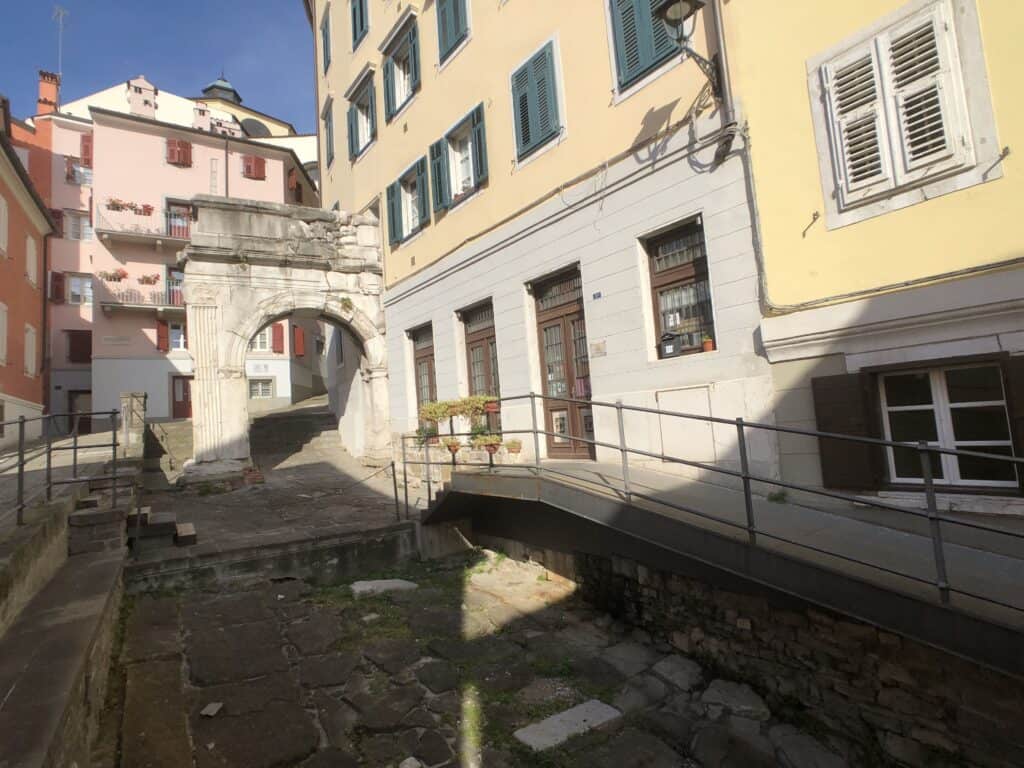
The Arco di Riccardo, also known as the Arch of Richard, is an imposing structure that is a testament to the architectural prowess of the Roman Empire. It invites visitors to step back in time and experience the grandeur of a bygone era.
While historians debate the exact date of construction, it is generally accepted that the Arco di Riccardo was erected during the 1st century AD, likely under the reign of Emperor Augustus. The arch, a grand gateway to the city, is a silent witness to the city’s transformation from a Roman outpost to a vibrant centre of trade and culture.
The arch, named after Richard, a local ruler of the region, was likely built to commemorate a significant event, perhaps a military victory or a period of prosperity under his rule. Its imposing stature, with its intricate carvings and monumental design, serves as a reminder of the Roman Empire’s power and influence, its reach extending even to this remote corner of the Mediterranean world.
The Arco di Riccardo is a striking example of Roman architectural ingenuity. Its arches, perfectly balanced and meticulously constructed, showcase the mastery of Roman engineering. The arch’s sturdy structure, built from durable materials, has withstood the test of time, a testament to the Romans’ skill in constructing durable and aesthetically pleasing structures.
The arch is more than just a physical structure; it is a portal to the past, a window into the world of the Romans. Its weathered stone, with its carvings and inscriptions, tells a story of a bygone era, whispering secrets of Roman life, politics, and military achievements.
As visitors stand beneath the arch, they can almost hear the echoes of Roman footsteps, the sound of chariots rumbling over cobblestones, and the murmurs of conversations in Latin. They can imagine the vibrant life that once pulsated through the streets of this ancient city, a bustling centre of trade and commerce, where Roman soldiers marched, merchants bartered, and citizens gathered in the forum to discuss the day’s affairs.
6. Visit the Roman Theatre in Trieste
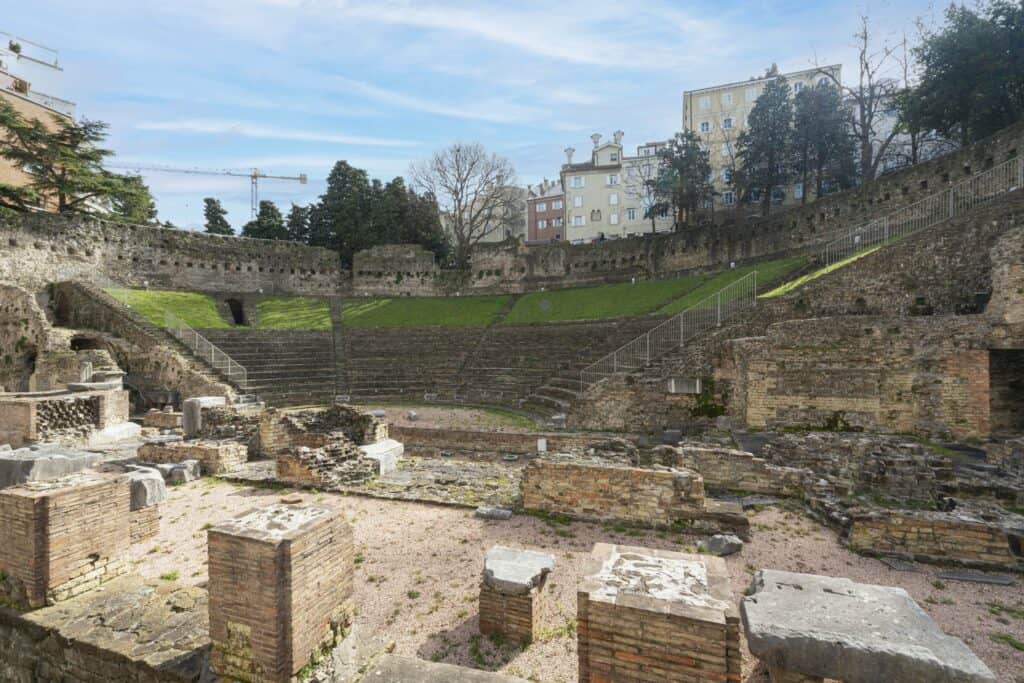
The Roman Theatre in Trieste is a hidden gem, a testament to the city’s enduring Roman heritage: the Roman Theatre. While not as grand or as well-preserved as some of its counterparts in other parts of Italy, this ancient structure offers a captivating glimpse into the city’s rich history and the vibrant cultural life that once flourished within its walls.
The theatre, located in the heart of Trieste, stands as a reminder of the city’s Roman origins, a time when it served as a vital trading post and a strategic military outpost on the northern edge of the Roman Empire. While only fragments of the original structure remain, the theatre’s layout and design are still visible, allowing visitors to piece together the grand spectacle that once unfolded within its walls.
The theatre’s semicircular structure, carved into the hillside, is a classic example of Roman architectural ingenuity. The tiered seating, designed to accommodate a large audience, is still discernible, inviting visitors to imagine the vibrant performances that once graced this stage. The stage itself, though now partially obscured by time and neglect, once served as a platform for drama, music, and other forms of entertainment, captivating the hearts and minds of the city’s inhabitants.
Stepping into the Roman Theatre is like stepping back in time. The silence of the theatre, broken only by the rustling of leaves and the murmur of the city beyond, allows visitors to experience a sense of stillness and reflection. One can almost hear the echoes of applause, the strains of music, and the passionate pronouncements of actors, bringing the theatre’s past to life.
The theatre’s fragmented remains, though incomplete, offer a valuable insight into the architectural and engineering skills of the Romans. The use of local stone, the meticulous construction techniques, and the carefully planned layout of the theatre all speak to the Romans’ mastery of building and design.
7. Miramare Castle
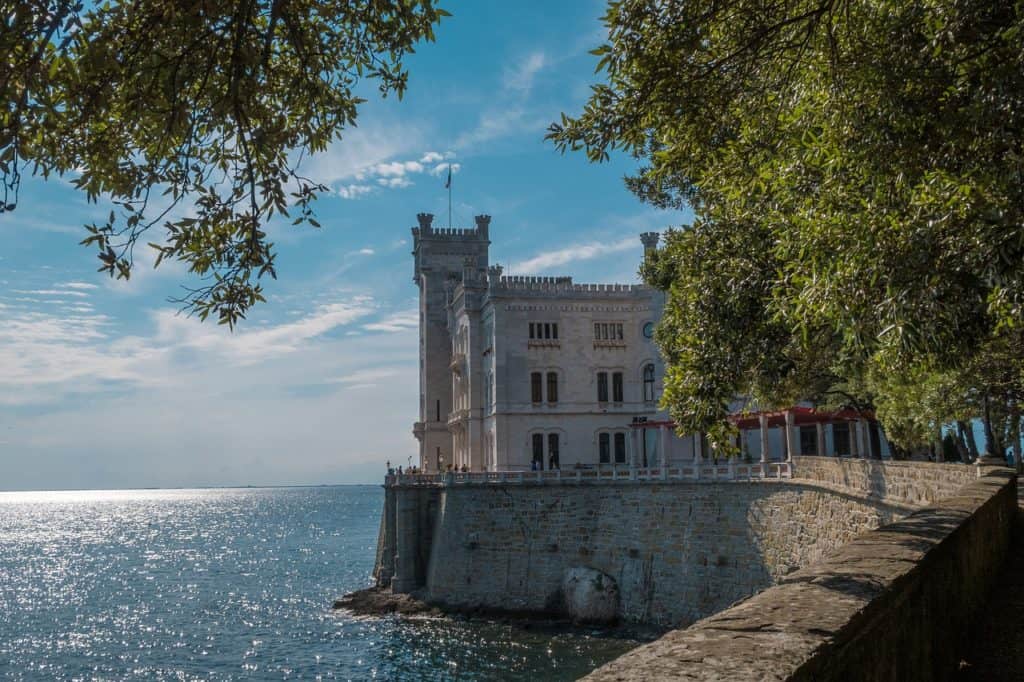
Perched dramatically on a rocky promontory overlooking the azure waters of the Adriatic Sea, Miramare Castle stands as a testament to the grandeur and elegance of the Habsburg monarchy. This magnificent edifice, built in the mid-19th century, offers a captivating journey through the lives of its former inhabitants, Archduke Ferdinand Maximilian of Austria and his beloved wife, Charlotte of Belgium.
The castle, with its fairytale-like appearance, was designed by the renowned Viennese architect Carl Junker, who blended elements of Neo-Gothic and Italian Renaissance styles to create a truly unique architectural masterpiece. The castle’s imposing facade, with its turrets, towers, and crenellations, evokes a sense of medieval romance, while its elegant interiors reflect the refined tastes of the Habsburg court.
Stepping inside Miramare Castle is like stepping into a bygone era. Visitors are greeted by lavishly decorated rooms, each showcasing the opulence and sophistication of the Habsburg lifestyle. The castle’s grand salon, with its ornate furniture, intricate tapestries, and breathtaking views of the sea, offers a glimpse into the ceremonial life of the Habsburg court.
The castle’s private apartments, once home to Archduke Maximilian and Empress Charlotte, are equally impressive. These intimate spaces, adorned with personal touches, offer a glimpse into the couple’s love story and their aspirations for a peaceful and fulfilling life. Visitors can explore their private library, where they can imagine the Archduke poring over maps and books, or their elegant dining room, where they can envision the couple enjoying intimate meals overlooking the vast expanse of the Adriatic Sea.
The castle’s gardens, as impressive as the building itself, are a testament to the Habsburg’s love of nature. These meticulously designed gardens, spread over 22 hectares, offer a serene retreat from the bustling city. Visitors can wander through fragrant rose gardens, admire the vibrant colours of the Italian garden, or lose themselves in the contemplative atmosphere of the English garden. A network of pathways lined with statues and fountains invites visitors to explore the gardens at their leisure, each step offering a new perspective on this beautiful landscape.
8. Museo Revoltella
Museo Revoltella, a renowned art museum located in the heart of Trieste, Italy, is a must-visit destination for art enthusiasts. This magnificent museum houses a vast collection of Italian and European art from the 19th and 20th centuries, showcasing the evolution of artistic expression during these pivotal periods.
The museum was founded in 1881 by Baron Pasquale Revoltella, a prominent figure in Trieste’s cultural and social scene. Revoltella’s passion for art led him to amass a significant collection of paintings, sculptures, and decorative arts. The museum opened to the public in 1897, showcasing Revoltella’s personal collection and inviting other artists to contribute their works.
Museo Revoltella boasts a diverse collection that spans a wide range of artistic styles and movements. Visitors can explore the works of renowned Italian artists such as Giovanni Segantini, Giacomo Balla, and Giorgio Morandi. The museum also features international artists, including French Impressionists, German Expressionists, and American Abstract Expressionists.
The museum’s building itself is a work of art. Designed by the architect Carlo Scarpa, the museum’s interior is characterised by its elegant lines, natural light, and harmonious integration of art and architecture. The museum’s courtyard is a peaceful oasis, providing a tranquil setting for visitors to relax and contemplate the art on display.
As we conclude our journey through Trieste, it’s clear that this captivating city offers a unique and unforgettable experience. From its iconic landmarks and cultural attractions to its hidden gems and stunning scenery, Trieste has something to offer everyone. Whether you’re a history buff, a foodie, or simply seeking a relaxing getaway, Trieste is a destination that will leave a lasting impression.