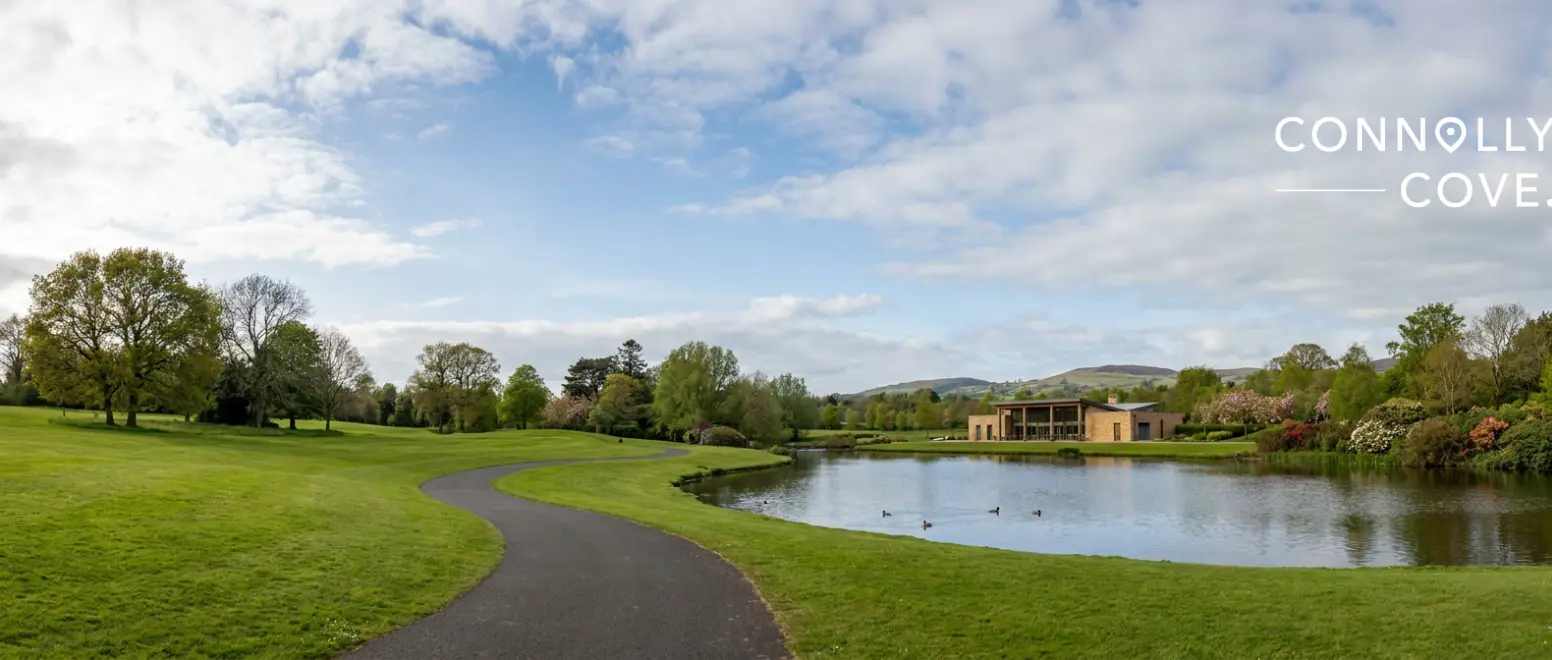
What this article covers: A practical guide to Newcastle in County Down, Northern Ireland, covering the beaches, forest parks, the Slieve Donard walk, places to eat and stay, and the cultural stories attached to the town and the Mournes.
Who this is for: Visitors planning a day trip or weekend in Northern Ireland, walkers heading for the Mourne Mountains, families looking for a beach and forest base, and travellers who want the cultural background as well as the logistics.
Key takeaway: Newcastle is one of the few places in Ireland where a working seaside town sits directly beneath a mountain range, so you can walk from sand to an 850 metre summit without moving your car.
Expert insight: “Following the Mourne Wall up towards the summit, you’re walking beside something built by hand, stone by stone, in weather most of us wouldn’t hike in for fun. That kind of graft is easy to forget until you’re standing next to it.” Ciaran Connolly, Founder of ConnollyCove
Quick facts:
- Slieve Donard, at 850 metres, is the highest peak in Northern Ireland and rises directly behind Newcastle’s promenade
- Tollymore Forest Park, three kilometres west of the town, opened in 1955 as Northern Ireland’s first state forest park
- Newcastle is roughly a 40 minute drive south of Belfast, with a direct Translink Goldliner bus service
Newcastle, County Down, is a seaside town in Northern Ireland, about 40 minutes south of Belfast, and not to be confused with Newcastle upon Tyne in England. It sits where the Mourne Mountains meet the Irish Sea, and it earns its reputation as one of Northern Ireland’s strongest coastal bases the moment you see Slieve Donard rising directly behind the promenade. Between the beaches, the forest parks and a scattering of genuinely good restaurants, it works equally well as a family day out, a hiking base or a slower weekend away.
This guide covers what to do, where to eat, where to stay, and the practical details that matter for planning a visit, whether that’s a sunny afternoon on the beach or a proper hike into the mountains.
Table of Contents
Why Newcastle Draws Visitors Year-Round
Newcastle draws visitors because it stacks mountains, forest and beach inside a two-mile radius, and it has done so for well over a century. The town grew up in the Victorian era as a seaside resort for Belfast’s industrial classes, and that history still shapes its character. The promenade, the grand hotels and the golf course were all built for visitors escaping the city, and more than a hundred years later, the same pull remains.
The railway made it happen. A new line from Belfast to Newcastle brought day trippers within easy reach, and the town’s fortunes have been tied to that connection ever since. You can still trace the Victorian layout in the wide seafront terraces and the scale of the older hotels.
Percy French and the Mountains of Mourne
The songwriter Percy French gave Newcastle its most quoted description, and it holds up. French, born in County Roscommon in 1854, wrote “The Mountains of Mourne” with its line about the mountains sweeping down to the sea, and that image still describes the town better than anything else.
You can see the line play out literally from the beach. Slieve Donard rises almost straight out of the water at the southern end of town, with no foothills and no gradual build-up. French’s name is still attached to the town: the Percy French Inn sits inside the Slieve Donard Resort, and travellers who follow Irish cultural figures to the places connected with them will find Newcastle an unusually direct example.
A guide to County Down is worth a look if you’re planning to explore beyond Newcastle itself, since the wider county has plenty more coastline and heritage to cover.
Top Things to Do in Newcastle
Newcastle’s main attractions split naturally into mountains, forest parks and the beach, and most visitors manage two or three of these in a single day. If you only have one day, pair a forest park with the beach and leave Slieve Donard for a trip of its own.
Royal County Down Golf Club is one of the most highly rated links courses in the world, set against dune-backed views of the Mournes. The original nine holes opened in March 1889, with Old Tom Morris advising on the layout, and the course has hosted the Irish Open several times since. You don’t need to golf to appreciate the scenery from the clubhouse side, but if you do play, expect a genuinely tough, weather-exposed round. Our full guide to Royal County Down Golf Club covers the history and visitor access days.
Murlough Beach, part of Murlough National Nature Reserve, is the pick of Newcastle’s beaches and one of the best beaches in Northern Ireland. Boardwalks cross the dune system to reach the sand, and the reserve is a good spot for birdwatching, with Dundrum Bay and the Mournes as a backdrop the whole way. The boardwalks also make the viewpoints over the dunes reachable for wheelchair users, which is unusual on this stretch of coast. The reserve is managed by the National Trust, and there is a car park charge.
Slieve Donard, at 850 metres, is the highest peak in Northern Ireland and the seventh highest on the island. Most walkers follow the Glen River path from Donard Park and pick up the Mourne Wall for the final push to the summit. The Great Cairn at the top is the remains of a megalithic passage grave, and the National Trust dates it to around 3,000 BC.
The Mourne Wall itself is the reason the walk feels different from other summit routes. Built between 1904 and 1922 to mark the boundary of Belfast’s water catchment area, the wall runs for around 22 miles across 15 summits, and it’s still the best navigation aid on the mountain in poor visibility.
“Following the Mourne Wall up towards the summit, you’re walking beside something built by hand, stone by stone, in weather most of us wouldn’t hike in for fun. That kind of graft is easy to forget until you’re standing next to it.” Ciaran Connolly, Founder of ConnollyCove
For a longer route that takes in more of the range, ConnollyCove’s guide to hiking the Mourne Way starts from the same trailhead.
Walking Slieve Donard from Newcastle
Allow four to five hours return and start from the Donard Park car park at the southern end of the main street. The route is about nine kilometres there and back, and the whole climb happens in one go, because the trailhead is essentially at sea level.
The first section runs through Donard Forest alongside the Glen River, on a made path with steps, crossing the river twice on stone bridges. This part is sheltered and pleasant, and it’s where most people misjudge the day: the woodland gives no sense of the exposure waiting above. Past the tree line, the path opens onto bare mountainside and climbs to the saddle between Slieve Donard and Slieve Commedagh, where the Mourne Wall meets you. From there, it’s a steep pull left along the wall to the summit.
A few practical points that matter more here than on most Irish hills:
- Boots, not trainers. The upper section is loose granite and worn stone steps, and it is slick after rain. The descent is where people come unstuck.
- The summit is much colder than the car park. You gain 850 metres from sea level with nothing in between, and the wind along the wall can be severe even on a mild summer day.
- Cloud sits on the summit ridge regularly. In poor visibility, the wall is your handrail, so if you lose it, stop rather than guess.
- Check conditions before you leave the town. You can check the current path and access conditions with the National Trust, which manages the paths on Donard and Commedagh.
Tollymore Forest Park, at the foot of the Mournes, was Northern Ireland’s first state forest park, opened in June 1955. The Shimna River runs through it, crossed by sixteen bridges, the earliest dating to 1726. Its Gothic stone arches and old beech woodland also made it a filming location for the Haunted Forest in the opening episode of Game of Thrones, and fans still make the trip specifically for that stretch of woodland. See ConnollyCove’s Game of Thrones filming locations guide for the wider list, and our Tollymore Forest Park guide for the four waymarked trails and what to look for on each.
The Mournes carry a long folk tradition of their own, and walkers interested in that side of the landscape will recognise the same customs that surround the fairy trees found across Ireland, where lone hawthorns are left standing in the middle of worked fields.
Castlewellan Forest Park, just outside town, holds the second-longest permanent hedge maze in the world, planted with 600 yew trees as a symbol of peace in Northern Ireland. The park also has a lake, a walled garden and a small castle, and its trails are gentler than Tollymore’s if you’re travelling with young children.
| Attraction | Best For | Time Needed | The Reward |
|---|---|---|---|
| Slieve Donard | Serious hikers | 4 to 5 hours return | Highest summit views in Northern Ireland |
| Tollymore Forest Park | Families, film fans | 1 to 3 hours | Gothic bridges, Haunted Forest location |
| Castlewellan Forest Park | Families, gentle walks | 1 to 2 hours | Peace Maze, lake, walled garden |
| Murlough Beach | Beach days, birdwatching | 1 to 3 hours | Dune boardwalks, Dundrum Bay views |
| Royal County Down | Golfers | Half day | World-ranked links course |
Rainy Day Newcastle
Newcastle handles bad weather better than most seaside towns, because the arcades, cafés and forest cover all stay usable. The amusement arcades along the promenade are a reliable fallback, and most of the town’s ice cream parlours and cafés stay open regardless of conditions, which makes them a natural stop between soggy walks.
If you’d rather stay closer to the centre of town, Tollymore’s lower forest trails are sheltered enough by tree cover to remain walkable in light rain, and the riverside sections are the best of them in wet weather.
Saint Patrick’s Country
For a more structured rainy-day plan, Downpatrick is 20 minutes north and makes a good half day. The town takes its name from Dún Pádraig, and tradition holds that Saint Patrick is buried on Cathedral Hill, with a Mourne granite slab marking the spot at Down Cathedral. The Saint Patrick Centre below the cathedral is the only permanent exhibition anywhere devoted to him, and it builds its displays around his own writing rather than the later legends.
Several of the golf club’s clubhouse restaurants also welcome non-members for lunch, with sea views included at no extra charge.
Where to Eat in Newcastle
Newcastle punches above its size for food, and you can eat well without booking weeks ahead outside peak summer weekends.
Villa Vinci, on Main Street, serves seafood, steak and pizza in a lively, welcoming setting, and it’s a solid choice for a straightforward meal.
Brunel’s, opened in 2014 by head chef Paul Cunningham, focuses on locally sourced ingredients and has built a strong reputation quickly enough that a second site followed in 2017.
Vanilla, run by local chef Darren Ireland since 2009, draws on his time cooking in Australia and leans towards fusion dishes with genuinely distinctive flavour.
Percy French Inn, inside the Slieve Donard Resort and Spa, is named after the songwriter behind “The Mountains of Mourne” and pairs a relaxed dining room with sea and mountain views. Game of Thrones fans can also find one of the ten Doors of Thrones on display here.
Where to Stay
Newcastle covers the range from a landmark Victorian hotel to glamping pods, all within a short distance of the beach and the trailheads.
Slieve Donard Resort and Spa is the town’s landmark hotel, with Victorian architecture, over 150 rooms, a well-regarded spa and direct beach access, all within walking distance of the golf course.
Gorse Hill Glamping offers three pods with Mourne Mountain views, each sleeping two adults and two children, along with a shared kitchen, fire bowl and picnic tables. The same site runs Gorse Hill Farm for self-catering stays if glamping isn’t quite what you’re after. There are more options for camping and glamping across the Mournes if you want to be closer to the higher trailheads, including sites at Tollymore and Castlewellan.
Avoca Hotel sits directly on the promenade with 16 rooms, easy walking access to the town’s attractions, and an open-plan restaurant and bar for guests.
Planning Your Visit
Newcastle is roughly a 40 minute drive from Belfast on the A24, and regular Translink Goldliner buses connect the two directly. From Dublin, allow around two hours. Parking in the town fills quickly on summer weekends, and Donard Park is the car park you want if you’re walking the mountain.
Current Conditions and Seasonal Information
Late spring through early autumn gives the most reliable weather for hiking and beach days, and that is when the town is busiest.
Spring (March to May): Longer daylight, wildflowers through Tollymore and Murlough, and quieter trails than summer. Showers are frequent, so waterproofs are not optional.
Summer (June to August): The most settled weather and daylight until close to 10 pm. Peak season on the beach and in the forest parks, and the point at which restaurants and accommodation need booking ahead. Early starts get you to the mountain by yourself.
Autumn (September to November): Often the best combination of stable weather and empty paths, and the beech woodland at Tollymore turns properly golden. Days shorten fast, so plan summit walks for the morning.
Winter (December to February): Short daylight, roughly 8 am to 4 pm, and ice on the upper Donard path. The town itself stays open, and the promenade in a winter storm is worth seeing, but the high Mournes need experience and proper kit at this time of year.
The Mournes can turn wet and cloudy with very little warning at any time of year, so pack layers and waterproofs regardless of season.
Place Names in Irish
Several names around Newcastle come straight from Irish, and knowing what they mean makes the map read differently.
- Slieve Donard comes from Sliabh Dónairt, meaning Donard’s mountain, traditionally linked to an early Christian figure said to have kept a cell near the summit. It’s pronounced, “sleeve DON-ard”. The element sliabh, meaning “mountain,” appears in the names of many peaks across Northern Ireland.
- Tollymore comes from Tulaigh Mhór, meaning the large hill or mound, referring to the two hills inside the forest boundary.
- Murlough and Dundrum both name features you can see from the same stretch of beach, and travellers exploring this region will notice how often the coastal names describe the shape of the land rather than who owned it.
Explore More of County Down
Newcastle works well as a base for the wider Mourne coastline and beyond. For a change of scene, ConnollyCove’s guide to dates in Belfast covers the city 40 minutes north, while Portaferry and Strangford Lough sit on the other side of the county. Walkers chasing folklore alongside the scenery might also enjoy our guide to Celtic mythology creatures, or plan a seasonal route from our autumn walks in Northern Ireland guide.
FAQs
Is there a Newcastle in Ireland?
Yes. Newcastle is a seaside town in County Down, Northern Ireland, on the coast at the foot of the Mourne Mountains. It is a separate place from Newcastle upon Tyne in England, and from the smaller Newcastle in County Wicklow and County Dublin. If you are searching for the Mournes, the golf course, or Murlough Beach, County Down is the one you want. It sits about 40 minutes south of Belfast by car.
How long does it take to walk up Slieve Donard?
Allow four to five hours for the return walk from Newcastle. The standard route starts at Donard Park, follows the Glen River path through Donard Forest, climbs to the saddle and then turns along the Mourne Wall to the summit. It’s around nine kilometres there and back with 850 metres of ascent, all of it from sea level. Fit walkers reach the top in roughly two and a half hours, but the descent takes longer than people expect on tired legs.
Can you walk up Slieve Donard in trainers?
Waterproof boots with ankle support are strongly recommended. The lower forest path is made up and easy, so trainers feel fine for the first half hour, which is exactly why people get caught out. Above the tree line, the surface changes to loose granite and worn stone steps that stay slick long after rain, and the descent along that section is where most slips happen. Bring waterproofs and a windproof layer as well, since the summit is markedly colder and windier than the car park.
What are the best things to do in Newcastle, County Down?
The main draws are Murlough Beach, Tollymore and Castlewellan forest parks, the Slieve Donard walk and Royal County Down Golf Club. Most visitors combine two or three in a day, typically a forest park in the morning and the beach or promenade in the afternoon. If the weather turns, the arcades, cafés and the Saint Patrick Centre at Downpatrick cover the gap. Local guides recommend leaving Slieve Donard for a day of its own rather than squeezing it in.
How do you get to Newcastle from Belfast?
Newcastle is about a 40 minute drive south of Belfast via the A24, and the Translink Goldliner bus service runs directly between the two. There is no train station in Newcastle; the nearest railway connections are at Newry or Bangor, so the bus is the practical public transport option. Parking is available in the town centre and at Donard Park, though both fill early on summer weekends.
Can you swim at Newcastle beach?
Yes, swimming is possible at the main beach and at Murlough. The Irish Sea stays cold year-round, so a wetsuit makes a real difference outside high summer, and you should check tide times and conditions before going in. Neither beach has year-round lifeguard cover, so treat it as open water swimming rather than a supervised beach. Murlough’s boardwalks give easier access to the water.
What’s the best time of year to visit?
Late spring to early autumn offers the most reliable weather for hiking and beach visits. September and October often give the steadiest conditions of the year with far fewer people, and the forest parks look their best. Summer brings the longest days and the busiest promenade, so book accommodation and restaurants ahead. The Mournes can turn wet and misty with little notice, whatever the season.
Are the Mourne Mountains dog-friendly?
Dogs are welcome on most trails but should be kept on a lead, since sheep graze freely across much of the range. The National Trust publishes specific guidance for dog walkers on Slieve Donard and Slieve Commedagh, including advice for the ground-nesting bird season. Tollymore and Castlewellan both allow dogs on their waymarked trails, and Murlough has seasonal restrictions on parts of the beach to protect wildlife.
Explore More of Northern Ireland
ConnollyCove covers destinations and cultural stories from across Ireland and around the world. If Newcastle has you planning a wider trip, explore our Northern Ireland travel guide for routes, coastal drives and day trips, or watch our video guides to the Mournes and County Down on the ConnollyCove YouTube channel.