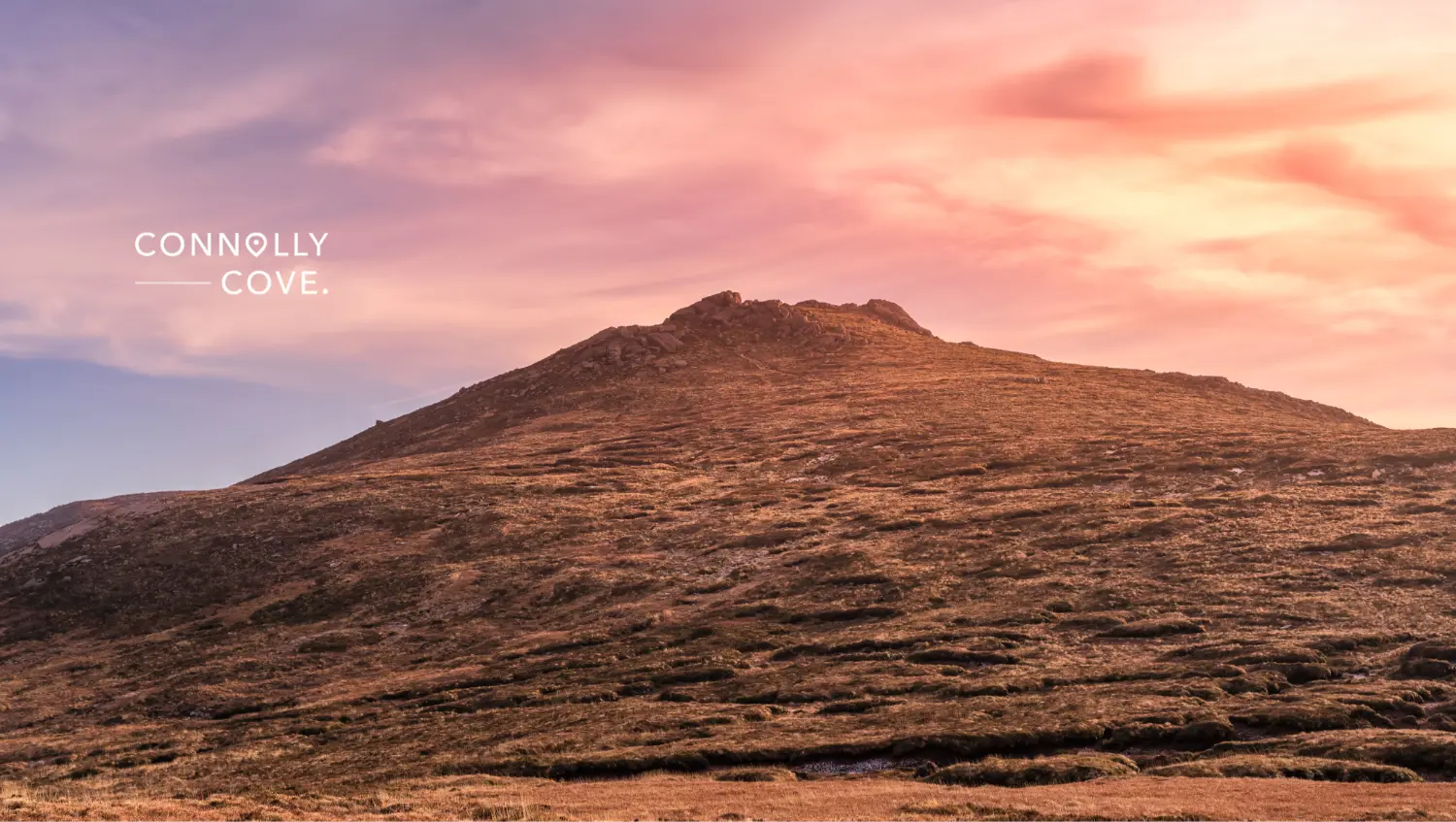
Are you craving a genuine, unplugged adventure in Northern Ireland’s most dramatic mountain landscape? Slieve Bearnagh, with its distinctive jagged profile and ancient granite tors, promises more than just a hike—it offers an authentic communion with one of Ireland’s most captivating natural wonders.
Rising majestically from the heart of the Mourne Mountains, Slieve Bearnagh stands as a striking sentinel. While its neighbour Slieve Donard may claim greater height and fame, Bearnagh offers something more profound: character, challenge, and a profound sense of wild Ireland that stays with you long after you’ve descended.
At ConnollyCove, we’ve laced up our hiking boots countless times to explore every facet of this magnificent peak. This comprehensive guide draws from our extensive first-hand experience to give you everything you need to conquer the Mournes’ granite giant—from practical details about trails and parking to the rich geological and cultural stories etched into the very stone of the mountain.
Table of Contents
Why Climb Bearnagh: Northern Ireland’s Most Rewarding Mountain
What makes Slieve Bearnagh worthy of the considerable effort required to reach its summit? Having climbed numerous peaks across Ireland and the UK, our team at ConnollyCove can confidently say that Bearnagh offers a unique blend of challenge, beauty, and satisfaction that sets it apart.
A True Hiker’s Challenge
Bearnagh isn’t just another walk—it’s a proper mountain experience that demands respect. The ascent is consistently steep, particularly the final push alongside the historic Mourne Wall. The terrain underfoot varies dramatically, from boggy approaches to rocky scrambles among the granite tors that crown the summit. This physical engagement with the mountain creates a deeply satisfying sense of achievement that you simply don’t get from many other hikes in Northern Ireland.
What makes Bearnagh particularly captivating is its distinctive personality among the Mourne peaks. The mountain demands a different kind of engagement from hikers—one that involves all your senses and complete attention. As you carefully navigate the granite tors, your hands become as important as your feet, feeling the cool, rough texture of stone formed millions of years ago. Each handhold and footstep must be earned, creating a visceral connection with the landscape that more straightforward hills simply cannot match. The physical engagement required transforms a simple hike into something more profound—a genuine conversation with one of Ireland’s most characterful mountains.
The Heart of the Mournes
Location is everything in mountain experiences, and at 739 metres (2,425 ft), Slieve Bearnagh occupies the prime position in the Mourne range. Unlike peripheral peaks, Bearnagh sits right in the central high Mournes, offering unmatched 360-degree panoramas that showcase the entire mountain range in dramatic fashion.
From the summit, you don’t just see mountains—you’re immersed in them. To the east, the distinctive profiles of Slieve Donard and Commedagh rise against the sea. Westward, the sharp peak of Slieve Binnian cuts a dramatic line against the sky. Looking north, your gaze follows the valley towards Slieve Meelmore and Meelbeg, while southward, the rounded summits roll towards the Irish border.
On clear days, the views extend far beyond the mountains themselves—the shimmering waters of Carlingford Lough, the Irish Sea coastline, and even the distant silhouettes of the Wicklow Mountains in the Republic of Ireland can all be spotted from this exceptional vantage point.
A Living Landscape of History and Geology
What truly elevates Bearnagh beyond a simple hiking destination is how it intertwines natural and human history. The mountain itself is a geological showcase of the dramatic forces that shaped Ireland. Its distinctive granite tors were formed deep underground during intense volcanic activity 50-60 million years ago, later exposed through millennia of erosion.
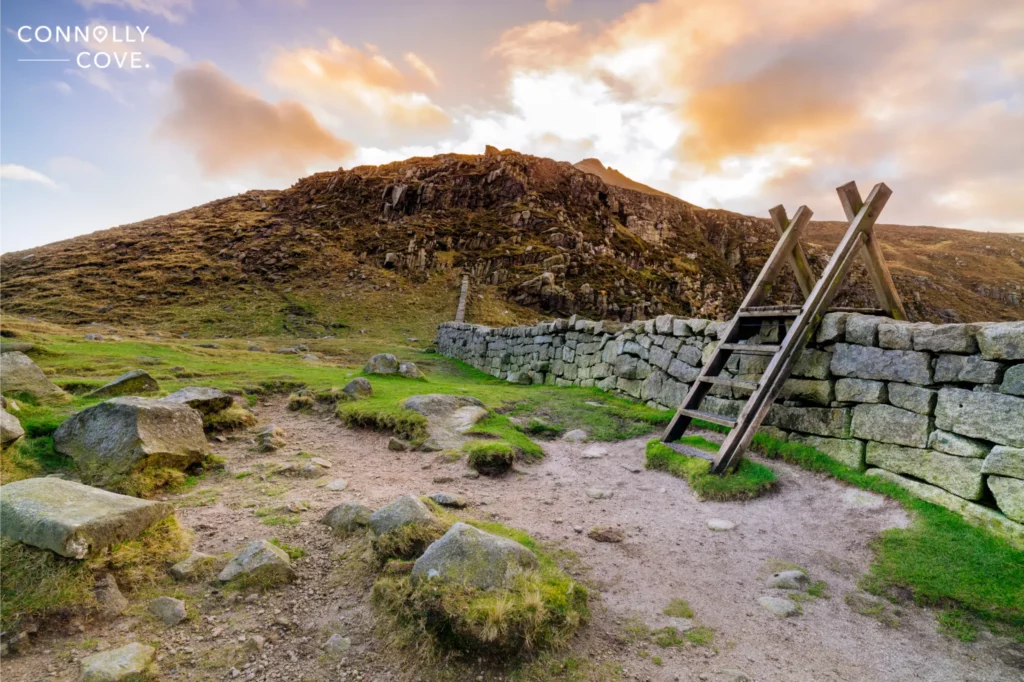
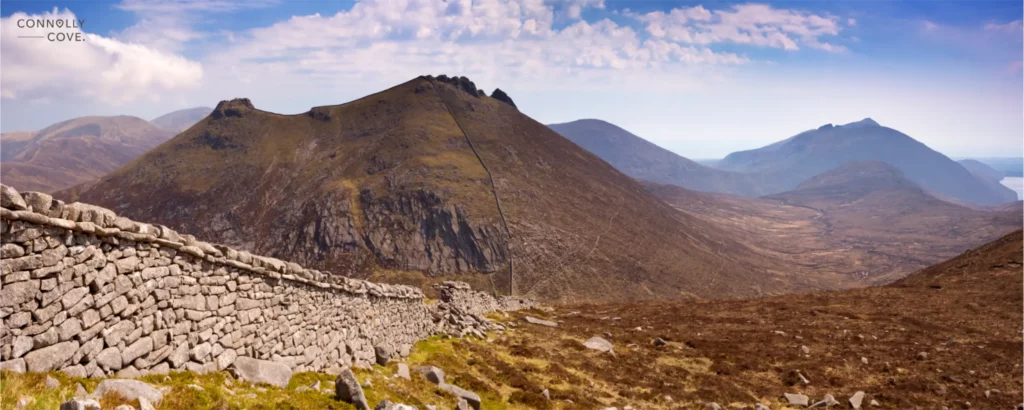
But it’s the human element that adds another dimension to the experience. The iconic Mourne Wall, a remarkable feat of engineering that traverses Bearnagh’s slopes, connects you directly to the stories of the skilled stonemasons who built it between 1904 and 1922. As you walk alongside this dry-stone masterpiece that runs for 22 miles across 15 mountains, you’re literally tracing the footsteps of those hardy workers who shaped this landscape with their bare hands.
This powerful combination of dramatic natural features and human heritage gives Bearnagh a depth and soul that makes every step of the challenging climb worthwhile.
Slieve Bearnagh Hike at a Glance: Key Stats for Your Adventure
Before diving into detailed route descriptions, here’s a quick reference guide to help you plan your Bearnagh adventure:
| Feature | Details |
|---|---|
| Summit Elevation | 739 metres (2,425 feet) |
| Difficulty | Moderate to challenging (includes steep sections and scrambling) |
| Distance (Main Route) | 9-11 km (5.5-6.8 miles) round trip via Hare’s Gap |
| Typical Duration | 4-6 hours (round trip) |
| Starting Point | Trassey Track car park or Meelmore Lodge |
| Grid Reference | J 335 300 (summit) |
| OS Map Required | OSNI Discoverer Series Sheet 29 |
| Terrain | Mixed – forest tracks, mountain paths, rocky sections, boggy ground |
| Best For | Experienced hikers seeking authentic mountain challenge |
| Parking Fee | Free at Trassey Track, £5 at Meelmore Lodge (as of 2025) |
Main Route Difficulty & Technicality
Slieve Bearnagh presents a moderate to challenging hike that requires a reasonable level of Fitness and some hiking experience. The route includes several steep sections, particularly the final approach to the summit alongside the Mourne Wall. The distinctive granite tors at the summit involve some light scrambling—using your hands as well as feet—though no technical climbing skills are needed.
The main difficulty factors include:
- Steep gradients on upper sections
- Potentially boggy ground after rainfall
- Exposure to high winds, especially at Hare’s Gap
- Some basic scrambling required around the summit tors
Whilst experienced hill walkers will find this comfortably within their capabilities, Bearnagh is not recommended as a first mountain experience. If you’re building your hiking experience, consider tackling Slieve Meelmore or Butter Mountain first, which offer similar terrain with less technical difficulty.
Starting Points & Access
The two primary access points for Slieve Bearnagh are:
Trassey Track Car Park
- Free parking but limited spaces (arrive early on weekends)
- Grid Reference: J 337 286
- Postcode for SatNav: BT33 0NZ (approximate)
Meelmore Lodge
- Paid parking (£5 per day as of 2025)
- Facilities include toilets, café, and camping
- Grid Reference: J 322 282
- Postcode for SatNav: BT33 0NQ
Popular Hiking Routes: Four Ways to Experience Slieve Bearnagh
Slieve Bearnagh offers several approaches, each with its own character and challenges. Based on our numerous ascents of this mountain in different seasons, we’ve detailed the four main routes below, from the most popular to the paths less travelled.
1. Hare’s Gap Route: The Classic Approach
Distance: 9-11 km round trip
Duration: 4-6 hours
Starting Point: Trassey Track car park
Character: The most popular and straightforward route, suitable for reasonably fit hikers with some mountain experience
The Hare’s Gap route is justifiably the most popular approach to Slieve Bearnagh, offering a perfect balance of challenge and accessibility. Having hiked this route in all seasons, we can attest to its consistent appeal and manageable nature for those with reasonable Fitness.
Route Description: Stage 1: The Trassey Track Approach
The journey begins on the broad, relatively flat Trassey Track, which provides a gentle warm-up for the more challenging sections ahead. The track follows the Trassey River for approximately 2.5 km through patches of forest and open moorland.
Look for the distinctive white-painted rocks that mark the point where you leave the main track and begin the climb toward Hare’s Gap. This junction is approximately 30-40 minutes from the car park at an average walking pace.
Stage 2: The Climb to Hare’s Gap
From the junction, the path narrows and steepens considerably as you ascend toward Hare’s Gap. This section crosses boulder fields and can be quite boggy after rainfall—we’ve found trekking poles particularly useful here for stability.
Hare’s Gap itself is a distinctive mountain pass—a dramatic notch in the ridgeline of the Mournes where the Mourne Wall crosses between Slieve Bearnagh and Slieve Meelmore. The gap acts as a natural wind tunnel, and we’ve experienced some impressively strong gusts here even on relatively calm days, so be prepared to add an extra layer before continuing.
Stage 3: The Mourne Wall and the Ascent
From Hare’s Gap, follow the Mourne Wall as it climbs steeply upward toward Slieve Bearnagh. This section is consistently steep and demanding but offers increasingly spectacular views across the kingdom of Mourne with every step gained.
The path follows the right (eastern) side of the wall. While the wall itself might seem tempting to use as a handrail, we recommend staying a few feet away from it—the ground immediately adjacent to the wall is often more eroded and unstable.
Stage 4: The Summit Tors
The final approach to the summit involves navigating around and between the distinctive granite tors—massive, weather-sculpted rock formations that crown Bearnagh’s summit. This requires some basic scrambling (using hands as well as feet) but nothing technically difficult.
The true summit is marked by a small cairn on the northern tor. From here, the panoramic views are simply spectacular. On our most recent ascent in perfect weather, we could see all the way to the Isle of Man, the Wicklow Mountains, and even the distant hills of Scotland.
Stage 5: The Descent
For most hikers, the descent retraces the same route via Hare’s Gap. Take particular care on the steep sections immediately below the summit, especially after rainfall when the granite can be treacherously slippery. Many hikers find the descent harder on the knees than the ascent, so don’t rush this section.
2. The Mourne Wall Direct Route: For the Purists
Distance: 8 km round trip
Duration: 4-5 hours
Starting Point: Meelmore Lodge
Character: Steeper and more direct, with fewer people but more challenging terrain
For those seeking a more direct ascent with fewer fellow hikers, the Mourne Wall route from Meelmore Lodge offers a compelling alternative. This route follows the Mourne Wall from much lower down, creating a more sustained and challenging climb.
Begin at Meelmore Lodge and follow the track toward Trassey. After approximately 1 km, you’ll reach the Mourne Wall. Turn right and follow the wall as it climbs relentlessly upward, crossing the peaks of Slieve Meelmore before continuing to Bearnagh.
This route is particularly appealing for photographers seeking early morning or late evening light, as it offers spectacular side-lighting on the wall’s weathered stones. The consistent steepness makes it physically demanding, but the direct nature of the route means you’re never in doubt about navigation—simply follow the wall.
3. Tollymore Forest Park Route: The Long Approach
Distance: 20-24 km round trip
Duration: 8-10 hours
Starting Point: Tollymore Forest Park main car park
Character: A full day’s expedition combining woodland, riverside, and mountain terrain
For those seeking a full day’s adventure that showcases the remarkable diversity of County Down’s landscapes, the approach from Tollymore Forest Park is unmatched. This route begins among the atmospheric woodland paths of the forest park, following the picturesque Shimna River before gradually climbing into the high mountains.
The route passes through native oak woodland, conifer plantations, open moorland, and finally the rocky upper reaches of Bearnagh. The extended approach means you’ll need to start early and carry ample provisions, but the diverse landscapes and sense of journey make this a truly memorable mountain day.
4. The Bearnagh-Meelmore-Meelbeg Circuit: The Mountain Connoisseur’s Choice
Distance: 11-16 km
Duration: 5-7 hours
Starting Point: Trassey Track car park
Character: A challenging mountain day taking in three summits, for experienced hikers only
For seasoned hill walkers looking to maximise their time in the high Mournes, this challenging circuit takes in three significant peaks. From our experience completing this route several times, it offers the most comprehensive mountain experience in a single day.
After ascending Bearnagh via Hare’s Gap, continue north along the ridge to Slieve Meelmore, then on to Slieve Meelbeg, before descending via either the Trassey Track or the Mourne Wall. The full circuit involves approximately 1,000 meters of ascent and descent across varied terrain, making it suitable only for those with good Fitness and mountain experience.
This route is particularly spectacular in autumn when the mountain slopes are painted in russet and gold, or in winter when a dusting of snow highlights the sculptural qualities of the landscape. However, in winter conditions, this should only be attempted by those with proper equipment and winter mountain skills.
Planning Your Hike: A Season-by-Season Guide to Climbing Slieve Bearnagh
The experience of climbing Slieve Bearnagh changes dramatically with the seasons. Based on our many ascents throughout the year, here’s what to expect and how to prepare:
Spring (March-May): The Awakening Mountain
Spring brings gradually warming temperatures and lengthening daylight hours, making it an increasingly popular time to tackle Bearnagh. The mountain begins to shed its winter character, though patches of snow can linger in shaded hollows well into April.
- Quieter trails than summer months
- Dramatic skies and light conditions for photography
- Wildflowers beginning to appear on lower slopes
- Less chance of heat exhaustion than summer
Advantages:
Challenges:
- Still-boggy ground from winter rainfall and snowmelt
- Unpredictable weather with sudden changes
- Cold winds are still common at higher elevations
Essential Gear for Spring:
- Waterproof jacket and trousers
- Warm mid-layers (fleece or down)
- Hat and gloves
- Gaiters for boggy sections
- Trekking poles for stability
Summer (June-August): Peak Season on the Peak
Summer brings the most reliable weather and the longest daylight hours, making it the most popular season for climbing Bearnagh. The mountain reveals its gentler side, though it still demands respect.
Advantages:
- Longest daylight hours (potential for early morning or sunset hikes)
- Generally warmer and more stable weather
- Drier ground conditions on average
- Clearest long-distance views
Challenges:
- More crowded trails, especially on weekends and bank holidays
- Potential for heat exhaustion on hotter days
- Midges can be problematic in still conditions, particularly at lower elevations
- Unexpected summer thunderstorms can develop quickly
Essential Gear for Summer:
- Sun protection (hat, sunscreen, sunglasses)
- Minimum 2 litres of water per person
- Light waterproof (mountain weather remains unpredictable)
- Insect repellent
- Light fleece or warm layer (summit can still be chilly)
Autumn (September-November): The Golden Season
Many mountain connoisseurs (ourselves included) consider autumn the perfect season for climbing Bearnagh. The mountain slopes take on rich amber and russet hues, tourist numbers decline, and the air clarity often improves dramatically.
Advantages:
- Spectacular colours as vegetation changes
- Fewer fellow hikers, especially mid-week
- Generally stable weather in early autumn
- Excellent visibility and photography conditions
Challenges:
- Shortening daylight hours (start early)
- Increasing likelihood of mist and low cloud
- First frosts can make rocky sections slippery
- Rapidly deteriorating conditions possible by late November
Essential Gear for Autumn:
- Headtorch (even if planning a daylight descent)
- Extra warm layer
- Waterproofs
- Flask with hot drink
- Camera for the spectacular colours
Winter (December-February): The Mountain Transformed
Winter transforms Bearnagh into a serious mountain proposition. When snow-covered, the peak takes on an almost Alpine character, with the granite tors resembling the turrets of a fantasy ice castle. These conditions create a magical landscape but require serious preparation and sometimes winter mountain skills.
Advantages:
- Breathtaking winter landscapes, especially after fresh snowfall
- Absolute solitude on many days
- Clearest air and longest views on crisp winter days
- Unique experience of the mountain at its most elemental
Challenges:
- Very short daylight hours (7-8 hours mid-winter)
- Navigation can be extremely difficult in poor visibility
- Severe wind chill factor at height
- Potential ice on steeper sections requiring winter equipment
Essential Gear for Winter:
- Multiple warm layers (base layer, mid-layer, insulation layer, shell)
- Waterproof jacket and trousers (essential)
- Warm hat, gloves, and spare gloves
- Headtorch with spare batteries
- Emergency shelter
- Extra food and hot drinks
- Ice axe and crampons in snow/ice conditions (if experienced)
- Map and compass with the skills to use them
Essential Items to Bring Year-Round
Regardless of when you tackle Slieve Bearnagh, certain items should always be in your rucksack:
- Navigation Tools: OS Northern Ireland Discoverer Series Map 29 and compass. While many hikers now use smartphone GPS, battery failure in cold conditions means a physical map remains essential.
- Appropriate Footwear: Proper hiking boots with ankle support and good grip are non-negotiable on Bearnagh. The mountain’s terrain varies from boggy paths to granite slabs, demanding footwear that can handle multiple surfaces.
- Waterproof Jacket and Trousers: The weather in the Mournes can change rapidly in any season. Even on forecast dry days, we’ve experienced sudden showers on Bearnagh.
- Food and Water: Carry more than you think you’ll need. The physical demands of the mountain can significantly increase appetite and thirst.
- First Aid Kit: A basic kit with plasters, bandages, pain relief, and any personal medications.
- Mobile Phone: Coverage is surprisingly good on most of Bearnagh, but don’t rely on it for navigation as battery life can be significantly reduced in cold conditions.
- Emergency Contact Details: Mountain Rescue can be contacted via 999 or 112, asking for Police and then Mountain Rescue.
The Geological Story of Slieve Bearnagh: Ancient Fire and Ice
Whilst many hiking guides focus solely on paths and routes, understanding the extraordinary geology of Slieve Bearnagh adds a fascinating dimension to your climb. The mountain you’re ascending is literally a window into Ireland’s dramatic past.
The Granite Tors: A Geological Wonder
The distinctive granite tors that crown Slieve Bearnagh are among the most recognisable features in the Mourne Mountains. These dramatic rock formations, sculpted by millions of years of weathering, tell the story of ancient volcanic activity and the relentless forces of erosion.
The granite that forms these tors was created during the Tertiary period, approximately 50-60 million years ago. Unlike surface volcanoes, this granite formed deep underground as magma slowly cooled and crystallised, creating the characteristic coarse-grained rock. The granite was gradually exposed as overlying rocks eroded away, revealing the harder granite beneath.
The tors themselves were shaped by a process called “onion-skin weathering” or exfoliation, where the outer layers of rock peel away like the layers of an onion. This process is particularly evident in the rounded, stacked appearance of many of the tors. The distinctive jointing patterns in the granite—created as the rock cooled and contracted—determined the eventual shapes of these remarkable formations.
When you reach the summit and touch these ancient stones, you’re connecting with rocks that formed at the same time that the first primitive mammals were evolving, long before humans walked the earth.
Sculpted by Ice: The Glacial Landscape
While volcanic activity created the granite, it was the ice ages that sculpted the dramatic landscape we see today. During the last ice age, which ended approximately 11,700 years ago, the Mournes were covered by massive ice sheets up to 500 meters thick.
As these ice sheets moved across the landscape, they carved out valleys, created corries (bowl-shaped hollows on the mountainside), and deposited glacial material across the region. These moving rivers of ice gouged out the distinctive U-shaped valleys visible from Bearnagh’s summit.
When you’re standing on the summit, looking at the dramatic landscape spread out before you, you’re witnessing the aftermath of this epic glacial sculpting. The bare, rounded shoulders of the mountains and the deep valleys between them are all testament to the power of moving ice.
More Than a Mountain: The Human Heritage of the Mourne Wall
What makes Slieve Bearnagh particularly special is how human history is literally built into its slopes in the form of the remarkable Mourne Wall. This impressive structure, which crosses Bearnagh’s flank, is far more than just a boundary marker—it’s a monument to human skill and determination.
Building the Mourne Wall: A Story of Grit and Skill
The Mourne Wall is an extraordinary feat of engineering and craftsmanship that deserves as much attention as the natural features of the mountain. Constructed between 1904 and 1922, this remarkable structure runs for 22 miles (35.5 km) across 15 mountains in the Mourne range.
The Belfast Water Commissioners built the wall to enclose the catchment area of the Silent Valley Reservoir, which was constructed to supply water to the growing city of Belfast. Before modern machinery, teams of skilled stonemasons known locally as “the wallstones” quarried and shaped the granite blocks on site, then assembled them using traditional dry-stone techniques without mortar.
These stonemasons worked in incredibly harsh conditions, often camping on the mountains for weeks at a time, through rain, wind, and snow. They used simple tools—hammers, chisels, crowbars, and their bare hands—to shape and place stones that often weighed hundreds of pounds.
The wall they created stands approximately 1.5 meters high and 0.8-0.9 meters wide, following the contours of the mountains regardless of how steep or challenging the terrain. It crosses some of the most inaccessible parts of the Mournes, including the precipitous slopes of Slieve Bearnagh.
When you walk alongside the wall during your ascent of Bearnagh, take a moment to examine the craftsmanship. Notice how perfectly the stones fit together without mortar, how the larger foundation stones support the structure, and how the wall has stood firm against a century of mountain weather. It’s a tactile connection to the skilled men who built it and a reminder of how humans have shaped even this seemingly wild landscape.
Digital Services for Mountain Exploration: ConnollyCove’s Expertise
At ConnollyCove, our passion for showcasing Ireland’s natural wonders like Slieve Bearnagh extends into our professional digital services. Our experience documenting and promoting destinations across Ireland has taught us the power of digital storytelling and strategic content creation.
Capturing the Mountain Experience
Through our video production and photography services, we’ve learned that showcasing places like Slieve Bearnagh requires more than just technical skill—it demands an authentic connection to the landscape and an understanding of what makes each location special.
When creating content for tourism businesses in the Mournes region, we focus on conveying the emotional experience of places like Bearnagh—the sense of achievement at reaching the summit, the awe inspired by the views, and the connection to both nature and history that makes these mountains so special.
Digital Strategy for Tourism Businesses
For accommodation providers, tour operators, and activity companies in the Mournes region, we provide specialised digital marketing strategies that highlight authentic local experiences. Our SEO expertise ensures that businesses offering hiking services, mountain guides, or accommodation for Mourne Mountain visitors can reach their target audience effectively.
Through carefully crafted content strategies, website development, and social media campaigns, we help tourism businesses showcase their unique connection to special places like Slieve Bearnagh, attracting visitors who seek authentic, meaningful travel experiences.
Safety Tips for Hiking Slieve Bearnagh
Safety in the mountains is paramount, and Slieve Bearnagh demands respect regardless of your experience level. Based on our many ascents and the changing conditions we’ve encountered, here are our essential safety recommendations:
Physical Preparation
- Build Fitness Gradually: If you’re new to mountain hiking, build up to Bearnagh with some less demanding hills first. Slieve Meelmore or Butter Mountain make good preparation.
- Know Your Limits: Be honest about your fitness level and experience. It’s always better to turn back than to push beyond your capabilities.
- Start Early: Allow plenty of time to complete your hike in daylight, particularly in autumn and winter when days are shorter.
Weather Awareness
- Check Forecasts: Always check a mountain-specific weather forecast before setting out. The Mountain Weather Information Service (MWIS) provides detailed forecasts for the Mournes.
- Be Weather-Wise: Learn to recognise changing weather patterns. Darkening skies, increasing wind, and dropping temperatures can all signal deteriorating conditions.
- Know When to Turn Back: There’s no shame in turning around if conditions deteriorate. The mountain will still be there another day.
Navigation and Communication
- Learn Basic Navigation: Know how to use a map and compass, particularly for hiking in poor visibility.
- Share Your Plans: Always tell someone your planned route and expected return time.
- Carry a Fully Charged Mobile: Mobile reception is surprisingly good on much of Bearnagh, but battery life can diminish quickly in cold conditions.
Emergency Procedures
- Know the Emergency Numbers: Mountain Rescue can be contacted via 999 or 112, asking for Police and then Mountain Rescue.
- Carry Emergency Equipment: A small emergency shelter, whistle, and first aid kit should be standard items in your rucksack.
- Understand Hypothermia: Learn to recognise the signs of hypothermia (confusion, shivering, slurred speech) and how to prevent it with proper clothing and nutrition.
After the Hike: Where to Recover and Reflect
A key part of the Slieve Bearnagh experience is finding the perfect spot to recover after your adventure and reflect on your achievement. The nearby town of Newcastle offers several excellent options:
Pubs with Character
Hugh McCann’s on Newcastle’s Central Promenade offers hearty food, a wide selection of drinks, and often features traditional music sessions on weekends. Their seafood chowder is particularly reviving after a day on the hills.
O’Hare’s Bar provides a more traditional pub experience with an excellent Guinness and a roaring fire in winter—perfect for warming up after a cold day on Bearnagh.
Cafés and Restaurants
Olive Bizarre in Newcastle serves excellent coffee and homemade cakes, plus more substantial meals if you’ve worked up a serious appetite.
Mourne Seafood Bar offers fresh, locally caught seafood if you’re looking for something special to celebrate your mountain conquest.
Enjoy the Experience: Connecting with Slieve Bearnagh
Slieve Bearnagh isn’t just a mountain to climb—it’s an encounter with Northern Ireland’s wild soul. Its granite tors demand more than mere footsteps; they invite a full sensory journey where every handhold on ancient stone and every panoramic vista creates a connection that ordinary walks simply cannot match.
The mountain’s magic lies in this perfect balance of challenge and reward. Each hard-earned step transforms into memories that endure long after your descent. At ConnollyCove, we understand this power of authentic experiences and specialise in helping tourism businesses capture and share these transformative stories through our digital content services.
FAQs
Based on the questions we’re most commonly asked about Slieve Bearnagh, here are the answers to help you plan your hike:
Is Slieve Bearnagh harder than Slieve Donard?
Whilst Slieve Donard is higher (850m compared to Bearnagh’s 739m), many hikers find Bearnagh technically more challenging due to its steeper sections and the scrambling required around the summit tors. Bearnagh has a more “mountaineering” feel, while Donard is a longer but more straightforward hike.
Is Slieve Bearnagh suitable for children or dogs?
Fit teenagers with hiking experience can certainly tackle Bearnagh, but it’s not suitable for younger children. As for dogs, athletic breeds with mountain experience can manage the terrain, but the rocky summit area can be challenging for some dogs, and owners should be prepared to assist their pets in the trickier sections.
How long does it really take to climb?
Most reasonably fit hikers should allow 4-6 hours for the round trip via the Hare’s Gap route, including breaks for rest and photography. The Mourne Wall route is slightly quicker for very fit hikers, while the Tollymore approach requires a full day (8-10 hours).
Is there phone signal on the mountain?
Surprisingly good mobile coverage exists on much of Bearnagh, particularly at higher elevations. However, there are dead spots in some of the valleys and hollows. Never rely exclusively on phone-based navigation as cold temperatures can quickly drain batteries.
What does Slieve Bearnagh mean?
The name comes from Irish: “Slieve” (Sliabh) means “mountain,” while “Bearnagh” (Bearnach) means “gapped” or “notched,” referring to the distinctive profile of the mountain with its granite tors creating a jagged appearance against the sky.