Updated on:
by
 Ciaran Connolly
 Ciaran Connolly
Deep in the heart of County Down, an area known as Silent Valley lies between the Mourne Mountains. Silent Valley has breathtaking views over its impressive reservoir that serves the people of County Down and an extensive area of Belfast. With an impressive dam that spans between the hills, the Silent Valley reservoir is uniquely placed in a mountain park and has become an essential part of a Mournes hike for locals and travellers alike. Silent Valley, Northern Ireland, is a mandatory venue for a picturesque view of the Down coastline.
Table of Contents
More Than Mountains: The Silent Valley Reservoir Mountain Park
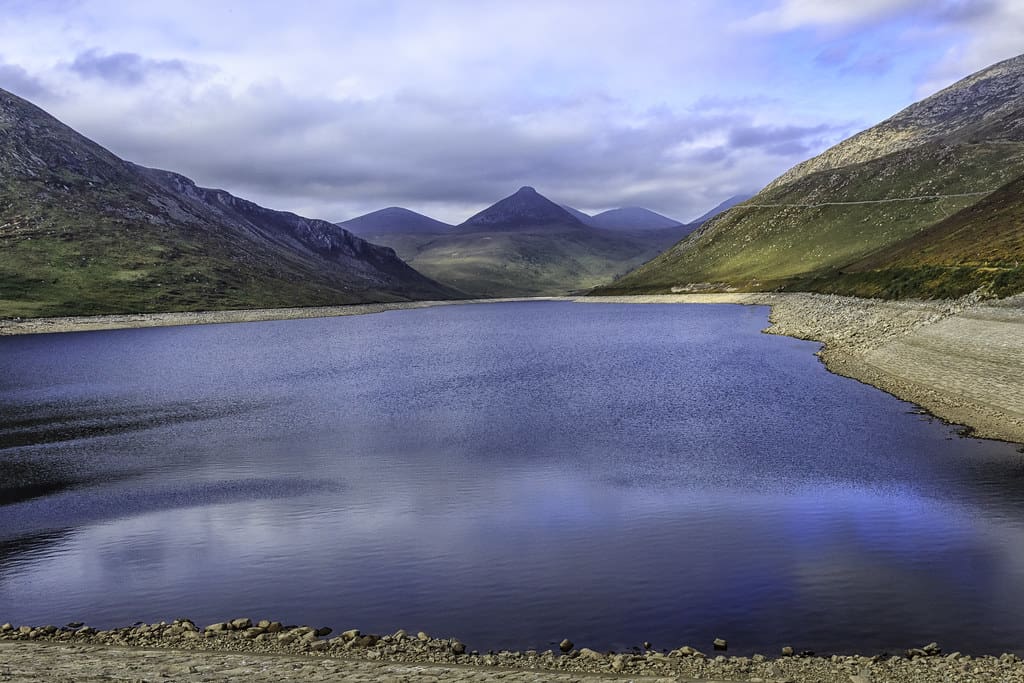
The Silent Valley Reservoir was designed to retrieve water from the Mourne Mountains. Residing within the Mourne Area of Outstanding Natural Beauty, Northern Ireland Water has provided a visitor centre and restaurant with conference and education facilities attached in cottages that adhere to the area. With over 50,000 people a year visiting the mountain park to experience the serene landscapes and the incredible Silent Valley Dam, varied and numerous walking routes have been tailored for all circumstances. The central Silent Valley walk is on the Mountain Access trail, but the Ben Crom and Nature trail is accessible for all abilities, including wheelchairs and prams. The Silent Valley Reservoir and Mountain Park are easily accessed, with car parking available for a small price. Close to Kilkeel in County Down, the area is considered one of Northern Ireland’s national treasures.
Hydrating a City: The Origins of the Silent Valley Reservoir

After Belfast’s industrial growth due to linen production, people moved into the city in droves. Due to this unprecedented growth, the city’s water supply was becoming a concern for the local authorities. The engineer responsible for sourcing this well was Luke Livingston Macassey. After surveying multiple sites, the Mourne Mountains were selected as the perfect option for water. With high rainfall and impressively clean water, Macassey recommended this area as the ideal option for the reservoir. After the relevant water commissioners agreed on this space, they secured a 9,000-acre space to build the reservoir and subsequent dam. Incredibly, the area was able to provide 140,000m3. This was surplus to requirements, and a plan was implemented to utilise this excess. Water was diverted from the Kilkeel and Annalong to a reservoir near Carryduff.
A second storage reservoir was built across the Kilkeel River, supplying 45,000 m3 of water daily. Finally, plans were made to build another storage reservoir in Annalong, but there were issues related to building the second dam in Silent Valley. Later, in the early 1950s, this water source was utilised by building a second dam at Ben Crom, a mountain further up the valley. This became the Ben Crom Dam, another water source. The Silent Valley Reservoir saw over 1000 men work on it, with nine deaths during the time it took to complete it. A ten-year period between 1923 and 1933 saw the Silent Valley Reservoir built, a resource that still benefits the people of Belfast and County Down.
Mourne Wall: The Silent Valley Protector

The Mourne Wall is an iconic part of the walkthrough of the Mourne Mountains. This impressive craftsmanship was constructed using natural granite stone and built via traditional dry stone walling. Spanning an incredible 22 miles, it passes over 15 of the Mournes’ summits and is used as a marker by many people embarking on a hike. It took 18 years to build the wall (between 1904 and 1922). Since then, this area has been protected by the Mourne Wall and has stood the test of time – monumental considering it was built entirely by hand.
Under the Mournes: The Binnian Tunnel
Under the majesty of Slieve Binnian, a tunnel runs almost three miles from the Annalong Valley to the Silent Valley Dam. Despite being built in 1933, it took 14 years to see the tunnel’s purpose reach fruition. It lay dormant due to the surplus water supply. Still, due to Belfast’s growing demands caused by an increasing population, the tunnel was revisited as a necessary part of supplying water to the people. Work began in 1947 to bring water into Silent Valley and took until 1951 to be completed. The tunnel’s entry begins at Dunnywater, and it exits on the roadside close to where NI Water has set up a Visitor Centre for the mountain park. The Binnian Tunnel has been operational since 1952 and is still used today.
Water Floweth: Spelga Reservoir and Dam

The Silent Valley Reservoir wasn’t the original space intended to store water. In 1894, the Spelga Reservoir and Dam were constructed to supply water to the people of Belfast. Situated in the townland of Spelga, between the Mourne Mountains, it sits 1,200 feet above sea level. Redeveloped between 1953 and 1957 for actual use, issues arose when they realised the dam was sinking. This was caused due to pouring concrete too close to the bedrock. Once this was resolved, the building resumed and was completed in 1957. The areas surrounding Portadown and Banbridge receive their water from the Spelga Reservoir and has a healthy wild trout population.
Valleys A Plenty: The Hills of County Down
The Silent Valley Reservoir continues to serve as one of the most beautiful walks in the County Down area. With campsites, caravan parks, and local amenities close by in the neighbouring town of Kilkeel, it is the perfect place to relax and enjoy the breathtaking sights of the local flora and fauna. The Belfast to Kilkeel road is an hour and a half long but worth the drive for unique views of Northern Ireland’s lush countryside. For more information, check out NI Water’s website or contact them on 03457 440088.
Silent Valley’s Cultural and Artistic Influence
Beyond its practical and natural significance, Silent Valley has inspired artists, writers, and photographers for generations. The quiet beauty of the reservoir and its surrounding landscape has provided the perfect backdrop for creative expression. Photographers are particularly drawn to the area for its changing light and dramatic vistas, with the reflections on the still waters of the reservoir providing a perfect mirror of the Mourne Mountains.
Poets and writers have also found inspiration in Silent Valley’s tranquil beauty. The reservoir and its surroundings offer a sense of isolation and peace, providing the perfect environment for reflection and contemplation. The stillness of the valley, broken only by the sound of the wind in the trees or the distant call of birds, has been a recurring theme in the works of many local writers. The area’s rich history and natural beauty create a deep sense of place that resonates with those who visit.
Practical Information for Visitors
Silent Valley Reservoir is open to visitors year-round, and there is a small entrance fee to access the park. The site offers ample parking, picnic areas, and a visitor centre where you can learn more about the history and significance of the reservoir. The visitor centre includes exhibitions on the construction of the reservoir, the history of the Mourne water supply system, and the area’s natural history.
The best time to visit Silent Valley depends on your desire. Spring and summer offer the most pleasant weather for walking and exploring, with the wildflowers in bloom and the Mournes at their greenest. Autumn brings a riot of colour to the woodlands around the reservoir, while winter, though colder, can offer a stark, beautiful solitude to those willing to brave the elements.
For those planning a visit, it is recommended to bring appropriate walking gear, especially if you plan to explore beyond the reservoir and into the Mourne Mountains. The weather in the Mournes can change rapidly; even on a clear day, it’s wise to be prepared for rain or mist.
Conclusion: A Place of Quiet Reflection
The Silent Valley Reservoir stands as a quiet sentinel in the heart of the Mourne Mountains, where nature, history, and engineering meet perfectly. Whether you’re visiting to learn about its history, enjoy the peaceful surroundings, or explore the stunning landscapes of the Mourne Mountains, Silent Valley offers a unique experience that lingers long after you’ve left its shores.
In a world that often feels noisy and fast-paced, Silent Valley reminds us of the beauty that can be found in stillness. Its quiet streams and waters invite us to pause, reflect, and reconnect with nature, making it a truly special place in the heart of Northern Ireland.