

How to Spend Unforgettable Time in Manchester, England
Updated On: November 08, 2023 by  Ahmed Samir
Manchester is a British city located in the northwestern part of England, and it is one of the major cities in the county of Greater Manchester. The city of Manchester is the pioneer of the industrial revolution in Western Europe and the world.
It is bordered on the north and east by the Pennines Hills while on the south by the Cheshire Plain. It is on an area of 260 km2 and 38 metres above sea level.
The city was known for its Roman name, Mamukium, which is a Roman fort located at the Medlock River with the Errol River, and from there, the name Manchester came, meaning the hill town.
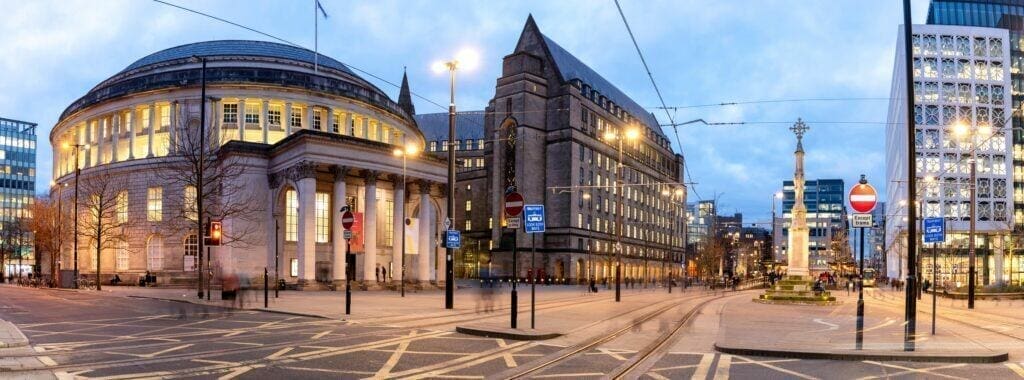
Manchester occupies the first place among the industrial cities in the world in terms of origin. The Manchester Navigational Canal opening increased the city’s importance, and it is noteworthy that this city was the starting point of the industrial revolution in Western Europe. As a result, Britain became one of the countries that achieved the highest level of industrial renaissance, which encouraged the outbreak of the agricultural revolution, which helped to inflate capital in the region due to the expansion of trade.
It also witnessed, on the scientific level, the birth of the famous chemist John Dalton, who discovered the atom. The city has many significant universities, considered the most important universities in the United Kingdom, such as the University of Manchester, Manchester Metropolitan University, and the University of Salford. Also, it has tremendous educational potential, as it contains more than 170 secondary and primary schools, and there are many schools and colleges with many academic disciplines.
Moving Around the City
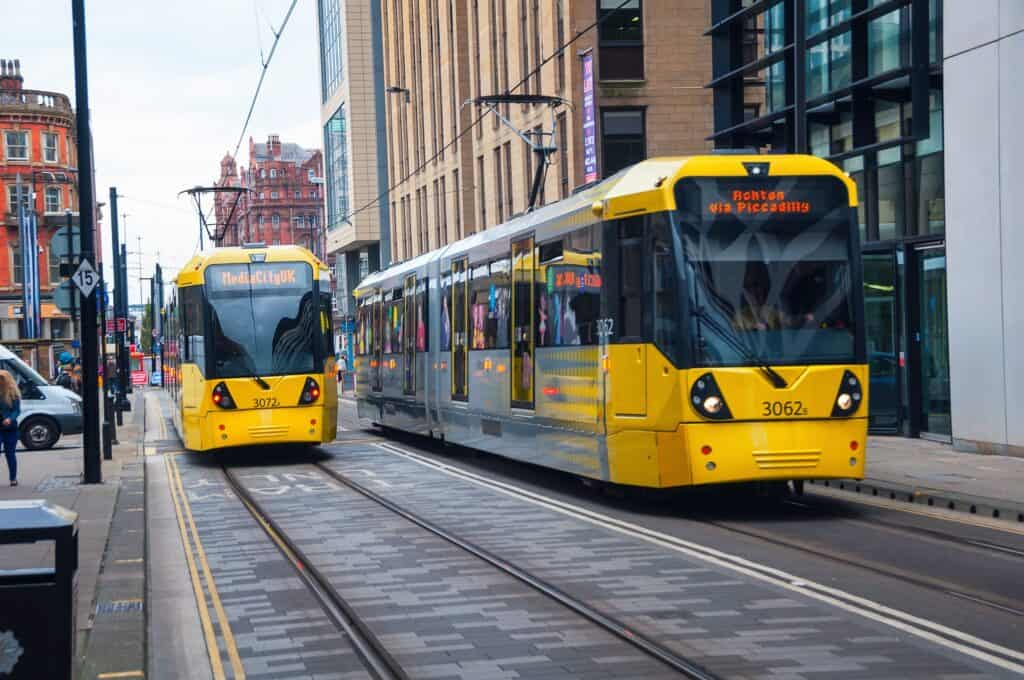
This city is characterised by its organised and multi-modal public transportation. Manchester Airport is a major airport in the city and the north of England and is the busiest airport in the UK after London airports.
Trains are an essential form of transportation in Manchester, as Manchester Piccadilly Station is one of Britain’s busiest stations. Buses are one of the citizens’ favourite means of transport in Manchester. In addition to the mass transit system, the Metro Link, it is also possible to move around the city by black taxis available on the streets.
What Does the Weather Forecast Say About Manchester?
Manchester has a temperate oceanic climate like much of the British Isles, where the summer is mild, and the winter is cold. Still, Manchester’s humidity level is relatively high due to the abundance of running water. As for snowfall, it is not common in the city due to the effect of global warming in urban areas. However, the hills and forests surrounding the town to the east and north fall in the snow. That leads to the closing of the roads by snow.
July and August are considered the hottest months of the year, where the average temperature is between 11 and 20 degrees, and January and February are the coldest, where the average temperature is between 1 and 7 degrees.
The Best Time to Visit Manchester
The best time to visit Manchester is in the summer, which is considered the peak season. During this time of the year, the number of tourists usually increases, and the demand for markets and tourist attractions also increases. While in winter, the temperature decreases, and the rain falls a lot; therefore, you will not be able to roam freely and enjoy the beauty of the attractions in the city.
Manchester and Football
Manchester is famous for football, after which sports clubs became so popular, including Manchester United and Manchester City, whose match is one of the essential derbies in the world.
In Manchester, two of the most famous stadiums in the world are the City of Manchester Stadium, which belongs to the Manchester City Club. It was also called the Etihad Stadium, attributed to Etihad Airways. The other stadium is the Old Trafford stadium, the stadium of dreams for Manchester United.
The Top Tourist Attractions and Activities in Manchester
Tourism plays a vital role in the economy of the city of Manchester. The city has many historical, archaeological, and tourist places to visit. This is in addition to many resorts, hotels, gardens, and parks that attract many tourists to enjoy its beautiful scenery.
Manchester ranks high among the British cities that attract tourists, where tourism contributes to making life in the town very encouraging due to advanced levels in the educational and sports sector. It has the best international universities and the best clubs in the world as well. The scientific and artistic importance of the city, alongside its geographical location, makes it one of the biggest tourist destinations in the country.
You can visit and tour the city of Manchester and explore its historical, archaeological, and tourist attractions. Shopping in Manchester is another thrilling experience that you shouldn’t miss. After a long day of exploring the city, you can have a nice meal and enjoy a couple of drinks at a restaurant or cafe. Local food in Manchester tastes like heaven. Make sure to keep your Instagram followers posted with pictures of you, your favourite dishes, and the breathtaking views of the city.
Now, after knowing a lot about Manchester, it is time to learn more about the places you can visit and the activities you can do there. Pack your bags, and let us start an incredible journey in one of the most important cities in the United Kingdom.
Manchester Cathedral
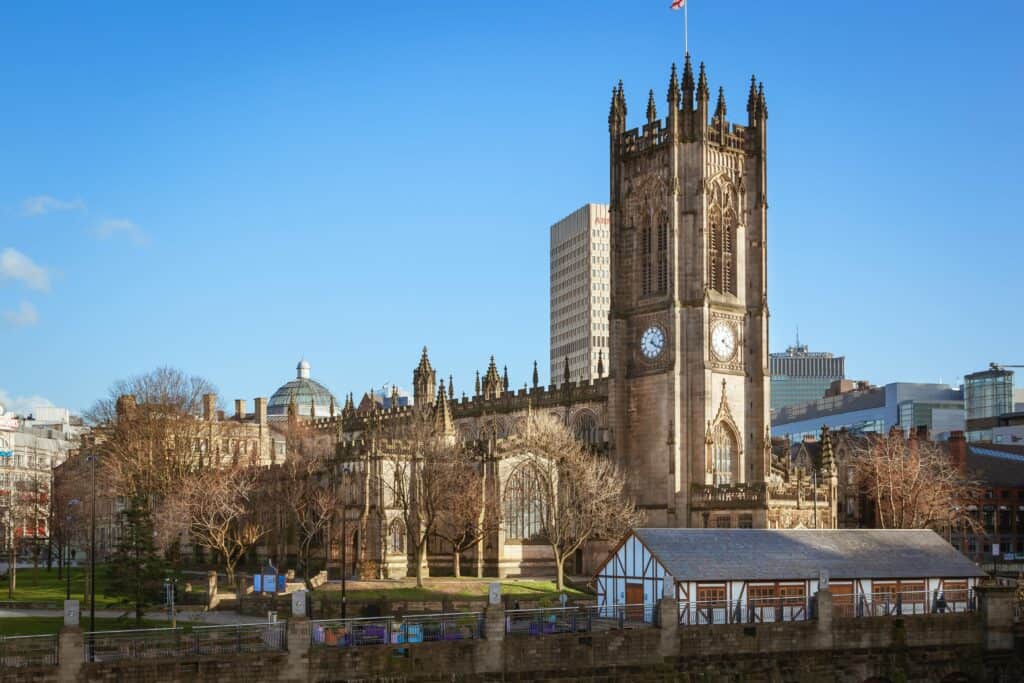
Manchester cathedral is on the banks of River Irwell. It was built between 1486 and 1508, with some additions every century. The Cathedral and Collegiate Church of St. Mary, St. Denys, and St. George mainly dated from 1422 to 1506 and was raised to cathedral status in 1847.
When you visit the cathedral, you can see St. John’s Chapel, the chapel of the Manchester Regiment. The Lady Chapel has a wooden screen dating back to 1440, and the octagonal chapterhouse, built in 1465, has murals that include a figure of Christ in modern dress.
The Canals of Castlefield
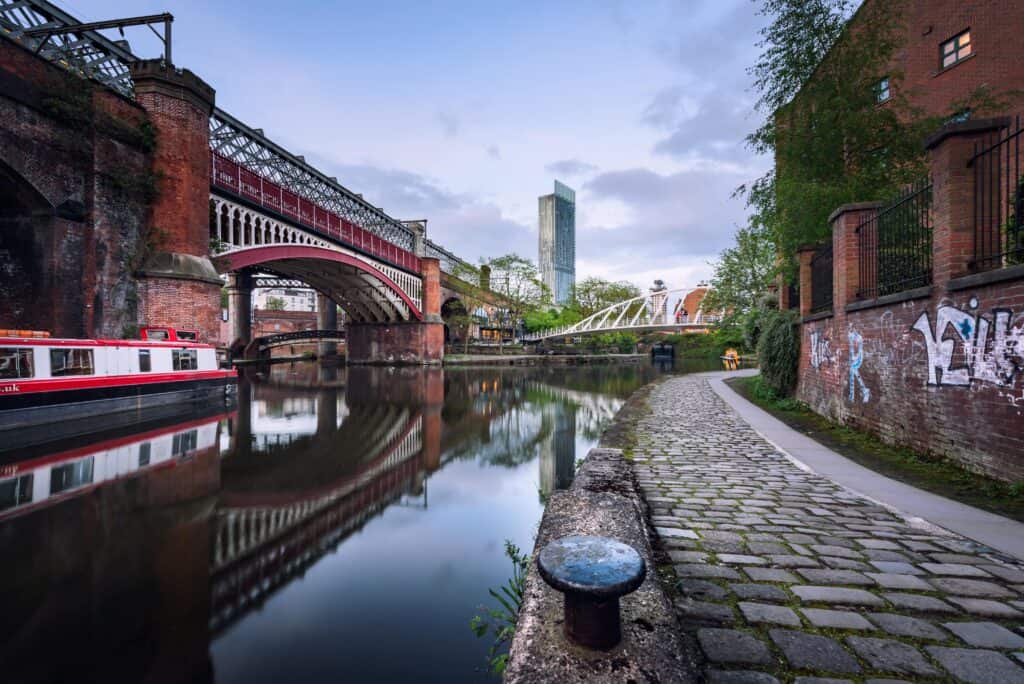
The Canals of Castlefield are well-known as an Urban Heritage Park. The place is also a perfect spot to start discovering Manchester, and you can walk there and see the wonderful restored Victorian houses along the old canals. Don’t forget to visit the Roman Fort too.
Also, there you can visit the Bridgewater Canal, constructed in 1761 to take the coal from the mines of Worsley to Manchester, and the warehouses on the canal were restored and became shops, hotels, restaurants, and offices.
National Football Museum
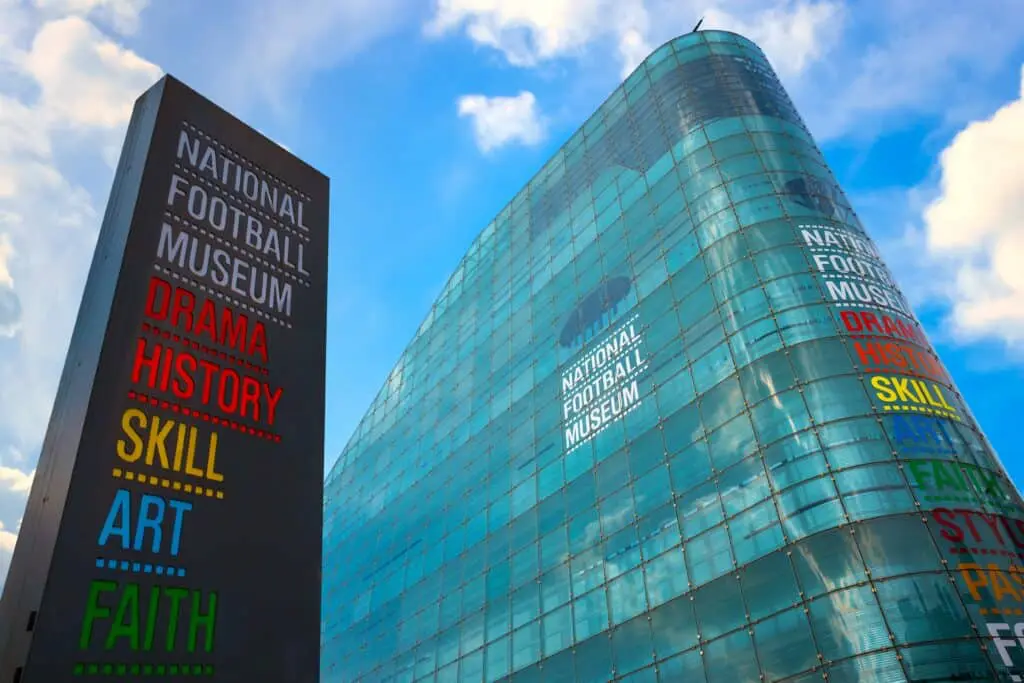
Manchester is well-known as the home of the famous two teams, Manchester United and Manchester City. The museum that you will visit includes many memories that are related to football, like the first rulebook, clothing, and trophies. Also, you will be able to see a movie that gives you information about the history of football, and there are many entertaining things to do for children as well.
You will have the chance to go and visit both stadiums of Manchester’s teams. The first one is Manchester City’s Etihad Stadium, which offers you a lovely tour behind the scenes. While the other stadium is Old Trafford, where you can have an excellent time with access to the field.
Manchester Museum
Manchester Museum is a famous tourist attraction in the city; it displays things related to natural history, anthropology, and archaeology, and its collections date back to 1821. The museum is the largest university museum in the United Kingdom. It includes a collection of over 4.5 million artefacts from all over the world, and it is famous for its Chinese cultural collections, as well.
Some exhibitions focus on the underwater world. Don’t miss seeing the museum’s vivarium, where you can see some of the rarest frogs in the world. Also, you can have a break at the café located in the museum after a long tour there.
Manchester Town Hall
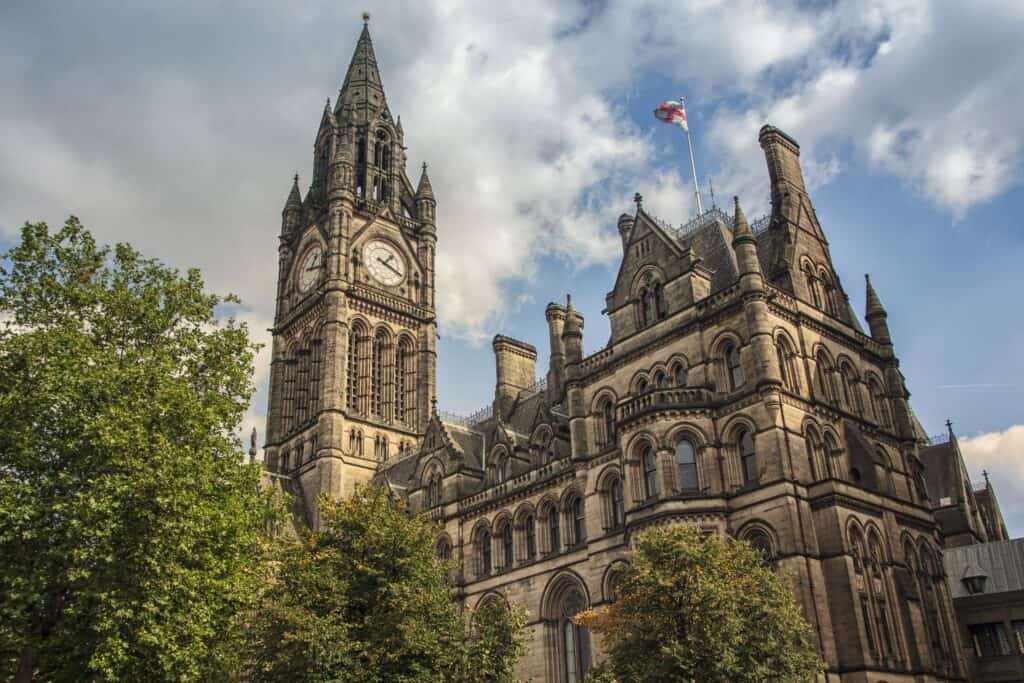
Manchester Town Hall is in the middle of the city at Albert Square. Its façade was built in a new-Gothic style in 1877, and the clock tower in the town hall reaches 85 metres and gives you a magnificent view of the city.
When you enter the place, you can see the interior with arched ceilings and a spiral staircase gilded in gold, and also you can see the cycle of Ford Madox Brown murals that tells the city’s history. The town hall was used to film scenes in some movies, such as The Iron Lady, Sherlock Holmes, and Victor Frankenstein.
Give a visit to the Manchester Central Convention Complex, one of the largest such sites in England, which hosts many musical performances throughout the year.
Mary’s Catholic Church
Another famous church in Manchester is St. Mary’s Catholic Church, built in 1794 near the Market Hall. The church is known to locals as the Hidden Gem. It is a beautiful building, so make sure to explore it from the inside.
Inside the church, you will find some beautiful Victorian carvings, and also you will be able to see a high marble altar, statues of saints, and much more.
Imperial War Museum North
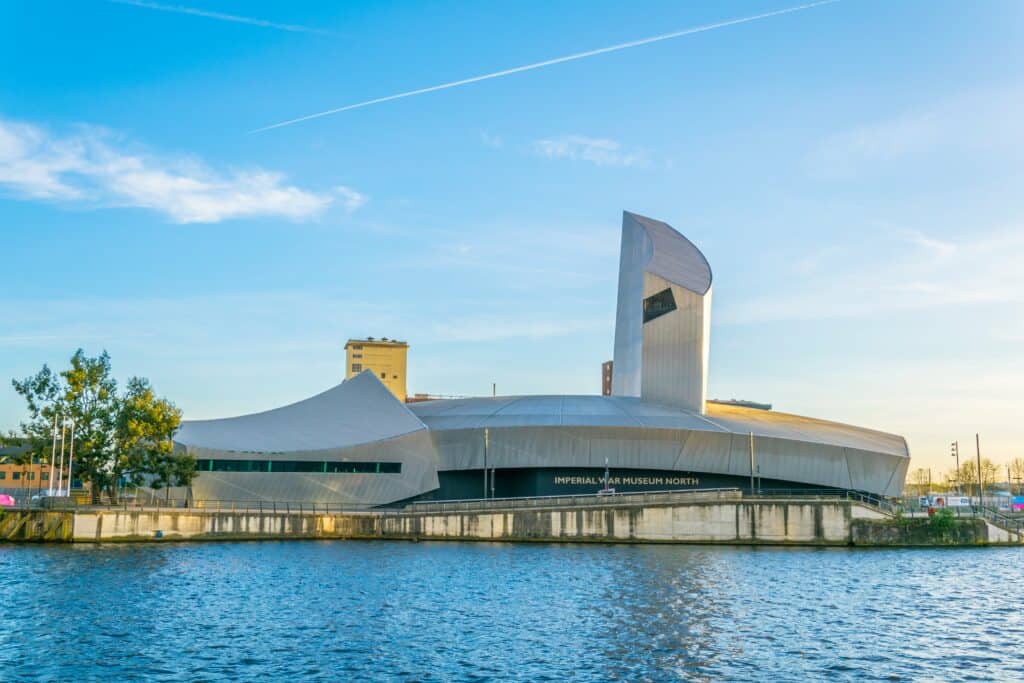
Manchester is full of museums, Imperial War Museum North is one of them, and it is a perfect place for those who love to learn more about history. The museum was opened in 2002. It includes many war-related collections, including fighting vehicles and aircraft. Some exhibits display machines like tanks, artillery, and many other things.
Chinatown
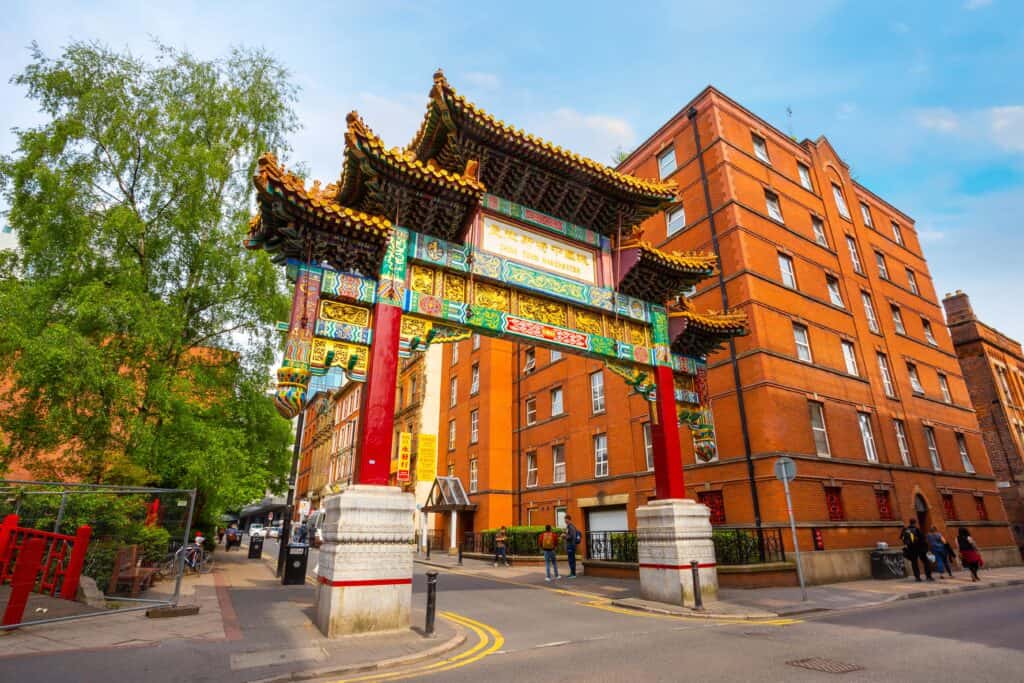
Chinatown in Manchester is known as the second-largest in the United Kingdom and one of the country’s largest Chinese communities. It includes many restaurants and shops that offer many culinary delicacies from Hong Kong and Beijing. You will see a decorated arched gateway leading into the district when you visit the place. You can visit the Centre for Contemporary Chinese Art, where you can find Chinese handicrafts and artworks.
Manchester Art Gallery
Manchester Art Gallery is in the middle of the city. The building was built in 1823 and included one of the largest art collections outside of London. Inside the art gallery, you will find works by French impressionists, including Gauguin, Manet, and Monet, and German artists, such as Max Ernst.
Besides that, there are works by English artists such as Constable and Turner, and the sculpture collection includes works by Rodin, Maillol, and Henry Moore. You can also visit HOME for arts and culture, known for contemporary visual arts and independent film.
Science and Industry Museum
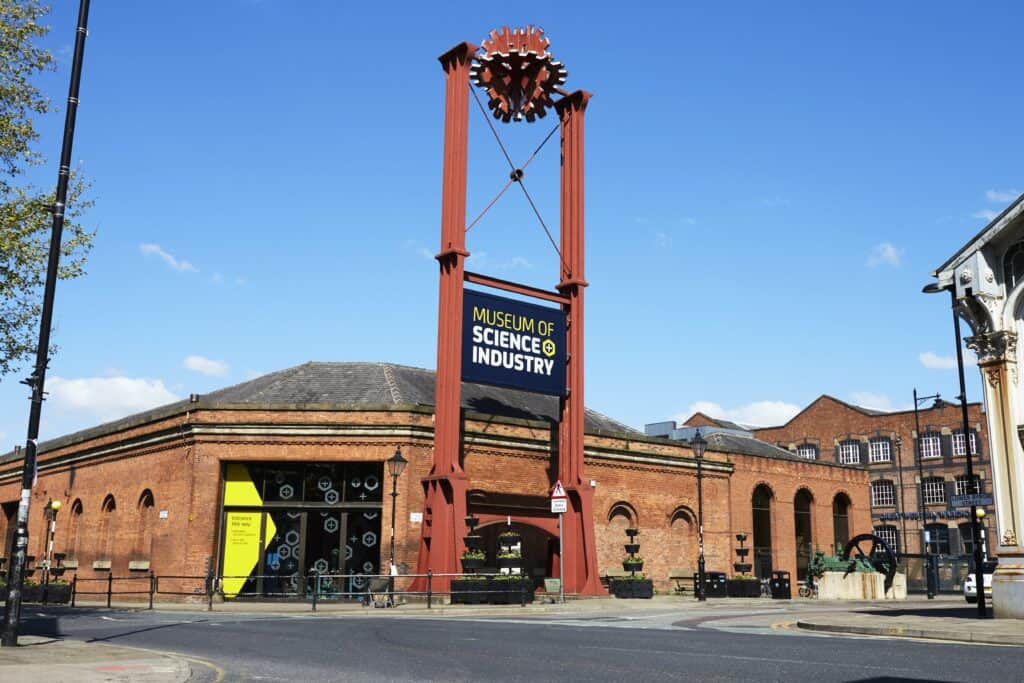
The Museum of Science and Industry is the oldest railroad station in the world; it includes many exhibitions like transport, power, and computing. There are also vehicles made in Manchester, such as a rare 1904 Rolls-Royce.
Inside the museum, you will see demonstrations of original machines used over the last 300 years. It is an excellent place for families, with many activities for kids, such as games, scientific experiments, and virtual reality booths.
Heaton Park
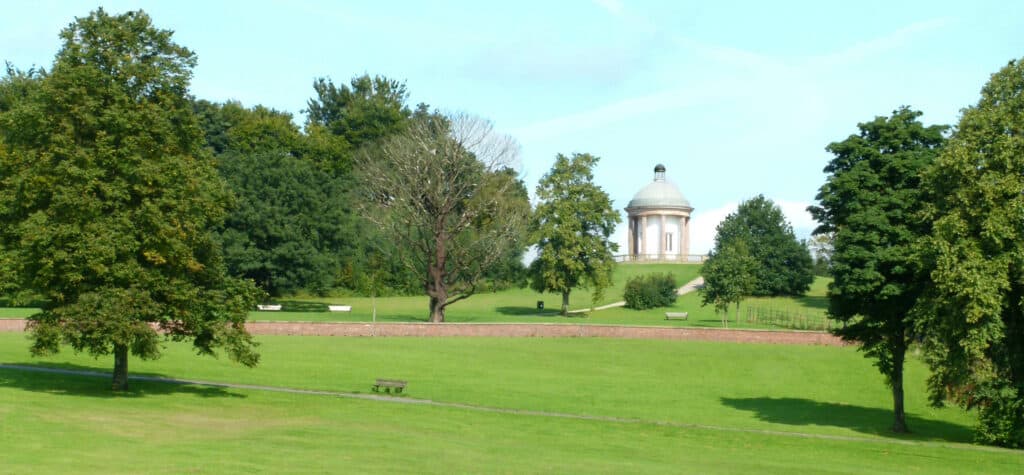
Heaton Park is considered a nice public green space. It is on an area of 600 acres and is a large European park. It is a perfect place for families to have a great time, picnic, and explore the area. You can find many things to do inside the park. You can find the Heaton Hall, built in 1772, in the middle of the park.
Also, you can visit the Animal Centre built in 1789, where you can find goats, donkeys, and more. Explore the park more by riding Heaton Park Tramway, and you will see a historic tram from the early 20th century. Many sports, like an 18-hole golf course, driving range, tennis courts, and exploring boating lakes, gardens, and playgrounds, can be practised.
University of Manchester
The University of Manchester is in Manchester’s educational region. It was built in 1851, and it contains institutes and residence halls. The university had 3 Nobel prizewinners, including:
- Ernest Rutherford, who laid the foundations of modern atomic physics.
- Physician James Chadwick, who proved the existence of the neutron.
- Sir John Cockcroft, one of the leading physicists in British and Canadian atomic research.
When you visit the university, don’t miss the Whitworth Art Gallery, which includes modern art and sculpture, the most extensive collections outside London.
Salford Quays
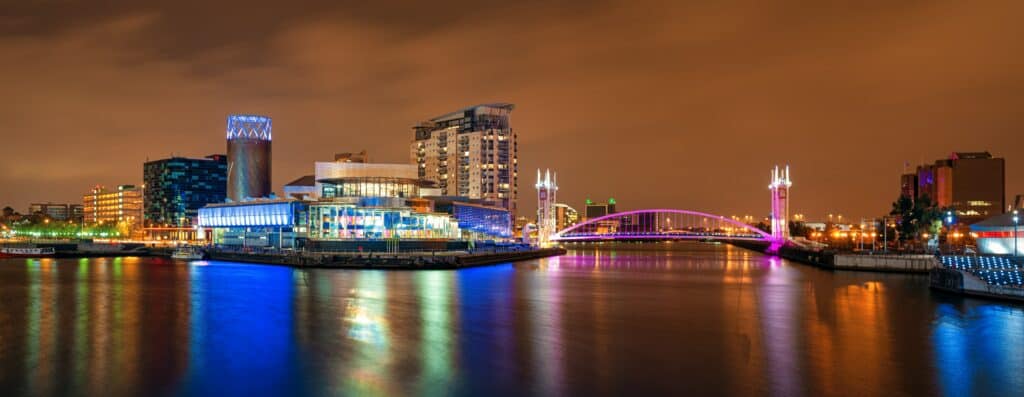
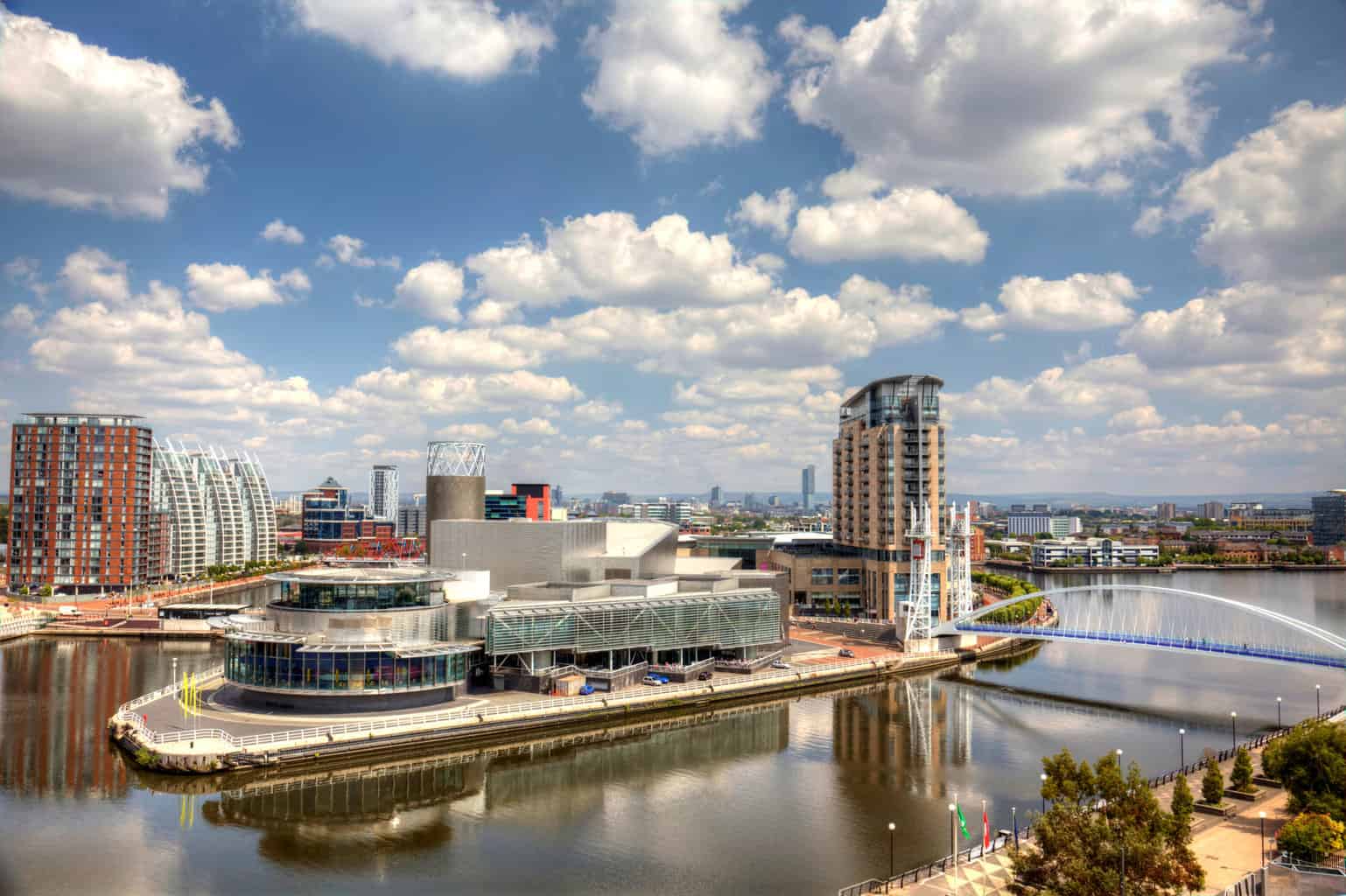
Salford Quays is an excellent place for a day trip and seeing more than one attraction. The area is 5 km away by public transportation and is on the banks of the city’s ship canal, and you can explore it while walking. Besides that, you can visit the Imperial War Museum North and Old Trafford, home to Manchester United Football Club.
Chetham’s Library
The Chetham’s Library is north of Manchester Cathedral. It was initially a hospital and a priest’s residence, but now it is a music school and Chetham Library, the oldest public library in England.
The library includes more than 100,000 books dating back to before 1850. The place became famous for being the meeting place of Karl Marx and Friedrich Engels during Marx’s visit to Manchester. There are other libraries you can explore during your visit to Manchester, like the Portico Library, which houses the literary collection of Dalton and Joule, founders of the Manchester Literary and Philosophical Society.
People’s History Museum
The People’s History Museum is famous for displaying the collection and study of material relating to the history of working people in the United Kingdom. When you visit the museum, you will find that this place used to be a pumping station in the past. It displays the history of British democracy and its impact on the population. In the museum, you can learn more about football culture, welfare, trade unionism, and much more. Also, it hosts many events, from craft workshops to one-off talks.
Fletcher Moss Botanical Garden
The Fletcher Moss Botanical Garden was founded in 1917 and opened to the public in 1919. It is an ample green space where you can have a great time. The garden includes ornamental gardens, ponds, and many trees, and besides that, there are walking trails and the home of the natural reserve where you will find wildlife.
Also, you will find birds such as wrens, parakeets, and swifts, and you can practise many activities, like tennis, rugby, football, and more, at the sports grounds there.
Museum of Transportation
The Museum of Transportation is a great place to visit. It is in the city’s Cheetham Hill area, and there you can find many collections of vehicles over 80 buses. Also, you can find historical modes of transportation, such as the original city tram from 1901. Besides the modes, you will learn more about the evolution and development of transportation in Manchester.
Victoria Baths
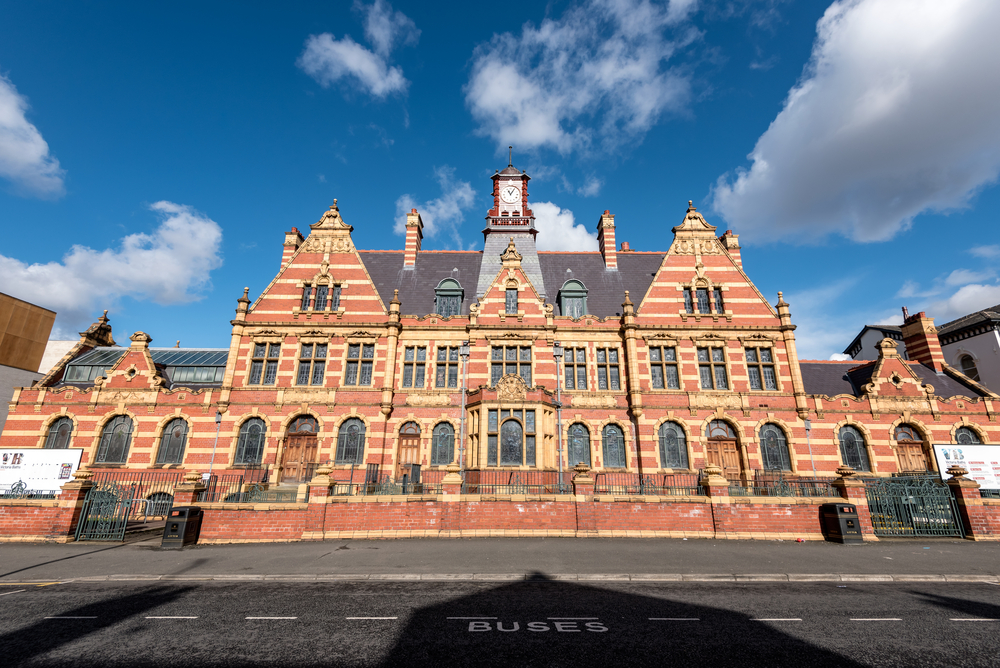
Victoria Baths are also known as the Water Palace. It is an excellent example of the Victorian-era bath. It was built in 1986 and is unique for the change facilities that line the pool’s perimeter and the ornate steelwork that holds the structure up.
The place is open seasonally from April through to November. Many concerts, as well as family events, are held in the palace, and cafes are located there.

A Comprehensive Guide to Tank Museums in England: Unveiling The English Armoured History!
History and Heritage
26/04/2024

A Walk in Ireland Guide: Best Trails, Routes, and Tips
Ireland
26/04/2024
An Ultimate Guide to 6 of the Finest Castle Tours in England
England
26/04/2024
Unveiling the Most Terrifying Haunted Tours in Scotland
Scotland
25/04/2024

7 Top Amusement Parks in England for an Unforgettable Adventure
England
25/04/2024